.webp)
.webp)
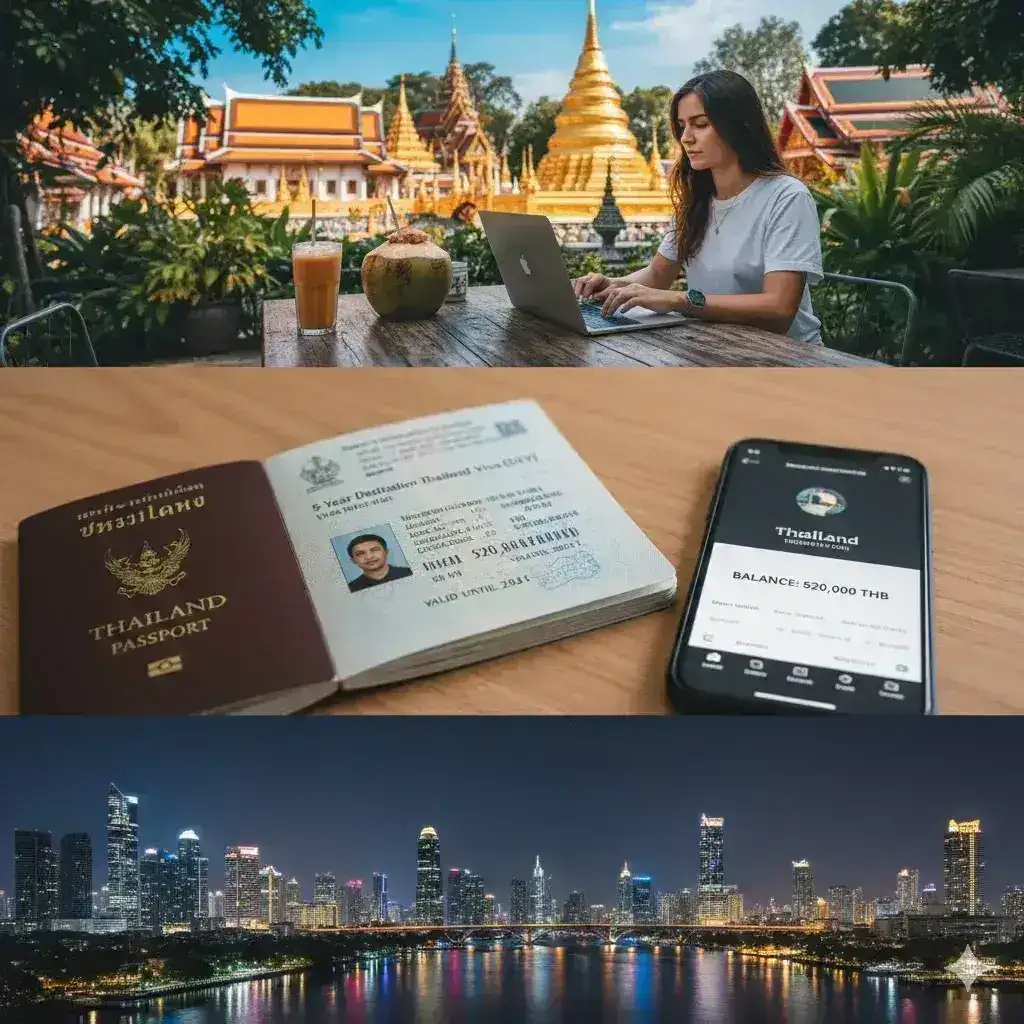
The Destination Thailand Visa (DTV) 2026: The Ultimate Guide for Digital Nomads
Thailand has long been a magnet for remote workers, freelancers, and digital nomads seeking an idyllic blend of tropical beauty, affordable living, world-class cuisine, and vibrant culture. However, until recently, navigating the country's visa landscape as a location-independent professional meant juggling tourist visas, visa runs, and legal gray areas. That changed with the introduction of the Destination Thailand Visa (DTV)—a game-changing visa category specifically designed for the modern remote workforce.
Launched in mid-2024 and continuing strong through 2026, the DTV represents Thailand's commitment to attracting high-value, long-term visitors who contribute to the local economy while working remotely for employers or clients outside Thailand. This comprehensive guide will walk you through everything you need to know about the DTV visa in 2026, from eligibility requirements and application procedures to financial obligations, tax implications, and how it compares to other visa options.
Whether you're a software developer dreaming of coding from a Chiang Mai café, a marketing consultant planning to work from a Phuket beachfront, or an entrepreneur seeking a base in Bangkok's thriving startup ecosystem, the DTV visa could be your key to unlocking an extended Thai adventure. With its 5-year validity, 180-day stays per entry, and multiple-entry privileges, the DTV offers unprecedented flexibility for digital nomads seeking stability without sacrificing mobility.
What Is the Destination Thailand Visa (DTV)?
The Destination Thailand Visa (DTV) is a special long-term visa category introduced by the Royal Thai Government to attract remote workers, freelancers, and "workation" enthusiasts to the country. Unlike traditional tourist visas that prohibit any form of work or business activities, the DTV explicitly permits holders to work remotely for employers or clients located outside Thailand while residing in the country.
This visa represents a strategic shift in Thailand's immigration policy, recognizing the growing global trend of remote work and the economic benefits of attracting affluent, skilled professionals who spend money locally while earning income abroad. The DTV is part of Thailand's broader initiative to position itself as a premier destination for digital nomads and remote workers in Southeast Asia, competing with similar programs in countries like Indonesia (Bali), Malaysia (DE Rantau), and Estonia (Digital Nomad Visa).
Key features of the DTV visa:
- Validity: 5 years from date of issue (multiple-entry).
- Duration of Stay: Up to 180 days per entry.
- Extension: Can be extended once per entry for an additional 180 days (total of 360 days per entry).
- Work Permission: Allows remote work for foreign employers/clients only (not for Thai companies).
- Family Inclusion: Spouses and children under 20 can apply for dependent visas.
- Path to Renewal: After initial 5-year period, may be eligible for renewal subject to meeting requirements.
- 👉 The Ultimate Azerbaijan Travel Guide: Exploring the Land of Fire and Untouched Magic
- 👉 আর্মেনিয়া ভিসা ২০২৬: বাংলাদেশী নাগরিকদের জন্য ই-ভিসা ও আবেদন নিয়ম
- 👉 10 Taiwan Convenience Store Shocks for Americans 2026
Who Is Eligible for the DTV Visa?
The DTV visa targets specific categories of remote workers and professionals. Understanding whether you qualify is the first step in the application process.
Primary Eligible Categories
1. Remote Workers for Foreign Companies: Employees of companies registered outside Thailand who work remotely full-time or part-time. You must provide proof of employment such as an employment contract, letter from employer confirming remote work arrangement, and company registration documents.
2. Freelancers and Independent Contractors: Self-employed professionals providing services to clients outside Thailand. This includes writers, designers, developers, consultants, marketers, and other service providers. You'll need to demonstrate an active portfolio of international clients and income from foreign sources.
3. Digital Nomads and Location-Independent Entrepreneurs: Individuals who run online businesses, e-commerce operations, or digital ventures that don't require physical presence in a specific location. You must show business registration (if applicable) and proof of business activities conducted primarily outside Thailand.
4. Participants in Thai Soft Power Activities: This unique category includes individuals participating in activities related to Thai culture, including:
- Muay Thai training (at recognized camps)
- Thai cooking courses (at certified schools)
- Traditional Thai massage training
- Thai language studies
- Cultural arts and crafts programs
- 👉 The Ultimate Azerbaijan Travel Guide: Exploring the Land of Fire and Untouched Magic
- 👉 আর্মেনিয়া ভিসা ২০২৬: বাংলাদেশী নাগরিকদের জন্য ই-ভিসা ও আবেদন নিয়ম
- 👉 10 Taiwan Convenience Store Shocks for Americans 2026
This category acknowledges Thailand's rich cultural heritage and allows individuals to immerse themselves in traditional practices while working remotely.
General Eligibility Requirements
Regardless of your specific category, all DTV applicants must meet these baseline criteria:
- Valid Passport: Must be valid for at least 6 months from date of application.
- Clean Criminal Record: No serious criminal convictions in Thailand or your home country.
- Health Insurance: Comprehensive health insurance coverage of at least $50,000 USD (or equivalent) valid for the duration of your stay.
- Financial Requirements: Proof of sufficient funds (detailed below).
- Proof of Remote Work: Documentation demonstrating you work for entities outside Thailand.
- Accommodation Proof: Confirmed accommodation in Thailand for initial stay.
- 👉 The Ultimate Azerbaijan Travel Guide: Exploring the Land of Fire and Untouched Magic
- 👉 আর্মেনিয়া ভিসা ২০২৬: বাংলাদেশী নাগরিকদের জন্য ই-ভিসা ও আবেদন নিয়ম
- 👉 10 Taiwan Convenience Store Shocks for Americans 2026
Financial Requirements for DTV Visa 2026

One of the most critical aspects of the DTV application is demonstrating financial stability. Thailand wants to ensure DTV holders can support themselves without seeking local employment or becoming a burden on public resources.
Minimum Financial Threshold
As of 2026, DTV applicants must demonstrate access to funds of at least 500,000 Thai Baht (THB) (approximately $14,000-15,000 USD depending on exchange rates). This is a significant amount compared to tourist visas but reflects the long-term nature of the DTV and Thailand's desire to attract financially stable remote workers.
Acceptable proof of funds includes:
- Bank Statements: Official statements from your bank showing a balance of at least 500,000 THB (or equivalent in foreign currency). Statements should be recent (within 30 days of application) and cover at least the last 3-6 months to demonstrate consistent financial stability.
- Bank Certificate: A formal letter from your bank confirming your account balance and relationship duration. This should be on official bank letterhead, signed and stamped.
- Investment Portfolios: Documentation of stocks, bonds, mutual funds, or other liquid investments that can be readily accessed. Total value must meet or exceed 500,000 THB.
- Combination of Sources: You can combine multiple financial sources (e.g., bank account + investments) to meet the threshold, provided you can document each source clearly.
- 👉 The Ultimate Azerbaijan Travel Guide: Exploring the Land of Fire and Untouched Magic
- 👉 আর্মেনিয়া ভিসা ২০২৬: বাংলাদেশী নাগরিকদের জন্য ই-ভিসা ও আবেদন নিয়ম
- 👉 10 Taiwan Convenience Store Shocks for Americans 2026
Income Requirements
In addition to the savings requirement, you should demonstrate stable income from remote work. While there's no official minimum income threshold published, immigration officers typically look for:
- Monthly income of at least $2,000-3,000 USD (60,000-90,000 THB) for individual applicants.
- Higher income for applicants bringing dependents (spouse/children).
- Consistent income history over the past 6-12 months.
- 👉 The Ultimate Azerbaijan Travel Guide: Exploring the Land of Fire and Untouched Magic
- 👉 আর্মেনিয়া ভিসা ২০২৬: বাংলাদেশী নাগরিকদের জন্য ই-ভিসা ও আবেদন নিয়ম
- 👉 10 Taiwan Convenience Store Shocks for Americans 2026
Proof of income can include:
- Employment contract stating salary
- Recent pay stubs (last 3-6 months)
- Client contracts and invoices (for freelancers)
- Tax returns from your home country
- Bank statements showing regular income deposits
- 👉 The Ultimate Azerbaijan Travel Guide: Exploring the Land of Fire and Untouched Magic
- 👉 আর্মেনিয়া ভিসা ২০২৬: বাংলাদেশী নাগরিকদের জন্য ই-ভিসা ও আবেদন নিয়ম
- 👉 10 Taiwan Convenience Store Shocks for Americans 2026
Financial Documentation Tips
To strengthen your application:
- Consistency matters: Regular income deposits and stable balances are more convincing than sudden large deposits.
- Translate documents: If your financial documents aren't in English or Thai, provide certified translations.
- Show liquidity: Funds should be readily accessible, not tied up in illiquid assets like real estate.
- Explain large deposits: If you have recent large deposits, include a letter explaining the source (bonus, property sale, gift, etc.).
- 👉 The Ultimate Azerbaijan Travel Guide: Exploring the Land of Fire and Untouched Magic
- 👉 আর্মেনিয়া ভিসা ২০২৬: বাংলাদেশী নাগরিকদের জন্য ই-ভিসা ও আবেদন নিয়ম
- 👉 10 Taiwan Convenience Store Shocks for Americans 2026
DTV Visa Application Process: Step-by-Step Guide

Applying for the DTV visa requires careful preparation and attention to detail. Follow this comprehensive step-by-step guide to maximize your chances of approval.
Step 1: Determine Your Application Location
You can apply for the DTV visa through:
- Royal Thai Embassy or Consulate: In your home country or country of legal residence. This is the most common route.
- Thai E-Visa Portal: If you're from an eligible country, you may be able to apply online through the official Thailand E-Visa system (thaievisa.go.th).
- Immigration Office in Thailand: If you're already in Thailand on a different visa type, you may be able to convert to DTV status at a local immigration office (subject to approval and specific conditions).
- 👉 The Ultimate Azerbaijan Travel Guide: Exploring the Land of Fire and Untouched Magic
- 👉 আর্মেনিয়া ভিসা ২০২৬: বাংলাদেশী নাগরিকদের জন্য ই-ভিসা ও আবেদন নিয়ম
- 👉 10 Taiwan Convenience Store Shocks for Americans 2026
Important: Not all Thai embassies process DTV applications. Check with your nearest embassy or consulate to confirm they accept DTV applications before preparing your documents.
Step 2: Gather Required Documents
Prepare the following documents for your DTV application:
Core Documents:
- Passport: Valid for at least 6 months, with at least 2 blank pages. Include copies of all pages with stamps/visas.
- Visa Application Form: Completed and signed (available from embassy website or e-visa portal).
- Photograph: Recent (within 6 months), 4cm x 6cm, white background, professional appearance.
- Proof of Remote Work:
- For employees: Employment contract, letter from employer confirming remote work arrangement, company registration
- For freelancers: Client contracts, portfolio, business registration (if applicable), invoices
- For entrepreneurs: Business registration, proof of business activities, client/base location outside Thailand
- 👉 The Ultimate Azerbaijan Travel Guide: Exploring the Land of Fire and Untouched Magic
- 👉 আর্মেনিয়া ভিসা ২০২৬: বাংলাদেশী নাগরিকদের জন্য ই-ভিসা ও আবেদন নিয়ম
- 👉 10 Taiwan Convenience Store Shocks for Americans 2026
- Financial Proof: Bank statements (3-6 months), bank certificate, proof of 500,000 THB minimum
- Income Proof: Pay stubs, tax returns, client payment records (last 6-12 months)
- Health Insurance: Policy document showing minimum $50,000 USD coverage valid in Thailand
- Accommodation Proof: Hotel reservation, rental agreement, or letter from host in Thailand
- Criminal Background Check: Police clearance certificate from your home country (some embassies require this)
- Medical Certificate: Some embassies require a health certificate confirming you're free from prohibited diseases
- 👉 The Ultimate Azerbaijan Travel Guide: Exploring the Land of Fire and Untouched Magic
- 👉 আর্মেনিয়া ভিসা ২০২৬: বাংলাদেশী নাগরিকদের জন্য ই-ভিসা ও আবেদন নিয়ম
- 👉 10 Taiwan Convenience Store Shocks for Americans 2026
Additional Documents for Specific Categories:
- For Muay Thai/Cooking/Massage Training: Enrollment confirmation from recognized school/camp, course details, payment receipt
- For Dependents: Marriage certificate (spouse), birth certificates (children), proof of relationship, their passports, their health insurance
- 👉 The Ultimate Azerbaijan Travel Guide: Exploring the Land of Fire and Untouched Magic
- 👉 আর্মেনিয়া ভিসা ২০২৬: বাংলাদেশী নাগরিকদের জন্য ই-ভিসা ও আবেদন নিয়ম
- 👉 10 Taiwan Convenience Store Shocks for Americans 2026
Step 3: Submit Your Application
For Embassy/Consulate Applications:
- Schedule an appointment if required (many embassies now require advance booking)
- Submit your application in person or through an authorized visa agency
- Pay the visa fee (approximately 10,000 THB or $300 USD, though fees vary by embassy)
- Receive receipt with collection date
- 👉 The Ultimate Azerbaijan Travel Guide: Exploring the Land of Fire and Untouched Magic
- 👉 আর্মেনিয়া ভিসা ২০২৬: বাংলাদেশী নাগরিকদের জন্য ই-ভিসা ও আবেদন নিয়ম
- 👉 10 Taiwan Convenience Store Shocks for Americans 2026
For E-Visa Applications:
- Create account on Thailand E-Visa portal (thaievisa.go.th)
- Select "Destination Thailand Visa (DTV)" category
- Complete online application form
- Upload digital copies of all required documents (PDF format, under specified size limits)
- Pay visa fee online through secure payment gateway
- Receive confirmation email with application reference number
- Track application status through portal
- 👉 The Ultimate Azerbaijan Travel Guide: Exploring the Land of Fire and Untouched Magic
- 👉 আর্মেনিয়া ভিসা ২০২৬: বাংলাদেশী নাগরিকদের জন্য ই-ভিসা ও আবেদন নিয়ম
- 👉 10 Taiwan Convenience Store Shocks for Americans 2026
Step 4: Wait for Processing
DTV visa processing times vary by embassy and application volume:
- Standard Processing: 10-15 business days
- Peak Season: Can extend to 20-30 business days (November-February, July-August)
- E-Visa Processing: Typically 5-10 business days
- 👉 The Ultimate Azerbaijan Travel Guide: Exploring the Land of Fire and Untouched Magic
- 👉 আর্মেনিয়া ভিসা ২০২৬: বাংলাদেশী নাগরিকদের জন্য ই-ভিসা ও আবেদন নিয়ম
- 👉 10 Taiwan Convenience Store Shocks for Americans 2026
Apply at least 4-6 weeks before your intended travel date to account for potential delays or requests for additional documentation.
Step 5: Receive Your Visa and Travel
Once approved:
- Collect your passport with DTV visa sticker (for embassy applications)
- Or download e-visa approval letter (for e-visa applications)
- Verify all details are correct (name, passport number, validity dates, visa type)
- Book your flight to Thailand
- Upon arrival, present your passport, visa, and supporting documents to immigration
- Receive 180-day entry stamp in your passport
- 👉 The Ultimate Azerbaijan Travel Guide: Exploring the Land of Fire and Untouched Magic
- 👉 আর্মেনিয়া ভিসা ২০২৬: বাংলাদেশী নাগরিকদের জন্য ই-ভিসা ও আবেদন নিয়ম
- 👉 10 Taiwan Convenience Store Shocks for Americans 2026
DTV Visa Benefits and Advantages

The DTV visa offers numerous advantages over traditional tourist visas and other visa categories for remote workers:
Long-Term Stability
With 5-year validity and multiple entries, the DTV provides unprecedented stability for digital nomads. You can come and go from Thailand as needed without constantly reapplying for visas or doing visa runs.
Extended Stay Permits
Each entry grants 180 days (approximately 6 months), which can be extended once for an additional 180 days, allowing you to stay in Thailand for up to 360 days consecutively before needing to exit and re-enter.
Legal Remote Work Status
Unlike tourist visas where working (even remotely) exists in a legal gray area, the DTV explicitly permits remote work for foreign employers and clients. This provides peace of mind and legal protection.
Family Inclusion
You can bring your spouse and children under 20 on dependent visas, allowing your entire family to experience life in Thailand. Dependents receive the same duration of stay as the primary visa holder.
Multiple Entries
Travel freely in and out of Thailand during your visa's 5-year validity. Visit neighboring countries, attend conferences, or visit family without worrying about visa status.
Path to Extension
After the initial 5-year period, you may be eligible to renew your DTV visa if you continue to meet requirements, providing potential for long-term residence in Thailand.
Access to Thai Services
DTV holders can more easily access certain Thai services like opening bank accounts, obtaining Thai SIM cards, and signing long-term rental agreements compared to tourist visa holders.
DTV Visa vs Other Thailand Visa Options

Understanding how the DTV compares to other visa categories helps you choose the right option for your situation.
DTV vs Tourist Visa (TR)
Tourist Visa:
- 60-day stay (extendable by 30 days)
- Single or multiple entry (3-6 months validity)
- No work permitted (including remote work)
- Lower financial requirements (20,000 THB)
- Lower visa fee (approximately 40 USD)
- 👉 The Ultimate Azerbaijan Travel Guide: Exploring the Land of Fire and Untouched Magic
- 👉 আর্মেনিয়া ভিসা ২০২৬: বাংলাদেশী নাগরিকদের জন্য ই-ভিসা ও আবেদন নিয়ম
- 👉 10 Taiwan Convenience Store Shocks for Americans 2026
DTV Visa:
- 180-day stay per entry (extendable by 180 days)
- Multiple entry (5-year validity)
- Remote work for foreign entities permitted
- Higher financial requirements (500,000 THB)
- Higher visa fee (approximately 300 USD)
- 👉 The Ultimate Azerbaijan Travel Guide: Exploring the Land of Fire and Untouched Magic
- 👉 আর্মেনিয়া ভিসা ২০২৬: বাংলাদেশী নাগরিকদের জন্য ই-ভিসা ও আবেদন নিয়ম
- 👉 10 Taiwan Convenience Store Shocks for Americans 2026
Best for: Tourist Visa for short visits; DTV for long-term remote work stays
DTV vs Thailand Elite Visa
Thailand Elite:
- 5-20 year validity options
- Premium membership program
- Requires significant investment (900,000 THB to 5 million THB)
- VIP services and privileges
- No work restrictions (but doesn't permit employment)
- 👉 The Ultimate Azerbaijan Travel Guide: Exploring the Land of Fire and Untouched Magic
- 👉 আর্মেনিয়া ভিসা ২০২৬: বাংলাদেশী নাগরিকদের জন্য ই-ভিসা ও আবেদন নিয়ম
- 👉 10 Taiwan Convenience Store Shocks for Americans 2026
DTV Visa:
- 5-year validity
- Standard visa (not membership program)
- Requires 500,000 THB in funds (not payment)
- Standard immigration services
- Explicitly permits remote work
- 👉 The Ultimate Azerbaijan Travel Guide: Exploring the Land of Fire and Untouched Magic
- 👉 আর্মেনিয়া ভিসা ২০২৬: বাংলাদেশী নাগরিকদের জন্য ই-ভিসা ও আবেদন নিয়ম
- 👉 10 Taiwan Convenience Store Shocks for Americans 2026
Best for: Elite Visa for wealthy retirees/frequent visitors wanting VIP treatment; DTV for working remote professionals
DTV vs Long-Term Resident (LTR) Visa
LTR Visa:
- 10-year validity
- Four categories: Wealthy Global Citizens, Wealthy Pensioners, Work-from-Thailand Professionals, High-Skill Professionals
- Very high financial requirements (1-3 million USD depending on category)
- Work permit included for certain categories
- Fast-track immigration services
- 👉 The Ultimate Azerbaijan Travel Guide: Exploring the Land of Fire and Untouched Magic
- 👉 আর্মেনিয়া ভিসা ২০২৬: বাংলাদেশী নাগরিকদের জন্য ই-ভিসা ও আবেদন নিয়ম
- 👉 10 Taiwan Convenience Store Shocks for Americans 2026
DTV Visa:
- 5-year validity
- Remote worker/freelancer focused
- Moderate financial requirements (500,000 THB)
- No work permit for Thai employment
- Standard immigration processing
- 👉 The Ultimate Azerbaijan Travel Guide: Exploring the Land of Fire and Untouched Magic
- 👉 আর্মেনিয়া ভিসা ২০২৬: বাংলাদেশী নাগরিকদের জন্য ই-ভিসা ও আবেদন নিয়ম
- 👉 10 Taiwan Convenience Store Shocks for Americans 2026
Best for: LTR for ultra-high-net-worth individuals or top professionals; DTV for typical digital nomads and remote workers
DTV vs Visa Exemption
Visa Exemption:
- 30-60 days depending on nationality
- No application required
- No visa fee
- No work permitted
- Limited extensions
- 👉 The Ultimate Azerbaijan Travel Guide: Exploring the Land of Fire and Untouched Magic
- 👉 আর্মেনিয়া ভিসা ২০২৬: বাংলাদেশী নাগরিকদের জন্য ই-ভিসা ও আবেদন নিয়ম
- 👉 10 Taiwan Convenience Store Shocks for Americans 2026
DTV Visa:
- 180 days per entry
- Requires application and approval
- Visa fee applies
- Remote work permitted
- Extendable by 180 days
- 👉 The Ultimate Azerbaijan Travel Guide: Exploring the Land of Fire and Untouched Magic
- 👉 আর্মেনিয়া ভিসা ২০২৬: বাংলাদেশী নাগরিকদের জন্য ই-ভিসা ও আবেদন নিয়ম
- 👉 10 Taiwan Convenience Store Shocks for Americans 2026
Best for: Visa exemption for short tourist visits; DTV for extended remote work stays
Tax Implications for DTV Visa Holders

Understanding your tax obligations is crucial when living in Thailand on a DTV visa. Tax laws can be complex, so consult with a tax professional for advice specific to your situation.
Thai Tax Residency
You become a Thai tax resident if you spend 180 days or more in Thailand within a calendar year (January 1 - December 31). As a DTV holder staying up to 180 days per entry, you could potentially become a tax resident depending on your travel patterns.
Tax Obligations for Tax Residents
If you're a Thai tax resident:
- Thailand taxes worldwide income: Income earned both in Thailand and abroad may be subject to Thai personal income tax.
- Progressive tax rates: Thailand uses a progressive tax system ranging from 0% to 35% depending on income level.
- Foreign income brought into Thailand: As of 2024, Thailand revised tax rules to tax foreign income brought into Thailand in the year it's received, regardless of when it was earned.
- Tax filing deadline: March 31st of the following year for paper filing; April 8th for online filing.
- 👉 The Ultimate Azerbaijan Travel Guide: Exploring the Land of Fire and Untouched Magic
- 👉 আর্মেনিয়া ভিসা ২০২৬: বাংলাদেশী নাগরিকদের জন্য ই-ভিসা ও আবেদন নিয়ম
- 👉 10 Taiwan Convenience Store Shocks for Americans 2026
Tax Obligations for Non-Residents
If you spend less than 180 days in Thailand per calendar year:
- You're considered a non-tax resident
- Only income earned in Thailand is subject to Thai tax
- Foreign-sourced income (remote work for foreign clients/employers) is not taxed in Thailand
- No requirement to file Thai tax return if you have no Thai-sourced income
- 👉 The Ultimate Azerbaijan Travel Guide: Exploring the Land of Fire and Untouched Magic
- 👉 আর্মেনিয়া ভিসা ২০২৬: বাংলাদেশী নাগরিকদের জন্য ই-ভিসা ও আবেদন নিয়ম
- 👉 10 Taiwan Convenience Store Shocks for Americans 2026
Strategies to Minimize Tax Liability
- Track your days: Carefully monitor your days in Thailand to avoid unintentionally becoming a tax resident if you want to maintain non-resident status.
- Time your entries: Plan your 180-day stays to span two calendar years, keeping you under 180 days in each calendar year.
- Don't repatriate income: If you're a tax resident, be strategic about when and how much foreign income you bring into Thailand.
- Consult a tax professional: Thai tax law is complex and subject to change. Work with a qualified tax advisor familiar with expat taxation.
- 👉 The Ultimate Azerbaijan Travel Guide: Exploring the Land of Fire and Untouched Magic
- 👉 আর্মেনিয়া ভিসা ২০২৬: বাংলাদেশী নাগরিকদের জন্য ই-ভিসা ও আবেদন নিয়ম
- 👉 10 Taiwan Convenience Store Shocks for Americans 2026
Double Taxation Treaties
Thailand has double taxation avoidance agreements (DTAAs) with many countries. These treaties prevent you from being taxed twice on the same income. Check if your home country has a DTAA with Thailand and understand how it applies to your situation.
Extending Your DTV Visa Stay

One of the DTV's key advantages is the ability to extend your stay without leaving Thailand.
Extension Process
Eligibility: You can extend your DTV stay once per entry for an additional 180 days.
Where to Apply: Visit your local Thai Immigration Office before your current 180-day permission to stay expires. Major offices are located in Bangkok, Chiang Mai, Phuket, and other provinces.
When to Apply: Apply during the last 30 days of your current permission to stay. Don't wait until the last week, as offices can be busy.
Required Documents:
- Passport (original and copies)
- Current DTV visa and entry stamp
- Completed extension application form (TM.7)
- Recent photograph (4cm x 6cm)
- Proof of accommodation in Thailand
- Proof of funds (may be requested)
- Extension fee: 1,900 THB
- 👉 The Ultimate Azerbaijan Travel Guide: Exploring the Land of Fire and Untouched Magic
- 👉 আর্মেনিয়া ভিসা ২০২৬: বাংলাদেশী নাগরিকদের জন্য ই-ভিসা ও আবেদন নিয়ম
- 👉 10 Taiwan Convenience Store Shocks for Americans 2026
Processing Time: Typically processed same-day or within 7-10 business days depending on the office.
After Extension
Once your 180-day extension is granted, you'll have stayed in Thailand for 360 consecutive days (180 initial + 180 extension). At this point, you must:
- Exit Thailand and re-enter to activate a new 180-day period, OR
- Apply for a different visa type if eligible
- 👉 The Ultimate Azerbaijan Travel Guide: Exploring the Land of Fire and Untouched Magic
- 👉 আর্মেনিয়া ভিসা ২০২৬: বাংলাদেশী নাগরিকদের জন্য ই-ভিসা ও আবেদন নিয়ম
- 👉 10 Taiwan Convenience Store Shocks for Americans 2026
Your DTV visa remains valid for 5 years from issue date, so you can continue using it for multiple entries and extensions during this period.
DTV Visa Restrictions and Limitations

While the DTV offers significant benefits, it's important to understand its limitations:
Work Restrictions
Permitted:
- Remote work for employers based outside Thailand
- Freelance work for international clients
- Running online businesses serving foreign markets
- Participating in Muay Thai, cooking, massage, or cultural courses
- 👉 The Ultimate Azerbaijan Travel Guide: Exploring the Land of Fire and Untouched Magic
- 👉 আর্মেনিয়া ভিসা ২০২৬: বাংলাদেশী নাগরিকদের জন্য ই-ভিসা ও আবেদন নিয়ম
- 👉 10 Taiwan Convenience Store Shocks for Americans 2026
NOT Permitted:
- Employment with Thai companies (requires work permit and different visa)
- Providing services to Thai clients/customers
- Operating a business registered in Thailand
- Teaching English or other subjects in Thai schools (requires work permit)
- 👉 The Ultimate Azerbaijan Travel Guide: Exploring the Land of Fire and Untouched Magic
- 👉 আর্মেনিয়া ভিসা ২০২৬: বাংলাদেশী নাগরিকদের জন্য ই-ভিসা ও আবেদন নিয়ম
- 👉 10 Taiwan Convenience Store Shocks for Americans 2026
Important: Violating these work restrictions can result in visa cancellation, fines, deportation, and future entry bans.
No Path to Permanent Residency
The DTV visa does not directly lead to Thai permanent residency or citizenship. It's a long-term temporary visa, not an immigration pathway. If you seek permanent residency, you'll need to explore other options.
Health Insurance Requirement
You must maintain health insurance coverage of at least $50,000 USD throughout your stay. Immigration may request proof of valid insurance during extensions or random checks. Letting your insurance lapse could jeopardize your visa status.
Financial Requirements Ongoing
While you only need to prove the 500,000 THB requirement during initial application and possibly during extensions, you should maintain financial stability throughout your stay. Inability to support yourself could lead to visa complications.
Practical Tips for DTV Visa Holders

Maximize your DTV visa experience with these practical tips:
Before You Arrive
- Research your destination: Thailand offers diverse experiences—choose locations that match your lifestyle (Bangkok for urban life, Chiang Mai for digital nomad community, islands for beach living).
- Arrange accommodation: Book initial accommodation for at least your first month. Consider serviced apartments or condos with good WiFi for remote work.
- Get comprehensive insurance: Don't just meet the minimum—get robust coverage including evacuation, dental, and pre-existing conditions if needed.
- Notify your bank: Inform your home bank of your travel plans to avoid card blocks.
- Set up international banking: Consider banks with good international ATM fee policies or open a Thai bank account after arrival.
- 👉 The Ultimate Azerbaijan Travel Guide: Exploring the Land of Fire and Untouched Magic
- 👉 আর্মেনিয়া ভিসা ২০২৬: বাংলাদেশী নাগরিকদের জন্য ই-ভিসা ও আবেদন নিয়ম
- 👉 10 Taiwan Convenience Store Shocks for Americans 2026
After Arrival
- Register your address: If staying in private accommodation (not hotel), you must register your address with immigration within 24 hours (TM.30 form). Your landlord typically handles this.
- Get a Thai SIM card: Essential for 2FA authentication, local calls, and mobile data. Major providers: AIS, TrueMove, DTAC.
- Open a Thai bank account: Makes paying rent, utilities, and local expenses easier. Required documents: passport, visa, proof of address, sometimes work letter.
- Understand 90-day reporting: If staying in Thailand for 90 consecutive days, you must report your address to immigration every 90 days. Can be done online, by mail, or in person.
- Join expat communities: Facebook groups, co-working spaces, and meetups help you connect with other remote workers and navigate life in Thailand.
- 👉 The Ultimate Azerbaijan Travel Guide: Exploring the Land of Fire and Untouched Magic
- 👉 আর্মেনিয়া ভিসা ২০২৬: বাংলাদেশী নাগরিকদের জন্য ই-ভিসা ও আবেদন নিয়ম
- 👉 10 Taiwan Convenience Store Shocks for Americans 2026
Working Remotely in Thailand
- Secure reliable internet: Test WiFi before committing to long-term accommodation. Have a backup (mobile hotspot, co-working space membership).
- Consider time zones: If working with clients in Europe or Americas, plan your schedule accordingly.
- Join co-working spaces: Great for networking, productivity, and reliable internet. Popular options: Hubba, The Hive, AIS D.C.
- Respect Thai culture: Understand local customs, dress appropriately, and learn basic Thai phrases.
- 👉 The Ultimate Azerbaijan Travel Guide: Exploring the Land of Fire and Untouched Magic
- 👉 আর্মেনিয়া ভিসা ২০২৬: বাংলাদেশী নাগরিকদের জন্য ই-ভিসা ও আবেদন নিয়ম
- 👉 10 Taiwan Convenience Store Shocks for Americans 2026
Conclusion: Is the DTV Visa Right for You?

The Destination Thailand Visa (DTV) represents a significant opportunity for digital nomads, remote workers, and freelancers seeking a legal, long-term base in one of the world's most captivating countries. With its 5-year validity, 180-day stays, multiple entries, and explicit permission for remote work, the DTV addresses many of the challenges that previously faced location-independent professionals in Thailand.
The DTV is ideal for you if:
- You work remotely for foreign employers or clients
- You have stable income and savings (500,000 THB minimum)
- You want to stay in Thailand for extended periods (6 months to a year at a time)
- You value legal clarity and peace of mind
- You can afford comprehensive health insurance
- You're comfortable with the financial investment (visa fees, living costs)
- 👉 The Ultimate Azerbaijan Travel Guide: Exploring the Land of Fire and Untouched Magic
- 👉 আর্মেনিয়া ভিসা ২০২৬: বাংলাদেশী নাগরিকদের জন্য ই-ভিসা ও আবেদন নিয়ম
- 👉 10 Taiwan Convenience Store Shocks for Americans 2026
Consider alternatives if:
- You plan to work for Thai companies (need Non-Immigrant B visa + work permit)
- You can't meet the 500,000 THB financial requirement
- You only plan short visits (tourist visa or visa exemption may suffice)
- You seek permanent residency (explore other visa categories)
- 👉 The Ultimate Azerbaijan Travel Guide: Exploring the Land of Fire and Untouched Magic
- 👉 আর্মেনিয়া ভিসা ২০২৬: বাংলাদেশী নাগরিকদের জন্য ই-ভিসা ও আবেদন নিয়ম
- 👉 10 Taiwan Convenience Store Shocks for Americans 2026
Thailand's appeal as a digital nomad destination is undeniable: affordable living costs, world-class healthcare, delicious food, stunning natural beauty, rich culture, and warm hospitality. The DTV visa removes the legal uncertainties that previously plagued remote workers, allowing you to focus on what matters—doing your best work while experiencing everything the Land of Smiles has to offer.
As you plan your application, remember that requirements can evolve and individual circumstances vary. Always verify current requirements through official channels like the Ministry of Foreign Affairs of Thailand or your nearest Thai embassy/consulate. Consider consulting with an immigration lawyer or visa specialist if you have complex circumstances.
The DTV visa isn't just a piece of paper—it's your gateway to a transformative experience living and working in one of Southeast Asia's most dynamic countries. Whether you're coding from a Chiang Mai café, designing from a Bangkok co-working space, or writing from a Phuket beachfront, the DTV provides the stability and legitimacy to make Thailand your remote work home.
Your Thai adventure awaits. Take the first step toward your DTV visa today.
0 Comments