.webp)
.webp)
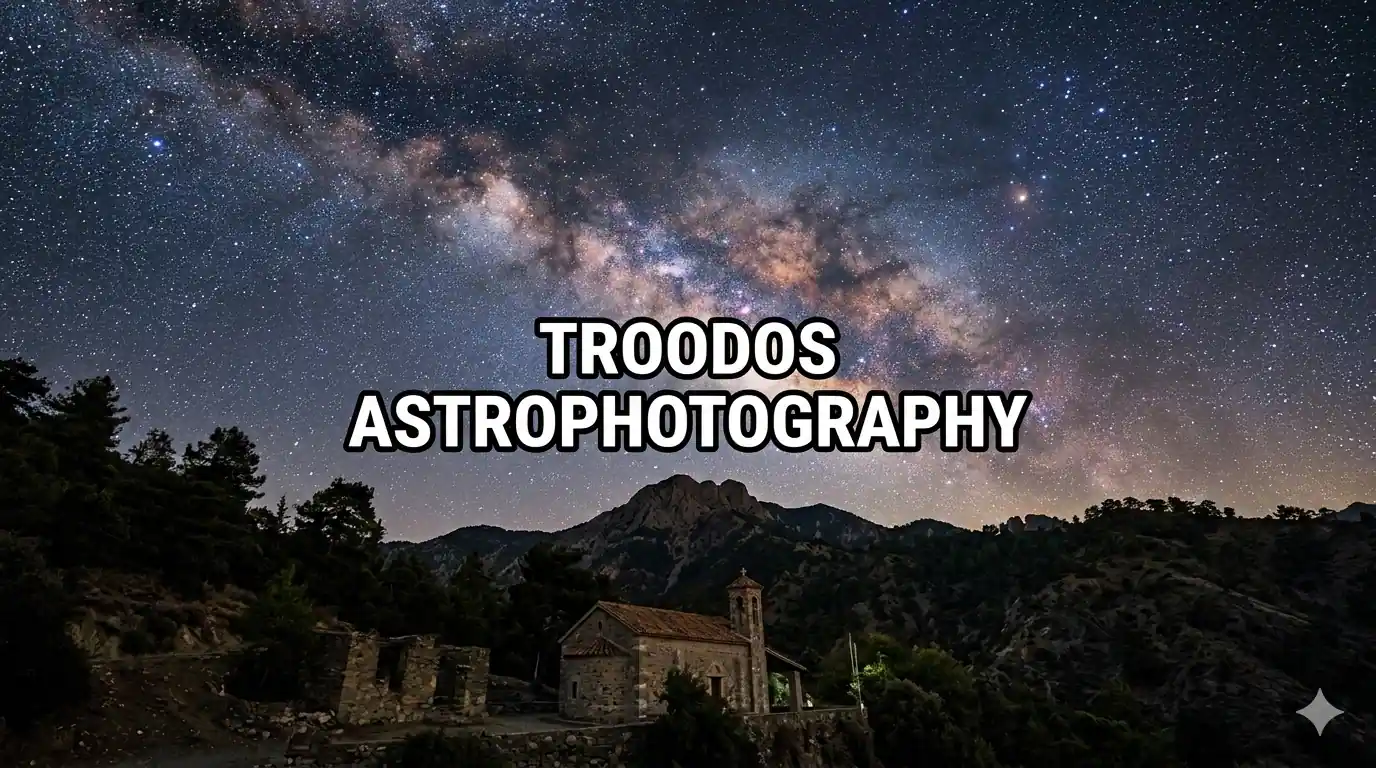
Discovering Troodos Mountains for Astrophotography Excellence
The Troodos Mountains represent Cyprus's premier destination for astrophotography, offering some of the darkest skies in the Eastern Mediterranean region. Rising to 1,952 meters at Mount Olympus, these peaks provide exceptional altitude and minimal light pollution for capturing stunning celestial images .
Astrophotographers from across Europe and beyond journey to Troodos seeking pristine night skies unobstructed by urban light pollution. The mountain range's elevation places observers above much of the atmospheric haze that plagues coastal areas .
The region's unique geographical position at 35 degrees north latitude offers spectacular views of both northern and southern celestial hemispheres. This positioning allows photographers to capture constellations and deep-sky objects invisible from more northern locations .
Troodos Mountains maintain several designated dark sky areas where artificial lighting is strictly controlled. These zones provide optimal conditions for long-exposure photography, meteor shower observation, and Milky Way imaging .
Beyond exceptional darkness, Troodos offers dramatic foreground elements including Byzantine churches, ancient villages, pine forests, and rugged mountain peaks. These terrestrial features create compelling compositions when combined with celestial subjects .
Why Troodos Peaks Offer World-Class Dark Sky Conditions

Troodos Mountains benefit from multiple factors creating exceptional astrophotography conditions. The combination of high altitude, geographical isolation, and environmental protections produces some of Europe's finest dark skies.
Light pollution levels in central Troodos measure Bortle Class 3-4, representing truly dark skies where the Milky Way casts visible shadows. This classification indicates minimal artificial light interference .
The mountain range's position away from major population centers proves crucial. Nicosia, Limassol, and Larnaca all lie at sufficient distances that their light domes do not significantly impact central Troodos darkness.
Atmospheric clarity in Troodos exceeds coastal areas due to reduced humidity and pollution. The elevation places observers above temperature inversions that often degrade seeing conditions at lower altitudes .
Cyprus's position in the Mediterranean provides stable atmospheric conditions for much of the year. Summer months offer particularly steady air, essential for sharp star images and successful deep-sky imaging.
What Makes Troodos Ideal for Night Sky Photography
Altitude represents the primary advantage for Troodos astrophotography. At 1,952 meters, Mount Olympus stands above 60 percent of Earth's atmosphere, reducing atmospheric distortion and light absorption .
The mountain range's geology creates numerous elevated plateaus and clearings perfect for setting up equipment. These natural platforms provide stable ground and unobstructed horizon views in multiple directions.
Troodos benefits from Cyprus's commitment to environmental preservation. The Troodos Geopark designation includes protections for dark skies alongside geological and ecological conservation efforts.
Accessibility distinguishes Troodos from many world-class dark sky locations. Paved roads reach the highest peaks, allowing photographers to transport heavy equipment without challenging off-road driving.
Best Astrophotography Locations in Troodos Mountains

Troodos Mountains offer numerous exceptional locations for capturing the night sky. Each site presents unique advantages depending on your photographic goals, equipment, and experience level.
Mount Olympus Peak
Mount Olympus, also known as Chionistra, stands as Cyprus's highest point at 1,952 meters. The summit area provides 360-degree horizon views essential for comprehensive astrophotography .
The British Forces radar station near the summit creates some light pollution to the north, but southern and eastern views remain exceptionally dark. Position yourself on the mountain's southern slopes for optimal darkness.
Winter access to Olympus requires caution as snow and ice can make roads hazardous. Summer and early autumn offer the most reliable access with clear roads and stable weather conditions.
The summit's elevation provides exceptional atmospheric clarity but also exposes photographers to wind. Bring sturdy tripods and wind protection for your equipment to ensure sharp images.
Prodromos Village and Surrounding Areas
Prodromos, Cyprus's highest village at 1,380 meters, serves as an excellent base for Troodos astrophotography. The village itself has minimal lighting, and surrounding areas offer darker skies .
Ancient stone buildings and traditional architecture provide compelling foreground elements for night sky compositions. The village's Byzantine church creates particularly photogenic subjects under starry skies.
Several clearings and agricultural terraces around Prodromos offer flat, stable ground for equipment setup. These locations combine accessibility with darkness suitable for serious astrophotography.
The village maintains basic amenities including accommodations, restaurants, and fuel stations. This infrastructure proves valuable for multi-night astrophotography expeditions requiring rest and resupply.
Platres Forest Clearings
The forests surrounding Platres village contain numerous clearings ideal for astrophotography. Pine forests frame compositions beautifully while providing wind protection for equipment .
Caledonia Waterfalls area offers dramatic foreground possibilities combined with dark skies. The waterfall's white water creates interesting long-exposure opportunities alongside star photography.
Forest Service maintains several picnic areas that double as excellent astrophotography locations. These sites typically feature level ground, parking access, and minimal artificial lighting.
The dense pine forests create naturally dark environments even near populated areas. Tree cover helps block distant light pollution while framing Milky Way compositions with terrestrial elements.
Kakopetria Old Town
Kakopetria's well-preserved old town combines historical architecture with surprisingly dark skies. The traditional stone houses and narrow streets create unique astrophotography opportunities .
The village sits at 900 meters elevation, lower than central Troodos but still offering good darkness levels. Position yourself away from the main square's lighting for optimal results.
Kakopetria provides excellent foreground variety including Byzantine churches, traditional architecture, and mountain landscapes. This diversity supports creative composition development.
The village's popularity means amenities abound, but also requires careful location selection to avoid tourist lighting. Scout locations during daylight to identify optimal nighttime shooting positions.
Troodos Square and Surrounding Plateaus
Troodos Square, the mountain resort area near Mount Olympus, offers convenient access to dark skies. Several plateaus around the square provide unobstructed views in multiple directions.
The area's elevation exceeds 1,800 meters, placing observers above much atmospheric interference. This altitude proves particularly beneficial during summer months when coastal humidity rises.
Parking areas and road pullouts around Troodos Square offer easy equipment access. The convenience allows photographers to maximize imaging time rather than hiking to remote locations.
Winter conditions can be severe at this elevation, with temperatures dropping well below freezing. Summer and early autumn provide more comfortable conditions for extended night photography sessions.
Best Times for Astrophotography in Troodos

Timing proves critical for successful Troodos astrophotography. Multiple factors including moon phase, season, weather, and celestial events determine optimal shooting windows.
Seasonal Considerations
Summer months from June through August offer the most reliable weather for Troodos astrophotography. Clear skies predominate, and the Milky Way core rises high in the southern sky .
July and August provide warm nighttime temperatures at elevation, making extended imaging sessions comfortable. However, these months also bring occasional thunderstorms that can clear skies dramatically.
Autumn from September through November offers excellent stability and clear skies. The Milky Way remains visible early in the season, while autumn provides opportunities for meteor shower photography.
Winter presents challenges including snow, ice, and extreme cold at higher elevations. However, winter also offers exceptional atmospheric clarity and opportunities to photograph summer constellations rising before dawn.
Spring from March through May brings variable weather but also dramatic skies. Wildflower blooms create beautiful foreground elements, and the galaxy core becomes visible in pre-dawn hours by late spring.
Moon Phase Planning
New moon periods provide the darkest skies essential for Milky Way and deep-sky photography. Plan Troodos astrophotography trips around new moon dates for optimal results .
The week before and after new moon offers acceptable darkness for most astrophotography. Moonrise and moonset times during these periods allow several hours of moonless darkness.
Full moon periods prove useful for landscape astrophotography where foreground illumination matters. The bright moonlight creates dramatic scenes but overwhelms faint celestial objects.
Quarter moon phases offer compromise conditions with some foreground illumination and partial darkness for brighter stars and constellations. These phases work well for wide-field Milky Way compositions.
Daily Timing and Celestial Events
Astronomical twilight ends approximately 90 minutes after sunset, marking the beginning of true darkness. Plan to arrive at your location before twilight ends to set up equipment in remaining light.
The Milky Way core rises in the southeast during spring and summer, reaching optimal position around midnight in July. Plan compositions knowing the galaxy's position throughout the night.
Meteor showers provide spectacular astrophotography opportunities. The Perseids in August and Geminids in December offer reliable meteor rates visible from Troodos dark skies.
Planetary conjunctions, lunar eclipses, and other celestial events create unique imaging opportunities. Check astronomical calendars when planning Troodos astrophotography expeditions.
Equipment Recommendations for Troodos Astrophotography

Successful astrophotography in Troodos requires appropriate equipment matched to your imaging goals. The mountain environment presents specific challenges demanding careful gear selection.
Camera Bodies and Lenses
Full-frame cameras provide superior low-light performance essential for astrophotography. Models from Sony, Nikon, Canon, and other manufacturers offer excellent high ISO capabilities .
Fast wide-angle lenses with focal lengths between 14mm and 24mm prove ideal for Milky Way photography. Apertures of f/2.8 or faster allow maximum light gathering in dark conditions.
Telephoto lenses between 70mm and 200mm enable detailed constellation imaging and narrow-field Milky Way compositions. These lenses also capture moon and planetary details effectively.
Bring multiple camera bodies if possible to avoid lens changes in darkness. Dust and moisture can enter sensors during nighttime lens swaps in mountain environments.
Tripods and Mounts
Sturdy tripods rated for your equipment weight prove essential in Troodos's often windy conditions. Carbon fiber models offer stability while remaining portable for mountain hiking .
Star trackers enable long-exposure deep-sky imaging by compensating for Earth's rotation. Portable trackers like Sky-Watcher Star Adventurer suit Troodos astrophotography well.
Equatorial mounts provide superior tracking for serious deep-sky imaging but require polar alignment and stable setup. The time investment pays dividends in image quality.
Bring tripod weights or hanging systems to stabilize gear in wind. Even sturdy tripods benefit from additional stability in mountain environments.
Accessories and Support Gear
Red headlamps preserve night vision while allowing equipment operation. Choose models with adjustable brightness and red-only LED options .
Extra batteries prove essential as cold mountain temperatures drain power rapidly. Keep spare batteries warm in interior pockets and rotate them regularly.
Memory cards with high capacity and fast write speeds support extended imaging sessions. Bring multiple cards to avoid running out of storage during critical moments.
Intervalometers enable precise control over exposure sequences and time-lapse photography. Many modern cameras include this function internally, but external controllers offer greater flexibility.
Protection and Comfort Items
Dew prevention systems including dew heaters and shields protect optics from moisture condensation. Troodos's elevation and temperature swings create dew challenges even in dry seasons.
Weather protection for equipment proves crucial as mountain weather changes rapidly. Rain covers and protective cases shield gear from unexpected precipitation.
Warm clothing layers enable comfort during long nighttime sessions. Temperatures drop significantly at elevation even in summer, requiring insulation beyond daytime needs.
Portable power banks keep devices charged during extended sessions. Solar chargers work well during daytime if camping for multiple nights.
Technical Astrophotography Tips for Troodos Conditions

Troodos's unique mountain environment demands specific techniques for optimal astrophotography results. Understanding these conditions improves image quality and shooting efficiency.
Exposure Settings and Techniques
The 500 rule helps determine maximum exposure before star trailing becomes visible. Divide 500 by your lens focal length to find the longest exposure in seconds .
For Milky Way photography, start with ISO 3200, widest aperture, and 15-20 second exposures. Adjust based on your specific camera's noise performance and sky darkness.
Take test shots and review histograms to ensure proper exposure. The histogram should show data extending into the right third without clipping important highlights.
Shoot in RAW format to maximize post-processing flexibility. RAW files retain significantly more data than JPEG, crucial for extracting faint celestial details.
Focusing in Darkness
Manual focus proves essential for astrophotography as autofocus fails in darkness. Use live view zoomed to maximum magnification on a bright star for precise focusing .
Mark your lens's infinity focus position with tape after achieving sharp focus. This allows quick return to focus if accidentally moved during the night.
Bahtinov masks simplify focusing by creating diffraction spikes that indicate perfect focus alignment. These inexpensive tools prove invaluable for critical focus in darkness.
Refocus periodically as temperature changes shift lens elements. Mountain temperature swings of 10-15 degrees Celsius can affect focus accuracy significantly.
Image Stacking and Calibration
Multiple exposures stacked together improve signal-to-noise ratio dramatically. Capture 20-50 identical exposures for stacking in post-processing software .
Dark frames matching your light frame exposure time and temperature reduce thermal noise. Capture these with the lens capped at session's end while equipment maintains temperature.
Flat frames correct for vignetting and dust spots on the sensor. Capture these at session's start or end using an evenly illuminated surface like a twilight sky or light panel.
Bias frames capture the camera's electronic noise floor. Take these with the fastest shutter speed possible and lens capped.
Dealing with Mountain Conditions
Wind represents the primary challenge for Troodos astrophotography. Position equipment behind natural windbreaks when possible and use weights for stability .
Temperature management prevents condensation and equipment malfunction. Allow gear to acclimate gradually to temperature changes and use dew prevention proactively.
Battery life decreases dramatically in cold conditions. Keep spare batteries warm and rotate them frequently to maintain power throughout the night.
Moisture protection proves crucial even in dry seasons. Mountain weather changes rapidly, and unexpected fog or dew can damage equipment without proper protection.
How to Reach Troodos Astrophotography Locations

Accessing Troodos's dark sky locations requires navigation through mountain roads from Cyprus's coastal cities. Understanding routes and conditions ensures safe arrival at photography destinations.
Driving from Major Cities
From Limassol, follow signs to Troodos via the B8 and F960 roads. The 45-kilometer journey takes approximately 60 minutes, ascending from sea level to mountain elevations .
From Nicosia, take the A9 highway toward Troodos, then follow the F960 to Mount Olympus area. This 70-kilometer route requires about 75 minutes of driving through mountain terrain.
From Paphos, drive via the B7 and F960 roads through scenic mountain villages. The 65-kilometer journey takes approximately 70 minutes with spectacular views along the way.
From Larnaca, route through Limassol adds distance but provides the most straightforward navigation. Total distance reaches 90 kilometers requiring approximately 90 minutes of travel time.
Road Conditions and Considerations
Troodos mountain roads are paved and well-maintained but feature numerous curves and elevation changes. Drive cautiously, especially at night when wildlife may cross roads .
Winter conditions from December through March can include snow and ice at higher elevations. Carry tire chains and check road conditions before traveling to Mount Olympus area.
Gas stations become scarce in mountain areas. Fill your tank in coastal cities or larger villages like Platres before ascending to remote astrophotography locations.
GPS navigation works well in Troodos but download offline maps as backup. Mobile coverage can be spotty in remote mountain areas despite generally good connectivity.
Parking and Access
Most Troodos astrophotography locations offer roadside parking or designated areas. Arrive during daylight to scout parking options and identify the best setup locations .
Some forest clearings and picnic areas close at night or have gates. Verify access hours with Cyprus Forestry Department if planning to use these facilities after dark.
Respect private property and agricultural land when selecting shooting locations. Many mountain areas consist of private orchards and fields requiring permission for access.
Leave no trace when using remote locations. Pack out all trash and minimize impact on natural areas to preserve dark sky access for future photographers.
Safety Considerations for Night Photography in Troodos

Troodos Mountains present specific safety challenges for astrophotographers working in darkness at elevation. Proper preparation and awareness ensure safe and enjoyable imaging experiences.
Weather and Environmental Hazards
Mountain weather changes rapidly even on clear nights. Monitor forecasts carefully and be prepared to abandon shoots if conditions deteriorate unexpectedly .
Temperatures at elevation can drop below freezing even in summer. Bring adequate insulation and watch for signs of hypothermia during extended nighttime sessions.
Wildlife including wild boar and stray dogs inhabit Troodos forests. Make noise when moving in darkness and carry deterrents if concerned about animal encounters.
Steep terrain and loose rocks create fall hazards when moving in darkness. Use headlamps when hiking and stay on established paths whenever possible.
Personal Safety and Security
Inform someone of your shooting location and expected return time. Mountain areas can be isolated, and having someone aware of your plans provides crucial safety backup.
Carry a fully charged mobile phone and portable power bank. Emergency services can be reached at 112 throughout Cyprus, though response times may be slow in remote areas.
Bring adequate water and snacks for extended sessions. Dehydration and low blood sugar impair judgment and physical performance even in cool mountain conditions.
First aid kit should include supplies for treating minor injuries and any personal medications. Mountain locations may be far from medical facilities if emergencies occur.
Equipment Security
Never leave equipment unattended even in remote locations. Theft remains rare in Troodos but opportunistic crime can occur anywhere valuable gear is visible.
Use equipment insurance covering theft and damage for expensive cameras and lenses. Standard travel insurance often excludes professional photography equipment.
Keep vehicle locked and valuables out of sight when shooting away from your car. Break-ins targeting tourists occur occasionally in popular mountain areas.
Backup images regularly to cloud storage or external drives. Equipment failure or loss should not mean losing irreplaceable astrophotography captures.
Light Pollution Information and Dark Sky Preservation

Understanding light pollution levels and contributing to dark sky preservation ensures Troodos remains viable for astrophotography for generations to come.
Current Light Pollution Status
Troodos Mountains maintain Bortle Class 3-4 skies in central areas, representing genuinely dark conditions. The Milky Way appears prominently with thousands of stars visible to naked eye .
Light domes from Nicosia, Limassol, and Larnaca remain visible on horizons but do not significantly impact zenith darkness in central Troodos. Southern skies remain exceptionally dark.
Village lighting in mountain communities creates localized light pollution but remains limited in scope. Positioning yourself even short distances from villages dramatically improves darkness.
The British Forces base near Mount Olympus creates northern light pollution but leaves other directions dark. Plan compositions to exclude this direction or use it creatively.
Dark Sky Preservation Efforts
Cyprus has not yet established official dark sky reserves, but Troodos Geopark includes dark sky protection in conservation goals. Support these efforts through responsible photography practices.
Use red lights only when working at night to minimize impact on other photographers and wildlife. White lights destroy night vision and create light pollution for others.
Report excessive or poorly directed lighting to local authorities. Shielded, downward-directed lighting serves safety needs without creating skyglow.
Educate other photographers about dark sky preservation. Growing astrophotography popularity brings more visitors to Troodos, requiring collective responsibility for protection.
Responsible Astrophotography Practices
Minimize artificial lighting at shooting locations. Use headlamps with red filters and dim settings, turning lights off when not actively needed.
Respect other photographers by maintaining distance and avoiding light contamination of their compositions. Communicate about shooting plans when working in proximity.
Follow Leave No Trace principles in all outdoor locations. Preserve natural darkness and environmental quality for future astrophotographers and wildlife.
Support local businesses and communities that maintain dark skies. Economic benefits from astrophotography tourism provide incentives for light pollution control.
Post-Processing Troodos Astrophotography Images

Capturing images in Troodos represents only half the astrophotography process. Proper post-processing extracts maximum quality from your nighttime captures.
Software and Workflow
Specialized astrophotography software including PixInsight, DeepSkyStacker, and AstroPixelProcessor excel at stacking and calibrating deep-sky images. These programs handle the technical aspects of combining multiple exposures.
General photo editors like Adobe Lightroom and Photoshop work well for Milky Way and nightscape processing. These tools provide intuitive controls for enhancing night sky images.
Start processing by calibrating and stacking your light frames with darks, flats, and biases. This technical step removes noise and optical imperfections before creative editing begins.
Apply stretching to reveal faint details hidden in raw data. Histogram stretching, curves adjustments, and specialized tools like Arcsinh Stretch bring out celestial structures.
Troodos-Specific Processing Considerations
High-altitude images often require less atmospheric correction than sea-level captures. The reduced atmosphere at Troodos elevations means less light pollution gradient to remove.
Color balance proves crucial for natural-looking Milky Way images. The galaxy's core shows warm tones while outer regions appear cooler. Preserve these natural color variations.
Noise reduction requires balance between smoothing and detail preservation. Troodos dark skies allow lower ISO settings reducing noise, but some reduction remains necessary.
Foreground and sky often require separate processing then blending. The exposure difference between terrestrial elements and celestial objects demands careful masking and adjustment.
Planning Your Troodos Astrophotography Expedition

Successful Troodos astrophotography requires advance planning coordinating weather, moon phases, equipment, and logistics. Systematic preparation maximizes your imaging success.
Pre-Trip Preparation
Check weather forecasts from multiple sources including Cyprus Meteorological Service and specialized astronomy weather sites. Clear skies prove essential for productive astrophotography sessions.
Verify moon phase and rise/set times for your planned dates. New moon periods offer darkest skies while quarter moons provide some foreground illumination.
Scout locations using tools like PhotoPills, PlanIt Pro, or Stellarium to visualize Milky Way position and timing. Knowing where the galaxy will appear helps compose shots in advance.
Prepare equipment checklist including cameras, lenses, tripods, batteries, memory cards, and accessories. Test all gear before departure to identify and resolve issues at home rather than in the mountains.
On-Site Strategy
Arrive at locations before astronomical twilight ends to set up in remaining light. Rushing setup in complete darkness increases errors and frustration.
Compose shots during twilight or using daylight scouting. Trying to compose in complete darkness wastes valuable imaging time and often produces poor results.
Monitor changing conditions throughout the night. Cloud movement, wind shifts, and temperature changes may require adjusting plans or locations.
Balance imaging time with rest and safety. Exhaustion leads to mistakes and accidents. Schedule breaks and know when to end sessions for the night.
Multi-Night Expeditions
Plan multi-night trips to maximize opportunities and capture different targets. Weather variability makes single-night expeditions risky for dedicated astrophotographers.
Base yourself in villages like Prodromos or Platres for multi-night stays. These locations provide accommodations, meals, and services while maintaining dark sky access.
Vary your targets and techniques across multiple nights. Dedicate different sessions to Milky Way, star trails, time-lapses, and deep-sky objects for comprehensive portfolio development.
Review images each evening to identify improvements for following nights. Learning from each session accelerates skill development and image quality.
Troodos Mountains offer exceptional astrophotography opportunities combining dark skies, dramatic landscapes, and accessibility. Whether capturing the Milky Way over Byzantine churches or imaging deep-sky objects from Mount Olympus, these peaks provide world-class conditions for night sky photography. Proper planning, appropriate equipment, and respect for the mountain environment ensure successful and safe astrophotography expeditions in one of the Mediterranean's finest dark sky destinations.
0 Comments