.webp)
.webp)
Why Saudi Arabia is the #1 Fastest-Growing Tourist Destination of 2026.
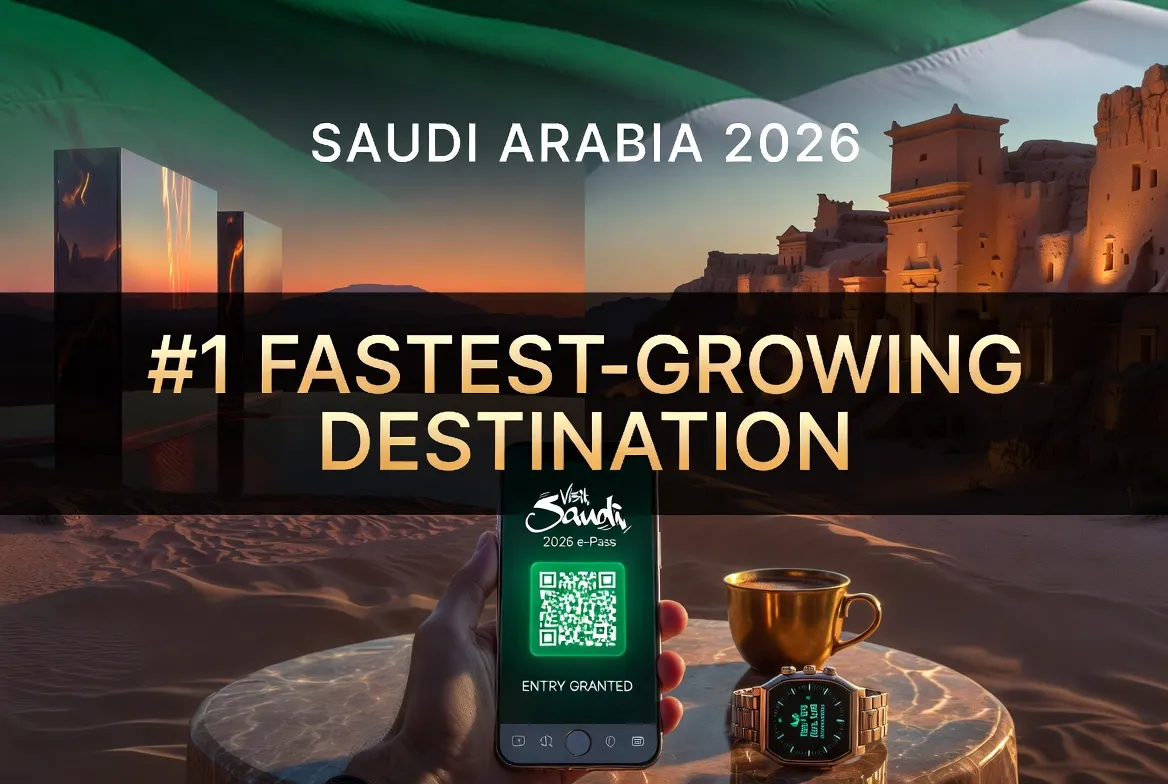
Saudi Arabia's Tourism Revolution: The Numbers Behind the #1 Ranking
Saudi Arabia has officially claimed the position as the world's fastest-growing tourist destination for 2026, marking an unprecedented transformation that positions the Kingdom at the forefront of global tourism expansion. This remarkable achievement, validated by data from the World Tourism Organization (UNWTO), World Travel and Tourism Council (WTTC), and international aviation authorities, represents more than statistical growth—it signals the successful execution of one of the world's most ambitious tourism development programs and the opening of a nation that was virtually closed to leisure tourism just a few years ago.
The numbers behind Saudi Arabia's #1 ranking are nothing short of extraordinary. In 2025, the Kingdom welcomed over 18.5 million international visitors, representing a staggering 78% increase compared to 2023 and exceeding pre-pandemic levels by over 120%. More significantly, projections for 2026 indicate international arrivals will surpass 25 million visitors, potentially reaching 28 million when including religious pilgrims, which would represent year-over-year growth rates exceeding 45%—the highest among all major global destinations. This growth trajectory dwarfs expansion rates in established destinations like France, Spain, Thailand, and even regional competitors like the UAE.
The Kingdom's tourism revenue tells an equally impressive story. In 2025, international tourism expenditure in Saudi Arabia exceeded $28 billion, with projections for 2026 suggesting revenues could reach $38-42 billion. This represents not just increased visitor numbers but higher per-capita spending, with average tourist expenditure in Saudi Arabia now exceeding $1,500 per visit—competitive with premium destinations globally. The tourism sector's contribution to GDP has grown from 3% in 2019 to over 6% in 2025, with Vision 2030 targets aiming for 10% contribution by 2030, creating over 1.5 million direct and indirect jobs.
What distinguishes Saudi Arabia's growth from other emerging destinations is the comprehensive nature of the transformation. The Kingdom isn't simply experiencing a post-pandemic rebound or capitalizing on a single attraction—it's systematically developing an entire tourism ecosystem encompassing world-class infrastructure, diverse attractions from ancient archaeological sites to futuristic cities, enhanced accessibility through visa reforms and expanded air connectivity, massive investment in hospitality infrastructure, and a fundamental cultural opening that welcomes international visitors while preserving Islamic heritage and Saudi traditions. This multi-dimensional development, backed by over $800 billion in tourism-related investments announced through 2026, creates sustainable growth potential that extends decades into the future.
Vision 2030: The Blueprint for Tourism Transformation

Saudi Arabia's emergence as the world's fastest-growing tourist destination is not accidental but rather the result of meticulous planning and execution under Crown Prince Mohammed bin Salman's Vision 2030 framework, launched in 2016. This comprehensive economic and social reform program identified tourism as a critical pillar for diversifying the Kingdom's economy away from oil dependence, creating employment opportunities for the young Saudi population, and positioning the nation as a global investment and cultural destination.
The Public Investment Fund (PIF), Saudi Arabia's sovereign wealth fund with over $700 billion in assets, has been instrumental in financing mega-projects that form the backbone of the tourism strategy. Through subsidiaries like the Saudi Arabian Airlines Corporation, Red Sea Global, NEOM, and Qiddiya Investment Company, the PIF has deployed hundreds of billions of dollars into tourism infrastructure, ensuring projects meet international standards while maintaining Saudi ownership and control. This centralized investment approach has enabled rapid development timelines that would be impossible through fragmented private sector investment alone.
The Ministry of Tourism, elevated from a commission to full ministry status in 2020, has implemented comprehensive regulatory reforms that streamline business operations, protect investor rights, and ensure quality standards. The Ministry's "Saudi Arabia Brand" campaign, launched globally in 2023 and expanded significantly in 2025-2026, has fundamentally reshaped international perceptions of the Kingdom, moving beyond stereotypes to showcase cultural richness, natural beauty, and modern ambition. Marketing investments exceeding $1 billion annually have positioned Saudi Arabia competitively against established destinations.
Human capital development represents another critical component of Vision 2030's tourism strategy. The Kingdom has established specialized tourism and hospitality programs at universities, created vocational training centers through the Technical and Vocational Training Corporation, and implemented Saudization policies that ensure Saudi nationals benefit from tourism sector growth. By 2026, over 150,000 Saudis are employed directly in tourism and hospitality roles, with comprehensive training programs ensuring service quality matches international expectations while providing meaningful career opportunities for young Saudis.
The regulatory environment has been transformed to facilitate tourism growth. The Kingdom has introduced comprehensive tourism laws, established consumer protection frameworks, implemented quality certification systems for hotels and tour operators, and created specialized tourism courts to resolve disputes efficiently. These institutional developments provide the legal and regulatory certainty that international investors and visitors require, distinguishing Saudi Arabia from destinations where tourism growth outpaces institutional capacity.
Giga-Projects: NEOM, Red Sea, and Qiddiya Redefining Tourism

Saudi Arabia's giga-projects represent the most visible and ambitious dimension of the Kingdom's tourism transformation, with developments that are literally reshaping the physical landscape and creating attractions without parallel globally. These projects, each valued at tens or hundreds of billions of dollars, are not simply hotels or resorts but entirely new cities and destinations designed from the ground up to showcase Saudi innovation, sustainability, and hospitality.
NEOM, the $500 billion futuristic megacity in northwest Saudi Arabia, stands as the Kingdom's most ambitious project and a centerpiece of its tourism strategy. Spanning 26,500 square kilometers along the Red Sea coast, NEOM encompasses multiple developments including THE LINE, a 170-kilometer linear city with zero cars and zero carbon emissions; Oxagon, a floating industrial city; Trojena, a mountain ski resort destination that will host the 2029 Asian Winter Games; and Sindalah, a luxury island destination that began welcoming visitors in late 2025. By 2026, NEOM's tourism infrastructure includes operational luxury resorts, world-class diving facilities showcasing pristine Red Sea coral reefs, adventure tourism offerings in dramatic desert and mountain landscapes, and glimpses of THE LINE's revolutionary urban design. NEOM represents not just tourism development but a laboratory for sustainable living and cutting-edge technology that attracts visitors interested in experiencing the future.
The Red Sea Project, developed by Red Sea Global, is creating one of the world's most ambitious regenerative tourism destinations along Saudi Arabia's western coast. The project encompasses 90 islands, with 22 designated for development as luxury tourism destinations, along with inland resorts, marinas, and an international airport that opened in 2024. By 2026, the Red Sea Project has opened 16 hotels across multiple islands, offering ultra-luxury accommodations from brands like St. Regis, Ritz-Carlton Reserve, and Six Senses. What distinguishes this project is its commitment to regenerative tourism—rather than simply minimizing environmental impact, the project aims to achieve a 30% net conservation benefit by 2040. This includes protecting coral reefs, establishing marine protected areas covering over 20,000 square kilometers, implementing 100% renewable energy operations, and banning single-use plastics. For environmentally conscious travelers, the Red Sea Project offers world-class diving, snorkeling, and marine wildlife encounters while demonstrating that luxury tourism can enhance rather than degrade natural ecosystems.
Qiddiya, positioned just 40 kilometers from Riyadh, is being developed as the world's largest entertainment, sports, and cultural destination, spanning 336 square kilometers. The project, with total investment exceeding $50 billion, includes Six Flags Qiddiya (which began phased opening in 2025), a Formula 1 racetrack designed to host the Saudi Arabian Grand Prix starting in 2027, water parks, golf courses, e-sports arenas, and cultural venues. By 2026, Qiddiya has established itself as a major regional entertainment destination, attracting visitors particularly from across the Middle East and Asia. The project's "Speed District" featuring the F1 track, "Motion District" with Six Flags and other theme parks, and "Nature District" offering outdoor adventures create diverse attractions that appeal to families, thrill-seekers, and sports enthusiasts. Qiddiya demonstrates Saudi Arabia's commitment to providing world-class entertainment options that complement cultural and natural attractions.
Diriyah Gate, a $63 billion project developing the historic Diriyah area northwest of Riyadh, focuses on cultural tourism and heritage preservation. Diriyah, a UNESCO World Heritage Site and the birthplace of the First Saudi State in 1744, is being restored and developed to accommodate millions of visitors while preserving its historical authenticity. The project includes museums, galleries, hotels in restored Najdi architecture, cultural centers, and dining experiences showcasing Saudi cuisine. By 2026, Diriyah Gate has opened significant portions including the Bujairi Terrace dining district, several boutique hotels, and expanded museum facilities, creating a cultural destination that rivals heritage sites globally while telling the story of Saudi Arabia's origins and evolution.
AlUla: Ancient Heritage Meets Modern Luxury

AlUla represents perhaps Saudi Arabia's most spectacular tourism success story, transforming an remote archaeological region into a world-class cultural destination that rivals Petra, Machu Picchu, and Angkor Wat. Located in northwest Saudi Arabia, AlUla encompasses 22,561 square kilometers of dramatic desert landscapes, ancient archaeological sites dating back thousands of years, and natural wonders that create an unparalleled tourism experience blending history, culture, and natural beauty.
Hegra (Mada'in Saleh), Saudi Arabia's first UNESCO World Heritage Site inscribed in 2008, serves as AlUla's crown jewel. The site features over 110 well-preserved Nabataean tombs carved into sandstone cliffs dating from the 1st century BC to the 1st century AD, showcasing remarkable architectural and artistic achievement. Unlike Petra in Jordan, which receives millions of visitors annually, Hegra remained largely inaccessible to tourists until recently, making it an exclusive destination for discerning travelers. In 2026, Hegra welcomes visitors through carefully managed access that limits daily visitor numbers to preserve the site while providing intimate, crowd-free experiences. Guided tours, available in multiple languages, offer deep insights into Nabataean civilization, trade routes, and the site's historical significance.
Beyond Hegra, AlUla encompasses numerous other archaeological and historical sites including the Old Town dating to the 12th century, Dadan (the ancient capital of the Dadan and Lihyan kingdoms), and thousands of rock art inscriptions and tombs scattered throughout the region. The AlUla Conservation and Development Plan, implemented by the Royal Commission for AlUla (RCU), ensures that development respects archaeological integrity while creating visitor infrastructure including a world-class visitor center, restored heritage sites, and interpretive facilities that make ancient history accessible and engaging.
Natural attractions complement AlUla's cultural heritage. Elephant Rock (Jabal AlFil), a massive sandstone formation resembling an elephant with trunk, has become one of Saudi Arabia's most photographed landmarks. The formation is particularly spectacular at sunset when the rock glows orange and red. AlUla's dramatic landscapes include canyons, oases, volcanic fields (harrat), and desert vistas that provide settings for hot air balloon rides, camel treks, stargazing experiences, and luxury desert camping. The region's clear skies and minimal light pollution make it exceptional for astronomical observation, and several operators offer guided stargazing experiences with professional telescopes.
Luxury hospitality in AlUla has developed rapidly, with properties like Habitas AlUla, Sharaan Resort (designed by Jean Nouvel and carved into rock formations), and Banyan Tree AlUla offering accommodations that blend seamlessly with the natural environment. These properties provide world-class amenities while maintaining low environmental impact and employing local residents. By 2026, AlUla offers over 2,000 hotel rooms across various categories, with plans to reach 9,000 rooms by 2030. The destination attracts culturally curious travelers, luxury seekers, and adventure tourists, with average stays of 3-4 days and high per-capita spending.
AlUla's cultural programming includes the annual AlUla Moments festival series featuring music performances, art installations, culinary experiences, and outdoor cinema. These events attract international artists and audiences, positioning AlUla as a cultural hub beyond its archaeological significance. The destination's success demonstrates Saudi Arabia's ability to develop tourism that respects heritage, engages local communities, and meets international quality standards.
Religious Tourism: Expanding Hajj and Umrah Capacity

Religious tourism has been the foundation of Saudi Arabia's tourism sector for centuries, with millions of Muslims traveling to Makkah and Madinah annually for Hajj and Umrah pilgrimages. Under Vision 2030, the Kingdom has dramatically expanded capacity and improved the pilgrimage experience while maintaining the sanctity of Islam's holiest sites. This expansion contributes significantly to Saudi Arabia's overall tourism growth and positions the Kingdom to accommodate the growing global Muslim population's pilgrimage aspirations.
The Hajj pilgrimage, one of the five pillars of Islam, brings approximately 2.5 million pilgrims to Makkah annually, with Saudi Arabia managing this massive logistical challenge through sophisticated planning, infrastructure investment, and technology deployment. For 2026, the Kingdom has implemented further expansions to the Grand Mosque (Masjid al-Haram) in Makkah, increasing capacity to accommodate over 100,000 worshippers simultaneously. The Mataf area (circumambulation area around the Kaaba) has been expanded, and new air-conditioned walkways, prayer areas, and service facilities improve pilgrim comfort and safety in the challenging desert climate.
Umrah, the lesser pilgrimage that can be performed year-round, has experienced explosive growth under Vision 2030 reforms. The Kingdom has streamlined visa processes, introducing the Umrah e-visa that allows pilgrims from eligible countries to obtain visas within hours rather than weeks. In 2025, over 11 million Umrah visas were issued, and projections for 2026 suggest this could reach 15 million, representing a significant contribution to overall tourism numbers. The Ministry of Hajj and Umrah has implemented digital platforms that allow pilgrims to book services, access guidance, and navigate Makkah and Madinah through smartphone applications available in multiple languages.
Infrastructure supporting religious tourism has expanded dramatically. The Haramain High-Speed Railway, connecting Makkah, Madinah, and Jeddah, transports pilgrims between the holy cities in under two hours, reducing congestion and improving the pilgrimage experience. By 2026, the railway operates at full capacity with trains departing every 15-20 minutes during peak periods. Hotel capacity in Makkah and Madinah has increased substantially, with new properties ranging from budget accommodations to luxury hotels offering views of the holy mosques. The Kingdom has also implemented crowd management technologies including AI-powered monitoring systems, smart barriers, and real-time capacity management to ensure pilgrim safety.
Visa reforms have made religious tourism more accessible. The Kingdom now offers one-year multiple-entry Umrah visas that allow pilgrims to perform Umrah multiple times and visit other Saudi cities for tourism, effectively combining religious and leisure travel. This innovation has proven popular, with many pilgrims extending stays to visit Jeddah's historic Al-Balad district, Riyadh's cultural attractions, or AlUla's archaeological sites. The integration of religious and leisure tourism represents a significant evolution in Saudi Arabia's approach, maximizing the value of each visitor while respecting the primacy of religious obligations.
Visa Reforms and Accessibility: Opening the Kingdom

Saudi Arabia's dramatic tourism growth would be impossible without comprehensive visa reforms and accessibility improvements that have transformed the Kingdom from one of the world's most closed destinations to one of the most accessible in the Middle East. These reforms, implemented progressively since 2019 and expanded significantly in 2025-2026, remove bureaucratic barriers and signal the Kingdom's genuine welcome to international visitors.
The introduction of the tourist visa in September 2019 marked a historic opening, allowing citizens from 63 eligible countries to visit Saudi Arabia for leisure, family visits, and Umrah (outside Hajj season). The e-visa system, accessible through a user-friendly online portal, processes applications within minutes to 72 hours, with visas valid for one year, multiple entries, and stays up to 90 days per visit. The visa fee of approximately $120 includes mandatory health insurance, simplifying the application process. In 2025, Saudi Arabia expanded the eligible countries list to 72 nations and introduced visa-on-arrival facilities at major airports for citizens of additional countries, further reducing barriers to entry.
For 2026, the Kingdom has implemented additional visa innovations including the "Sharek" visa allowing visitors to attend events and conferences, extended validity periods for frequent travelers, and streamlined family visit visa processes. The Ministry of Tourism has also introduced a digital visa assistance service providing support in multiple languages, ensuring applicants from diverse backgrounds can navigate the process successfully. Visa approval rates for tourism visas exceed 95%, and the application process has been optimized to require minimal documentation—typically just a valid passport, photograph, and payment.
Air connectivity has expanded dramatically to support tourism growth. Saudia, the national carrier, has increased international routes from 95 in 2019 to over 130 in 2026, with new destinations across Europe, Asia, Africa, and the Americas. The airline's fleet has grown to over 150 aircraft, with orders for wide-body jets to support long-haul expansion. Riyadh's King Khalid International Airport and Jeddah's King Abdulaziz International Airport have undergone massive expansions, with new terminals increasing combined capacity to over 80 million passengers annually. Dammam, Madinah, and regional airports have also been upgraded to handle increased traffic.
New airlines have entered the Saudi market, increasing competition and connectivity. Flynas and flyadeal, low-cost carriers, have expanded domestic and regional networks, making travel within Saudi Arabia and to neighboring countries more affordable. International carriers including Emirates, Qatar Airways, Etihad, Turkish Airlines, and European and Asian airlines have increased frequencies to Saudi cities, recognizing the market's growth potential. By 2026, over 70 international airlines serve Saudi Arabia, providing direct connections to major cities globally.
Domestic connectivity has improved through expanded flight networks, modernized airports, and enhanced ground transportation. Saudi Arabia's vast geography makes internal travel essential for tourists wanting to experience multiple destinations. Domestic airlines operate frequent flights between Riyadh, Jeddah, Dammam, Madinah, AlUla, and emerging destinations, with flight times typically under two hours. The railway network, including the Haramain High-Speed Railway and the North-South Railway, provides alternative transportation options, though air travel remains dominant for long distances.
Cultural Opening and Entertainment: A New Saudi Arabia

Beyond infrastructure and visa reforms, Saudi Arabia's tourism growth reflects a profound cultural transformation that has opened the Kingdom to entertainment, arts, and social activities that were unimaginable just a few years ago. This cultural opening, carefully managed to balance modernization with Islamic values and Saudi traditions, has created a vibrant social scene that attracts visitors and improves quality of life for residents.
The entertainment sector has exploded since the establishment of the General Entertainment Authority (GEA) in 2016. In 2025, Saudi Arabia hosted over 12,000 entertainment events attracting more than 100 million attendees, with projections for 2026 suggesting further growth. These events include international music concerts featuring global superstars, comedy shows, theatrical performances, sporting events, cultural festivals, and family entertainment. Riyadh Season, launched in 2019 and expanded annually, has become one of the world's largest entertainment festivals, running for several months and featuring hundreds of events across multiple zones. The 2025-2026 edition attracted over 15 million visitors, with international performers, world-class dining, shopping experiences, and family attractions.
Music and arts have flourished in Saudi Arabia. The Kingdom now hosts regular concerts by international artists across genres including pop, rock, hip-hop, and electronic music. The MDLBEAST Soundstorm festival, launched in 2019, has become one of the Middle East's largest music festivals, attracting over 700,000 attendees in 2025 with performances by international DJs and artists. Cultural venues including the King Abdulaziz Center for World Culture (Ithra) in Dhahran, the King Fahd Cultural Center in Riyadh, and Jeddah's Al-Balad district host art exhibitions, film screenings, literary events, and cultural programs that enrich the Kingdom's cultural landscape.
Cinema, banned for 35 years until 2018, has experienced remarkable growth. By 2026, Saudi Arabia has over 500 cinema screens across 30+ locations, with major operators including VOX Cinemas, Muvi Cinemas, and AMC Theatres. The Kingdom has also begun developing its own film industry through the Saudi Film Commission, offering incentives for international productions and supporting Saudi filmmakers. The Red Sea International Film Festival, launched in 2021 and held annually in Jeddah, has established itself as a significant regional film event, attracting international filmmakers, actors, and cinema enthusiasts.
Social reforms have improved the visitor experience for international tourists, particularly women. The relaxation of guardianship laws, permission for women to drive (implemented in 2018), and reduced enforcement of dress codes for foreign visitors have made Saudi Arabia more accessible and comfortable for international travelers. While visitors are still expected to dress modestly, women are no longer required to wear abayas (though it remains recommended), and gender mixing in public spaces is increasingly accepted. These changes, while sometimes controversial domestically, signal Saudi Arabia's evolution toward a more open society that welcomes diverse visitors.
Investment and Economic Impact: Tourism as Economic Engine

Saudi Arabia's tourism transformation is underpinned by massive investment that demonstrates the Kingdom's serious commitment to establishing tourism as a major economic sector. This investment, flowing from government sources, the Public Investment Fund, and increasingly from private sector and international investors, is creating infrastructure, attractions, and services that will generate economic returns for decades.
Total tourism-related investment announced through 2026 exceeds $800 billion, making Saudi Arabia one of the world's largest tourism investors. This includes $500 billion for NEOM, $63 billion for Diriyah Gate, $50 billion for Qiddiya, $20+ billion for the Red Sea Project, and billions more for hotel development, airport expansion, road infrastructure, and cultural facilities. The scale of this investment dwarfs tourism development in most countries and ensures that Saudi Arabia will have the infrastructure and attractions necessary to sustain long-term growth.
The economic impact of tourism growth extends far beyond direct tourism revenue. The sector creates employment across diverse fields including hospitality, transportation, retail, construction, entertainment, and professional services. By 2026, the tourism sector employs over 1.2 million people directly and supports an estimated 2.5 million jobs indirectly, providing opportunities particularly for young Saudis entering the workforce. The Saudization program ensures that Saudi nationals benefit from this employment growth, with targets requiring increasing percentages of Saudi employees in tourism and hospitality roles.
Tourism development is also stimulating growth in related sectors including construction, real estate, food and beverage, retail, and technology. The construction boom required to build hotels, resorts, airports, roads, and attractions has created sustained demand for construction workers, engineers, architects, and materials suppliers. Real estate values in tourism areas have increased, benefiting property owners and developers. The food and beverage sector has expanded dramatically, with international restaurant chains, local eateries, and fine dining establishments opening to serve growing visitor numbers.
The multiplier effect of tourism investment extends to small and medium enterprises (SMEs) that provide goods and services to the tourism sector. The Kingdom has implemented programs to support Saudi entrepreneurs in tourism-related businesses including tour operations, handicrafts, tour guiding, and hospitality services. Access to financing, training, and mentorship helps these businesses succeed while ensuring that tourism growth benefits Saudi business owners rather than only international corporations.
Practical Travel Information for 2026

For travelers planning to visit Saudi Arabia in 2026 to experience this rapidly evolving destination, understanding practical logistics ensures smooth, enjoyable trips that maximize the opportunities this opening Kingdom provides.
Visa Requirements: Citizens of 72 countries are eligible for e-visa or visa-on-arrival, with applications processed online through the official visa portal. The tourist visa costs approximately $120 including health insurance, is valid for one year with multiple entries, and allows stays up to 90 days per visit. Processing typically takes 24-72 hours. Pilgrims performing Hajj or Umrah require specific pilgrimage visas with different requirements. Travelers should apply for visas well in advance of planned travel dates and ensure passports have at least six months validity.
Best Time to Visit: Saudi Arabia's climate varies significantly by region and season. The optimal visiting period is November through March, when temperatures are mild and pleasant, ranging from 15-28°C (59-82°F) depending on location. This period coincides with major events including Riyadh Season, AlUla Moments, and cultural festivals. April through October brings extreme heat, particularly in central and eastern regions where temperatures regularly exceed 40°C (104°F). However, summer travel offers advantages including lower hotel rates, fewer crowds, and access to air-conditioned indoor attractions. The mountainous Asir region in the southwest remains cooler year-round and experiences a monsoon season (July-September) that creates lush green landscapes unique in the Arabian Peninsula.
Currency and Costs: The Saudi Riyal (SAR) is pegged to the US dollar at 3.75 SAR to 1 USD. Credit and debit cards are widely accepted in urban areas, hotels, restaurants, and retail establishments, though carrying some cash is advisable for traditional markets and smaller vendors. ATMs are readily available throughout the country. Saudi Arabia offers good value compared to other Gulf destinations—hotel rates, dining, and attractions are generally less expensive than Dubai or Abu Dhabi while offering comparable quality. Budget travelers can manage on $75-100 per day, mid-range travelers might spend $150-250 daily, and luxury travelers can expect to spend $400+ per day.
Cultural Considerations: While Saudi Arabia has opened significantly, visitors should respect local customs and Islamic traditions. Dress modestly—women should cover shoulders and knees (abayas are recommended but not mandatory for foreign women), and men should avoid wearing shorts in public areas. During Ramadan, eating, drinking, and smoking in public during daylight hours is prohibited by law. Public displays of affection should be minimal. Photography of government buildings, military installations, and local people (particularly women) should only be done with permission. Alcohol is prohibited throughout the Kingdom. These considerations reflect Saudi values and Islamic law, and respecting them ensures positive interactions with local residents.
Transportation: Getting around Saudi Arabia requires planning given the Kingdom's vast size. Domestic flights connect major cities efficiently, with multiple daily flights between Riyadh, Jeddah, Dammam, Madinah, and emerging destinations. Ride-hailing apps including Uber and local service Careem operate in major cities. Car rentals are available for those preferring independence, though driving in Saudi cities can be challenging for visitors unfamiliar with local traffic patterns. The railway network provides comfortable connections between Makkah, Madinah, and Jeddah. For tourism destinations like AlUla, NEOM, and the Red Sea Project, organized tours or private transfers are often the most convenient option.
Conclusion: Saudi Arabia's Historic Moment

Saudi Arabia's designation as the world's fastest-growing tourist destination for 2026 represents a historic achievement that validates the Kingdom's ambitious Vision 2030 strategy and demonstrates that rapid, sustainable tourism development is possible with clear vision, substantial investment, and committed execution. The numbers—18.5 million visitors in 2025 growing to projected 25+ million in 2026, $28 billion in tourism revenue growing to $38-42 billion, $800 billion in tourism investment—are impressive statistics, but they represent something far more significant: the opening of a nation, the creation of opportunities, and the sharing of Saudi Arabia's rich heritage, stunning landscapes, and warm hospitality with the world.
For international travelers, 2026 presents an exceptional opportunity to discover Saudi Arabia at a pivotal moment when the Kingdom offers world-class infrastructure and attractions while retaining authenticity and the excitement of discovery. From the ancient archaeological wonders of AlUla to the futuristic ambition of NEOM, from the spiritual significance of Makkah and Madinah to the entertainment energy of Riyadh and Jeddah, from pristine Red Sea diving to dramatic desert landscapes, Saudi Arabia offers diversity and depth that reward extended exploration.
The Kingdom's tourism transformation is not without challenges—managing rapid growth, ensuring sustainability, balancing modernization with tradition, and maintaining service quality as visitor numbers expand all require ongoing attention and investment. However, Saudi Arabia's approach demonstrates awareness of these challenges and commitment to addressing them through planning, regulation, and investment in human capital.
For the global tourism industry, Saudi Arabia's emergence as the fastest-growing destination signals a shift in regional dynamics and creates both competition and collaboration opportunities with established destinations. The Kingdom's success demonstrates that tourism development can be a powerful tool for economic diversification, job creation, and cultural exchange when backed by political will and financial resources.
As you consider your 2026 travel plans, Saudi Arabia deserves serious consideration not as an exotic alternative but as a premier destination offering experiences unavailable elsewhere. The Kingdom extends a genuine welcome to international visitors, inviting you to witness a nation in transformation, to explore ancient heritage and futuristic innovation, to experience renowned Saudi hospitality, and to discover why Saudi Arabia is rightfully recognized as the world's fastest-growing tourist destination. In 2026, that growth is not just statistical—it's experiential, and it awaits your discovery.
0 Comments