.webp)
.webp)
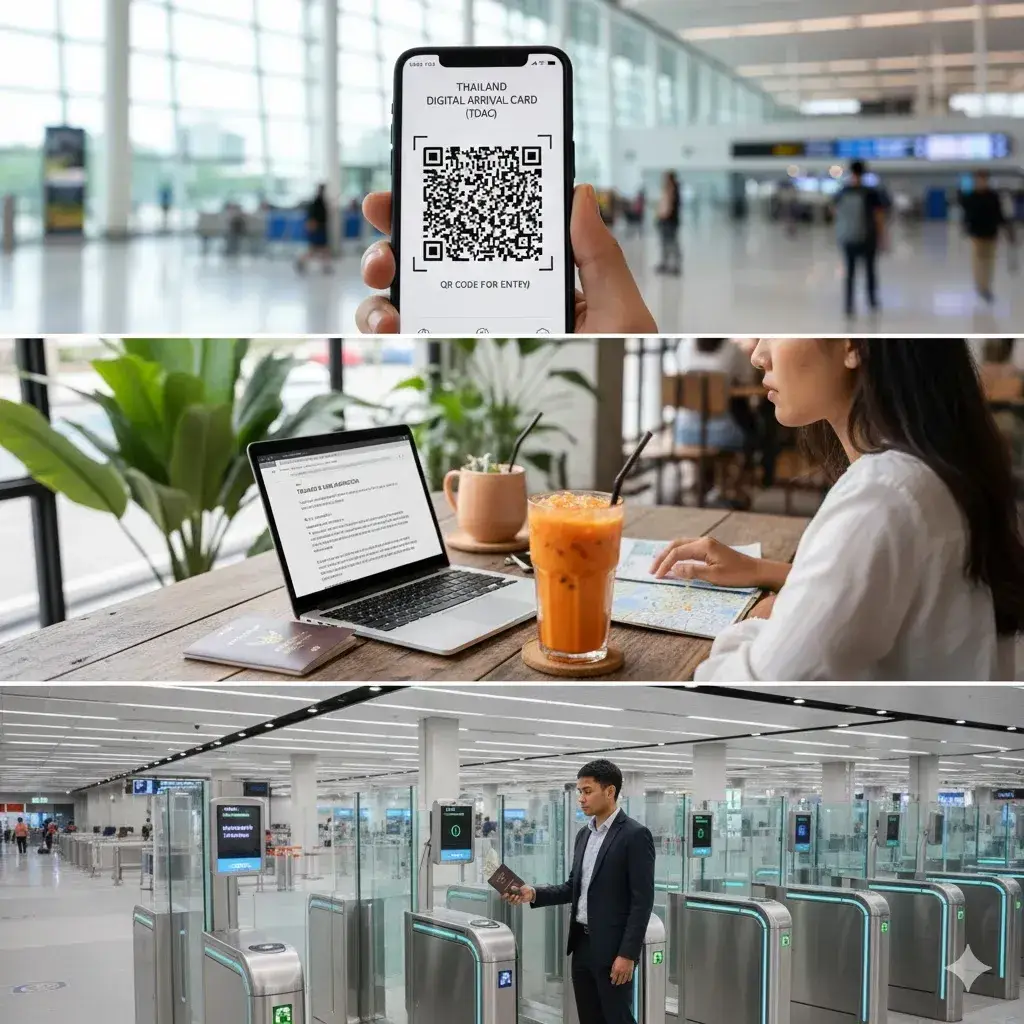
THAILAND VISA REQUIREMENTS 2026: THE COMPLETE TOURIST AND E-VISA GUIDE
Thailand, the "Land of Smiles," continues to reign as one of the world's most beloved travel destinations, attracting millions of visitors annually with its stunning beaches, ancient temples, vibrant street life, world-renowned cuisine, and legendary hospitality. As we journey through 2026, understanding Thailand visa requirements has become increasingly important for travelers planning to explore this captivating Southeast Asian kingdom. Whether you're dreaming of island-hopping in the Andaman Sea, exploring the historic temples of Chiang Mai, experiencing the electric energy of Bangkok's nightlife, or finding tranquility in rural rice paddies, securing the appropriate visa is your essential first step.
This comprehensive guide provides everything you need to know about obtaining a Thailand tourist visa or e-visa in 2026. From eligibility criteria and required documents to application procedures, visa exemptions, and common pitfalls to avoid, we've compiled the most current information to help you navigate the process with confidence. Thailand has made remarkable progress in digitizing its visa system, introducing the e-visa platform and streamlining processes for travelers from many countries, though requirements still vary significantly based on your nationality and purpose of visit.
Whether you're a first-time visitor planning a two-week beach vacation or a frequent traveler exploring Thailand's diverse regions, this guide will equip you with the knowledge to secure your Thailand visa efficiently and avoid delays or rejections. With recent updates to visa policies, including extended visa-exempt stays for certain nationalities and the introduction of new long-term visa options, 2026 presents both opportunities and complexities for travelers. Let's embark on this journey to ensure your Thai adventure begins smoothly and memorably.
Why Understanding Thailand Visa Requirements Matters in 2026
The global travel landscape continues to evolve rapidly, and Thailand has adapted its immigration policies to balance tourism promotion with border security and sustainable tourism goals. In 2026, Thailand maintains its position as a tourism powerhouse while implementing measures to manage overtourism, ensure visitor safety, and promote longer, higher-quality stays. The country has significantly expanded its e-visa system, extended visa-exempt periods for key markets, and introduced innovative visa categories for remote workers and long-term visitors.
Thailand welcomed over 40 million international visitors in recent peak years, and tourism contributes approximately 20% to the nation's GDP. The government has implemented strategic measures to facilitate legitimate tourism while maintaining rigorous screening processes and addressing concerns about illegal employment and overstays. Understanding these requirements not only ensures your application's success but also helps you prepare adequately for your trip, from financial documentation to health insurance considerations.
Additionally, visa policies can change with relatively short notice due to diplomatic relations, economic considerations, public health situations, or security concerns. Staying informed about the latest requirements through official channels like the Ministry of Foreign Affairs of Thailand and Thai embassies is crucial for a stress-free application experience and smooth entry into the country.
Types of Thailand Visas for Tourists in 2026

Thailand offers several visa categories for short-term and long-term visitors. Understanding which type applies to your situation is the crucial first step in the application process.
Tourist Visa (TR) - Single and Multiple Entry
The Tourist Visa (TR) is the standard visa for tourists planning to stay in Thailand for more than 30 days or for those from countries not eligible for visa exemption. This visa category has been modernized in 2026 with improved processing times and digital options.
Single-Entry Tourist Visa (SETV):
- Validity: 3 months from date of issue (must enter Thailand within this period).
- Duration of Stay: Up to 60 days upon entry, extendable by 30 days at a local immigration office for a fee of 1,900 THB.
- Processing Time: Typically 3-5 business days, though it can take longer during peak seasons or if additional documentation is required.
- Fee: Approximately 40 USD or equivalent in local currency (fees vary by embassy/consulate).
- 👉 Navigating Customs: What Rare Ginseng and Herbs You Cannot Bring to the USA
- 👉 Samtskhe-Javakheti Hidden Gems for History Enthusiasts 2026
- 👉 10 things that shock Americans about Nepal’s local buses in 2026.
Multiple-Entry Tourist Visa (METV):
- Validity: 6 months from date of issue.
- Duration of Stay: Up to 60 days per entry, with unlimited entries during the 6-month validity period.
- Ideal For: Frequent travelers, digital nomads, or those planning multiple trips to Thailand within 6 months.
- Requirements: More stringent than SETV, requiring proof of employment, financial stability, and previous travel history.
- Fee: Approximately 200 USD or equivalent.
- 👉 Navigating Customs: What Rare Ginseng and Herbs You Cannot Bring to the USA
- 👉 Samtskhe-Javakheti Hidden Gems for History Enthusiasts 2026
- 👉 10 things that shock Americans about Nepal’s local buses in 2026.
Thailand E-Visa System
In a significant modernization effort, Thailand has expanded and improved its e-visa system in 2026. This digital application platform allows eligible travelers to apply online without visiting a Thai embassy or consulate in person, making the process more convenient and efficient.
Eligibility for E-Visa: As of 2026, citizens of numerous countries including China, India, United Kingdom, United States, Canada, Australia, most European nations, and many others can apply for Thailand tourist e-visas. The system continues to expand, so always verify your eligibility on the official Thailand E-Visa website (thaievisa.go.th).
E-Visa Application Process:
- Create an account on the official Thailand E-Visa portal.
- Complete the online application form with accurate personal and travel information.
- Upload required documents in digital format (passport copy, photograph, flight itinerary, accommodation proof, financial documents).
- Pay the visa fee online through secure payment gateway.
- Receive visa approval notification via email once processed (typically 3-7 business days).
- Print the e-visa approval or save it digitally on your mobile device.
- Present the e-visa approval along with your passport at immigration upon arrival in Thailand.
- 👉 Navigating Customs: What Rare Ginseng and Herbs You Cannot Bring to the USA
- 👉 Samtskhe-Javakheti Hidden Gems for History Enthusiasts 2026
- 👉 10 things that shock Americans about Nepal’s local buses in 2026.
Important: The e-visa is not a physical sticker in your passport but a digital authorization linked to your passport number. You must carry a printed copy or digital version of the e-visa approval when traveling. Immigration officers will verify your e-visa status electronically upon arrival.
Visa Exemption Scheme
Citizens of 64 countries and territories enjoy visa-exempt entry to Thailand for short-term tourism visits. This is the most convenient option for eligible travelers, requiring no advance visa application.
Visa exemption conditions (2026 updates):
- Duration: Citizens of most visa-exempt countries receive 30 days upon arrival by air. However, Thailand has extended this to 60 days for citizens of select countries including the United States, United Kingdom, Canada, Australia, and most European Union nations as part of tourism promotion initiatives.
- Land border entries: Visa-exempt entries via land borders are limited to 30 days and restricted to two entries per calendar year.
- Passport validity: Must be valid for at least 6 months from date of entry.
- Purpose of visit: Must be tourism only (no business activities or employment).
- Proof of onward travel: Immigration officers may request proof of onward or return travel within the permitted stay period.
- Proof of funds: While not always checked, you should be prepared to show proof of adequate funds (10,000 THB per person or 20,000 THB per family).
- 👉 Navigating Customs: What Rare Ginseng and Herbs You Cannot Bring to the USA
- 👉 Samtskhe-Javakheti Hidden Gems for History Enthusiasts 2026
- 👉 10 things that shock Americans about Nepal’s local buses in 2026.
Visa-exempt countries include: United States, United Kingdom, Canada, Australia, most EU countries, Japan, South Korea, Singapore, Malaysia, Hong Kong, and many others. Always verify your country's specific allowance on the official Thai immigration website.
Even if your country is on the visa-exempt list, immigration officers have the authority to deny entry if they suspect your visit doesn't comply with tourism conditions or if you lack proper documentation. Always carry supporting documents like hotel reservations, return tickets, and proof of funds.
Visa on Arrival (VOA)
Citizens of 19 countries and territories, including China, India, Saudi Arabia, Ukraine, and others, are eligible for Visa on Arrival at designated international airports and land border checkpoints in Thailand.
Visa on Arrival details:
- Duration: 15 days (non-extendable).
- Fee: 2,000 THB (approximately 60 USD), payable in Thai Baht only (cash).
- Eligibility: Tourism purposes only.
- Required documents: Passport valid for at least 30 days, confirmed return ticket within 15 days, proof of accommodation, proof of funds (10,000 THB per person or 20,000 THB per family), completed arrival/departure card, one recent passport-sized photograph.
- Processing: Can take 30 minutes to 2 hours depending on airport traffic. Consider using the fast-track service (additional fee) during peak times.
- 👉 Navigating Customs: What Rare Ginseng and Herbs You Cannot Bring to the USA
- 👉 Samtskhe-Javakheti Hidden Gems for History Enthusiasts 2026
- 👉 10 things that shock Americans about Nepal’s local buses in 2026.
Important: Visa on Arrival is different from visa exemption. VOA requires payment and has shorter duration. If eligible for visa exemption, that's generally more convenient than VOA.
Special Tourist Visa (STV) and Long-Term Options
For extended stays, Thailand offers several long-term visa options introduced or updated in recent years:
- Thailand Elite Visa: A premium membership program offering 5 to 20-year multiple-entry visas with various benefits. Requires significant investment (starting from 900,000 THB).
- Long-Term Resident (LTR) Visa: Introduced for wealthy global citizens, retirees, remote workers, and highly skilled professionals. Offers 10-year validity with multiple benefits.
- Destination Thailand Visa (DTV): Launched in 2024 and continuing in 2026, this visa targets remote workers, freelancers, and "workation" enthusiasts. Allows stays of up to 180 days per entry, extendable once, with multiple entries over 5 years.
- 👉 Navigating Customs: What Rare Ginseng and Herbs You Cannot Bring to the USA
- 👉 Samtskhe-Javakheti Hidden Gems for History Enthusiasts 2026
- 👉 10 things that shock Americans about Nepal’s local buses in 2026.
Thailand Visa Requirements by Nationality

Visa requirements vary significantly based on your passport. Here's a comprehensive breakdown for major traveler nationalities in 2026:
United States, Canada, United Kingdom, Australia, EU Countries
Citizens of these countries enjoy visa-exempt entry for tourism. As of 2026, most receive 60 days upon arrival by air (extended from the previous 30 days as part of Thailand's tourism recovery initiatives). No advance visa application is required. However, ensure your passport is valid for at least 6 months and be prepared to show proof of onward travel and sufficient funds if requested by immigration officers.
If you plan to stay longer than 60 days, you can apply for a 30-day extension at a local immigration office for 1,900 THB, or obtain a Tourist Visa (TR) before traveling for an initial 60-day stay.
India
Indian citizens have multiple options for visiting Thailand in 2026:
- Visa on Arrival: Available for 15 days (2,000 THB fee).
- E-Visa (Tourist Visa): Recommended for longer stays (60 days). Apply online through the Thailand E-Visa portal.
- Visa Exemption: Thailand has periodically offered temporary visa-exempt entry for Indian citizens as part of tourism promotion. Check current status before travel.
- 👉 Navigating Customs: What Rare Ginseng and Herbs You Cannot Bring to the USA
- 👉 Samtskhe-Javakheti Hidden Gems for History Enthusiasts 2026
- 👉 10 things that shock Americans about Nepal’s local buses in 2026.
E-Visa requirements for Indian citizens:
- Passport valid for at least 6 months with at least 2 blank pages.
- Completed online visa application form.
- Recent passport-sized photograph (digital upload).
- Confirmed flight itinerary (round-trip or onward).
- Hotel reservations or accommodation proof for entire stay.
- Bank statements for the last 6 months showing minimum balance of 20,000 THB (approximately 600 USD) per person or 40,000 THB per family.
- Employment letter or business registration documents.
- Income tax returns for the last 2 years (optional but strengthens application).
- 👉 Navigating Customs: What Rare Ginseng and Herbs You Cannot Bring to the USA
- 👉 Samtskhe-Javakheti Hidden Gems for History Enthusiasts 2026
- 👉 10 things that shock Americans about Nepal’s local buses in 2026.
Processing time is typically 3-5 business days. Apply at least 2 weeks before your intended travel date.
China
Chinese citizens can choose between:
- Visa on Arrival: 15 days (2,000 THB fee).
- E-Visa (Tourist Visa): 60 days, recommended for longer stays.
- Visa Exemption: Thailand and China have implemented mutual visa-exemption agreements. Chinese citizens can enter Thailand visa-free for up to 30 days (verify current status before travel as policies may change).
- 👉 Navigating Customs: What Rare Ginseng and Herbs You Cannot Bring to the USA
- 👉 Samtskhe-Javakheti Hidden Gems for History Enthusiasts 2026
- 👉 10 things that shock Americans about Nepal’s local buses in 2026.
Philippines, Indonesia, Vietnam, Malaysia, Singapore
Citizens of these ASEAN countries enjoy visa-exempt entry for tourism, typically receiving 30 days upon arrival. Singaporeans and Malaysians often receive longer exemptions (30-90 days) due to bilateral agreements.
Other Countries
Requirements vary by country. Always check the official website of the Royal Thai Embassy or Consulate in your country for the most accurate, up-to-date information specific to your nationality. The Thailand E-Visa website (thaievisa.go.th) also provides nationality-specific guidance.
Step-by-Step Thailand Visa Application Process

Whether applying for a traditional visa or e-visa, following a systematic approach significantly increases your chances of approval and minimizes delays.
Step 1: Determine Your Visa Type and Eligibility
Visit the official Ministry of Foreign Affairs of Thailand website or the Thailand E-Visa portal (thaievisa.go.th) to confirm:
- Whether you need a visa or qualify for visa exemption.
- Whether you're eligible for Visa on Arrival.
- Which visa category best suits your purpose and duration of travel.
- Whether you can apply for an e-visa based on your nationality and location.
- 👉 Navigating Customs: What Rare Ginseng and Herbs You Cannot Bring to the USA
- 👉 Samtskhe-Javakheti Hidden Gems for History Enthusiasts 2026
- 👉 10 things that shock Americans about Nepal’s local buses in 2026.
Step 2: Gather Required Documents
Prepare all documents well in advance. Common requirements for Tourist Visa (TR) applications include:
- Passport: Valid for at least 6 months from date of entry, with at least 2 blank visa pages. Include copies of previous Thai visas if applicable.
- Visa Application Form: Completed accurately and signed. For e-visas, this is completed online. For traditional applications, download from embassy website.
- Photograph: Recent (within 6 months), 4cm x 6cm or 2in x 2in, white background, front-facing, neutral expression, no glasses or headwear unless for religious reasons. For e-visas, upload digital version (JPEG format, under 5MB).
- Flight Itinerary: Confirmed round-trip or onward flight reservations. Do not purchase non-refundable tickets until your visa is approved. A reservation confirmation is sufficient.
- Accommodation Proof: Hotel reservations for your entire stay or a letter of invitation from a Thai host with their ID copy and house registration. If staying at multiple locations, provide all reservations.
- Financial Proof: Bank statements for the last 3-6 months showing consistent balance. Minimum requirements: 20,000 THB (approximately 600 USD) per person or 40,000 THB per family for visa exemption/VOA; higher amounts may be requested for visa applications. Bank certificate letter is also acceptable.
- Employment Verification: For employed applicants: letter from employer on company letterhead stating your position, salary, employment duration, and approved leave dates. For self-employed: business registration documents, tax returns, and financial statements. For students: enrollment letter and no-objection certificate from school/university.
- Cover Letter: A personal letter explaining your purpose of visit, planned itinerary, and intention to return to your home country. This is particularly important for first-time applicants or those with weak ties to their home country.
- Travel Insurance: While not always mandatory for tourist visas, comprehensive travel insurance covering medical emergencies (minimum coverage of 10,000 USD) and trip cancellation is highly recommended and may strengthen your application. Some visa categories now require proof of insurance.
- 👉 Navigating Customs: What Rare Ginseng and Herbs You Cannot Bring to the USA
- 👉 Samtskhe-Javakheti Hidden Gems for History Enthusiasts 2026
- 👉 10 things that shock Americans about Nepal’s local buses in 2026.
Step 3: Submit Your Application
For E-Visa Applications:
- Create an account on the official Thailand E-Visa portal (thaievisa.go.th).
- Select the appropriate visa type (Tourist Visa - TR).
- Complete all sections of the online application form accurately.
- Upload digital copies of all required documents in specified formats (PDF, JPEG).
- Review your application carefully for errors or omissions.
- Pay the visa fee online through the secure payment gateway (credit/debit card).
- Receive confirmation email with application reference number.
- Track your application status through the portal using your reference number.
- 👉 Navigating Customs: What Rare Ginseng and Herbs You Cannot Bring to the USA
- 👉 Samtskhe-Javakheti Hidden Gems for History Enthusiasts 2026
- 👉 10 things that shock Americans about Nepal’s local buses in 2026.
For Traditional Visa Applications:
- Download the visa application form from the Thai embassy/consulate website.
- Complete the form and gather all required documents.
- Schedule an appointment if required (some embassies accept walk-ins).
- Submit your application in person or through an accredited visa application agency at the Thai embassy or consulate with jurisdiction over your place of residence.
- Pay the visa fee in cash or as specified by the embassy.
- Receive a receipt with collection date.
- 👉 Navigating Customs: What Rare Ginseng and Herbs You Cannot Bring to the USA
- 👉 Samtskhe-Javakheti Hidden Gems for History Enthusiasts 2026
- 👉 10 things that shock Americans about Nepal’s local buses in 2026.
Step 4: Wait for Processing
Standard processing times:
- E-Visa: 3-5 business days (can extend to 7-10 days during peak seasons or if additional documents are requested).
- Traditional Visa: 3-5 business days for standard processing; express service (1-2 days) may be available for additional fee.
- 👉 Navigating Customs: What Rare Ginseng and Herbs You Cannot Bring to the USA
- 👉 Samtskhe-Javakheti Hidden Gems for History Enthusiasts 2026
- 👉 10 things that shock Americans about Nepal’s local buses in 2026.
Apply at least 2-4 weeks before your intended travel date to account for potential delays, especially during peak tourist seasons (November-February, July-August, Songkran in April).
Step 5: Receive Your Visa and Travel
For E-Visas: You'll receive an email notification when your visa is approved. Log into the e-visa portal to download your e-visa approval letter. Print this document or save it digitally on your phone. Present it along with your passport at immigration upon arrival in Thailand. The immigration officer will verify your e-visa electronically and stamp your passport with the appropriate entry permission.
For Traditional Visas: Collect your passport with the visa sticker affixed. Verify all details (name spelling, passport number, visa type, validity dates, number of entries) are correct before leaving the embassy/consulate. Report any errors immediately.
Upon Arrival in Thailand: Present your passport, visa (if required), completed arrival/departure card (TM6 - though this has been digitized at many airports), proof of onward travel, and proof of accommodation if requested. Immigration officers may ask about your purpose of visit and duration of stay. Answer clearly and confidently.
Financial Requirements and Proof of Funds

Demonstrating sufficient financial capacity is one of the most critical aspects of a Thailand visa application and entry process.
How Much Money Do You Need?
Thailand immigration requires proof of adequate funds to support your stay. While enforcement varies, these are the official guidelines:
- Visa Exemption/Visa on Arrival: 10,000 THB per person or 20,000 THB per family (approximately 300-600 USD).
- Tourist Visa (TR): 20,000 THB per person or 40,000 THB per family (approximately 600-1,200 USD).
- Multiple-Entry Tourist Visa (METV): Bank statements showing at least 200,000 THB (approximately 6,000 USD) equivalent.
- 👉 Navigating Customs: What Rare Ginseng and Herbs You Cannot Bring to the USA
- 👉 Samtskhe-Javakheti Hidden Gems for History Enthusiasts 2026
- 👉 10 things that shock Americans about Nepal’s local buses in 2026.
However, these are minimum requirements. Immigration officers have discretion to request higher amounts if they doubt your financial capacity. For longer stays or luxury travel, demonstrate proportionally higher funds.
Acceptable Financial Documents
Thai embassies and immigration accept:
- Bank Statements: Official statements from your bank for the last 3-6 months, showing consistent balance and transaction history. Statements should be stamped and signed by the bank. Sudden large deposits shortly before application may raise questions about fund authenticity.
- Bank Certificate: A formal letter from your bank confirming your account balance, account type, and relationship duration. This is often required alongside statements.
- Cash: For visa exemption/VOA entries, immigration officers may conduct random checks and request to see physical cash. Have Thai Baht or equivalent in major currencies readily accessible.
- Traveler's Checks: Less common now but still acceptable.
- Credit Cards: Can supplement but not replace cash/bank statement requirements.
- 👉 Navigating Customs: What Rare Ginseng and Herbs You Cannot Bring to the USA
- 👉 Samtskhe-Javakheti Hidden Gems for History Enthusiasts 2026
- 👉 10 things that shock Americans about Nepal’s local buses in 2026.
Important Tip: Consistency and legitimacy matter more than a single large balance. Regular income deposits, reasonable spending patterns, and a stable financial history are more convincing than a suddenly inflated account. If someone is sponsoring your trip, include a sponsorship letter, their financial documents, and proof of your relationship.
Common Reasons for Thailand Visa Rejection and How to Avoid Them

Understanding common pitfalls can significantly improve your application's success rate and prevent costly delays.
Incomplete or Inconsistent Documentation
Missing documents, unsigned forms, illegible copies, or discrepancies between your application and supporting documents are frequent rejection reasons. Double-check every detail: ensure names match exactly across all documents (as they appear in your passport), dates align with your itinerary, financial figures are consistent, and all required fields are completed.
Insufficient Proof of Financial Capacity
Applications showing inadequate funds, unexplained large deposits, inconsistent income, or questionable financial sources are often rejected. Provide clear, verifiable financial documentation that demonstrates you can comfortably afford your trip without working in Thailand. If your balance is low but you have regular income, include employment letters and pay slips to show earning capacity.
Unclear Purpose of Visit or Suspicious Itinerary
Vague travel plans, unrealistic itineraries, or patterns suggesting potential illegal employment (frequent long stays, no clear tourism activities) can raise red flags. Provide a detailed, logical daily schedule that matches your hotel bookings and flight dates. If visiting friends or family, include a formal letter of invitation with their Thai ID copy and house registration.
Weak Ties to Home Country
Visa officers assess whether you're likely to return home after your visit. Demonstrate strong ties through employment verification, property ownership documents, family dependencies, enrollment in education, or business commitments. Unemployed applicants, students without strong ties, or those with unstable employment history may face additional scrutiny. Include a compelling cover letter explaining your reasons to return.
Previous Immigration Violations
Overstaying visas, working illegally, or violating immigration rules in Thailand or other countries can lead to rejection or entry bans. Always comply with visa conditions during international travel. If you have a previous overstay, be prepared to explain the circumstances and provide evidence it won't happen again.
Passport Issues
Passports with less than 6 months validity, insufficient blank pages, or significant damage will result in rejection. Ensure your passport meets all requirements before applying.
How to Appeal or Reapply
If your visa is rejected, you'll typically receive a brief reason (though sometimes no specific reason is given). There's no formal appeal process for tourist visas. You can reapply after addressing the issues that led to rejection. Wait at least 1-2 months before reapplying unless the rejection reason can be immediately resolved (like obtaining additional documents). Strengthen your application with additional documentation, clearer explanations, or evidence addressing the previous concerns.
Special Considerations for 2026

Several important developments affect Thailand visa applications and entry in 2026:
Digital Transformation and E-Visa Expansion
Thailand continues expanding its e-visa system and digital services. The Thailand E-Visa platform now serves more nationalities and offers improved processing times. Many embassies accept digital document submissions, though original passports are still required for visa sticker affixation (for non-e-visa applicants). The arrival/departure card (TM6) has been digitized at major airports, streamlining the entry process.
Extended Visa-Exempt Stays
As part of tourism recovery and promotion initiatives, Thailand has extended visa-exempt stays from 30 to 60 days for citizens of select countries including the US, UK, Canada, Australia, and most EU nations. This policy, introduced temporarily, has been extended through 2026. Always verify current duration allowances before travel.
Destination Thailand Visa (DTV)
Launched in 2024 and continuing in 2026, the Destination Thailand Visa targets remote workers, freelancers, and "workation" enthusiasts. This 5-year multiple-entry visa allows stays of up to 180 days per entry (extendable once by 180 days). Requirements include proof of employment or business ownership, minimum bank balance of 500,000 THB (approximately 15,000 USD), and health insurance coverage of at least 50,000 USD. This is ideal for digital nomads wanting extended stays without frequent visa runs.
Health and Travel Insurance Requirements
While not universally mandatory for all tourist visas, Thailand increasingly encourages or requires proof of travel insurance covering medical emergencies. Some visa categories and certain nationalities must show insurance coverage of at least 10,000-50,000 USD. Even when not required, comprehensive travel insurance is highly recommended given healthcare costs for foreigners.
Sustainable Tourism Initiatives
Thailand is promoting sustainable and responsible tourism. While not a visa requirement, demonstrating awareness of responsible travel practices and including eco-friendly accommodations or activities in your itinerary can positively influence your application, particularly for longer stays or multiple-entry visas.
Practical Tips for a Smooth Thailand Visa Experience

These insider tips can streamline your application process and enhance your travel experience:
- Start Early: Begin preparing your application 4-6 weeks before your intended travel date to account for document gathering, processing time, and potential delays. During peak seasons (November-February, Songkran in April), apply even earlier.
- Use Official Resources Only: Rely on the Ministry of Foreign Affairs of Thailand website (mfa.go.th), Thailand E-Visa portal (thaievisa.go.th), or official embassy/consulate channels for information. Avoid third-party sites that may provide outdated or incorrect guidance or charge unnecessary fees.
- Be Honest and Consistent: Never provide false information or forged documents. Thai immigration authorities share data internationally, and discrepancies can lead to long-term entry bans or blacklisting. If you have a previous overstay or violation, be transparent and explain the circumstances.
- Prepare for Immigration Questions: Upon arrival, immigration officers may ask about your purpose of visit, duration of stay, where you're staying, and your return plans. Answer clearly, confidently, and consistently with your application. Have supporting documents readily accessible.
- Keep Copies of Everything: Maintain digital and physical copies of your entire application package, visa approval, flight tickets, hotel reservations, and travel insurance. This helps if documents are lost, if you need to reapply, or if immigration requests verification.
- Consider Travel Insurance: Even if not required, comprehensive travel insurance covering medical emergencies, evacuation, trip cancellation, and lost luggage demonstrates responsibility and can strengthen your application. It's essential for your protection.
- Track Your Application: For e-visas, use the online portal to monitor status. For traditional applications, follow up politely if processing exceeds advertised timelines. Keep your application reference number handy.
- Understand Extension Options: If you want to extend your stay, visit a local immigration office before your current permission to stay expires. Tourist visas can typically be extended by 30 days for 1,900 THB. Overstaying results in fines (500 THB per day, maximum 20,000 THB) and potential bans.
- Respect Thai Culture and Laws: Thailand has strict laws regarding respect for the monarchy, Buddhism, and national symbols. Familiarize yourself with cultural norms and legal requirements to avoid problems during your stay.
- 👉 Navigating Customs: What Rare Ginseng and Herbs You Cannot Bring to the USA
- 👉 Samtskhe-Javakheti Hidden Gems for History Enthusiasts 2026
- 👉 10 things that shock Americans about Nepal’s local buses in 2026.
Conclusion: Your Journey to Thailand Starts with the Right Visa

Navigating Thailand visa requirements in 2026 doesn't have to be overwhelming. With clear information, thorough preparation, and attention to detail, securing your tourist visa, e-visa, or understanding your visa-exempt status is a manageable step toward experiencing one of the world's most captivating destinations.
Remember that visa policies can evolve, so always verify requirements through official channels close to your application date. Whether you're exploring ancient temples in Chiang Mai, relaxing on pristine beaches in Phuket, experiencing Bangkok's vibrant street life, or discovering hidden gems in rural Thailand, the effort you invest in your visa preparation ensures a smooth start to your Thai adventure.
Thailand welcomes respectful, prepared travelers who appreciate its rich culture, contribute positively to local communities, and embrace the famous Thai spirit of hospitality known as sanuk (finding joy in what you do). By following this comprehensive guide, you're not just securing a visa—you're laying the foundation for an unforgettable journey through the Land of Smiles.
From the moment you present your documents at immigration to your final departure, Thailand promises experiences that will create lasting memories. The ancient wisdom of Buddhist temples, the warmth of Thai hospitality, the incredible diversity of landscapes, and the world-renowned cuisine await you.
Your Thailand adventure awaits. Start your visa application today and prepare for the journey of a lifetime.
0 Comments