.webp)
.webp)
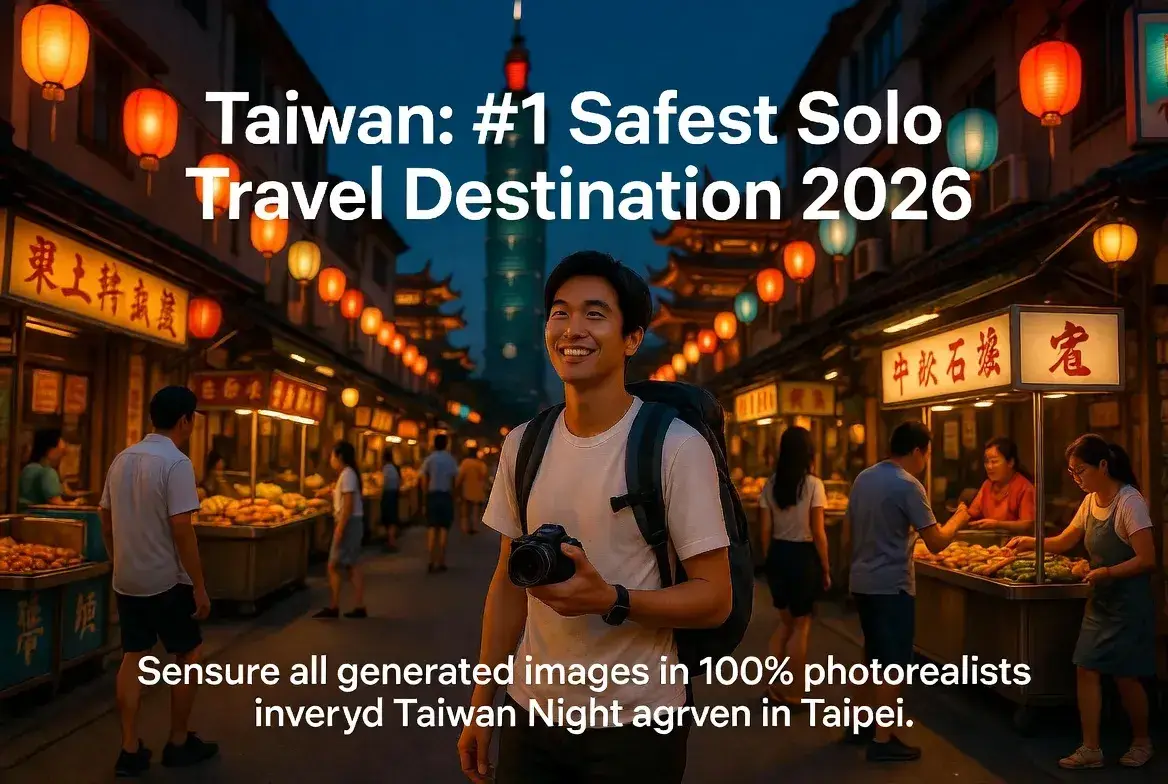
Introduction: Taiwan's Top Ranking for Solo Travelers
In 2026, Bloomberg's comprehensive analysis of global travel safety placed Taiwan at the pinnacle of solo travel destinations, awarding it the #1 ranking for safety among independent travelers. This prestigious recognition isn't merely a statistical achievement—it represents Taiwan's exceptional commitment to creating an environment where solo travelers, whether first-time adventurers or seasoned globetrotters, can explore with confidence, freedom, and peace of mind.
For solo travelers, safety concerns often dominate destination selection. Questions about personal security, crime rates, healthcare access, transportation reliability, and cultural acceptance weigh heavily in travel decisions. Taiwan's ascent to the top of Bloomberg's safety rankings reflects the island nation's remarkable performance across all these critical dimensions, establishing it as a beacon of secure, welcoming travel in an increasingly complex world.
This comprehensive guide explores the multifaceted reasons behind Taiwan's #1 ranking, examining the concrete factors that make it the safest destination for solo travelers in 2026. From remarkably low crime rates and exceptional healthcare infrastructure to efficient public transportation, cultural hospitality, and robust support systems for travelers, we'll uncover what makes Taiwan not just safe on paper, but genuinely secure in practice for those exploring alone.
Bloomberg's Methodology: How Taiwan Earned the Top Spot

Understanding Taiwan's #1 ranking requires examining Bloomberg's rigorous evaluation methodology. The 2026 solo travel safety assessment analyzed destinations across multiple critical dimensions, weighting factors that directly impact the solo travel experience.
Key Evaluation Criteria
Crime Statistics and Personal Safety: Bloomberg analyzed violent crime rates, property crime incidence, harassment reports, and overall personal security metrics. Taiwan's exceptionally low rates of violent crime—among the lowest in the developed world—provided a foundational advantage. The assessment specifically examined crimes targeting tourists and solo travelers, areas where Taiwan consistently outperforms competitors.
Healthcare Infrastructure: Solo travelers face unique vulnerabilities when medical issues arise. Bloomberg evaluated healthcare accessibility, quality of medical facilities, availability of English-speaking medical staff, health insurance coverage for visitors, and emergency response capabilities. Taiwan's National Health Insurance system, world-class hospitals, and widespread English-language medical services scored exceptionally high.
Transportation Safety: The assessment examined public transportation reliability, road safety statistics, taxi and rideshare safety, nighttime transportation security, and infrastructure quality. Taiwan's efficient MRT systems, extensive bus networks, safe taxi services, and excellent road conditions contributed significantly to its ranking.
Digital Connectivity and Emergency Services: Modern solo travel depends on reliable communication. Bloomberg evaluated internet accessibility, emergency service responsiveness, tourist police presence, multilingual support systems, and digital safety infrastructure. Taiwan's comprehensive coverage and responsive emergency systems proved exemplary.
Cultural Acceptance and Social Environment: Perhaps most importantly for solo travelers, the assessment measured cultural attitudes toward foreigners, gender equality, LGBTQ+ acceptance, language accessibility, and overall social welcoming. Taiwan's renowned hospitality, progressive social values, and genuine warmth toward visitors created an environment where solo travelers feel not just safe, but genuinely welcomed.
Comparative Performance
Taiwan's #1 ranking emerges from outperforming traditional safety leaders across multiple categories. While countries like Japan, Singapore, and Iceland consistently rank highly for safety, Taiwan's combination of ultra-low crime, exceptional healthcare, efficient infrastructure, and warm hospitality created a unique value proposition for solo travelers. The island nation didn't just excel in one area—it achieved top-tier performance across all evaluation dimensions.
Exceptionally Low Crime Rates: The Foundation of Safety

Taiwan's remarkably low crime statistics form the bedrock of its #1 safety ranking. Understanding these numbers reveals why solo travelers can explore with unprecedented confidence.
Violent Crime: Virtually Nonexistent
Taiwan reports some of the world's lowest violent crime rates. Homicide rates stand at approximately 0.3 per 100,000 people—dramatically lower than the United States (approximately 6.5 per 100,000) and comparable to Japan and Singapore. For solo travelers, this statistic translates to an environment where violent crime is so rare that it rarely registers as a concern in daily life.
Assault, robbery, and other violent offenses occur at minimal rates, particularly in areas frequented by tourists. Solo travelers can walk streets at night, use public transportation after dark, and explore neighborhoods independently without the anxiety that characterizes travel in many destinations. This freedom proves particularly valuable for solo female travelers, who often face heightened safety concerns.
Property Crime: Minimal Risk
Pickpocketing, bag snatching, and theft—common concerns in many tourist destinations—occur at remarkably low rates in Taiwan. While basic precautions remain wise, solo travelers needn't maintain the hyper-vigilance required in European cities or other popular destinations. The risk of having belongings stolen while using public transportation, visiting markets, or exploring attractions is minimal.
This low property crime rate extends to accommodation safety. Hostels, hotels, and guesthouses maintain secure environments where travelers can leave belongings with confidence. Many solo travelers report leaving laptops, cameras, and valuables unattended in cafés or co-working spaces without incident—a level of trust impossible in many destinations.
Scams and Tourist Exploitation: Rare Occurrences
Unlike destinations where tourist scams form an unfortunate part of the travel experience, Taiwan maintains remarkably honest interactions with visitors. Taxi drivers use meters consistently, vendors charge fair prices, and service providers deliver as promised. While occasional minor overcharging might occur in highly touristic areas, systematic exploitation of tourists is virtually unknown.
This honesty extends to lost property. Taiwan's culture of integrity means that lost wallets, phones, and belongings are frequently returned intact. Police stations maintain robust lost-and-found systems, and the cultural value placed on honesty creates an environment where solo travelers can trust strangers in ways that surprise visitors from more cynical societies.
Harassment and Personal Security
For solo travelers, particularly women, harassment concerns significantly impact destination selection. Taiwan's low rates of street harassment, catcalling, and unwanted attention create a comfortable environment for independent exploration. Cultural norms emphasize respect and courtesy, and violations of these norms are socially unacceptable.
Solo female travelers consistently report feeling safe walking alone at night, using public transportation independently, and dining alone without uncomfortable attention. This freedom from harassment anxiety proves transformative for the solo travel experience, enabling genuine exploration rather than defensive navigation.
World-Class Healthcare: Medical Security for Solo Travelers

Solo travelers face unique vulnerabilities when health issues arise—there's no travel companion to advocate, assist, or provide support during medical emergencies. Taiwan's exceptional healthcare infrastructure addresses these concerns comprehensively, providing medical security that ranks among the world's best.
National Health Insurance Excellence
Taiwan's National Health Insurance (NHI) system, established in 1995, provides comprehensive coverage to residents and accessible care to visitors. The system achieves near-universal coverage with relatively low costs, high quality, and minimal administrative complexity. For solo travelers, this translates to:
- Affordable Care: Medical services cost a fraction of American prices while maintaining excellent quality. Doctor visits typically cost $10-20 USD, specialist consultations $20-40, and emergency care remains accessible without bankrupting travelers.
- High Quality: Taiwan's hospitals rank among Asia's best, with modern equipment, well-trained physicians, and outcomes comparable to leading Western healthcare systems. Many doctors trained in the United States, Europe, or other leading medical centers.
- Accessibility: Medical facilities are widespread, with hospitals and clinics in every city and town. Wait times are minimal, and appointments are easily secured.
- 👉 Is the 5-Year Indian e-Tourist Visa worth $200 for US citizens in 2026?
- 👉 Why Bloomberg Named Mongolia the "Top Growth Destination" for 2026.
- 👉 Budget Travel in South Korea: How to Explore on a Student Budget
English-Language Medical Services
Language barriers during medical emergencies create significant anxiety for solo travelers. Taiwan addresses this concern through extensive English-language medical services. Major hospitals in Taipei, Kaohsiung, Taichung, and other cities employ English-speaking staff, provide translated materials, and offer interpretation services.
International medical centers specifically cater to foreign patients, providing comprehensive services in English and other languages. These facilities understand the unique needs of travelers, including insurance coordination, prescription transfers, and communication with home-country physicians.
Pharmaceutical Access and Quality
Taiwan's pharmaceutical system ensures that medications are accessible, affordable, and high-quality. Pharmacies are widespread, many operating 24 hours. Prescription medications cost significantly less than in Western countries, and over-the-counter options are extensive.
For solo travelers managing chronic conditions or requiring specific medications, Taiwan's reliable pharmaceutical infrastructure provides peace of mind. Pharmacists are well-trained, often speak English, and provide thorough consultation.
Emergency Response Excellence
Taiwan's emergency response system operates efficiently and professionally. The emergency number (119 for ambulance, 110 for police) connects to responsive services with reasonable response times. Ambulances are well-equipped, staff trained to international standards, and transport to appropriate facilities occurs without delay.
For solo travelers, knowing that emergency care is accessible, affordable, and high-quality eliminates a major source of travel anxiety. The healthcare system's excellence means that medical issues, while never desirable, don't become catastrophic crises.
Transportation Safety: Getting Around with Confidence

Solo travelers depend heavily on public transportation, making transportation safety a critical factor in destination selection. Taiwan's transportation infrastructure excels across multiple dimensions, providing secure, reliable mobility for independent explorers.
MRT and Metro Systems: World-Class Safety
Taiwan's metro systems, particularly Taipei MRT and Kaohsiung MRT, rank among the world's safest and most efficient. These systems feature:
- Exceptional Cleanliness: Stations and trains maintain immaculate conditions, deterring crime and creating comfortable environments.
- Security Presence: Visible security personnel, surveillance cameras, and emergency communication systems provide multiple layers of safety.
- Reliability: Trains run on time, frequently, and late into the night, reducing the need for risky late-night transportation alternatives.
- Accessibility: Clear signage in multiple languages, intuitive navigation, and helpful staff make the systems accessible to all travelers.
- 👉 Is the 5-Year Indian e-Tourist Visa worth $200 for US citizens in 2026?
- 👉 Why Bloomberg Named Mongolia the "Top Growth Destination" for 2026.
- 👉 Budget Travel in South Korea: How to Explore on a Student Budget
For solo travelers, MRT systems provide safe, affordable, efficient transportation at all hours. Women-only cars during rush hours in some systems demonstrate attention to passenger comfort and safety concerns.
Bus Networks: Comprehensive and Secure
Taiwan's extensive bus networks connect cities, towns, and rural areas with reliable, safe service. Intercity buses feature comfortable seating, air conditioning, professional drivers, and reasonable fares. Urban bus systems provide comprehensive coverage with frequent service.
Bus safety standards are high, with regular vehicle maintenance, driver training requirements, and safety inspections. Solo travelers can confidently use buses for both short urban trips and longer intercity journeys.
Taxi and Rideshare Safety
Taiwan's taxi industry maintains high safety standards. Licensed taxis display clear identification, use meters consistently, and drivers undergo background checks. Ride-hailing services like Uber operate legally with similar safety protocols.
For solo travelers, taxis provide safe, affordable transportation, particularly for late-night travel or areas less accessible by public transit. Drivers are generally honest, routes are direct, and fares are reasonable. The ability to safely use taxis eliminates a common solo travel concern.
Road Safety and Pedestrian Infrastructure
Taiwan's road safety record is strong, with traffic fatality rates significantly lower than many developed nations. Road infrastructure is well-maintained, traffic laws are enforced, and driver education is comprehensive.
Pedestrian infrastructure, while varying by location, generally provides safe walking environments. Sidewalks, crosswalks, and pedestrian signals are common in urban areas. Solo travelers can walk confidently, knowing that infrastructure supports pedestrian safety.
High-Speed Rail: Safe, Efficient Intercity Travel
Taiwan High Speed Rail (THSR) connects major western cities with exceptional safety, speed, and comfort. The system maintains an outstanding safety record, with modern trains, advanced signaling systems, and professional operations.
For solo travelers, THSR provides a safe, efficient way to explore multiple cities independently. Trains are comfortable, stations are secure, and the system's reliability enables confident itinerary planning.
Cultural Hospitality: A Welcoming Environment for Solo Travelers

Beyond statistics and infrastructure, Taiwan's greatest safety asset may be its culture of genuine hospitality. Solo travelers consistently report feeling not just safe, but genuinely welcomed—a distinction that transforms the travel experience.
Respect for Foreigners
Taiwanese culture emphasizes respect, courtesy, and helpfulness toward visitors. Foreigners are generally viewed with curiosity and warmth rather than suspicion or hostility. This cultural attitude creates an environment where solo travelers feel comfortable asking for directions, seeking assistance, or engaging with locals.
The concept of "face" (maintaining dignity and respect) in Taiwanese culture means that people go to considerable lengths to be helpful and avoid causing embarrassment or discomfort to others. For solo travelers, this translates to genuine assistance when needed and respectful interactions in daily life.
Language Accessibility
While Mandarin Chinese is Taiwan's primary language, English accessibility is surprisingly good, particularly in urban areas and tourist destinations. Younger Taiwanese often speak functional to fluent English, having studied it extensively in school. Signs in transportation hubs, tourist areas, and major establishments typically include English translations.
For solo travelers, this language accessibility reduces anxiety and enables independent navigation. Even when English proficiency is limited, Taiwanese people generally make earnest efforts to communicate and assist, using translation apps, gestures, or finding someone who speaks better English.
Community Support for Solo Travelers
Taiwan's solo traveler community, both local and international, provides additional layers of support. Hostels, co-working spaces, and travel groups facilitate connections between solo travelers, creating informal support networks. Online communities and social media groups offer advice, meetups, and assistance.
Local residents often go out of their way to help solo travelers, whether providing directions, recommending restaurants, or offering travel tips. This community support creates a safety net that extends beyond formal infrastructure.
Gender Equality and LGBTQ+ Acceptance
Taiwan's progressive social values enhance safety for all solo travelers. The country ranks highly for gender equality in Asia, with women enjoying significant social, economic, and political rights. This equality translates to safer environments for solo female travelers, who face less discrimination and harassment than in many destinations.
Taiwan made history in 2019 by becoming Asia's first country to legalize same-sex marriage, reflecting broader LGBTQ+ acceptance. LGBTQ+ solo travelers report feeling safe and welcomed, with vibrant queer communities in major cities and generally tolerant attitudes nationwide.
Digital Infrastructure: Connectivity and Emergency Support

Modern solo travel depends on digital connectivity for navigation, communication, emergency response, and information access. Taiwan's exceptional digital infrastructure provides solo travelers with the connectivity essential for safe, confident independent travel.
Internet Accessibility
Taiwan boasts some of the world's fastest and most widespread internet connectivity. Free public WiFi is available in transportation hubs, government facilities, tourist areas, and many businesses. The "iTaiwan" free WiFi service provides accessible connectivity throughout the island.
For solo travelers, reliable internet enables real-time navigation, translation, communication with home, emergency contact, and information access. The ability to stay connected reduces anxiety and enhances safety.
Mobile Network Coverage
Taiwan's mobile network coverage is comprehensive, with 4G/LTE available throughout most of the island and 5G expanding rapidly in urban areas. Even in rural and mountainous regions, coverage is generally good. Multiple carriers offer affordable prepaid plans for travelers.
Solo travelers can reliably use mobile data for maps, translation, ride-hailing, emergency calls, and communication. This connectivity proves essential for independent navigation and safety.
Emergency Services and Tourist Support
Taiwan's emergency services are responsive and professional. The emergency numbers (110 for police, 119 for fire/ambulance) connect to operators who can often provide English-language assistance. Response times are reasonable, and services are professional.
Tourist police operate in major tourist areas, providing assistance specifically for visitors. Tourist service centers in transportation hubs and popular destinations offer information, assistance, and support in multiple languages.
Digital Payment Safety
Taiwan's digital payment ecosystem is advanced and secure. Credit cards are widely accepted, mobile payments are common, and ATMs are plentiful and secure. The ability to access money safely and make digital payments reduces the risks associated with carrying large amounts of cash.
For solo travelers, Taiwan's financial infrastructure provides secure, convenient access to funds without the safety concerns of cash-heavy transactions.
Practical Safety Tips for Solo Travelers in Taiwan

While Taiwan's safety record is exceptional, smart travel practices enhance security and peace of mind. These practical tips help solo travelers maximize safety while enjoying Taiwan's many offerings.
Essential Precautions
- Secure Accommodations: Choose reputable hotels, hostels, or guesthouses with good reviews and security features. Read recent reviews from other solo travelers.
- Share Itineraries: Provide travel plans to trusted contacts at home. Regular check-ins provide additional security.
- Emergency Contacts: Save local emergency numbers, your country's embassy/consulate contact, and accommodation details in your phone.
- Travel Insurance: Purchase comprehensive travel insurance covering medical emergencies, trip cancellation, and lost belongings.
- Document Security: Keep passport copies separate from originals. Use hotel safes for valuables.
- 👉 Is the 5-Year Indian e-Tourist Visa worth $200 for US citizens in 2026?
- 👉 Why Bloomberg Named Mongolia the "Top Growth Destination" for 2026.
- 👉 Budget Travel in South Korea: How to Explore on a Student Budget
Nighttime Safety
- Use Public Transportation: MRT and buses are safe late at night. Avoid walking alone in unfamiliar areas after dark.
- Stick to Populated Areas: Night markets, busy streets, and well-lit areas are generally safe.
- Trust Your Instincts: If a situation feels uncomfortable, leave. Taiwan's safe environment means you rarely need to worry, but basic awareness remains wise.
- 👉 Is the 5-Year Indian e-Tourist Visa worth $200 for US citizens in 2026?
- 👉 Why Bloomberg Named Mongolia the "Top Growth Destination" for 2026.
- 👉 Budget Travel in South Korea: How to Explore on a Student Budget
Cultural Sensitivity
- Respect Local Customs: Understanding and respecting Taiwanese culture enhances safety by avoiding unintentional offense.
- Dress Appropriately: While Taiwan is relatively liberal, modest dress in temples and religious sites shows respect.
- Learn Basic Mandarin: Even simple phrases demonstrate respect and facilitate assistance when needed.
- 👉 Is the 5-Year Indian e-Tourist Visa worth $200 for US citizens in 2026?
- 👉 Why Bloomberg Named Mongolia the "Top Growth Destination" for 2026.
- 👉 Budget Travel in South Korea: How to Explore on a Student Budget
Natural Disaster Preparedness
Taiwan experiences earthquakes and typhoons. Solo travelers should:
- Understand basic earthquake safety procedures
- Monitor weather forecasts during typhoon season (June-November)
- Follow local authority instructions during emergencies
- Keep emergency supplies (water, snacks, phone charger) accessible
- 👉 Is the 5-Year Indian e-Tourist Visa worth $200 for US citizens in 2026?
- 👉 Why Bloomberg Named Mongolia the "Top Growth Destination" for 2026.
- 👉 Budget Travel in South Korea: How to Explore on a Student Budget
Comparing Taiwan to Other Top Safety Destinations

Understanding Taiwan's #1 ranking requires context. How does it compare to other traditionally safe destinations?
Taiwan vs. Japan
Japan has long been considered Asia's safest destination. Taiwan matches Japan's low crime rates while offering advantages for solo travelers: lower costs, easier visa requirements for many nationalities, more widespread English in tourist areas, and warmer, more outgoing hospitality. Taiwan's healthcare is equally excellent but more affordable.
Taiwan vs. Singapore
Singapore offers exceptional safety but at significantly higher costs. Taiwan provides comparable safety with more affordable accommodation, food, and activities. Taiwan also offers greater cultural diversity, natural beauty, and outdoor adventure opportunities.
Taiwan vs. Iceland
Iceland consistently ranks highly for safety but presents challenges: extreme costs, limited public transportation, harsh weather, and geographic isolation. Taiwan offers year-round accessibility, affordable travel, excellent public transit, and diverse experiences from mountains to cities to beaches.
Taiwan vs. European Destinations
Popular European solo travel destinations like Portugal, Slovenia, or Austria offer good safety but higher crime rates than Taiwan, particularly regarding pickpocketing and tourist scams. Taiwan's combination of ultra-low crime, excellent infrastructure, affordable costs, and warm hospitality creates a unique value proposition.
Conclusion: Why Taiwan Deserves the #1 Ranking

Bloomberg's 2026 ranking of Taiwan as the world's safest destination for solo travelers isn't merely a statistical achievement—it's a recognition of Taiwan's comprehensive commitment to creating an environment where independent travelers can explore with confidence, freedom, and peace of mind.
Taiwan's #1 position emerges from excellence across all dimensions that matter to solo travelers: remarkably low crime rates that eliminate anxiety about personal safety; world-class healthcare that provides medical security; efficient, safe transportation that enables confident mobility; cultural hospitality that makes solo travelers feel genuinely welcomed; digital infrastructure that keeps travelers connected and supported; and a social environment that respects diversity and promotes equality.
But beyond statistics and infrastructure, Taiwan's greatest strength for solo travelers may be intangible: a genuine culture of kindness, helpfulness, and respect that makes visitors feel not just safe, but valued. In Taiwan, solo travelers discover that safety isn't merely the absence of danger—it's the presence of support, the assurance of assistance, and the confidence that comes from knowing you're in a place that welcomes and protects its visitors.
For solo travelers considering their next destination, Taiwan offers something increasingly rare: the freedom to explore independently without constant vigilance, the confidence to venture off the beaten path, and the peace of mind that comes from knowing help is available if needed. In a world where solo travel can feel risky, Taiwan stands as a beacon of security, hospitality, and possibility.
Bloomberg's #1 ranking isn't just an award—it's an invitation. An invitation to explore ancient temples and bustling night markets, to hike mountain trails and discover hidden beaches, to connect with warm, welcoming people, and to experience the transformative freedom of solo travel in a place where safety isn't a concern but a given.
Taiwan has earned its position as the world's safest solo travel destination. Now it's your turn to discover why.
0 Comments