.webp)
.webp)
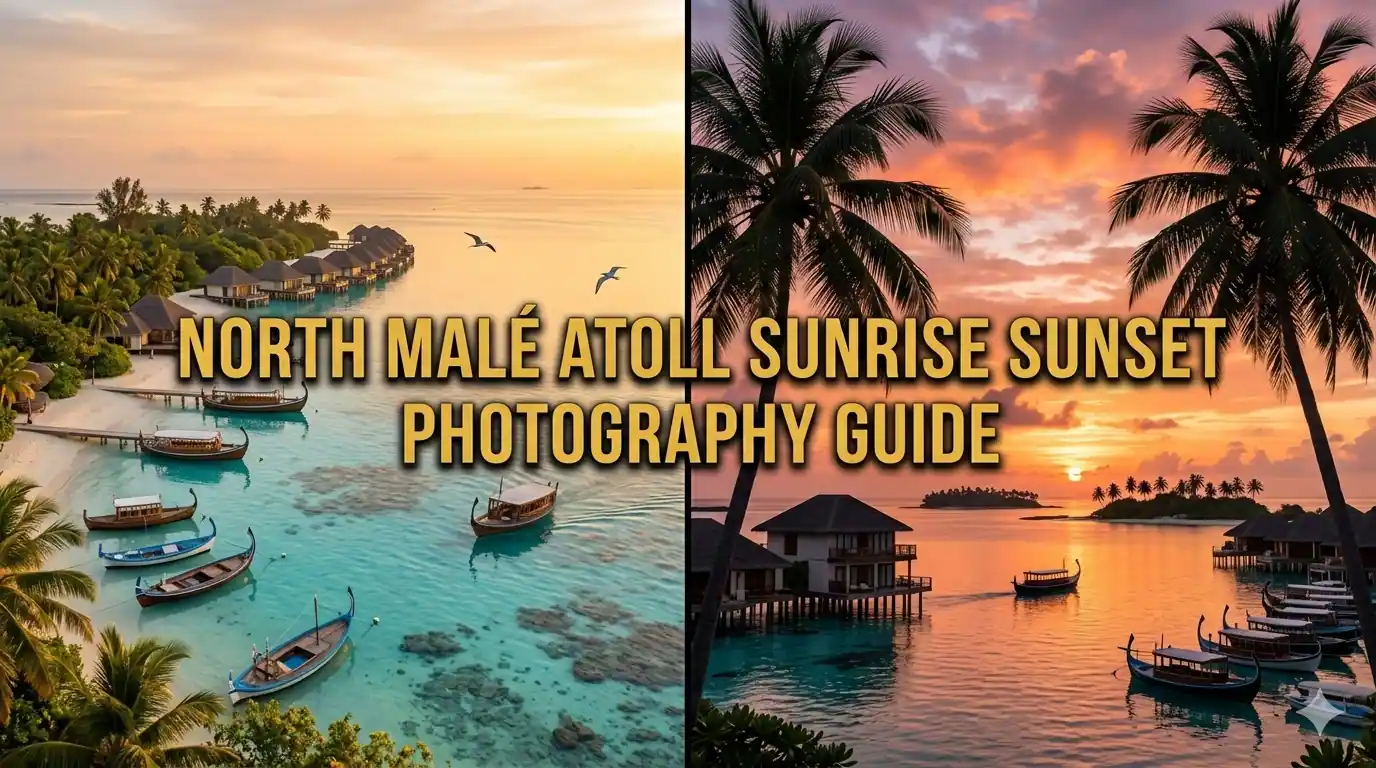
Introduction to North Malé Atoll Photography
North Malé Atoll offers some of the world's most spectacular sunrise and sunset photography opportunities.
The atoll's unique geography creates perfect conditions for capturing golden hour magic over turquoise waters.
Photographers can access numerous vantage points from local islands, resorts, and sandbanks.
This comprehensive guide reveals the best locations, timing, and techniques for stunning Maldivian light photography.
Whether amateur or professional, understanding these spots transforms your Maldives photography experience.
Understanding North Malé Atoll Geography

North Malé Atoll sits centrally in the Maldives archipelago surrounding the capital city Malé.
The atoll features numerous islands, channels, and reefs creating diverse photographic compositions.
East-facing shores provide spectacular sunrise views while west-facing locations offer dramatic sunsets.
Shallow lagoons and deep channels create varied light reflection and color opportunities.
Understanding atoll orientation helps photographers position themselves for optimal light capture.
Atoll Orientation and Light
North Malé Atoll stretches approximately forty kilometers from north to south.
Eastern reef edges face the open Indian Ocean providing unobstructed sunrise views.
Western sides face the atoll lagoon creating calm sunset reflections perfect for photography.
Channel cuts through the reef allow light penetration creating unique underwater photography opportunities.
Island positions within the atoll determine specific sunrise and sunset viewing angles.
Seasonal Light Variations
Sunrise and sunset times vary only thirty minutes throughout the year due to equatorial location.
Sunrise occurs between 6 AM and 6:30 AM year-round providing consistent shooting schedules.
Sunset happens between 6 PM and 6:30 PM allowing predictable golden hour planning.
Northeast monsoon December through March offers clearest skies and most vibrant colors.
Southeast monsoon May through November brings dramatic cloud formations enhancing sunset drama.
Best Sunrise Photography Locations

East-facing islands and reefs in North Malé Atoll provide exceptional sunrise photography opportunities.
Each location offers unique compositions from beach perspectives to elevated viewpoints.
Accessibility varies from resort islands requiring bookings to public beaches with free access.
Early morning light creates magical conditions with calm waters and vibrant sky colors.
Understanding each location's characteristics helps photographers choose optimal sunrise spots.
Hulhulé Island Beach
Hulhulé Island near Velana Airport offers accessible sunrise photography with runway views.
Eastern beach provides unobstructed ocean horizon perfect for sunrise silhouettes.
Aircraft taking off at dawn create dynamic compositions combining nature and aviation.
Public beach access requires no fees though security checkpoints exist near airport areas.
Shallow water reflections double sunrise colors creating symmetrical compositions.
Thilafushi Lagoon Viewpoints
Thilafushi industrial island offers unexpected sunrise photography with working harbor scenes.
Eastern lagoon views capture fishing boats departing at dawn creating authentic Maldivian moments.
Industrial elements contrast with natural beauty providing unique documentary photography opportunities.
Access requires permission though photographers can shoot from boat approaches.
Early morning light softens industrial landscape creating more aesthetically pleasing images.
Resort Island Eastern Beaches
Resort islands like Kurumba, Bandos, and Paradise offer manicured eastern beaches for sunrise photography.
Palm-fringed beaches create classic tropical sunrise compositions with foreground interest.
Overwater bungalows silhouette against dawn sky providing iconic Maldives imagery.
Resort access requires guest status or day pass purchases typically costing fifty to one hundred dollars.
Photography guides at resorts can recommend specific locations and optimal timing.
Sandbank Sunrise Sessions
Private sandbanks in North Malé Atoll offer exclusive sunrise photography without crowds.
360-degree water views create immersive sunrise experiences with panoramic compositions.
Boat transfers required departing before dawn typically costing one hundred to two hundred dollars.
Shallow surrounding waters reflect sky colors creating ethereal photography conditions.
Marine life activity at dawn provides wildlife photography opportunities alongside landscape shots.
Best Sunset Photography Locations

West-facing locations in North Malé Atoll showcase spectacular sunset photography opportunities.
Calm lagoon waters create perfect reflections enhancing sunset compositions dramatically.
Each location offers distinct character from local island culture to luxury resort settings.
Golden hour extends longer near equator providing extended photography windows.
Understanding sunset positions helps photographers anticipate and prepare for optimal shots.
Hulhumalé Artificial Beach
Hulhumalé's western beach provides easily accessible sunset photography with Malé skyline views.
Urban and natural elements combine creating unique cityscape seascape compositions.
Public beach access free of charge making it ideal for budget-conscious photographers.
Local fishermen and families create authentic cultural photography opportunities during sunset.
Shallow lagoon water reflects sunset colors doubling visual impact of golden hour.
Villingili Island Western Shore
Villingili Island offers elevated western viewpoints overlooking Malé and surrounding atolls.
Higher elevation provides panoramic sunset perspectives impossible from sea level.
Local island atmosphere allows authentic cultural photography alongside sunset landscapes.
Short speedboat ride from Malé costing five to ten dollars per person each way.
Western café and restaurant terraces provide comfortable sunset viewing with refreshments.
Resort Overwater Restaurants
Resort overwater restaurants position photographers perfectly for sunset dining and photography.
West-facing decks provide unobstructed horizon views with comfortable seating.
Combining dinner reservations with photography maximizes time and creates memorable experiences.
Day visitor passes allow non-guests access typically costing seventy-five to one hundred fifty dollars.
Professional photography equipment generally permitted though tripods may require advance approval.
Dhoni Cruise Sunset Photography
Traditional dhoni boat sunset cruises provide mobile photography platforms in North Malé Atoll.
Moving vessel allows positioning for optimal sunset angles and compositions.
Boat wakes create interesting foreground elements in sunset photography.
Cruise costs range from fifty to one hundred fifty dollars per person including refreshments.
Marine life encounters during sunset cruises add wildlife photography opportunities.
Technical Photography Considerations

Tropical photography presents unique technical challenges requiring specific preparation and techniques.
High humidity, salt air, and intense light demand equipment protection and exposure management.
Understanding tropical light characteristics improves image quality and creative possibilities.
Proper preparation prevents equipment failure and maximizes photography success.
Adapting techniques to Maldivian conditions separates good images from exceptional ones.
Equipment Protection in Marine Environment
Salt spray and humidity threaten camera equipment requiring protective measures.
Weather-sealed camera bodies and lenses essential for beach and boat photography.
UV filters protect lens front elements from salt spray and sand scratches.
Silica gel packets in camera bags absorb moisture preventing internal condensation.
Rain covers or plastic bags protect equipment during unexpected tropical showers.
Exposure Challenges in High Contrast Scenes
Bright tropical sunsets create extreme dynamic range challenging camera sensors.
Graduated neutral density filters balance sky and foreground exposures effectively.
Exposure bracketing with HDR processing captures full tonal range in post-production.
Spot metering on mid-tones prevents blown highlights in bright sunset skies.
RAW file format essential for maximum flexibility in exposure adjustment later.
Lens Selection for Atoll Photography
Wide-angle lenses fifteen to twenty-four millimeters capture expansive seascape compositions.
Telephoto lenses seventy to two hundred millimeters compress distant islands and clouds dramatically.
Macro lenses reveal intricate details of shells, coral, and marine life.
Fast apertures f/2.8 or wider enable handheld shooting in low dawn and dusk light.
Image stabilization crucial for telephoto work from moving boats or unstable surfaces.
Composition Techniques for Tropical Seascapes

Effective composition transforms beautiful locations into compelling photographic images.
Tropical environments offer unique compositional elements like palms, boats, and overwater structures.
Understanding visual flow and balance creates images that engage viewers emotionally.
Foreground interest adds depth and context to seascape photography.
Experimenting with perspectives reveals fresh views of familiar subjects.
Using Foreground Elements
Palm tree silhouettes frame sunrise and sunset creating classic tropical compositions.
Traditional dhoni boats add cultural context and scale to seascape images.
Overwater bungalow pillars create leading lines drawing viewers into compositions.
Rocky outcrops or coral formations provide textural contrast to smooth water.
Human subjects silhouetted against sky add narrative and emotional connection.
Reflection Photography
Calm lagoon waters create mirror reflections doubling visual impact of sunrise and sunset.
Low camera angles near water surface maximize reflection opportunities.
Polarizing filters control reflection intensity allowing creative choices about water transparency.
Shallow depth of field isolates reflections creating abstract artistic images.
Long exposures smooth water surface enhancing mirror-like reflection quality.
Sky and Cloud Compositions
Dramatic cloud formations enhance sunrise and sunset photography significantly.
Rule of thirds placement positions horizon high or low depending on sky interest.
Cloud movement during long exposures creates dynamic streaking effects.
Color temperature variations from warm oranges to cool purples add visual interest.
Clear sky minimalism creates serene peaceful images emphasizing simplicity and space.
Best Times and Seasons for Photography

Timing significantly impacts photography success in North Malé Atoll.
Understanding seasonal variations helps photographers plan optimal visit periods.
Daily light cycles create predictable photography windows requiring strategic planning.
Weather patterns influence sky conditions and color potential dramatically.
Tidal cycles affect water levels and composition possibilities at many locations.
Seasonal Photography Considerations
Northeast monsoon December through March offers clearest skies and calmest waters.
Visibility underwater reaches maximum during northeast monsoon ideal for combination photography.
Southeast monsoon May through November brings dramatic cloud formations enhancing sunset drama.
Rainy season creates moody atmospheric conditions appealing to certain photographic styles.
Transition months April and October balance good weather with fewer tourists.
Daily Photography Schedule
Golden hour begins approximately thirty minutes before sunrise and after sunset.
Blue hour occurs twenty to thirty minutes before sunrise and after sunset providing cool tones.
Midday harsh light limits photography though underwater shooting excels during this time.
Afternoon thunderstorms common in monsoon season creating dramatic lighting when they clear.
Night photography possible with minimal light pollution on local islands.
Tidal Considerations
Low tide exposes sandbars and reef creating unique composition opportunities.
High tide fills lagoons creating maximum water reflection potential.
Tidal charts essential for planning specific location photography sessions.
Tide movement during long exposures creates smooth ethereal water effects.
Some locations only accessible during specific tide states requiring advance planning.
Local Island Photography Opportunities

Local inhabited islands in North Malé Atoll offer authentic cultural photography alongside natural beauty.
Islands like Hulhumalé, Thulusdhoo, and Dhiffushi provide accessible photography locations.
Cultural sensitivity and respect essential when photographing local communities.
Local islands contrast with resort photography offering documentary and street photography opportunities.
Understanding local customs ensures positive interactions and photography permissions.
Hulhumalé Photography Locations
Hulhumalé artificial island features modern architecture against traditional seascape backdrop.
Western beach provides sunset photography with Malé city skyline views.
Urban development creates interesting juxtaposition with natural ocean environment.
Public spaces and parks offer foreground elements for seascape compositions.
Easy accessibility from airport makes Hulhumalé ideal for arrival or departure day photography.
Thulusdhoo Island Features
Thulusdhoo known for surfing breaks providing action photography opportunities.
Local brewery and factory add industrial photography elements unusual in Maldives.
Traditional village atmosphere offers cultural photography with local community.
Eastern and western beaches provide both sunrise and sunset photography options.
Guesthouses cater to photographers offering local knowledge and boat arrangements.
Cultural Photography Etiquette
Always ask permission before photographing local residents especially women and children.
Respect prayer times and religious sites avoiding photography during sensitive moments.
Dress modestly on local islands covering shoulders and knees respecting Islamic culture.
Avoid photographing government buildings, military installations, or airport security areas.
Learn basic Dhivehi greetings facilitating positive interactions before requesting photography permission.
Resort Photography Access and Permissions

Resort islands offer pristine photography locations though access requires planning and fees.
Understanding resort photography policies prevents conflicts and ensures positive experiences.
Day passes and photography tours provide non-guest access to resort locations.
Professional photography may require special permissions and fees beyond standard access.
Building relationships with resort staff facilitates photography access and local knowledge.
Day Visitor Pass Options
Many North Malé Atoll resorts offer day passes costing fifty to two hundred dollars.
Day passes typically include facility access, beach use, and sometimes meals.
Photography generally permitted for personal use though commercial work requires additional permissions.
Advance booking essential as resorts limit day visitor numbers protecting guest experience.
Transportation to resorts usually additional cost ranging from fifty to one hundred fifty dollars.
Photography Tour Packages
Some resorts offer specialized photography tours with guides and location access.
Photography workshops provide instruction alongside location access maximizing learning.
Package pricing includes accommodation, meals, and photography activities typically.
Professional photographers in residence at some resorts offering mentorship and guidance.
Group photography tours reduce costs while providing social photography experience.
Commercial Photography Regulations
Commercial photography requires advance permission and often additional fees at resorts.
Model releases necessary for images featuring resort guests or staff commercially.
Drone photography requires special permits and insurance documentation at most resorts.
Tripod use may be restricted in public areas during peak guest times.
Respect guest privacy avoiding photography that intrudes on resort guest experiences.
Underwater and Above Water Combination Photography

North Malé Atoll offers unique opportunities for split-level photography showing above and below water simultaneously.
Shallow reefs and clear water create ideal conditions for combination imagery.
Specialized equipment and techniques required for successful split-level photography.
Timing and positioning critical for capturing both elements effectively.
Practice and patience essential mastering this challenging photography genre.
Equipment for Split Photography
Dome ports essential for split-level photography creating clean waterline separation.
Wide-angle lenses fifteen to twenty-four millimeters work best for split compositions.
Waterproof camera housings or action cameras like GoPro enable underwater photography.
Lens cloths critical for wiping dome port between shots removing water droplets.
Floatation devices protect equipment if dropped in deep water.
Best Locations for Combination Shots
House reefs at resorts provide easy access for split-level photography practice.
Shallow sandbanks with coral patches offer varied above and below water interest.
Calm lagoon conditions essential for clean waterline in split images.
Early morning calm water provides best conditions before wind creates surface chop.
Overwater bungalows create interesting above water elements with reef below.
Technique and Execution
Position waterline across center or third of frame depending on composition goals.
Focus on underwater subject as above water elements typically have greater depth of field.
Use small apertures f/8 to f/11 maximizing sharpness in both elements.
Fast shutter speeds freeze water movement creating crisp split images.
Practice in controlled conditions before attempting challenging locations or subjects.
Drone Photography Considerations

Aerial photography reveals North Malé Atoll's stunning geometry and patterns from above.
Drone regulations in Maldives require permits and adherence to strict guidelines.
Spectacular aerial perspectives impossible from ground level enhance portfolio diversity.
Weather and wind conditions significantly impact drone photography success.
Respect privacy and safety regulations when operating drones in populated areas.
Maldives Drone Regulations
Drone import requires declaration at customs with detailed equipment specifications.
Ministry of Transport and Civil Aviation approval necessary before drone operation.
No-fly zones exist around airports, military installations, and some resort areas.
Maximum altitude restrictions typically one hundred twenty meters above ground level.
Privacy laws prohibit photography of individuals without consent from aerial perspective.
Best Aerial Photography Subjects
Atoll reef patterns create stunning geometric compositions from aerial perspective.
Resort islands show distinctive overwater bungalow arrangements and lagoon colors.
Sandbanks appear as white specks in turquoise water creating minimalist compositions.
Wave patterns on reef edges provide dynamic texture and movement in images.
Boat wakes and watercraft create leading lines and scale references in aerial shots.
Technical Drone Photography Tips
Polarizing filters enhance water color saturation and reduce surface glare.
Golden hour provides warm light and long shadows adding dimension to aerial images.
Bracket exposures for HDR processing capturing full dynamic range in high contrast scenes.
Shoot in RAW format providing maximum flexibility in post-processing adjustments.
Battery management critical as wind and temperature affect flight time significantly.
Post-Processing Tropical Photography
Post-processing enhances tropical photography bringing out vibrant colors and managing challenging light.
Maldivian scenes often require specific adjustments for water color accuracy and sky detail.
Workflow efficiency important when processing large volumes of sunrise and sunset images.
Ethical editing maintains scene authenticity while optimizing visual impact.
Backup and organization systems protect valuable photography from loss or damage.
Color Correction for Tropical Waters
Turquoise water requires careful white balance adjustment avoiding unrealistic blue casts.
HSL adjustments fine-tune blue and cyan tones achieving natural lagoon colors.
Gradient filters balance exposure between bright sky and darker water foreground.
Clarity and dehaze adjustments enhance water transparency and reef visibility.
Avoid oversaturation maintaining natural appearance of tropical water colors.
Sky Enhancement Techniques
Graduated filters recover detail in bright sunset skies balancing foreground exposure.
Color grading enhances warm tones in sunrise and sunset creating emotional impact.
Cloud detail extraction brings out texture and drama in sky compositions.
Dodge and burn techniques emphasize light rays and atmospheric effects.
Sky replacement ethical considerations maintain authenticity of location photography.
Workflow and Organization
Immediate backup to multiple devices prevents loss of irreplaceable sunrise and sunset images.
Culling process selects best images from similar compositions avoiding duplicate storage.
Keyword tagging facilitates future image retrieval for portfolio or client work.
Presets and batch processing apply consistent adjustments across similar lighting conditions.
Cloud storage provides off-site backup protecting against equipment loss or damage.
Conclusion and Photography Planning
North Malé Atoll offers exceptional sunrise and sunset photography opportunities for all skill levels.
Understanding locations, timing, and techniques maximizes photography success in this tropical paradise.
Respectful engagement with local communities and environments ensures sustainable photography tourism.
Proper preparation and equipment protection enable consistent results in challenging marine conditions.
The combination of natural beauty, cultural richness, and photographic diversity makes North Malé Atoll a world-class photography destination.
0 Comments