.webp)
.webp)
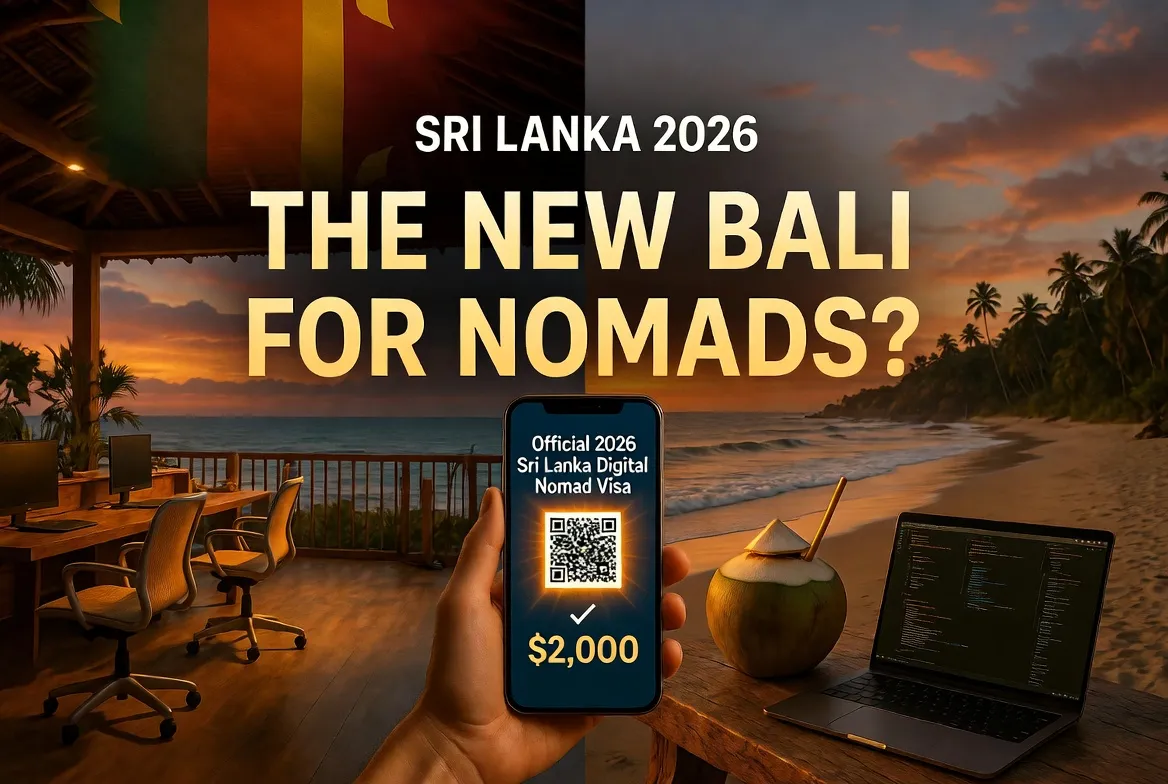
The Rise of Sri Lanka as a Digital Nomad Destination
Sri Lanka has emerged as one of the most talked-about destinations for digital nomads in 2026, with many in the remote work community boldly declaring it the "New Bali." This comparison is not merely marketing hype but reflects genuine shifts in the global digital nomad landscape as travelers seek affordable, beautiful, and welcoming destinations that offer excellent infrastructure for remote work. As Bali faces increasing challenges including overtourism, rising costs, visa complexities, and infrastructure strain, Sri Lanka presents a compelling alternative that combines tropical beauty, low cost of living, improving digital infrastructure, and a fresh, uncrowded appeal that recalls Bali's golden era of the early 2000s.
The timing of Sri Lanka's emergence as a digital nomad hotspot is significant. Following the country's economic crisis in 2022, Sri Lanka has implemented substantial reforms, stabilized its economy, and actively courted international visitors including remote workers as part of its economic recovery strategy. The government has introduced favorable visa policies, invested in digital infrastructure, and worked to improve the business environment for location-independent professionals. These efforts, combined with Sri Lanka's inherent advantages including stunning beaches, ancient cultural sites, diverse landscapes from mountains to coast, renowned hospitality, and exceptionally low costs, have created ideal conditions for digital nomad growth.
In 2025, Sri Lanka welcomed approximately 150,000 long-term visitors including digital nomads, representing a 340% increase from the post-crisis low of 2022. Projections for 2026 suggest this number could reach 250,000-300,000, with digital nomads comprising a significant portion. While these numbers remain far below Bali's estimated 600,000+ long-term visitors and digital nomads annually, the growth trajectory is remarkable and suggests Sri Lanka is experiencing the kind of explosive digital nomad adoption that Bali saw 15-20 years ago.
This comprehensive comparison examines whether Sri Lanka truly deserves the "New Bali" moniker by analyzing critical factors for digital nomads including cost of living, visa requirements, internet connectivity, co-working infrastructure, accommodation options, lifestyle and culture, safety, healthcare, community, and overall quality of life. The goal is to provide remote workers with detailed, practical information to determine whether Sri Lanka or Bali better suits their needs, preferences, and work requirements in 2026.
Cost of Living: Where Your Dollar Goes Further

One of the most compelling arguments for Sri Lanka as the "New Bali" is its significantly lower cost of living, which allows digital nomads to maintain a high quality of life on modest budgets. While both destinations offer exceptional value compared to Western countries, Sri Lanka's prices are approximately 30-40% lower than Bali across most categories, making it one of the most affordable digital nomad destinations globally in 2026.
Accommodation Costs:
Accommodation represents the largest expense for most digital nomads, and here Sri Lanka offers exceptional value. In popular digital nomad areas of Sri Lanka including Mirissa, Weligama, Hiriketiya (Hiri), and Arugam Bay, a comfortable one-bedroom apartment or villa with modern amenities typically costs $300-600 per month. Luxury beachfront villas with pools range from $800-1,500 monthly. In contrast, similar accommodations in Bali's digital nomad hubs like Canggu, Ubud, and Uluwatu cost $500-900 for standard apartments and $1,200-2,500 for luxury villas, representing 40-60% higher prices than Sri Lanka.
Short-term rentals and guesthouses in Sri Lanka cost $15-35 per night, while Bali's equivalent options average $25-50 nightly. The price differential reflects Sri Lanka's lower property values, reduced tourism demand compared to Bali's saturated market, and the country's efforts to attract long-term visitors through competitive pricing.
Food and Dining:
Both destinations offer incredible food at remarkably low prices, though Sri Lanka edges out Bali in affordability. Local Sri Lankan cuisine at small restaurants and street food stalls costs $2-5 per meal, while mid-range restaurant meals average $8-15. Western food and international cuisine, available in tourist areas, costs $10-20 per meal. Groceries for cooking at home are exceptionally cheap, with fresh produce, rice, lentils, and local ingredients costing 40-50% less than comparable items in Bali.
Bali's food scene is slightly more expensive but still very affordable. Local warung meals cost $3-7, mid-range restaurants charge $10-20, and Western/international dining averages $15-30. Bali's advantage is greater variety and more established international food scenes in areas like Canggu and Seminyak, with numerous vegan, health food, and specialty dining options that Sri Lanka is still developing.
Monthly food budgets for digital nomads typically run $200-350 in Sri Lanka versus $300-500 in Bali, representing significant savings particularly for those who eat out frequently.
Transportation:
Getting around Sri Lanka costs $50-100 monthly for scooter rentals ($40-70/month) plus fuel ($10-30). Tuk-tuks for short trips cost $2-5, while private drivers for day trips charge $40-60 daily. Public buses and trains are extremely cheap at $0.50-3 per journey but can be crowded and time-consuming.
Bali's scooter rentals cost $50-80 monthly with similar fuel expenses. Ride-hailing apps like Gojek and Grab are widely available and affordable at $2-8 per trip. Private drivers cost $50-70 daily. Overall transportation costs are comparable, though Bali offers more convenient app-based services while Sri Lanka relies more on traditional tuk-tuks and informal transport networks.
Co-working and Internet:
Co-working space memberships in Sri Lanka cost $80-150 monthly for hot desks and $150-250 for dedicated desks, slightly less than Bali's $100-200 for hot desks and $200-350 for dedicated spaces. However, Sri Lanka has far fewer co-working options, concentrated mainly in Colombo, Galle, and emerging spaces in beach towns. Bali boasts over 100 co-working spaces across the island with world-class facilities, networking events, and established communities.
Mobile data in Sri Lanka costs $10-20 monthly for generous plans with 50-100GB, while home internet runs $20-40 monthly. Bali's internet costs are similar at $25-50 for reliable home connections. Both destinations offer adequate connectivity for remote work, though infrastructure quality varies by location.
Overall Monthly Budgets:
A comfortable digital nomad lifestyle in Sri Lanka costs $800-1,200 monthly including accommodation, food, transportation, co-working, entertainment, and miscellaneous expenses. In Bali, similar lifestyles cost $1,200-1,800 monthly. Budget travelers can survive on $600-800 in Sri Lanka versus $900-1,200 in Bali, while luxury lifestyles cost $2,000-3,000 in Sri Lanka compared to $3,000-5,000 in Bali.
The cost advantage clearly favors Sri Lanka, allowing digital nomads to either save significantly, extend their travel budgets, or enjoy higher quality accommodations and experiences for the same money. For remote workers earning Western salaries, Sri Lanka's low costs enable exceptional savings rates and financial flexibility.
Visa Requirements and Legal Framework for Remote Workers

Visa policies represent a critical factor for digital nomads choosing between destinations, and both Sri Lanka and Bali (Indonesia) have evolved their visa frameworks in 2025-2026 to better accommodate remote workers, though with different approaches and requirements.
Sri Lanka's Digital Nomad Visa Options:
Sri Lanka introduced significant visa reforms in 2024-2025 to attract digital nomads and long-term visitors. The country now offers several visa options suitable for remote workers:
The Sri Lanka Electronic Travel Authorization (ETA) allows tourists from 196 countries to obtain visas online for 30-day stays, extendable up to 6 months. The process is straightforward, requiring only passport details, travel information, and payment of fees ($50-100 depending on duration). This visa permits tourism and remote work for foreign employers but prohibits employment with Sri Lankan companies.
The Residence Visa for Remote Workers, launched in 2025, specifically targets digital nomads and remote professionals. This visa allows stays of 1-2 years with multiple entries, requires proof of remote employment or business ownership, minimum monthly income of $2,000, health insurance coverage, and clean criminal record. Application fees are $300-500, and processing takes 2-4 weeks. This visa provides stability and legal clarity for long-term remote workers.
Sri Lanka also offers Multiple Entry Business Visas valid for 1-5 years for those conducting business activities, and pathways to Permanent Residence for those investing $250,000+ in the country or maintaining legal residence for 10+ years.
Visa extensions are generally straightforward in Sri Lanka, with immigration offices in Colombo and major cities processing extensions within 1-2 weeks. Overstay penalties are reasonable at $25-50 per month, though avoiding overstays is strongly recommended.
Indonesia/Bali Visa Options:
Indonesia has also reformed its visa system to attract digital nomads, though the framework differs from Sri Lanka's approach:
The B211A Visit Visa (social-cultural visa) remains the most popular option for digital nomads in Bali. It allows 60-day stays extendable up to 4 times (total 180 days), costs $100-200 plus extension fees of $50-100 per extension, and requires sponsorship from an Indonesian entity (often provided by visa agents for $50-100). This visa technically prohibits work, but remote work for foreign employers is generally tolerated though exists in a legal gray area.
Indonesia's Second Home Visa, introduced in 2022 and refined in 2025, targets wealthy remote workers and retirees. It requires proof of funds of approximately $130,000 in an Indonesian bank or employment with a company valued at $650,000+, allows 5-10 year stays, and costs $200-400. While expensive, it provides long-term stability for those who qualify.
The Digital Nomad Visa proposal has been discussed since 2022 but as of 2026 has not been fully implemented, creating uncertainty for remote workers seeking legal clarity.
Visa Comparison:
Sri Lanka offers clearer legal frameworks for digital nomads with its specific remote worker visa, while Bali's B211A visa exists in a gray area regarding remote work legality. Sri Lanka's visa costs are comparable or slightly higher, but provide greater legal certainty. Bali's visa requires more frequent extensions and agent involvement, adding complexity and cost over time.
For short-term stays under 6 months, both destinations offer workable solutions. For long-term residence of 1-2+ years, Sri Lanka's dedicated remote worker visa provides superior clarity and convenience. However, Bali's established expat infrastructure makes visa runs and extensions more predictable despite the gray legal status.
Internet Connectivity and Digital Infrastructure

Reliable, fast internet is non-negotiable for digital nomads, and both Sri Lanka and Bali have made significant infrastructure improvements in recent years, though challenges remain particularly outside major urban centers.
Sri Lanka's Internet Infrastructure:
Sri Lanka's internet connectivity has improved dramatically since 2022, with fiber optic expansion, 4G/LTE coverage reaching 90% of populated areas, and the rollout of 5G in Colombo and major cities beginning in 2025. Average internet speeds in 2026 are:
- Colombo and major cities: 50-150 Mbps download, 20-50 Mbps upload via fiber optic
- Tourist areas (Galle, Mirissa, Kandy): 25-75 Mbps download, 10-30 Mbps upload
- Remote areas and smaller towns: 10-30 Mbps download, 5-15 Mbps upload
Mobile data networks operated by Dialog, Mobitel, Hutch, and Airtel provide reliable 4G coverage in most areas, with speeds of 20-60 Mbps in urban areas and 10-30 Mbps in rural regions. Unlimited data plans cost $15-30 monthly, making mobile internet an affordable backup or primary option.
Co-working spaces in Colombo, Kandy, Galle, and emerging locations offer guaranteed high-speed internet (100-300 Mbps) with backup connections, making them ideal for video calls and bandwidth-intensive work. However, co-working infrastructure remains limited compared to Bali, with perhaps 15-20 quality spaces nationwide versus Bali's 100+.
Power reliability has improved significantly since the 2022 crisis, with most urban and tourist areas experiencing minimal outages. However, occasional power cuts still occur, particularly in rural areas, making backup power (UPS, generators, or battery packs) advisable for critical work.
Bali's Internet Infrastructure:
Bali benefits from more developed digital infrastructure, particularly in popular digital nomad hubs:
- Canggu, Ubud, Seminyak, Uluwatu: 50-200 Mbps download, 20-100 Mbps upload via fiber optic
- Other areas (Sanur, Denpasar, North Bali): 25-100 Mbps download, 10-50 Mbps upload
- Remote areas: 10-40 Mbps download, 5-20 Mbps upload
Major internet providers include IndiHome, Biznet, First Media, and CBN, with fiber optic coverage extensive in southern Bali and expanding elsewhere. Mobile networks (Telkomsel, XL Axiata, Indosat) provide 4G coverage island-wide with speeds of 20-80 Mbps in populated areas.
Bali's co-working spaces offer exceptional connectivity with speeds of 100-500 Mbps, redundant connections, backup power, and professional infrastructure designed for remote work. The density of co-working spaces means digital nomads can easily find backup locations if their primary workspace experiences issues.
Power reliability in Bali is generally good in tourist areas, with infrequent outages. Most accommodations and co-working spaces have backup generators or battery systems.
Connectivity Comparison:
Bali maintains an advantage in internet infrastructure with faster average speeds, more extensive fiber coverage, greater co-working space availability, and more reliable power. However, Sri Lanka's connectivity is adequate for most remote work needs, particularly in Colombo, Galle, and major tourist areas, and the gap is narrowing as infrastructure investments continue.
For digital nomads requiring consistent high-speed internet for video production, large file transfers, or multiple simultaneous video calls, Bali's infrastructure is more reliable. For standard remote work including email, web applications, video conferencing, and moderate file sharing, Sri Lanka's connectivity is sufficient, particularly if based in urban areas or using co-working spaces.
Co-working Spaces and Work Infrastructure

The availability and quality of co-working spaces significantly impact the digital nomad experience, providing not just reliable internet and comfortable workspaces but also community, networking opportunities, and professional environments.
Sri Lanka's Co-working Landscape:
Sri Lanka's co-working ecosystem is developing rapidly but remains nascent compared to established digital nomad destinations. In 2026, the country has approximately 15-20 quality co-working spaces, concentrated in:
- Colombo: The hub of Sri Lanka's co-working scene with spaces like The Work Hub, Regus, Spaces, and local operators offering professional environments, meeting rooms, and networking events. Monthly memberships cost $100-250.
- Galle: Emerging as a digital nomad-friendly city with 2-3 co-working spaces catering to remote workers seeking beachside lifestyles. Facilities are modern but more limited than Colombo.
- Kandy: Has 1-2 co-working spaces serving both locals and digital nomads exploring the cultural highlands.
- Beach towns (Mirissa, Weligama, Arugam Bay): Limited co-working infrastructure with perhaps 1-2 small spaces or cafe-based working options. Most digital nomads work from accommodations, cafes, or occasional co-working visits to Colombo or Galle.
Sri Lanka's co-working spaces typically offer high-speed internet, air conditioning, comfortable seating, coffee/tea, meeting rooms, and basic amenities. However, they lack the extensive community programming, events, workshops, and networking opportunities that characterize Bali's mature co-working ecosystem.
Cafes with reliable wifi serve as alternative workspaces, particularly in Colombo, Galle, and tourist areas, though they can be noisy and less conducive to focused work or video calls.
Bali's Co-working Ecosystem:
Bali boasts one of the world's most developed co-working scenes with over 100 spaces across the island, particularly concentrated in digital nomad hubs:
- Canggu: The epicenter with 30+ co-working spaces including Dojo Bali, Tropical Nomad, Bwork, Outpost, and numerous others offering world-class facilities, vibrant communities, and extensive programming.
- Ubud: Features 20+ spaces including Hubud (one of Asia's pioneering co-working spaces), Outpost Ubud, and others catering to creatives, entrepreneurs, and remote workers seeking jungle settings.
- Uluwatu, Seminyak, Sanur: Each has 5-10 co-working options serving their respective communities.
Bali's co-working spaces distinguish themselves through:
- Exceptional facilities including pools, gyms, cafes, event spaces, and Instagram-worthy designs
- Extensive community programming including workshops, networking events, skill-sharing sessions, and social activities
- Strong entrepreneurial and startup ecosystems with access to mentors, investors, and collaborators
- Flexible membership options from daily passes ($10-20) to monthly unlimited ($150-350)
- International communities with nomads from 50+ countries
- Professional services including meeting room rentals, virtual offices, and business support
- 👉 Ashgabat Digital Nomad Internet and Connectivity Guide 2026
- 👉 Sustainable Wildlife Viewing Best Practices for Socotra Chameleon
- 👉 Complete Guide to Exploring Al-Shafi'i Mosque in Jeddah 2026
Co-working Comparison:
Bali clearly dominates in co-working infrastructure, offering more spaces, better facilities, stronger communities, and extensive programming that enhances the digital nomad experience. Sri Lanka's limited co-working options require digital nomads to be more self-sufficient, working primarily from accommodations or cafes, with occasional co-working use for specific needs.
For digital nomads who value community, networking, structured work environments, and professional development opportunities, Bali is superior. For those who prefer solitude, lower costs, and don't require extensive co-working infrastructure, Sri Lanka's limitations are manageable, particularly as the ecosystem continues developing.
Lifestyle, Culture, and Quality of Life

Beyond work infrastructure, lifestyle factors including culture, recreation, food, social opportunities, and overall quality of life significantly influence digital nomad destination choices.
Sri Lanka's Lifestyle Appeal:
Sri Lanka offers a rich, diverse lifestyle that combines stunning natural beauty, ancient culture, warm hospitality, and varied experiences:
Natural Beauty: Sri Lanka packs incredible diversity into its compact 65,000 square kilometers. Pristine beaches line the coast, dramatic mountains rise in the central highlands, lush rainforests teem with wildlife, waterfalls cascade through tea plantations, and national parks harbor elephants, leopards, and whales. This diversity allows digital nomads to easily vary their environment—working from beach towns one month and mountain villages the next.
Cultural Richness: Sri Lanka's 2,500+ years of recorded history is visible in ancient cities like Anuradhapura and Polonnaruwa, rock fortresses like Sigiriya, colonial architecture in Galle Fort, Buddhist temples, Hindu kovils, and vibrant festivals. Cultural immersion is easy and rewarding, with locals generally welcoming to foreigners interested in their heritage.
Food Scene: Sri Lankan cuisine is exceptional, featuring rice and curry, hoppers, kottu, seafood, tropical fruits, and renowned Ceylon tea. The food is flavorful, healthy, and incredibly affordable. International cuisine is available in tourist areas though less diverse than Bali.
Activities: Surfing (particularly in Arugam Bay and the south coast), yoga retreats, whale watching, hiking, wildlife safaris, temple visits, cooking classes, and beach relaxation provide abundant leisure options. The pace of life is generally relaxed and unhurried.
Community: Sri Lanka's digital nomad community is small but growing, with perhaps 500-1,000 long-term remote workers at any time. This creates intimate, tight-knit communities where everyone knows each other, fostering deep connections but limiting networking diversity. The expat community is friendly and welcoming to newcomers.
Safety: Sri Lanka is generally safe for digital nomads, with low violent crime rates. Petty theft and scams exist but are less common than in many tourist destinations. The 2022 economic crisis caused some unrest, but stability has returned. Women travelers generally feel safe though should exercise normal precautions.
Healthcare: Sri Lanka offers good healthcare with modern hospitals in Colombo (Asiri, Nawaloka, Lanka Hospitals) providing quality care at affordable prices. Smaller cities and tourist areas have clinics for basic needs. Healthcare costs are 60-70% lower than Western countries. However, specialized treatment may require travel to Colombo or medical evacuation.
Bali's Lifestyle Appeal:
Bali has cultivated a lifestyle that attracts digital nomads seeking balance between work, wellness, adventure, and community:
Natural Beauty: Bali offers stunning beaches, dramatic volcanoes, iconic rice terraces, waterfalls, jungles, and coral reefs. While less geographically diverse than Sri Lanka (no wildlife safaris or ancient cities on the same scale), Bali's landscapes are undeniably beautiful and highly Instagrammable.
Cultural Richness: Balinese Hindu culture permeates daily life through temples, ceremonies, traditional arts, dance, and architecture. The island offers rich cultural experiences though mass tourism has commodified some aspects. Ubud remains a cultural heart with authentic arts and traditions.
Food Scene: Bali boasts an exceptional food scene ranging from local warungs serving nasi campur and mie goreng to world-class restaurants, vegan cafes, health food establishments, and international cuisine. The variety and quality exceed Sri Lanka, particularly in Canggu, Ubud, and Seminyak.
Activities: Surfing, yoga, fitness, beach clubs, nightlife, hiking, diving, wellness retreats, cultural tours, and social events provide endless activities. Bali's activity scene is more developed and commercialized than Sri Lanka's, with options for every interest and budget.
Community: Bali's digital nomad community is massive, with an estimated 50,000-100,000 long-term remote workers and entrepreneurs at any time. This creates incredible networking opportunities, diverse friendships, collaboration possibilities, and vibrant social scenes. However, the sheer size can feel overwhelming, and connections may be more superficial than in smaller communities.
Safety: Bali is generally safe with low violent crime. Petty theft, scams, and traffic accidents pose the main risks. The island is tolerant and welcoming to foreigners. Women travelers generally feel safe though should exercise normal precautions.
Healthcare: Bali has good healthcare with international-standard hospitals like BIMC and Siloast in Denpasar and Canggu, plus numerous clinics. Medical tourism is well-developed. Costs are affordable at 50-60% below Western prices. Serious conditions may require evacuation to Singapore.
Lifestyle Comparison:
Bali offers a more developed, commercialized, and socially vibrant lifestyle with extensive amenities, activities, and community. Sri Lanka provides a more authentic, off-the-beaten-path experience with rich culture, natural diversity, and intimate communities. Bali suits those seeking active social lives, wellness culture, and established infrastructure. Sri Lanka appeals to adventurers, culture enthusiasts, and those preferring quieter, less touristy environments.
Accommodation Options and Living Standards

Quality, affordable accommodation is essential for digital nomads, and both destinations offer diverse options though with different characteristics.
Sri Lanka Accommodation:
Sri Lanka's accommodation market caters well to digital nomads with options including:
- Villas and apartments: Modern, furnished one-bedroom units cost $300-600 monthly in beach towns and $400-800 in Colombo. Many include wifi, air conditioning, kitchens, and sometimes pools.
- Guesthouses and homestays: Budget options at $15-35 nightly or $300-600 monthly, often family-run with basic amenities and local hospitality.
- Luxury villas: Beachfront or hillside properties with pools cost $800-2,000 monthly, offering exceptional value compared to Western destinations.
- Serviced apartments: Available in Colombo at $600-1,200 monthly with hotel-like amenities.
Finding accommodation typically involves Facebook groups, Booking.com, Airbnb (though less common post-crisis), or arriving and searching locally. Long-term rentals often require cash payments and informal contracts. Quality varies significantly, so viewing properties before committing is advisable.
Most accommodations include basic furniture, kitchens, and wifi, though internet reliability varies. Air conditioning is common in coastal areas but not universal in hill country. Power backup is increasingly common but not guaranteed.
Bali Accommodation:
Bali's mature rental market offers extensive options:
- Villas and houses: Private one-bedroom villas cost $600-1,200 monthly in Canggu/Ubud, with luxury properties at $1,500-3,000+. Many include pools, gardens, and staff.
- Apartments and studios: Modern units cost $400-800 monthly with amenities like pools, gyms, and security.
- Guesthouses and homestays: Budget options at $25-50 nightly or $500-900 monthly, often family-run with basic facilities.
- Co-living spaces: Emerging option combining accommodation and co-working at $800-1,500 monthly all-inclusive.
Bali's rental market is well-developed with numerous agencies, Facebook groups, WhatsApp networks, and platforms like Airbnb and Booking.com. Long-term leases (6-12 months) are common and provide better rates. Contracts are more formalized than Sri Lanka though still often informal by Western standards.
Quality is generally high with modern furnishings, reliable wifi, air conditioning, pools, and Western-style amenities common. The competitive market ensures good standards though prices have risen significantly in popular areas.
Accommodation Comparison:
Sri Lanka offers significantly lower prices (30-50% cheaper) but less inventory, fewer amenities, and more variability in quality. Bali provides more options, higher standards, better amenities, and more professional rental processes at higher prices. For budget-conscious nomads, Sri Lanka wins. For those prioritizing comfort, amenities, and convenience, Bali is superior.
Transportation and Mobility

Getting around efficiently affects quality of life for digital nomads, and both destinations have distinct transportation characteristics.
Sri Lanka Transportation:
Sri Lanka's transportation options include:
- Scooters/motorcycles: Rental costs $40-70 monthly. Essential for beach towns and exploring. Requires international driving permit and comfort with chaotic traffic.
- Tuk-tuks: Ubiquitous three-wheelers for short trips at $2-5 per ride. Can be hired for full days at $30-50. Negotiate fares in advance.
- Private drivers: Available for day trips at $40-60 daily including fuel. Comfortable for longer journeys.
- Trains: Scenic but slow. Famous Kandy-Ella route costs $5-15. Good for experiences but impractical for regular commuting.
- Buses: Extremely cheap ($0.50-3) but crowded, hot, and unpredictable. Used mainly by budget travelers.
- Ride-hailing: PickMe and Uber operate in Colombo with limited coverage elsewhere.
Traffic in Colombo and major cities is congested. Road quality varies from excellent highways to potholed rural roads. Driving is on the left. Distances are relatively short—the island is only 432km long and 224km wide.
Bali Transportation:
Bali's transportation includes:
- Scooters: Rental costs $50-80 monthly. The primary mode of transport for digital nomads. Essential for navigating traffic and narrow roads.
- Ride-hailing: Gojek and Grab are ubiquitous, affordable ($2-8 per trip), and convenient for those not riding scooters.
- Private drivers: Available for $50-70 daily. Common for day trips and airport transfers.
- Car rentals: Possible but impractical due to traffic, parking difficulties, and narrow roads.
- Buses: Limited public bus system. Trans Sarbagita serves some routes but rarely used by tourists.
Traffic in southern Bali (Canggu, Seminyak, Denpasar) is notoriously congested, particularly during peak hours. Scooters weave through traffic, and accidents are common. Road quality is generally good in tourist areas. Distances are short but travel times long due to congestion.
Transportation Comparison:
Both destinations require scooter riding for optimal mobility, though ride-hailing is more developed in Bali. Sri Lanka has less traffic outside Colombo but also less infrastructure. Bali's congestion is frustrating but manageable with scooters. Costs are comparable. Neither destination is particularly easy for those uncomfortable with two-wheeled transport.
Final Verdict: Is Sri Lanka Really the "New Bali"?
After comprehensive analysis, Sri Lanka does share similarities with Bali's digital nomad appeal but also differs significantly. Whether it's truly the "New Bali" depends on what aspects matter most to individual remote workers.
Where Sri Lanka Excels Over Bali:
- Cost: 30-40% cheaper across most categories, enabling higher savings or better quality of life on the same budget
- Authenticity: Less touristy, more genuine cultural experiences, fewer crowds
- Natural diversity: Beaches, mountains, wildlife, ancient cities all accessible within short distances
- Emerging destination appeal: Being part of a growing community rather than an established scene
- Visa clarity: Dedicated remote worker visa provides legal certainty
- Value: Exceptional quality-to-price ratio for accommodation, food, and experiences
- 👉 Ashgabat Digital Nomad Internet and Connectivity Guide 2026
- 👉 Sustainable Wildlife Viewing Best Practices for Socotra Chameleon
- 👉 Complete Guide to Exploring Al-Shafi'i Mosque in Jeddah 2026
Where Bali Remains Superior:
- Infrastructure: Better internet, more co-working spaces, more reliable services
- Community: Massive, diverse digital nomad network with endless networking opportunities
- Amenities: More restaurants, cafes, shops, entertainment, and lifestyle options
- Convenience: Easier to find everything you need, more English spoken, more tourist-friendly
- Wellness culture: World-class yoga, fitness, health food, and wellness infrastructure
- Proven track record: Established destination with predictable experiences
- 👉 Ashgabat Digital Nomad Internet and Connectivity Guide 2026
- 👉 Sustainable Wildlife Viewing Best Practices for Socotra Chameleon
- 👉 Complete Guide to Exploring Al-Shafi'i Mosque in Jeddah 2026
The Verdict:
Sri Lanka is not simply "the new Bali"—it's a different destination with its own character, advantages, and challenges. For digital nomads prioritizing low costs, authentic experiences, natural beauty, cultural richness, and being part of an emerging scene, Sri Lanka is an excellent choice that recalls Bali's earlier, less commercialized era.
For those requiring robust infrastructure, extensive co-working options, large communities, wellness amenities, and proven reliability, Bali remains superior despite higher costs and overtourism challenges.
The ideal approach for many digital nomads in 2026 may be experiencing both: starting in Sri Lanka to enjoy low costs and authentic experiences, then moving to Bali for community, networking, and infrastructure when needed. Both destinations offer exceptional value and quality of life for remote workers, and the "best" choice depends entirely on individual priorities, work requirements, and lifestyle preferences.
Sri Lanka's emergence as a digital nomad destination is real and significant, but rather than replacing Bali, it expands the options available to location-independent professionals seeking tropical, affordable, welcoming places to live and work. In 2026, both destinations deserve consideration, and many digital nomads will find value in experiencing what each uniquely offers.
0 Comments