.webp)
.webp)
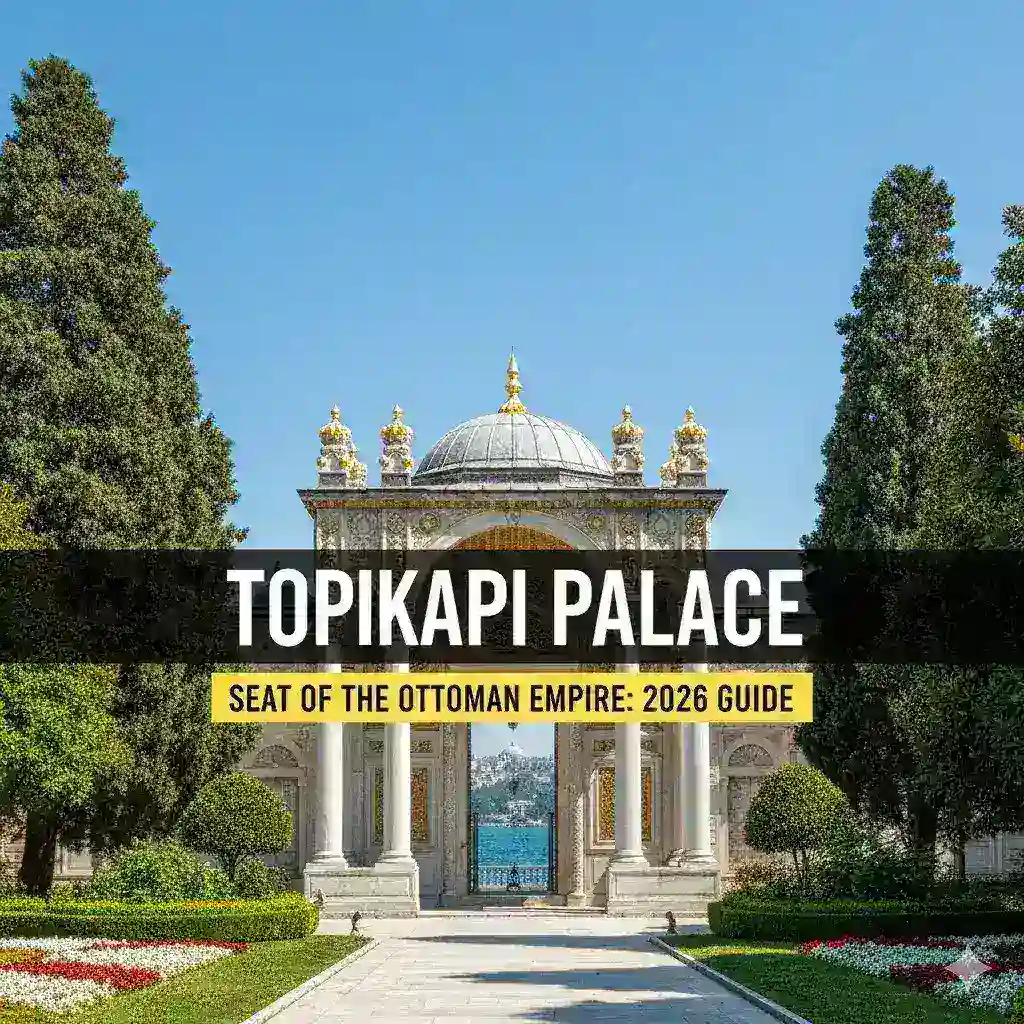
TOPKAPI PALACE: EXPLORING THE OTTOMAN EMPIRE'S SEAT
Topkapi Palace stands as one of the world's most significant imperial residences, a sprawling complex that served as the administrative heart and royal dwelling of the Ottoman Empire for nearly four centuries. Located on Istanbul's historic Seraglio Point, where the Bosphorus Strait meets the Golden Horn and the Sea of Marmara, this magnificent palace witnessed the zenith of Ottoman power, culture, and artistic achievement. From its construction in the 1460s by Sultan Mehmed II (the Conqueror) until the mid-19th century, Topkapi Palace was the stage for imperial ceremonies, political intrigue, artistic patronage, and the daily life of sultans, their families, and thousands of courtiers.
In 2026, as travelers seek destinations that combine architectural splendor, historical depth, and authentic cultural experiences, Topkapi Palace remains an essential destination for anyone visiting Istanbul. Whether you are a history enthusiast fascinated by imperial power, an architecture lover drawn by Ottoman design, a culture seeker inspired by Islamic art and artifacts, or simply a curious traveler awed by human achievement, this comprehensive guide will help you understand and appreciate one of the world's most remarkable palace complexes.
Understanding Topkapi Palace requires more than admiring its ornate rooms; it demands engaging with the complex political, cultural, and spiritual life of the Ottoman court. By approaching Topkapi Palace with curiosity and respect, you will discover not just a museum but a living dialogue between power and piety, between public ceremony and private life, between imperial grandeur and human intimacy.
HISTORICAL CONTEXT: FROM CONQUEST TO IMPERIAL RESIDENCE
The story of Topkapi Palace begins with the Ottoman conquest of Constantinople in 1453.
Construction and Early History (1460s-16th Century):
After capturing Constantinople, Sultan Mehmed II (Mehmed the Conqueror) sought to establish a new imperial capital that would reflect Ottoman power and Islamic identity.
Key Historical Milestones:
- 1453: Mehmed II conquers Constantinople, ending the Byzantine Empire
- 1459-1465: Construction of Topkapi Palace begins on Seraglio Point, the historic acropolis of ancient Byzantium
- Original Name: "New Palace" (Yeni Saray), later renamed Topkapi ("Cannon Gate") after a nearby gate
- Purpose: Serve as both administrative center and royal residence for the Ottoman dynasty
Architectural Vision:
- Layout: Unlike European palaces with a single monumental structure, Topkapi was designed as a series of courtyards and pavilions, reflecting Islamic concepts of privacy, hierarchy, and harmony with nature
- Expansion: Successive sultans added buildings, gardens, and decorations, creating a layered architectural record of Ottoman history
- Strategic Location: Positioned to command views of the Bosphorus, Golden Horn, and Sea of Marmara, symbolizing Ottoman control of key waterways
The Palace as Imperial Seat (16th-19th Centuries):
For nearly 400 years, Topkapi Palace was the center of Ottoman political, cultural, and spiritual life:
Political Function:
- Imperial Council (Divan): Met in the Second Courtyard to govern the empire
- Sultan's Authority: The sultan ruled from the Third Courtyard, receiving ambassadors and conducting state business
- Administrative Hub: Thousands of officials, scribes, and servants worked within the palace complex
Cultural Patronage:
- Artistic Workshops: Palace ateliers produced exquisite manuscripts, ceramics, textiles, and metalwork
- Library: Extensive collection of manuscripts, including Quranic texts, scientific works, and historical chronicles
- Gardens: Landscaped gardens reflected Islamic paradise imagery and provided serene spaces for contemplation
Daily Life:
- Royal Household: The sultan's family, concubines, eunuchs, and servants lived in the Harem and surrounding quarters
- Education: Prince's school (Enderun) trained future administrators and military leaders
- Religious Life: Mosques, prayer rooms, and religious scholars ensured spiritual observance
Transition and Museum Status (19th Century-Present):
- 1856: Sultan Abdülmecid I moves the imperial residence to the new Dolmabahçe Palace, reflecting European influences
- 1924: Following the establishment of the Turkish Republic, Topkapi Palace is converted into a museum
- 1985: Designated as part of the "Historic Areas of Istanbul" UNESCO World Heritage Site
- Today: One of the world's most visited palace museums, preserving Ottoman heritage for global audiences
ARCHITECTURAL LAYOUT: FOUR COURTYARDS AND IMPERIAL GATES
Topkapi Palace is organized as a series of four main courtyards, each with distinct functions and levels of access, reflecting Ottoman concepts of hierarchy, privacy, and ceremonial progression.
The Imperial Gate (Bab-ı Hümayun):
Entrance to the Palace Complex:
- Construction: Built in 1478 under Mehmed II; restored after earthquake damage
- Architecture: Massive stone gate with Ottoman inscription invoking God's protection
- Function: Main public entrance; still used today by visitors
- Inscription: Features Quranic verses and the sultan's tugra (imperial monogram)
First Courtyard (Alay Meydanı):
The Outer Court:
- Function: Public area for ceremonies, military parades, and general access
- Features:
- Hagia Irene Church: Byzantine church preserved within the palace grounds, now used for concerts and exhibitions
- Imperial Mint: Former coin-production facility, now housing exhibitions
- Fountains and Gardens: Landscaped spaces with historic fountains and cypress trees
- Atmosphere: Lively, accessible area with ticket offices, cafes, and visitor services
Gate of Salutation (Babüsselam):
Entrance to the Imperial Realm:
- Architecture: Ornate gate with twin towers, representing the transition from public to imperial space
- Function: Only authorized personnel and invited guests could pass beyond this point
- Ceremony: Ambassadors and dignitaries were received here with elaborate protocols
Second Courtyard (Divan Meydanı):
The Administrative Heart:
- Function: Center of Ottoman governance; location of the Imperial Council (Divan)
- Key Buildings:
- Divan-ı Hümayun: Council chamber where viziers met to govern the empire
- Palace Kitchens: Massive complex where hundreds of cooks prepared meals for the court; now displays exquisite Iznik ceramics and imperial porcelain
- Harem Entrance: Discrete entrance to the private imperial household
- Treasury Entrance: Access to the Imperial Treasury (requires separate ticket)
- Atmosphere: Formal, ceremonial space reflecting imperial authority
Gate of Felicity (Babüssaade):
Entrance to the Private Imperial Sphere:
- Architecture: Elegant gate with gold inscriptions and intricate decoration
- Function: Threshold to the sultan's private quarters; only the sultan, his family, and highest officials could pass
- Ceremony: The sultan appeared on the gate's balcony for important announcements and celebrations
Third Courtyard (Enderun Avlusu):
The Sultan's Private Domain:
- Function: Private residence of the sultan and center of palace education
- Key Buildings:
- Audience Hall (Arz Odası): Where the sultan received ambassadors and conducted state business
- Imperial Treasury: Houses one of the world's most spectacular collections of jewels, artifacts, and sacred relics (separate ticket required)
- Library of Ahmed III: Elegant rococo-style library with extensive manuscript collection
- Enderun School: Educational institution for training future imperial administrators
- Atmosphere: Intimate, refined spaces reflecting the sultan's personal taste and spiritual devotion
Fourth Courtyard and Gardens:
The Imperial Retreat:
- Function: Private gardens and pavilions for the sultan's relaxation and contemplation
- Features:
- Baghdad Kiosk and Revan Kiosk: Elegant pavilions with Iznik tile decoration and Bosphorus views
- Terrace Gardens: Landscaped terraces with fountains, flowers, and panoramic views
- Sofa Kiosk: Pavilion offering spectacular views of the Bosphorus and Golden Horn
- Atmosphere: Serene, poetic spaces reflecting Islamic paradise imagery and Ottoman appreciation of nature
THE HAREM: PRIVATE LIFE OF THE IMPERIAL HOUSEHOLD
The Harem (from Arabic "haram," meaning sacred or forbidden) was the private residential quarter of the sultan, his family, concubines, and servants. Often misunderstood in Western imagination, the Ottoman Harem was a complex institution of education, politics, and domestic life.
Harem Organization and Life:
Structure and Hierarchy:
- Residents: The sultan's mother (Valide Sultan), wives, concubines, children, and hundreds of female servants and eunuchs
- Hierarchy: Strictly organized with the Valide Sultan at the top, followed by senior concubines, junior concubines, and servants
- Education: Women received instruction in religion, literature, music, dance, and court etiquette
- Influence: Senior women, particularly the Valide Sultan, often wielded significant political influence
Architectural Layout:
- Rooms and Apartments: Over 300 rooms arranged around courtyards, with private quarters for the sultan and his family
- Decorative Arts: Exquisite Iznik tiles, painted decorations, stained glass, and carved woodwork
- Bathhouses: Elaborate hammams for ritual purification and relaxation
- Gardens: Private courtyards with fountains and flowers for contemplation
Visiting the Harem:
Access and Tickets:
- Separate Ticket: Harem tours require an additional ticket beyond general palace admission
- Guided Tours: Highly recommended to understand the complex history and architecture; available in multiple languages
- Duration: Allow 1-1.5 hours for a comprehensive Harem tour
Highlights of the Harem Tour:
- Courtyard of the Eunuchs: Entrance area with quarters for male servants who guarded the Harem
- Hall of the Ablution Fountain: Elegant space with ornate fountain and tile decoration
- Imperial Hall: Grand reception room with magnificent ceiling and Iznik tiles
- Sultan's Private Quarters: Intimate spaces where the sultan lived and worked
- Valide Sultan's Apartments: Luxurious quarters of the sultan's mother, often the most powerful woman in the empire
- Baths and Gardens: Serene spaces for relaxation and contemplation
Cultural Sensitivity:
- Respectful Behavior: Remember this was a private residential space; maintain quiet, respectful conduct
- Photography: Permitted but avoid flash; respect any restricted areas
- Understanding Context: Approach the Harem as a historical institution, not through sensationalized Western stereotypes
IMPERIAL TREASURY: JEWELS, ARTIFACTS, AND SACRED RELICS
The Imperial Treasury (Hazine) houses one of the world's most spectacular collections of jewels, artifacts, and sacred objects, reflecting the wealth, power, and spiritual devotion of the Ottoman Empire.
Access and Tickets:
- Separate Ticket: Treasury access requires an additional ticket beyond general palace admission
- Security: Enhanced security measures; bags may be searched; photography restrictions apply
- Duration: Allow 45 minutes - 1 hour to appreciate the collection
Must-See Treasures:
The Topkapi Dagger:
- Description: Ornate ceremonial dagger with three large emeralds and a watch mechanism in the handle
- History: Commissioned in the 18th century as a gift for the Shah of Iran; never delivered
- Significance: Symbol of Ottoman craftsmanship and diplomatic ambition
The Spoonmaker's Diamond:
- Description: 86-carat pear-shaped diamond, one of the world's largest and most brilliant
- Legend: Allegedly found by a fisherman in a rubbish heap; acquired by the palace for three silver spoons (likely apocryphal)
- Setting: Surrounded by 49 old-mine cut diamonds in a silver setting
The Throne of Ahmed I:
- Description: Elaborate ceremonial throne inlaid with mother-of-pearl, tortoiseshell, and ivory
- Craftsmanship: Exemplifies Ottoman woodworking and decorative arts
- Use: Used for imperial ceremonies and receptions
Sacred Relics (Mukaddes Emanetler):
- Location: Private chambers within the Treasury, accessible via separate pathway
- Contents: Sacred objects associated with Prophet Muhammad and early Islamic history, including:
- The Prophet's mantle (Hırka-i Saadet)
- Letters and personal items of Prophet Muhammad
- Swords and relics of early caliphs and companions
- Visiting: Modest dress required; quiet, reverent behavior expected; photography prohibited
Other Notable Artifacts:
- Emerald and Ruby Collections: Exquisite jewels set in ceremonial objects, weapons, and jewelry
- Ottoman Ceremonial Objects: Thrones, weapons, armor, and regalia used in imperial ceremonies
- European Gifts: Diplomatic gifts from European monarchs, reflecting Ottoman international relations
PALACE KITCHENS AND CERAMICS COLLECTION: CULINARY AND ARTISTIC EXCELLENCE
The Palace Kitchens complex, one of the largest in the world, now houses an extraordinary collection of imperial ceramics, porcelain, and culinary artifacts.
The Kitchens Complex:
- Scale: Ten domed chimneys served over 800 staff who prepared meals for thousands of palace residents
- Function: Produced elaborate feasts for imperial ceremonies, daily meals for the court, and charitable distributions
- Architecture: Impressive row of chimneys visible from the Second Courtyard
Ceramics and Porcelain Collection:
Iznik Tiles and Ceramics:
- Origin: Produced in İznik (ancient Nicaea), the center of Ottoman ceramic production
- Period: 15th-17th centuries, the golden age of Iznik pottery
- Characteristics: Vibrant colors (cobalt blue, turquoise, emerald green, coral red), floral motifs, and intricate patterns
- Examples: Plates, tiles, mosque lamps, and architectural elements showcasing masterful craftsmanship
Chinese and Japanese Porcelain:
- Collection: One of the world's finest collections of Chinese celadon, blue-and-white porcelain, and Japanese Imari ware
- Significance: Reflects Ottoman trade relations with East Asia and imperial appreciation of foreign artistry
- Display: Elegant presentation in the former kitchen spaces
Culinary Artifacts:
- Imperial Tableware: Gold and silver serving dishes, crystal goblets, and ornate utensils
- Cooking Equipment: Large copper pots, specialized utensils, and serving implements
- Documentation: Historical records of imperial menus, recipes, and food distribution
GARDENS AND VIEWS: SERENITY AND PANORAMAS
Topkapi Palace's gardens and terraces offer serene spaces for contemplation and some of Istanbul's most spectacular views.
Fourth Courtyard Gardens:
Landscaped Terraces:
- Design: Reflect Islamic paradise imagery with fountains, flowers, cypress trees, and flowing water
- Pavilions: Baghdad Kiosk and Revan Kiosk feature elegant architecture and Iznik tile decoration
- Atmosphere: Peaceful retreat from the bustling city; ideal for reflection and photography
Bosphorus Views:
Sofa Kiosk and Terraces:
- Panoramic Vistas: Spectacular views of the Bosphorus Strait, Golden Horn, and Sea of Marmara
- Photography: Golden hour lighting creates magical conditions for capturing Istanbul's iconic skyline
- Historical Context: Imagine sultans contemplating their empire from these same viewpoints
Seasonal Beauty:
- Spring: Tulips and roses bloom in traditional Ottoman garden styles
- Summer: Lush greenery provides shade and coolness
- Autumn: Cypress trees and changing foliage create dramatic landscapes
- Winter: Snow-dusted gardens offer serene, poetic scenes
VISITING TOPKAPI PALACE IN 2026: PRACTICAL INFORMATION
Planning your visit to Topkapi Palace requires understanding current policies, hours, and protocols.
Opening Hours and Seasonal Variations:
Current Schedule (subject to change):
- Summer Season (April-October): Typically 9:00 AM - 6:45 PM (last entry 6:00 PM)
- Winter Season (November-March): Typically 9:00 AM - 4:45 PM (last entry 4:00 PM)
- Closed: Tuesdays (year-round); also closed during first day of religious holidays
Checking Current Hours:
- Official Website: Check Topkapi Palace Museum official website or Turkish Ministry of Culture and Tourism
- Local Information: Ask at your hotel or Sultanahmet tourist information center
- Mobile Apps: Use Istanbul tourism apps for real-time updates
Admission and Tickets:
Current Pricing (subject to change):
- General Admission: Approximately 500-700 TRY ($15-25 USD) for palace grounds
- Harem Tour: Additional 300-400 TRY ($10-15 USD)
- Imperial Treasury: Additional 200-300 TRY ($7-12 USD)
- Museum Pass Istanbul: May offer savings if visiting multiple attractions; calculate based on your itinerary
Ticket Purchase:
- Online Booking: Recommended to avoid queues; book through official channels
- On-Site Purchase: Available at palace entrance but expect lines, especially in peak season
- Guided Tours: Available from licensed guides; inquire at information desk or book in advance
Dress Code and Behavior:
As a historic site with religious significance, respectful attire and conduct are expected:
Dress Guidelines:
- Modest Clothing: Cover shoulders and knees; avoid revealing or tight clothing
- Footwear: Comfortable shoes recommended for extensive walking on stone surfaces
- Head Covering: Not required for general palace areas; required only in sacred relic chambers
Behavioral Guidelines:
- Quiet Conduct: Maintain respectful volume, especially in sacred spaces and the Harem
- Photography: Permitted in most areas; no flash; prohibited in Treasury sacred relic chambers
- Touching: Do not touch artifacts, tiles, or historic surfaces; oils accelerate deterioration
Best Time to Visit:
Timing significantly impacts your experience:
Avoid Crowds:
- Early Morning: Arrive at opening (9:00 AM) for fewer crowds and peaceful atmosphere
- Weekdays: Tuesday closed; Wednesday-Thursday typically less crowded than weekends
- Off-Peak Seasons: November-March (excluding holidays) sees fewer international tourists
Optimal Lighting:
- Morning Light: Interior spaces and tilework best illuminated in morning hours
- Afternoon: Gardens and Bosphorus views best in afternoon light
- Golden Hour: Exterior photography spectacular at sunset; palace grounds close early in winter
Duration of Visit:
Recommended Time:
- Minimum: 2-3 hours for palace grounds only
- Ideal: 4-5 hours including Harem and Treasury tours
- Comprehensive: Full day (6+ hours) for in-depth exploration, gardens, and photography
- Guided Tours: Typically 3-4 hours with historical commentary
Accessibility and Facilities:
Wheelchair Accessibility:
- Ground Level: First and Second Courtyards largely accessible via ramps
- Harem and Treasury: Limited accessibility due to historic stairs and narrow passages; inquire in advance
- Restrooms: Accessible facilities available in main visitor areas
- Assistance: Staff available to assist visitors with disabilities; contact in advance for specific needs
Visitor Facilities:
- Restrooms: Available in First Courtyard and near ticket offices
- Cafes and Restaurants: Several options within palace grounds and nearby Sultanahmet
- Gift Shop: Palace museum shop offering books, replicas, and Turkish crafts
- Lockers: Available for storing bags and large items (may be required for Treasury access)
WHAT TO SEE: HIGHLIGHTS AND HIDDEN GEMS
Topkapi Palace contains numerous architectural and artistic treasures worth discovering.
Must-See Features:
Imperial Gates and Courtyards:
- Imperial Gate (Bab-ı Hümayun): Grand entrance with Ottoman inscription
- Gate of Salutation (Babüsselam): Ornate transition to imperial space
- Gate of Felicity (Babüssaade): Elegant entrance to sultan's private quarters
- Courtyard Progression: Experience the ceremonial journey from public to private imperial space
Divan-ı Hümayun (Imperial Council Chamber):
- Location: Second Courtyard
- Function: Where viziers met to govern the empire
- Features: Ornate decoration, golden lattice window through which the sultan could observe proceedings
- Significance: Heart of Ottoman administrative power
Palace Kitchens and Ceramics:
- Architecture: Impressive row of domed chimneys
- Collection: World-class Iznik ceramics and Chinese porcelain
- Context: Imagine the scale of imperial food production for thousands of residents
Harem Highlights:
- Imperial Hall: Grand reception room with magnificent ceiling and Iznik tiles
- Sultan's Private Quarters: Intimate spaces reflecting personal taste
- Valide Sultan's Apartments: Luxurious quarters of the empire's most powerful woman
- Baths and Gardens: Serene spaces for relaxation and contemplation
Imperial Treasury Treasures:
- Topkapi Dagger: Ornate ceremonial dagger with emeralds and watch mechanism
- Spoonmaker's Diamond: 86-carat masterpiece surrounded by smaller diamonds
- Sacred Relics: Sacred objects associated with Prophet Muhammad (modest dress, reverent behavior required)
- Throne of Ahmed I: Elaborate ceremonial throne inlaid with mother-of-pearl and ivory
Gardens and Views:
- Fourth Courtyard Pavilions: Baghdad Kiosk and Revan Kiosk with Iznik decoration
- Sofa Kiosk: Panoramic Bosphorus views from elegant pavilion
- Terrace Gardens: Landscaped spaces reflecting Islamic paradise imagery
Photography Tips:
Best Locations:
- Imperial Gate: Classic exterior shot with historic inscription
- Second Courtyard: Wide-angle view of Divan-ı Hümayun and palace kitchens
- Harem Interiors: Intricate tilework and painted decorations (no flash)
- Treasury Artifacts: Close-ups of jewels and sacred objects (where permitted)
- Gardens and Terraces: Bosphorus views with palace architecture in foreground
Technical Considerations:
- Lighting: Morning light best for interiors; afternoon for gardens and views
- Equipment: Wide-angle lens for courtyards; macro for tile details; tripod may be restricted
- Restrictions: No flash in Harem or Treasury; respect all posted photography guidelines
NEARBY ATTRACTIONS: MAXIMIZING YOUR SULTANAHMET VISIT
Topkapi Palace is located in the heart of Istanbul's historic peninsula, surrounded by other significant attractions within easy walking distance:
Within 5-Minute Walk:
Hagia Sophia:
- Distance: 300 meters (4-minute walk)
- Significance: Former cathedral, mosque, museum, now active mosque again
- Visiting: Free entry; dress code required; check prayer times
- Time Needed: 1-2 hours
Blue Mosque (Sultan Ahmed Mosque):
- Distance: 400 meters (5-minute walk)
- Significance: Active mosque with six minarets and famous Iznik tiles
- Visiting: Free entry; dress code required; avoid prayer times
- Time Needed: 1-1.5 hours
Sultanahmet Square:
- Features: Beautiful public square with gardens, fountains, and views of historic monuments
- Activities: Perfect for photography, rest, and appreciating the architectural ensemble
- Atmosphere: Lively with street performers, vendors, and fellow travelers
Within 10-Minute Walk:
Basilica Cistern:
- Distance: 500 meters (7-minute walk)
- Significance: 6th-century underground water reservoir with Medusa head columns
- Visiting: Admission fee; atmospheric lighting; allow 45 minutes - 1 hour
- Highlights: Mystical ambiance, ancient columns, reflective pools
Archaeological Museums:
- Distance: Adjacent to Topkapi Palace (shared entrance area)
- Significance: Extensive collection of ancient artifacts from Anatolia and beyond
- Visiting: Admission fee; allow 2-3 hours
- Highlights: Sarcophagus of Alexander the Great, ancient sculptures, cuneiform tablets
Grand Bazaar:
- Distance: 1 kilometer (15-minute walk or short tram ride)
- Significance: One of world's oldest and largest covered markets
- Visiting: Free entry; allow 2-3 hours for exploration
- Highlights: Jewelry, carpets, ceramics, spices, traditional crafts
Suggested Itineraries:
Half-Day Sultanahmet Itinerary (4 hours):
1. Topkapi Palace (2.5 hours, including Harem)
2. Hagia Sophia (1 hour)
3. Sultanahmet Square photos and rest (30 minutes)
Full-Day Historic Peninsula Itinerary (8 hours):
1. Topkapi Palace (3-4 hours, including Harem and Treasury)
2. Lunch break in Sultanahmet (1 hour)
3. Hagia Sophia (1.5 hours)
4. Blue Mosque (1 hour)
5. Basilica Cistern (45 minutes)
Two-Day Sultanahmet Experience:
Day 1: Topkapi Palace (full exploration), Archaeological Museums, Sultanahmet Square
Day 2: Hagia Sophia, Blue Mosque, Basilica Cistern, Grand Bazaar
CULTURAL SENSITIVITY AND RESPECTFUL VISITING
As a historic imperial palace with religious significance, Topkapi Palace requires visitors to demonstrate cultural sensitivity and respect.
Religious and Historical Respect:
Sacred Spaces:
- Treasury Sacred Relics: Modest dress, quiet behavior, and reverent attitude required; photography prohibited
- Harem: Remember this was a private residential space; maintain respectful conduct
- Prayer Areas: If visiting during prayer times, respect worshippers and avoid disruptions
General Guidelines:
- Modest Dress: Cover shoulders and knees throughout the palace complex
- Quiet Conduct: Maintain respectful volume, especially in historic and sacred spaces
- Photography: Follow all posted guidelines; no flash in sensitive areas; respect restricted zones
Cultural Understanding:
Historical Context:
- Learn Before Visiting: Understanding Ottoman history and palace life enhances appreciation
- Imperial Life: Recognize the complex social, political, and spiritual dimensions of palace life
- Living Heritage: Approach the palace as a repository of cultural memory, not just a tourist attraction
Photography Etiquette:
- Ask Permission: When photographing people, always ask first and respect refusals
- Be Discreet: Avoid flash and intrusive photography that disturbs other visitors
- Respect Restrictions: Follow all posted photography guidelines and staff instructions
- Share Responsibly: When sharing on social media, provide accurate historical and cultural context
SUSTAINABLE TOURISM: PRESERVING TOPKAPI PALACE FOR FUTURE GENERATIONS
As one of the world's most visited historic sites, Topkapi Palace faces challenges from mass tourism. Visitors can help preserve this treasure:
Environmental Responsibility:
Reduce Impact:
- Reusable Bottles: Bring a refillable water bottle to reduce plastic waste
- Waste Disposal: Use designated trash and recycling bins throughout the complex
- Energy Conservation: Respect lighting and climate control systems in historic buildings
- Minimal Touch: Avoid touching historic tiles, woodwork, and artifacts; oils accelerate deterioration
Support Preservation:
- Donations: Consider making a voluntary donation for conservation efforts
- Responsible Tours: Choose licensed guides who emphasize preservation and respectful visiting
- Spread Awareness: Share information about proper visiting etiquette with fellow travelers
Cultural Preservation:
Respect Heritage:
- Follow Guidelines: Adhere to all posted rules and staff instructions without exception
- Report Issues: Notify palace staff if you observe damage, inappropriate behavior, or conservation concerns
- Educate Others: Share proper visiting etiquette and cultural sensitivity with fellow travelers
- Support Local: Purchase from local artisans and businesses in Sultanahmet to support the community
PRACTICAL TIPS FOR 2026 VISITORS
Essential Information:
Before You Go:
- Check Hours: Verify current opening hours and any special closures through official channels
- Book Tickets Online: Recommended to avoid queues, especially for Harem and Treasury tours
- Dress Appropriately: Wear modest clothing that covers shoulders and knees; comfortable walking shoes
- Bring Essentials: Water, sun protection, camera (no flash), and small cash for donations or souvenirs
- Plan Your Route: Prioritize must-see areas; palace complex is extensive and can be overwhelming
During Your Visit:
- Arrive Early: Beat crowds by arriving at opening time (typically 9:00 AM)
- Security Screening: Expect airport-style security at entrances; allow extra time
- Start with Harem/Treasury: If you have separate tickets, visit these popular areas early to avoid later crowds
- Take Breaks: Palace grounds are extensive; use gardens and cafes for rest and reflection
- Stay Hydrated: Bring water, especially in summer; drink in designated areas, not in historic rooms
- Respect Signage: Follow all posted guidelines for photography, behavior, and restricted areas
After Your Visit:
- Explore Sultanahmet: Many world-class attractions within walking distance
- Local Cuisine: Try traditional Turkish food in nearby restaurants; ask for Ottoman-inspired dishes
- Reflection: Consider journaling or photographing your favorite moments to deepen your appreciation
Common Mistakes to Avoid:
- Inappropriate Dress: Don't arrive in shorts, tank tops, or revealing clothing; you may be denied entry to sacred areas
- Rushing: Don't treat Topkapi as a quick photo stop; allow adequate time to appreciate the complex
- Ignoring Guidelines: Don't disregard posted rules about photography, behavior, or restricted areas
- Touching Artifacts: Don't touch historic tiles, woodwork, or treasures; oils cause irreversible damage
- Loud Behavior: Don't speak loudly in historic or sacred spaces; maintain respectful volume
- Skipping Context: Don't miss guided tours or informational panels; historical context enriches the experience
CONCLUSION: A LEGACY OF IMPERIAL GRANDEUR AND CULTURAL RICHNESS
Topkapi Palace stands as more than just a museum; it is a testament to the sophistication, artistry, and spiritual depth of the Ottoman Empire. For nearly four centuries, this complex witnessed the exercise of imperial power, the patronage of exquisite arts, the rituals of court life, and the daily humanity of those who lived within its walls.
In 2026, as you walk through its courtyards, gaze upon its Iznik tiles, contemplate its imperial treasures, and stand on its terraces overlooking the Bosphorus, you participate in a continuum of human experience that spans centuries. Whether you come as a student of history, an admirer of Islamic art, a seeker of spiritual connection, or simply a curious traveler, Topkapi Palace offers something profound: a reminder of our shared human capacity for beauty, power, devotion, and creation.
May your visit to Topkapi Palace deepen your appreciation for the rich tapestry of Ottoman culture and Islamic heritage, and inspire your commitment to preserving cultural heritage for future generations. As the sultans, artisans, and courtiers who created and sustained this imperial seat understood, true greatness lies not just in stone and tile but in the meanings, connections, and legacies we create across time and cultures. May you carry that understanding forward, wherever your journey leads.
Useful Resources:
- Official Topkapi Palace Museum: Check Turkish Ministry of Culture and Tourism website
- Istanbul Tourism: www.goturkey.com
- UNESCO World Heritage: whc.unesco.org
- Museum Pass Istanbul: May offer savings for multiple attractions
- Emergency Services: 112 for all emergencies in Turkey
Disclaimer: Information is accurate as of early 2026. Opening hours, ticket prices, dress code requirements, and visiting policies may change; verify current details through official channels before your visit. This guide is for informational purposes only and does not constitute professional travel advice.
0 Comments