.webp)
.webp)
Why the Philippines is Set to Become Asia's Next Tourism Powerhouse in 2026.
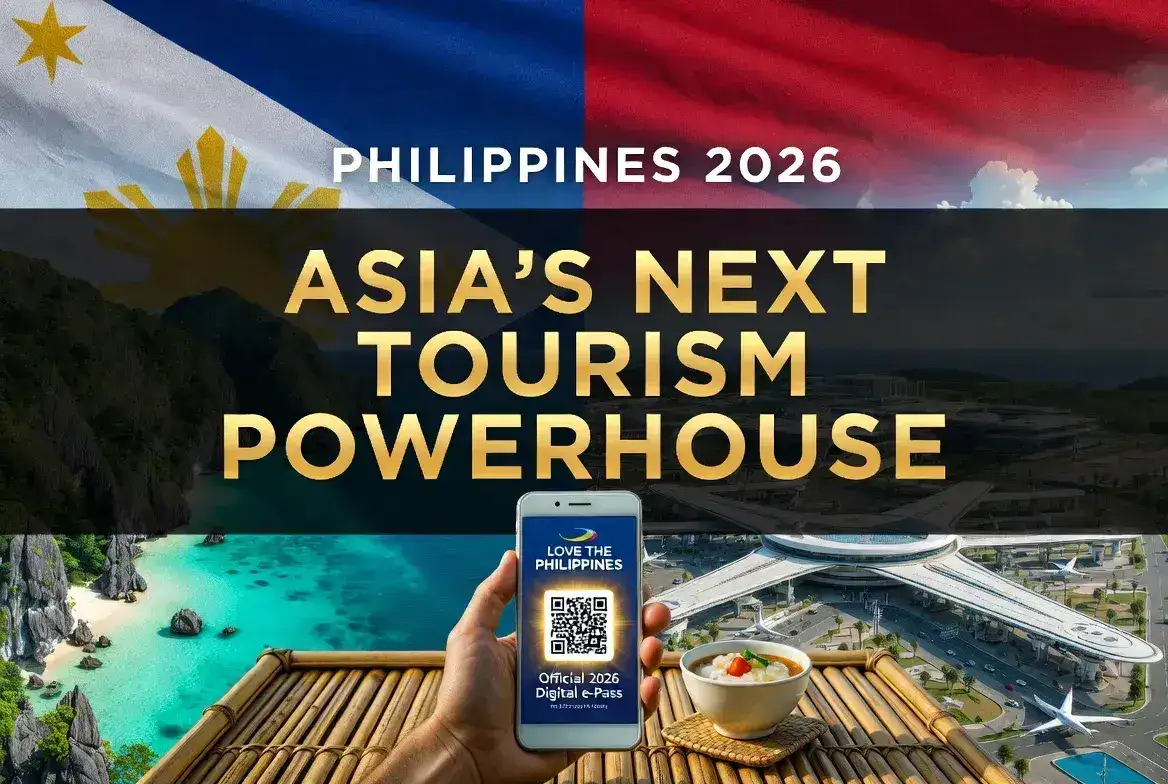
The Philippines' Tourism Renaissance: Setting the Stage for 2026
The Philippines stands at the precipice of a remarkable tourism transformation that positions the archipelago nation to emerge as Asia's next tourism powerhouse by 2026. After weathering the devastating impacts of the global pandemic that brought international travel to a near standstill, the Philippines is experiencing a robust and sustained recovery that exceeds pre-pandemic levels in key metrics. This resurgence is not merely a return to normalcy but represents a fundamental reimagining of the country's tourism sector, driven by strategic infrastructure investments, progressive policy reforms, enhanced connectivity, and a renewed commitment to sustainable and inclusive tourism development that leverages the nation's extraordinary natural beauty, rich cultural heritage, and renowned Filipino hospitality.
The numbers tell a compelling story of this renaissance. In 2025, the Philippines welcomed over 8.2 million international visitors, representing a 95% recovery to pre-pandemic levels and positioning the country among the fastest-recovering tourism destinations in Southeast Asia. More significantly, the Department of Tourism projects that international arrivals will surpass 10 million in 2026, potentially reaching 12 million visitors, which would exceed the 2019 peak of 8.26 million and mark a historic milestone for the industry. This growth trajectory is supported by concrete indicators including a 40% increase in international flight capacity, the opening of over 150 new hotel properties across the archipelago, and tourism revenue projections exceeding $15 billion for 2026.
What distinguishes the Philippines' tourism ascent from other regional competitors is the comprehensive and strategic nature of the transformation underway. The government's National Tourism Development Plan 2023-2028 provides a clear roadmap for sustainable growth, emphasizing infrastructure development, product diversification, market expansion, and community-based tourism that ensures local populations benefit from industry growth. Simultaneously, massive infrastructure projects under the "Build Better More" program are dramatically improving accessibility to previously remote destinations, reducing travel times, and enhancing the overall visitor experience. New airports, expanded seaports, improved road networks, and enhanced digital connectivity are removing traditional barriers that once limited tourism growth in this nation of over 7,600 islands.
Beyond infrastructure, the Philippines is capitalizing on evolving global travel trends that align perfectly with the country's inherent strengths. Modern travelers increasingly seek authentic experiences, sustainable destinations, outdoor adventures, and meaningful cultural connections—precisely what the Philippines offers in abundance. From the pristine beaches and world-class diving sites that have long drawn visitors to emerging attractions like eco-tourism destinations, heritage sites, culinary tourism, and adventure travel opportunities, the Philippines is diversifying its tourism portfolio to appeal to broader market segments while maintaining its position as a premier beach and island destination.
Unparalleled Natural Assets: The Foundation of Tourism Excellence

The Philippines' emergence as a tourism powerhouse rests fundamentally on its extraordinary natural endowments, which rank among the most spectacular and diverse in the world. This archipelago nation, stretching over 1,850 kilometers from north to south, encompasses breathtaking landscapes that range from pristine white-sand beaches and crystal-clear lagoons to dramatic volcanic peaks, ancient rice terraces, lush rainforests, and some of the planet's most biodiverse marine ecosystems. These natural assets, many of which remain relatively undeveloped and uncrowded compared to regional competitors, provide the foundation for sustainable tourism growth that can continue for decades without the overtourism challenges facing destinations like Bali or Thailand's most popular islands.
Palawan, consistently ranked among the world's most beautiful islands, exemplifies the Philippines' natural splendor. The province features the UNESCO World Heritage-listed Puerto Princesa Subterranean River National Park, the stunning lagoons and limestone cliffs of El Nido, and the pristine beaches and diving sites of Coron. In 2026, Palawan is set to benefit from improved air connectivity with expanded international flights and new domestic routes, making these world-class attractions more accessible while the provincial government implements carrying capacity limits and sustainable tourism practices to preserve the very qualities that draw visitors.
Boracay, the famous 7-kilometer island that underwent a controversial six-month closure in 2018 for environmental rehabilitation, has emerged as a model for sustainable beach tourism. The rehabilitation efforts, which included strict environmental regulations, infrastructure upgrades, and limits on visitor numbers, have successfully restored the island's famous white-sand beaches and crystal-clear waters while improving the quality of the tourism experience. In 2026, Boracay continues to attract visitors seeking both relaxation and nightlife, with new luxury resorts and enhanced environmental monitoring ensuring the island's long-term viability as a premier destination.
Beyond these well-known destinations, the Philippines boasts numerous emerging attractions poised for growth in 2026. Siargao Island, named one of Time Magazine's World's Greatest Places, has evolved from a surfer's secret to a mainstream destination while maintaining its laid-back charm and natural beauty. The island's Cloud 9 surf break attracts world-class surfers, while its lagoons, mangrove forests, and island-hopping tours appeal to diverse travelers. Similarly, destinations like Bohol with its iconic Chocolate Hills and tarsier sanctuaries, Cebu with its waterfalls and whale shark encounters, and the Bicol Region with its Mayon Volcano and whale shark interactions are experiencing increased visitor numbers supported by improved infrastructure and marketing.
The Philippines' marine biodiversity represents another unparalleled asset. Positioned within the Coral Triangle, the global center of marine biodiversity, Philippine waters contain over 500 coral species and more than 2,000 fish species, making it a world-class destination for diving and snorkeling. Sites like Tubbataha Reefs Natural Park, a UNESCO World Heritage Site accessible only by liveaboard boats, offer some of the planet's most pristine coral reefs. Anilao in Batangas is renowned as the birthplace of underwater photography and macro diving paradise, while Apo Reef, Malapascua Island (famous for thresher shark encounters), and numerous other sites provide diverse diving experiences. In 2026, the Philippines is expanding its marine protected areas and implementing sustainable diving practices to ensure these underwater treasures remain intact for future generations.
Infrastructure Revolution: Connecting the Archipelago

The Philippines' transformation into a tourism powerhouse is being enabled by an unprecedented infrastructure development program that addresses the archipelago's greatest historical challenge: connectivity. For decades, the difficulty of traveling between islands, limited airport capacity, inadequate road networks, and unreliable transportation infrastructure constrained tourism growth and frustrated visitors. The current administration's "Build Better More" program, with its substantial allocation for tourism-related infrastructure, is systematically dismantling these barriers and creating the physical foundation for sustained tourism expansion through 2026 and beyond.
Airport development represents a critical component of this infrastructure revolution. The New Manila International Airport in Bulacan, scheduled to begin operations in phases starting in 2027 but with preliminary operations potentially beginning in late 2026, will dramatically increase the country's international air capacity. Once fully operational, the airport will handle up to 100 million passengers annually, compared to the current Ninoy Aquino International Airport's capacity of around 35 million. In the interim, expansions and upgrades to existing airports including Mactan-Cebu International Airport, Clark International Airport, and regional airports in Palawan, Bohol, and other key destinations are increasing capacity and improving passenger experience. The Department of Transportation reports that in 2025-2026, over 20 airports nationwide are undergoing upgrades or expansion, enhancing connectivity to both established and emerging destinations.
Road infrastructure improvements are equally transformative. The ongoing construction of expressways, including the Cavite-Laguna Expressway, the Central Luzon Link Expressway, and various provincial road networks, is reducing travel times between major cities and tourist destinations. The completion of key bridges connecting islands, such as the Panay-Guimaras-Negros Bridge project, promises to revolutionize inter-island travel and open new tourism circuits. In popular destinations like Palawan, Bohol, and Cebu, road improvements are making attractions more accessible while reducing travel times and improving safety.
Seaport development addresses the critical need for efficient inter-island maritime transport. The Philippine Ports Authority is modernizing major ports and developing new facilities to accommodate increased passenger and cargo traffic. New roll-on/roll-off terminals, improved ferry services, and enhanced port facilities are making island-hopping more convenient and reliable. The expansion of fast craft services and the introduction of modern, comfortable vessels are improving the maritime travel experience, encouraging visitors to explore multiple destinations during a single trip.
Digital infrastructure, often overlooked but increasingly critical for modern tourism, is receiving significant attention. The expansion of 5G networks, improved internet connectivity in tourist areas, and the digitalization of tourism services are enhancing the visitor experience and enabling new forms of tourism marketing and service delivery. The Department of Tourism's digital transformation initiatives include online booking systems, digital payment platforms, and mobile applications that provide travelers with real-time information, booking capabilities, and emergency assistance.
Policy Reforms and Investment Climate: Creating Enabling Environment

The Philippines' emergence as a tourism powerhouse is being accelerated by comprehensive policy reforms and an increasingly favorable investment climate that encourage both domestic and foreign investment in tourism infrastructure, services, and product development. The government has recognized that achieving ambitious tourism growth targets requires not just physical infrastructure but also regulatory frameworks that facilitate business, protect investors, ensure quality standards, and promote sustainable practices.
The Tourism Infrastructure and Enterprise Zone Authority (TIEZA) has been empowered to provide enhanced incentives for tourism enterprises, including tax holidays, duty-free importation of equipment, and simplified permitting processes. The CREATE Law (Corporate Recovery and Tax Incentives for Enterprises Act), enacted in 2021 and fully implemented by 2026, provides competitive fiscal incentives for tourism projects, particularly those in less-developed regions and those incorporating sustainable practices. These incentives have attracted significant investment from both international hotel chains and local developers, resulting in a construction boom of accommodation facilities ranging from luxury resorts to boutique hotels and eco-lodges.
Visa policy reforms have made the Philippines more accessible to international visitors. The expansion of the electronic travel authorization system, visa-free entry for citizens of additional countries, and the introduction of special visas for digital nomads and long-stay visitors are removing barriers to entry. In 2026, the Philippines is implementing a streamlined visa application process that allows tourists from key markets to obtain visas online within 24-48 hours, significantly improving the ease of travel planning. The government is also exploring the possibility of a Southeast Asia-style multi-entry visa that would allow visitors to explore the Philippines and neighboring countries more flexibly.
Investment in human capital represents another critical policy focus. The Technical Education and Skills Development Authority (TESDA) has expanded tourism-related training programs, producing thousands of skilled workers in hospitality, tour guiding, culinary arts, and tourism management. The Department of Tourism's accreditation programs ensure quality standards across hotels, restaurants, tour operators, and other tourism enterprises, enhancing the overall visitor experience and building the Philippines' reputation for service excellence. In 2026, new initiatives focus on upskilling workers in digital literacy, sustainable tourism practices, and specialized areas like adventure tourism and eco-tourism guiding.
Public-private partnerships (PPPs) have emerged as a key mechanism for tourism development, leveraging private sector expertise and capital for public infrastructure projects. Several major tourism infrastructure projects, including airport expansions, resort developments, and tourism circuit improvements, are being implemented through PPP arrangements that ensure efficiency while maintaining public oversight and community benefits. The government's PPP Center has streamlined processes and improved transparency, making the Philippines more attractive to institutional investors and international developers.
Market Diversification and Strategic Marketing: Expanding the Visitor Base

The Philippines' strategy to become Asia's tourism powerhouse includes aggressive market diversification and sophisticated marketing campaigns that expand beyond traditional source markets to capture emerging opportunities. While South Korea, China, Japan, and the United States have historically been the largest source markets, the Department of Tourism is actively developing new markets in Europe, the Middle East, India, and other Asian countries, reducing dependence on any single market and building resilience against regional economic downturns or travel restrictions.
The "It's More Fun in the Philippines" campaign, while still recognized globally, is being complemented by more targeted, market-specific campaigns that speak to the interests and motivations of different traveler segments. For adventure travelers, marketing emphasizes world-class diving, surfing, mountaineering, and island-hopping opportunities. For cultural tourists, campaigns highlight the country's Spanish colonial heritage, indigenous cultures, UNESCO World Heritage Sites, and vibrant festivals. For luxury travelers, marketing showcases new high-end resorts, exclusive island experiences, and personalized services. For eco-tourists, campaigns emphasize conservation efforts, sustainable tourism practices, and opportunities to experience pristine natural environments.
Digital marketing has become central to the Philippines' tourism promotion strategy. The Department of Tourism has significantly expanded its social media presence, influencer partnerships, and digital advertising, recognizing that modern travelers research and book travel primarily through digital channels. Strategic partnerships with travel platforms like TripAdvisor, Booking.com, and Expedia ensure strong visibility in online search results. The government has also invested in content creation, producing high-quality videos, virtual tours, and interactive experiences that showcase the Philippines' attractions to global audiences.
Market development efforts in 2026 include establishing new tourism offices in key cities, participating in major international travel fairs, and conducting roadshows and trade missions to build relationships with tour operators, travel agents, and media. The Philippines is also leveraging diaspora communities, recognizing that overseas Filipinos serve as ambassadors who introduce friends and colleagues to the country. Special programs targeting the MICE (Meetings, Incentives, Conferences, and Exhibitions) sector aim to attract business travelers and large-scale events that generate high-value tourism.
Regional cooperation represents another strategic dimension of market development. The Philippines is working with ASEAN partners on multi-destination marketing campaigns that promote Southeast Asia as a cohesive tourism region while highlighting the Philippines' unique attractions. Partnerships with neighboring countries on visa facilitation, air connectivity, and tourism circuit development create win-win scenarios that benefit all participating nations while making the region more competitive against other global tourism destinations.
Sustainable Tourism and Community Empowerment: Ensuring Long-Term Viability

The Philippines' ambition to become a tourism powerhouse is firmly grounded in principles of sustainability and community empowerment, recognizing that long-term success requires protecting natural resources, preserving cultural heritage, and ensuring that local communities benefit from tourism development. This commitment to sustainable tourism distinguishes the Philippines from destinations that have experienced negative consequences from overtourism and unsustainable development, positioning the country to attract the growing segment of conscious travelers who prioritize environmental and social responsibility.
Environmental protection initiatives are being integrated into tourism planning at national and local levels. The Department of Tourism, in coordination with the Department of Environment and Natural Resources, has established carrying capacity limits for sensitive destinations, implemented waste management systems, and developed guidelines for sustainable tourism operations. Marine protected areas are being expanded and better enforced, with community-based monitoring systems ensuring compliance. In destinations like Boracay, Palawan, and Siargao, strict environmental regulations govern construction, waste disposal, water quality, and visitor activities, with penalties for violations that threaten natural resources.
Community-based tourism (CBT) has emerged as a key strategy for inclusive development, empowering local communities to participate in and benefit from tourism while maintaining control over their resources and cultural heritage. CBT initiatives provide training, financing, and marketing support to community enterprises offering homestays, guided tours, cultural performances, handicrafts, and local cuisine. These initiatives ensure that tourism revenue flows directly to local households rather than leaking to external operators, creating economic incentives for conservation and cultural preservation. In 2026, the Philippines has over 500 active community-based tourism enterprises across the archipelago, with plans to double this number by 2028.
Cultural heritage preservation is receiving increased attention as tourism grows. The National Commission for Culture and the Arts, working with local governments and indigenous communities, is documenting and protecting tangible and intangible cultural heritage, from historic buildings and archaeological sites to traditional crafts, music, dance, and oral traditions. Tourism is being leveraged as a tool for cultural preservation, with visitors providing markets for traditional arts and economic incentives for communities to maintain cultural practices. However, safeguards prevent commodification and ensure that cultural presentations are authentic and respectful.
Climate change adaptation is being integrated into tourism planning, recognizing that the Philippines, as an archipelago nation, is particularly vulnerable to rising sea levels, extreme weather events, and ocean acidification. Coastal tourism infrastructure is being designed with climate resilience in mind, mangrove restoration projects protect shorelines while providing eco-tourism opportunities, and disaster risk reduction systems ensure visitor safety. The tourism sector is also contributing to climate mitigation through energy efficiency programs, renewable energy adoption in tourism facilities, and carbon offset initiatives.
Challenges and Opportunities: Navigating the Path Forward

While the Philippines is well-positioned to become Asia's next tourism powerhouse in 2026, the path forward is not without challenges that must be acknowledged and addressed. Recognizing these challenges demonstrates realistic planning and commitment to sustainable growth rather than盲目 expansion that could undermine long-term success.
Infrastructure gaps, while being addressed through massive investment programs, remain a concern particularly in less-developed regions. Some destinations still lack reliable electricity, clean water, waste management systems, and telecommunications infrastructure necessary for quality tourism experiences. The government is prioritizing these basic infrastructure needs alongside high-profile tourism projects to ensure inclusive development across the archipelago.
Human resource development, while progressing, must accelerate to meet the demands of a growing tourism industry. There is a need for more skilled workers in specialized areas including tour guiding, hospitality management, culinary arts, and adventure tourism instruction. Language training, particularly in emerging source markets' languages, is essential for providing quality service to diverse international visitors. The government and private sector are collaborating on expanded training programs, but scaling these initiatives to meet demand requires sustained commitment and investment.
Environmental pressures from increasing visitor numbers require vigilant management to prevent degradation of the very attractions that draw tourists. Popular destinations face challenges from waste management, water scarcity, coral reef damage, and habitat destruction. The implementation of carrying capacity limits, environmental fees, and sustainable tourism practices must be enforced consistently, even when this means limiting short-term revenue for long-term sustainability.
Competition from other Southeast Asian destinations remains intense. Thailand, Vietnam, Indonesia, and Malaysia are all investing heavily in tourism development and marketing, and each offers unique attractions and advantages. The Philippines must continue to differentiate itself through its unique combination of natural beauty, cultural diversity, Filipino hospitality, and commitment to sustainable tourism while continuously improving the quality of the visitor experience.
Despite these challenges, the opportunities for the Philippines in 2026 and beyond are substantial and compelling. The country's natural assets are world-class and, in many cases, less developed than competing destinations, providing room for growth without the overtourism problems facing places like Bali or Phuket. The Filipino people's renowned hospitality and English language proficiency provide service advantages that are difficult for competitors to replicate. The government's commitment to tourism as a priority sector, demonstrated through budget allocations, policy reforms, and infrastructure investment, provides the political will necessary for sustained development.
Emerging travel trends favor the Philippines' strengths. The post-pandemic emphasis on outdoor activities, nature-based tourism, and less crowded destinations aligns perfectly with what the Philippines offers. The growing interest in authentic cultural experiences, sustainable travel, and community engagement matches the Philippines' community-based tourism initiatives and cultural heritage. The rise of remote work and digital nomadism creates opportunities for long-stay visitors who can explore the archipelago extensively while contributing to local economies.
Conclusion: The Philippines' Moment Has Arrived

The convergence of extraordinary natural assets, transformative infrastructure development, progressive policy reforms, strategic marketing, commitment to sustainability, and favorable global travel trends positions the Philippines to fulfill its potential as Asia's next tourism powerhouse in 2026. This is not merely aspirational rhetoric but a realistic projection based on concrete achievements, measurable progress, and clear momentum across all dimensions of tourism development.
The Philippines offers something increasingly rare in our globalized world: authentic, diverse, and relatively uncrowded experiences in some of the planet's most beautiful settings. From the world's best beaches and diving sites to dramatic volcanic landscapes, ancient rice terraces, vibrant cities, and warm hospitality, the archipelago provides a breadth and depth of tourism products that can satisfy diverse traveler preferences while supporting sustainable growth for decades to come.
For travelers considering their 2026 Asian destinations, the Philippines represents exceptional value and unique experiences that justify its emergence as a must-visit destination. For investors and tourism professionals, the Philippines offers opportunities in a growing market with strong government support and enormous potential. For the Filipino people, tourism development represents a pathway to inclusive economic growth, cultural preservation, and environmental conservation that benefits communities across the archipelago.
The Philippines' journey to becoming Asia's tourism powerhouse is not about surpassing or competing with neighbors but about realizing its own unique potential and offering the world an exceptional tourism destination that combines natural wonder, cultural richness, and genuine hospitality. In 2026, that potential becomes reality, and the world discovers what Filipinos have known all along: that their islands truly offer some of the most remarkable travel experiences on Earth.
0 Comments