.webp)
.webp)
Ghadames Old Town UNESCO: Why "The Pearl of the Desert" Is Trending for 2026 Slow Travel
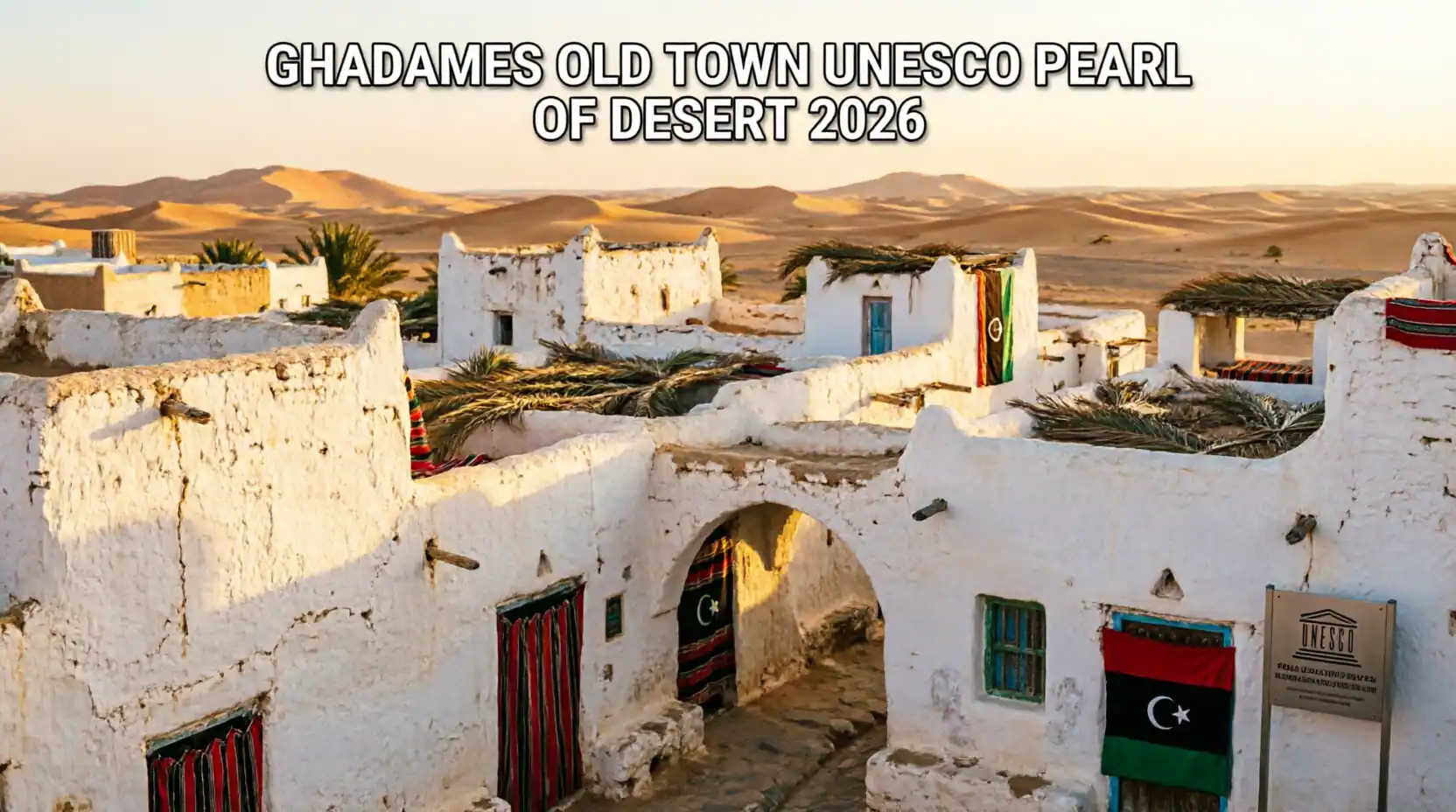
Ghadames Old Town UNESCO: Why "The Pearl of the Desert" Is Trending for 2026 Slow Travel
In the heart of the Sahara Desert, where golden dunes meet endless blue skies and the silence is broken only by the whisper of wind through palm fronds, lies a place that seems to exist outside of time: Ghadames Old Town. Known affectionately as "The Pearl of the Desert," this extraordinary UNESCO World Heritage Site in western Libya represents one of the world's most remarkable examples of traditional Saharan architecture, sustainable desert living, and cultural resilience. For travelers seeking authentic, meaningful, and unhurried experiences in 2026, Ghadames has emerged as a trending destination for slow travel—a place where time slows down, where every stone tells a story, and where the pace of life aligns with the rhythms of the desert rather than the demands of modern urgency.
Designated a UNESCO World Heritage Site in 1986, Ghadames Old Town is far more than an archaeological curiosity—it is a living testament to human ingenuity in one of Earth's most challenging environments. Its distinctive architecture—whitewashed mud-brick houses connected by a labyrinth of covered alleyways, rooftop terraces reserved for women, and ground-level passages for men and commerce—reflects a sophisticated understanding of desert climate, social structure, and community life that has sustained this oasis for over two millennia. After years of limited access due to regional instability, 2026 marks a pivotal moment for Ghadames: improved security conditions, renewed international interest in sustainable and cultural tourism, and a growing global appreciation for slow travel are making this extraordinary destination more accessible and relevant than ever before.
This comprehensive guide explores everything you need to know about experiencing Ghadames Old Town in 2026: understanding the town's extraordinary historical significance and architectural uniqueness, practical information for planning your journey from Tripoli or beyond, tips for navigating the labyrinthine old town and appreciating its key features, photography guidance for capturing this extraordinary landscape, cultural context for respectful and meaningful engagement with Berber/Amazigh communities, safety considerations for traveling in Libya, and expert insights for maximizing your experience of slow travel in one of the world's most extraordinary desert oases. Whether you're an architecture enthusiast, a cultural traveler, a photographer seeking extraordinary subjects, or simply someone drawn to the romance of desert life and the philosophy of slow travel, this guide ensures you're prepared for an unforgettable journey to the Pearl of the Desert.
Historical Significance: Two Millennia of Desert Civilization

Origins and Early Development
Ghadames' story begins in antiquity:
- Pre-Roman foundations: Evidence suggests human settlement in the Ghadames oasis dates to at least the 1st millennium BCE, with Berber/Amazigh communities establishing sustainable desert life
- Trans-Saharan trade hub: Ghadames flourished as a crucial stop on trans-Saharan trade routes, connecting sub-Saharan Africa with the Mediterranean world; caravans carried gold, ivory, slaves, and exotic goods northward, and salt, textiles, and manufactured goods southward
- Roman and Byzantine periods: Incorporated into Roman sphere of influence; archaeological evidence shows Roman-era structures and artifacts
- Islamic era: Became an important center of Islamic scholarship and trade; mosque and religious institutions established
- Ottoman period: Integrated into Ottoman administrative system while maintaining local autonomy and cultural traditions
- 👉 Guinea-Sierra Leone Border 2026: Falaba-Forécariah Safe Travel Guide
- 👉 First Time Travelers Guide to Tanzania National Cultural Centre
- 👉 Best Time to Visit El Jem Amphitheatre Avoid Crowds 2026 Guide
Architectural Evolution: Design for Desert Life
Ghadames' unique architecture evolved over centuries to address desert challenges:
- Climate adaptation: Covered alleyways provide shade and cool air circulation; thick mud-brick walls insulate against extreme temperatures; rooftop terraces capture evening breezes
- Social organization: Vertical stratification of space: ground level for commerce and male activity; upper levels for family life; rooftops reserved for women's social space
- Water management: Sophisticated systems for collecting, storing, and distributing scarce water resources; underground channels (foggaras) bring water from aquifers
- Defensive design: Compact, interconnected layout provides security; narrow passages limit access; communal spaces foster mutual protection
- Material sustainability: Local materials (mud, palm wood, stone) minimize environmental impact; buildings naturally biodegrade and can be rebuilt using traditional techniques
- 👉 Guinea-Sierra Leone Border 2026: Falaba-Forécariah Safe Travel Guide
- 👉 First Time Travelers Guide to Tanzania National Cultural Centre
- 👉 Best Time to Visit El Jem Amphitheatre Avoid Crowds 2026 Guide
UNESCO Recognition and Preservation
- World Heritage designation (1986): Recognized for outstanding universal value as exceptional example of traditional Saharan settlement and sustainable desert architecture
- Preservation challenges: Modernization pressures, climate change, and limited resources threaten traditional building techniques and community continuity
- Conservation efforts: Libyan authorities, UNESCO, and international partners working to preserve traditional architecture while supporting community needs
- Living heritage: Unlike many archaeological sites, Ghadames remains inhabited; preservation must balance heritage protection with contemporary life
- 👉 Guinea-Sierra Leone Border 2026: Falaba-Forécariah Safe Travel Guide
- 👉 First Time Travelers Guide to Tanzania National Cultural Centre
- 👉 Best Time to Visit El Jem Amphitheatre Avoid Crowds 2026 Guide
The Architecture of Ghadames: A Masterclass in Desert Design

The Urban Fabric: A Three-Dimensional Labyrinth
Ghadames Old Town is organized in a unique vertical and horizontal system:
- Ground level: Covered passageways (sikkak) serve as public thoroughfares for men, commerce, and community activities; shops, workshops, and storage spaces line these shaded corridors
- Upper levels: Family living quarters accessed by internal staircases; private spaces for domestic life, protected from public view
- Rooftop terraces: Reserved primarily for women; spaces for socializing, drying foods, sleeping during hot nights, and enjoying desert views; connected by rooftop pathways allowing women to move between houses without descending to public areas
- Interconnectedness: Houses share walls and roofs; the entire old town functions as a single, integrated architectural organism
- Visual harmony: Uniform whitewashed facades create striking visual unity; occasional colorful doors or decorations provide subtle accents
- 👉 Guinea-Sierra Leone Border 2026: Falaba-Forécariah Safe Travel Guide
- 👉 First Time Travelers Guide to Tanzania National Cultural Centre
- 👉 Best Time to Visit El Jem Amphitheatre Avoid Crowds 2026 Guide
Key Architectural Features
Mud-Brick Construction:
- Materials: Local clay mixed with straw and water; sun-dried rather than fired, reducing energy consumption
- Techniques: Traditional building methods passed through generations; walls thick (up to 1 meter) for thermal mass
- Maintenance: Annual replastering with mud mixture after rainy season; community practice that reinforces social bonds
- Sustainability: Materials biodegradable; buildings can be rebuilt using same techniques; minimal environmental footprint
- 👉 Guinea-Sierra Leone Border 2026: Falaba-Forécariah Safe Travel Guide
- 👉 First Time Travelers Guide to Tanzania National Cultural Centre
- 👉 Best Time to Visit El Jem Amphitheatre Avoid Crowds 2026 Guide
Covered Alleyways (Sikkak):
- Climate control: Roofed passages create cool microclimates; temperature can be 10-15°C cooler than open desert
- Social function: Spaces for conversation, commerce, and community interaction; natural gathering places
- Navigation: Labyrinthine layout can be confusing for first-time visitors; part of the experience is getting pleasantly lost
- Photography: Dramatic light and shadow play; leading lines created by architectural elements
- 👉 Guinea-Sierra Leone Border 2026: Falaba-Forécariah Safe Travel Guide
- 👉 First Time Travelers Guide to Tanzania National Cultural Centre
- 👉 Best Time to Visit El Jem Amphitheatre Avoid Crowds 2026 Guide
Rooftop Terraces:
- Women's space: Traditionally reserved for women's social life; reflects social organization and gender roles
- Practical uses: Drying foods, sleeping during hot nights, enjoying evening breezes, celebrating festivals
- Views: Panoramic views of old town, palm groves, and desert landscape; spectacular at sunrise and sunset
- Cultural sensitivity: Access to rooftop areas requires respect for local customs; always ask permission before entering private spaces
- 👉 Guinea-Sierra Leone Border 2026: Falaba-Forécariah Safe Travel Guide
- 👉 First Time Travelers Guide to Tanzania National Cultural Centre
- 👉 Best Time to Visit El Jem Amphitheatre Avoid Crowds 2026 Guide
Water Management Systems:
- Foggaras: Underground channels that bring water from aquifers to oasis; ancient engineering marvel
- Public fountains: Communal water points serving as social hubs
- Household systems: Traditional methods for storing and conserving water in arid environment
- Sustainability lessons: Ghadames' water management offers insights for contemporary water-scarce regions
- 👉 Guinea-Sierra Leone Border 2026: Falaba-Forécariah Safe Travel Guide
- 👉 First Time Travelers Guide to Tanzania National Cultural Centre
- 👉 Best Time to Visit El Jem Amphitheatre Avoid Crowds 2026 Guide
Why Ghadames Is Trending for Slow Travel in 2026

The Slow Travel Philosophy
Slow travel emphasizes quality over quantity, connection over consumption:
- Immersive experience: Slow travel encourages staying longer in fewer places, engaging deeply with local culture rather than checking off attractions
- Sustainability: Lower environmental impact through reduced transportation, support for local economies, and respect for cultural heritage
- Meaningful connections: Time to build relationships with local people, learn about traditions, and understand different ways of life
- Personal reflection: Space for contemplation, journaling, photography, and personal growth away from daily routines
- Authenticity: Experiences that feel genuine rather than staged for tourism; engagement with real communities
- 👉 Guinea-Sierra Leone Border 2026: Falaba-Forécariah Safe Travel Guide
- 👉 First Time Travelers Guide to Tanzania National Cultural Centre
- 👉 Best Time to Visit El Jem Amphitheatre Avoid Crowds 2026 Guide
Ghadames as the Ideal Slow Travel Destination
Multiple factors make Ghadames perfectly suited for slow travel:
- Pace of life: Desert rhythms naturally slow down time; no rush, no crowds, no pressure to "see everything"
- Architectural immersion: The old town's labyrinthine layout encourages wandering, discovery, and getting pleasantly lost
- Cultural depth: Rich Berber/Amazigh heritage, traditional crafts, and living traditions reward extended engagement
- Natural setting: Sahara Desert provides dramatic landscape, stunning light, and opportunities for contemplation
- Relative accessibility: Improved conditions in 2026 make Ghadames more reachable while maintaining its sense of remoteness
- Photographic potential: Extraordinary architecture, light, and landscapes offer endless creative opportunities
- Community welcome: Ghadames residents known for hospitality; slow travel allows time to build genuine connections
- 👉 Guinea-Sierra Leone Border 2026: Falaba-Forécariah Safe Travel Guide
- 👉 First Time Travelers Guide to Tanzania National Cultural Centre
- 👉 Best Time to Visit El Jem Amphitheatre Avoid Crowds 2026 Guide
2026 Context: Why Now?
- Post-pandemic travel shifts: Travelers increasingly seeking meaningful, uncrowded, nature-based experiences over mass tourism
- Climate consciousness: Growing awareness of sustainable travel; Ghadames' traditional architecture offers lessons in climate adaptation
- Digital detox appeal: Limited connectivity in Ghadames encourages disconnection from digital distractions and reconnection with self and place
- Cultural curiosity: Increased interest in indigenous cultures, traditional knowledge, and alternative ways of living
- Improved access: Better security and infrastructure in western Libya making Ghadames more accessible to international travelers
- UNESCO visibility: Renewed international attention on World Heritage Sites driving interest in lesser-known treasures
- 👉 Guinea-Sierra Leone Border 2026: Falaba-Forécariah Safe Travel Guide
- 👉 First Time Travelers Guide to Tanzania National Cultural Centre
- 👉 Best Time to Visit El Jem Amphitheatre Avoid Crowds 2026 Guide
Planning Your Slow Travel Journey to Ghadames

Getting to Ghadames
Access from major Libyan cities:
- From Tripoli:
- Distance: Approximately 550 kilometers (340 miles) southwest
- Travel time: 6-8 hours by car depending on road conditions and stops
- Route: Via coastal highway then inland through desert; scenic but requires careful planning
- Transportation: Private car with driver highly recommended; organized tours available; public transport limited
- 👉 Guinea-Sierra Leone Border 2026: Falaba-Forécariah Safe Travel Guide
- 👉 First Time Travelers Guide to Tanzania National Cultural Centre
- 👉 Best Time to Visit El Jem Amphitheatre Avoid Crowds 2026 Guide
- From Nalut:
- Distance: Approximately 120 kilometers (75 miles) east
- Travel time: 2-3 hours by car
- Advantage: Nalut offers additional cultural experiences and accommodation options
- 👉 Guinea-Sierra Leone Border 2026: Falaba-Forécariah Safe Travel Guide
- 👉 First Time Travelers Guide to Tanzania National Cultural Centre
- 👉 Best Time to Visit El Jem Amphitheatre Avoid Crowds 2026 Guide
- From Tunis (Tunisia):
- Distance: Approximately 450 kilometers (280 miles) via border crossing at Ras Ajdir
- Travel time: 5-7 hours including border formalities
- Considerations: Verify border crossing status and visa requirements for both countries
- 👉 Guinea-Sierra Leone Border 2026: Falaba-Forécariah Safe Travel Guide
- 👉 First Time Travelers Guide to Tanzania National Cultural Centre
- 👉 Best Time to Visit El Jem Amphitheatre Avoid Crowds 2026 Guide
- 👉 Guinea-Sierra Leone Border 2026: Falaba-Forécariah Safe Travel Guide
- 👉 First Time Travelers Guide to Tanzania National Cultural Centre
- 👉 Best Time to Visit El Jem Amphitheatre Avoid Crowds 2026 Guide
Best Time to Visit for Slow Travel
Seasonal considerations for optimal experience:
Autumn (October-November):
- Weather: Pleasant temperatures (20-30°C / 68-86°F); desert heat moderating after summer
- Advantages: Ideal conditions for walking; beautiful light for photography; date harvest season adds cultural interest
- Considerations: Popular season; book accommodation in advance
- 👉 Guinea-Sierra Leone Border 2026: Falaba-Forécariah Safe Travel Guide
- 👉 First Time Travelers Guide to Tanzania National Cultural Centre
- 👉 Best Time to Visit El Jem Amphitheatre Avoid Crowds 2026 Guide
Winter (December-February):
- Weather: Mild days (15-25°C / 59-77°F); cool nights (can drop to 5°C / 41°F)
- Advantages: Fewest visitors; dramatic desert skies; excellent for stargazing; comfortable for extended exploration
- Considerations: Pack layers for temperature changes; some facilities may have reduced hours
- 👉 Guinea-Sierra Leone Border 2026: Falaba-Forécariah Safe Travel Guide
- 👉 First Time Travelers Guide to Tanzania National Cultural Centre
- 👉 Best Time to Visit El Jem Amphitheatre Avoid Crowds 2026 Guide
Spring (March-April):
- Weather: Warming temperatures (25-35°C / 77-95°F); occasional sandstorms possible
- Advantages: Desert wildflowers bloom; pleasant mornings and evenings; good photography light
- Considerations: Heat increasing; plan activities for cooler parts of day
- 👉 Guinea-Sierra Leone Border 2026: Falaba-Forécariah Safe Travel Guide
- 👉 First Time Travelers Guide to Tanzania National Cultural Centre
- 👉 Best Time to Visit El Jem Amphitheatre Avoid Crowds 2026 Guide
Summer (May-September):
- Weather: Very hot (35-45°C / 95-113°F); intense sun; minimal rainfall
- Advantages: Fewest tourists; unique experience of extreme desert; lower prices
- Considerations: Heat can be challenging; limit outdoor activity to early morning/late evening; carry ample water
- 👉 Guinea-Sierra Leone Border 2026: Falaba-Forécariah Safe Travel Guide
- 👉 First Time Travelers Guide to Tanzania National Cultural Centre
- 👉 Best Time to Visit El Jem Amphitheatre Avoid Crowds 2026 Guide
Accommodation Options for Slow Travelers
Choices that support immersive experience:
- Traditional guesthouses in Old Town:
- Authentic experience staying in restored mud-brick houses
- Opportunity to interact with local families and learn about traditional life
- Basic amenities; part of the slow travel appeal is simplicity
- Price range: $30-80 USD per night
- 👉 Guinea-Sierra Leone Border 2026: Falaba-Forécariah Safe Travel Guide
- 👉 First Time Travelers Guide to Tanzania National Cultural Centre
- 👉 Best Time to Visit El Jem Amphitheatre Avoid Crowds 2026 Guide
- Eco-lodges on Old Town periphery:
- Blend traditional architecture with modern comforts
- Often feature rooftop terraces, desert views, and cultural programming
- More amenities while maintaining authentic atmosphere
- Price range: $60-150 USD per night
- 👉 Guinea-Sierra Leone Border 2026: Falaba-Forécariah Safe Travel Guide
- 👉 First Time Travelers Guide to Tanzania National Cultural Centre
- 👉 Best Time to Visit El Jem Amphitheatre Avoid Crowds 2026 Guide
- Modern hotels in new Ghadames:
- Contemporary facilities with air conditioning, private bathrooms, etc.
- Short drive to Old Town; convenient for those preferring modern amenities
- Less immersive but practical for some travelers
- Price range: $50-120 USD per night
- 👉 Guinea-Sierra Leone Border 2026: Falaba-Forécariah Safe Travel Guide
- 👉 First Time Travelers Guide to Tanzania National Cultural Centre
- 👉 Best Time to Visit El Jem Amphitheatre Avoid Crowds 2026 Guide
- 👉 Guinea-Sierra Leone Border 2026: Falaba-Forécariah Safe Travel Guide
- 👉 First Time Travelers Guide to Tanzania National Cultural Centre
- 👉 Best Time to Visit El Jem Amphitheatre Avoid Crowds 2026 Guide
Duration Recommendations for Slow Travel
- Minimum: 2-3 days to appreciate Old Town architecture and basic cultural experiences
- Ideal: 4-5 days to explore at relaxed pace, engage with community, and experience desert surroundings
- Extended: 7+ days for deep cultural immersion, photography projects, desert excursions, and personal reflection
- Slow travel tip: Build in unstructured time for wandering, conversation, and spontaneous discovery
- 👉 Guinea-Sierra Leone Border 2026: Falaba-Forécariah Safe Travel Guide
- 👉 First Time Travelers Guide to Tanzania National Cultural Centre
- 👉 Best Time to Visit El Jem Amphitheatre Avoid Crowds 2026 Guide
Experiencing Ghadames: A Slow Traveler's Guide

Wandering the Old Town: Embrace Getting Lost
The essence of Ghadames is in its labyrinth:
- No fixed itinerary: Allow yourself to wander without a strict plan; the joy is in discovery
- Follow your senses: Notice the play of light and shadow, the texture of mud walls, the sound of footsteps on ancient stones
- Engage with residents: Smile, greet in Arabic ("As-salamu alaykum"), and be open to conversation; many residents are happy to share stories
- Respect privacy: Remember you are in a living community; ask before entering private spaces or photographing people
- Take your time: Sit in a shaded alleyway, watch daily life unfold, and let Ghadames reveal itself at its own pace
- 👉 Guinea-Sierra Leone Border 2026: Falaba-Forécariah Safe Travel Guide
- 👉 First Time Travelers Guide to Tanzania National Cultural Centre
- 👉 Best Time to Visit El Jem Amphitheatre Avoid Crowds 2026 Guide
Cultural Experiences for Slow Travelers
Traditional Crafts:
- Pottery: Observe or try traditional pottery-making techniques using local clay
- Weaving: Learn about traditional Berber weaving; purchase authentic textiles directly from artisans
- Palm crafts: Discover items made from date palm fronds: baskets, mats, and decorative objects
- Slow travel tip: Spend time with artisans; ask about techniques and meanings; support local economy through thoughtful purchases
- 👉 Guinea-Sierra Leone Border 2026: Falaba-Forécariah Safe Travel Guide
- 👉 First Time Travelers Guide to Tanzania National Cultural Centre
- 👉 Best Time to Visit El Jem Amphitheatre Avoid Crowds 2026 Guide
Culinary Experiences:
- Traditional meals: Sample Ghadames specialties: couscous with desert herbs, dates, camel milk, and traditional breads
- Tea ceremony: Participate in traditional mint tea preparation and sharing; important social ritual
- Cooking classes: Some guesthouses offer opportunities to learn traditional cooking techniques
- Slow travel tip: Share meals with local families when invited; food is a powerful connector across cultures
- 👉 Guinea-Sierra Leone Border 2026: Falaba-Forécariah Safe Travel Guide
- 👉 First Time Travelers Guide to Tanzania National Cultural Centre
- 👉 Best Time to Visit El Jem Amphitheatre Avoid Crowds 2026 Guide
Music and Storytelling:
- Traditional music: Experience Berber/Amazigh music featuring drums, flutes, and vocal traditions
- Storytelling: Evening gatherings where elders share stories of Ghadames' history, desert life, and cultural wisdom
- Slow travel tip: Attend community events when invited; listen more than you speak; allow stories to resonate
- 👉 Guinea-Sierra Leone Border 2026: Falaba-Forécariah Safe Travel Guide
- 👉 First Time Travelers Guide to Tanzania National Cultural Centre
- 👉 Best Time to Visit El Jem Amphitheatre Avoid Crowds 2026 Guide
Desert Excursions: Beyond the Old Town
Slow travel extends to the surrounding landscape:
- Palm grove walks: Explore the oasis palm groves that sustain Ghadames; learn about traditional irrigation and date cultivation
- Desert sunrise/sunset: Short excursions to nearby dunes for spectacular light and contemplative moments
- Camel trekking: Traditional desert transportation; short rides offer unique perspective on desert landscape
- Stargazing: Sahara's minimal light pollution creates extraordinary night skies; bring a blanket and lie back
- Slow travel tip: Choose low-impact excursions; respect desert environment; allow time for reflection in nature
- 👉 Guinea-Sierra Leone Border 2026: Falaba-Forécariah Safe Travel Guide
- 👉 First Time Travelers Guide to Tanzania National Cultural Centre
- 👉 Best Time to Visit El Jem Amphitheatre Avoid Crowds 2026 Guide
Photography at Ghadames: Capturing Desert Light and Architecture

Best Photography Opportunities
- Architectural details: Textures of mud walls, carved wooden doors, geometric patterns in plasterwork
- Light and shadow: Covered alleyways create dramatic contrasts; golden hour enhances architectural forms
- Human element: Residents going about daily life; children playing in alleyways; elders sharing stories
- Desert context: Old town framed by palm groves and desert landscape; panoramic views from rooftop terraces
- Cultural moments: Traditional crafts, tea ceremonies, community gatherings (always ask permission first)
- 👉 Guinea-Sierra Leone Border 2026: Falaba-Forécariah Safe Travel Guide
- 👉 First Time Travelers Guide to Tanzania National Cultural Centre
- 👉 Best Time to Visit El Jem Amphitheatre Avoid Crowds 2026 Guide
Technical Tips for Desert Photography
- Golden hour: Early morning and late afternoon provide warm, directional light that enhances textures and forms
- Lens selection: Wide-angle (16-35mm) for architectural grandeur; standard zoom (24-70mm) for details; prime lens (50mm) for intimate portraits
- Exposure: High contrast scenes may require exposure bracketing; consider graduated ND filters for sky/landscape balance
- Protection: Desert dust can damage equipment; use protective covers, clean lenses carefully, avoid changing lenses in dusty conditions
- Battery management: Heat can drain batteries faster; carry spares and keep them cool
- 👉 Guinea-Sierra Leone Border 2026: Falaba-Forécariah Safe Travel Guide
- 👉 First Time Travelers Guide to Tanzania National Cultural Centre
- 👉 Best Time to Visit El Jem Amphitheatre Avoid Crowds 2026 Guide
Ethical Photography Practices
- Ask permission: Always ask before photographing people, especially women and children; respect refusals gracefully
- Cultural sensitivity: Understand that some spaces (rooftops, private homes) may not be appropriate for photography
- Avoid exploitation: Photograph people with dignity; avoid images that reinforce stereotypes or exoticize
- Share context: When sharing images, provide information about Ghadames' cultural significance and conservation efforts
- Support local: Consider purchasing prints from local photographers or contributing to community projects through your photography
- 👉 Guinea-Sierra Leone Border 2026: Falaba-Forécariah Safe Travel Guide
- 👉 First Time Travelers Guide to Tanzania National Cultural Centre
- 👉 Best Time to Visit El Jem Amphitheatre Avoid Crowds 2026 Guide
Cultural Context and Responsible Engagement

Understanding Berber/Amazigh Heritage
- Indigenous identity: Ghadames is home to Berber/Amazigh communities with distinct language, customs, and traditions
- Cultural pride: Residents take pride in their heritage; showing interest and respect is appreciated
- Language: Tamazight (Berber language) spoken alongside Arabic; learning basic greetings shows respect
- Gender considerations: Traditional social structures influence interactions; be mindful of cultural norms regarding gender
- 👉 Guinea-Sierra Leone Border 2026: Falaba-Forécariah Safe Travel Guide
- 👉 First Time Travelers Guide to Tanzania National Cultural Centre
- 👉 Best Time to Visit El Jem Amphitheatre Avoid Crowds 2026 Guide
Respectful Visitor Practices
- Dress modestly: Shoulders and knees covered for both men and women; lightweight, breathable fabrics for desert climate
- Greetings matter: Learn basic Arabic greetings: "As-salamu alaykum" (hello), "Shukran" (thank you), "Min fadlak" (please)
- Ask before entering: Private homes, rooftop terraces, and certain community spaces require invitation
- Support local economy: Purchase crafts, meals, and services directly from Ghadames residents
- Environmental care: Pack out all waste; respect fragile desert ecosystem; minimize water usage
- 👉 Guinea-Sierra Leone Border 2026: Falaba-Forécariah Safe Travel Guide
- 👉 First Time Travelers Guide to Tanzania National Cultural Centre
- 👉 Best Time to Visit El Jem Amphitheatre Avoid Crowds 2026 Guide
Slow Travel Mindset
- Embrace uncertainty: Slow travel means accepting that not everything will go as planned; flexibility is part of the experience
- Listen more than you speak: Approach conversations with curiosity and humility; allow local voices to lead
- Value connections over checklists: A meaningful conversation may be more valuable than seeing every architectural feature
- Reflect and journal: Take time to process experiences through writing, sketching, or quiet contemplation
- Carry lessons home: Consider how Ghadames' sustainable design, community values, and desert wisdom might inform your own life
- 👉 Guinea-Sierra Leone Border 2026: Falaba-Forécariah Safe Travel Guide
- 👉 First Time Travelers Guide to Tanzania National Cultural Centre
- 👉 Best Time to Visit El Jem Amphitheatre Avoid Crowds 2026 Guide
Practical Considerations for Libya Travel in 2026

Current Security Context
Important considerations for travelers:
- Consult travel advisories: Check your government's current travel advisory for Libya before planning; conditions can change
- Regional variations: Western Libya including Ghadames generally more stable than eastern regions; verify current situation
- Local guidance: Travel with reputable local guides or tour operators who understand current conditions and cultural protocols
- Registration: Some nationalities may need to register with authorities; verify requirements in advance
- Communication: Share itinerary with contacts; maintain regular check-ins; have emergency contacts accessible
- 👉 Guinea-Sierra Leone Border 2026: Falaba-Forécariah Safe Travel Guide
- 👉 First Time Travelers Guide to Tanzania National Cultural Centre
- 👉 Best Time to Visit El Jem Amphitheatre Avoid Crowds 2026 Guide
Health and Practical Preparations
- Travel insurance: Essential; ensure coverage includes medical evacuation and Libya travel
- Vaccinations: Routine vaccines up to date; hepatitis A/B, typhoid recommended; consult travel clinic
- Medications: Bring adequate supply of prescription medications; pharmacy access may be limited in Ghadames
- Water and food: Drink bottled water; eat at reputable establishments; ensure food is well-cooked
- Sun and heat: Sahara sun is intense; use high-SPF sunscreen, hat, sunglasses; stay hydrated
- Emergency contacts: Save local emergency numbers and your embassy contact information
- 👉 Guinea-Sierra Leone Border 2026: Falaba-Forécariah Safe Travel Guide
- 👉 First Time Travelers Guide to Tanzania National Cultural Centre
- 👉 Best Time to Visit El Jem Amphitheatre Avoid Crowds 2026 Guide
Transportation and Logistics
- Vehicle rental: Possible but requires international driving permit and experience with desert driving; consider hiring local driver
- Guided tours: Highly recommended for first-time visitors; provides navigation, cultural context, and local knowledge
- Accommodation: Book in advance, especially for traditional guesthouses; confirm amenities and accessibility
- Currency: Libyan Dinar (LYD); carry sufficient cash as credit card acceptance is limited
- Connectivity: Mobile coverage in Ghadames can be limited; embrace digital detox or plan accordingly
- 👉 Guinea-Sierra Leone Border 2026: Falaba-Forécariah Safe Travel Guide
- 👉 First Time Travelers Guide to Tanzania National Cultural Centre
- 👉 Best Time to Visit El Jem Amphitheatre Avoid Crowds 2026 Guide
Combining Ghadames with Other Libyan Destinations

Nearby Cultural and Natural Sites
Create a rich slow travel itinerary:
- Nalut: Mountain town with traditional Berber architecture and cave dwellings; 2-3 hours from Ghadames
- Cydamus Museum: Local museum in Ghadames showcasing traditional crafts, history, and desert life
- Desert excursions: Short trips to nearby dunes, oases, or rock formations for photography and contemplation
- Border region: For adventurous travelers, proximity to Tunisian border offers potential for cross-cultural experiences (verify current border status)
- 👉 Guinea-Sierra Leone Border 2026: Falaba-Forécariah Safe Travel Guide
- 👉 First Time Travelers Guide to Tanzania National Cultural Centre
- 👉 Best Time to Visit El Jem Amphitheatre Avoid Crowds 2026 Guide
Extended Libyan Itineraries
- Roman Libya circuit: Combine Ghadames with Leptis Magna and Sabratha for comprehensive archaeological experience
- Coastal and desert contrast: Pair Ghadames with Mediterranean coastal experiences in Tripoli or other coastal towns
- Cultural immersion: Extended stay in Ghadames with day trips to surrounding villages and desert landscapes
- Slow travel tip: Allow buffer time between destinations; slow travel is about depth, not distance
- 👉 Guinea-Sierra Leone Border 2026: Falaba-Forécariah Safe Travel Guide
- 👉 First Time Travelers Guide to Tanzania National Cultural Centre
- 👉 Best Time to Visit El Jem Amphitheatre Avoid Crowds 2026 Guide
Conservation and Sustainability: Protecting the Pearl

Preservation Challenges
Ghadames faces unique conservation challenges:
- Traditional techniques: Mud-brick construction requires regular maintenance; traditional knowledge at risk of being lost
- Modernization pressures: New construction materials and styles may not align with traditional architecture
- Climate change: Increased temperatures, changing rainfall patterns, and extreme weather events threaten traditional building methods
- Community continuity: Younger generations may migrate to cities; maintaining living heritage requires community engagement
- Tourism balance: Managing visitor numbers and behavior to protect site while enabling cultural exchange
- 👉 Guinea-Sierra Leone Border 2026: Falaba-Forécariah Safe Travel Guide
- 👉 First Time Travelers Guide to Tanzania National Cultural Centre
- 👉 Best Time to Visit El Jem Amphitheatre Avoid Crowds 2026 Guide
How Slow Travelers Can Support Conservation
- Choose responsible accommodation: Stay in traditional guesthouses that reinvest in preservation and community
- Support local artisans: Purchase authentic crafts directly from makers; fair compensation supports traditional skills
- Respect the site: Follow all guidelines regarding photography, movement, and interaction with structures
- Learn and share: Educate yourself about Ghadames' significance; share knowledge respectfully with others
- Advocate thoughtfully: Support policies and practices that protect cultural heritage and support local communities
- 👉 Guinea-Sierra Leone Border 2026: Falaba-Forécariah Safe Travel Guide
- 👉 First Time Travelers Guide to Tanzania National Cultural Centre
- 👉 Best Time to Visit El Jem Amphitheatre Avoid Crowds 2026 Guide
Frequently Asked Questions

Is Ghadames safe to visit in 2026?
Security conditions in Libya require careful consideration. Many travelers visit Ghadames safely by: traveling with reputable local guides or tour operators, staying informed about current conditions through official channels, visiting during daylight hours, following security protocols, and maintaining situational awareness. Always consult your government's travel advisory and consider traveling with organized support rather than independently. The Old Town itself is generally welcoming to respectful visitors interested in culture and heritage.
Do I need to speak Arabic or Berber to visit Ghadames?
No, but learning basic Arabic phrases shows respect and enhances connection. Many Ghadames residents speak some English, especially those involved in tourism. Local guides can facilitate communication. The most important "language" is respectful body language, patience, and genuine interest in cultural exchange.
How much time should I allocate for visiting Ghadames?
For a meaningful slow travel experience, allocate 3-5 days minimum. This allows time to wander the Old Town without rushing, engage with community members, experience traditional crafts and cuisine, and explore surrounding desert landscape. Slow travel is about depth, not speed; allow space for unexpected discoveries and meaningful connections.
Can I photograph in Ghadames Old Town?
Photography is generally permitted for personal use. However, always ask permission before photographing people, especially women and children; respect refusals gracefully. Some private spaces may not be appropriate for photography. When sharing images, provide context about Ghadames' cultural significance and conservation efforts. Commercial photography requires advance permission.
What should I pack for slow travel in Ghadames?
- Clothing: Lightweight, breathable, modest clothing; layers for temperature changes; sturdy walking shoes
- Sun protection: Wide-brimmed hat, sunglasses, high-SPF sunscreen, lip balm
- Hydration: Reusable water bottle; electrolyte supplements for desert conditions
- Cultural items: Small gifts for hosts (if invited to homes); notebook for journaling; phrases in Arabic
- Photography: Camera with dust protection; extra batteries and memory cards; lens cleaning supplies
- Comfort: Lightweight scarf for sun/dust protection; comfortable sandals for rooftop terraces
- 👉 Guinea-Sierra Leone Border 2026: Falaba-Forécariah Safe Travel Guide
- 👉 First Time Travelers Guide to Tanzania National Cultural Centre
- 👉 Best Time to Visit El Jem Amphitheatre Avoid Crowds 2026 Guide
Are there facilities for visitors in Ghadames?
Ghadames offers basic visitor facilities: entrance to Old Town (small fee), restrooms, and small shops selling crafts and refreshments. Traditional guesthouses provide accommodation and meals. Medical facilities are limited; carry personal medications and travel insurance. Embrace the simplicity—part of slow travel is adapting to local conditions and finding joy in essential experiences.
Conclusion: The Gift of Slow Time in the Pearl of the Desert

Ghadames Old Town is more than a destination—it is an invitation to experience time differently. In a world that often rewards speed, noise, and constant connectivity, Ghadames offers something increasingly rare: the space to slow down, to listen, to wander without purpose, and to connect with a way of life that has sustained human community in one of Earth's most challenging environments for over two thousand years.
For slow travelers in 2026, Ghadames represents the essence of meaningful travel: not about collecting stamps or checking boxes, but about allowing a place to change you. To walk the covered alleyways as the sun casts long shadows is to feel the weight of centuries. To share mint tea with a Ghadames family is to taste hospitality that transcends language. To watch the desert sunset from a rooftop terrace is to remember that some of life's most profound moments require nothing more than presence.
As you plan your journey to the Pearl of the Desert, approach it with humility and openness. Learn about its history and architecture before you go. Engage with local guides and community members with curiosity and respect. Take time to appreciate not just the grand architectural vision but the small details—the texture of mud walls, the pattern of light through a carved screen, the sound of footsteps on ancient stone. And remember that your visit, when conducted thoughtfully, supports the preservation of this extraordinary heritage for future generations.
Ghadames awaits—not as a backdrop for your vacation, but as a teacher, a challenge, and a gift. May your journey to this extraordinary place deepen your appreciation for human ingenuity, strengthen your commitment to preserving cultural heritage, and inspire you to carry the lessons of Ghadames—about sustainability, community, and the beauty of living in harmony with place—into your own life.
Welcome to Ghadames. Welcome to the Pearl of the Desert. Welcome to the gift of slow time.
0 Comments