.webp)
.webp)
DESSU Corridor Authority 2026: How the New 4-Nation Pact Transforms Horn of Africa Travel
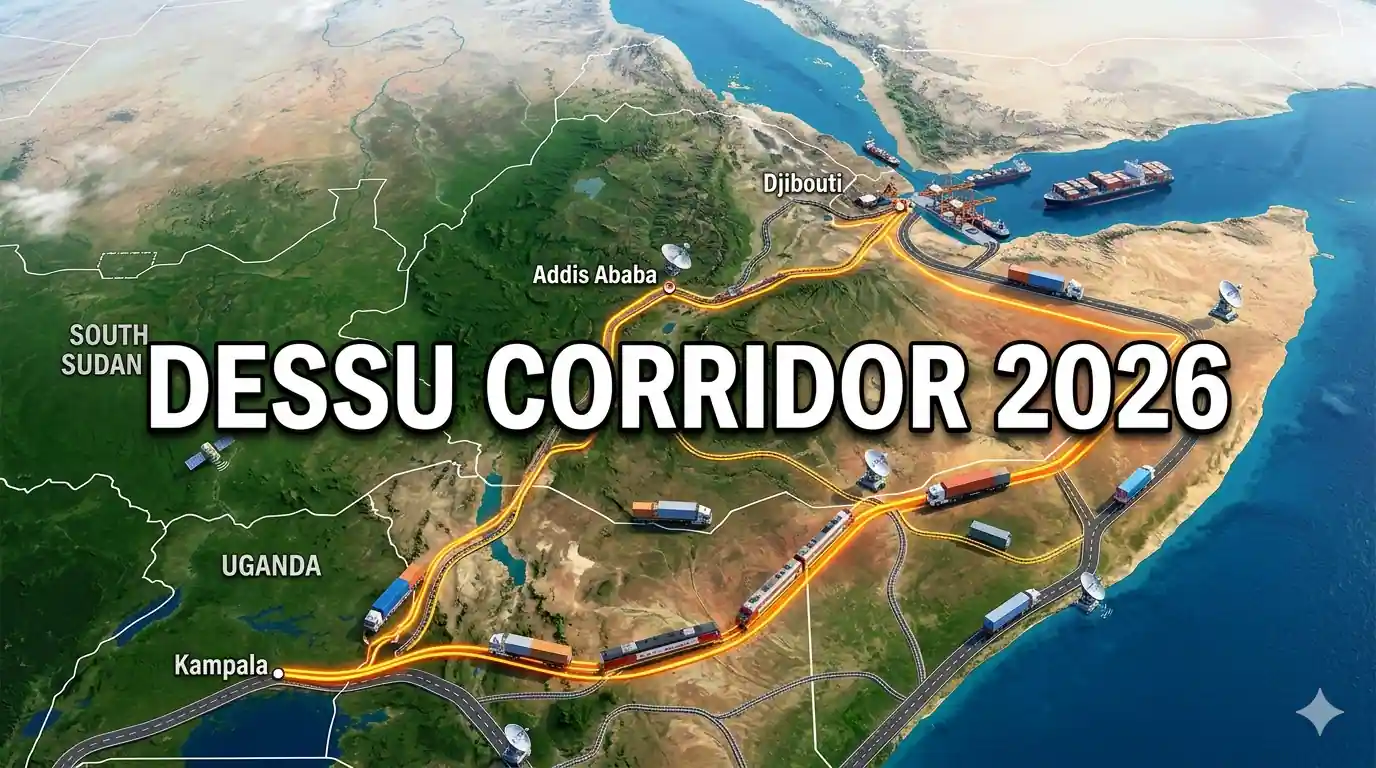
A historic shift is reshaping travel and trade across the Horn of Africa. On February 15, 2026, four nations—Djibouti, Ethiopia, South Sudan, and Uganda—signed a landmark agreement establishing the DESSU Corridor Authority, creating one of the most ambitious regional integration initiatives in recent African history . This multimodal transport corridor promises to revolutionize how people and goods move across the region, linking the strategic Port of Djibouti on the Red Sea to landlocked South Sudan and Uganda via Ethiopia's highland corridor .
For travelers, adventurers, and businesspeople eyeing the Horn of Africa, the DESSU Corridor represents more than just infrastructure development—it signals a fundamental transformation in cross-border mobility, customs procedures, and regional cooperation. As the Authority begins operations in early 2026, immediate priorities include establishing a secretariat, developing operational protocols, and putting in place a legal framework for corridor management . This comprehensive guide explores what the DESSU Corridor means for travel, tourism, and movement across these four nations, and how it could reshape your Horn of Africa journey in 2026 and beyond.
What Is the DESSU Corridor Authority?

Understanding the Agreement
The DESSU Corridor Authority represents a binding institutional framework that moves beyond bilateral cooperation to unified governance across four strategically important East African nations . The acronym DESSU stands for Djibouti-Ethiopia-South Sudan-Uganda, and the corridor creates a multimodal transport network designed to streamline logistics, reduce transit costs, and provide seamless connectivity from the Red Sea to the Great Lakes region .
Unlike previous transport initiatives that focused primarily on physical infrastructure, DESSU emphasizes governance harmonization, digital integration, and institutional coordination . The Authority will oversee planning, investment, operations, and monitoring of corridor infrastructure, with a mandate to reduce transit times and costs through digital and smart logistics systems .
The Route: From Djibouti to Kampala
The DESSU Corridor follows a strategic route connecting key economic and population centers across the four nations :
- Port of Djibouti: The maritime gateway on the Red Sea, handling cargo from global shipping routes
- Addis Ababa, Ethiopia: The continental diplomatic capital and major logistics hub
- Jimma, Ethiopia: Agricultural and commercial center in western Ethiopia
- Boma and Kapoeta, South Sudan: Eastern South Sudan towns along the Ethiopian border
- Nimule, South Sudan: Border town connecting to Uganda
- Gulu, Uganda: Major northern Ugandan city
- Kampala, Uganda: The final destination and Uganda's capital
- 👉 Backpacking Seychelles on $100 a Day Budget Itinerary 2026
- 👉 Chinguetti's Disappearing Libraries: Solo Traveler's Preservation Guide
- 👉 Ultimate 10-Day Mozambique Coastline Itinerary: Maputo to Vilankulo 2026
This route leverages existing infrastructure, particularly the well-established Djibouti-Addis Ababa railway and road network, while extending connectivity into South Sudan and Uganda through planned upgrades and new construction .
Governance Structure
The DESSU Corridor Authority features a multi-tiered governance framework designed to balance national sovereignty with operational efficiency :
- Interstate Council of Ministers: Top decision-making body comprising transport ministers from all four countries
- Joint Steering Committees: Mid-level coordination bodies overseeing implementation
- Technical Committees: Specialized groups handling customs, infrastructure, security, and digital systems
- Secretariat: Permanent administrative body to be established in early 2026
- 👉 Backpacking Seychelles on $100 a Day Budget Itinerary 2026
- 👉 Chinguetti's Disappearing Libraries: Solo Traveler's Preservation Guide
- 👉 Ultimate 10-Day Mozambique Coastline Itinerary: Maputo to Vilankulo 2026
Officials from all four governments emphasized that the creation of this binding institution marks a shift from bilateral cooperation to unified institutional governance .
How DESSU Transforms Travel and Border Crossing

Single Customs Territory: Revolutionizing Border Procedures
One of DESSU's most transformative features for travelers is the planned Single Customs Territory, which aims to synchronize digital customs systems and dramatically reduce border processing times . Currently, crossing borders in the Horn of Africa can involve hours or even days of bureaucratic procedures, multiple document checks, and redundant inspections. The DESSU framework seeks to change this fundamentally.
Key improvements include:
- Electronic cargo tracking: GPS-enabled systems that monitor shipments across borders, reducing the need for repeated physical inspections
- Single window systems: Digital platforms where travelers and traders can submit all required documentation once, rather than at each border
- One-stop border posts: Facilities where exit and entry procedures for adjacent countries are handled simultaneously, cutting processing time from days to hours
- Harmonized documentation: Standardized forms and requirements across all four countries, eliminating confusion and delays
- 👉 Backpacking Seychelles on $100 a Day Budget Itinerary 2026
- 👉 Chinguetti's Disappearing Libraries: Solo Traveler's Preservation Guide
- 👉 Ultimate 10-Day Mozambique Coastline Itinerary: Maputo to Vilankulo 2026
The Transport Observatory, backed by TradeMark Africa, will track real-time truck movements and "name and shame" sluggish border posts to ensure accountability and continuous improvement . For overland travelers, this means potentially transforming what used to be multi-day border ordeals into matters of hours.
Digital Corridor: Technology-Enabled Travel
The DESSU Corridor's "digital backbone" represents a quantum leap in cross-border mobility . Supported by TradeMark Africa and the European Union, the initiative includes:
- Digital visa systems: Potential for unified or streamlined visa application processes across DESSU nations
- Electronic travel permits: Digital authorization systems that can be obtained online before travel
- Real-time border information: Mobile apps and platforms providing up-to-date information on border wait times, requirements, and procedures
- Cybersecurity infrastructure: Protection for digital systems, particularly important in countries like South Sudan that are building digital capacity
- 👉 Backpacking Seychelles on $100 a Day Budget Itinerary 2026
- 👉 Chinguetti's Disappearing Libraries: Solo Traveler's Preservation Guide
- 👉 Ultimate 10-Day Mozambique Coastline Itinerary: Maputo to Vilankulo 2026
These digital tools target the infamous three-day border delays that have long plagued the region, promising fluid flows and reduced opportunities for corruption .
Visa and Entry Requirements: Toward Simplification
While the DESSU agreement primarily focuses on trade and transport, its integration framework creates pressure for simplified visa regimes. Though specific unified visa policies haven't been formally announced as of early 2026, the corridor's logic points toward several potential developments:
- Harmonized visa categories: Standardized tourist, business, and transit visa types across DESSU countries
- Multiple-entry facilitation: Easier processes for travelers moving between DESSU nations
- Regional business visas: Special categories for traders and businesspeople operating across the corridor
- Extended validity periods: Longer visa durations to accommodate multi-country itineraries
- 👉 Backpacking Seychelles on $100 a Day Budget Itinerary 2026
- 👉 Chinguetti's Disappearing Libraries: Solo Traveler's Preservation Guide
- 👉 Ultimate 10-Day Mozambique Coastline Itinerary: Maputo to Vilankulo 2026
Travelers should monitor official DESSU Authority announcements throughout 2026 for specific visa policy changes. Currently, each country maintains its own visa requirements, but the integration trajectory suggests gradual harmonization.
Infrastructure Upgrades: What's Being Built and When

AfDB Funding and Priority Projects
The African Development Bank approved $214.47 million in Phase II funding in late 2025, with allocations reflecting both opportunities and challenges across the corridor :
- Ethiopia: $181.5 million - The largest share addresses critical gaps including the 67-km Melka Jilo-Awash expressway extension
- Djibouti: $29.71 million - Road upgrades to enhance port connectivity and handling capacity
- South Sudan: $1.96 million - Modest allocation plus $1.3 million for fragile-state needs, reflecting security and capacity constraints
- Uganda: Included in broader regional frameworks - Leveraging existing and planned infrastructure
- 👉 Backpacking Seychelles on $100 a Day Budget Itinerary 2026
- 👉 Chinguetti's Disappearing Libraries: Solo Traveler's Preservation Guide
- 👉 Ultimate 10-Day Mozambique Coastline Itinerary: Maputo to Vilankulo 2026
The EU has also contributed €32 million specifically for the Djibouti-Ethiopia segment, financed through Agence Française de Développement (AFD) and implemented by TradeMark Africa . This program aims to cut transit times by 50 percent through both physical and digital infrastructure upgrades .
Key Infrastructure Components
Rail Transport
The Djibouti-Addis Ababa railway forms the corridor's backbone, already operational and handling significant freight volumes . This electrified railway, built with Chinese financing, provides efficient transport from the port to Ethiopia's capital. Future extensions toward South Sudan and Uganda remain in planning stages, though the immediate focus is on optimizing existing rail capacity and improving last-mile connectivity.
Road Networks
Road infrastructure varies significantly along the corridor :
- Djibouti-Ethiopia: Well-developed expressways and paved roads
- Ethiopia-South Sudan: The critical Paloich-Pagak road link under construction, connecting South Sudan's oil fields to the Ethiopian border
- South Sudan-Uganda: Sections like Nimule-Gulu require substantial upgrades, with funding gaps and security concerns slowing progress
- 👉 Backpacking Seychelles on $100 a Day Budget Itinerary 2026
- 👉 Chinguetti's Disappearing Libraries: Solo Traveler's Preservation Guide
- 👉 Ultimate 10-Day Mozambique Coastline Itinerary: Maputo to Vilankulo 2026
Port and Dry Port Facilities
South Sudan has signed complementary agreements with Djibouti to develop river and dry ports along the White Nile, integrating with the corridor network . These facilities will enable multimodal transport combining river barges, road transport, and rail connections, providing flexibility and redundancy for cargo movement.
Timeline and Implementation
The DESSU Corridor Authority began operations in early 2026, with immediate priorities including :
- Establishing the permanent secretariat
- Developing detailed operational protocols
- Implementing legal frameworks for corridor management
- Creating performance monitoring systems
- 👉 Backpacking Seychelles on $100 a Day Budget Itinerary 2026
- 👉 Chinguetti's Disappearing Libraries: Solo Traveler's Preservation Guide
- 👉 Ultimate 10-Day Mozambique Coastline Itinerary: Maputo to Vilankulo 2026
Full infrastructure integration is a multi-year endeavor, with some segments operational now (Djibouti-Ethiopia) and others requiring 3-5 years for completion (South Sudan-Uganda links) .
Economic Impact: Reduced Costs and New Opportunities

Logistics Cost Reduction
The DESSU Corridor targets dramatic reductions in logistics costs, currently estimated at 10-40% of total trade value due to inefficiencies . By streamlining procedures, reducing border delays, and improving infrastructure, the Authority aims to:
- Cut transit times: From current averages of 10-15 days to 5-7 days for full corridor journeys
- Reduce transport costs: By 20-30% through efficiency gains and competition
- Minimize border delays: From days to hours through digital systems and one-stop border posts
- Lower corruption opportunities: Through transparency and digital tracking
- 👉 Backpacking Seychelles on $100 a Day Budget Itinerary 2026
- 👉 Chinguetti's Disappearing Libraries: Solo Traveler's Preservation Guide
- 👉 Ultimate 10-Day Mozambique Coastline Itinerary: Maputo to Vilankulo 2026
For travelers, these improvements translate to cheaper goods, more reliable transport services, and smoother cross-border movement.
New Tourism Opportunities
The DESSU Corridor opens exciting possibilities for regional tourism:
- Multi-country itineraries: Easier to combine Ethiopia's historical sites, South Sudan's emerging tourism, Uganda's wildlife destinations, and Djibouti's unique landscapes
- Overland adventures: Improved roads and simplified borders make self-drive and overland tours more feasible
- Business tourism: Increased trade generates demand for business travel, conferences, and trade fairs
- Cultural exchange: Enhanced connectivity facilitates people-to-people connections and cultural tourism
- 👉 Backpacking Seychelles on $100 a Day Budget Itinerary 2026
- 👉 Chinguetti's Disappearing Libraries: Solo Traveler's Preservation Guide
- 👉 Ultimate 10-Day Mozambique Coastline Itinerary: Maputo to Vilankulo 2026
South Sudan's Oil and Economic Diversification
For South Sudan, DESSU provides a critical alternative to the Port Sudan route, which has become unreliable due to Sudan's ongoing conflict . The corridor enables:
- Oil export diversification: Rerouting exports via Ethiopia to Djibouti, reducing dependence on Sudan
- Refined product imports: More reliable supply chains for fuel and other essentials
- Economic integration: Stronger ties to regional markets beyond oil
- 👉 Backpacking Seychelles on $100 a Day Budget Itinerary 2026
- 👉 Chinguetti's Disappearing Libraries: Solo Traveler's Preservation Guide
- 👉 Ultimate 10-Day Mozambique Coastline Itinerary: Maputo to Vilankulo 2026
The Paloich-Pagak road emerges as a critical "missing link," channeling oil from northern fields into the corridor system . For a country where oil fuels over 90% of government revenue, this diversification is economically vital.
Geopolitical Implications: Reshaping Regional Power Dynamics

Ethiopia's Strategic Repositioning
For Ethiopia, which has historically depended on Djibouti for 95% of its seaborne trade, DESSU transforms a vulnerability into collective strength . What was once a bilateral choke point—prone to fee hikes, capacity constraints, or diplomatic tensions—now becomes a regional lifeline involving Uganda and South Sudan, spreading risks and rewards .
Ethiopia positions itself as the pivotal transit node, gaining bargaining power while its partners lock in reliable ocean access. This creates a web of interdependencies that could buffer against flare-ups or external interference .
Uganda's Diversification Strategy
For Uganda, DESSU marks a strategic diversification from traditional reliance on the Northern Corridor via Mombasa (Kenya) and the Central Corridor through Dar es Salaam (Tanzania) . This shift:
- Signals to Kenya and Tanzania that Kampala won't remain a locked-in client
- Provides fresh leverage in freight rate negotiations with southern neighbors
- Broadens options in a region where single-route reliance creates economic fragility
- Strengthens Uganda's position in East African Community (EAC) negotiations
- 👉 Backpacking Seychelles on $100 a Day Budget Itinerary 2026
- 👉 Chinguetti's Disappearing Libraries: Solo Traveler's Preservation Guide
- 👉 Ultimate 10-Day Mozambique Coastline Itinerary: Maputo to Vilankulo 2026
Comparison with LAPSSET
DESSU inevitably invites comparison with Kenya's Lamu Port-South Sudan-Ethiopia Transport (LAPSSET) Corridor, a decade-old ambition that has struggled with funding shortfalls, land disputes, and coordination challenges . Key differences include:
| Feature | DESSU Corridor | LAPSSET Corridor |
|---|---|---|
| Infrastructure basis | Builds on existing Djibouti-Addis rail and roads | Requires new construction from scratch |
| Progress status | Operational core with extensions underway | Partial completion; major segments stalled |
| Funding | $214M AfDB Phase II approved 2025 | Multi-billion estimates; funding gaps |
| Timeline | Faster rollout leveraging existing assets | Slower momentum due to delays |
| Strategic focus | Neutralizes Ethiopia's port dependency | Provides southern Horn access |
While some view DESSU as a "LAPSSET killer," the region's desperate need for reliable links suggests these corridors could be complementary rather than purely competitive, providing redundancy and resilience .
China-West Geopolitical Dynamics
DESSU also plays into broader geopolitical competition. Djibouti's infrastructure, including key ports and rail lines, has been heavily funded by Chinese loans and investments, creating bilateral debt relationships . DESSU offers a mechanism to "multilateralize" this burden, shifting it from direct Beijing-Addis relationships to a shared regional framework .
By pooling resources and attracting Western-backed financiers like the African Development Bank and European Union, the corridor dilutes China's exclusive influence while inviting a geopolitical tug-of-war between Eastern and Western powers vying for sway in the Horn .
Challenges and Risks: Navigating the Obstacles

Security Concerns
Security remains a significant challenge, particularly in South Sudan and parts of Ethiopia :
- South Sudan instability: Ongoing internal conflicts and intercommunal violence pose risks to corridor infrastructure and operations
- Ethiopian tensions: Lingering effects of the Tigray conflict and other regional disputes
- Cross-border threats: Armed groups, cattle raiding, and banditry in border regions
- 👉 Backpacking Seychelles on $100 a Day Budget Itinerary 2026
- 👉 Chinguetti's Disappearing Libraries: Solo Traveler's Preservation Guide
- 👉 Ultimate 10-Day Mozambique Coastline Itinerary: Maputo to Vilankulo 2026
The corridor's success depends on enhanced security coordination among the four nations, potentially involving joint patrols, intelligence sharing, and rapid response mechanisms.
Sovereignty vs. Integration Trade-offs
DESSU demands a fundamental trade-off: sovereignty for synergy . Binding nations to a central authority means ceding slices of control over customs, tariffs, and standards—a significant ask in a region where protectionism often trumps partnership . Key tensions include:
- Revenue collection: Customs harmonization may reduce individual countries' control over a major revenue source
- Regulatory autonomy: Standardized rules limit national policy flexibility
- Enforcement authority: Dispute resolution mechanisms require accepting external decisions
- 👉 Backpacking Seychelles on $100 a Day Budget Itinerary 2026
- 👉 Chinguetti's Disappearing Libraries: Solo Traveler's Preservation Guide
- 👉 Ultimate 10-Day Mozambique Coastline Itinerary: Maputo to Vilankulo 2026
The governance structure's ability to balance these concerns will determine DESSU's long-term viability.
Infrastructure Gaps and Funding Shortfalls
While the Djibouti-Addis Ababa spine is well-developed, extensions into South Sudan and Uganda face significant challenges :
- Funding gaps: South Sudan's allocation of $1.96 million is modest compared to actual needs
- Geological challenges: Ethiopia's rugged highlands and South Sudan's seasonal flooding create engineering difficulties
- Land acquisition: Compensation and resettlement issues can delay projects
- Climate resilience: Infrastructure must withstand increasing extreme weather events
- 👉 Backpacking Seychelles on $100 a Day Budget Itinerary 2026
- 👉 Chinguetti's Disappearing Libraries: Solo Traveler's Preservation Guide
- 👉 Ultimate 10-Day Mozambique Coastline Itinerary: Maputo to Vilankulo 2026
Without addressing these gaps through public-private partnerships or additional donor support, DESSU risks remaining stunted, capping its reach and postponing benefits .
Administrative Capacity and Bureaucratic Resistance
Even with political commitment, implementation faces bureaucratic hurdles :
- Digital skills gaps: Particularly in South Sudan, requiring extensive training programs
- Institutional resistance: Agencies may formally support harmonization while informally resisting changes that reduce gatekeeping power
- Coordination challenges: Multiple ministries, customs agencies, and local administrations with overlapping mandates
- Corruption risks: Digital systems can reduce petty corruption but require strong cybersecurity
- 👉 Backpacking Seychelles on $100 a Day Budget Itinerary 2026
- 👉 Chinguetti's Disappearing Libraries: Solo Traveler's Preservation Guide
- 👉 Ultimate 10-Day Mozambique Coastline Itinerary: Maputo to Vilankulo 2026
The political economy of corridor governance reveals that revenue collection, transit fees, licensing systems, and inspection powers all create interests that may favor friction over flow . Streamlining procedures can improve corridor performance while reducing discretionary rents, creating incentives for informal resistance .
Practical Travel Information for 2026

Current Visa Requirements by Country
While DESSU works toward harmonization, each country currently maintains its own visa regime:
Djibouti
- Tourist visa: Available on arrival for many nationalities or e-visa online
- Validity: Typically 30-90 days
- Cost: Approximately $50-100 USD depending on nationality
- 👉 Backpacking Seychelles on $100 a Day Budget Itinerary 2026
- 👉 Chinguetti's Disappearing Libraries: Solo Traveler's Preservation Guide
- 👉 Ultimate 10-Day Mozambique Coastline Itinerary: Maputo to Vilankulo 2026
Ethiopia
- Tourist visa: E-visa system available for most nationalities
- Validity: 30 or 90 days
- Cost: $50-100 USD
- Note: Must apply online before travel; visa on arrival limited
- 👉 Backpacking Seychelles on $100 a Day Budget Itinerary 2026
- 👉 Chinguetti's Disappearing Libraries: Solo Traveler's Preservation Guide
- 👉 Ultimate 10-Day Mozambique Coastline Itinerary: Maputo to Vilankulo 2026
South Sudan
- Tourist visa: Must be obtained in advance from embassy/consulate
- Validity: Typically 30 days
- Cost: $100-200 USD
- Note: More restrictive; requires invitation letter or proof of accommodation
- 👉 Backpacking Seychelles on $100 a Day Budget Itinerary 2026
- 👉 Chinguetti's Disappearing Libraries: Solo Traveler's Preservation Guide
- 👉 Ultimate 10-Day Mozambique Coastline Itinerary: Maputo to Vilankulo 2026
Uganda
- Tourist visa: E-visa system or visa on arrival for many nationalities
- Validity: Up to 90 days
- Cost: $50 USD
- East Africa Tourist Visa: $100 for multiple entries to Uganda, Kenya, Rwanda
- 👉 Backpacking Seychelles on $100 a Day Budget Itinerary 2026
- 👉 Chinguetti's Disappearing Libraries: Solo Traveler's Preservation Guide
- 👉 Ultimate 10-Day Mozambique Coastline Itinerary: Maputo to Vilankulo 2026
Important: Monitor DESSU Authority announcements for potential unified visa developments throughout 2026.
Health and Vaccination Requirements
- Yellow fever: Mandatory for all four countries; carry International Certificate of Vaccination
- Malaria prophylaxis: Recommended for all DESSU countries except high-altitude Ethiopia
- COVID-19: Check current requirements as they vary and change frequently
- Other vaccinations: Hepatitis A/B, typhoid, meningitis recommended
- 👉 Backpacking Seychelles on $100 a Day Budget Itinerary 2026
- 👉 Chinguetti's Disappearing Libraries: Solo Traveler's Preservation Guide
- 👉 Ultimate 10-Day Mozambique Coastline Itinerary: Maputo to Vilankulo 2026
Best Time to Travel the Corridor
Climate considerations vary along the route :
- Djibouti: October-April (cooler, less humid)
- Ethiopia: October-June (dry season; avoid July-September heavy rains)
- South Sudan: December-March (dry season; avoid April-November floods)
- Uganda: June-September and December-February (drier periods)
- 👉 Backpacking Seychelles on $100 a Day Budget Itinerary 2026
- 👉 Chinguetti's Disappearing Libraries: Solo Traveler's Preservation Guide
- 👉 Ultimate 10-Day Mozambique Coastline Itinerary: Maputo to Vilankulo 2026
Optimal corridor travel window: January-March offers the best balance across all four countries.
Transport Options Along the Corridor
Rail
- Djibouti-Addis Ababa: Modern electrified railway; 12-hour journey; affordable and efficient
- Future extensions: Planned but not yet operational
- 👉 Backpacking Seychelles on $100 a Day Budget Itinerary 2026
- 👉 Chinguetti's Disappearing Libraries: Solo Traveler's Preservation Guide
- 👉 Ultimate 10-Day Mozambique Coastline Itinerary: Maputo to Vilankulo 2026
Road Transport
- Bus services: Regular services on major segments; varying comfort levels
- Private vehicles: Feasible but requires Carnet de Passage and insurance
- Shared taxis: Common for shorter segments; negotiate fares in advance
- 👉 Backpacking Seychelles on $100 a Day Budget Itinerary 2026
- 👉 Chinguetti's Disappearing Libraries: Solo Traveler's Preservation Guide
- 👉 Ultimate 10-Day Mozambique Coastline Itinerary: Maputo to Vilankulo 2026
Air Connections
- Ethiopian Airlines: Extensive regional network connecting all DESSU capitals
- Regional carriers: Limited but growing options
- 👉 Backpacking Seychelles on $100 a Day Budget Itinerary 2026
- 👉 Chinguetti's Disappearing Libraries: Solo Traveler's Preservation Guide
- 👉 Ultimate 10-Day Mozambique Coastline Itinerary: Maputo to Vilankulo 2026
Accommodation and Services
Infrastructure quality varies significantly:
- Djibouti City: International-standard hotels; higher prices
- Addis Ababa: Wide range from budget to luxury; excellent services
- Secondary cities: Limited mid-range options; basic amenities
- Border towns: Very basic facilities; plan overnight stops in larger cities
- 👉 Backpacking Seychelles on $100 a Day Budget Itinerary 2026
- 👉 Chinguetti's Disappearing Libraries: Solo Traveler's Preservation Guide
- 👉 Ultimate 10-Day Mozambique Coastline Itinerary: Maputo to Vilankulo 2026
Money and Banking
- Currencies: Djiboutian franc, Ethiopian birr, South Sudanese pound, Ugandan shilling
- USD acceptance: Widely accepted in Djibouti and South Sudan; limited in Ethiopia and Uganda
- ATMs: Available in major cities; scarce in border areas
- Credit cards: Limited acceptance outside major hotels; carry cash
- 👉 Backpacking Seychelles on $100 a Day Budget Itinerary 2026
- 👉 Chinguetti's Disappearing Libraries: Solo Traveler's Preservation Guide
- 👉 Ultimate 10-Day Mozambique Coastline Itinerary: Maputo to Vilankulo 2026
The AfCFTA Connection: DESSU as a Continental Blueprint

Testing Ground for African Integration
DESSU mirrors the African Continental Free Trade Area (AfCFTA) in miniature, probing whether four nations with deep historical rivalries can synchronize digital customs and share sovereign authority . Its success or failure carries implications far beyond the Horn of Africa:
- Proof of concept: If DESSU delivers tariff reductions, standardized procedures, and seamless connectivity, it provides a replicable blueprint for other African corridors
- Continental credibility: AfCFTA's success depends on functional regional corridors; DESSU is a critical test case
- Investment signal: Demonstrated success attracts international financing for similar initiatives across Africa
- 👉 Backpacking Seychelles on $100 a Day Budget Itinerary 2026
- 👉 Chinguetti's Disappearing Libraries: Solo Traveler's Preservation Guide
- 👉 Ultimate 10-Day Mozambique Coastline Itinerary: Maputo to Vilankulo 2026
Conversely, failure would highlight systemic challenges facing continental integration, potentially slowing AfCFTA implementation .
Alignment with Regional Bodies
DESSU intersects with multiple regional organizations :
- IGAD (Intergovernmental Authority on Development): Provides political framework for Horn of Africa cooperation
- COMESA (Common Market for Eastern and Southern Africa): Offers customs harmonization models and trade facilitation tools
- EAC (East African Community): Uganda's membership creates bridge between DESSU and East African integration
- African Union: DESSU aligns with AU's Agenda 2063 vision for continental connectivity
- 👉 Backpacking Seychelles on $100 a Day Budget Itinerary 2026
- 👉 Chinguetti's Disappearing Libraries: Solo Traveler's Preservation Guide
- 👉 Ultimate 10-Day Mozambique Coastline Itinerary: Maputo to Vilankulo 2026
Who Wins and Who Loses: Distributional Impacts

Clear Winners
- The Authority itself: Centralizes power and gains from efficiency improvements
- Governments: Boosted trade volumes and diversified revenues
- Large businesses: Exporters and importers benefit from slashed costs and faster turnaround
- Consumers: Lower prices on imported goods
- Regional integration advocates: Validation of multilateral approach
- 👉 Backpacking Seychelles on $100 a Day Budget Itinerary 2026
- 👉 Chinguetti's Disappearing Libraries: Solo Traveler's Preservation Guide
- 👉 Ultimate 10-Day Mozambique Coastline Itinerary: Maputo to Vilankulo 2026
Potential Losers
- Local truckers: If Single Customs Territory eliminates border delays, they lose "waiting time" fees that currently pad invoices, potentially squeezing margins
- Informal traders: Stricter standards and documentation may create barriers for small-scale operators
- Border communities: Reduced transit times mean less spending by stranded travelers
- Corrupt officials: Digital systems and transparency reduce opportunities for illicit extraction
- 👉 Backpacking Seychelles on $100 a Day Budget Itinerary 2026
- 👉 Chinguetti's Disappearing Libraries: Solo Traveler's Preservation Guide
- 👉 Ultimate 10-Day Mozambique Coastline Itinerary: Maputo to Vilankulo 2026
Mixed Impacts
- Route communities: Gain jobs and investment but may face displacement or environmental changes
- National carriers: Face competition but gain access to larger markets
- 👉 Backpacking Seychelles on $100 a Day Budget Itinerary 2026
- 👉 Chinguetti's Disappearing Libraries: Solo Traveler's Preservation Guide
- 👉 Ultimate 10-Day Mozambique Coastline Itinerary: Maputo to Vilankulo 2026
Environmental and Climate Considerations

Climate-Resilient Design
DESSU incorporates "climate-resilient" standards, a priority for funders like the AfDB and EU :
- Elevated roads: Protection against flooding, particularly critical in South Sudan
- Reinforced bridges: Designed to withstand extreme weather events
- Sustainable materials: Reduced environmental footprint
- Drainage systems: Enhanced capacity for heavy rainfall
- 👉 Backpacking Seychelles on $100 a Day Budget Itinerary 2026
- 👉 Chinguetti's Disappearing Libraries: Solo Traveler's Preservation Guide
- 👉 Ultimate 10-Day Mozambique Coastline Itinerary: Maputo to Vilankulo 2026
This forward-thinking approach aims to future-proof the corridor against environmental pressures that have derailed past projects .
Environmental Challenges
- Flood risks: South Sudan experiences severe seasonal flooding
- Drought: Ethiopia faces increasing water stress
- Deforestation: Infrastructure development and increased access can accelerate forest loss
- Wildlife corridors: Roads and railways may fragment habitats
- 👉 Backpacking Seychelles on $100 a Day Budget Itinerary 2026
- 👉 Chinguetti's Disappearing Libraries: Solo Traveler's Preservation Guide
- 👉 Ultimate 10-Day Mozambique Coastline Itinerary: Maputo to Vilankulo 2026
Maritime Cabotage: Keeping Revenue in Africa

A standout feature of DESSU is its maritime cabotage push, prioritizing African-flagged vessels for regional cargo to reclaim the "logistics dollar" from global shipping giants like Maersk or MSC . Backed by the Port Management Association of Eastern and Southern Africa, this approach:
- Keeps more revenue circulating within the Horn
- Bolsters local shipping fleets
- Reduces foreign dependencies
- Creates maritime jobs for Africans
- 👉 Backpacking Seychelles on $100 a Day Budget Itinerary 2026
- 👉 Chinguetti's Disappearing Libraries: Solo Traveler's Preservation Guide
- 👉 Ultimate 10-Day Mozambique Coastline Itinerary: Maputo to Vilankulo 2026
This element reflects broader African economic sovereignty ambitions and aligns with AfCFTA goals.
Success Metrics: How to Measure DESSU's Impact

The DESSU Corridor Authority's performance will be evaluated against several key indicators :
Authority Clarity
- Can operational mandates be clarified before overlapping roles become chronic bottlenecks?
- Are decision-making processes transparent and efficient?
- 👉 Backpacking Seychelles on $100 a Day Budget Itinerary 2026
- 👉 Chinguetti's Disappearing Libraries: Solo Traveler's Preservation Guide
- 👉 Ultimate 10-Day Mozambique Coastline Itinerary: Maputo to Vilankulo 2026
Customs Sequencing
- Will customs harmonization be treated as core architecture rather than downstream technical cleanup?
- Are digital systems interoperable across all four countries?
- 👉 Backpacking Seychelles on $100 a Day Budget Itinerary 2026
- 👉 Chinguetti's Disappearing Libraries: Solo Traveler's Preservation Guide
- 👉 Ultimate 10-Day Mozambique Coastline Itinerary: Maputo to Vilankulo 2026
Dispute Institutionalization
- Can routine frictions be contained through agreed mechanisms before escalating into political confrontations?
- Are escalation ladders, timelines, and technical forums clearly defined?
- 👉 Backpacking Seychelles on $100 a Day Budget Itinerary 2026
- 👉 Chinguetti's Disappearing Libraries: Solo Traveler's Preservation Guide
- 👉 Ultimate 10-Day Mozambique Coastline Itinerary: Maputo to Vilankulo 2026
Insulation from Bilateral Volatility
- Can corridor operations remain functional during periods of diplomatic strain?
- Does the governance framework protect technical cooperation from political shocks?
- 👉 Backpacking Seychelles on $100 a Day Budget Itinerary 2026
- 👉 Chinguetti's Disappearing Libraries: Solo Traveler's Preservation Guide
- 👉 Ultimate 10-Day Mozambique Coastline Itinerary: Maputo to Vilankulo 2026
Administrative Capacity and Compliance
- Do participating institutions have the systems and discipline to implement agreed rules consistently?
- Is training and capacity-building adequate?
- 👉 Backpacking Seychelles on $100 a Day Budget Itinerary 2026
- 👉 Chinguetti's Disappearing Libraries: Solo Traveler's Preservation Guide
- 👉 Ultimate 10-Day Mozambique Coastline Itinerary: Maputo to Vilankulo 2026
Incentive Alignment
- Can revenue and bureaucratic incentives be aligned toward throughput and predictability rather than checkpoint control?
- Are stakeholders benefiting from efficiency gains?
- 👉 Backpacking Seychelles on $100 a Day Budget Itinerary 2026
- 👉 Chinguetti's Disappearing Libraries: Solo Traveler's Preservation Guide
- 👉 Ultimate 10-Day Mozambique Coastline Itinerary: Maputo to Vilankulo 2026
Conclusion: A Pivotal Moment for Horn of Africa Integration

The DESSU Corridor Authority represents far more than a transport initiative—it's a stress test for the Horn of Africa's ability to convert connectivity ambitions into governed interdependence . As the Authority begins operations in 2026, its trajectory will depend less on the ambition of infrastructure announcements than on the quality of governance design that follows .
For travelers, the promise is transformative: faster border crossings, simplified procedures, cheaper transport, and easier multi-country itineraries. For the region, DESSU offers a path toward deeper integration, economic diversification, and reduced vulnerability to external shocks. For Africa, it provides a critical test of whether the continental integration vision embodied in AfCFTA can work in practice.
The challenges are formidable—security concerns, sovereignty tensions, infrastructure gaps, bureaucratic resistance, and climate risks all threaten to derail progress . Yet the strategic imperatives are equally compelling: Ethiopia's need to diversify beyond Djibouti, Uganda's quest for route options, South Sudan's desperate requirement for alternatives to Port Sudan, and all four nations' shared interest in economic growth.
DESSU's success will ultimately hinge on whether participating actors can build institutional arrangements that protect state agency while reducing operational arbitrariness . It requires converting sovereignty from a barrier into a foundation for rule-based coordination. It demands treating governance architecture as foundational rather than supplementary .
In the Horn of Africa's evolving corridor politics, the decisive contest is less about building routes than about building the institutions that make routes usable . If DESSU succeeds in making that shift—from project diplomacy to corridor governance—it could become more than a connectivity initiative. It could become a precedent for how the region manages sovereignty and interdependence in the same strategic space, offering a blueprint for African integration in the 21st century.
For travelers planning Horn of Africa journeys in 2026 and beyond, DESSU represents both opportunity and uncertainty. Monitor the Authority's announcements, prepare for evolving procedures, and consider positioning yourself to benefit from this historic transformation. The corridor is opening—the question is whether you'll be among the first to traverse it.
0 Comments