.webp)
.webp)
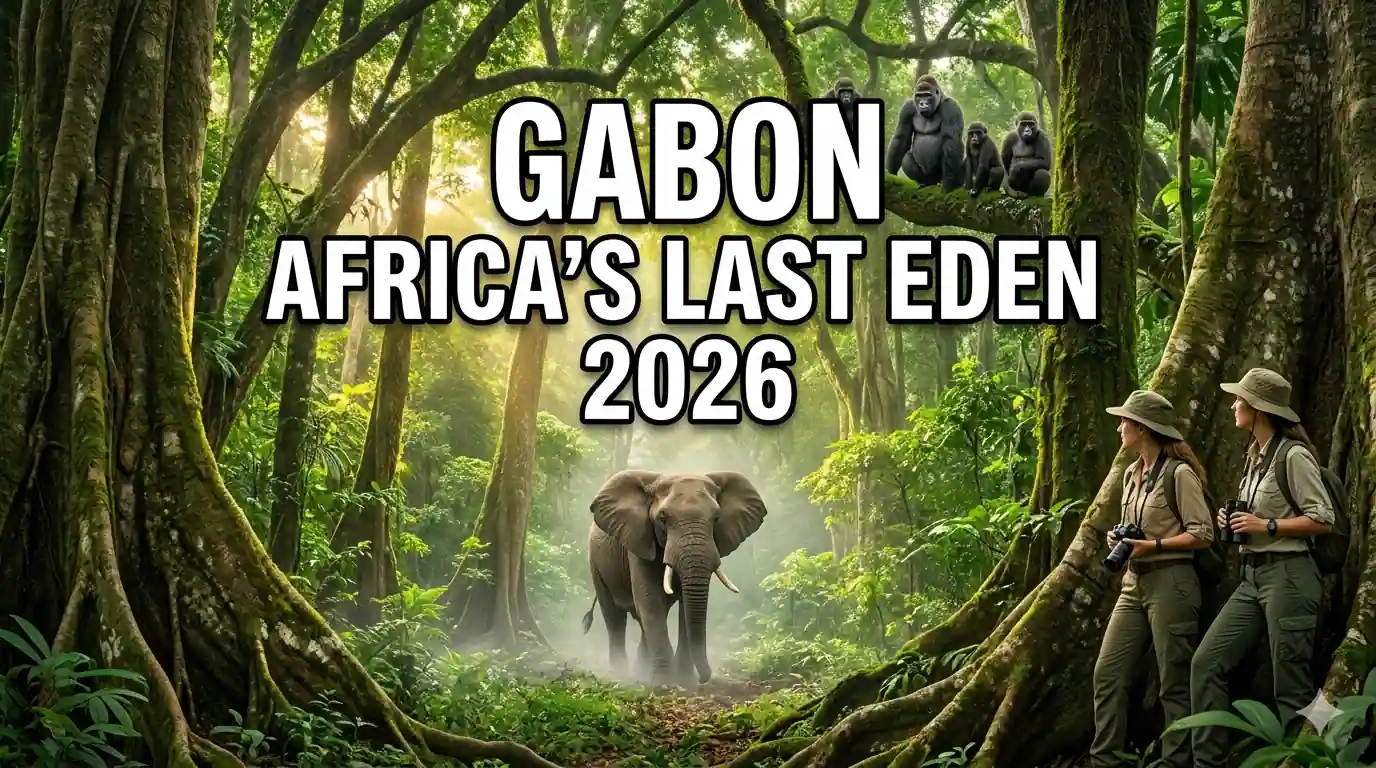
Why 2026 Is the Year of "Africa's Last Eden": Exploring Gabon's Primary Rainforests
In an era where pristine wilderness grows increasingly rare, Gabon stands as a beacon of hope—a nation that has chosen conservation over exploitation, protecting 88% of its territory as forest and establishing 13 national parks covering more than 11% of its land. Dubbed "Africa's Last Eden," Gabon possesses one of the highest concentrations of biodiversity on the planet, with vast expanses of untouched primary rainforest that serve as critical carbon sinks, wildlife sanctuaries, and living laboratories for understanding our planet's ecological heritage.
As we enter 2026, Gabon emerges at the forefront of a global conservation renaissance. This carbon-negative nation—absorbing more CO2 than it emits—demonstrates that economic development and environmental protection are not mutually exclusive. With forest elephants roaming freely across savannah and beach, western lowland gorillas thriving in pristine canopy, and humpback whales calving in protected coastal waters, Gabon offers travelers an unprecedented opportunity to witness Africa as it existed before widespread human impact.
This comprehensive guide explores why 2026 represents a pivotal moment for experiencing Gabon's primary rainforests: the country's groundbreaking conservation achievements, the extraordinary wildlife that calls these forests home, the national parks providing sanctuary to endangered species, sustainable tourism opportunities that support conservation, and practical information for travelers seeking to explore Africa's last great wilderness while contributing to its preservation.
Understanding Gabon: Africa's Conservation Leader

The Carbon-Negative Nation
Gabon's environmental credentials are unparalleled in Africa and increasingly rare globally:
- Forest coverage: 88% of Gabon's territory remains forested, representing one of the highest percentages globally
- Carbon-negative status: Gabon absorbs approximately 100 million tons more CO2 annually than it emits
- Protected areas: 13 national parks covering over 30,000 square kilometers (11% of national territory)
- Marine protection: 20% of territorial waters designated as marine protected areas
- Anti-deforestation commitment: Zero tolerance for illegal logging with strict enforcement
- 👉 Maseru Regional Hospital 2026: New Era for Medical Tourism in Lesotho's Capital
- 👉 Guinea Highland Adventure 2026: Beyond the Atlantic Coast
- 👉 Top 12 Traditional Congolese Dishes You Must Try Beyond Saka-Saka and Moambe: Complete 2026 Food Guide
This commitment to conservation positions Gabon as a global leader in climate action, demonstrating that developing nations can prioritize environmental protection while pursuing sustainable economic growth.
Why "Africa's Last Eden"?
The moniker "Africa's Last Eden" reflects several extraordinary characteristics:
- Primary rainforest: Vast expanses of untouched, old-growth forest that have never been logged
- Wildlife abundance: Healthy populations of forest elephants, gorillas, chimpanzees, and other species that are endangered or extinct elsewhere
- Low population density: With only 2.3 million people spread across 267,668 square kilometers, human impact remains minimal
- Biodiversity hotspot: Home to over 7,000 plant species, 190 mammal species, and 650 bird species
- Coastal wilderness: Pristine Atlantic coastline where forest meets ocean, creating unique ecosystems
- 👉 Maseru Regional Hospital 2026: New Era for Medical Tourism in Lesotho's Capital
- 👉 Guinea Highland Adventure 2026: Beyond the Atlantic Coast
- 👉 Top 12 Traditional Congolese Dishes You Must Try Beyond Saka-Saka and Moambe: Complete 2026 Food Guide
The 2026 Significance
Several converging factors make 2026 a critical year for Gabon's rainforests:
- Infrastructure development: New sustainable tourism infrastructure making remote areas accessible while maintaining conservation standards
- Aviation access: Africa United Airlines launching scheduled flights to Loango and Ivindo National Parks
- Conservation funding: FCFA 21.6 billion tourism investment strengthening park management and community programs
- Climate urgency: Growing global recognition of Gabon's role in carbon sequestration and climate stability
- Sustainable tourism model: Gabon demonstrating how high-value, low-impact tourism can fund conservation
- 👉 Maseru Regional Hospital 2026: New Era for Medical Tourism in Lesotho's Capital
- 👉 Guinea Highland Adventure 2026: Beyond the Atlantic Coast
- 👉 Top 12 Traditional Congolese Dishes You Must Try Beyond Saka-Saka and Moambe: Complete 2026 Food Guide
The Primary Rainforest: An Ecological Treasure

Forest Characteristics
Gabon's primary rainforests represent some of the most intact tropical forests remaining on Earth:
- Canopy height: Trees reaching 40-60 meters, with emergents exceeding 70 meters
- Biodiversity: Over 7,000 plant species, including 300+ tree species per hectare
- Carbon storage: Each hectare stores 150-200 tons of carbon in biomass
- Age: Many trees exceed 500-1,000 years old, representing millennia of ecological continuity
- Complexity: Multi-layered canopy structure creating diverse microhabitats
- 👉 Maseru Regional Hospital 2026: New Era for Medical Tourism in Lesotho's Capital
- 👉 Guinea Highland Adventure 2026: Beyond the Atlantic Coast
- 👉 Top 12 Traditional Congolese Dishes You Must Try Beyond Saka-Saka and Moambe: Complete 2026 Food Guide
Ecological Importance
These forests provide critical ecosystem services:
- Carbon sequestration: Absorbing millions of tons of CO2 annually, mitigating climate change
- Water regulation: Maintaining regional rainfall patterns and watershed health
- Biodiversity conservation: Providing habitat for countless species, many endemic or endangered
- Medicinal resources: Hosting plants with pharmaceutical potential yet to be discovered
- Cultural significance: Supporting indigenous communities and their traditional knowledge systems
- 👉 Maseru Regional Hospital 2026: New Era for Medical Tourism in Lesotho's Capital
- 👉 Guinea Highland Adventure 2026: Beyond the Atlantic Coast
- 👉 Top 12 Traditional Congolese Dishes You Must Try Beyond Saka-Saka and Moambe: Complete 2026 Food Guide
Iconic Wildlife: Guardians of the Forest

Forest Elephants (Loxodonta cyclotis)
Gabon harbors approximately 65,000 forest elephants—roughly 60% of the global population:
- Behavior: Unlike savannah elephants, forest elephants are more elusive and inhabit dense rainforest
- Unique habitat: Loango National Park is the only place where forest elephants regularly emerge onto beaches
- Conservation status: Critically Endangered; Gabon's protection is critical for species survival
- Viewing opportunities: Best observed at forest clearings (bais), lagoon edges, and coastal areas
- 👉 Maseru Regional Hospital 2026: New Era for Medical Tourism in Lesotho's Capital
- 👉 Guinea Highland Adventure 2026: Beyond the Atlantic Coast
- 👉 Top 12 Traditional Congolese Dishes You Must Try Beyond Saka-Saka and Moambe: Complete 2026 Food Guide
Western Lowland Gorillas (Gorilla gorilla gorilla)
Gabon contains the world's largest population of western lowland gorillas:
- Population: Estimated 100,000+ individuals, representing the majority of the species
- Habitat: Primary and secondary rainforest throughout Gabon's interior
- Behavior: Live in family groups led by dominant silverback males
- Conservation: Critically Endangered; Gabon's protected areas provide critical refuge
- Viewing: Gorilla trekking available in Lopé and other parks with trained guides
- 👉 Maseru Regional Hospital 2026: New Era for Medical Tourism in Lesotho's Capital
- 👉 Guinea Highland Adventure 2026: Beyond the Atlantic Coast
- 👉 Top 12 Traditional Congolese Dishes You Must Try Beyond Saka-Saka and Moambe: Complete 2026 Food Guide
Chimpanzees (Pan troglodytes)
Gabon's chimpanzee populations remain relatively healthy:
- Distribution: Found throughout Gabon's forested regions
- Behavior: Complex social structures with tool use and cultural traditions
- Conservation status: Endangered; protected within national park system
- Research: Long-term studies in Lopé National Park provide insights into chimpanzee behavior
- 👉 Maseru Regional Hospital 2026: New Era for Medical Tourism in Lesotho's Capital
- 👉 Guinea Highland Adventure 2026: Beyond the Atlantic Coast
- 👉 Top 12 Traditional Congolese Dishes You Must Try Beyond Saka-Saka and Moambe: Complete 2026 Food Guide
Marine and Coastal Species
Gabon's unique forest-ocean interface supports remarkable marine life:
- Humpback whales: Migrate to Gabon's coast (July-September) to calve in protected waters
- Leatherback turtles: Nest on Gabon's beaches; country hosts Africa's largest nesting population
- Manatees: Inhabit coastal lagoons and estuaries
- Dolphins: Atlantic humpback dolphins and bottlenose dolphins frequent coastal waters
- 👉 Maseru Regional Hospital 2026: New Era for Medical Tourism in Lesotho's Capital
- 👉 Guinea Highland Adventure 2026: Beyond the Atlantic Coast
- 👉 Top 12 Traditional Congolese Dishes You Must Try Beyond Saka-Saka and Moambe: Complete 2026 Food Guide
National Parks: Sanctuaries of Wilderness

Loango National Park
Often called "Africa's Last Eden," Loango exemplifies Gabon's conservation success:
- Size: 1,550 square kilometers of coastal forest, savannah, lagoon, and ocean
- Unique feature: Only place where forest elephants, buffalo, and hippos regularly use beaches
- Wildlife: Forest elephants, hippos, buffalo, gorillas, chimpanzees, marine species
- Activities: Game drives, boat safaris, beach walks, whale watching (seasonal), birdwatching
- Access: Africa United Airlines scheduled flights from Libreville beginning 2026
- 👉 Maseru Regional Hospital 2026: New Era for Medical Tourism in Lesotho's Capital
- 👉 Guinea Highland Adventure 2026: Beyond the Atlantic Coast
- 👉 Top 12 Traditional Congolese Dishes You Must Try Beyond Saka-Saka and Moambe: Complete 2026 Food Guide
Ivindo National Park
Home to one of Africa's most spectacular waterfalls:
- Size: 3,000 square kilometers of pristine rainforest
- Highlight: Kongou Falls—300 meters wide and 60 meters high, known as "the great water"
- Wildlife: Forest elephants, gorillas, chimpanzees, forest buffalo, diverse birdlife
- Features: Primary rainforest, rapids, pristine rivers, exceptional biodiversity
- Access: New scheduled flights via Makokou beginning 2026
- 👉 Maseru Regional Hospital 2026: New Era for Medical Tourism in Lesotho's Capital
- 👉 Guinea Highland Adventure 2026: Beyond the Atlantic Coast
- 👉 Top 12 Traditional Congolese Dishes You Must Try Beyond Saka-Saka and Moambe: Complete 2026 Food Guide
Lopé National Park
A UNESCO World Heritage Site combining rainforest and savannah:
- Size: 4,910 square kilometers
- UNESCO status: Recognized for ecological diversity and cultural heritage
- Unique feature: Rare forest-savannah mosaic creating exceptional biodiversity
- Wildlife: Largest concentration of mandrills, forest elephants, gorillas, chimpanzees
- Research: Long-term ecological research station providing critical data
- 👉 Maseru Regional Hospital 2026: New Era for Medical Tourism in Lesotho's Capital
- 👉 Guinea Highland Adventure 2026: Beyond the Atlantic Coast
- 👉 Top 12 Traditional Congolese Dishes You Must Try Beyond Saka-Saka and Moambe: Complete 2026 Food Guide
Pongara National Park
Coastal park protecting critical marine and forest habitats:
- Size: 870 square kilometers
- Features: Mangrove forests, beaches, coastal rainforest
- Wildlife: Sea turtles (nesting site), manatees, dolphins, forest elephants
- Access: Closest national park to Libreville (accessible by boat)
- 👉 Maseru Regional Hospital 2026: New Era for Medical Tourism in Lesotho's Capital
- 👉 Guinea Highland Adventure 2026: Beyond the Atlantic Coast
- 👉 Top 12 Traditional Congolese Dishes You Must Try Beyond Saka-Saka and Moambe: Complete 2026 Food Guide
Sustainable Tourism: Conservation Through Travel

The Gabon Model
Gabon has pioneered a sustainable tourism approach that prioritizes conservation:
- Low-volume, high-value: Limiting visitor numbers while maximizing per-visitor revenue for conservation
- Community benefit: 30-40% of tourism revenue directed to local communities
- Environmental standards: Strict eco-certification requirements for all tourism operators
- Wildlife protection: Tourism activities designed to minimize disturbance to animals
- Carbon offsetting: All tourism operations required to offset carbon emissions
- 👉 Maseru Regional Hospital 2026: New Era for Medical Tourism in Lesotho's Capital
- 👉 Guinea Highland Adventure 2026: Beyond the Atlantic Coast
- 👉 Top 12 Traditional Congolese Dishes You Must Try Beyond Saka-Saka and Moambe: Complete 2026 Food Guide
Eco-Lodge Development
2026 sees significant expansion of sustainable accommodation:
- Loango Savannah Camp: New luxury eco-lodge at Iguela Lagoon with 12 villas
- Existing lodges: Upgrades to meet international eco-certification standards
- Community lodges: Locally-owned accommodations ensuring revenue stays in communities
- Research stations: Facilities offering basic accommodation for conservation-focused travelers
- 👉 Maseru Regional Hospital 2026: New Era for Medical Tourism in Lesotho's Capital
- 👉 Guinea Highland Adventure 2026: Beyond the Atlantic Coast
- 👉 Top 12 Traditional Congolese Dishes You Must Try Beyond Saka-Saka and Moambe: Complete 2026 Food Guide
Wildlife Viewing Guidelines
Strict protocols protect wildlife while allowing observation:
- Minimum distances: 7-10 meters from primates, 20+ meters from elephants
- Time limits: Maximum 1 hour with habituated gorilla groups
- Group size: Limited to 4-6 visitors per guide for minimal impact
- No feeding: Strictly prohibited to maintain natural behaviors
- Health protocols: Visitors must be healthy to prevent disease transmission to primates
- 👉 Maseru Regional Hospital 2026: New Era for Medical Tourism in Lesotho's Capital
- 👉 Guinea Highland Adventure 2026: Beyond the Atlantic Coast
- 👉 Top 12 Traditional Congolese Dishes You Must Try Beyond Saka-Saka and Moambe: Complete 2026 Food Guide
Planning Your Gabon Rainforest Journey

Best Time to Visit
Dry Season (June-September):
- Optimal wildlife viewing as animals concentrate around water sources
- Humpback whale migration peak (July-September)
- Lower humidity and comfortable temperatures (22-28°C / 72-82°F)
- Peak tourist season; book 6-12 months in advance
- 👉 Maseru Regional Hospital 2026: New Era for Medical Tourism in Lesotho's Capital
- 👉 Guinea Highland Adventure 2026: Beyond the Atlantic Coast
- 👉 Top 12 Traditional Congolese Dishes You Must Try Beyond Saka-Saka and Moambe: Complete 2026 Food Guide
Shoulder Season (October-November, March-May):
- Lush vegetation and dramatic landscapes
- Fewer visitors and potentially lower rates
- Good wildlife viewing with occasional rain
- Excellent birdwatching during migration
- 👉 Maseru Regional Hospital 2026: New Era for Medical Tourism in Lesotho's Capital
- 👉 Guinea Highland Adventure 2026: Beyond the Atlantic Coast
- 👉 Top 12 Traditional Congolese Dishes You Must Try Beyond Saka-Saka and Moambe: Complete 2026 Food Guide
Rainy Season (December-February):
- Heaviest rainfall; some activities may be limited
- Lowest rates and minimal crowds
- Landscape at its most vibrant
- Consider travel insurance and flexible bookings
- 👉 Maseru Regional Hospital 2026: New Era for Medical Tourism in Lesotho's Capital
- 👉 Guinea Highland Adventure 2026: Beyond the Atlantic Coast
- 👉 Top 12 Traditional Congolese Dishes You Must Try Beyond Saka-Saka and Moambe: Complete 2026 Food Guide
Getting to Gabon
International Access:
- Libreville International Airport (LBV): Main gateway with connections from Europe, Africa, and beyond
- Airlines: Air France, Turkish Airlines, Ethiopian Airlines, Royal Air Maroc, and others
- Visa: Most nationalities require visa; eVisa system available for many countries
- Yellow fever: Certificate mandatory for entry
- 👉 Maseru Regional Hospital 2026: New Era for Medical Tourism in Lesotho's Capital
- 👉 Guinea Highland Adventure 2026: Beyond the Atlantic Coast
- 👉 Top 12 Traditional Congolese Dishes You Must Try Beyond Saka-Saka and Moambe: Complete 2026 Food Guide
Domestic Access:
- Africa United Airlines: New scheduled flights to Loango and Ivindo beginning 2026
- Charter flights: Available to remote parks and airstrips
- Boat transfers: Required for some coastal and riverine parks
- 4x4 vehicles: Necessary for overland travel in remote areas
- 👉 Maseru Regional Hospital 2026: New Era for Medical Tourism in Lesotho's Capital
- 👉 Guinea Highland Adventure 2026: Beyond the Atlantic Coast
- 👉 Top 12 Traditional Congolese Dishes You Must Try Beyond Saka-Saka and Moambe: Complete 2026 Food Guide
Essential Preparations
Health:
- Malaria prophylaxis essential (consult travel doctor)
- Yellow fever vaccination mandatory
- Hepatitis A/B, typhoid recommended
- Comprehensive travel insurance with medical evacuation
- 👉 Maseru Regional Hospital 2026: New Era for Medical Tourism in Lesotho's Capital
- 👉 Guinea Highland Adventure 2026: Beyond the Atlantic Coast
- 👉 Top 12 Traditional Congolese Dishes You Must Try Beyond Saka-Saka and Moambe: Complete 2026 Food Guide
Documentation:
- Valid passport (6+ months validity)
- Gabon visa (apply in advance)
- Yellow fever certificate (original document)
- Travel insurance documentation
- Lodge and flight confirmations
- 👉 Maseru Regional Hospital 2026: New Era for Medical Tourism in Lesotho's Capital
- 👉 Guinea Highland Adventure 2026: Beyond the Atlantic Coast
- 👉 Top 12 Traditional Congolese Dishes You Must Try Beyond Saka-Saka and Moambe: Complete 2026 Food Guide
Packing:
- Lightweight, neutral-colored clothing (khaki, green, brown)
- Long sleeves and pants for sun and insect protection
- Sturdy walking boots and sandals
- Rain gear (lightweight jacket/poncho)
- Insect repellent (DEET-based)
- Sunscreen (reef-safe, high SPF)
- Binoculars (8x42 or 10x42)
- Camera with telephoto lens (200mm+)
- Personal medications and first aid kit
- 👉 Maseru Regional Hospital 2026: New Era for Medical Tourism in Lesotho's Capital
- 👉 Guinea Highland Adventure 2026: Beyond the Atlantic Coast
- 👉 Top 12 Traditional Congolese Dishes You Must Try Beyond Saka-Saka and Moambe: Complete 2026 Food Guide
Conservation Challenges and Opportunities

Ongoing Threats
Despite Gabon's conservation leadership, challenges remain:
- Poaching: Forest elephants targeted for ivory; gorillas for bushmeat
- Illegal logging: Despite bans, some illegal timber extraction occurs
- Infrastructure development: Roads and mining can fragment habitat
- Climate change: Altered rainfall patterns affecting forest health
- Funding gaps: Conservation requires sustained financial support
- 👉 Maseru Regional Hospital 2026: New Era for Medical Tourism in Lesotho's Capital
- 👉 Guinea Highland Adventure 2026: Beyond the Atlantic Coast
- 👉 Top 12 Traditional Congolese Dishes You Must Try Beyond Saka-Saka and Moambe: Complete 2026 Food Guide
How Tourism Helps
Responsible tourism directly supports conservation:
- Revenue generation: Park fees and tourism spending fund anti-poaching and management
- Employment: Jobs as guides, rangers, and lodge staff provide alternatives to poaching
- Community benefits: Revenue sharing incentivizes local support for conservation
- Global awareness: Visitors become advocates for Gabon's conservation model
- Research support: Tourism infrastructure supports scientific research and monitoring
- 👉 Maseru Regional Hospital 2026: New Era for Medical Tourism in Lesotho's Capital
- 👉 Guinea Highland Adventure 2026: Beyond the Atlantic Coast
- 👉 Top 12 Traditional Congolese Dishes You Must Try Beyond Saka-Saka and Moambe: Complete 2026 Food Guide
Carbon Credit Innovation
Gabon pioneers forest carbon credit programs:
- REDD+ leadership: Gabon among first African nations to receive results-based payments for reducing deforestation
- Carbon markets: Selling carbon credits to international buyers
- Revenue use: Funds directed to conservation, communities, and sustainable development
- Global model: Demonstrating how forest nations can monetize conservation
- 👉 Maseru Regional Hospital 2026: New Era for Medical Tourism in Lesotho's Capital
- 👉 Guinea Highland Adventure 2026: Beyond the Atlantic Coast
- 👉 Top 12 Traditional Congolese Dishes You Must Try Beyond Saka-Saka and Moambe: Complete 2026 Food Guide
Cultural Heritage: People of the Forest

Indigenous Communities
Gabon's forests are home to diverse ethnic groups:
- Baka and Bakola: Indigenous forest peoples with deep ecological knowledge
- Fang: Largest ethnic group with rich cultural traditions
- Other groups: Over 40 ethnic groups contributing to Gabon's cultural diversity
- 👉 Maseru Regional Hospital 2026: New Era for Medical Tourism in Lesotho's Capital
- 👉 Guinea Highland Adventure 2026: Beyond the Atlantic Coast
- 👉 Top 12 Traditional Congolese Dishes You Must Try Beyond Saka-Saka and Moambe: Complete 2026 Food Guide
Cultural Tourism
Responsible cultural experiences:
- Community visits: Learn about traditional forest knowledge and practices
- Craft cooperatives: Support local artisans through fair-trade purchases
- Traditional music and dance: Experience Gabon's rich cultural heritage
- Culinary experiences: Taste traditional dishes using forest ingredients
- 👉 Maseru Regional Hospital 2026: New Era for Medical Tourism in Lesotho's Capital
- 👉 Guinea Highland Adventure 2026: Beyond the Atlantic Coast
- 👉 Top 12 Traditional Congolese Dishes You Must Try Beyond Saka-Saka and Moambe: Complete 2026 Food Guide
The Future of Gabon's Rainforests

2026 and Beyond
Gabon's conservation trajectory points toward continued leadership:
- Expanded protection: Potential for additional protected areas and wildlife corridors
- Renewable energy: Investment in solar and hydro reducing pressure on forests
- Sustainable economy: Diversification beyond extractive industries
- Youth engagement: Education programs培养 next generation of conservationists
- International partnerships: Collaboration with global conservation organizations
- 👉 Maseru Regional Hospital 2026: New Era for Medical Tourism in Lesotho's Capital
- 👉 Guinea Highland Adventure 2026: Beyond the Atlantic Coast
- 👉 Top 12 Traditional Congolese Dishes You Must Try Beyond Saka-Saka and Moambe: Complete 2026 Food Guide
Your Role as a Visitor
Travelers can contribute to Gabon's conservation future:
- Choose responsible operators: Select eco-certified lodges and guides
- Respect wildlife: Follow all viewing guidelines and maintain distances
- Support local: Purchase from community enterprises and hire local guides
- Minimize impact: Reduce waste, conserve water, respect cultural norms
- Share responsibly: Advocate for Gabon's conservation model through your experiences
- Contribute: Consider donations to conservation organizations working in Gabon
- 👉 Maseru Regional Hospital 2026: New Era for Medical Tourism in Lesotho's Capital
- 👉 Guinea Highland Adventure 2026: Beyond the Atlantic Coast
- 👉 Top 12 Traditional Congolese Dishes You Must Try Beyond Saka-Saka and Moambe: Complete 2026 Food Guide
Conclusion: Witness Africa's Last Eden

Gabon stands as a testament to what's possible when a nation chooses conservation over short-term exploitation. Its primary rainforests—vast, pristine, and teeming with life—offer a glimpse of Africa as it existed before widespread human impact. In 2026, as new infrastructure makes these wilderness areas more accessible while maintaining strict conservation standards, the opportunity to experience "Africa's Last Eden" has never been more viable.
For travelers, Gabon offers something increasingly rare: authentic wilderness encounters where forest elephants roam beaches, gorillas thrive in untouched canopy, and humpback whales calve in protected waters. But more than just a destination, Gabon represents a model for how tourism can fund conservation, empower communities, and protect biodiversity.
As you plan your 2026 journey to Gabon's primary rainforests, remember that your visit carries significance beyond personal enrichment. Each visitor contributes to the economic viability of conservation, supports local communities, and becomes an advocate for protecting these irreplaceable ecosystems. In choosing Gabon, you choose to support a nation that has demonstrated that development and environmental protection are not mutually exclusive.
The forest elephants are waiting. The gorillas call from the canopy. The ancient trees stand sentinel over a wilderness that time has spared. Africa's Last Eden awaits your respectful exploration.
In 2026, will you answer the call?
0 Comments