.webp)
.webp)
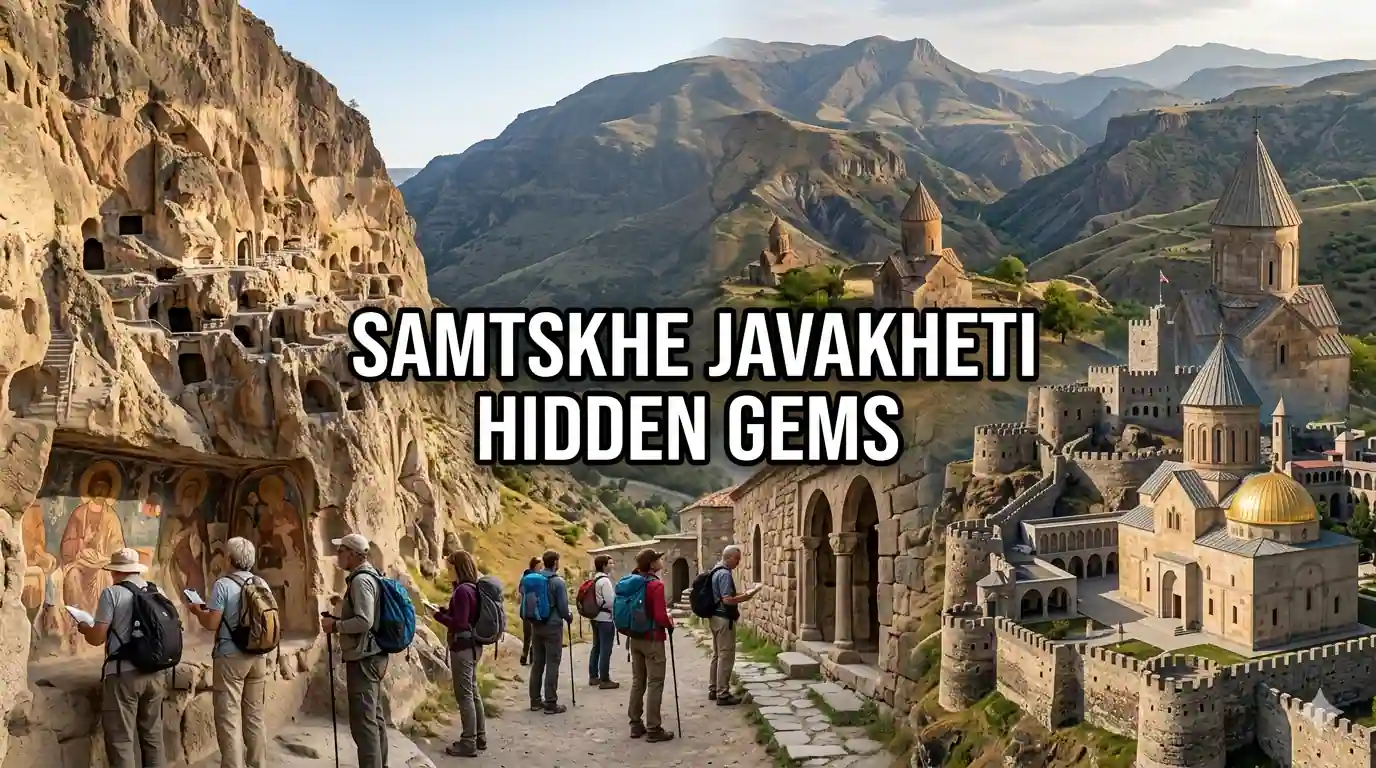
Discovering Samtskhe-Javakheti Historical Treasures
Samtskhe-Javakheti stands as one of Georgia's most historically rich yet underrated regions. This southern territory encompasses ancient cave cities, medieval fortresses, and monasteries that tell the story of over two millennia of Caucasian history.
The region's strategic location along historic trade routes between Europe and Asia made it a crossroads of civilizations. Persian, Ottoman, and Georgian influences blend in the architecture and cultural heritage found throughout the area.
Despite its historical significance, Samtskhe-Javakheti remains relatively unknown to mainstream tourism. This obscurity preserves the authentic atmosphere and allows visitors to explore sites without crowds.
From the spectacular cave monastery of Vardzia to the imposing Rabati Castle, the region offers unparalleled opportunities to experience Georgia's medieval golden age. Each site reveals layers of history carved in stone.
The diverse landscape ranges from volcanic plateaus to deep river gorges, providing dramatic backdrops for historical exploration. Natural beauty complements cultural heritage at every turn.
Why Samtskhe-Javakheti Captivates History Enthusiasts

The region's historical density rivals any area in the Caucasus. Within a relatively compact territory, visitors encounter sites spanning from Bronze Age settlements to nineteenth-century Russian fortifications.
Preservation quality exceeds many more famous destinations. Dry cave environments and remote locations protected numerous sites from destruction and deterioration over centuries.
Archaeological discoveries continue to emerge regularly. Recent excavations reveal new insights into medieval Georgian civilization and earlier cultures that inhabited the region.
Local communities maintain living connections to historical sites. Traditional practices, religious observances, and oral histories keep ancient places relevant to contemporary life.
The region's relative isolation preserved cultural traditions that disappeared elsewhere. Visitors experience authentic Georgian highland culture largely unchanged by modernization.
What Makes This Region Unique
Vardzia represents one of the world's most impressive cave cities. This twelfth-century monastic complex housed thousands of monks in rooms carved deep into the Erusheti Mountain cliff face.
The concentration of medieval fortifications tells the story of constant warfare and defense. Strategic fortresses controlled vital mountain passes and trade routes through the centuries.
Fresco cycles in remote monasteries display artistic achievements matching famous European cathedrals. These paintings survived centuries of neglect in remarkable condition.
The region's multi-ethnic history created cultural complexity. Georgian, Armenian, Turkish, and other influences created a unique cultural mosaic visible in architecture and traditions.
Essential Planning Information for 2026 Visitors

Visiting Samtskhe-Javakheti requires advance preparation due to the region's remote nature. Understanding logistics ensures smooth exploration of these historical treasures.
Best Time to Visit
May through October offers optimal conditions for exploring historical sites. Warm weather and clear roads provide access to remote locations throughout the region.
September and October combine pleasant weather with fewer tourists. Autumn colors enhance the dramatic landscapes surrounding ancient monuments.
Winter visits prove challenging but rewarding for experienced travelers. Snow-covered fortresses create spectacular photography opportunities though some sites become inaccessible.
Spring brings wildflowers and moderate temperatures. April and May offer comfortable conditions before summer heat arrives in the valleys.
Getting to Samtskhe-Javakheti
Tbilisi serves as the primary gateway with marshrutka buses departing daily for Akhaltsikhe. The three-hour journey costs approximately ten USD and travels through scenic mountain passes.
Rental cars provide maximum flexibility for exploring remote sites. The drive from Tbilisi takes two and a half hours on improved highways with spectacular views.
Private transfers offer comfort and convenience at higher cost. Drivers familiar with the region can provide valuable historical context during the journey.
Public transportation connects major towns but reaches few historical sites directly. Reaching remote monasteries and fortresses requires private vehicles or organized tours.
Accommodation Options
Akhaltsikhe offers the widest range of lodging from budget guesthouses to mid-range hotels. The town serves as ideal base for exploring the region.
Bakuriani mountain resort provides modern hotels and guesthouses. This ski town transforms into summer retreat with comfortable accommodations.
Guesthouses in villages near historical sites offer authentic experiences. Family-run establishments provide local knowledge and home-cooked meals.
Camping proves possible at designated areas though facilities remain basic. Wild camping requires permission from local authorities and landowners.
Vardzia Cave Monastery Complex

Vardzia stands as Georgia's most spectacular historical site and the crown jewel of Samtskhe-Javakheti. This massive cave monastery city carved into a cliff represents medieval Georgian civilization at its zenith.
Historical Significance
Queen Tamar ordered Vardzia's construction in the twelfth century during Georgia's golden age. The complex originally housed up to fifty thousand monks and visitors in over six hundred rooms.
The monastery served as both religious center and defensive fortress. Its hidden chambers and secret passages protected inhabitants during invasions.
An earthquake in thirteen ninety-one destroyed much of the upper levels and exposed the cave chambers. This disaster revealed the interior frescoes to the outside world.
Vardzia remained active as a monastery until Soviet times. The site's remote location preserved it from complete destruction during various invasions.
Exploring the Complex
The Church of the Dormition contains the region's finest frescoes. These twelfth-century paintings depict Queen Tamar and King Giorgi III with remarkable artistic sophistication.
Over three hundred rooms remain accessible to visitors today. Exploration reveals dining halls, bakeries, wine cellars, and living quarters carved deep into the rock.
The irrigation system demonstrates medieval engineering prowess. Channels brought water from the mountain top to the cave dwellings through sophisticated networks.
Climbing to the upper levels provides panoramic views of the Kura River valley. The perspective reveals the full scale of this extraordinary achievement.
Practical Visiting Information
Entrance fees cost approximately five USD for foreign visitors. Guided tours in English available for additional ten USD and highly recommended for historical context.
The site lies one hundred thirty kilometers from Akhaltsikhe requiring three-hour drive. Road conditions improved recently though mountain driving demands caution.
Allow three to four hours for thorough exploration. Comfortable walking shoes essential for navigating uneven cave floors and steep staircases.
Photography permitted without flash inside churches. The frescoes require protection from light damage to ensure preservation for future generations.
Rabati Castle and Akhaltsikhe Fortress

Rabati Castle dominates Akhaltsikhe and represents one of the Caucasus region's most impressive restored fortifications. This massive complex showcases eight centuries of architectural evolution.
Architectural Heritage
The original fortress dates to the ninth century though most visible structures come from the sixteenth to nineteenth centuries. Ottoman and Georgian influences blend throughout the complex.
Recent comprehensive restoration transformed Rabati into a cultural center. The project reconstructed palaces, mosques, churches, and defensive walls using traditional techniques.
The complex includes a mosque with original minaret, Orthodox church, Catholic chapel, and synagogue. This diversity reflects the region's multi-confessional history.
Museum collections display artifacts from regional archaeological sites. Exhibits include medieval weapons, religious objects, and everyday items from various historical periods.
Exploring the Fortress
Walking the ramparts provides commanding views of Akhaltsikhe and surrounding mountains. The perspective reveals the fortress's strategic importance controlling the valley.
The Jakeli Palace showcases opulent interiors with period furnishings. These rooms demonstrate the lifestyle of medieval Georgian nobility who ruled the region.
Underground passages and dungeons reveal the fortress's defensive capabilities. These spaces housed prisoners and provided emergency escape routes during sieges.
The citadel's highest point offers spectacular photography opportunities. Sunset illumination creates dramatic lighting on the stone walls and mountain backdrop.
Visitor Information
Entrance to the castle grounds costs approximately five USD with additional fees for museum access. Combined tickets provide best value for comprehensive visits.
The castle sits within Akhaltsikhe town center reachable on foot from most accommodations. No special transportation required for visiting this site.
Allow two to three hours for complete exploration. Audio guides available in multiple languages providing detailed historical information.
Evening visits offer magical atmosphere with illuminated walls. The castle remains open until eight in the evening during summer months.
Khertvisi Fortress at the Confluence

Khertvisi Fortress commands one of Georgia's most dramatic locations at the confluence of the Mtkvari and Paravani rivers. This strategic position made it one of the region's most important defensive sites.
Strategic Importance
Khertvisi guarded the vital route between Kartli and Samtskhe regions for over two millennia. Control of this fortress meant control of trade and military movement through southern Georgia.
The site shows continuous occupation from the second century BC through the nineteenth century. Each period left architectural evidence visible in the ruins today.
Medieval Georgian chronicles frequently mention Khertvisi in accounts of wars and succession disputes. The fortress changed hands numerous times between Georgian kings and foreign invaders.
The Ottomans captured and modified the fortress in the sixteenth century adding characteristic defensive features. These modifications remain visible in the stonework.
Architectural Features
The fortress complex includes multiple defensive walls adapted to the rocky promontory. Natural cliffs provided protection on three sides while massive walls defended the accessible approach.
Remains of churches from different periods demonstrate the site's religious significance. Fresco fragments suggest rich interior decoration now mostly lost to time.
The cistern system provided water security during lengthy sieges. These engineering works demonstrate sophisticated understanding of hydraulic principles.
Watchtowers at strategic points allowed surveillance of the river valleys for many kilometers. Early warning systems protected against surprise attacks.
Visiting Khertvisi
The fortress sits twenty kilometers from Akhaltsikhe on the road to Vardzia. The location makes it perfect stop en route to the cave monastery.
No entrance fee required though the site lacks formal facilities. Visitors should bring water and sun protection as no shade exists on the rocky summit.
Allow one hour for exploration and photography. The climb to the top proves moderately strenuous requiring reasonable fitness levels.
The confluence viewpoint offers spectacular photo opportunities. The meeting of two rivers creates distinctive color patterns visible from the fortress walls.
Sapara Monastery and the Jakeli Dynasty

Sapara Monastery served as the spiritual center and burial place of the Jakeli family who ruled Samtskhe for centuries. This remote monastery contains some of Georgia's finest medieval art.
Historical Context
The Jakeli princes established Sapara in the thirteenth century as their family monastery. Their patronage transformed it into one of the region's most important religious centers.
Multiple churches within the complex span several centuries of construction. Each building reflects the architectural style and artistic preferences of its era.
The monastery survived Ottoman conquest by maintaining continuous monastic life. This unbroken tradition preserved the site's religious significance through difficult periods.
Soviet closure in the nineteen twenties ended monastic occupation though the site remained sacred to local communities. Recent decades saw gradual revival of religious life.
Artistic Treasures
Frescoes in the Church of Saint Sabba represent thirteenth-century painting at its finest. Portraits of the Jakeli family display remarkable individual characterization.
The depiction of the Last Judgment covers the entire west wall with intricate detail. This masterpiece combines theological sophistication with artistic brilliance.
Decorative stonework on church facades demonstrates master craftsmanship. Intricate carvings of crosses, geometric patterns, and religious symbols adorn the exterior walls.
The iconostasis fragments preserved in the museum reveal the quality of liturgical furnishings. These pieces survived destruction that claimed most of the original decoration.
Access and Visiting
Sapara lies ten kilometers from Akhaltsikhe on a rural road through agricultural landscapes. The journey itself provides insight into traditional Georgian village life.
A small monastic community maintains the site and welcomes visitors respectfully. Modest dress required with covered shoulders and knees for both men and women.
No entrance fee though donations support the monastery's maintenance and monastic life. Contributions help preserve this irreplaceable cultural heritage.
Allow one to two hours for visit including time for quiet reflection. The peaceful atmosphere invites contemplation away from tourist crowds.
Zarzma Monastery in the Mountain Valley

Zarzma Monastery nestles in a remote mountain valley near Adigeni representing one of Georgia's most beautifully situated religious sites. The monastery's isolation preserved both its spiritual atmosphere and artistic treasures.
Foundation and Development
Serapion Zarzmeli founded the monastery in the eighth century establishing a tradition of ascetic monasticism. The remote location attracted monks seeking solitude and spiritual struggle.
The current church dates primarily to the fourteenth century though built upon earlier foundations. This structure represents the height of Georgian ecclesiastical architecture.
The monastery maintained continuous occupation despite invasions and political upheaval. This resilience testifies to the strength of monastic traditions in the region.
Recent restoration returned the church to its medieval appearance removing later additions. The project revealed original frescoes hidden under centuries of whitewash.
Architectural Excellence
The cross-in-square design with high dome creates harmonious proportions. This classic Georgian church architecture achieves perfect balance between vertical and horizontal elements.
Exterior decoration features carved stone ornaments of exceptional quality. The facades display intricate patterns and religious symbols demonstrating master stonemason skills.
The bell tower stands separately from the main church following Georgian tradition. This structure provides both functional and aesthetic contributions to the complex.
Fortification walls surround the monastery reflecting the need for defense throughout history. These walls protected monks and treasures during turbulent times.
Planning Your Visit
Zarzma sits one hundred kilometers from Akhaltsikhe requiring half-day journey. The mountain road offers spectacular scenery though demands careful driving.
The monastery remains active with small monastic community in residence. Visitors should maintain respectful behavior and observe religious customs.
No admission fee though the remote location requires private transportation. Organized tours from Akhaltsikhe or Tbilisi provide convenient access.
Combine the visit with nearby Adigeni attractions for full day excursion. The surrounding valley offers additional historical sites and natural beauty.
Tmogvi Fortress and the Southern Frontier

Tmogvi Fortress commands a dramatic cliff overlooking the Kura River valley near the Armenian border. This imposing stronghold guarded Georgia's southern frontier for over a millennium.
Frontier Defense
Tmogvi marked the boundary between Georgian kingdoms and Armenian principalities throughout the medieval period. Its strategic position controlled movement through the river gorge.
The fortress changed hands numerous times between Georgian, Armenian, and later Ottoman forces. Each occupation left architectural evidence visible in the ruins.
Historical records document Tmogvi's role in regional conflicts from the tenth through eighteenth centuries. The fortress witnessed centuries of warfare and political change.
The site's abandonment in the nineteenth century preserved the ruins in romantic state. Partial collapse created dramatic silhouettes against the mountain backdrop.
Ruins and Remains
Multiple defensive walls adapted to the steep cliff face demonstrate sophisticated military architecture. The builders maximized natural defenses while adding formidable artificial fortifications.
Church ruins within the fortress walls indicate the spiritual life of the garrison. Fresco fragments suggest these spaces received artistic decoration despite the military function.
Cisterns and storage facilities reveal how the fortress sustained lengthy sieges. These engineering works provided water and food security during blockades.
The view from Tmogvi encompasses dozens of kilometers of river valley. This commanding perspective explains the fortress's strategic importance for controlling the region.
Reaching Tmogvi
The fortress sits eighty kilometers from Akhaltsikhe near the village of Tmogvi. The final approach requires driving on unpaved roads through rural landscapes.
No facilities exist at the site requiring visitors to bring all supplies. The remote location ensures solitude but demands self-sufficiency.
Allow two hours for exploration and photography. The climb to the upper levels proves challenging requiring sure footing and reasonable fitness.
Combine the visit with nearby Khertvisi Fortress for comprehensive understanding of regional defense systems. Both sites complement each other historically and geographically.
Paravani Lake and Ancient Settlements

Paravani Lake, Georgia's largest body of water, sits on a high volcanic plateau surrounded by archaeological sites spanning millennia. This remote area combines natural beauty with historical significance.
Archaeological Wealth
The Paravani basin contains Bronze Age settlements revealing early Caucasian civilization. Excavations uncovered tools, pottery, and burial sites dating back four thousand years.
Medieval Georgian sources mention settlements around the lake that disappeared centuries ago. These lost communities left ruins still visible to careful observers.
The area's volcanic soil preserved organic materials rarely found elsewhere in Georgia. Wooden structures and textiles survived in anaerobic conditions providing unique archaeological insights.
Ongoing excavations continue revealing new discoveries each season. The region's archaeological potential remains largely unexplored offering opportunities for future findings.
Natural and Cultural Landscape
Paravani Lake sits at over two thousand meters elevation creating harsh winter conditions. The high altitude plateau experiences extreme weather limiting the visiting season.
Traditional transhumant pastoralism continues around the lake as practiced for millennia. Seasonal migration of livestock maintains ancient land use patterns.
The lake's volcanic origin created unique geological features complementing the archaeological sites. Basalt formations and thermal springs add natural interest to historical exploration.
Remote villages around the lake maintain traditional lifestyles largely unchanged for centuries. These communities preserve cultural practices disappeared from more accessible regions.
Visiting Considerations
Paravani Lake lies one hundred kilometers from Akhaltsikhe on high mountain roads. The journey requires four-wheel drive vehicle especially outside summer months.
Summer offers only viable visiting season from June through September. Winter snow makes roads impassable and temperatures drop well below freezing.
Limited accommodation exists in lakeside villages requiring advance arrangements. Camping provides alternative though facilities remain basic and weather unpredictable.
Combine the visit with other regional sites for multi-day exploration. The area's remoteness makes day trips from Akhaltsikhe impractical though possible for experienced travelers.
Practical Travel Tips for History Enthusiasts

Maximizing your Samtskhe-Javakheti experience requires practical preparation and local knowledge. These tips ensure smooth exploration of the region's historical treasures.
Transportation Strategies
Rental cars provide essential flexibility for reaching remote historical sites. Public transportation connects towns but rarely reaches monasteries and fortresses directly.
Four-wheel drive vehicles recommended for visiting mountain monasteries and frontier fortresses. Some roads remain unpaved and require capable vehicles especially after rain.
Local drivers familiar with the region prove invaluable for navigation and historical context. Hiring a driver-guide combines transportation with expert knowledge.
Fuel stations exist in major towns but remain scarce in rural areas. Fill tanks whenever opportunity arises to avoid running short in remote locations.
Accommodation Recommendations
Akhaltsikhe offers best base for exploring the region with range of accommodations. The town's central location minimizes daily driving distances to major sites.
Guesthouses in villages near historical sites provide authentic experiences and local knowledge. Family-run establishments often arrange guided tours and traditional meals.
Booking accommodation in advance essential during summer peak season. The region's limited capacity fills quickly especially on weekends.
Consider staying multiple nights in one location to reduce packing and unpacking. Base yourself strategically to explore clusters of sites efficiently.
Cultural Sensitivity
Active monasteries require modest dress and respectful behavior. Shoulders and knees must be covered and photography may be restricted in certain areas.
Local communities appreciate visitors showing genuine interest in their heritage. Learning basic Georgian greetings demonstrates respect and opens doors to warmer interactions.
Religious services welcome respectful observers though participation requires invitation. Observe quietly and follow the lead of local worshippers.
Photographing people requires permission especially in rural villages. Always ask before taking portraits and respect refusals graciously.
Creating Your Historical Itinerary
Designing an effective itinerary balances historical interests with practical logistics. These sample plans maximize your Samtskhe-Javakheti experience.
Three Day Essential Itinerary
Day one focuses on Akhaltsikhe and Rabati Castle allowing thorough exploration of this major complex. Evening stroll through the town reveals local life and dining options.
Day two dedicates to Vardzia requiring full day for travel and exploration. Stop at Khertvisi Fortress on the way maximizing historical sites visited.
Day three visits Sapara Monastery in morning then explores additional Akhaltsikhe area sites. This schedule covers major highlights without excessive rushing.
Five Day Comprehensive Itinerary
Extend to five days allows inclusion of Zarzma Monastery and Paravani Lake area. The additional time reduces daily driving and permits deeper exploration.
Day four travels to Zarzma then continues toward Paravani Lake region. Overnight in mountain village provides authentic highland experience.
Day five explores Paravani archaeological sites then returns to Akhaltsikhe via different route. This circuit maximizes sites visited while minimizing backtracking.
Seven Day In Depth Exploration
A full week enables comprehensive exploration including remote fortresses like Tmogvi. Additional time permits spontaneous discoveries and extended site visits.
Dedicate separate days to different historical periods and site types. This thematic approach provides deeper understanding of regional development.
Include time for museums and archaeological collections in Akhaltsikhe and smaller towns. These repositories provide context enhancing appreciation of individual sites.
Build in flexibility for weather delays and unexpected discoveries. The region rewards patient exploration and openness to serendipitous encounters.
Preservation and Responsible Tourism
Samtskhe-Javakheti's historical sites face ongoing preservation challenges requiring visitor cooperation. Responsible tourism ensures these treasures survive for future generations.
Conservation Challenges
Frescoes deteriorate from exposure to light, humidity, and temperature fluctuations. Limiting photography flash and following site regulations helps protect these irreplaceable artworks.
Structural instability threatens many fortress ruins. Climbing on fragile walls accelerates deterioration and creates safety hazards for visitors.
Limited funding constrains conservation work throughout the region. Visitor fees and donations directly support preservation efforts maintaining sites for future exploration.
Climate change impacts including increased precipitation and temperature extremes accelerate deterioration. Understanding these threats emphasizes urgency of conservation efforts.
Visitor Responsibilities
Stay on marked paths and respect barriers protecting fragile archaeological deposits. Trampling destroys evidence before archaeologists can document and preserve it.
Never remove artifacts or disturb archaeological materials. Even seemingly insignificant items provide valuable information when studied in context by professionals.
Report vandalism or damage to site authorities immediately. Quick response can prevent further deterioration and enable timely conservation intervention.
Support local communities through responsible spending at guesthouses, restaurants, and shops. Economic benefits from tourism provide incentives for heritage preservation.
Sustainable Practices
Carry reusable water bottles and minimize plastic waste. Remote sites lack waste management infrastructure requiring visitors to pack out all trash.
Use established parking areas to prevent damage to archaeological deposits. Vehicle tracks can destroy undiscovered archaeological features beneath the soil surface.
Respect seasonal closures protecting sites during vulnerable periods. Spring thaw and heavy rains increase erosion risks requiring temporary access restrictions.
Share preservation ethics with fellow travelers through example and gentle education. Collective responsibility ensures long-term survival of these remarkable historical resources.
Samtskhe-Javakheti region offers history enthusiasts unparalleled opportunities to explore Georgia's rich medieval heritage. From the spectacular cave city of Vardzia to remote mountain monasteries and frontier fortresses, the region preserves layers of Caucasian civilization spanning millennia. These seven hidden gems represent just the beginning of historical discovery in this remarkable territory. The combination of well-preserved monuments, stunning natural settings, and authentic cultural experiences creates unforgettable journeys through time. Responsible visitation supports ongoing preservation efforts while providing economic benefits to local communities maintaining these sites. Whether spending three days or a week, Samtskhe-Javakheti rewards curious travelers with profound insights into Georgia's glorious past and living cultural traditions. The region's relative obscurity preserves both the monuments and the authentic atmosphere that makes historical exploration so rewarding. Plan your 2026 visit to discover these treasures before mass tourism transforms this special corner of the Caucasus.
0 Comments