.webp)
.webp)
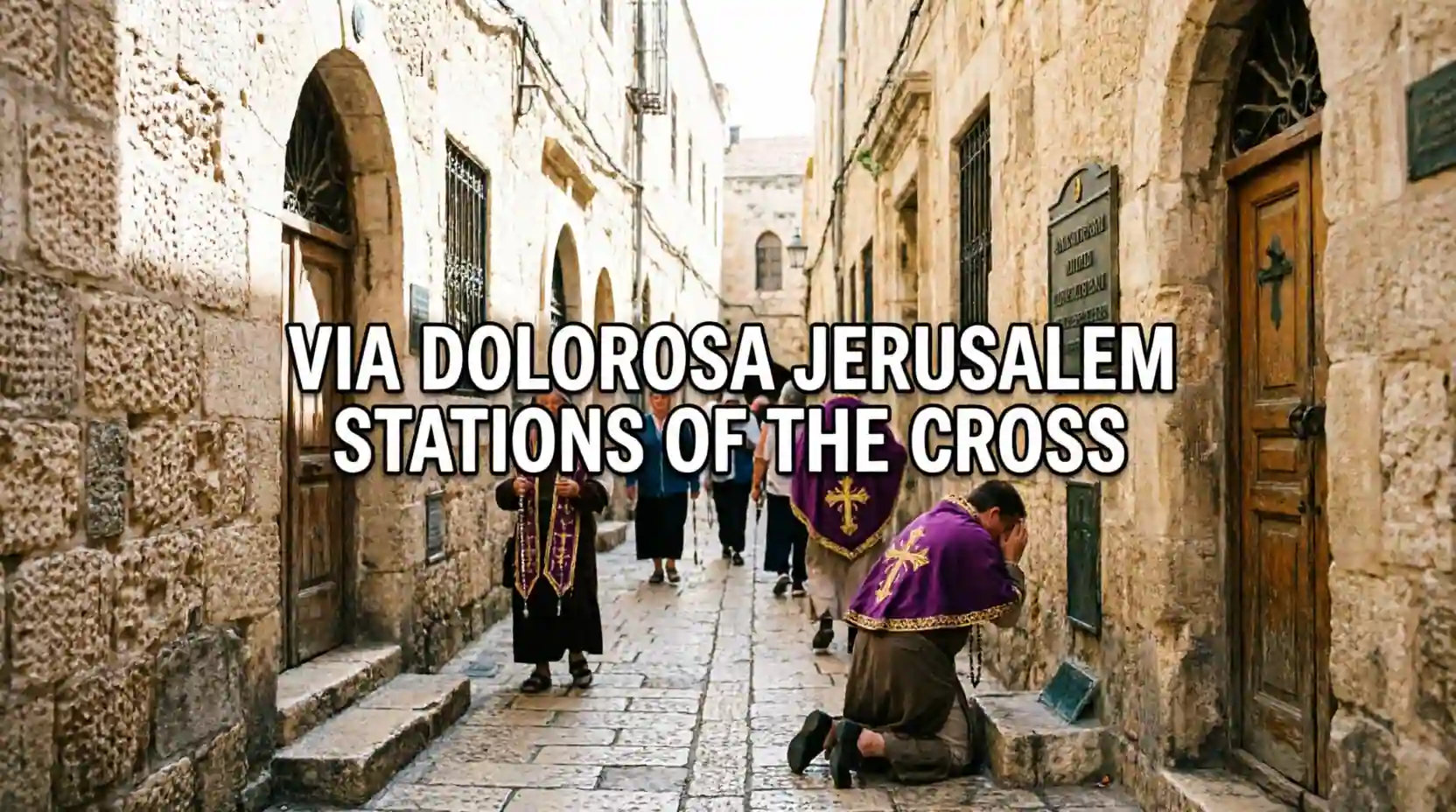
Walking Through the Via Dolorosa: The Stations of the Cross
In the narrow, winding streets of Jerusalem's Old City, where ancient stones bear the weight of millennia of human faith, hope, and suffering, lies a path that has drawn pilgrims for nearly two thousand years: the Via Dolorosa, the "Way of Sorrow." This sacred route, traditionally marking the path Jesus Christ walked from his condemnation by Pontius Pilate to his crucifixion at Golgotha, is more than a historical reconstruction—it is a living pilgrimage, a spiritual journey, and a profound encounter with the foundational narrative of Christianity. For travelers exploring Jerusalem in 2026, walking the Via Dolorosa offers a unique opportunity to engage with the Passion story in the very spaces where Christians believe these events unfolded, to join a continuum of faith that spans centuries and continents, and to experience a form of prayer that engages body, mind, and spirit in the ancient practice of the Stations of the Cross.
The Via Dolorosa is not merely a tourist attraction or historical site; it is a sacred geography where faith becomes tangible. Along its approximately 600-meter route through the Muslim and Christian Quarters of the Old City, fourteen traditional Stations mark key moments of Christ's final journey. At each station, pilgrims pause to pray, meditate, and reflect on the theological and personal significance of these events. The path winds through bustling marketplaces, past ancient churches and chapels, under stone arches that have echoed with prayers in countless languages, and alongside walls that have witnessed the devotion of millions. To walk this path is to participate in a ritual that has sustained Christian faith through persecution, schism, war, and renewal—a ritual that continues to offer meaning, comfort, and challenge to believers and seekers alike.
This comprehensive guide explores everything you need to know about walking the Via Dolorosa: understanding its historical development and theological significance, appreciating each of the fourteen Stations with their biblical and traditional contexts, navigating practical considerations for visiting with respect and sensitivity, experiencing the spiritual practice of the Stations of the Cross, engaging with the diverse Christian communities that maintain this sacred route, and approaching this profound pilgrimage with the preparation, humility, and openness it deserves. Whether you're a Christian pilgrim fulfilling a lifelong spiritual goal, a traveler seeking to understand Christian faith and history, a student of religion and culture, or simply someone curious about one of humanity's most meaningful sacred journeys, this guide provides the insights you need to walk the Via Dolorosa thoughtfully and meaningfully.
Historical Context: The Development of a Sacred Route

Biblical Foundations and Early Tradition
The Via Dolorosa's significance rests on Gospel narratives and early Christian memory:
- Gospel accounts: All four Gospels describe Jesus' condemnation, journey to crucifixion, and death; details vary but core narrative consistent
- Early pilgrimage: By 4th century, Christian pilgrims visited Jerusalem sites associated with Jesus' passion; Egeria's travelogue (c. 380 CE) describes early devotional practices
- Byzantine development: Empress Helena's 4th-century visit spurred identification and marking of holy sites; Church of Holy Sepulchre built over traditional Golgotha and tomb
- Medieval elaboration: Franciscan custodians (granted rights in 14th century) formalized route and stations; devotional practice of "walking the passion" spread throughout Christendom
- Station standardization: Fourteen Stations formalized by 18th century; route stabilized in current form through Christian Quarter
- 👉 The Ultimate Cyprus Travel Guide: A Journey Through the Island of Love, Legends, and Eternal History
- 👉 Is Koh Kradan still the "World's Best Beach" in 2026? A survivor's guide.
- 👉 Saudi Arabia Drone Laws 2026 How to Secure Permits for Aerial Desert Shots
The Route Through Changing Jerusalem
The Via Dolorosa's path reflects Jerusalem's complex history:
- Urban evolution: Modern route differs from likely historical path; city's layout changed through Roman, Byzantine, Islamic, Crusader, and Ottoman periods
- Scholarly perspectives: Historians note that exact route cannot be verified archaeologically; significance lies in devotional tradition rather than geographical precision
- Living tradition: Regardless of historical debates, the route has functioned as sacred space for centuries; meaning derived from faithful practice rather than archaeological certainty
- Contemporary reality: Today's Via Dolorosa winds through vibrant, multi-faith Old City; pilgrimage occurs alongside daily life of residents and visitors of all backgrounds
- 👉 The Ultimate Cyprus Travel Guide: A Journey Through the Island of Love, Legends, and Eternal History
- 👉 Is Koh Kradan still the "World's Best Beach" in 2026? A survivor's guide.
- 👉 Saudi Arabia Drone Laws 2026 How to Secure Permits for Aerial Desert Shots
Theological Significance of the Journey
- Imitatio Christi: Walking the Via Dolorosa embodies Christian call to follow Christ, even in suffering
- Compassion and solidarity: Meditating on Christ's passion fosters empathy for suffering people throughout history and today
- Redemptive meaning: Stations frame suffering within narrative of love, sacrifice, and resurrection hope
- Communal dimension: Pilgrimage connects individual believers to global Christian community across time and space
- Transformative potential: Many pilgrims report spiritual renewal, deeper faith, or personal healing through walking the Way
- 👉 The Ultimate Cyprus Travel Guide: A Journey Through the Island of Love, Legends, and Eternal History
- 👉 Is Koh Kradan still the "World's Best Beach" in 2026? A survivor's guide.
- 👉 Saudi Arabia Drone Laws 2026 How to Secure Permits for Aerial Desert Shots
The Fourteen Stations: A Station-by-Station Guide

Station 1: Jesus Is Condemned to Death
Location: Al-Omariya School (former Antonia Fortress site), near Lion's Gate
- Biblical reference: Matthew 27:11-26; Mark 15:1-15; Luke 23:1-25; John 18:28-19:16
- Traditional significance: Site where Pontius Pilate condemned Jesus; courtyard of Roman judgment
- Current features: Small chapel within school complex; plaque marking station; often crowded with pilgrims beginning their journey
- Prayer focus: Reflect on injustice, courage in truth, the weight of communal responsibility
- Visitor guidance: Modest dress required; quiet reverence; may be brief stop due to space constraints
- 👉 The Ultimate Cyprus Travel Guide: A Journey Through the Island of Love, Legends, and Eternal History
- 👉 Is Koh Kradan still the "World's Best Beach" in 2026? A survivor's guide.
- 👉 Saudi Arabia Drone Laws 2026 How to Secure Permits for Aerial Desert Shots
Station 2: Jesus Carries His Cross
Location: Franciscan Chapel of the Condemnation and Imposition of the Cross, Via Dolorosa
- Biblical reference: John 19:17; parallel accounts in Synoptic Gospels
- Traditional significance: Where Jesus received the cross; beginning of physical journey to Golgotha
- Current features: Beautiful Franciscan chapel with archaeological remains; mosaic floor showing Roman game (lithostrotos); artistic depictions of the passion
- Prayer focus: Acceptance of burden, strength in weakness, the cost of discipleship
- Visitor guidance: Chapel open to visitors; remove hats; maintain silence; photography may be restricted during services
- 👉 The Ultimate Cyprus Travel Guide: A Journey Through the Island of Love, Legends, and Eternal History
- 👉 Is Koh Kradan still the "World's Best Beach" in 2026? A survivor's guide.
- 👉 Saudi Arabia Drone Laws 2026 How to Secure Permits for Aerial Desert Shots
Station 3: Jesus Falls the First Time
Location: Small chapel near intersection with Aqabat el-Atar, marked by Polish Catholic chapel
- Biblical reference: Not explicitly in Gospels; derived from traditional piety and Isaiah 53 prophetic imagery
- Traditional significance: First of three falls; symbolizes human weakness and Christ's solidarity with human suffering
- Current features: Modest chapel with icon or statue depicting the fall; often a quiet space for reflection
- Prayer focus: Compassion for those who struggle, grace in failure, God's presence in weakness
- Visitor guidance: Small space; be mindful of others praying; brief pause appropriate
- 👉 The Ultimate Cyprus Travel Guide: A Journey Through the Island of Love, Legends, and Eternal History
- 👉 Is Koh Kradan still the "World's Best Beach" in 2026? A survivor's guide.
- 👉 Saudi Arabia Drone Laws 2026 How to Secure Permits for Aerial Desert Shots
Station 4: Jesus Meets His Mother
Location: Armenian Catholic chapel on Via Dolorosa, marked by relief sculpture
- Biblical reference: Implied in John 19:25-27 (Mary at cross); developed in traditional piety
- Traditional significance: Profound encounter between mother and son; Mary's "yes" to God's will despite suffering
- Current features: Chapel with moving depiction of Mary and Jesus; often adorned with flowers and candles
- Prayer focus: Family bonds, maternal love, faithfulness in sorrow, Mary as model of discipleship
- Visitor guidance: Respectful silence; many pilgrims pause here for extended prayer
- 👉 The Ultimate Cyprus Travel Guide: A Journey Through the Island of Love, Legends, and Eternal History
- 👉 Is Koh Kradan still the "World's Best Beach" in 2026? A survivor's guide.
- 👉 Saudi Arabia Drone Laws 2026 How to Secure Permits for Aerial Desert Shots
Station 5: Simon of Cyrene Helps Jesus Carry the Cross
Location: Chapel of Simon of Cyrene, marked by stone beam in wall
- Biblical reference: Matthew 27:32; Mark 15:21; Luke 23:26
- Traditional significance: Simon compelled to help; represents call to share others' burdens; his sons Alexander and Rufus mentioned in early Christian tradition
- Current features: Simple marker with inscription; often a place where pilgrims touch the stone
- Prayer focus: Service to others, unexpected callings, the grace of shared burdens
- Visitor guidance: Brief stop; be respectful of those praying
- 👉 The Ultimate Cyprus Travel Guide: A Journey Through the Island of Love, Legends, and Eternal History
- 👉 Is Koh Kradan still the "World's Best Beach" in 2026? A survivor's guide.
- 👉 Saudi Arabia Drone Laws 2026 How to Secure Permits for Aerial Desert Shots
Station 6: Veronica Wipes the Face of Jesus
Location: Chapel of Veronica, marked by relic tradition and icon
- Biblical reference: Not in canonical Gospels; developed in apocryphal tradition and medieval piety
- Traditional significance: Veronica's compassionate act; image of Christ's face imprinted on cloth (vera icon = "true image"); symbol of compassionate presence
- Current features: Small chapel with icon of Veronica's veil; often a place of quiet devotion
- Prayer focus: Compassionate action, seeing Christ in suffering faces, the power of small acts of kindness
- Visitor guidance: Modest dress; quiet reverence; photography restrictions may apply
- 👉 The Ultimate Cyprus Travel Guide: A Journey Through the Island of Love, Legends, and Eternal History
- 👉 Is Koh Kradan still the "World's Best Beach" in 2026? A survivor's guide.
- 👉 Saudi Arabia Drone Laws 2026 How to Secure Permits for Aerial Desert Shots
Station 7: Jesus Falls the Second Time
Location: Marked by column fragment in wall at intersection with Via Dolorosa and Souq Khan ez-Zeit
- Biblical reference: Traditional piety, not explicit in Gospels
- Traditional significance: Second fall emphasizes physical exhaustion and perseverance; Christ's continued solidarity with human weakness
- Current features: Simple marker with cross or inscription; often busy due to market activity
- Prayer focus: Perseverance in difficulty, grace for repeated struggles, God's faithfulness when we fail
- Visitor guidance: Brief pause; be mindful of pedestrian traffic in busy marketplace
- 👉 The Ultimate Cyprus Travel Guide: A Journey Through the Island of Love, Legends, and Eternal History
- 👉 Is Koh Kradan still the "World's Best Beach" in 2026? A survivor's guide.
- 👉 Saudi Arabia Drone Laws 2026 How to Secure Permits for Aerial Desert Shots
Station 8: Jesus Meets the Women of Jerusalem
Location: Greek Orthodox chapel on Via Dolorosa, marked by icon and inscription
- Biblical reference: Luke 23:27-31: "Daughters of Jerusalem, do not weep for me..."
- Traditional significance: Jesus' words to mourning women; call to repentance and hope beyond present suffering
- Current features: Chapel with icon depicting the encounter; often a space for group prayer
- Prayer focus: Compassion for those who mourn, prophetic hope, the call to conversion
- Visitor guidance: Respectful silence; chapel may host services; check opening times
- 👉 The Ultimate Cyprus Travel Guide: A Journey Through the Island of Love, Legends, and Eternal History
- 👉 Is Koh Kradan still the "World's Best Beach" in 2026? A survivor's guide.
- 👉 Saudi Arabia Drone Laws 2026 How to Secure Permits for Aerial Desert Shots
Station 9: Jesus Falls the Third Time
Location: Coptic Orthodox Patriarchate roof, marked by column and cross
- Biblical reference: Traditional piety, not explicit in Gospels
- Traditional significance: Final fall before reaching Golgotha; ultimate exhaustion and nearness to completion of mission
- Current features: Column fragment on roof of Coptic Patriarchate; access via courtyard; marked by cross and inscription
- Prayer focus: Final perseverance, surrender to God's will, the cost of redemption
- Visitor guidance: Access through Coptic courtyard; be respectful of monastic community; modest dress
- 👉 The Ultimate Cyprus Travel Guide: A Journey Through the Island of Love, Legends, and Eternal History
- 👉 Is Koh Kradan still the "World's Best Beach" in 2026? A survivor's guide.
- 👉 Saudi Arabia Drone Laws 2026 How to Secure Permits for Aerial Desert Shots
Station 10: Jesus Is Stripped of His Garments
Location: Within Church of the Holy Sepulchre, Chapel of the Division of the Robes (Frankish Chapel)
- Biblical reference: Matthew 27:35; Mark 15:24; Luke 23:34; John 19:23-24
- Traditional significance: Soldiers cast lots for Jesus' garments; fulfillment of Psalm 22:18; humiliation and vulnerability
- Current features: Small chapel within Holy Sepulchre complex; shared by multiple Christian denominations
- Prayer focus: Vulnerability before God, detachment from material things, Christ's identification with the humiliated
- Visitor guidance: Part of Holy Sepulchre visit; expect crowds; maintain reverence; follow denominational protocols
- 👉 The Ultimate Cyprus Travel Guide: A Journey Through the Island of Love, Legends, and Eternal History
- 👉 Is Koh Kradan still the "World's Best Beach" in 2026? A survivor's guide.
- 👉 Saudi Arabia Drone Laws 2026 How to Secure Permits for Aerial Desert Shots
Station 11: Jesus Is Nailed to the Cross
Location: Within Church of the Holy Sepulchre, at the foot of Calvary/Golgotha
- Biblical reference: All four Gospels describe crucifixion
- Traditional significance: Site of crucifixion; central event of Christian faith; place of sacrifice and love
- Current features: Chapel of Calvary (Golgotha) within Holy Sepulchre; altar beneath rock of Calvary; silver disk marks traditional spot of crucifixion
- Prayer focus: Sacrificial love, forgiveness, the depth of God's solidarity with human suffering
- Visitor guidance: One of most sacred spots in Christianity; expect long lines; maintain profound reverence; photography often restricted
- 👉 The Ultimate Cyprus Travel Guide: A Journey Through the Island of Love, Legends, and Eternal History
- 👉 Is Koh Kradan still the "World's Best Beach" in 2026? A survivor's guide.
- 👉 Saudi Arabia Drone Laws 2026 How to Secure Permits for Aerial Desert Shots
Station 12: Jesus Dies on the Cross
Location: Within Church of the Holy Sepulchre, at the altar of Calvary
- Biblical reference: All four Gospels record Jesus' death
- Traditional significance: Moment of redemption; "It is finished"; the culmination of Christ's earthly mission
- Current features: Same chapel as Station 11; altar of Calvary; hole in rock beneath altar where cross traditionally stood
- Prayer focus: Thanksgiving for salvation, meditation on love's cost, surrender to God's purposes
- Visitor guidance: Allow time for prayer; be prepared for emotional intensity; respect worshippers
- 👉 The Ultimate Cyprus Travel Guide: A Journey Through the Island of Love, Legends, and Eternal History
- 👉 Is Koh Kradan still the "World's Best Beach" in 2026? A survivor's guide.
- 👉 Saudi Arabia Drone Laws 2026 How to Secure Permits for Aerial Desert Shots
Station 13: Jesus Is Taken Down from the Cross
Location: Within Church of the Holy Sepulchre, Stone of Anointing
- Biblical reference: John 19:38-40; preparation for burial
- Traditional significance: Jesus' body received by Joseph of Arimathea and Nicodemus; anointed for burial; Mary's sorrow
- Current features: Stone of Anointing (red stone slab) just inside Holy Sepulchre entrance; pilgrims often kneel, touch, or place items on stone
- Prayer focus: Compassion for grief, care for the dead, the tenderness of love after loss
- Visitor guidance: Stone often crowded; be patient; maintain reverence; many pilgrims place rosaries or other items on stone
- 👉 The Ultimate Cyprus Travel Guide: A Journey Through the Island of Love, Legends, and Eternal History
- 👉 Is Koh Kradan still the "World's Best Beach" in 2026? A survivor's guide.
- 👉 Saudi Arabia Drone Laws 2026 How to Secure Permits for Aerial Desert Shots
Station 14: Jesus Is Laid in the Tomb
Location: Within Church of the Holy Sepulchre, the Edicule (Tomb of Christ)
- Biblical reference: All four Gospels describe burial in Joseph of Arimathea's tomb
- Traditional significance: Final station before resurrection; place of waiting, hope, and the promise of new life
- Current features: Edicule (small chapel) housing traditional tomb; often long queue to enter; powerful atmosphere of anticipation
- Prayer focus: Hope beyond death, trust in God's promises, the mystery of resurrection
- Visitor guidance: Expect significant wait to enter Edicule; maintain silence; photography typically prohibited inside; experience is often profoundly moving
- 👉 The Ultimate Cyprus Travel Guide: A Journey Through the Island of Love, Legends, and Eternal History
- 👉 Is Koh Kradan still the "World's Best Beach" in 2026? A survivor's guide.
- 👉 Saudi Arabia Drone Laws 2026 How to Secure Permits for Aerial Desert Shots
Practical Guidance for Walking the Via Dolorosa

Starting Your Journey: Logistics and Preparation
- Route orientation: Via Dolorosa begins near Lion's Gate (St. Stephen's Gate) in Muslim Quarter; ends at Church of Holy Sepulchre in Christian Quarter
- Navigation: Route marked by bronze plaques with Roman numerals (I-XIV); follow signs or use map/app
- Best times: Early morning (7-9 AM) or late afternoon (4-6 PM) for fewer crowds; avoid Friday afternoons (Muslim prayer) and Saturday (Sabbath)
- Duration: Allow 1.5-3 hours depending on prayer time at each station; longer if including Holy Sepulchre exploration
- Guided vs. independent: Guided tours provide historical context and navigation; independent walking allows personal pacing and prayer
- 👉 The Ultimate Cyprus Travel Guide: A Journey Through the Island of Love, Legends, and Eternal History
- 👉 Is Koh Kradan still the "World's Best Beach" in 2026? A survivor's guide.
- 👉 Saudi Arabia Drone Laws 2026 How to Secure Permits for Aerial Desert Shots
Dress Code and Cultural Etiquette
Respectful attire and behavior enhance the experience:
- Modest dress: Shoulders and knees covered for all visitors; head covering recommended for women in churches
- Footwear: Comfortable walking shoes for cobblestones and uneven surfaces
- Behavior in sacred spaces: Maintain quiet reverence; avoid loud conversation; turn off phone ringers
- Photography: Generally permitted outdoors; restricted inside churches, especially during services; always ask before photographing worshippers
- Respect for worship: If you encounter prayer services, observe quietly from back or return later; do not disrupt worship
- Interfaith sensitivity: Via Dolorosa passes through Muslim Quarter; respect Islamic prayer times and local customs
- 👉 The Ultimate Cyprus Travel Guide: A Journey Through the Island of Love, Legends, and Eternal History
- 👉 Is Koh Kradan still the "World's Best Beach" in 2026? A survivor's guide.
- 👉 Saudi Arabia Drone Laws 2026 How to Secure Permits for Aerial Desert Shots
Physical Considerations
- Walking conditions: Cobblestone streets, steps, and uneven surfaces; not fully accessible for mobility challenges
- Weather preparation: Jerusalem sun can be intense; bring water, hat, sunscreen; winter can be cool and rainy
- Pacing: Walk slowly; allow time for prayer and reflection at each station; this is pilgrimage, not race
- Rest opportunities: Benches occasionally available; cafes along route for breaks
- Health considerations: Bring any necessary medications; Holy Sepulchre can be crowded and warm
- 👉 The Ultimate Cyprus Travel Guide: A Journey Through the Island of Love, Legends, and Eternal History
- 👉 Is Koh Kradan still the "World's Best Beach" in 2026? A survivor's guide.
- 👉 Saudi Arabia Drone Laws 2026 How to Secure Permits for Aerial Desert Shots
Experiencing the Stations: Prayer and Reflection

The Practice of the Stations of the Cross
Traditional devotional approach:
- Structure: Move from station to station; at each: pause, read scripture or meditation, pray, reflect
- Prayer resources: Many pilgrims use prayer books with station meditations; apps and pamphlets available
- Personal adaptation: Feel free to adapt prayers to your tradition or personal spiritual practice
- Group vs. individual: Can be walked alone or in community; group walks often include shared prayers and songs
- Pacing: No "right" speed; some spend minutes at each station, others longer; follow your spiritual leading
- 👉 The Ultimate Cyprus Travel Guide: A Journey Through the Island of Love, Legends, and Eternal History
- 👉 Is Koh Kradan still the "World's Best Beach" in 2026? A survivor's guide.
- 👉 Saudi Arabia Drone Laws 2026 How to Secure Permits for Aerial Desert Shots
Meditation Prompts for Each Station
Questions to deepen reflection:
- Stations 1-3 (Condemnation and first falls): Where do I see injustice in the world today? What burdens am I carrying? How does Christ's weakness speak to my struggles?
- Stations 4-6 (Encounters with Mary, Simon, Veronica): Who in my life needs compassion? When have I been called to help unexpectedly? What small acts of kindness can I offer today?
- Stations 7-9 (Further falls and Jesus' words): What helps me persevere when I want to give up? How do I respond to those who mourn? What does repentance mean in my life?
- Stations 10-12 (Crucifixion): What does sacrificial love look like in my relationships? How do I receive forgiveness? Where do I see God's presence in suffering?
- Stations 13-14 (Burial and tomb): What losses am I grieving? Where do I need hope beyond present circumstances? How does resurrection hope shape my daily life?
- 👉 The Ultimate Cyprus Travel Guide: A Journey Through the Island of Love, Legends, and Eternal History
- 👉 Is Koh Kradan still the "World's Best Beach" in 2026? A survivor's guide.
- 👉 Saudi Arabia Drone Laws 2026 How to Secure Permits for Aerial Desert Shots
Non-Christian Visitors: Respectful Engagement
- Understanding the tradition: Learning about Christian devotion enhances appreciation; approach with curiosity and respect
- Observation vs. participation: You may observe prayers and rituals; participation is welcome if done respectfully and with understanding
- Personal reflection: Even without Christian faith, the themes of suffering, compassion, and hope are universally human; allow space for personal reflection
- Respectful presence: Maintain quiet demeanor; avoid disruptive behavior; recognize this is sacred space for millions
- Learning opportunity: Conversations with pilgrims or guides can deepen understanding of Christian faith and practice
- 👉 The Ultimate Cyprus Travel Guide: A Journey Through the Island of Love, Legends, and Eternal History
- 👉 Is Koh Kradan still the "World's Best Beach" in 2026? A survivor's guide.
- 👉 Saudi Arabia Drone Laws 2026 How to Secure Permits for Aerial Desert Shots
Combining the Via Dolorosa with Other Jerusalem Sites

Church of the Holy Sepulchre
- Natural conclusion: Via Dolorosa ends at Holy Sepulchre; allow ample time to explore this complex sacred site
- Key areas: Calvary/Golgotha (Stations 11-12), Stone of Anointing (Station 13), Edicule/Tomb (Station 14), rotunda, various chapels
- Denominational complexity: Church shared by multiple Christian communities; respect different liturgical practices and spaces
- Visitor tips: Visit early to avoid peak crowds; allow 1-2 hours minimum; dress modestly; be prepared for emotional intensity
- 👉 The Ultimate Cyprus Travel Guide: A Journey Through the Island of Love, Legends, and Eternal History
- 👉 Is Koh Kradan still the "World's Best Beach" in 2026? A survivor's guide.
- 👉 Saudi Arabia Drone Laws 2026 How to Secure Permits for Aerial Desert Shots
Other Christian Quarter Sites
- Lutheran Church of the Redeemer: Archaeological park revealing ancient Jerusalem streets; good orientation point
- Anglican Christ Church: Near Jaffa Gate; historic Protestant presence in Jerusalem
- Muristan area: Medieval hospital complex; now vibrant marketplace; connect with Crusader history
- Walking strategy: Combine Via Dolorosa with exploration of Christian Quarter's churches, shops, and cafes
- 👉 The Ultimate Cyprus Travel Guide: A Journey Through the Island of Love, Legends, and Eternal History
- 👉 Is Koh Kradan still the "World's Best Beach" in 2026? A survivor's guide.
- 👉 Saudi Arabia Drone Laws 2026 How to Secure Permits for Aerial Desert Shots
Broader Old City Context
- Western Wall: Short walk from Holy Sepulchre; understand Jewish sacred geography in relation to Christian sites
- Temple Mount/Haram al-Sharif: Adjacent sacred space; recognize Islamic significance and access restrictions
- Muslim Quarter: Via Dolorosa passes through vibrant marketplace; experience Jerusalem's multi-faith reality
- Integrated pilgrimage: Consider how different faith traditions understand sacred geography; approach with humility and respect
- 👉 The Ultimate Cyprus Travel Guide: A Journey Through the Island of Love, Legends, and Eternal History
- 👉 Is Koh Kradan still the "World's Best Beach" in 2026? A survivor's guide.
- 👉 Saudi Arabia Drone Laws 2026 How to Secure Permits for Aerial Desert Shots
Sample Itineraries for Via Dolorosa Pilgrimage

Half-Day Focused Pilgrimage (3-4 Hours)
- Start: Arrive at Lion's Gate early morning; begin at Station 1
- Stations 1-9: Walk first nine stations through Muslim Quarter; pause for prayer at each; allow 1.5 hours
- Transition: Enter Christian Quarter; brief rest at cafe if needed
- Stations 10-14: Explore final stations within Church of Holy Sepulchre; allow 1-1.5 hours for church exploration
- Reflection: Exit via Christian Quarter; time for journaling or quiet reflection
- 👉 The Ultimate Cyprus Travel Guide: A Journey Through the Island of Love, Legends, and Eternal History
- 👉 Is Koh Kradan still the "World's Best Beach" in 2026? A survivor's guide.
- 👉 Saudi Arabia Drone Laws 2026 How to Secure Permits for Aerial Desert Shots
Full-Day Jerusalem Sacred Sites (6-8 Hours)
- Morning: Via Dolorosa pilgrimage with guided or independent prayer at stations
- Lunch: Traditional meal in Christian or Muslim Quarter; experience local cuisine
- Afternoon: Deep exploration of Church of Holy Sepulchre; visit other Christian Quarter sites
- Late afternoon: Walk to Western Wall or other Old City sites; compare sacred geographies
- Evening: Return to Via Dolorosa or Holy Sepulchre for evening prayers; experience different atmosphere
- 👉 The Ultimate Cyprus Travel Guide: A Journey Through the Island of Love, Legends, and Eternal History
- 👉 Is Koh Kradan still the "World's Best Beach" in 2026? A survivor's guide.
- 👉 Saudi Arabia Drone Laws 2026 How to Secure Permits for Aerial Desert Shots
Multi-Day Pilgrimage Focus
- Day 1: Via Dolorosa morning; afternoon reflection and journaling; evening prayer at Holy Sepulchre
- Day 2: Mount of Olives sites (Gethsemane, Pater Noster Church); connect with earlier passion narrative
- Day 3: Bethlehem (Church of Nativity); extend passion narrative to incarnation theme
- Integration: Allow time between site visits for reflection, prayer, and processing
- 👉 The Ultimate Cyprus Travel Guide: A Journey Through the Island of Love, Legends, and Eternal History
- 👉 Is Koh Kradan still the "World's Best Beach" in 2026? A survivor's guide.
- 👉 Saudi Arabia Drone Laws 2026 How to Secure Permits for Aerial Desert Shots
Frequently Asked Questions

Is the Via Dolorosa historically accurate?
Scholars debate the exact historical route Jesus took. The current Via Dolorosa developed through centuries of Christian devotion and pilgrimage tradition. While archaeological evidence cannot confirm every station's precise location, the route's significance lies in its function as sacred space for prayer and meditation rather than geographical precision. For pilgrims, the spiritual meaning transcends historical debates.
Do I need to be Christian to walk the Via Dolorosa?
No, the Via Dolorosa is open to visitors of all faiths and backgrounds. Many non-Christians find the route historically fascinating and spiritually meaningful. Approach with respect for Christian tradition; maintain quiet reverence in sacred spaces; feel free to reflect on universal themes of suffering, compassion, and hope that resonate across human experience.
How long does it take to walk the Via Dolorosa?
Allow 1.5-3 hours depending on your pace and prayer time at each station. If you include extensive time at the Church of the Holy Sepulchre, add 1-2 hours. There is no rush; this is pilgrimage, not sightseeing. Follow your spiritual leading rather than a schedule.
What should I wear when walking the Via Dolorosa?
Modest dress is required: shoulders and knees covered for all visitors. Comfortable walking shoes are essential for cobblestone streets. Bring a scarf or shawl for additional coverage if needed. Dress respectfully as you would for any sacred site.
Can I take photographs along the Via Dolorosa?
Photography is generally permitted outdoors along the route. However, always ask permission before photographing individuals praying. Inside churches, especially the Church of the Holy Sepulchre, photography is often restricted, particularly during services. Flash photography is typically prohibited. When in doubt, ask or err on the side of caution.
Is the Via Dolorosa accessible for visitors with mobility challenges?
The route includes cobblestone streets, steps, and uneven surfaces that present challenges for mobility. Some stations have steps or narrow access. The Church of the Holy Sepulchre has limited accessibility. Contact sites in advance to inquire about specific accommodations. Consider focusing on accessible stations if mobility is limited.
Cultural Etiquette and Interfaith Sensitivity

Respecting Christian Worship
- Prayer services: If you encounter liturgical services, observe quietly from back or return later; do not disrupt worship
- Sacred objects: Do not touch religious artifacts, icons, or altar items unless explicitly invited
- Participation: You may be invited to join prayers; participate respectfully if comfortable, or decline politely
- Language: Services may be in Arabic, Greek, Armenian, Latin, or other languages; silence allows you to appreciate the prayer regardless of language
- 👉 The Ultimate Cyprus Travel Guide: A Journey Through the Island of Love, Legends, and Eternal History
- 👉 Is Koh Kradan still the "World's Best Beach" in 2026? A survivor's guide.
- 👉 Saudi Arabia Drone Laws 2026 How to Secure Permits for Aerial Desert Shots
Navigating Multi-Faith Jerusalem
- Muslim Quarter: Via Dolorosa passes through vibrant Muslim neighborhood; respect Islamic prayer times and local customs
- Call to prayer: You may hear the adhan (call to prayer) from nearby mosques; this is normal part of Jerusalem soundscape
- Interfaith awareness: Jerusalem is sacred to three faiths; approach all sacred sites with respect for different traditions
- Political sensitivity: Avoid political debates or assumptions; focus on spiritual and cultural understanding
- Language: Arabic, Hebrew, and English all spoken; learning basic greetings in local languages shows respect
- 👉 The Ultimate Cyprus Travel Guide: A Journey Through the Island of Love, Legends, and Eternal History
- 👉 Is Koh Kradan still the "World's Best Beach" in 2026? A survivor's guide.
- 👉 Saudi Arabia Drone Laws 2026 How to Secure Permits for Aerial Desert Shots
Photography Ethics
- People: Always ask permission before photographing worshippers; many consider prayer deeply personal
- Sacred spaces: Follow posted photography restrictions; when in doubt, ask staff or clergy
- Cultural context: When sharing images online, provide context about site's sacred nature; avoid exploitative framing
- Personal reflection: Consider experiencing some moments without camera; some memories are most powerful when carried in heart
- 👉 The Ultimate Cyprus Travel Guide: A Journey Through the Island of Love, Legends, and Eternal History
- 👉 Is Koh Kradan still the "World's Best Beach" in 2026? A survivor's guide.
- 👉 Saudi Arabia Drone Laws 2026 How to Secure Permits for Aerial Desert Shots
Conservation and Responsible Pilgrimage

Protecting Sacred Heritage
- Physical preservation: Ancient stones and structures require care; avoid touching surfaces unnecessarily
- Environmental care: Do not leave trash; use designated waste bins; help maintain site cleanliness
- Respectful behavior: Follow all posted guidelines; your conduct affects preservation efforts
- Support conservation: Consider donations to churches or organizations maintaining these sites
- 👉 The Ultimate Cyprus Travel Guide: A Journey Through the Island of Love, Legends, and Eternal History
- 👉 Is Koh Kradan still the "World's Best Beach" in 2026? A survivor's guide.
- 👉 Saudi Arabia Drone Laws 2026 How to Secure Permits for Aerial Desert Shots
Responsible Tourism Practices
- Local economy: Support local businesses: cafes, shops, guides; ensure tourism benefits residents
- Cultural exchange: Engage respectfully with local people; listen to their stories and perspectives
- Educational approach: Learn about history and traditions before visiting; deepen appreciation through knowledge
- Share responsibly: When sharing your experience, emphasize respect, learning, and the sacred nature of sites
- 👉 The Ultimate Cyprus Travel Guide: A Journey Through the Island of Love, Legends, and Eternal History
- 👉 Is Koh Kradan still the "World's Best Beach" in 2026? A survivor's guide.
- 👉 Saudi Arabia Drone Laws 2026 How to Secure Permits for Aerial Desert Shots
The Via Dolorosa in Contemporary Pilgrimage

Global Christian Practice
- Universal devotion: Stations of the Cross prayed by Catholics, Orthodox, Anglicans, Protestants worldwide
- Local adaptations: Many churches have indoor Stations; Jerusalem route remains primary pilgrimage destination
- Ecumenical dimension: Via Dolorosa can be place of Christian unity when different traditions walk together respectfully
- Contemporary relevance: Passion narrative speaks to modern struggles: injustice, suffering, hope, redemption
- 👉 The Ultimate Cyprus Travel Guide: A Journey Through the Island of Love, Legends, and Eternal History
- 👉 Is Koh Kradan still the "World's Best Beach" in 2026? A survivor's guide.
- 👉 Saudi Arabia Drone Laws 2026 How to Secure Permits for Aerial Desert Shots
Personal Transformation
- Spiritual impact: Many pilgrims report deepened faith, emotional healing, or renewed purpose after walking Via Dolorosa
- Carrying the journey: Lessons of compassion, perseverance, and hope can inform life beyond Jerusalem
- Community connection: Sharing pilgrimage experience with others can strengthen faith communities
- Ongoing practice: Stations of the Cross can be prayed anywhere; Jerusalem experience can enrich home practice
- 👉 The Ultimate Cyprus Travel Guide: A Journey Through the Island of Love, Legends, and Eternal History
- 👉 Is Koh Kradan still the "World's Best Beach" in 2026? A survivor's guide.
- 👉 Saudi Arabia Drone Laws 2026 How to Secure Permits for Aerial Desert Shots
Conclusion: A Journey of Faith, History, and Hope

Walking the Via Dolorosa is more than traversing a historical route; it is entering into a story that has shaped civilizations, comforted the brokenhearted, challenged the powerful, and offered hope to the hopeless for two millennia. Each stone along the way has been touched by countless hands in prayer; each station holds the accumulated devotion of generations who have found in Christ's passion a mirror for their own struggles and a promise of redemption.
For pilgrims in 2026, the Via Dolorosa invites not just observation but participation. It asks you to slow down in a fast world, to feel the weight of the cross in your own life, to encounter the suffering Christ in the suffering people around you, and to discover that the path of sorrow can become a path of transformation. The stations are not merely historical markers; they are invitations to examine your own journey, to ask hard questions about justice and mercy, power and vulnerability, death and life.
As you prepare to walk this sacred path, remember that you join a cloud of witnesses—pilgrims from every century, every continent, every walk of life who have found meaning in these stones. Approach with humility, curiosity, and openness. Listen to the prayers ascending around you. Allow yourself to be moved. And when you reach the final station, the empty tomb, carry home not just memories of a journey through Jerusalem's streets, but the enduring hope that love is stronger than death, that light shines in darkness, and that every via dolorosa can lead to resurrection.
Welcome to the Via Dolorosa. Welcome to the Way of the Cross. Welcome to a journey that has changed countless lives—and may change yours.
0 Comments