.webp)
.webp)
Puerto Rico Travel Without Passport for US Citizens 2026
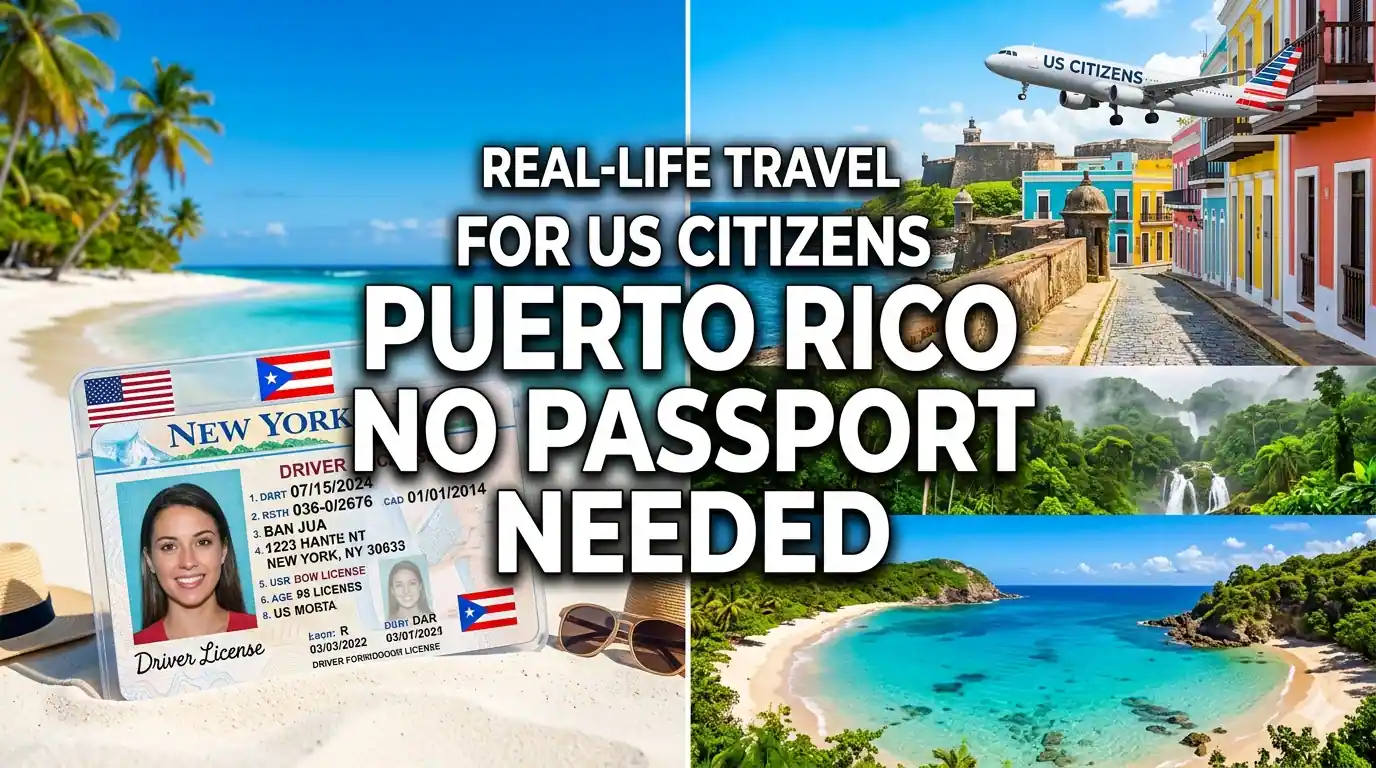
Travel to Puerto Rico Without Passport Complete Guide for 2026
Puerto Rico stands as one of the most accessible tropical destinations for United States citizens, offering the unique advantage of Caribbean paradise without the bureaucratic hurdles of international travel. As an unincorporated territory of the United States since 1898, Puerto Rico maintains a special status that allows American citizens to travel freely without passports, customs declarations, or currency exchanges. This comprehensive guide for 2026 provides everything you need to know about visiting Puerto Rico using only valid government-issued identification, making your island getaway simpler, faster, and more convenient than ever before.
The beauty of Puerto Rico travel lies in its seamless accessibility combined with exotic appeal. You will experience vibrant Spanish colonial architecture in Old San Juan, hike through the only tropical rainforest in the United States National Forest System at El Yunque, relax on world-class beaches with turquoise waters, and enjoy a rich cultural fusion of Taíno, Spanish, and African influences—all while remaining within United States jurisdiction. Your US dollar goes further here, your cell phone works without international roaming charges, and you can explore freely knowing you are protected by US laws and consular services.
For 2026 travelers, understanding the REAL ID Act requirements becomes crucial as the May 7, 2025 deadline has passed, meaning all air travelers within the United States and to US territories must present REAL ID-compliant identification or alternative acceptable documents. This guide walks you through every aspect of passport-free Puerto Rico travel, from documentation requirements and transportation options to budget planning, itinerary suggestions, and insider tips that will transform your trip from ordinary to extraordinary. Whether you are planning a romantic getaway, family vacation, solo adventure, or group excursion, Puerto Rico welcomes you with open arms and minimal paperwork.
Why Puerto Rico Requires No Passport for US Citizens

Understanding why Puerto Rico does not require passports for American citizens begins with comprehending the island's unique political and legal status. Puerto Rico is not an independent country but rather an unincorporated territory of the United States, acquired following the Spanish-American War in 1898 through the Treaty of Paris. This territorial status means that Puerto Rico falls under US sovereignty, making travel between the mainland United States and Puerto Rico domestic travel rather than international travel, despite the Caribbean location and distinct cultural identity.
The Jones-Shafroth Act of 1917 granted US citizenship to all persons born in Puerto Rico, establishing that Puerto Ricans are American citizens by birth with the same rights and privileges as citizens born in any of the 50 states. This citizenship status creates a fundamental legal framework where movement between Puerto Rico and the mainland United States cannot be restricted by passport requirements, as this would effectively limit the freedom of movement of US citizens within their own country. The Supreme Court has consistently affirmed that Puerto Rico belongs to but is not part of the United States in the constitutional sense, creating this unique travel dynamic.
From a practical standpoint, Puerto Rico's integration into US systems extends far beyond citizenship. The island uses the US dollar as its official currency, operates under the US postal system with ZIP codes, follows US federal laws alongside local territorial laws, and maintains the same time zone as Eastern Standard Time. When you travel to Puerto Rico, you are not crossing international borders, passing through customs and immigration, or entering a foreign jurisdiction. You are simply traveling to another part of the United States, albeit one with distinctive culture, language, and geography that creates an international travel experience without international travel requirements.
What is Puerto Rico political status and travel classification
Puerto Rico operates as an unincorporated organized territory of the United States, meaning it is controlled by the US government but not fully incorporated as a state. This status was established by a series of Supreme Court decisions known as the Insular Cases in the early 1900s. For travelers, this classification means Puerto Rico is treated as domestic territory for all travel purposes. The US Customs and Border Protection explicitly states that Puerto Rico is not considered international travel for US citizens, eliminating passport, visa, and customs declaration requirements that would apply to nearby independent Caribbean nations like the Dominican Republic or the British Virgin Islands.
Required Identification for Puerto Rico Travel in 2026

While Puerto Rico does not require passports for US citizens, you must present valid identification to board commercial flights and access certain services. The landscape of acceptable identification changed significantly with the full implementation of the REAL ID Act, which established minimum security standards for state-issued driver's licenses and identification cards. As of May 7, 2025, the Department of Homeland Security requires all air travelers 18 years and older to present REAL ID-compliant identification or alternative acceptable documents when boarding domestic flights, including flights to US territories like Puerto Rico.
A REAL ID-compliant driver's license or state identification card bears a star marking in the upper portion of the card, typically a gold or black star set against a white background. This star indicates that your state has verified your identity documents and that your license meets federal security standards. If your current driver's license does not have this star marking, you cannot use it alone to board flights to Puerto Rico after the May 2025 deadline. You will need to either upgrade to a REAL ID-compliant license at your local Department of Motor Vehicles or present alternative acceptable identification.
Beyond REAL ID-compliant licenses, several other forms of identification remain acceptable for Puerto Rico travel even if they are not REAL ID-compliant. These include valid US passports or passport cards, Department of Defense IDs, permanent resident cards, trusted traveler cards like Global Entry or TSA PreCheck, and enhanced driver's licenses issued by certain states. For most travelers, the simplest solution is obtaining a REAL ID-compliant driver's license, which requires presenting proof of identity like a birth certificate or passport, proof of Social Security number, and two proofs of residency at your state's DMV office.
What ID do I need to fly to Puerto Rico in 2026
To fly to Puerto Rico in 2026, you need either a REAL ID-compliant driver's license or state ID marked with a star, a valid US passport, a passport card, or other TSA-approved identification like a military ID or trusted traveler card. Standard driver's licenses without REAL ID compliance are no longer accepted for air travel. The Transportation Security Administration requires all passengers 18 and older to present acceptable identification at airport security checkpoints. Children under 18 typically do not need ID when traveling with adults within the United States and its territories, though airlines may have their own policies.
Transportation Options to Puerto Rico from the United States

Reaching Puerto Rico from the mainland United States involves choosing between air travel and cruise ships, each offering distinct advantages depending on your budget, time constraints, and travel preferences. Commercial aviation provides the fastest and most direct route, with numerous airlines operating daily flights from major US cities to Puerto Rico's primary airports. The island's strategic Caribbean location makes it accessible from the East Coast in as little as three to four hours, while West Coast travelers should expect six to nine hour flights often with connections in eastern hubs.
Luis Muñoz Marín International Airport in San Juan serves as Puerto Rico's main gateway, handling millions of passengers annually with direct flights from cities including New York, Miami, Boston, Atlanta, Chicago, Dallas, Charlotte, and Philadelphia. Major carriers like American Airlines, JetBlue, United, Delta, and Southwest compete on these routes, often creating competitive pricing especially during non-peak seasons. The airport sits just three miles from San Juan's historic district, making ground transportation to hotels quick and affordable. Secondary airports like Rafael Hernández Airport in Aguadilla on the western coast and Antonio Rivera Rodríguez Airport in Vieques provide access to different regions of the island for travelers seeking destinations beyond the capital.
Cruise travel offers an alternative approach to reaching Puerto Rico, with the island serving as a popular port of call or embarkation point for Caribbean itineraries. San Juan's cruise terminal ranks among the busiest in the Caribbean, hosting ships from Royal Caribbean, Norwegian, Celebrity, Princess, and other major cruise lines. Some cruises depart from Florida or other East Coast ports and include San Juan as one stop on a multi-day Caribbean itinerary, while others offer one-way cruises that allow you to fly home from San Juan or fly to San Juan and cruise elsewhere. Cruise travel eliminates the need for hotel bookings during transit and allows you to visit multiple destinations, though it provides less time in Puerto Rico itself compared to flying directly.
How long is the flight to Puerto Rico from major US cities
Flight times to Puerto Rico vary significantly based on your departure city. From New York City, expect approximately 3 hours and 45 minutes of flight time. Miami to San Juan takes about 2 hours and 30 minutes, making it one of the quickest routes. Boston travelers should plan for roughly 4 hours of flight time. Atlanta, a major hub for Caribbean travel, offers flights of approximately 3 hours and 30 minutes. Chicago requires about 4 hours and 45 minutes, while Dallas travelers face roughly 4 hours and 30 minutes in the air. West Coast cities like Los Angeles typically require 7 to 9 hours including connections, as no direct flights operate from the West Coast to Puerto Rico.
Best Time to Visit Puerto Rico for Ideal Weather and Value

Puerto Rico enjoys a tropical marine climate characterized by warm temperatures year-round, with average daily highs ranging from 80 to 85 degrees Fahrenheit and nighttime lows rarely dropping below 70 degrees. This consistent warmth makes the island attractive regardless of when you visit, but distinct seasonal patterns affect rainfall, humidity, crowd levels, and pricing that should influence your travel timing decisions. Understanding these patterns helps you balance ideal weather conditions against budget considerations and crowd avoidance.
The high season for Puerto Rico tourism runs from mid-December through April, coinciding with winter in the mainland United States when travelers seek escape from cold temperatures. During these months, you will experience the driest weather with minimal rainfall, comfortable humidity levels, and temperatures in the low to mid-80s. However, this popularity comes with premium pricing for flights and accommodation, often 30 to 50 percent higher than off-season rates, plus larger crowds at major attractions like El Yunque rainforest, Old San Juan historic sites, and popular beaches. Booking several months in advance becomes essential during high season to secure preferred hotels and competitive rates.
Shoulder seasons in May through early June and late October through November offer excellent compromises between weather, crowds, and cost. May and early June provide warm temperatures, relatively low rainfall before summer patterns intensify, and significantly reduced prices as the high season ends. Late October and November see hurricane season winding down while prices remain lower than winter months. These shoulder periods attract fewer tourists, meaning shorter lines at attractions, better restaurant availability, and more relaxed beach experiences. The trade-off involves slightly higher rain probability, though Puerto Rico's tropical showers often pass quickly and rarely ruin entire days.
When is hurricane season in Puerto Rico and should I avoid it
Hurricane season in Puerto Rico officially runs from June 1 through November 30, with peak activity occurring from mid-August through October. While the statistical risk of a direct hurricane strike during any specific trip remains relatively low, the possibility of tropical storms, heavy rainfall, and disrupted travel plans increases during these months. Modern meteorological forecasting provides several days of advance warning for developing storms, allowing travelers to adjust plans if necessary. Many visitors successfully travel during hurricane season, benefiting from significantly lower prices and minimal crowds, but should purchase comprehensive travel insurance covering weather disruptions and remain flexible with itineraries.
Puerto Rico Travel Costs and Budget Planning for 2026

Traveling to Puerto Rico without passport requirements does not automatically mean budget travel, though the elimination of international fees, currency exchange costs, and roaming charges provides some savings compared to Caribbean island nations. Your total trip cost depends heavily on travel style, accommodation choices, dining preferences, activity selection, and trip duration. Understanding typical costs allows realistic budget planning and helps avoid financial stress during your vacation.
Accommodation costs in Puerto Rico span a wide range from budget hostels to luxury resorts. Budget travelers can find hostel dorm beds in San Juan for $30 to $50 per night or basic guesthouses and budget hotels for $60 to $100 nightly. Mid-range hotels and vacation rentals typically cost $120 to $250 per night, offering comfortable rooms, amenities like pools or beach access, and convenient locations. Luxury resorts and boutique hotels command $300 to $600 or more per night, featuring premium amenities, oceanfront locations, spas, fine dining, and personalized service. Vacation rentals through platforms like Airbnb or VRBO provide alternatives, with entire apartments or houses ranging from $80 to $400+ nightly depending on size, location, and quality.
Dining costs reflect Puerto Rico's diverse culinary scene, from inexpensive local eateries serving traditional Puerto Rican cuisine to upscale restaurants offering international fare. Street food and local cafeterias called cafeterías or lechoneras serve hearty meals like mofongo, arroz con pollo, or lechón asado for $8 to $15. Mid-range restaurants charge $15 to $30 per entree, while upscale dining establishments in San Juan's tourist areas or resort hotels may charge $35 to $60 or more for main courses. Breakfast typically costs less than dinner, with café con leche and pastelillos or breakfast sandwiches available for $5 to $10 at local bakeries. Alcohol adds significantly to dining costs, with local beer like Medalla Light costing $3 to $6 at restaurants and $2 to $4 at bars, while cocktails range from $8 to $15.
How much does a week-long Puerto Rico vacation cost
A moderate one-week Puerto Rico vacation for one person typically costs between $1,200 and $2,000, including round-trip flights from the East Coast ($300 to $600), mid-range accommodation for six nights ($720 to $1,200), meals ($300 to $500), local transportation ($100 to $200), and activities and entertainment ($150 to $300). Budget travelers can reduce costs to $800 to $1,200 by choosing budget accommodation, eating at local establishments, using public transportation, and focusing on free activities like beach visits and hiking. Luxury travelers spending on high-end resorts, fine dining, car rentals, private tours, and premium experiences should budget $2,500 to $4,000 or more for a week.
Suggested Puerto Rico Itineraries for First-Time Visitors

First-time visitors to Puerto Rico face delightful decisions about how to allocate their time across the island's diverse attractions, from historic colonial cities and pristine beaches to tropical rainforests and bioluminescent bays. Creating a balanced itinerary that captures Puerto Rico's highlights without excessive rushing requires strategic planning based on your available days, interests, and travel pace. The following itinerary suggestions provide frameworks that you can customize based on personal preferences.
A classic five-day Puerto Rico itinerary maximizes your experience without overwhelming your schedule. Days one and two focus on San Juan, beginning with Old San Juan's colorful colonial streets, historic forts like El Morro and Castillo San Cristóbal, and the charming Plaza de Armas. Dedicate time to shopping for local crafts, sampling Puerto Rican coffee at traditional cafés, and enjoying sunset views from the city walls. Day two explores modern San Juan with visits to the Puerto Rico Museum of Art, relaxing at Condado or Isla Verde beaches, and experiencing the vibrant nightlife and dining scene. Days three and four venture to El Yunque National Forest for hiking among waterfalls and tropical vegetation, followed by exploration of the eastern coast including the bioluminescent bay in Fajardo or Laguna Grande. Day five allows for beach relaxation, last-minute shopping, or a day trip to nearby islands like Vieques or Culebra if time permits before departure.
For travelers with seven to ten days, expanding your itinerary to include western and southern Puerto Rico reveals additional treasures. After exploring San Juan and El Yunque, travel west to Rincón, renowned for world-class surfing, spectacular sunsets, and whale watching during winter months. Continue to Cabo Rojo to visit the historic lighthouse and stunning salt flats, or explore the caves and beaches of Cabo Rojo's coastline. Southern Puerto Rico offers the picturesque town of Ponce with its distinctive architecture and museums, the dramatic cliffs and natural pools at Cabo Rojo, and opportunities to experience traditional Puerto Rican culture away from tourist centers. Island hopping to Vieques or Culebra adds unforgettable experiences, with Vieques famous for its bioluminescent bay ranked among the world's brightest, and Culebra offering Flamenco Beach, consistently rated one of the world's most beautiful beaches with powder-white sand and crystal-clear turquoise water.
What are must-see attractions in Puerto Rico
Puerto Rico's must-see attractions include Old San Juan with its 500-year-old colonial architecture and historic forts, El Yunque National Forest as the only tropical rainforest in the US National Forest System, the bioluminescent bays particularly Mosquito Bay in Vieques, pristine beaches like Flamenco Beach in Culebra and Playa Negra in Vieques, the scenic Ruta Panorámica mountain route, Camuy Caves representing one of the world's largest cave systems, and the vibrant beaches and nightlife of Condado and Isla Verde. Each attraction offers unique experiences from history and culture to natural wonders and outdoor adventure, creating a diverse portfolio of activities that appeal to various interests and travel styles.
Getting Around Puerto Rico Transportation and Car Rentals

Navigating Puerto Rico requires understanding your transportation options, which range from public buses and rideshare services to rental cars and private tours. Your choice depends on itinerary complexity, comfort with driving in unfamiliar territories, budget constraints, and desire for flexibility versus convenience. Each option presents distinct advantages and limitations that affect your overall travel experience.
Rental cars provide maximum flexibility for exploring Puerto Rico independently, allowing you to visit remote beaches, mountain towns, and attractions on your own schedule without relying on tour operators or public transportation timetables. Major rental companies like Hertz, Avis, Budget, and Enterprise operate at Luis Muñoz Marín Airport and in San Juan, with daily rates typically ranging from $40 to $80 for economy vehicles, increasing to $100 to $150 for SUVs or premium cars during peak seasons. However, consider that Puerto Rico's roads, particularly in mountainous regions and rural areas, can be narrow, poorly marked, and occasionally in disrepair. San Juan traffic resembles major US cities with congestion during rush hours, and parking in Old San Juan proves challenging and expensive. Gas prices approximate mainland US rates, and toll roads require cash or electronic payment devices available at rental counters.
Public transportation through the Autoridad Metropolitana de Autobuses (AMA) operates bus routes primarily within the San Juan metropolitan area, offering extremely affordable fares around $0.75 per ride but limited schedules, route coverage, and reliability that frustrates many visitors. The Tren Urbano urban train connects San Juan with suburbs like Bayamón and Guaynabo, useful for specific routes but insufficient for comprehensive island exploration. For travelers remaining primarily in San Juan, rideshare services like Uber operate reliably with pricing similar to mainland US cities, providing convenient point-to-point transportation without parking hassles. Tourist areas also feature público shared vans that follow set routes for nominal fees, though these require Spanish language skills and patience.
Do I need a car to explore Puerto Rico
You do not absolutely need a car to explore Puerto Rico if you plan to remain primarily in San Juan, where walkable neighborhoods, rideshare services, and tour operators provide adequate transportation. However, renting a car becomes highly recommended if you intend to visit El Yunque, explore the western or southern regions, discover hidden beaches, or travel at your own pace. Public transportation outside San Juan remains limited and unreliable, making independent exploration difficult without a vehicle. Many visitors adopt a hybrid approach, spending initial days in San Juan without a car, then renting a vehicle for several days to explore the island before returning it for departure.
Safety Tips and Travel Considerations for Puerto Rico

Puerto Rico generally maintains safety standards comparable to mainland United States destinations, but exercising common sense precautions and understanding local conditions enhances your security and peace of mind. The island welcomes millions of tourists annually with relatively low rates of violent crime against visitors, though petty crime like pickpocketing and bag snatching occurs in tourist areas and requires vigilance. Understanding where and when to exercise caution allows you to enjoy Puerto Rico's beauty and culture without unnecessary worry.
Urban areas like San Juan require standard city safety practices: avoid displaying expensive jewelry or large amounts of cash, keep bags and phones secure and attended, use hotel safes for passports and valuables, remain aware of surroundings especially at night, and stick to well-lit, populated areas after dark. Old San Juan's tourist zones maintain heavy police presence and remain safe during daytime and evening hours, but exercise increased caution in less touristy neighborhoods, particularly after dark. Beach areas require watching belongings while swimming, as theft from unattended items on beaches occurs. When driving, keep doors locked, windows up in traffic, and avoid leaving visible valuables in parked vehicles.
Natural hazards warrant attention given Puerto Rico's Caribbean location and tropical geography. Hurricane season from June through November brings potential for severe weather, though modern forecasting provides adequate warning. If traveling during hurricane season, monitor weather forecasts, understand your hotel's emergency procedures, purchase travel insurance covering weather disruptions, and maintain flexibility in travel plans. Earthquake activity increased in recent years particularly in southern regions, though significant events remain rare. Ocean safety requires respecting warning flags at beaches, understanding that strong currents and rip tides occur, and never turning your back on the ocean. When hiking in El Yunque or other natural areas, stay on marked trails, carry water, wear appropriate footwear, and inform others of your plans.
Is Puerto Rico safe for solo travelers and families
Puerto Rico proves safe for both solo travelers and families when exercising standard precautions and maintaining situational awareness. Solo travelers, including women traveling alone, report positive experiences by staying in reputable accommodations, using rideshare services rather than walking alone at night, joining group tours for remote areas, and connecting with other travelers through hostels or travel groups. Families find Puerto Rico welcoming with numerous child-friendly activities, safe resort areas, familiar food options, and US healthcare standards if medical needs arise. Both solo travelers and families benefit from researching neighborhoods before booking accommodation, choosing well-reviewed properties in tourist-friendly areas like Condado, Isla Verde, or Old San Juan, and trusting instincts if situations feel uncomfortable.
Cultural Etiquette and Language in Puerto Rico

Puerto Rico's rich cultural heritage blends Taíno indigenous roots, Spanish colonial influence, and African traditions, creating a unique identity that distinguishes the island from mainland United States despite political ties. Understanding and respecting this culture enhances your travel experience, fosters positive interactions with locals, and demonstrates appreciation for Puerto Rican hospitality. While Puerto Ricans are US citizens, many maintain strong cultural pride and distinct traditions that visitors should honor.
Language presents an interesting dynamic in Puerto Rico, where both Spanish and English hold official status but Spanish dominates daily life. Approximately 95 percent of residents speak Spanish as their primary language, with English proficiency varying significantly by location and demographic. San Juan's tourist areas, hotels, and restaurants typically employ English-speaking staff, and younger Puerto Ricans often possess conversational English skills learned in school. However, venturing beyond tourist zones or interacting with older residents or rural communities frequently requires Spanish language ability or translation assistance.
Learning basic Spanish phrases demonstrates respect and effort that Puerto Ricans appreciate, even if your pronunciation proves imperfect. Simple greetings like buenos días (good morning), buenas tardes (good afternoon), por favor (please), gracias (thank you), and disculpe (excuse me) facilitate positive interactions. Puerto Ricans generally respond warmly to visitors attempting Spanish, often switching to English to help if they detect struggle, but the effort itself builds rapport. In restaurants, knowing how to order la cuenta (the check) or understanding menu items enhances dining experiences, while asking directions or purchasing goods becomes smoother with basic Spanish vocabulary.
What cultural customs should visitors respect in Puerto Rico
Visitors to Puerto Rico should respect several cultural customs including greeting people with a handshake or kiss on the cheek among friends, maintaining polite and friendly interactions as Puerto Ricans value personal connections, dressing appropriately when visiting churches or religious sites with covered shoulders and knees, asking permission before photographing people particularly in rural areas or markets, respecting beach and natural area regulations, supporting local businesses and artisans, and understanding that Puerto Rican time operates more flexibly than mainland US punctuality expectations. Demonstrating cultural sensitivity and genuine interest in Puerto Rican heritage creates meaningful exchanges and memorable travel experiences.
Conclusion Your Passport-Free Puerto Rico Adventure Awaits

Puerto Rico stands as the perfect destination for US citizens seeking tropical paradise without passport complications, offering an exceptional blend of accessibility and exotic appeal that few destinations can match. The elimination of passport requirements, combined with no currency exchange, no language barriers in tourist areas, no international roaming charges, and the security of US jurisdiction, removes traditional travel obstacles while preserving the excitement of exploring a distinct culture and stunning natural environment. Whether you are a first-time traveler nervous about international complications or an experienced globetrotter seeking convenient Caribbean beauty, Puerto Rico delivers unforgettable experiences with minimal bureaucratic friction.
As you plan your 2026 Puerto Rico adventure, remember that securing REAL ID-compliant identification before travel proves essential following the May 2025 deadline, but beyond this single requirement, your path to tropical paradise remains remarkably straightforward. From the cobblestone streets of 500-year-old San Juan to the misty peaks of El Yunque, from bioluminescent bays that glow with magical light to beaches consistently ranked among the world's most beautiful, Puerto Rico offers diverse experiences that satisfy history enthusiasts, nature lovers, beach bums, foodies, adventure seekers, and relaxation pursuers alike. The island's warm hospitality, rich culture, and breathtaking scenery await your exploration, all accessible with nothing more than a valid driver's license and sense of adventure.
Start planning your Puerto Rico journey today by checking your identification documents, researching flights from your nearest airport, selecting accommodation that matches your style and budget, and crafting an itinerary that balances must-see attractions with leisure time for spontaneous discoveries. Whether you spend a long weekend exploring Old San Juan's historic charm or dedicate two weeks to circumnavigating the island's diverse regions, Puerto Rico promises memories that will inspire return visits and enthusiastic recommendations to friends and family. Your passport-free Caribbean adventure awaits—embrace the opportunity to experience international allure with domestic convenience in one of the United States' most captivating territories.
0 Comments