.webp)
.webp)
Brazil Cashless 2026: 10 Shocks for American Travelers
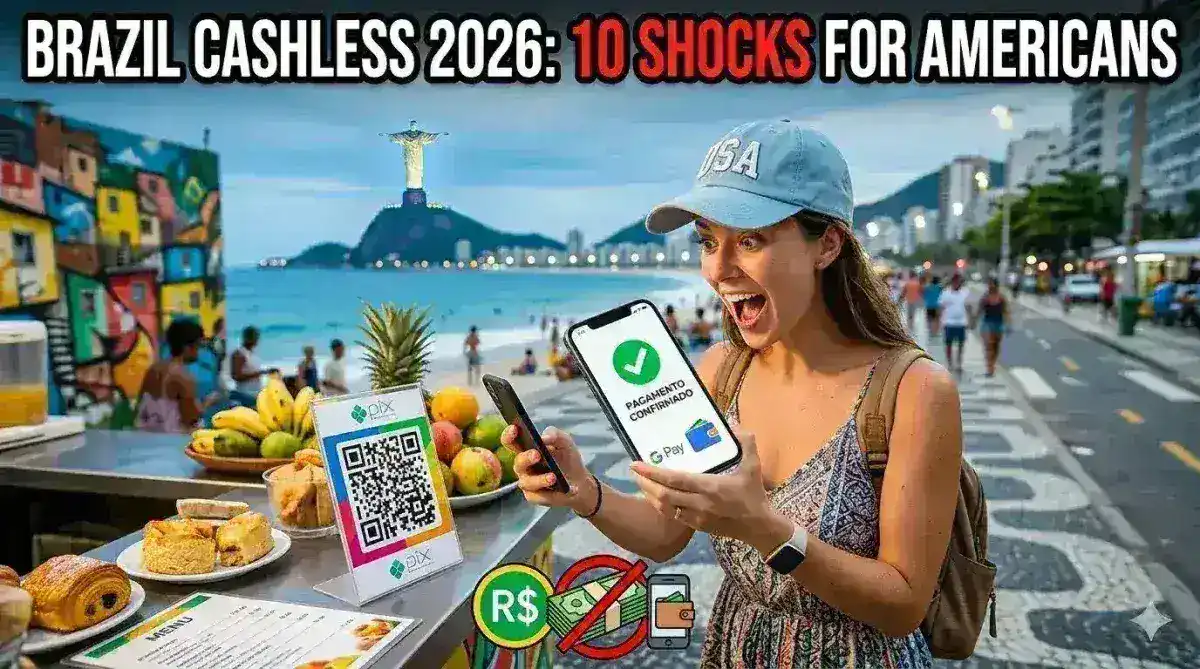
Brazil's Cashless Revolution: Why Americans Are Stunned in 2026
When American travelers arrive in Brazil in 2026, many expect a developing nation where cash still reigns supreme. Instead, they encounter a startling reality: Brazil has leapfrogged the United States to become one of the world's most advanced cashless societies . From street vendors selling coconut water to luxury boutiques in São Paulo, digital payments have become the default, and physical cash is increasingly viewed as inconvenient, outdated, and even suspicious .
This transformation hasn't happened overnight. Brazil's journey to cashless dominance has been driven by innovative technology, forward-thinking regulation, and a population eager to embrace digital solutions that make life easier, safer, and more inclusive . At the heart of this revolution is PIX, Brazil's instant payment system, which has fundamentally changed how money moves through the economy—and left many American visitors wondering how their home country fell so far behind.
For Americans planning to visit Brazil in 2026, understanding this cashless landscape isn't just interesting—it's essential. Attempting to rely on cash or traditional credit cards can lead to confusion, missed opportunities, and even embarrassment when vendors politely decline physical money. This comprehensive guide explores the ten most surprising aspects of Brazil's cashless transformation that consistently shock American travelers, along with practical advice for navigating digital payments like a local.
Whether you're a tech enthusiast curious about financial innovation, a traveler preparing for your first Brazilian adventure, or simply someone fascinated by how societies evolve, these insights will help you understand why Brazil's payment revolution matters—and how you can participate in it seamlessly.
1. PIX: The Instant Payment System That Makes Venmo Look Ancient

The single biggest shock for Americans encountering Brazil's cashless ecosystem is PIX, the Central Bank of Brazil's instant payment platform that has achieved near-universal adoption in record time . Launched in 2020, PIX allows individuals and businesses to transfer money instantly, 24/7, using simple identifiers like phone numbers, email addresses, or randomly generated keys—no bank account numbers or routing codes required.
Why PIX Shocks Americans:
- Speed: Transactions settle in under 10 seconds, any time of day or night, including weekends and holidays. Compare this to ACH transfers in the US, which can take 1-3 business days.
- Zero Fees: PIX transfers are free for individuals and low-cost for businesses. Venmo, Zelle, and PayPal all have fees for certain transactions or instant transfers.
- Universal Acceptance: Over 90% of Brazilian businesses accept PIX, from multinational corporations to street food carts. In the US, digital payment acceptance remains fragmented.
- Simplicity: To pay via PIX, you simply scan a QR code or enter a recipient's key. No need to exchange contact information, wait for approvals, or navigate complex menus.
- Government Backing: PIX is operated by Brazil's Central Bank, giving it credibility and stability that private-sector alternatives in the US sometimes lack.
- 👉 10 Day Puerto Rico Itinerary San Juan and Central Cordillera
- 👉 Humano Hotel by Marriott Miraflores: A first look at the early 2026 boutique opening in Lima.
- 👉 How to Organize School or Educational Group Expedition to Llanos
Real-World Example:
An American visitor buys açaí from a beach vendor in Rio. Instead of fumbling with cash or hoping their credit card works, the vendor displays a PIX QR code. The traveler scans it with their banking app, confirms the amount in Brazilian Reais, and the payment completes instantly. The vendor smiles, hands over the bowl, and both parties move on—no receipts, no signatures, no waiting.
How Americans Can Use PIX:
- Download a Brazilian banking app that supports PIX (some international banks now offer this)
- Link your foreign card or account to the app (requirements vary)
- Alternatively, use a multi-currency digital wallet like Wise that integrates with PIX
- Always carry a small amount of cash as backup, but expect PIX to be preferred
- 👉 10 Day Puerto Rico Itinerary San Juan and Central Cordillera
- 👉 Humano Hotel by Marriott Miraflores: A first look at the early 2026 boutique opening in Lima.
- 👉 How to Organize School or Educational Group Expedition to Llanos
Pro Tip: Many hotels, tour operators, and restaurants now offer PIX payment options for international guests. Ask in advance about digital payment acceptance to avoid surprises.
2. QR Codes Everywhere: Even the Street Vendor Has One

Americans accustomed to seeing QR codes primarily in marketing materials or restaurant menus are stunned to discover that in Brazil, QR codes are the primary interface for financial transactions . From bus drivers to beachside masseuses, virtually anyone selling goods or services displays a PIX QR code for instant payment.
The Ubiquity Factor:
- Street Markets: Vendors selling fruit, crafts, or snacks have laminated QR codes hanging from their stalls
- Public Transportation: Many bus and metro systems accept PIX QR code payments for fares
- Informal Economy: Even unlicensed street performers and tour guides accept digital payments
- Rural Areas: Farmers' markets and eco-lodges in remote regions often have PIX capability via mobile networks
- Emergency Services: Some municipalities allow PIX payments for fines, permits, or public services
- 👉 10 Day Puerto Rico Itinerary San Juan and Central Cordillera
- 👉 Humano Hotel by Marriott Miraflores: A first look at the early 2026 boutique opening in Lima.
- 👉 How to Organize School or Educational Group Expedition to Llanos
Why This Surprises Americans:
In the United States, QR code payments remain niche, primarily used by larger retailers or specific apps like Starbucks. The idea that a spontaneous purchase from an unknown street vendor could be completed digitally—without cash, without a card reader, without even exchanging words—challenges American assumptions about how commerce works in emerging economies.
Cultural Context:
Brazil's QR code adoption wasn't driven by corporate marketing but by practical necessity and government innovation. PIX's simple QR standard meant that even micro-entrepreneurs with basic smartphones could participate in the digital economy. This democratization of payment technology has accelerated financial inclusion in ways that top-down US approaches have not.
Practical Advice for Travelers:
- Ensure your smartphone camera and payment apps are functional before traveling
- Download offline QR code scanners as backup
- Keep your phone charged; portable power banks are essential
- Learn to recognize legitimate PIX QR codes (they include the PIX logo and recipient information)
- 👉 10 Day Puerto Rico Itinerary San Juan and Central Cordillera
- 👉 Humano Hotel by Marriott Miraflores: A first look at the early 2026 boutique opening in Lima.
- 👉 How to Organize School or Educational Group Expedition to Llanos
3. Digital Wallets Have Replaced Physical Wallets for Many Brazilians

Americans often travel with bulky wallets containing cash, multiple credit cards, ID, and loyalty cards. In Brazil, they encounter locals who carry nothing but a smartphone—and rarely miss the physical wallet .
The Brazilian Digital Wallet Ecosystem:
- Banking Apps: Major banks (Itaú, Bradesco, Banco do Brasil) offer full-featured apps with PIX, bill pay, investments, and more
- Fintech Apps: Nubank, C6 Bank, and PicPay have millions of users and innovative features
- Super Apps: Apps like Mercado Pago combine payments, shopping, credit, and financial services
- International Options: Wise, Revolut, and PayPal integrate with Brazilian payment systems
- 👉 10 Day Puerto Rico Itinerary San Juan and Central Cordillera
- 👉 Humano Hotel by Marriott Miraflores: A first look at the early 2026 boutique opening in Lima.
- 👉 How to Organize School or Educational Group Expedition to Llanos
What Americans Find Surprising:
- Feature Richness: Brazilian banking apps often offer more functionality than US counterparts, including instant international transfers, cryptocurrency trading, and personalized financial insights
- User Experience: Apps are designed for mobile-first users, with intuitive interfaces that work well on modest smartphones
- Adoption Speed: Brazilians embraced digital wallets rapidly, while US consumers have been slower to abandon physical cards
- Trust in Digital: Many Brazilians express greater confidence in app-based security than in physical card security
- 👉 10 Day Puerto Rico Itinerary San Juan and Central Cordillera
- 👉 Humano Hotel by Marriott Miraflores: A first look at the early 2026 boutique opening in Lima.
- 👉 How to Organize School or Educational Group Expedition to Llanos
Implications for Travelers:
Americans relying on physical credit cards may encounter limitations:
- Some smaller vendors accept only PIX or digital wallets, not international cards
- Foreign transaction fees can make card payments expensive
- Card skimming remains a risk in certain areas
- 👉 10 Day Puerto Rico Itinerary San Juan and Central Cordillera
- 👉 Humano Hotel by Marriott Miraflores: A first look at the early 2026 boutique opening in Lima.
- 👉 How to Organize School or Educational Group Expedition to Llanos
Recommendation: Before traveling, research which digital payment apps work for international users in Brazil. Consider opening a Wise account or similar service that offers local currency accounts and PIX compatibility.
4. Cash Is Becoming Inconvenient—Not Just Unnecessary

Perhaps the most disorienting shock for cash-reliant Americans is discovering that in many Brazilian contexts, physical money is not just optional but actively discouraged . Vendors may politely decline cash, charge extra for cash payments, or simply lack the ability to provide change.
Why Cash Is Declining:
- Security: Carrying cash increases robbery risk; digital payments leave no physical trail
- Efficiency: Digital transactions are faster than counting bills and making change
- Record-Keeping: Digital payments automatically generate receipts and transaction histories
- Financial Inclusion: Digital systems bring unbanked populations into the formal economy
- Government Policy: Brazil has incentivized digital payments through tax benefits and infrastructure investment
- 👉 10 Day Puerto Rico Itinerary San Juan and Central Cordillera
- 👉 Humano Hotel by Marriott Miraflores: A first look at the early 2026 boutique opening in Lima.
- 👉 How to Organize School or Educational Group Expedition to Llanos
Real Scenarios Americans Encounter:
- Restaurants: Some establishments add a 3-5% surcharge for cash payments to offset handling costs
- Taxis/Ride-Sharing: Drivers prefer digital payments to avoid carrying cash and simplify accounting
- Tourist Attractions: Entry fees, tours, and souvenirs often have QR code payment options with discounts for digital payment
- Markets: Vendors may not have small bills for change, making cash transactions awkward
- 👉 10 Day Puerto Rico Itinerary San Juan and Central Cordillera
- 👉 Humano Hotel by Marriott Miraflores: A first look at the early 2026 boutique opening in Lima.
- 👉 How to Organize School or Educational Group Expedition to Llanos
When Cash Still Matters:
Despite the cashless trend, Americans should keep some Brazilian Reais on hand for:
- Very remote areas with limited connectivity
- Small tips for service workers who prefer cash
- Emergency backup if technology fails
- Certain traditional markets or rural vendors
- 👉 10 Day Puerto Rico Itinerary San Juan and Central Cordillera
- 👉 Humano Hotel by Marriott Miraflores: A first look at the early 2026 boutique opening in Lima.
- 👉 How to Organize School or Educational Group Expedition to Llanos
Practical Tip: Withdraw a modest amount of cash (R$200-500) upon arrival for emergencies, but plan to use digital payments for 90% of transactions.
5. Cryptocurrency Integration Is More Advanced Than in the US

Americans interested in cryptocurrency are often surprised to find that Brazil has integrated digital assets into its payment infrastructure more seamlessly than the United States . While the US regulatory environment remains fragmented, Brazil has created clearer pathways for crypto usage in everyday commerce.
Brazil's Crypto-Friendly Landscape:
- PIX and Crypto: Some Brazilian banks and fintechs allow users to convert cryptocurrency to Reais instantly via PIX
- Merchant Adoption: A growing number of businesses accept Bitcoin, Ethereum, or stablecoins directly
- Regulatory Clarity: Brazil's Central Bank has established guidelines for crypto service providers, reducing uncertainty
- Remittances: Crypto-based remittance services offer faster, cheaper cross-border transfers than traditional methods
- 👉 10 Day Puerto Rico Itinerary San Juan and Central Cordillera
- 👉 Humano Hotel by Marriott Miraflores: A first look at the early 2026 boutique opening in Lima.
- 👉 How to Organize School or Educational Group Expedition to Llanos
Why This Shocks Americans:
The United States, despite being a leader in cryptocurrency innovation, has struggled with regulatory fragmentation between federal and state authorities. Brazil's more centralized approach has enabled faster integration of crypto into mainstream payment systems—a reversal of the typical narrative about US technological leadership.
Practical Implications for Travelers:
- Crypto holders may find it easier to spend digital assets in Brazil than in the US
- Exchange services are widely available, often with competitive rates
- Be aware of tax implications in both Brazil and your home country
- 👉 10 Day Puerto Rico Itinerary San Juan and Central Cordillera
- 👉 Humano Hotel by Marriott Miraflores: A first look at the early 2026 boutique opening in Lima.
- 👉 How to Organize School or Educational Group Expedition to Llanos
Caution: Cryptocurrency regulations and acceptance vary by business. Always confirm payment options before relying on crypto for essential purchases.
6. Banking Is Accessible via Smartphone—No Branches Required

Americans accustomed to visiting bank branches for complex transactions are stunned to discover that in Brazil, nearly all banking services are available via smartphone apps . From opening accounts to applying for loans, the mobile experience is comprehensive and user-friendly.
What Brazilian Banking Apps Offer:
- Account Opening: Fully digital onboarding with identity verification via selfie and document upload
- Instant Transfers: PIX enables real-time domestic and international transfers
- Bill Payment: Pay utilities, taxes, and invoices with a few taps
- Investment Options: Access to stocks, funds, and fixed-income products within the same app
- Customer Support: Chat, video, and AI assistants available 24/7
- Security Features: Biometric login, transaction alerts, and remote card controls
- 👉 10 Day Puerto Rico Itinerary San Juan and Central Cordillera
- 👉 Humano Hotel by Marriott Miraflores: A first look at the early 2026 boutique opening in Lima.
- 👉 How to Organize School or Educational Group Expedition to Llanos
Why This Surprises Americans:
While US banks offer mobile apps, many still require branch visits for certain services (notarizations, complex loans, business accounts). Brazil's mobile-first approach, driven by necessity and innovation, has created a more seamless digital experience that many Americans find superior to homegrown options.
For Travelers:
- Research which Brazilian banks offer services to foreigners
- Consider fintech options like Nubank that have English-language support
- Understand that some features may require Brazilian tax ID (CPF)
- 👉 10 Day Puerto Rico Itinerary San Juan and Central Cordillera
- 👉 Humano Hotel by Marriott Miraflores: A first look at the early 2026 boutique opening in Lima.
- 👉 How to Organize School or Educational Group Expedition to Llanos
7. Contactless Infrastructure Is More Widespread Than in the US

Americans expecting to tap their contactless credit cards at every terminal are sometimes disappointed to find that while Brazil has embraced contactless technology, it often works differently than in the US .
Brazil's Contactless Landscape:
- QR Code Dominance: Many "contactless" payments use QR codes rather than NFC tap-to-pay
- Mobile Wallet Integration: Apple Pay and Google Pay work in Brazil but are less common than local solutions
- Wearable Payments: Smartwatches and fitness trackers with payment capabilities are widely supported
- Public Transit: Many cities accept contactless payments for fares via card or smartphone
- 👉 10 Day Puerto Rico Itinerary San Juan and Central Cordillera
- 👉 Humano Hotel by Marriott Miraflores: A first look at the early 2026 boutique opening in Lima.
- 👉 How to Organize School or Educational Group Expedition to Llanos
What Shocks Americans:
- QR Over NFC: Americans used to tapping cards may need to adjust to scanning codes
- App Diversity: Multiple payment apps coexist, requiring travelers to choose compatible options
- Speed Expectations: Brazilians expect instant confirmation; slow international card processing can cause friction
- 👉 10 Day Puerto Rico Itinerary San Juan and Central Cordillera
- 👉 Humano Hotel by Marriott Miraflores: A first look at the early 2026 boutique opening in Lima.
- 👉 How to Organize School or Educational Group Expedition to Llanos
Practical Advice:
- Install multiple payment apps before traveling as backup
- Test your contactless card at a small purchase upon arrival
- Carry a portable charger to ensure your phone stays powered for payments
- 👉 10 Day Puerto Rico Itinerary San Juan and Central Cordillera
- 👉 Humano Hotel by Marriott Miraflores: A first look at the early 2026 boutique opening in Lima.
- 👉 How to Organize School or Educational Group Expedition to Llanos
8. Financial Inclusion Through Technology Is Transforming Society

Americans often view Brazil through stereotypes of inequality and informality. The cashless transformation reveals a different story: digital payments are bringing millions of previously unbanked Brazilians into the formal financial system .
The Inclusion Impact:
- Access: PIX requires only a smartphone and basic ID, not a traditional bank account
- Affordability: Free or low-cost transactions reduce barriers for low-income users
- Security: Digital payments reduce risks associated with carrying cash in high-crime areas
- Opportunity: Formal transaction histories help users access credit and financial services
- 👉 10 Day Puerto Rico Itinerary San Juan and Central Cordillera
- 👉 Humano Hotel by Marriott Miraflores: A first look at the early 2026 boutique opening in Lima.
- 👉 How to Organize School or Educational Group Expedition to Llanos
Why This Matters to Travelers:
Understanding Brazil's financial inclusion journey helps Americans appreciate the social context behind the cashless shift. It's not just about convenience—it's about equity, safety, and economic empowerment. This perspective can enrich travel experiences and foster more meaningful interactions with locals.
9. Cultural Attitudes Toward Money Are Shifting Rapidly

Beyond technology, Americans are surprised by how quickly Brazilian culture is adapting to cashless norms . Younger generations, in particular, view digital payments as the default and cash as an anomaly.
Cultural Shifts Americans Notice:
- Trust in Digital: Many Brazilians express greater confidence in app security than in physical card safety
- Social Payments: Splitting bills, sending gifts, or contributing to group purchases happens instantly via PIX
- Generational Divide: Older Brazilians may still prefer cash, creating interesting intergenerational dynamics
- Pride in Innovation: Brazilians often express pride in PIX as a homegrown success story
- 👉 10 Day Puerto Rico Itinerary San Juan and Central Cordillera
- 👉 Humano Hotel by Marriott Miraflores: A first look at the early 2026 boutique opening in Lima.
- 👉 How to Organize School or Educational Group Expedition to Llanos
Implications for Travel:
Americans who insist on cash may inadvertently signal distrust or cultural insensitivity. Embracing digital payments, even imperfectly, demonstrates respect for local norms and facilitates smoother interactions.
10. Security and Fraud Prevention Are More Advanced Than Expected

Americans worried about digital payment security in Brazil are often reassured to discover robust fraud prevention measures . Brazil's experience with financial crime has driven innovation in security technology.
Brazil's Security Innovations:
- Biometric Authentication: Fingerprint and facial recognition are standard for payment authorization
- Real-Time Monitoring: AI systems detect suspicious transactions instantly
- User Controls: Apps allow users to freeze cards, set spending limits, and receive instant alerts
- Education Campaigns: Government and banks actively educate users about phishing and scams
- 👉 10 Day Puerto Rico Itinerary San Juan and Central Cordillera
- 👉 Humano Hotel by Marriott Miraflores: A first look at the early 2026 boutique opening in Lima.
- 👉 How to Organize School or Educational Group Expedition to Llanos
What Shocks Americans:
- Proactive Protection: Brazilian systems often prevent fraud before it occurs, rather than reacting afterward
- User Empowerment: Travelers appreciate granular control over their payment security
- Transparency: Clear communication about security measures builds trust
- 👉 10 Day Puerto Rico Itinerary San Juan and Central Cordillera
- 👉 Humano Hotel by Marriott Miraflores: A first look at the early 2026 boutique opening in Lima.
- 👉 How to Organize School or Educational Group Expedition to Llanos
Practical Security Tips for Travelers:
- Enable two-factor authentication on all payment apps
- Use dedicated travel cards or accounts to limit exposure
- Monitor transactions daily via app notifications
- Report lost devices or suspicious activity immediately
- 👉 10 Day Puerto Rico Itinerary San Juan and Central Cordillera
- 👉 Humano Hotel by Marriott Miraflores: A first look at the early 2026 boutique opening in Lima.
- 👉 How to Organize School or Educational Group Expedition to Llanos
Practical Guide: Navigating Brazil's Cashless Economy as an American

Armed with understanding, here's how to thrive in Brazil's digital payment landscape:
Before You Travel:
- Research Payment Apps: Identify which digital wallets work for international users in Brazil (Wise, Nubank, etc.)
- Notify Your Bank: Inform your US bank of travel plans to avoid card blocks
- Download Essentials: Install banking apps, QR scanners, and currency converters
- Get a Backup Card: Carry at least two payment methods in case one fails
- Learn Basic Portuguese: Phrases like "Aceita PIX?" (Do you accept PIX?) and "Cartão internacional" (International card) help
Upon Arrival:
- Test Payments: Make a small purchase to verify your payment methods work
- Withdraw Emergency Cash: Get R$200-500 for situations where digital payments fail
- Save Important Numbers: Store your bank's international contact info and local emergency numbers
- Enable Roaming or Get Local SIM: Ensure reliable internet for payment apps
During Your Stay:
- Prefer Digital Payments: Use PIX or digital wallets when possible to align with local norms
- Keep Phone Charged: Carry a portable charger; dead phone = no payments
- Monitor Transactions: Check your accounts daily for unauthorized activity
- Ask Questions: If unsure about payment options, politely ask vendors what they accept
- Embrace the Learning Curve: Mistakes happen; Brazilians are generally patient with foreigners navigating their systems
- 👉 10 Day Puerto Rico Itinerary San Juan and Central Cordillera
- 👉 Humano Hotel by Marriott Miraflores: A first look at the early 2026 boutique opening in Lima.
- 👉 How to Organize School or Educational Group Expedition to Llanos
Common Pitfalls to Avoid:
- Assuming all vendors accept international credit cards
- Relying solely on cash in urban areas
- Ignoring app updates or security settings while traveling
- Using public WiFi for financial transactions without VPN protection
- Forgetting to re-enable travel notifications on cards after returning home
- 👉 10 Day Puerto Rico Itinerary San Juan and Central Cordillera
- 👉 Humano Hotel by Marriott Miraflores: A first look at the early 2026 boutique opening in Lima.
- 👉 How to Organize School or Educational Group Expedition to Llanos
Frequently Asked Questions: Brazil's Cashless Transformation

Can Americans use PIX without a Brazilian bank account?
Direct PIX usage typically requires a Brazilian bank account or CPF (tax ID). However, international services like Wise now offer PIX-compatible accounts for foreigners. Alternatively, use credit cards or digital wallets that integrate with Brazilian payment systems.
What if my phone dies or I lose internet connection?
Always carry emergency cash (R$200-500) and a backup payment card. Many hotels and larger businesses can process traditional card payments if digital options fail. Download offline maps and payment instructions before traveling.
Are there fees for Americans using Brazilian digital payments?
Fees vary by service. PIX transfers are free for individuals, but currency conversion and international transaction fees may apply. Wise, Revolut, and similar services often offer competitive exchange rates with transparent fee structures.
Is it safe to use digital payments in Brazil?
Yes, when using reputable apps and following security best practices. Brazil has advanced fraud prevention systems. Enable biometric authentication, monitor transactions, and avoid public WiFi for financial activities.
Do I need a CPF (Brazilian tax ID) to use digital payments?
For full access to Brazilian banking services, yes. However, tourists can often use international cards, digital wallets, or services like Wise without a CPF. Some vendors may ask for CPF for large transactions, but this is uncommon for typical tourist spending.
How do I split bills with Brazilian friends using digital payments?
PIX makes bill-splitting effortless. One person pays the full amount, then others instantly transfer their share via PIX using phone numbers or keys. Many apps also have built-in split-payment features.
What's the best way to exchange currency for digital payments?
Avoid airport exchange counters with poor rates. Use ATMs from major banks (Itaú, Bradesco) for fair rates, or load funds onto a multi-currency account like Wise before traveling. Withdraw only what you need for emergency cash.
Can I tip using digital payments?
Yes, many apps allow adding tips to transactions. For service workers who prefer cash (tour guides, hotel staff), keep small bills handy. When in doubt, ask "Posso dar gorjeta pelo PIX?" (Can I tip via PIX?).
What if a vendor only accepts PIX and I can't use it?
Politely explain you're an international visitor. Most vendors will accept international cards or cash as alternatives. If not, consider it an opportunity to explore other options—Brazil has abundant choices.
Will Brazil's cashless system work in rural or remote areas?
Connectivity can be limited in remote regions. Carry more cash when traveling to rural areas, national parks, or small towns. However, many eco-lodges and tour operators in remote areas have adapted with satellite-based payment systems.
Conclusion: Embracing Brazil's Financial Future

Brazil's cashless transformation in 2026 isn't just a technological curiosity—it's a window into how societies can leapfrog legacy systems to create more inclusive, efficient, and secure financial ecosystems. For American travelers, encountering this reality can be initially disorienting, but it also offers valuable lessons about innovation, adaptation, and the human capacity to embrace change.
The ten shocks outlined in this guide—from the ubiquity of PIX to the cultural shift away from cash—reflect a broader truth: Brazil is not waiting for the future of payments. It is building it, today. And in doing so, it challenges Americans to reconsider assumptions about technological leadership, financial inclusion, and what's possible when policy, innovation, and public adoption align.
For travelers, the practical takeaway is simple: prepare to go digital. Download the right apps, understand how PIX works, keep emergency cash as backup, and approach Brazil's payment landscape with curiosity rather than resistance. In return, you'll enjoy faster transactions, fewer hassles, and a deeper connection to how modern Brazilians live, work, and thrive.
Beyond convenience, embracing Brazil's cashless economy is an act of cultural respect. When you scan a QR code at a street market or split a dinner bill via PIX, you're not just paying for a meal—you're participating in a story of innovation, inclusion, and progress. That's a travel experience worth having.
So pack your smartphone, charge your power bank, and get ready to experience Brazil's cashless revolution firsthand. The future of payments isn't coming—it's already here, and it's waiting for you.
0 Comments