.webp)
.webp)
Venezuela Wildlife Enthusiasts Rare Harpy Eagle Sightings South
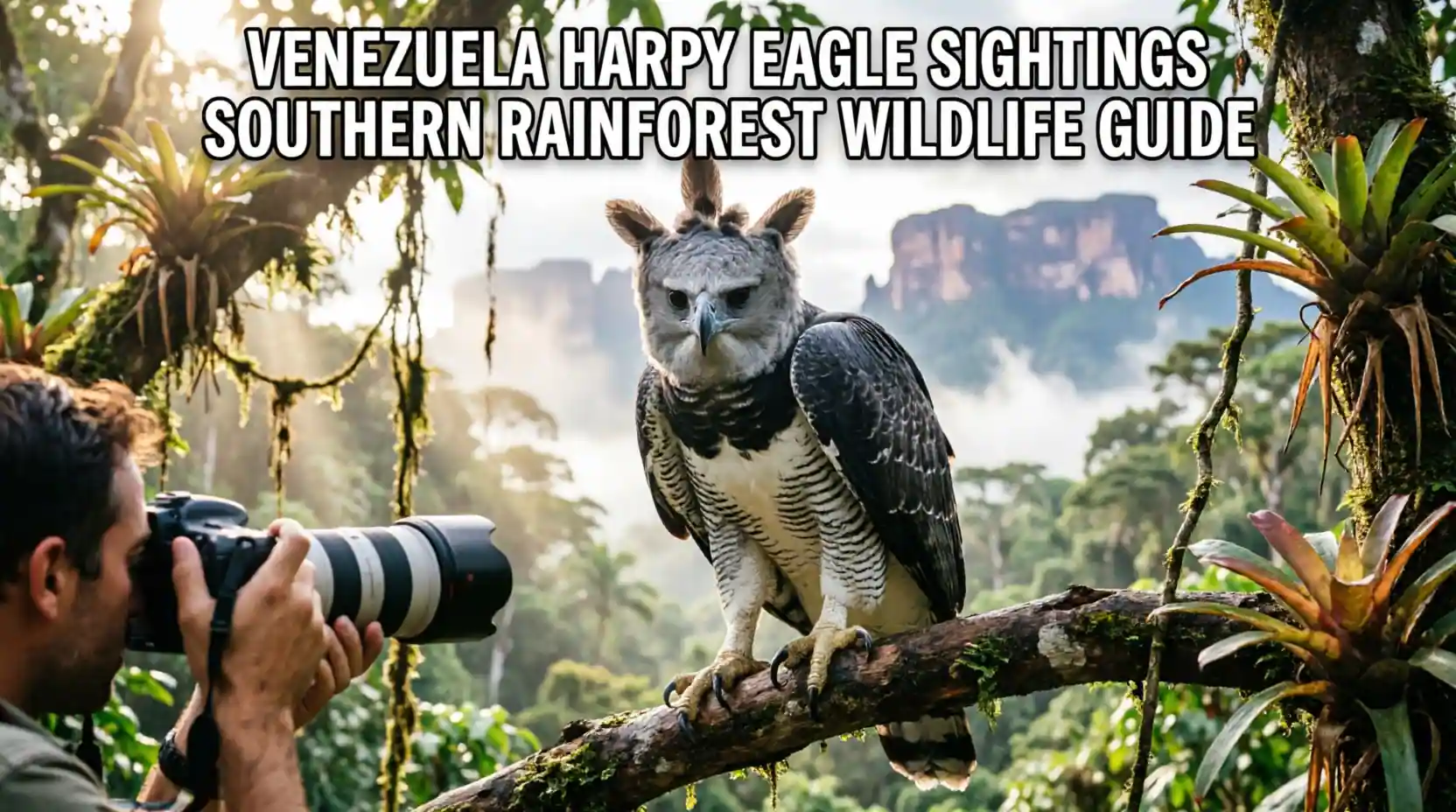
Encountering Venezuelas Majestic Harpy Eagle
Venezuela's southern rainforests harbor one of the world's most spectacular and elusive raptors the Harpy Eagle. This powerful bird represents the apex predator of Neotropical rainforests and symbolizes Venezuela's incredible biodiversity.
The Harpy Eagle also known as Harpia harpyja ranks among the largest and most powerful eagles globally. With wingspans reaching two meters and talons larger than grizzly bear claws these magnificent birds command respect in their forest domain.
Southern Venezuela particularly the Canaima National Park and Gran Sabana regions offers some of the best remaining Harpy Eagle habitat in South America. The vast tracts of pristine rainforest and dramatic tepui landscapes provide ideal conditions for these rare raptors.
Spotting a Harpy Eagle in the wild represents a rare privilege for wildlife enthusiasts. These birds maintain low population densities requiring large territories and healthy forest ecosystems making sightings truly special encounters.
This comprehensive guide reveals everything wildlife enthusiasts need to know about pursuing Harpy Eagle sightings in southern Venezuela including prime locations best seasons expert guides and responsible viewing practices.
Understanding the Harpy Eagle

The Harpy Eagle stands as one of nature's most impressive predators combining power size and stealth in a perfectly adapted rainforest hunter.
Adult Harpy Eagles weigh between four and nine kilograms with females significantly larger than males. This sexual dimorphism proves unusual among birds of prey and reflects the female's role in nest defense and chick rearing.
Their distinctive double crest of feathers rises when the bird feels threatened or excited creating a dramatic appearance. Gray plumage on the head and neck contrasts with black upperparts and white underparts marked with bold black bands.
Harpy Eagle talons measure up to thirteen centimeters longer than most wolf claws. These formidable weapons enable them to capture prey including sloths monkeys and large birds weighing up to half their own body weight.
Unlike many raptors Harpy Eagles possess relatively short broad wings adapted for maneuvering through dense forest rather than soaring over open terrain. This adaptation suits their ambush hunting strategy in closed canopy rainforests.
Voice characteristics include loud piercing calls that carry through the forest particularly during territorial displays and pair bonding. These vocalizations help researchers locate and study these elusive birds.
Harpy Eagle Habitat in Southern Venezuela

Southern Venezuela's unique geography creates exceptional Harpy Eagle habitat combining vast rainforests ancient tepuis and relatively undisturbed ecosystems.
Canaima National Park spanning over thirty thousand square kilometers represents one of Venezuela's most important Harpy Eagle strongholds. This UNESCO World Heritage Site protects extensive tracts of primary rainforest essential for eagle survival.
The Gran Sabana region bordering Brazil and Guyana features mosaic landscapes of forest savanna and tepui highlands. This diversity supports varied prey populations enabling Harpy Eagles to maintain territories.
Tepui formations creating isolated sky islands harbor unique ecosystems with species found nowhere else. Harpy Eagles utilize these dramatic landscapes for nesting and hunting demonstrating remarkable adaptability.
Primary rainforest with tall emergent trees provides crucial nesting sites as Harpy Eagles build massive nests in the canopy's upper reaches. These nests often exceed one meter in diameter and get reused for decades.
River systems including the Caroni Paragua and Caura rivers create ecological corridors through the forest. These waterways concentrate wildlife providing reliable hunting grounds for Harpy Eagles.
Best Locations for Harpy Eagle Sightings

Identifying specific locations with Harpy Eagle presence significantly improves sighting chances though these birds' elusive nature means no guarantees.
Kavac indigenous Pemon community near Canaima has become renowned for Harpy Eagle sightings. Local guides possess intimate knowledge of eagle territories and nesting sites developed over generations.
Angel Falls region despite heavy tourist traffic maintains Harpy Eagle populations in less visited areas. Experienced guides know where to look away from crowded viewpoints.
La Gran Sabana's forest-savanna ecotone attracts Harpy Eagles hunting along the edges. The open areas facilitate spotting though eagles remain within forest cover.
Parima-Tapirapeco National Park in Amazonas State represents one of South America's most remote wilderness areas. Limited access preserves pristine habitat though reaching these locations requires significant effort and resources.
Caura River basin harbors healthy Harpy Eagle populations in relatively undisturbed forest. Indigenous Ye'kuana and Sanema communities maintain traditional territories with sustainable land use practices.
Research stations and eco-lodges throughout southern Venezuela occasionally report Harpy Eagle sightings. Establishing relationships with these facilities provides valuable local intelligence.
Optimal Seasons and Timing

Understanding seasonal patterns and daily activity cycles enhances Harpy Eagle observation success in southern Venezuela.
Dry season from December through April generally offers better wildlife viewing conditions. Reduced rainfall facilitates forest travel and eagles may hunt more actively during drier periods.
Nesting season varies but often peaks during dry months when prey availability increases. Active nests provide reliable locations for observation though viewing requires extreme caution to avoid disturbance.
Early morning hours from dawn until mid-morning prove most productive for eagle sightings. Harpy Eagles typically hunt during these hours taking advantage of cooler temperatures and active prey.
Late afternoon sometimes yields observations as eagles return to roosting sites. However morning observations generally prove more reliable for active hunting behavior.
Weather conditions significantly affect eagle activity with heavy rain reducing hunting. Clear days following rain often produce excellent viewing as eagles resume normal activities.
Full moon periods may influence hunting patterns with some evidence suggesting increased nocturnal or crepuscular activity. Understanding lunar cycles adds another dimension to observation planning.
Expert Guides and Tour Operators

Successfully locating Harpy Eagles in Venezuela's vast southern wilderness requires local expertise indigenous knowledge and professional guiding services.
Pemon indigenous guides possess generations of knowledge about eagle behavior territories and signs. Their traditional ecological knowledge proves invaluable for locating these elusive birds.
Specialized birding tour operators focusing on Venezuela maintain networks of local contacts and knowledge of recent sightings. Companies like Birding Venezuela and others offer targeted Harpy Eagle expeditions.
Research organizations studying Harpy Eagles sometimes offer educational tours or citizen science programs. Participating in these initiatives supports conservation while providing exceptional viewing opportunities.
Local eco-lodges in Canaima and Gran Sabana regions often employ naturalist guides familiar with eagle locations. Staying at these facilities increases sighting chances through accumulated local knowledge.
Guide qualifications should include ornithological knowledge conservation ethics and commitment to responsible wildlife viewing. Verify credentials and conservation credentials before booking.
Small group sizes of four to six people maximum minimize disturbance and improve observation quality. Large groups create noise and movement that can disturb eagles and reduce sighting opportunities.
Photography and Observation Techniques

Capturing images of Harpy Eagles or simply observing them requires specialized equipment patience and ethical practices that prioritize bird welfare.
Telephoto lenses of four hundred millimeters or longer prove essential for photographing Harpy Eagles. These powerful birds typically perch high in the canopy requiring significant magnification.
Fast shutter speeds of one thousandth second or faster freeze eagle movement particularly important when capturing flight or hunting behavior. High ISO capabilities enable these speeds in forest shade.
Patience represents the most critical skill for Harpy Eagle observation. These birds may remain motionless for hours requiring observers to maintain quiet vigilance for extended periods.
Understanding eagle behavior helps predict movements and activities. Learning to read body language vocalizations and environmental cues improves observation success.
Respectful distances of at least fifty meters from nests and perched eagles prevent disturbance. Using blinds or natural cover enables closer observation without causing stress.
Recording observations including behavior location and environmental conditions contributes to citizen science efforts. Sharing data with researchers helps expand knowledge about these rare birds.
Harpy Eagle Conservation Status

Understanding conservation challenges facing Harpy Eagles in Venezuela contextualizes the importance of responsible wildlife tourism and protection efforts.
Harpy Eagles classified as Near Threatened by IUCN face declining populations across their range. Venezuela maintains some of the healthiest remaining populations making conservation critical.
Habitat loss from deforestation mining and development represents the primary threat. Southern Venezuela's relatively intact forests provide crucial refuge though face increasing pressure.
Illegal hunting though less common than habitat loss still occurs particularly near human settlements. Eagles sometimes killed for perceived threats to livestock or for traditional uses.
Low reproductive rates with pairs raising only one chick every two to three years limit population recovery. This slow reproduction makes populations particularly vulnerable to adult mortality.
Conservation organizations including Provita and others work to protect Harpy Eagle habitat and conduct research. Supporting these organizations through tourism donations or volunteering aids conservation.
Protected areas like Canaima National Park provide legal protection though enforcement remains challenging. Tourism revenue demonstrates economic value of conservation supporting protection efforts.
Other Wildlife in Southern Venezuela

While pursuing Harpy Eagles wildlife enthusiasts encounter Venezuela's extraordinary biodiversity making southern regions premier destinations for nature observation.
Giant anteaters tamanduas and sloths frequent the same forests as Harpy Eagles. These species comprise primary eagle prey making their presence indicative of healthy eagle habitat.
Howler monkeys capuchins and spider monkeys inhabit the canopy providing both spectacle and eagle prey. Their alarm calls often signal eagle presence in the area.
Colorful macaws toucans and cotingas brighten the forest with their presence. These species share the canopy with Harpy Eagles creating spectacular bird watching opportunities.
Jaguars pumas and ocelots patrol the forest floor though proving far more elusive than eagles. Their presence indicates intact ecosystems capable of supporting apex predators.
Giant river otters anacondas and caimans inhabit southern Venezuela's waterways. These aquatic species complement terrestrial wildlife creating comprehensive wilderness experiences.
Endemic tepui species including unique frogs birds and plants inhabit the ancient tablelands. These evolutionary relics demonstrate southern Venezuela's biological significance.
Travel Logistics and Planning

Reaching southern Venezuela's Harpy Eagle habitat requires careful planning regarding transportation permits timing and practical preparations.
Flights to Canaima typically depart from Caracas Puerto Ordaz or Ciudad Bolivar requiring advance booking particularly during peak season. Small aircraft land on dirt strips creating adventurous arrivals.
Ground transportation from airports to lodges or trailheads often requires four-wheel drive vehicles or boats. Road conditions vary dramatically with rainy season creating challenging travel.
Permits for national parks and indigenous territories sometimes required though often arranged by tour operators. Verify requirements well in advance of travel.
Accommodation ranges from basic indigenous community lodgings to comfortable eco-lodges. Booking through reputable operators ensures appropriate facilities and supports local economies.
Travel insurance covering medical evacuation proves essential given remote locations and limited medical facilities. Verify coverage includes adventure activities and wilderness areas.
Packing lists should include lightweight breathable clothing rain gear sturdy boots insect repellent and binoculars. Camera equipment requires weather protection for humid conditions.
Health and Safety Considerations

Traveling in southern Venezuela's remote wilderness requires attention to health precautions and safety protocols for responsible wildlife viewing.
Yellow fever vaccination mandatory for entry to Venezuela with proof required at borders. Additional recommended vaccinations include hepatitis A and B typhoid and routine immunizations.
Malaria prophylaxis essential for southern Venezuela with consultation with travel medicine specialists determining appropriate medications. Resistance patterns require current medical advice.
Water purification through filtration chemical treatment or boiling prevents waterborne illnesses. Bottled water available in some areas though carrying purification methods provides backup.
Wildlife safety includes maintaining safe distances from all animals particularly predators. Harpy Eagles though not threatening to humans deserve respect and space.
Guide instructions regarding wildlife encounters must be followed without exception. Experienced guides understand animal behavior and appropriate responses to various situations.
Emergency communication plans including satellite phones or radios prove vital in areas without cell coverage. Verify guides carry appropriate emergency equipment.
Responsible Wildlife Viewing Practices

Observing Harpy Eagles and other wildlife in Venezuela requires commitment to ethical practices that prioritize animal welfare and habitat protection.
Maintaining appropriate distances prevents stress and behavioral disruption. Using optical equipment enables observation without approaching too closely.
Avoiding playback of eagle calls or other artificial attraction methods protects natural behavior. These practices can disrupt territorial patterns and waste energy.
Limiting observation time at nests prevents abandonment or reduced parental care. Brief respectful visits minimize impact while allowing observation.
Staying on established trails prevents habitat damage and disturbance to ground-nesting species. Trampling vegetation creates lasting impacts in fragile ecosystems.
Carrying out all trash and minimizing environmental footprint protects the wilderness. Leave no trace principles apply to all wildlife viewing activities.
Supporting conservation through tourism dollars donations or citizen science contributes to long-term protection. Responsible tourism demonstrates economic value of conservation.
Cultural Context and Indigenous Communities

Understanding the cultural context of Harpy Eagle habitat in southern Venezuela enriches wildlife experiences while respecting indigenous rights and knowledge.
Pemon Ye'kuana and other indigenous groups maintain traditional territories throughout southern Venezuela. Their lands often coincide with prime Harpy Eagle habitat.
Traditional ecological knowledge held by indigenous communities includes detailed understanding of eagle behavior and ecology. This knowledge developed over millennia proves invaluable for conservation.
Respectful engagement with indigenous communities requires permission for access to traditional lands. Working with community-approved guides ensures appropriate protocols.
Harpy Eagles hold cultural significance for many indigenous groups appearing in mythology and traditional stories. Understanding these connections deepens appreciation for the species.
Community-based tourism initiatives enable indigenous groups to benefit economically from wildlife tourism while maintaining cultural integrity. Supporting these enterprises creates positive outcomes.
Photography of indigenous people requires explicit permission and often compensation. Respect for privacy and cultural protocols proves essential.
Climate and Weather Patterns

Southern Venezuela's tropical climate significantly affects wildlife viewing opportunities requiring understanding of seasonal patterns and weather considerations.
Rainy season from May through November brings daily afternoon storms high humidity and challenging trail conditions. Though challenging this season offers lush landscapes and active wildlife.
Dry season from December through April provides easier travel clearer skies and concentrated wildlife around water sources. This period generally preferred for wildlife viewing.
Temperature remains relatively constant year-round with daytime highs of twenty-eight to thirty-two degrees Celsius. Nighttime temperatures drop to comfortable levels particularly in higher elevations.
Humidity levels consistently high particularly in rainforest areas requiring appropriate clothing and hydration. Moisture-wicking fabrics and rain protection prove essential.
Weather can change rapidly in tropical environments with clear mornings becoming stormy afternoons. Flexibility in scheduling accommodates weather variability.
Microclimates created by tepuis and elevation changes produce localized weather patterns. Understanding these variations helps plan daily activities.
Accommodation and Eco-Lodges

Choosing appropriate accommodation in southern Venezuela affects both wildlife viewing success and environmental impact requiring consideration of various options.
Eco-lodges designed with sustainability principles minimize environmental impact while providing comfortable bases for wildlife exploration. These facilities often employ local guides and support conservation.
Indigenous community lodgings offer authentic cultural experiences while directly benefiting local people. These arrangements provide economic alternatives to extractive industries.
Research stations sometimes accept visitors particularly those interested in citizen science or educational programs. These facilities provide unique access to ongoing conservation work.
Camping in designated areas enables deeper wilderness immersion though requires appropriate equipment and experience. Guided camping trips prove safest for unfamiliar visitors.
Booking accommodation well in advance particularly for popular locations ensures availability and supports planning. Peak seasons fill quickly requiring early reservations.
Sustainability credentials including renewable energy waste management and local employment indicate genuine eco-tourism commitment. Verify claims through reviews and certifications.
Cost Considerations and Budgeting
Planning a Harpy Eagle expedition to southern Venezuela requires realistic budgeting for transportation guides accommodation and equipment.
International flights to Venezuela vary significantly by season and departure location typically ranging from eight hundred to two thousand dollars. Booking well in advance secures better rates.
Domestic flights to Canaima or other southern destinations cost two hundred to four hundred dollars round trip depending on routing and season. These flights prove essential for accessing remote areas.
Guide services typically cost one hundred to two hundred dollars daily depending on expertise and group size. Specialized birding guides command premium rates reflecting their knowledge.
Accommodation ranges from thirty dollars nightly for basic lodgings to two hundred dollars for luxury eco-lodges. Mid-range options of eighty to one hundred fifty dollars provide good value.
Meals and incidentals cost twenty to fifty dollars daily depending on accommodation type and dining preferences. Remote locations often include meals in lodging packages.
Equipment rental including binoculars cameras and camping gear if needed adds fifty to one hundred fifty dollars daily. Bringing personal equipment reduces costs.
Conclusion Embracing Venezuelas Wild Heritage
Venezuela's southern wilderness offers wildlife enthusiasts extraordinary opportunities to encounter Harpy Eagles and experience one of South America's most spectacular natural heritage sites.
Successfully observing these magnificent raptors requires patience preparation and commitment to responsible practices that protect both the birds and their habitat.
The combination of pristine rainforests dramatic tepuis and rich biodiversity makes southern Venezuela a premier destination for serious wildlife enthusiasts and conservation-minded travelers.
Supporting sustainable tourism indigenous communities and conservation organizations ensures Harpy Eagles continue soaring over Venezuela's forests for generations to come.
Your journey to witness Venezuela's Harpy Eagles contributes to the economic value of conservation while creating unforgettable memories of nature at its most magnificent. Embrace this rare privilege with respect wonder and commitment to protection.
0 Comments