.webp)
.webp)
Choco Andino 2026: Ecuador Biosphere Reserve Guide
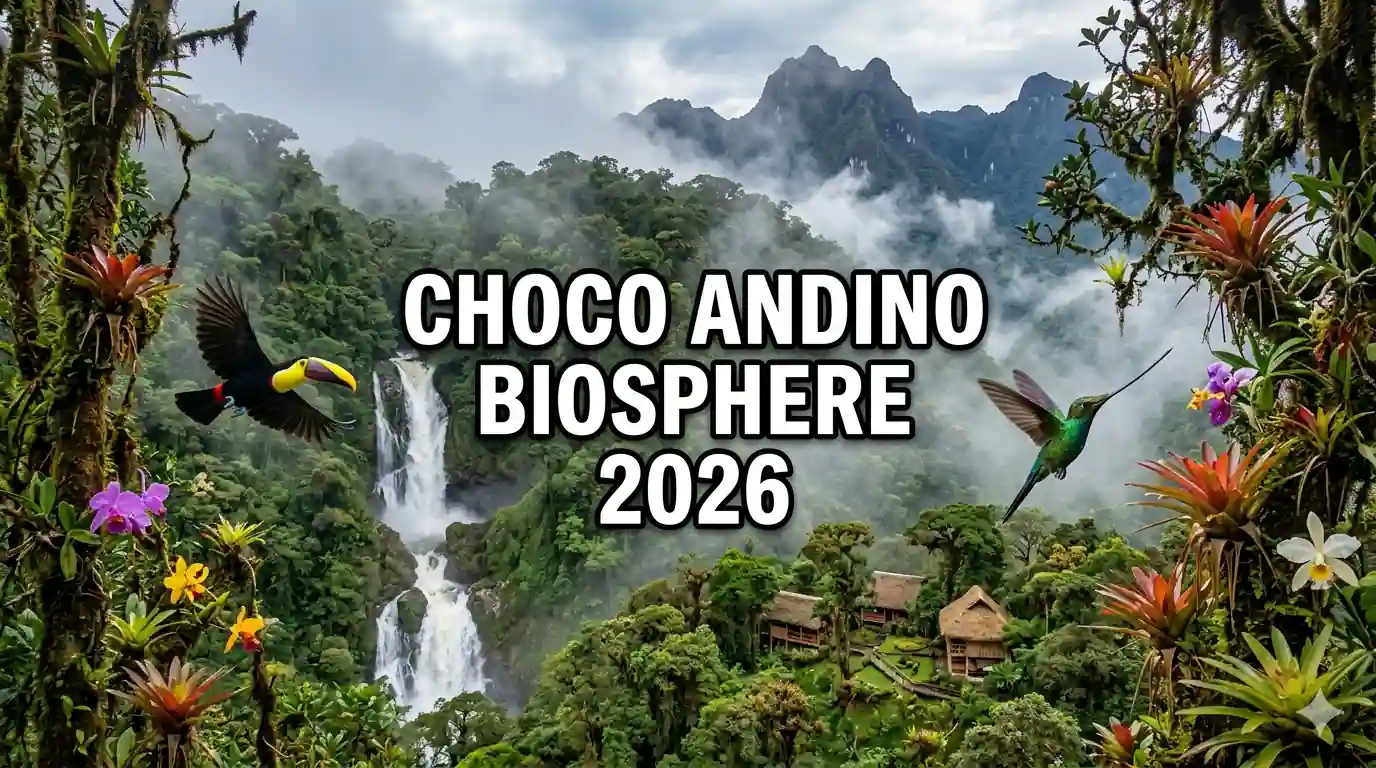
Why 2026 Is the Year of "Choco Andino": Exploring Ecuador's Newest UNESCO Biosphere Reserve
In the lush, mist-shrouded slopes of Ecuador's western Andes, a destination of extraordinary biological significance is capturing global attention. The Chocó Andino de Pichincha, designated as Ecuador's seventh UNESCO Biosphere Reserve in 2018, has been named by The Wall Street Journal among the best destinations to visit in 2026—a recognition that signals a pivotal moment for sustainable tourism in one of Earth's most biodiverse regions.
Just 45 minutes to two hours from Quito, this 286,806-hectare sanctuary bridges two critical ecoregions: the humid forests of the Chocó-Darién and the Northern Andean Mountain Forests. Within its boundaries flourish approximately 10,000 plant species (2,500 endemic), 270 mammals, 210 reptiles, 200 birds, and 130 amphibians—making it one of the planet's most concentrated pockets of biodiversity. For travelers seeking authentic nature experiences that support conservation and local communities, 2026 represents the perfect moment to discover the Chocó Andino.
This comprehensive guide explores why the Chocó Andino deserves its place among the world's top 2026 destinations: the science behind its UNESCO designation, the best wildlife encounters and outdoor activities, practical planning information, sustainable accommodation options, and how your visit can contribute to protecting this irreplaceable ecosystem. Whether you're a birdwatching enthusiast, an adventure traveler, or a conscious tourist seeking meaningful connections with nature, the Chocó Andino offers an unforgettable journey into Ecuador's wild heart.
Understanding the Chocó Andino: A Biosphere Reserve of Global Significance

UNESCO Recognition and Conservation Status
On July 25, 2018, UNESCO's Man and the Biosphere Programme officially designated the Chocó Andino de Pichincha as a Biosphere Reserve, placing it within the World Network of Biosphere Reserves—a global coalition of 738 sites across 134 countries dedicated to reconciling biodiversity conservation with sustainable human use. This recognition affirmed what conservation scientists have long understood: the Chocó Andino is one of Earth's most extraordinary biological treasures.
The designation acknowledges three interconnected functions:
- Conservation: Protecting landscapes, ecosystems, species, and genetic variation
- Development: Fostering economically and culturally sustainable human activities
- Logistic support: Supporting research, monitoring, education, and information exchange related to local, national, and global issues of conservation and development
- 👉 Coolcations Potosí 2026: Escape Heat in World's Highest City
- 👉 First Time Travelers Guide to Port of Montevideo and Sea Entry Regulations
- 👉 Argentina Digital Nomad Visa 2026: Why the informal $1,500/mo income rule is trending.
For Ecuador—a country already renowned for the Galápagos Islands and Amazon rainforest—the Chocó Andino designation completes a trifecta of globally significant ecosystems, reinforcing the nation's position as a biodiversity superpower.
Geographic Scope and Ecological Diversity
The Chocó Andino de Pichincha Biosphere Reserve lies in northern Ecuador's Pichincha Province, northwest of Quito. Its remarkable characteristics include:
- Total area: 286,806 hectares (approximately 2,868 square kilometers)
- Elevation range: 360 to 4,480 meters above sea level, creating dramatic ecological gradients
- Location: Extends from the outer foothills of the western Andean cordillera to its inner foothills
- Population: Approximately 88,069 residents living within reserve boundaries
- Accessibility: 45 minutes to 2 hours from Quito, Ecuador's capital
- 👉 Coolcations Potosí 2026: Escape Heat in World's Highest City
- 👉 First Time Travelers Guide to Port of Montevideo and Sea Entry Regulations
- 👉 Argentina Digital Nomad Visa 2026: Why the informal $1,500/mo income rule is trending.
This elevation gradient creates eight distinct ecosystem types within a relatively compact area:
- Cloud forest (the reserve's signature habitat)
- Lowland humid forest (Chocó-Darién ecoregion)
- Andean mountain forest
- Páramo (high-altitude grasslands)
- Rivers and waterfall systems
- Agricultural landscapes managed by local communities
- Secondary forest undergoing ecological restoration
- Urban-rural interface zones
- 👉 Coolcations Potosí 2026: Escape Heat in World's Highest City
- 👉 First Time Travelers Guide to Port of Montevideo and Sea Entry Regulations
- 👉 Argentina Digital Nomad Visa 2026: Why the informal $1,500/mo income rule is trending.
This ecological mosaic supports exceptional biodiversity and endemism, driven by natural fragmentation of the western moist forests that has accelerated evolutionary processes over millennia.
Why 2026? The Perfect Convergence of Factors
Several converging trends make 2026 the ideal year to visit the Chocó Andino:
- Wall Street Journal recognition: Named one of the best destinations to visit in 2026, bringing unprecedented global visibility
- Mature sustainable infrastructure: Years of development have created robust community-based tourism offerings while maintaining environmental integrity
- Conservation momentum: The Municipality of Quito has implemented public policies focused on environmental conservation, ecosystem restoration, and protected area strengthening
- Global travel trends: Approximately 70% of international travelers now prefer destinations offering sustainable and environmentally responsible experiences
- Pre-mass tourism window: Experience pristine ecosystems before potential visitor surges
- Improved accessibility: Enhanced transportation links and tour operator partnerships make visiting easier than ever
- 👉 Coolcations Potosí 2026: Escape Heat in World's Highest City
- 👉 First Time Travelers Guide to Port of Montevideo and Sea Entry Regulations
- 👉 Argentina Digital Nomad Visa 2026: Why the informal $1,500/mo income rule is trending.
Extraordinary Biodiversity: A Living Laboratory of Evolution

Flora: A Botanical Paradise
The Chocó Andino's plant diversity is staggering. Around 10,000 plant species have been documented, about 2,500 of which are endemic—found nowhere else on Earth. This botanical richness includes:
- Orchids: Hundreds of species, many endemic, creating spectacular displays especially in cloud forest zones; some bloom year-round while others follow seasonal patterns
- Bromeliads: Thousands of these epiphytic plants create microhabitats for frogs, insects, and other organisms; their water-holding tanks support entire miniature ecosystems
- Ferns: Ancient lineages thrive in the humid, misty conditions of cloud forests; some species date back to the age of dinosaurs
- Trees: From towering emergents like the ceibo to understory species, the forest structure supports incredible diversity; many trees host dozens of epiphyte species
- Medicinal plants: Traditional knowledge combined with scientific research continues to reveal therapeutic properties; local communities maintain extensive ethnobotanical knowledge
- 👉 Coolcations Potosí 2026: Escape Heat in World's Highest City
- 👉 First Time Travelers Guide to Port of Montevideo and Sea Entry Regulations
- 👉 Argentina Digital Nomad Visa 2026: Why the informal $1,500/mo income rule is trending.
The Metropolitan District of Quito concentrates approximately 83% of this biological diversity, reaffirming the enormous responsibility and commitment to protecting ecosystems of global relevance.
Fauna: Wildlife Encounters
The reserve is home to remarkable animal diversity across multiple taxonomic groups:
Mammals (270 species):
- Spectacled bear (Tremarctos ornatus): South America's only bear species, occasionally spotted in higher elevations; elusive but increasingly observed through camera trap programs
- Olinguito (Bassaricyon neblina): A small carnivore discovered in 2013, found in cloud forests; one of the first new mammal species described in the Americas in decades
- Ecuadorian mantled howler (Alouatta palliata aequatorialis): Heard before seen, their calls echo through the forest at dawn and dusk
- Pacarana (Dinomys branickii): A rare rodent species, one of the world's least-known large rodents
- Pumas, ocelots, and other wild cats: Elusive but present; camera traps document their movements
- Bats: Over 50 species, many playing crucial roles in pollination and seed dispersal
- 👉 Coolcations Potosí 2026: Escape Heat in World's Highest City
- 👉 First Time Travelers Guide to Port of Montevideo and Sea Entry Regulations
- 👉 Argentina Digital Nomad Visa 2026: Why the informal $1,500/mo income rule is trending.
Birds (200+ species):
- Chocó toucan (Ramphastos brevis): Endemic species with spectacular colorful bills; a flagship species for the region
- Speckle-faced parrot (Pionus tumultuosus): Endemic to the region; often seen in flocks
- Andean cock-of-the-rock: Ecuador's national bird, with males displaying brilliant orange plumage during lekking displays
- Hummingbirds: Dozens of species, including the extraordinary sword-billed hummingbird with its bill longer than its body
- Tanagers: Colorful songbirds in dazzling variety; the Chocó region has more tanager species than anywhere else
- Endemic specialists: Species like the Banded Ground-Cuckoo and Elusive Antpitta found only in this region
- 👉 Coolcations Potosí 2026: Escape Heat in World's Highest City
- 👉 First Time Travelers Guide to Port of Montevideo and Sea Entry Regulations
- 👉 Argentina Digital Nomad Visa 2026: Why the informal $1,500/mo income rule is trending.
Amphibians (130 species):
- Pichincha rocket frog (Hyloxalus toachi): Endemic species
- Glass frogs: Transparent skin reveals internal organs; a marvel of evolutionary adaptation
- Poison dart frogs: Tiny but vividly colored; some species used by indigenous peoples for hunting
- Salamanders and caecilians: Less visible but ecologically important; many species remain undescribed by science
- 👉 Coolcations Potosí 2026: Escape Heat in World's Highest City
- 👉 First Time Travelers Guide to Port of Montevideo and Sea Entry Regulations
- 👉 Argentina Digital Nomad Visa 2026: Why the informal $1,500/mo income rule is trending.
Reptiles (210 species):
- Snakes: From harmless species to venomous pit vipers; most are shy and avoid human contact
- Lizards: Including anoles, iguanas, and geckos; many display remarkable camouflage
- Turtles and tortoises: In aquatic and terrestrial habitats; some species are conservation priorities
- 👉 Coolcations Potosí 2026: Escape Heat in World's Highest City
- 👉 First Time Travelers Guide to Port of Montevideo and Sea Entry Regulations
- 👉 Argentina Digital Nomad Visa 2026: Why the informal $1,500/mo income rule is trending.
Ecosystem Services and Global Importance
Beyond biodiversity, the Chocó Andino provides critical ecosystem services:
- Water regulation: Cloud forests capture moisture from passing clouds, feeding rivers that supply Quito and surrounding communities
- Carbon sequestration: Dense vegetation stores significant carbon, contributing to climate mitigation
- Soil protection: Forest cover prevents erosion on steep Andean slopes
- Pollination: Diverse insect and bird populations support agricultural productivity in surrounding areas
- Genetic reservoir: Endemic species represent unique evolutionary lineages with potential scientific and medicinal value
- 👉 Coolcations Potosí 2026: Escape Heat in World's Highest City
- 👉 First Time Travelers Guide to Port of Montevideo and Sea Entry Regulations
- 👉 Argentina Digital Nomad Visa 2026: Why the informal $1,500/mo income rule is trending.
Why the Chocó Andino Is a Top 2026 Destination

Wall Street Journal Recognition and Global Visibility
The Wall Street Journal's inclusion of the Chocó Andino among the best destinations to visit in 2026 reflects several converging trends. The destination stands out for:
- Biodiversity: Globally important biological richness recognized by UNESCO
- Sustainable tourism focus: Community-based, low-impact tourism models that benefit local residents
- Emerging status: Consolidation as a nature and adventure destination before mass tourism arrives
- Accessibility: Proximity to Quito combined with wilderness experience
- Authenticity: Genuine cultural exchanges and unspoiled natural environments
- 👉 Coolcations Potosí 2026: Escape Heat in World's Highest City
- 👉 First Time Travelers Guide to Port of Montevideo and Sea Entry Regulations
- 👉 Argentina Digital Nomad Visa 2026: Why the informal $1,500/mo income rule is trending.
This international recognition has been amplified by specialized media including EKO Negocios, La Hora, and various tourism analysis platforms monitoring global travel trends.
Alignment with Modern Traveler Priorities
The Chocó Andino perfectly matches what contemporary travelers seek:
- Sustainability priority: Approximately 70% of international travelers now prefer destinations offering sustainable and environmentally responsible experiences
- Nature focus: Between 45% and 50% of tourists prioritize nature, wildlife, or protected area destinations
- Adventure activities: More than 60% of travelers incorporate at least one adventure or outdoor activity into their vacations
- Authentic experiences: Low-impact, community-based tourism far from mass tourism circuits
- Wellness and nature connection: Growing demand for outdoor activities that support mental and physical health
- Educational value: Opportunities to learn about conservation, ecology, and local cultures
- 👉 Coolcations Potosí 2026: Escape Heat in World's Highest City
- 👉 First Time Travelers Guide to Port of Montevideo and Sea Entry Regulations
- 👉 Argentina Digital Nomad Visa 2026: Why the informal $1,500/mo income rule is trending.
Nature and adventure tourism is one of the fastest-growing segments, surpassing traditional urban tourism—trends that position the Chocó Andino perfectly for 2026 and beyond.
Institutional Commitment to Conservation
The Chocó Andino's success stems from sustained institutional support. The destination represents the result of sustained work by the Municipality of the Metropolitan District of Quito, which has promoted public policies aimed at:
- Environmental conservation and protected area management
- Recovery and protection of ravines and watersheds
- Restoration of degraded ecosystems through reforestation
- Strengthening the Metropolitan Subsystem of Protected Natural Areas
- Supporting community-based conservation initiatives
- 👉 Coolcations Potosí 2026: Escape Heat in World's Highest City
- 👉 First Time Travelers Guide to Port of Montevideo and Sea Entry Regulations
- 👉 Argentina Digital Nomad Visa 2026: Why the informal $1,500/mo income rule is trending.
Thanks to this vision, forests, water sources, flora, and fauna essential for the environmental balance of the city and the region are protected, consolidating the Chocó Andino as a competitive, responsible destination deserving of international recognition.
Top Activities and Experiences in the Chocó Andino

Birdwatching: A World-Class Destination
The Chocó Andino is recognized as a birdwatching capital, offering exceptional opportunities to observe endemic and rare species. With over 200 bird species in a relatively compact area, the region delivers remarkable diversity for ornithologists and casual observers alike.
Prime birdwatching locations:
- Mindo: The most famous birdwatching hub with numerous lodges, trails, and hummingbird feeders
- Yellow House (Casa Amarilla): Known for hummingbird feeders attracting dozens of species at eye level
- Guango Lodge: Famous for Andean cock-of-the-rock displays and tanager flocks
- San Silvestre Reserve: High-elevation species including grassland specialists and páramo endemics
- Private reserves: Multiple community-managed areas with expert local guides
- 👉 Coolcations Potosí 2026: Escape Heat in World's Highest City
- 👉 First Time Travelers Guide to Port of Montevideo and Sea Entry Regulations
- 👉 Argentina Digital Nomad Visa 2026: Why the informal $1,500/mo income rule is trending.
Target species for birdwatchers:
- Andean cock-of-the-rock (Ecuador's national bird; males display at dawn)
- Sword-billed hummingbird (with bill longer than its body; a marvel of co-evolution)
- Chocó toucan and other toucan species
- Plate-billed mountain toucan
- Golden-chested tanager and dozens of other colorful tanagers
- Elusive antpitta (requires expert guides to locate)
- Banded ground-cuckoo (rare and highly sought by serious birders)
- 👉 Coolcations Potosí 2026: Escape Heat in World's Highest City
- 👉 First Time Travelers Guide to Port of Montevideo and Sea Entry Regulations
- 👉 Argentina Digital Nomad Visa 2026: Why the informal $1,500/mo income rule is trending.
Best practices: Hire local guides who know bird calls and locations; visit hummingbird feeders at dawn when activity peaks; bring quality binoculars (8x42 or 10x42 recommended); respect wildlife distances; use playback sparingly and ethically.
Hiking and Nature Trails
The Chocó Andino offers exceptional hiking opportunities across diverse ecosystems:
Popular hiking destinations:
- Cloud forest trails: Well-maintained paths through primary and secondary forest; interpretive signs explain ecological processes
- Waterfall hikes: Multiple routes to spectacular cascades with swimming opportunities
- Protected areas: Official reserves with marked trails, ranger stations, and interpretive signage
- Community trails: Routes managed by local communities offering cultural insights alongside nature
- High-elevation treks: Páramo landscapes with panoramic Andean views
- 👉 Coolcations Potosí 2026: Escape Heat in World's Highest City
- 👉 First Time Travelers Guide to Port of Montevideo and Sea Entry Regulations
- 👉 Argentina Digital Nomad Visa 2026: Why the informal $1,500/mo income rule is trending.
Notable trails include:
- Mindo to Nambillo Waterfalls (moderate, 3-4 hours round-trip)
- Cascada de Paz trail network (easy to moderate, multiple options)
- Mindo Bird Reserve trail system (varied difficulty, expert guides available)
- Community-managed forest paths (cultural interpretation included)
- San Silvestre Reserve high-elevation hikes (challenging, rewarding views)
- 👉 Coolcations Potosí 2026: Escape Heat in World's Highest City
- 👉 First Time Travelers Guide to Port of Montevideo and Sea Entry Regulations
- 👉 Argentina Digital Nomad Visa 2026: Why the informal $1,500/mo income rule is trending.
Waterfall Exploration
The Chocó Andino's abundant rainfall and dramatic topography create spectacular waterfalls:
Famous waterfalls:
- Cascada Nambillo: Multi-tiered waterfall near Mindo with natural swimming pools; accessible via well-maintained trail
- Cascada de Paz: Series of waterfalls with trails and observation points; community-managed tourism model
- Cascada El Milagro: Powerful cascade accessible via scenic hike; less crowded than Nambillo
- Private reserve waterfalls: Numerous lesser-known falls on community lands; often combined with birdwatching
- 👉 Coolcations Potosí 2026: Escape Heat in World's Highest City
- 👉 First Time Travelers Guide to Port of Montevideo and Sea Entry Regulations
- 👉 Argentina Digital Nomad Visa 2026: Why the informal $1,500/mo income rule is trending.
Activities: Swimming in natural pools (water temperatures typically 16-20°C/61-68°F), photography, canyoning with professional guides, meditation by the falls, picnicking in designated areas
Mountain Biking and Adventure Sports
The region's varied terrain makes it ideal for mountain biking and adventure activities:
- Mountain biking: Scenic routes through rural areas and forest trails; rentals available in Mindo
- Canopy/ziplining: Several operators offer canopy tours through cloud forest; combines adventure with wildlife observation
- Rappelling: Descend waterfalls with professional guides; suitable for beginners with instruction
- River activities: Tubing and kayaking on clear mountain rivers; gentle currents suitable for families
- Paragliding: Soar above the cloud forest from elevated launch points; tandem flights available
- 👉 Coolcations Potosí 2026: Escape Heat in World's Highest City
- 👉 First Time Travelers Guide to Port of Montevideo and Sea Entry Regulations
- 👉 Argentina Digital Nomad Visa 2026: Why the informal $1,500/mo income rule is trending.
Community Tourism and Cultural Experiences
The Chocó Andino excels in community-based tourism that benefits local residents:
- Agroecological farm visits: Learn about sustainable agriculture, chocolate production from native cacao, and local crops like naranjilla and tree tomatoes
- Community homestays: Experience daily life with local families; meals prepared with traditional ingredients
- Traditional crafts: Watch Panama hat weaving from toquilla palm, basketry, and other artisanal work
- Local gastronomy: Taste traditional dishes like guatita, locro de papa, and fresh river fish prepared with local herbs
- Cultural exchanges: Learn about Yumbo culture archaeological sites and local history; some communities offer storytelling sessions
- 👉 Coolcations Potosí 2026: Escape Heat in World's Highest City
- 👉 First Time Travelers Guide to Port of Montevideo and Sea Entry Regulations
- 👉 Argentina Digital Nomad Visa 2026: Why the informal $1,500/mo income rule is trending.
Wildlife Observation Beyond Birds
While birds dominate attention, the Chocó Andino offers diverse wildlife encounters:
- Butterfly gardens: Observe hundreds of species including morphos with iridescent blue wings and owl butterflies with eyespot patterns
- Frog watching: Night hikes reveal diverse amphibians including glass frogs with transparent skin and poison dart frogs in vivid warning colors
- Mammal tracking: With expert guides and camera trap data, search for spectacled bears, olinguitos, and other mammals
- Nocturnal tours: Discover the forest's nighttime activity; many species are more active after dark
- Botanical tours: Focus on orchids, bromeliads, and medicinal plants; some lodges offer ethnobotanical walks with local healers
- 👉 Coolcations Potosí 2026: Escape Heat in World's Highest City
- 👉 First Time Travelers Guide to Port of Montevideo and Sea Entry Regulations
- 👉 Argentina Digital Nomad Visa 2026: Why the informal $1,500/mo income rule is trending.
Key Destinations Within the Chocó Andino

Mindo: The Heart of the Biosphere Reserve
Mindo is the Chocó Andino's most famous destination and Ecuador's birdwatching capital:
- Location: Approximately 115 kilometers (71 miles) from Quito; 2-2.5 hours by car
- Elevation: Around 1,250 meters (4,100 feet)
- Climate: Warm and humid, typical of cloud forest; average temperatures 18-24°C (64-75°F)
- Highlights: World-class birdwatching, waterfalls, butterfly gardens, chocolate tours, canopy adventures
- Infrastructure: Well-developed tourism with diverse accommodation options from hostels to eco-lodges
- 👉 Coolcations Potosí 2026: Escape Heat in World's Highest City
- 👉 First Time Travelers Guide to Port of Montevideo and Sea Entry Regulations
- 👉 Argentina Digital Nomad Visa 2026: Why the informal $1,500/mo income rule is trending.
Must-do in Mindo:
- Visit hummingbird feeders at dawn (6-8 AM) for peak activity
- Hike to Nambillo Waterfalls for swimming and photography
- Take a butterfly garden tour to observe metamorphosis up close
- Explore chocolate production at local farms from bean to bar
- Experience the canopy zipline for aerial forest views
- Enjoy the vibrant town atmosphere with local restaurants and craft shops
- 👉 Coolcations Potosí 2026: Escape Heat in World's Highest City
- 👉 First Time Travelers Guide to Port of Montevideo and Sea Entry Regulations
- 👉 Argentina Digital Nomad Visa 2026: Why the informal $1,500/mo income rule is trending.
Nanegal and Nanegalito
These neighboring towns offer different elevations and experiences:
- Nanegalito: Higher elevation (around 2,500m/8,200ft), cooler climate, excellent for highland birds like the Andean cock-of-the-rock
- Nanegal: Lower elevation, warmer, known for sugarcane production and traditional panela (unrefined cane sugar)
- Attractions: Hot springs, waterfalls, birdwatching lodges, community tourism initiatives
- 👉 Coolcations Potosí 2026: Escape Heat in World's Highest City
- 👉 First Time Travelers Guide to Port of Montevideo and Sea Entry Regulations
- 👉 Argentina Digital Nomad Visa 2026: Why the informal $1,500/mo income rule is trending.
Pacto and Surrounding Areas
The Pacto region offers:
- Sugarcane cultivation: Traditional agriculture and panela production; visitors can observe traditional processing methods
- Fish farming: Trout and tilapia operations; some farms offer catch-and-cook experiences
- Community reserves: Local conservation initiatives with guided nature walks
- Cultural heritage: Yumbo culture archaeological sites including ceremonial pools and stone carvings
- 👉 Coolcations Potosí 2026: Escape Heat in World's Highest City
- 👉 First Time Travelers Guide to Port of Montevideo and Sea Entry Regulations
- 👉 Argentina Digital Nomad Visa 2026: Why the informal $1,500/mo income rule is trending.
Private Reserves and Eco-Lodges
Numerous private reserves offer exceptional experiences:
- Mindo Bird Reserve: Extensive trail network and expert guides; one of Ecuador's premier birding destinations
- San Silvestre Reserve: High-elevation cloud forest and páramo; excellent for endemic highland species
- Cascada de Paz: Waterfalls and sustainable tourism model; community-owned and operated
- Guango Lodge: Famous for bird feeding stations that attract spectacular species at close range
- Yellow House (Casa Amarilla): Hummingbird paradise with dozens of species visiting feeders
- 👉 Coolcations Potosí 2026: Escape Heat in World's Highest City
- 👉 First Time Travelers Guide to Port of Montevideo and Sea Entry Regulations
- 👉 Argentina Digital Nomad Visa 2026: Why the informal $1,500/mo income rule is trending.
Planning Your Visit: Practical Information

Best Time to Visit
The Chocó Andino can be visited year-round, but seasons affect the experience:
Dry Season (June-September, December-February):
- Less rainfall makes hiking more comfortable and trails less muddy
- Better visibility for photography and birdwatching
- More predictable weather for outdoor activities
- Peak tourist season; book accommodations and guides 2-3 months in advance
- 👉 Coolcations Potosí 2026: Escape Heat in World's Highest City
- 👉 First Time Travelers Guide to Port of Montevideo and Sea Entry Regulations
- 👉 Argentina Digital Nomad Visa 2026: Why the informal $1,500/mo income rule is trending.
Rainy Season (March-May, October-November):
- Lush, vibrant vegetation with flowers in bloom
- Waterfalls at their most spectacular with increased flow
- Fewer tourists and potentially lower prices
- Afternoon rains typical; mornings often clear for activities
- Birds often more active during and after rain
- 👉 Coolcations Potosí 2026: Escape Heat in World's Highest City
- 👉 First Time Travelers Guide to Port of Montevideo and Sea Entry Regulations
- 👉 Argentina Digital Nomad Visa 2026: Why the informal $1,500/mo income rule is trending.
Year-round considerations: The cloud forest is humid regardless of season; pack accordingly. Temperatures remain relatively stable due to equatorial location, but elevation creates microclimates.
Getting There
From Quito to Mindo (most popular destination):
- Distance: Approximately 115 kilometers (71 miles)
- Travel time: 2-2.5 hours by car depending on traffic and road conditions
- Route: Take the Calacalí-La Independencia highway northwest from Quito; well-paved but winding mountain road
- Transportation options:
- Private car or rental (recommended for flexibility; 4WD not required but helpful in rainy season)
- Bus from Quito's Carcelén terminal to Mindo (approximately $5-7 USD; 2.5-3 hours)
- Organized tours with transportation included (convenient for first-time visitors)
- Private transfers arranged through lodges (most comfortable option)
- 👉 Coolcations Potosí 2026: Escape Heat in World's Highest City
- 👉 First Time Travelers Guide to Port of Montevideo and Sea Entry Regulations
- 👉 Argentina Digital Nomad Visa 2026: Why the informal $1,500/mo income rule is trending.
- 👉 Coolcations Potosí 2026: Escape Heat in World's Highest City
- 👉 First Time Travelers Guide to Port of Montevideo and Sea Entry Regulations
- 👉 Argentina Digital Nomad Visa 2026: Why the informal $1,500/mo income rule is trending.
From Quito to Nanegalito:
- Distance: Approximately 75 kilometers (47 miles)
- Travel time: 1.5 hours
- Route: Same highway as Mindo, but turn off earlier at Nanegalito junction
- 👉 Coolcations Potosí 2026: Escape Heat in World's Highest City
- 👉 First Time Travelers Guide to Port of Montevideo and Sea Entry Regulations
- 👉 Argentina Digital Nomad Visa 2026: Why the informal $1,500/mo income rule is trending.
Road conditions: Main highways are paved and generally good; some secondary roads to specific lodges or reserves may be unpaved and require careful driving, especially in rainy season.
Accommodation Options
The Chocó Andino offers diverse lodging from budget to luxury:
Eco-Lodges (Mid to High-End):
- Guango Lodge: Famous for bird feeding stations; $150-300/night; includes meals and guided activities
- Cascada de Paz: Sustainable lodge with waterfalls; $100-200/night; community-owned model
- Yellow House (Casa Amarilla): Hummingbird paradise; $80-150/night; intimate atmosphere
- Mindo Eco-Lodge: Cloud forest setting; $100-250/night; various room categories
- 👉 Coolcations Potosí 2026: Escape Heat in World's Highest City
- 👉 First Time Travelers Guide to Port of Montevideo and Sea Entry Regulations
- 👉 Argentina Digital Nomad Visa 2026: Why the informal $1,500/mo income rule is trending.
Mid-Range Hotels:
- Mindo town hotels: Various options; $50-100/night; convenient to restaurants and shops
- Family-run lodges: Personal service; $60-120/night; often include home-cooked meals
- 👉 Coolcations Potosí 2026: Escape Heat in World's Highest City
- 👉 First Time Travelers Guide to Port of Montevideo and Sea Entry Regulations
- 👉 Argentina Digital Nomad Visa 2026: Why the informal $1,500/mo income rule is trending.
Budget Options:
- Hostels: Mindo has several backpacker-friendly options; $15-30/night; shared or private rooms
- Camping: Some reserves offer camping facilities; $10-20/night; bring your own gear
- Community homestays: Authentic cultural experience; $20-40/night; includes meals and local guidance
- 👉 Coolcations Potosí 2026: Escape Heat in World's Highest City
- 👉 First Time Travelers Guide to Port of Montevideo and Sea Entry Regulations
- 👉 Argentina Digital Nomad Visa 2026: Why the informal $1,500/mo income rule is trending.
Booking tip: Reserve well in advance for peak season (June-September, December-January) and holidays. Many eco-lodges have limited rooms and fill quickly.
What to Pack
Prepare for cloud forest conditions:
Clothing:
- Lightweight, quick-dry clothing (synthetic or merino wool)
- Rain jacket or poncho (essential year-round; cloud forest is humid)
- Long pants for hiking and insect protection
- Long-sleeve shirts for sun and insect protection
- Warm layer for higher elevations (temperatures drop at night)
- Sturdy hiking boots or shoes with good traction (waterproof recommended)
- Water shoes or sandals for waterfalls and river activities
- 👉 Coolcations Potosí 2026: Escape Heat in World's Highest City
- 👉 First Time Travelers Guide to Port of Montevideo and Sea Entry Regulations
- 👉 Argentina Digital Nomad Visa 2026: Why the informal $1,500/mo income rule is trending.
Gear:
- Binoculars (essential for birdwatching; 8x42 or 10x42 recommended)
- Camera with waterproof protection or dry bag
- Headlamp or flashlight for night walks and early morning activities
- Daypack for hikes (20-30L capacity)
- Water bottle (refillable; many lodges provide filtered water)
- Insect repellent (DEET-based recommended for effectiveness)
- Sunscreen (UV can be strong despite cloud cover)
- Hat for sun and rain protection
- 👉 Coolcations Potosí 2026: Escape Heat in World's Highest City
- 👉 First Time Travelers Guide to Port of Montevideo and Sea Entry Regulations
- 👉 Argentina Digital Nomad Visa 2026: Why the informal $1,500/mo income rule is trending.
Optional:
- Field guide to birds or plants of Ecuador
- Swimsuit for waterfalls and hot springs
- Waterproof bags for electronics and documents
- Small quick-dry towel
- Light gloves for higher elevation hikes
- 👉 Coolcations Potosí 2026: Escape Heat in World's Highest City
- 👉 First Time Travelers Guide to Port of Montevideo and Sea Entry Regulations
- 👉 Argentina Digital Nomad Visa 2026: Why the informal $1,500/mo income rule is trending.
Health and Safety
- Altitude: Most areas are between 1,000-2,500m; generally well-tolerated but allow time to acclimatize if coming from sea level; stay hydrated
- Insects: Mosquitoes present; use repellent and wear long sleeves in evenings; malaria risk is very low but consult a travel doctor
- Water: Drink bottled or purified water; many lodges provide filtered water; avoid tap water in rural areas
- Wildlife: Respect wildlife distances; never feed animals; some species may carry diseases
- Trails: Stay on marked paths; hire guides for remote areas; trails can be slippery when wet
- Weather: Conditions can change rapidly; be prepared for rain and temperature shifts
- Travel insurance: Recommended for medical coverage and trip protection; ensure it covers adventure activities if planned
- 👉 Coolcations Potosí 2026: Escape Heat in World's Highest City
- 👉 First Time Travelers Guide to Port of Montevideo and Sea Entry Regulations
- 👉 Argentina Digital Nomad Visa 2026: Why the informal $1,500/mo income rule is trending.
Sustainable Tourism: Supporting Conservation and Communities

Community-Based Tourism Model
The Chocó Andino exemplifies community-led conservation through tourism. Local communities are actively involved in:
- Reserve management: Community members serve as guides, rangers, and administrators; local knowledge enhances visitor experiences
- Accommodation: Family-run lodges and homestays keep revenue local; profits support household needs and community projects
- Food production: Agroecological farms supply restaurants and lodges; reduces food miles and supports local agriculture
- Cultural interpretation: Residents share traditional knowledge and history; visitors gain authentic cultural insights
- Conservation decisions: Communities participate in land-use planning; local voices shape sustainable development
- 👉 Coolcations Potosí 2026: Escape Heat in World's Highest City
- 👉 First Time Travelers Guide to Port of Montevideo and Sea Entry Regulations
- 👉 Argentina Digital Nomad Visa 2026: Why the informal $1,500/mo income rule is trending.
This model ensures tourism benefits flow directly to local residents, creating economic incentives for conservation rather than extraction. When communities profit from protecting forests, they become powerful allies in biodiversity conservation.
How Your Visit Supports Conservation
Tourism revenue directly funds conservation efforts:
- Entrance fees: Park and reserve fees fund protection, trail maintenance, and ranger salaries
- Guide services: Employing local guides provides alternatives to logging, hunting, or unsustainable agriculture
- Lodge partnerships: Many eco-lodges invest in reforestation, habitat restoration, and wildlife monitoring
- Research support: Some lodges host scientists and contribute to biodiversity studies; visitor fees may fund research
- Environmental education: Tourism raises awareness among visitors and locals; guides often share conservation messages
- Community projects: Revenue supports schools, health clinics, and infrastructure that benefits residents
- 👉 Coolcations Potosí 2026: Escape Heat in World's Highest City
- 👉 First Time Travelers Guide to Port of Montevideo and Sea Entry Regulations
- 👉 Argentina Digital Nomad Visa 2026: Why the informal $1,500/mo income rule is trending.
Responsible Travel Practices
Minimize your impact while maximizing benefits:
- Choose local: Stay in community-owned or locally-run accommodations; eat at family restaurants
- Hire local guides: Their knowledge enhances your experience while providing income; ask about their conservation work
- Buy local products: Purchase crafts, food, and services from community members; supports traditional livelihoods
- Respect wildlife: Maintain safe distances; never feed animals; avoid disturbing nesting or breeding sites
- Follow Leave No Trace: Pack out all trash; stay on trails; minimize noise in sensitive areas
- Conserve water: Take short showers; reuse towels; cloud forest water sources are precious
- Use biodegradable products: Soap, shampoo, and sunscreen should be eco-friendly to protect aquatic ecosystems
- Respect culture: Ask permission before photographing people; learn basic Spanish greetings; be open to cultural exchange
- 👉 Coolcations Potosí 2026: Escape Heat in World's Highest City
- 👉 First Time Travelers Guide to Port of Montevideo and Sea Entry Regulations
- 👉 Argentina Digital Nomad Visa 2026: Why the informal $1,500/mo income rule is trending.
Certification and Standards
Look for sustainability certifications:
- UNESCO Biosphere Reserve: The entire region has this designation; indicates commitment to conservation and sustainable development
- Model Forest status: The Chocó Andino is recognized as a Model Forest promoting sustainable management of forest landscapes
- Smart Voyager: Ecuadorian certification for sustainable tourism operators; indicates adherence to environmental and social standards
- Rainforest Alliance: Some lodges and farms carry this certification; indicates sustainable practices
- 👉 Coolcations Potosí 2026: Escape Heat in World's Highest City
- 👉 First Time Travelers Guide to Port of Montevideo and Sea Entry Regulations
- 👉 Argentina Digital Nomad Visa 2026: Why the informal $1,500/mo income rule is trending.
Cultural Heritage: The Yumbo Legacy

Ancient Civilizations
The Chocó Andino is rich in archaeological heritage. Many archaeological sites of the Yumbo culture are found in the area. The Yumbo built a lasting culture on the rich volcanic mountainsides of Pichincha Volcano, using their skills as farmers and merchants to become indispensable to neighboring tribes.
Following European colonization, diseases such as smallpox severely reduced population numbers, and the Yumbo culture disappeared in 1660 after the eruption of Pichincha Volcano, which deposited a thick layer of ash over Tulipe and the surrounding area. Today, archaeological research continues to uncover the sophistication of this pre-Columbian society.
Archaeological Sites to Visit
- Tulipe Archaeological Site: Sacred pools and ceremonial centers of the Yumbo culture; interpretive center explains archaeological findings
- La Florida: Pre-Columbian settlements and artifacts; ongoing excavations reveal new insights
- Community museums: Local collections preserving Yumbo heritage; often managed by community members
- 👉 Coolcations Potosí 2026: Escape Heat in World's Highest City
- 👉 First Time Travelers Guide to Port of Montevideo and Sea Entry Regulations
- 👉 Argentina Digital Nomad Visa 2026: Why the informal $1,500/mo income rule is trending.
Living Culture
Contemporary communities maintain traditions:
- Panama hat weaving: Traditional craft using toquilla palm; watch artisans create these world-famous hats
- Agricultural practices: Sustainable farming methods passed through generations; agroecological approaches protect soil and water
- Local gastronomy: Traditional dishes using native ingredients; flavors reflect Andean and Amazonian influences
- Festivals: Community celebrations throughout the year; visitors may be welcomed to participate respectfully
- Oral history: Stories and legends preserved by elders; some communities offer storytelling sessions for visitors
- 👉 Coolcations Potosí 2026: Escape Heat in World's Highest City
- 👉 First Time Travelers Guide to Port of Montevideo and Sea Entry Regulations
- 👉 Argentina Digital Nomad Visa 2026: Why the informal $1,500/mo income rule is trending.
Conclusion: Why 2026 Is Your Moment to Discover the Chocó Andino
The Chocó Andino de Pichincha represents everything that makes Ecuador a global biodiversity leader. As a UNESCO Biosphere Reserve, it demonstrates that conservation and community development are not competing goals but complementary strategies for sustainable prosperity.
For travelers in 2026, the Chocó Andino offers a rare convergence of factors:
- Global recognition: Wall Street Journal's designation as a top 2026 destination validates its exceptional quality
- Accessibility: Just 45 minutes to 2 hours from Quito, yet worlds away in terms of natural immersion
- Biodiversity: 10,000 plant species, 270 mammals, 210 reptiles, 200 birds, and 130 amphibians create unparalleled wildlife encounters
- Sustainability: Community-based tourism models ensure your visit supports conservation and local livelihoods
- Authenticity: Before mass tourism arrives, experience pristine cloud forests, spectacular waterfalls, and genuine cultural exchanges
- Versatility: From world-class birdwatching to waterfall hikes, from chocolate tours to canopy adventures, activities suit diverse interests
- 👉 Coolcations Potosí 2026: Escape Heat in World's Highest City
- 👉 First Time Travelers Guide to Port of Montevideo and Sea Entry Regulations
- 👉 Argentina Digital Nomad Visa 2026: Why the informal $1,500/mo income rule is trending.
The Chocó Andino embodies the kind of destination that defines the future of tourism: well-preserved nature, authentic experiences, responsible adventure, and strong community involvement. Its inclusion among the best destinations to visit in 2026 not only recognizes its extraordinary natural value but also highlights Quito's institutional commitment to sustainability, conservation, and responsible management of natural heritage.
As you plan your 2026 travels, consider that the Chocó Andino offers more than a vacation—it offers a chance to witness one of Earth's most biodiverse regions, support communities protecting that biodiversity, and experience the profound joy of immersion in nature's splendor.
The cloud forests are calling. The waterfalls are waiting. The birds are singing. And the Chocó Andino is ready to welcome you to one of the planet's most extraordinary places.
2026 is the year of the Chocó Andino. Will you answer the call?
0 Comments