.webp)
.webp)
7 Hidden Gems in Guajataca Forest for Adventure Hikers
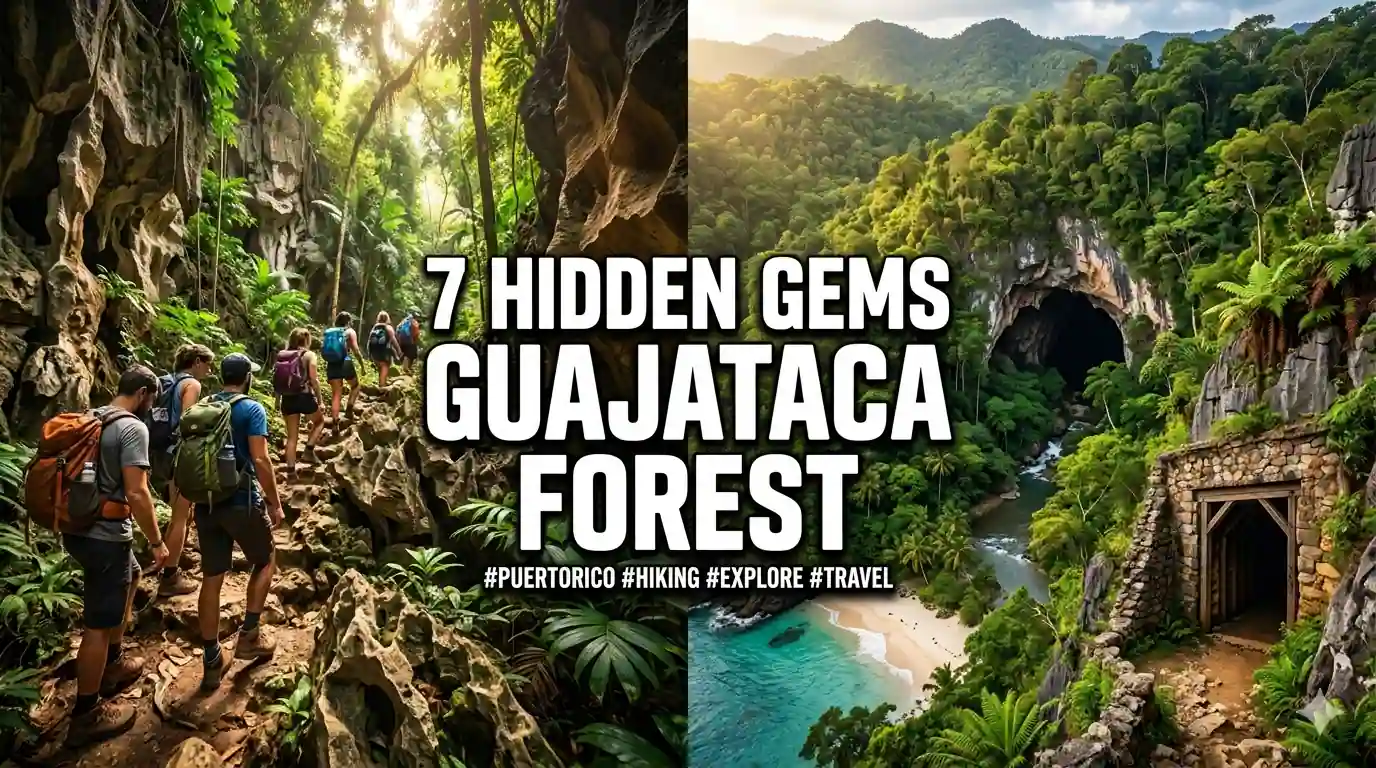
Discovering Puerto Rico's Guajataca Forest Adventure Paradise
Nestled in the rugged northwestern corner of Puerto Rico, the Guajataca Forest (Bosque Estatal de Guajataca) remains one of the island's best-kept secrets for adventure hikers and nature enthusiasts. This 3,200-acre state forest sprawls across the dramatic karst landscape between the municipalities of Isabela, Quebradillas, and San Sebastián, offering a wilderness experience that contrasts sharply with Puerto Rico's more famous coastal attractions and rainforest destinations. While El Yunque draws millions of visitors annually, Guajataca Forest waits quietly, preserving its mystical caves, hidden beaches, historic tunnels, and pristine hiking trails for those willing to venture off the beaten path.
The forest's unique geological character stems from its position within Puerto Rico's northern karst belt, a region sculpted over millions of years by the slow dissolution of limestone bedrock. This process has created a surreal landscape of towering mogotes (limestone hills), deep sinkholes, extensive cave systems, and underground rivers that disappear beneath the earth only to reemerge as natural springs and swimming holes. For adventure hikers, this terrain offers unparalleled exploration opportunities, from navigating narrow cave passages to scrambling up rocky outcrops for panoramic ocean views, to discovering secluded beaches accessible only by challenging coastal trails.
Beyond its natural wonders, Guajataca Forest holds significant historical importance, most notably through the abandoned Guajataca Tunnel, a haunting relic of early 20th-century infrastructure development that has become an iconic destination for urban explorers and photographers. The forest also preserves remnants of Taíno indigenous culture, Spanish colonial history, and Puerto Rico's agricultural heritage, creating layers of human story woven into the natural landscape. This comprehensive guide reveals seven hidden gems within Guajataca Forest that every adventure hiker should experience, providing detailed information about access, difficulty levels, safety considerations, and the unique characteristics that make each location special.
Hidden Gem Number 1: The Mysterious Guajataca Tunnel

The Guajataca Tunnel stands as the forest's most famous attraction, yet it remains relatively unknown to international tourists and even many Puerto Ricans. This abandoned railway tunnel, carved through solid limestone in the 1920s as part of the Puerto Rico Railroad Company's ambitious coastal route, stretches approximately 240 feet through a dramatic mogote formation. The tunnel was intended to connect the northern coastal towns, facilitating sugar cane transportation and passenger travel, but the railroad project was abandoned in the 1950s as automobile transportation rendered the rail system obsolete. Today, the tunnel serves as a haunting monument to early 20th-century engineering ambition and a gateway to adventure hiking.
Reaching the Guajataca Tunnel requires a moderate 1.5-mile hike each way from the nearest parking area along Route 446 between Isabela and Quebradillas. The trail descends through dense tropical forest, passing towering ceiba and kapok trees, before emerging at the tunnel's western entrance where the ocean suddenly appears through the limestone archway. The tunnel itself creates a dramatic frame for views of the Atlantic Ocean and the rugged coastline, making it a photographer's paradise especially during golden hour when sunlight streams through the eastern entrance at specific angles.
Inside the tunnel, you will find remnants of the railroad infrastructure including deteriorating wooden ties, rusted rail fragments, and graffiti left by decades of visitors. The tunnel's cool interior provides relief from tropical heat, but exercise extreme caution as the floor is uneven, slippery in places, and home to colonies of bats that emerge at dusk. Bring a flashlight or headlamp even for daytime visits, as the tunnel's interior can be quite dark. The eastern exit opens onto a small beach accessible only by hiking through the tunnel or via a challenging coastal trail, adding to the sense of discovery and adventure.
What should I bring for the Guajataca Tunnel hike
Essential items for the Guajataca Tunnel hike include sturdy hiking boots with good traction for rocky and potentially slippery terrain, a flashlight or headlamp with extra batteries for tunnel exploration, plenty of water (at least 2 liters per person), sun protection including hat and sunscreen, insect repellent, a camera, and snacks. The trail has no facilities or water sources, so bring everything you need. Visit during daylight hours for safety, and never enter the tunnel alone. Check weather conditions before departing, as rain makes the trail and tunnel extremely slippery.
Hidden Gem Number 2: Playa Guajataca Secret Beach

Playa Guajataca, also known as Tunnel Beach or Playa del Túnel, represents one of Puerto Rico's most secluded and beautiful beaches, accessible only by hiking through the Guajataca Tunnel or descending a steep, unmarked coastal trail. This crescent of golden sand backed by dramatic limestone cliffs and lush vegetation offers the perfect reward for adventurous hikers willing to navigate challenging terrain. The beach's isolation means you will likely have it almost entirely to yourself, even on weekends when more popular Puerto Rico beaches draw crowds.
The beach itself stretches approximately 300 yards along a protected cove, with calm waters ideal for swimming during favorable conditions. However, ocean conditions can change rapidly, and strong currents sometimes develop, so always assess water conditions carefully before swimming and never turn your back on the ocean. The beach's western end features interesting rock formations and tide pools teeming with marine life including hermit crabs, small fish, and colorful sea anemones, perfect for exploration during low tide.
Camping on Playa Guajataca is technically possible but requires proper permits from Puerto Rico's Department of Natural and Environmental Resources (DRNA), and facilities are nonexistent. Those who do camp here experience unforgettable nights under star-filled skies with the sound of waves as lullaby, but must practice strict leave-no-trace principles to preserve this pristine environment. The beach's limestone cliffs provide natural shade in certain areas, though bringing a portable shade structure is advisable for extended visits. Access back to the main road requires hiking back through the tunnel or climbing the steep coastal trail, so plan accordingly and allow plenty of daylight hours.
How difficult is the hike to Playa Guajataca
The hike to Playa Guajataca rates as moderate to difficult depending on your chosen route. The tunnel route involves 1.5 miles each way on relatively flat but rocky forest trail plus navigating through the tunnel itself, suitable for most hikers with reasonable fitness. The coastal trail descent is steeper and more challenging, requiring scrambling over rocks and roots with approximately 200 feet of elevation loss that must be regained on the return hike. Total hiking time ranges from 1.5 to 2.5 hours round-trip via the tunnel, or 2 to 3 hours via the coastal route. Bring plenty of water as the hike is strenuous in tropical heat.
Hidden Gem Number 3: Cueva del Indio Cave System

While not to be confused with the more famous Cueva del Indio near Arecibo, the cave systems within Guajataca Forest offer equally spectacular underground exploration opportunities for adventurous hikers and spelunkers. These limestone caves, carved by ancient underground rivers over thousands of years, feature impressive stalactite and stalagmite formations, narrow passages requiring crawling, and chambers large enough to stand upright. The forest contains multiple cave entrances scattered throughout its karst landscape, though many remain unmarked and require local knowledge or GPS coordinates to locate.
One of the more accessible cave systems lies near the forest's eastern boundary, reachable via a 2-mile hike from the main forest road. The entrance appears as a narrow opening in a limestone outcrop, barely visible beneath dense vegetation. Inside, the cave opens into a series of interconnected chambers with ceiling heights ranging from 3 feet to over 20 feet. Impressive flowstone formations created by mineral-rich water dripping over millennia decorate the walls, while pools of crystal-clear water collect in natural basins carved into the cave floor. The cave maintains a constant temperature of approximately 72 degrees Fahrenheit, providing refreshing relief from surface heat.
Cave exploration in Guajataca Forest requires proper equipment and experience. Never enter caves alone, always inform someone of your planned route and expected return time, and bring multiple light sources as darkness underground is absolute and disorienting. Helmets protect against head injuries from low ceilings, sturdy boots with excellent traction prevent slips on wet surfaces, and gloves shield hands from sharp rocks. Some passages require crawling or squeezing through tight spaces, so assess your comfort level with confined spaces before venturing deep into cave systems. Consider hiring a local guide familiar with the specific caves for your first visit, as the karst landscape can be confusing and it is easy to become disoriented.
Are the Guajataca Forest caves safe to explore
Guajataca Forest caves can be safely explored with proper preparation, equipment, and caution, but they present real dangers for unprepared visitors. Hazards include slippery surfaces, low ceilings, tight passages, complete darkness if lights fail, flash flooding during rain, and potential for becoming lost in complex passage systems. Never explore caves during or after heavy rain, as flash flooding can occur rapidly with fatal consequences. Always bring at least three independent light sources, wear a helmet, inform others of your plans, and never venture deeper than your comfort and experience level allow. For beginners, joining organized caving tours or hiring experienced local guides is strongly recommended.
Hidden Gem Number 4: Charco Azul Natural Pool

Charco Azul, meaning "Blue Pool," represents one of Guajataca Forest's most refreshing hidden treasures, a natural swimming hole formed where an underground river emerges from limestone bedrock to create a deep, crystal-clear pool surrounded by tropical vegetation. This secluded oasis lies approximately 3 miles from the forest's main entrance, accessible via a moderately challenging 2.5-mile hiking trail that crosses streams, climbs rocky outcrops, and winds through dense forest. The trail itself provides excellent opportunities for birdwatching and plant identification, with over 150 bird species recorded in the forest including the endangered Puerto Rican parrot, various woodpeckers, and colorful tanagers.
Upon reaching Charco Azul, you will discover a pool approximately 30 feet across and 8 to 12 feet deep, fed by a small waterfall cascading over moss-covered limestone. The water maintains a refreshingly cool temperature year-round, typically between 70 and 75 degrees Fahrenheit, providing perfect relief after the humid hike. The pool's clarity allows visibility of 15 feet or more on clear days, revealing small fish, freshwater shrimp, and the rocky bottom. Swimming is the primary activity, though cliff jumping from a 10-foot rock ledge on the pool's eastern side attracts adventurous visitors seeking an adrenaline rush.
The area surrounding Charco Azul features natural rock formations perfect for sunbathing and picnicking, though you must pack out all trash as no facilities exist. Several smaller pools and cascades upstream offer additional exploration opportunities for those willing to scramble over rocks and through shallow water. The best time to visit Charco Azul is during dry season from December through April, when water clarity is optimal and trail conditions are best. During rainy season, the pool can become murky from sediment runoff, and the trail turns muddy and slippery, increasing difficulty and reducing enjoyment.
What is the best time to visit Charco Azul
The best time to visit Charco Azul is during Puerto Rico's dry season from December through April, when rainfall is minimal, water clarity is excellent, and trail conditions are optimal. Visit early morning on weekdays to avoid crowds, as the pool has become increasingly popular with local hikers on weekends. Arrive before 10 AM for the best experience with fewer people and cooler temperatures for the hike. Avoid visiting during or immediately after heavy rain, as the trail becomes dangerously slippery, the pool fills with murky runoff, and flash flooding poses serious risks in the narrow canyon sections.
Hidden Gem Number 5: Mirador de Guajataca Scenic Overlook

Mirador de Guajataca, the forest's premier scenic overlook, rewards hikers with breathtaking panoramic views that capture the full majesty of Puerto Rico's northern karst region. Reaching this viewpoint requires a challenging 3-mile round-trip hike with approximately 400 feet of elevation gain, climbing through dense forest before emerging onto a limestone outcrop that juts dramatically from the mogote's side. The effort proves worthwhile as the view unfolds: a seemingly endless sea of green mogotes rising from the coastal plain, the turquoise Atlantic Ocean stretching to the horizon, and on clear days, distant views of the islands of Vieques and Culebra.
The overlook sits at approximately 300 feet elevation, providing a unique perspective on the karst landscape's geological complexity. Below, you can trace the winding path of the Guajataca River as it carves through limestone valleys, disappearing underground in some sections and reemerging in others. The forest canopy spreads like a green carpet across the mogotes, broken only by exposed limestone cliffs and occasional clearings where small farms cling to the steep terrain. This viewpoint is particularly spectacular at sunrise and sunset, when golden light bathes the landscape in warm tones and long shadows accentuate the mogotes' dramatic shapes.
The trail to Mirador de Guajataca is less maintained than some forest paths, with sections of eroded tread, exposed tree roots requiring careful footing, and occasional route-finding necessary at trail junctions. Bring a GPS device or download offline maps before hiking, as cell service is unreliable in the forest. The final ascent to the viewpoint involves scrambling over rocks and using hands for balance, so the trail rates as difficult and is not suitable for young children or those with mobility limitations. However, the physical challenge adds to the sense of accomplishment when you finally stand at the edge, taking in views that few tourists ever experience.
How long does it take to hike to Mirador de Guajataca
The hike to Mirador de Guajataca takes approximately 1.5 to 2.5 hours round-trip depending on fitness level and time spent at the viewpoint. The 1.5-mile trail each way requires 45 minutes to 1.5 hours one-way due to steep elevation gain and challenging terrain. Plan for 30 to 45 minutes at the overlook for photography, rest, and enjoying the view. Bring plenty of water and snacks, as the climb is strenuous in tropical heat and humidity. Start early morning to avoid afternoon heat and potential thunderstorms common in Puerto Rico's interior.
Hidden Gem Number 6: Quebrada de las Palmas Ravine

Quebrada de las Palmas, or "Ravine of the Palms," offers a completely different hiking experience within Guajataca Forest, following a seasonal stream bed through a narrow canyon lined with towering royal palms and endemic vegetation. This 4-mile out-and-back trail provides a cool, shaded alternative to the forest's more exposed routes, with the canyon walls creating a natural corridor that channels breezes and maintains lower temperatures even on hot days. The ravine's unique microclimate supports plant species found nowhere else in the forest, including rare orchids, bromeliads, and ferns that cling to the limestone walls.
The trail begins at a modest trailhead off Forest Road 632, descending gradually into the ravine where the landscape transforms dramatically. Towering royal palms (Roystonea borinquena), Puerto Rico's national tree, line the stream bed, their smooth gray trunks rising 60 feet or more before unfurling crowns of feathery fronds that create a natural cathedral ceiling. During dry season, the stream reduces to a series of connected pools perfect for wading and cooling off, while wet season transforms the ravine into a rushing creek requiring water crossings that add adventure and challenge to the hike.
Wildlife viewing opportunities in Quebrada de las Palmas exceed those in more open forest areas, as the ravine's protected environment attracts diverse species. Look for the endangered Puerto Rican parrot (though sightings remain rare), pearly-eyed thrashers, bananaquits flitting among flowers, and if you are lucky, the elusive Puerto Rican nightjar. The stream pools harbor freshwater shrimp and small fish, while hermit crabs scuttle among rocks and fallen leaves. The ravine's moist environment supports abundant insect life, so bring insect repellent and consider wearing long pants to protect against mosquitoes and chiggers.
What wildlife can I see in Quebrada de las Palmas
Quebrada de las Palmas hosts diverse wildlife including over 50 bird species such as pearly-eyed thrashers, bananaquits, Puerto Rican woodpeckers, and occasionally the endangered Puerto Rican parrot. The stream pools contain freshwater shrimp and small fish, while the forest floor harbors coquí frogs whose distinctive chirping defines Puerto Rican nights. Look for land crabs, hermit crabs, anoles (small lizards), and if you are very fortunate, the rare Puerto Rican boa. Early morning and late afternoon offer the best wildlife viewing opportunities when animals are most active.
Hidden Gem Number 7: Bosque Seco de Guajataca Dry Forest Section

The Bosque Seco de Guajataca, or Guajataca Dry Forest, represents an often-overlooked section of the state forest that provides a stark contrast to the lush, wet areas more commonly visited. Located in the forest's western reaches near the coast, this 800-acre dry forest ecosystem receives significantly less rainfall than the interior sections, creating a unique habitat dominated by drought-resistant vegetation including cacti, acacia trees, and thorny shrubs adapted to arid conditions. This ecological diversity within a single forest demonstrates Puerto Rico's remarkable environmental variety and offers hikers a completely different experience from the typical tropical rainforest imagery.
The dry forest trail system covers approximately 5 miles of interconnected loops ranging from easy to moderate difficulty, making it accessible to hikers of various fitness levels. The landscape features dramatic coastal views where the forest meets the ocean, with waves crashing against limestone cliffs and creating natural arches and sea caves through erosion. The vegetation, while less dense than wet forest areas, includes fascinating species like the prickly pear cactus, gumbo-limbo trees with distinctive peeling red bark, and various succulents that store water in their tissues to survive extended dry periods.
Birdwatching in the dry forest rewards patient observers with species adapted to arid environments, including the Puerto Rican flycatcher, gray kingbirds, and various migratory species that pass through during spring and fall. The coastal sections attract seabirds like brown boobies, magnificent frigatebirds, and pelicans that nest on offshore rocks. During winter months, humpback whales migrating between feeding and breeding grounds can sometimes be spotted from coastal viewpoints, adding an unexpected marine dimension to the forest hiking experience. The dry forest's open character also makes it ideal for photography, with dramatic light and shadow patterns created by the sparse canopy.
How does the dry forest differ from the rest of Guajataca
The Bosque Seco de Guajataca differs dramatically from the forest's wetter sections in receiving less than 40 inches of annual rainfall compared to 80+ inches in interior areas, creating an arid ecosystem dominated by drought-resistant vegetation including cacti, thorny shrubs, and deciduous trees that drop leaves during dry periods. The landscape is more open with better coastal views, temperatures run 5 to 10 degrees warmer, and wildlife includes species adapted to dry conditions rather than the moisture-loving animals found in wet forest areas. This ecological diversity makes Guajataca Forest unique, offering both tropical rainforest and dry forest experiences within a single protected area.
Planning Your Guajataca Forest Adventure

Successfully exploring Guajataca Forest's hidden gems requires careful planning and preparation to ensure safety and maximize enjoyment. The forest is open daily from sunrise to sunset, with no entrance fees required, though some activities like camping require permits from the Department of Natural and Environmental Resources. Access is primarily via Route 446 between Isabela and Quebradillas, with multiple unpaved forest roads branching into different sections. A high-clearance vehicle is recommended but not essential, as most trailheads are accessible via regular cars driven carefully.
Safety considerations for Guajataca Forest hiking include bringing adequate water (at least 1 liter per hour of hiking), wearing sturdy footwear with excellent traction, applying insect repellent liberally, and carrying a basic first aid kit. Cell phone coverage is spotty throughout the forest, so download offline maps and inform someone of your planned route and expected return time. Weather can change rapidly, with afternoon thunderstorms common year-round, so start hikes early and be prepared to turn back if conditions deteriorate. The forest's karst terrain presents unique hazards including sinkholes, unstable rock formations, and caves that should only be explored with proper equipment and experience.
Best times to visit Guajataca Forest are during dry season from December through April, when trails are driest, water clarity in pools is optimal, and mosquito populations are lower. However, this is also peak tourist season, so popular spots like the Guajataca Tunnel may see more visitors on weekends. Shoulder seasons of May-June and November offer good compromises with fewer crowds and acceptable weather, though afternoon rain becomes more frequent. Hurricane season from June through November brings increased rainfall and storm risk, but also lush vegetation, flowing waterfalls, and dramatic cloud formations that photographers appreciate.
Conclusion Your Guajataca Forest Adventure Awaits
Guajataca Forest stands as Puerto Rico's hidden adventure playground, offering seven remarkable destinations that showcase the island's geological diversity, ecological richness, and historical heritage. From the mysterious Guajataca Tunnel framing ocean views to secluded Playa Guajataca's pristine sands, from underground cave systems to refreshing natural pools, from panoramic mountain overlooks to palm-lined ravines and unique dry forest ecosystems, this 3,200-acre wilderness provides experiences that rival Puerto Rico's more famous destinations without the crowds.
For adventure hikers seeking authentic exploration opportunities, Guajataca Forest rewards preparation, respect for nature, and willingness to venture beyond marked trails with unforgettable memories and stunning photographs. The forest's karst landscape tells a geological story millions of years in the making, while its diverse ecosystems support rare and endemic species found nowhere else on Earth. By visiting these seven hidden gems, you contribute to the growing recognition of Guajataca Forest as a premier hiking destination, helping ensure its protection and preservation for future generations of adventurers.
Plan your Guajataca Forest expedition with care, pack appropriately for challenging terrain and tropical conditions, practice leave-no-trace principles to minimize your impact, and approach each hike with curiosity and respect for the natural world. Whether you are a local Puerto Rican discovering your island's treasures or an international visitor seeking authentic adventure beyond resort beaches, Guajataca Forest offers the raw, unspoiled beauty and thrilling exploration that defines truly memorable hiking experiences. Your adventure awaits in the mystical karst wilderness of northwestern Puerto Rico.
0 Comments