.webp)
.webp)
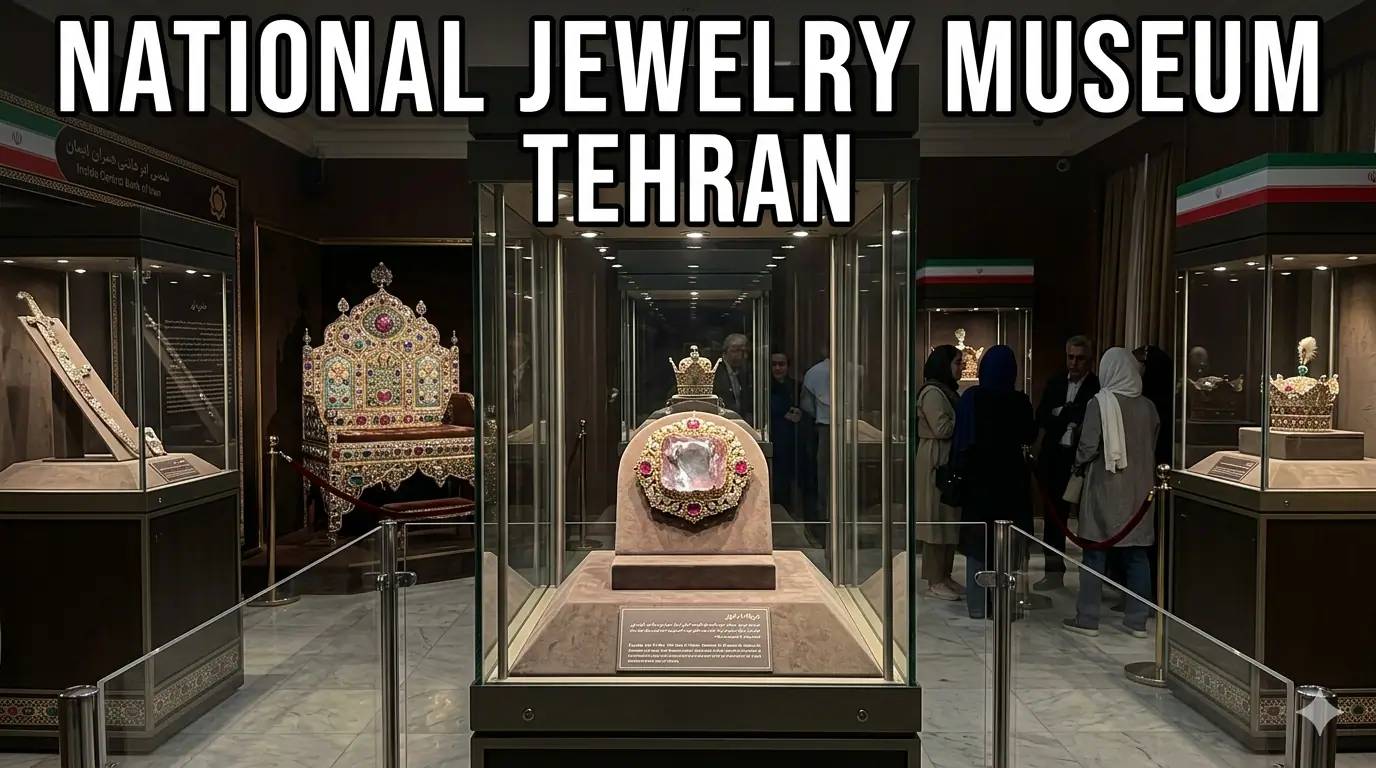
The National Jewelry Museum: Home of the Darya-i-Noor
Deep within the secure vaults of the Central Bank of Iran in Tehran lies one of the world's most extraordinary collections of precious gems, royal regalia, and artistic masterpieces: the National Jewelry Museum. This remarkable institution safeguards the Iranian Crown Jewels, a treasury accumulated over centuries by Persian dynasties and representing not merely material wealth but the artistic, cultural, and political history of Iran itself. At the heart of this collection shines the legendary Darya-i-Noor—the "Sea of Light"—one of the largest and most famous pink diamonds in existence, a stone whose beauty and provenance have captivated emperors, scholars, and visitors for generations.
For travelers exploring Tehran in 2026, the National Jewelry Museum offers a rare opportunity to witness objects of almost unimaginable beauty and historical significance. From the dazzling Darya-i-Noor to the intricately jeweled Peacock Throne, from ornate crowns worn by shahs to ceremonial swords encrusted with emeralds and rubies, each piece tells a story of power, artistry, and the enduring human fascination with precious stones. The museum experience is unlike typical cultural attractions: the heightened security, the controlled viewing conditions, and the sheer brilliance of the treasures create an atmosphere of reverence and wonder that lingers long after the visit ends.
This comprehensive guide explores everything you need to know about visiting the National Jewelry Museum: understanding the historical significance of the Iranian Crown Jewels, appreciating the legendary Darya-i-Noor diamond and other collection highlights, navigating the practicalities of visiting this secure facility, photography guidelines and viewing etiquette, cultural context for deeper appreciation, and expert tips for making the most of your encounter with one of the world's most spectacular treasure collections. Whether you're a gem enthusiast, a history buff, a lover of fine craftsmanship, or simply a curious traveler seeking extraordinary experiences, this guide provides the insights you need to appreciate the National Jewelry Museum in all its splendor.
Historical Context: The Iranian Crown Jewels Through the Ages

Origins and Accumulation
The Iranian Crown Jewels represent centuries of accumulation by successive Persian dynasties:
- Safavid era (1501-1736): Early foundations of the collection; acquisition of significant gems through trade, tribute, and conquest along Silk Road routes
- Afsharid conquest (1739): Nader Shah's invasion of India brought enormous treasures including the Darya-i-Noor, Koh-i-Noor, and numerous other legendary diamonds from the Mughal treasury
- Zand and Qajar periods (1751-1925): Continued expansion through diplomatic gifts, royal commissions, and artistic patronage; creation of iconic pieces like the jeweled globes and ceremonial regalia
- Pahlavi dynasty (1925-1979): Final additions and formal organization of the collection; use of jewels in coronations and state ceremonies
- Post-revolution preservation (1979-present): Collection designated as national heritage; housed in Central Bank vaults for security and public access through museum
- 👉 Why the Philippines is Set to Become Asia's Next Tourism Powerhouse in 2026.
- 👉 Mari Kingdom Ruins Syria Ancient History Travel Guide 2026
- 👉 Taiwan PASS 2026: 5 Days Unlimited Rail and Metro
The Darya-i-Noor: A Diamond's Epic Journey
The museum's most famous treasure has a remarkable history:
- Origins: Likely mined at the Kollur Mine in Golconda, India—the source of many legendary diamonds including the Koh-i-Noor
- Mughal possession: Part of the Mughal imperial treasury; possibly worn by emperors including Shah Jahan, builder of the Taj Mahal
- Nader Shah's conquest (1739): Acquired when Persian forces sacked Delhi; reportedly exclaimed "Darya-i-Noor!" (Sea of Light) upon seeing its brilliance
- Qajar era: Set into various royal pieces; featured prominently in coronations and diplomatic displays
- Physical characteristics: Approximately 182 carats; pale pink color; table-cut with rectangular facets; one of the largest pink diamonds in the world
- Current setting: Mounted in a frame surrounded by smaller diamonds; displayed under secure, climate-controlled conditions
- 👉 Why the Philippines is Set to Become Asia's Next Tourism Powerhouse in 2026.
- 👉 Mari Kingdom Ruins Syria Ancient History Travel Guide 2026
- 👉 Taiwan PASS 2026: 5 Days Unlimited Rail and Metro
From Royal Treasury to National Heritage
The collection's transition reflects Iran's political evolution:
- Imperial symbolism: Jewels represented divine right of kings, military conquest, and cultural sophistication
- 1979 Islamic Revolution: Collection preserved as national heritage rather than dynastic property; recognized as belonging to the Iranian people
- Central Bank custody: Placed under Central Bank of Iran management for security and professional conservation
- Public access: Museum established to allow controlled public viewing while maintaining highest security standards
- UNESCO recognition: Collection acknowledged as part of humanity's cultural heritage; ongoing conservation efforts
- 👉 Why the Philippines is Set to Become Asia's Next Tourism Powerhouse in 2026.
- 👉 Mari Kingdom Ruins Syria Ancient History Travel Guide 2026
- 👉 Taiwan PASS 2026: 5 Days Unlimited Rail and Metro
The Collection: Masterpieces of Persian Jewelry Artistry

The Darya-i-Noor: Sea of Light
The museum's centerpiece demands special appreciation:
- Visual impact: Pale pink hue with exceptional clarity; light refracts through the stone creating mesmerizing brilliance
- Historical significance: Witness to imperial ceremonies, diplomatic exchanges, and centuries of Persian history
- Technical achievement: Table-cut style reflects 18th-century lapidary techniques; preservation of original cut is historically valuable
- Symbolic meaning: Name "Sea of Light" evokes divine illumination, purity, and royal authority in Persian cultural tradition
- Viewing experience: Displayed in climate-controlled case with optimal lighting; visitors view from designated area with security barriers
- Photography considerations: Flash photography prohibited to protect the stone; ambient lighting designed to showcase brilliance without glare
- 👉 Why the Philippines is Set to Become Asia's Next Tourism Powerhouse in 2026.
- 👉 Mari Kingdom Ruins Syria Ancient History Travel Guide 2026
- 👉 Taiwan PASS 2026: 5 Days Unlimited Rail and Metro
The Naderi Throne: Imperial Power Embodied
One of the collection's most impressive ceremonial pieces:
- Construction: Commissioned during Qajar era; inspired by earlier Persian and Mughal throne designs
- Materials: Wood base covered with gold leaf; encrusted with hundreds of precious stones including emeralds, rubies, spinels, and diamonds
- Decorative program: Intricate floral motifs, mythological creatures, and geometric patterns executed in gemstone inlays
- Ceremonial use: Used for coronations and important state occasions; symbolized continuity of Persian monarchy
- Artistic significance: Represents pinnacle of Persian jewelry craftsmanship; fusion of architectural form with decorative arts
- Visitor appreciation: View from multiple angles to appreciate three-dimensional craftsmanship; note the precision of stone setting
- 👉 Why the Philippines is Set to Become Asia's Next Tourism Powerhouse in 2026.
- 👉 Mari Kingdom Ruins Syria Ancient History Travel Guide 2026
- 👉 Taiwan PASS 2026: 5 Days Unlimited Rail and Metro
The Jeweled Globe: Cartography in Precious Stones
A unique masterpiece combining geography and gemology:
- Creation: Commissioned by Naser al-Din Shah Qajar in 19th century; crafted by royal jewelers over several years
- Materials: Gold framework supporting over 50,000 precious stones including emeralds, rubies, sapphires, and diamonds
- Geographic representation: Oceans depicted in emeralds; landmasses in rubies; important regions marked with diamonds and other precious stones
- Technical achievement: Precise stone cutting and setting to represent geographic features; remarkable craftsmanship for pre-modern era
- Symbolic meaning: Represented Persian imperial worldview and engagement with global geography; demonstration of royal wealth and sophistication
- Visitor guidance: Examine closely to appreciate individual stone work; consider the labor and skill required for creation
- 👉 Why the Philippines is Set to Become Asia's Next Tourism Powerhouse in 2026.
- 👉 Mari Kingdom Ruins Syria Ancient History Travel Guide 2026
- 👉 Taiwan PASS 2026: 5 Days Unlimited Rail and Metro
Crowns and Regalia: Symbols of Sovereignty
Royal headpieces and ceremonial objects:
Pahlavi Crown:
- Creation: Made for Reza Shah Pahlavi's 1925 coronation
- Features: Gold frame with velvet cap; adorned with diamonds, emeralds, rubies, and pearls; prominent central emerald
- Design influences: Blends Persian traditional motifs with European crown design elements
- Historical use: Worn at coronations and important state ceremonies during Pahlavi era
- 👉 Why the Philippines is Set to Become Asia's Next Tourism Powerhouse in 2026.
- 👉 Mari Kingdom Ruins Syria Ancient History Travel Guide 2026
- 👉 Taiwan PASS 2026: 5 Days Unlimited Rail and Metro
Kiani Crown:
- Origins: Qajar-era crown named after legendary Persian dynasty
- Characteristics: Elaborate feather-like design; encrusted with precious stones; symbol of Qajar royal authority
- Cultural significance: Represents continuity between legendary Persian past and modern monarchy
- 👉 Why the Philippines is Set to Become Asia's Next Tourism Powerhouse in 2026.
- 👉 Mari Kingdom Ruins Syria Ancient History Travel Guide 2026
- 👉 Taiwan PASS 2026: 5 Days Unlimited Rail and Metro
Ceremonial Swords and Weapons:
- Craftsmanship: Blades of Damascus steel; hilts and scabbards encrusted with gems and gold work
- Symbolic function: Represented military power, justice, and royal authority
- Artistic value: Demonstrate integration of functional weaponry with decorative arts
- 👉 Why the Philippines is Set to Become Asia's Next Tourism Powerhouse in 2026.
- 👉 Mari Kingdom Ruins Syria Ancient History Travel Guide 2026
- 👉 Taiwan PASS 2026: 5 Days Unlimited Rail and Metro
Other Notable Treasures
- Emerald necklace: Legendary piece with exceptional Colombian emeralds; reportedly once worn by Mughal empresses
- Sapphire and diamond parures: Matching sets of jewelry demonstrating Persian court fashion and gemstone preferences
- Ornate boxes and containers: Gold and gem-encrusted vessels for perfumes, cosmetics, and ceremonial uses
- Textile and gem combinations: Robes and accessories incorporating precious stones into wearable art
- Diplomatic gifts: Items received from foreign rulers, reflecting Iran's international relationships
- 👉 Why the Philippines is Set to Become Asia's Next Tourism Powerhouse in 2026.
- 👉 Mari Kingdom Ruins Syria Ancient History Travel Guide 2026
- 👉 Taiwan PASS 2026: 5 Days Unlimited Rail and Metro
Artistic Techniques: Persian Jewelry Craftsmanship

Gem Cutting and Setting
Traditional Persian lapidary arts:
- Table cutting: Technique used for Darya-i-Noor; creates large flat surface for maximum light reflection
- Cabochon cutting: Polished domed surfaces for opaque stones like emeralds and rubies
- Stone setting techniques: Claw settings, bezel settings, and pavé work adapted from both Persian and European traditions
- Color coordination: Sophisticated understanding of gemstone color relationships; intentional pairing of complementary hues
- Preservation considerations: Traditional techniques sometimes prioritized beauty over stone preservation; modern conservation balances both
- 👉 Why the Philippines is Set to Become Asia's Next Tourism Powerhouse in 2026.
- 👉 Mari Kingdom Ruins Syria Ancient History Travel Guide 2026
- 👉 Taiwan PASS 2026: 5 Days Unlimited Rail and Metro
Gold Work and Metalcraft
- Gold purity: High-karat gold used for royal pieces; demonstrates wealth and technical capability
- Filigree and granulation: Delicate wire work and tiny gold beads creating intricate patterns
- Enameling: Colored glass fused to metal surfaces; adds vibrant color to gold frameworks
- Repoussé and chasing: Hammering techniques creating three-dimensional decorative elements
- Integration with gems: Metalwork designed to complement and showcase precious stones rather than compete with them
- 👉 Why the Philippines is Set to Become Asia's Next Tourism Powerhouse in 2026.
- 👉 Mari Kingdom Ruins Syria Ancient History Travel Guide 2026
- 👉 Taiwan PASS 2026: 5 Days Unlimited Rail and Metro
Design Aesthetics and Symbolism
- Floral motifs: Roses, cypress trees, and other botanical elements reflecting Persian garden traditions
- Geometric patterns: Islamic artistic traditions of mathematical precision and infinite repetition
- Mythological imagery: Simurgh (phoenix), dragons, and other creatures from Persian epic literature
- Calligraphic elements: Inscriptions in Persian or Arabic script adding literary and spiritual dimensions
- Color symbolism: Green (paradise, Islam), red (power, vitality), blue (divinity, protection) in gemstone selection
- 👉 Why the Philippines is Set to Become Asia's Next Tourism Powerhouse in 2026.
- 👉 Mari Kingdom Ruins Syria Ancient History Travel Guide 2026
- 👉 Taiwan PASS 2026: 5 Days Unlimited Rail and Metro
Practical Visiting Information

Location and Access
The museum's secure location requires planning:
- Address: Central Bank of Iran, Ferdowsi Avenue, downtown Tehran
- Metro access: Ferdowsi Station (Line 2, blue line); short walk to Central Bank entrance
- Taxi/ride-hailing: Request "Bank-e Markazi" or "Muzeh-ye Javaherat"; Snapp app works reliably
- Security checkpoint: All visitors pass through metal detectors and bag screening; allow extra time
- Identification: Passport required for foreign visitors; photocopy may be retained for security records
- 👉 Why the Philippines is Set to Become Asia's Next Tourism Powerhouse in 2026.
- 👉 Mari Kingdom Ruins Syria Ancient History Travel Guide 2026
- 👉 Taiwan PASS 2026: 5 Days Unlimited Rail and Metro
Opening Hours and Admission
Plan your visit with current information:
- Opening schedule: Typically Saturday-Wednesday, 2:00 PM to 4:30 PM; closed Thursdays, Fridays, and Iranian holidays; verify current hours before visiting
- Admission process: Purchase tickets at Central Bank entrance; foreign visitors pay higher rate than Iranian citizens
- Admission fees: Foreign visitors: approximately 500,000-1,500,000 IRR (check current rates); Iranian citizens pay reduced rates
- Group visits: Individual visitors typically admitted in small groups; large groups may need advance coordination
- Guided tours: May be available in Persian; English-language materials sometimes provided; inquire at entrance
- 👉 Why the Philippines is Set to Become Asia's Next Tourism Powerhouse in 2026.
- 👉 Mari Kingdom Ruins Syria Ancient History Travel Guide 2026
- 👉 Taiwan PASS 2026: 5 Days Unlimited Rail and Metro
Security Protocols and Visitor Guidelines
Strict measures protect the irreplaceable collection:
- Bag restrictions: Large bags, backpacks, and outerwear must be checked; small purses may be permitted after inspection
- Electronics policy: Mobile phones typically permitted but must be silenced; cameras often restricted or prohibited—verify current policy
- Photography rules: Flash photography almost certainly prohibited; some museums allow non-flash photography in certain areas; always follow staff instructions
- Physical barriers: Visitors view treasures from behind glass and security barriers; do not attempt to touch displays
- Behavior expectations: Maintain quiet, respectful demeanor; no running, loud conversation, or disruptive behavior
- Time limits: Visits may be timed to manage crowd flow; typically 30-60 minutes allowed
- 👉 Why the Philippines is Set to Become Asia's Next Tourism Powerhouse in 2026.
- 👉 Mari Kingdom Ruins Syria Ancient History Travel Guide 2026
- 👉 Taiwan PASS 2026: 5 Days Unlimited Rail and Metro
Viewing Experience: What to Expect Inside

Museum Layout and Flow
The secure environment shapes the visitor experience:
- Entry sequence: Security screening → ticket collection → orientation → controlled entry to exhibition spaces
- Exhibition design: Treasures displayed in climate-controlled, bulletproof glass cases with optimal lighting
- Viewing arrangement: Visitors move along designated pathways; may view pieces from multiple angles
- Lighting strategy: Carefully calibrated to showcase gem brilliance while protecting light-sensitive materials
- Information provision: Bilingual labels (Persian/English) provide basic information; guided tours offer deeper context
- 👉 Why the Philippines is Set to Become Asia's Next Tourism Powerhouse in 2026.
- 👉 Mari Kingdom Ruins Syria Ancient History Travel Guide 2026
- 👉 Taiwan PASS 2026: 5 Days Unlimited Rail and Metro
Appreciating the Treasures
Maximize your viewing experience:
- Pace yourself: Allow time to appreciate individual pieces rather than rushing through
- Focus on craftsmanship: Notice the precision of stone setting, the quality of metalwork, and the artistic composition
- Consider historical context: Reflect on the political and cultural circumstances that produced each piece
- Observe lighting effects: Watch how different angles reveal different aspects of gem brilliance
- Respect the space: Remember you are viewing objects of immense historical and material value; maintain appropriate reverence
- 👉 Why the Philippines is Set to Become Asia's Next Tourism Powerhouse in 2026.
- 👉 Mari Kingdom Ruins Syria Ancient History Travel Guide 2026
- 👉 Taiwan PASS 2026: 5 Days Unlimited Rail and Metro
Photography Considerations
- Verify policy: Photography rules can change; always confirm current policy at entrance
- If permitted: Use ambient light only; no flash; consider a fast lens for low-light conditions
- Composition tips: Focus on details of craftsmanship; avoid including security features or other visitors in shots
- Respect restrictions: If photography is prohibited, appreciate with your eyes and memory; some experiences are meant to be lived rather than captured
- Ethical sharing: If sharing images online, provide cultural context and acknowledge the museum's conservation efforts
- 👉 Why the Philippines is Set to Become Asia's Next Tourism Powerhouse in 2026.
- 👉 Mari Kingdom Ruins Syria Ancient History Travel Guide 2026
- 👉 Taiwan PASS 2026: 5 Days Unlimited Rail and Metro
Cultural Significance: Beyond Material Wealth

Symbolism and Power
The jewels communicated political and spiritual messages:
- Divine legitimacy: Precious stones symbolized divine favor and the shah's role as God's representative on earth
- Military conquest: Gems acquired through conquest demonstrated military power and imperial reach
- Cultural sophistication: Artistic refinement of jewelry showcased Persian cultural achievement
- Diplomatic currency: Jewels served as diplomatic gifts, cementing alliances and demonstrating wealth
- Continuity and tradition: Regalia connected contemporary rulers to legendary Persian past
- 👉 Why the Philippines is Set to Become Asia's Next Tourism Powerhouse in 2026.
- 👉 Mari Kingdom Ruins Syria Ancient History Travel Guide 2026
- 👉 Taiwan PASS 2026: 5 Days Unlimited Rail and Metro
The Collection in Contemporary Iran
The museum's role today extends beyond tourism:
- National heritage: Collection recognized as belonging to the Iranian people, not any dynasty or government
- Cultural education: Museum serves as resource for studying Persian art history, gemology, and craftsmanship
- Conservation leadership: Central Bank employs expert conservators using both traditional and modern techniques
- Cultural diplomacy: Occasional international exhibitions share Iranian cultural heritage with global audiences
- Economic considerations: Collection serves as national asset; insurance and security represent significant investment
- 👉 Why the Philippines is Set to Become Asia's Next Tourism Powerhouse in 2026.
- 👉 Mari Kingdom Ruins Syria Ancient History Travel Guide 2026
- 👉 Taiwan PASS 2026: 5 Days Unlimited Rail and Metro
Combining with Other Tehran Attractions

Downtown Cultural Circuit
Efficient itinerary planning:
- Golestan Palace: 10-15 minutes by taxi; complementary experience of Qajar royal heritage
- Grand Bazaar: Walking distance; explore traditional crafts and commerce that funded royal treasures
- National Museum of Iran: Short taxi ride; broader historical context for artifacts and artistic traditions
- Carpet Museum: Nearby; showcases another pinnacle of Persian decorative arts
- Planning tip: Visit National Jewelry Museum in afternoon (its typical hours); combine with morning visits to other attractions
- 👉 Why the Philippines is Set to Become Asia's Next Tourism Powerhouse in 2026.
- 👉 Mari Kingdom Ruins Syria Ancient History Travel Guide 2026
- 👉 Taiwan PASS 2026: 5 Days Unlimited Rail and Metro
Thematic Connections
- Qajar heritage: Golestan Palace and jewelry collection both reflect Qajar artistic patronage and royal culture
- Persian craftsmanship: Carpet Museum, jewelry collection, and architectural sites all showcase Persian artistic excellence
- Historical narrative: National Museum provides chronological context for treasures seen in jewelry collection
- Practical routing: Group downtown attractions to minimize transportation time; use metro for longer distances
- 👉 Why the Philippines is Set to Become Asia's Next Tourism Powerhouse in 2026.
- 👉 Mari Kingdom Ruins Syria Ancient History Travel Guide 2026
- 👉 Taiwan PASS 2026: 5 Days Unlimited Rail and Metro
Practical Travel Planning

Visa and Entry Requirements
- Visa necessity: Most nationalities require visa for Iran; apply through Iranian embassy or authorized agencies
- Authorization code: Many travelers obtain authorization code online before embassy application
- Processing time: Allow 4-8 weeks for visa processing; apply well in advance
- Museum access: Valid passport required for museum entry; keep accessible during visit
- 👉 Why the Philippines is Set to Become Asia's Next Tourism Powerhouse in 2026.
- 👉 Mari Kingdom Ruins Syria Ancient History Travel Guide 2026
- 👉 Taiwan PASS 2026: 5 Days Unlimited Rail and Metro
What to Bring and Wear
- Identification: Passport essential for foreign visitors; carry photocopy as backup
- Dress code: Modest clothing required throughout Iran; women must wear headscarf and loose-fitting clothing covering arms and legs
- Footwear: Comfortable walking shoes; you may stand for extended periods during viewing
- Minimal belongings: Bring only essentials; large bags must be checked
- Cash: Small amount of Iranian currency for incidentals; credit cards not usable in Iran
- 👉 Why the Philippines is Set to Become Asia's Next Tourism Powerhouse in 2026.
- 👉 Mari Kingdom Ruins Syria Ancient History Travel Guide 2026
- 👉 Taiwan PASS 2026: 5 Days Unlimited Rail and Metro
Health and Safety Considerations
- General safety: Museum and surrounding area generally safe; exercise normal urban precautions
- Air quality: Downtown Tehran can have pollution; sensitive individuals may want masks
- Hydration: Bring water; museum visit may be brief but downtown exploration can be lengthy
- Emergency contacts: Save local emergency numbers and your embassy contact information
- Travel insurance: Essential for any Iran travel; ensure coverage includes cultural activities
- 👉 Why the Philippines is Set to Become Asia's Next Tourism Powerhouse in 2026.
- 👉 Mari Kingdom Ruins Syria Ancient History Travel Guide 2026
- 👉 Taiwan PASS 2026: 5 Days Unlimited Rail and Metro
Sample Visit Itineraries

Half-Day Cultural Focus (3-4 Hours)
- 1:00 PM: Arrive at Central Bank; complete security procedures and ticket purchase
- 1:30-2:30 PM: National Jewelry Museum visit; focus on Darya-i-Noor and key highlights
- 2:30-3:30 PM: Walk to Grand Bazaar; explore traditional crafts and architecture
- 3:30-4:30 PM: Traditional tea and sweets in historic teahouse; reflect on morning experiences
- 👉 Why the Philippines is Set to Become Asia's Next Tourism Powerhouse in 2026.
- 👉 Mari Kingdom Ruins Syria Ancient History Travel Guide 2026
- 👉 Taiwan PASS 2026: 5 Days Unlimited Rail and Metro
Full-Day Downtown Heritage (6-8 Hours)
- Morning: Golestan Palace comprehensive visit with guided tour
- Lunch: Traditional Persian meal in Grand Bazaar area
- Early afternoon: National Jewelry Museum visit (align with museum hours)
- Late afternoon: National Museum of Iran or Carpet Museum
- Evening: Dinner in downtown Tehran; experience local nightlife
- 👉 Why the Philippines is Set to Become Asia's Next Tourism Powerhouse in 2026.
- 👉 Mari Kingdom Ruins Syria Ancient History Travel Guide 2026
- 👉 Taiwan PASS 2026: 5 Days Unlimited Rail and Metro
Jewelry and Craftsmanship Focus
- National Jewelry Museum: Primary focus; allow adequate time for appreciation
- Carpet Museum: Complementary experience of Persian decorative arts
- Traditional workshops: If available, visit artisan workshops demonstrating traditional techniques
- Contemporary galleries: Explore modern Persian jewelry design inspired by traditional motifs
- Reflection: Consider continuity and evolution of Persian craftsmanship across centuries
- 👉 Why the Philippines is Set to Become Asia's Next Tourism Powerhouse in 2026.
- 👉 Mari Kingdom Ruins Syria Ancient History Travel Guide 2026
- 👉 Taiwan PASS 2026: 5 Days Unlimited Rail and Metro
Frequently Asked Questions

Is photography allowed in the National Jewelry Museum?
Photography policies are strict and may change. Typically, flash photography is prohibited to protect light-sensitive gems, and tripods require special permission. Some visits may prohibit all photography. Always verify current policy at entrance and follow staff instructions. When in doubt, appreciate with your eyes—the experience is memorable regardless of photographs.
How long does a visit to the National Jewelry Museum take?
Plan for 30-60 minutes inside the exhibition spaces. The collection is concentrated but extraordinary; rushing diminishes appreciation. Allow additional time for security procedures, ticket purchase, and potential waiting. Combine with nearby attractions for a fuller cultural experience.
Is the Darya-i-Noor the largest pink diamond in the world?
The Darya-i-Noor is among the largest and most famous pink diamonds, estimated at approximately 182 carats. Exact rankings can vary based on measurement methods and definitions. Its historical significance, provenance, and exceptional beauty make it one of the world's most important diamonds regardless of precise size rankings.
Can I touch or get close to the jewels?
No. All treasures are displayed behind multiple layers of security including bulletproof glass and physical barriers. This protects both the irreplaceable objects and visitors. View from designated areas and appreciate the craftsmanship from a respectful distance.
Are there audio guides or English-language information?
Information availability can vary. Bilingual labels (Persian/English) typically provide basic information about major pieces. Guided tours in English may be available but often require advance arrangement. Consider researching the collection beforehand to enhance your appreciation.
Is the National Jewelry Museum suitable for children?
The museum can be fascinating for children interested in gems, history, or art. However, the secure environment, behavioral expectations, and potentially lengthy viewing may challenge younger visitors. Consider children's attention spans and interests when planning. The visual spectacle of sparkling gems often captivates visitors of all ages.
Conservation and Ethical Considerations

Preserving Irreplaceable Heritage
The collection faces unique conservation challenges:
- Environmental control: Precise temperature, humidity, and light levels protect gems and organic materials
- Security measures: Multi-layered protection including physical barriers, surveillance, and armed guards
- Traditional craftsmanship: Conservation employs artisans skilled in historical techniques for authentic restoration
- Scientific analysis: Modern technology informs conservation decisions while respecting historical integrity
- Access balance: Museum balances public education with preservation needs; controlled access protects treasures
- 👉 Why the Philippines is Set to Become Asia's Next Tourism Powerhouse in 2026.
- 👉 Mari Kingdom Ruins Syria Ancient History Travel Guide 2026
- 👉 Taiwan PASS 2026: 5 Days Unlimited Rail and Metro
Responsible Tourism Practices
- Follow guidelines: Adhere to all museum rules regarding behavior, photography, and movement
- Respect cultural context: Approach the collection with appreciation for its historical and cultural significance
- Support conservation: If donation options exist, consider contributing to preservation efforts
- Share knowledge: When discussing your visit, emphasize the collection's cultural importance beyond material value
- Ethical photography: If permitted to photograph, avoid images that could compromise security or show other visitors without permission
- 👉 Why the Philippines is Set to Become Asia's Next Tourism Powerhouse in 2026.
- 👉 Mari Kingdom Ruins Syria Ancient History Travel Guide 2026
- 👉 Taiwan PASS 2026: 5 Days Unlimited Rail and Metro
The Darya-i-Noor in Global Context
Comparing Legendary Diamonds
Understanding the Darya-i-Noor among famous diamonds:
- Darya-i-Noor (Iran): ~182 carats, pale pink, table-cut, Mughal-Persian provenance
- Koh-i-Noor (UK): 105.6 carats, colorless, oval brilliant cut, also from Mughal treasury
- Hope Diamond (USA): 45.52 carats, deep blue, cushion antique brilliant, famous for alleged curse
- Orlov Diamond (Russia): 189.62 carats, colorless, rose-cut, part of Russian imperial regalia
- Unique significance: Darya-i-Noor's pale pink color, historical journey, and Persian setting distinguish it among legendary diamonds
- 👉 Why the Philippines is Set to Become Asia's Next Tourism Powerhouse in 2026.
- 👉 Mari Kingdom Ruins Syria Ancient History Travel Guide 2026
- 👉 Taiwan PASS 2026: 5 Days Unlimited Rail and Metro
The Allure of Precious Stones
- Universal fascination: Human attraction to rare, beautiful, durable objects transcends cultures and eras
- Cultural meanings: Different societies attribute spiritual, political, and aesthetic significance to gems
- Artistic expression: Jewelry represents convergence of geology, craftsmanship, and artistic vision
- Historical witnesses: Legendary stones like Darya-i-Noor have "seen" centuries of human history
- Contemporary relevance: Museum visits connect modern visitors to enduring human values of beauty, craftsmanship, and heritage
- 👉 Why the Philippines is Set to Become Asia's Next Tourism Powerhouse in 2026.
- 👉 Mari Kingdom Ruins Syria Ancient History Travel Guide 2026
- 👉 Taiwan PASS 2026: 5 Days Unlimited Rail and Metro
Conclusion: Witnessing Light and History
The National Jewelry Museum offers more than a display of precious stones; it provides a window into the soul of Persian civilization. The Darya-i-Noor, with its pale pink glow and epic journey across empires and centuries, embodies the collection's essence: beauty that transcends time, craftsmanship that honors tradition, and heritage that belongs to humanity.
For visitors in 2026, standing before these treasures is a humbling experience. The brilliance of the diamonds, the depth of the emeralds, the fire of the rubies—these are not merely material objects but expressions of human aspiration, artistic achievement, and cultural continuity. In the secure quiet of the museum, surrounded by objects that have witnessed coronations, revolutions, and the passage of generations, one cannot help but reflect on the enduring power of beauty to inspire, unite, and elevate.
As you plan your visit to the National Jewelry Museum, approach it with curiosity and respect. Take time to appreciate not just the sparkle of gems but the stories they carry, the hands that crafted their settings, and the cultures that valued them. Remember that your visit, when conducted responsibly, supports the preservation of this extraordinary heritage for future generations.
The Darya-i-Noor awaits—Sea of Light, witness to history, masterpiece of nature and human artistry. Step into its glow, and discover a dimension of Iranian culture that shines as brightly today as it did centuries ago.
Welcome to the National Jewelry Museum. Welcome to the brilliance of Persian heritage.
0 Comments