.webp)
.webp)
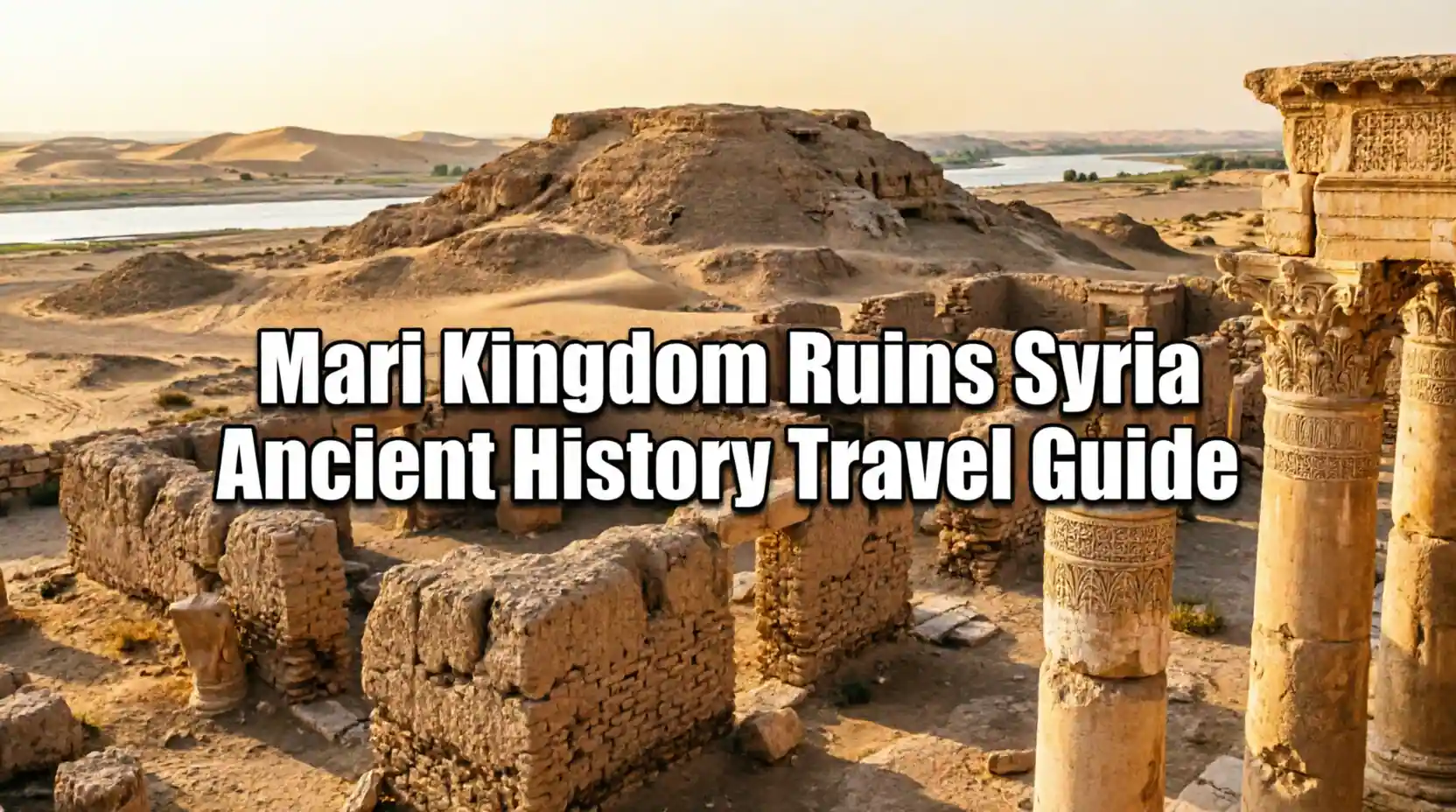
Introduction to the Mari Kingdom and Its Historical Significance
The ancient city of Mari stands as one of the most important archaeological sites in Syria, offering travelers a profound glimpse into one of humanity's earliest urban civilizations.
Located on the western bank of the Euphrates River in modern-day Syria, Mari flourished as a powerful kingdom and crucial trading hub between Mesopotamia and the Mediterranean world.
This comprehensive guide explores the rich history, archaeological treasures, and practical considerations for visiting the ruins of this remarkable ancient civilization in 2026.
Mari's strategic position along ancient trade routes made it a crossroads of cultures, languages, and innovations that shaped the development of early urban society.
From its magnificent royal palace to thousands of cuneiform tablets revealing daily life in the Bronze Age, Mari continues to captivate historians, archaeologists, and adventurous travelers alike.
The Rise and Fall of the Mari Kingdom

Mari was founded around 2900 BCE during the Early Dynastic period, strategically positioned to control trade flowing along the Euphrates River between Sumer in the south and Anatolia in the north.
The city reached its zenith during the Amorite period under the rule of the Shakkanakku dynasty and later the Lim dynasty, particularly during the reign of King Zimri-Lim from 1775 to 1761 BCE.
At its height, Mari controlled an extensive territory and maintained diplomatic relations with other major powers including Babylon, Aleppo, and various city-states throughout Mesopotamia.
The kingdom's prosperity derived from its control of trade routes, agricultural production in the fertile Euphrates valley, and sophisticated administrative systems documented in extensive archives.
Mari's independence ended dramatically in 1759 BCE when Hammurabi of Babylon conquered and destroyed the city, though the site continued to be inhabited on a smaller scale for centuries.
Archaeological Discovery and Excavation History
The ancient city remained buried for over three millennia until French archaeologist André Parrot began systematic excavations in 1933, uncovering one of the most significant Bronze Age sites in the Near East.
Initial discoveries included the spectacular Royal Palace, one of the largest and best-preserved palaces from the ancient Near East, covering over two and a half hectares with more than three hundred rooms.
Over decades of excavation, archaeologists have uncovered temples, residential quarters, fortifications, and most importantly, an archive of over twenty-five thousand cuneiform tablets.
These tablets provide unprecedented insights into administration, diplomacy, economy, religion, and daily life in an ancient Mesopotamian kingdom during the Middle Bronze Age.
Excavations continue to reveal new information about Mari's urban planning, architectural achievements, and role in the broader context of ancient Near Eastern civilization.
The Royal Palace of Mari

The Royal Palace stands as the crown jewel of Mari's archaeological remains, representing one of the most impressive architectural achievements of the ancient Near East.
This vast complex served as the administrative, political, and ceremonial center of the kingdom, housing the royal family, government officials, workshops, and storage facilities.
The palace featured elaborate reception halls, private apartments, courtyards adorned with gardens, and the famous Investiture Hall decorated with vibrant wall paintings depicting religious ceremonies.
Visitors can explore the ruins of throne rooms where King Zimri-Lim received dignitaries, conducted state business, and maintained diplomatic relations with neighboring kingdoms.
The palace's sophisticated water management system, including bathrooms and drainage facilities, demonstrates advanced engineering knowledge and concern for royal comfort.
Architectural Features and Urban Planning
Mari's urban layout reflects careful planning with the palace complex dominating the city center, surrounded by temples, administrative buildings, and residential districts.
The city was protected by massive fortification walls and gates, demonstrating both defensive capabilities and the kingdom's wealth and organizational capacity.
Temples dedicated to various deities including Ishtar, Dagan, and Ninhursag occupied prominent positions, reflecting the importance of religion in Mari's political and social life.
Residential areas reveal social stratification through variations in house size, construction quality, and proximity to the palace and temples.
The city's grid-like street pattern and standardized building techniques indicate centralized planning and strong administrative control over urban development.
The Mari Archives and Cuneiform Tablets

Among Mari's most significant discoveries are the extensive archives containing over twenty-five thousand cuneiform tablets written in Akkadian, providing an extraordinary window into Bronze Age civilization.
These tablets include royal correspondence, administrative records, legal documents, economic transactions, diplomatic treaties, and literary texts that illuminate virtually every aspect of Mari's society.
Letters between King Zimri-Lim and his officials reveal the complexities of ancient governance, intelligence networks, military strategy, and diplomatic relations with contemporary powers.
Economic records document trade in textiles, metals, agricultural products, and luxury goods, illustrating Mari's role as a commercial hub connecting diverse regions.
Many tablets are now housed in museums including the Louvre in Paris and the National Museum of Damascus, though ongoing research continues to extract new information from these ancient texts.
Insights from the Tablets
The Mari archives provide detailed information about palace administration, including the organization of labor, resource management, and the complex bureaucracy supporting the kingdom.
Correspondence reveals the sophisticated diplomatic practices of the time, including marriage alliances, gift exchanges, treaty negotiations, and protocols for international relations.
Religious texts and ritual descriptions illuminate the spiritual life of Mari's inhabitants, their pantheon of deities, temple ceremonies, and the role of religion in legitimizing royal authority.
Military documents detail army organization, weapon production, fortification maintenance, and strategic concerns facing a kingdom situated in a contested region.
Personal letters and legal documents offer glimpses into daily life, family relationships, social customs, and the experiences of ordinary people alongside the elite.
Religious Life and Temple Architecture

Religion permeated every aspect of life in ancient Mari, with temples serving as centers of worship, economic activity, and political power alongside their spiritual functions.
The city featured numerous temples dedicated to different deities, with the most important being the Temple of Ishtar, goddess of love and war, and the Temple of Dagan, a major Mesopotamian god.
These religious structures followed traditional Mesopotamian architectural patterns with elevated platforms, courtyards, offering halls, and inner sanctuaries housing cult statues.
Priests and priestesses conducted elaborate rituals including sacrifices, libations, divination practices, and seasonal festivals that maintained cosmic order and divine favor.
Archaeological evidence reveals votive offerings, ritual objects, and inscriptions documenting the piety and religious devotion of Mari's rulers and inhabitants.
The Massab Temple and Sacred Spaces
The Massab Temple, dedicated to the god Dagan, represents one of Mari's most significant religious structures, featuring distinctive architectural elements and rich decorative programs.
Temple complexes included not only worship spaces but also workshops, storage facilities, and administrative offices, reflecting their role as economic and social institutions.
Religious festivals brought together people from across the kingdom, reinforcing social cohesion and royal authority through shared ritual experiences and communal celebrations.
Divination practices, particularly extispicy examining animal livers for omens, played crucial roles in decision-making at all levels from royal policy to personal matters.
The integration of religious and political authority is evident in royal titles, iconography, and the king's role as intermediary between the divine and human realms.
Trade and Economy in Ancient Mari

Mari's prosperity depended fundamentally on its strategic location controlling trade routes along the Euphrates River, connecting the resource-rich regions of Anatolia, Mesopotamia, and the Levant.
The kingdom served as a crucial intermediary in the exchange of metals, particularly tin and copper needed for bronze production, timber from Lebanon, and luxury goods from distant lands.
Agricultural production in the fertile Euphrates valley provided surplus grain, dates, and other crops that supported the urban population and generated export commodities.
Textile production emerged as a major industry, with Mari's workshops producing high-quality woolen fabrics that were traded throughout the ancient Near East.
The palace administered a complex economic system involving taxation, redistribution, craft production, and long-distance trade managed by specialized officials and merchants.
Commercial Networks and Merchant Activity
Mari's merchants traveled extensively, establishing commercial relationships with partners in Babylon, Aleppo, Emar, and cities throughout Mesopotamia and beyond.
Caravans transported goods along well-established routes, facing risks from bandits, rival kingdoms, and the challenges of long-distance travel in the ancient world.
The Mari archives document detailed contracts, loans, partnerships, and commercial disputes that reveal sophisticated business practices and legal frameworks supporting trade.
Craft specialization flourished in Mari, with skilled artisans producing metalwork, pottery, jewelry, and other goods for both local consumption and export markets.
The kingdom's economic success enabled monumental construction projects, military expenditures, and the maintenance of an elaborate court culture befitting a major regional power.
How to Reach the Mari Archaeological Site

The ruins of Mari are located at Tell Hariri near the modern town of Abu Kamal in eastern Syria, approximately one hundred twenty kilometers southeast of Deir ez-Zor.
Access to the site requires traveling through the Euphrates River valley, with the nearest major city being Deir ez-Zor, though current security conditions significantly affect accessibility.
Under normal circumstances, visitors would travel from Damascus northeast via the M20 highway through Palmyra and Deir ez-Zor before continuing southeast to Abu Kamal.
The journey covers roughly four hundred fifty kilometers from Damascus and requires a full day of travel with overnight stops recommended in Deir ez-Zor.
Local transportation from Abu Kamal to the archaeological site involves a short drive of approximately eleven kilometers to reach Tell Hariri.
Current Access Considerations
Important note: The security situation in eastern Syria remains complex and volatile, with various forces controlling different areas and ongoing military activities in some regions.
Travel to Mari requires careful assessment of current conditions, coordination with local authorities, and potentially traveling with guides familiar with the area.
International visitors should consult their government's travel advisories and consider the significant risks before planning visits to this region of Syria.
When access is possible, coordination with Syrian Directorate-General of Antiquities and Museums is essential for site visits and archaeological tourism.
Alternative ways to experience Mari include visiting the National Museum of Damascus which houses important artifacts from the site and provides contextual information about the kingdom.
Best Time to Visit Mari Ruins

The climate of eastern Syria features hot summers and mild winters, significantly affecting the comfort and feasibility of visiting archaeological sites like Mari.
Spring from March through May offers the most pleasant conditions with moderate temperatures, blooming vegetation, and comfortable weather for exploring outdoor ruins.
Autumn from September through November provides similar advantages with warm days, cool evenings, and generally clear skies ideal for photography and extended site visits.
Summer months from June through August bring extreme heat with temperatures regularly exceeding forty degrees Celsius, making outdoor exploration dangerous and uncomfortable.
Winter from December through February features cooler temperatures and occasional rain, though conditions remain generally suitable for site visits with appropriate clothing.
Seasonal Considerations for Travelers
Spring offers the additional attraction of green landscapes and wildflowers that contrast beautifully with the ancient mudbrick ruins and provide excellent photographic opportunities.
Dust storms can occur particularly in spring and early summer, potentially affecting visibility and travel plans, so flexibility in scheduling is advisable.
The Euphrates River reaches different levels throughout the year, with spring snowmelt from Turkish mountains causing higher water levels that can affect riverside areas.
Visiting during weekdays rather than weekends may provide quieter experiences with fewer local visitors, though the site typically receives limited tourist traffic regardless.
Early morning or late afternoon visits during warmer months help avoid peak heat while providing optimal lighting for appreciating the ruins and landscape.
What to See at the Mari Archaeological Site

Visitors to Mari can explore extensive ruins that reveal the grandeur and complexity of this ancient kingdom, though preservation conditions vary across different areas of the site.
The Royal Palace remains the highlight, with visitors able to walk through reconstructed portions of courtyards, halls, and rooms that once housed one of the ancient world's most sophisticated administrations.
The Investiture Hall features reproductions of the famous wall paintings depicting King Zimri-Lim receiving symbols of authority from the goddess Ishtar, originally discovered during excavations.
Temple ruins throughout the site demonstrate the religious importance of Mari, with visible foundations, altars, and architectural elements revealing ancient worship practices.
The city's fortification system including walls, gates, and defensive structures illustrates the military concerns and engineering capabilities of Mari's builders.
Key Areas to Explore
The palace's administrative quarters reveal the bureaucratic machinery that governed the kingdom, with rooms that once stored thousands of cuneiform tablets now visible to visitors.
Residential areas show how different social classes lived, from modest dwellings of common people to more substantial houses of officials and merchants.
Craft production zones indicate where metalworkers, potters, and textile workers created goods that supported Mari's economy and trade networks.
The audience halls where kings received visitors and conducted state business provide tangible connections to the diplomatic and political life documented in the Mari archives.
Storage facilities and granaries demonstrate the organizational capacity required to manage agricultural surplus and support urban populations in the ancient world.
Practical Tips for Visiting Mari

Visiting an archaeological site in eastern Syria requires thorough preparation and realistic expectations about facilities and services available to travelers.
Bring sufficient water, sun protection including hats and sunscreen, and appropriate clothing for the climate and cultural context of the region.
Sturdy walking shoes are essential for navigating uneven terrain, loose gravel, and the remains of ancient structures that lack modern pathways or handrails.
Photography equipment should be protected from dust and heat, with extra batteries as charging opportunities may be limited depending on local infrastructure.
Cash in Syrian pounds is necessary for any fees, guides, or purchases, as credit card facilities are unlikely to be available at the remote site.
Health and Safety Precautions
Carry a basic first aid kit including treatments for minor injuries, digestive issues, and any personal medications you may require during your visit.
Stay hydrated throughout your visit, particularly if traveling during warmer months, as the exposed site offers limited shade and the dry climate accelerates fluid loss.
Be aware of your surroundings and follow guidance from local authorities or guides regarding areas that may be unsafe due to unexcavated sections or structural instability.
Respect the archaeological site by not climbing on fragile structures, removing artifacts, or disturbing the ruins in any way that could cause damage.
Travel insurance that covers Syria and includes medical evacuation is strongly recommended given the remote location and limited medical facilities in the area.
Accommodation Near Mari

Accommodation options near Mari are extremely limited, with most visitors needing to stay in Abu Kamal or Deir ez-Zor and make day trips to the archaeological site.
Abu Kamal offers basic hotels and guesthouses that provide simple lodging for travelers visiting the site, though amenities may be modest by international standards.
Deir ez-Zor, being a larger city, provides more accommodation choices ranging from budget hotels to more comfortable mid-range establishments with better facilities.
Booking in advance is advisable when possible, though the tourism infrastructure has been significantly affected by years of conflict and may operate at reduced capacity.
Some travelers may arrange to stay with local families through personal connections, which can provide authentic hospitality and valuable local knowledge about the region.
Planning Your Stay
Consider spending at least one night in Deir ez-Zor to break up the long journey from Damascus and allow for acclimatization before continuing to Mari.
Verify current conditions and availability of accommodation before traveling, as the situation in eastern Syria can change and affect tourism services.
Bring essential toiletries and any specific items you may need, as shopping opportunities in smaller towns may be limited in selection and availability.
Electricity supply can be intermittent in some areas, so carrying a portable charger for electronic devices and a flashlight is practical preparation.
Respect local customs and dress modestly, particularly in smaller communities where traditional values predominate and visitors are more noticeable.
Cultural Etiquette and Responsible Tourism

Visiting archaeological sites in Syria carries responsibilities to preserve cultural heritage for future generations and respect the communities who live near these ancient treasures.
Always follow posted regulations and guidance from site guardians or officials regarding where visitors may walk, photograph, and explore within the archaeological zone.
Engage respectfully with local residents, many of whom have deep connections to the land and its history stretching back through countless generations.
Support local economies by purchasing food, guides, or crafts from community members, ensuring that tourism benefits those who live alongside these heritage sites.
Avoid purchasing antiquities or objects that may have been illicitly removed from archaeological contexts, as this contributes to the destruction of irreplaceable cultural heritage.
Photography Guidelines
Photography is generally permitted at archaeological sites, though always ask permission before photographing local people, particularly women and children.
Some areas of sites may have photography restrictions for preservation or security reasons, so observe signage and follow instructions from site staff.
Drone photography typically requires special permits from Syrian authorities and should not be attempted without proper authorization.
Share photographs responsibly on social media, providing accurate information about the site and avoiding geotagging sensitive locations that might attract looters.
Use your photography to educate others about Syria's rich cultural heritage and the importance of preserving archaeological sites for future generations.
The Legacy of Mari and Its Modern Significance

The ancient kingdom of Mari continues to illuminate our understanding of early civilization, providing insights that resonate far beyond its archaeological remains.
The Mari archives revolutionized scholarship on the ancient Near East, offering detailed information about Bronze Age politics, society, and culture unavailable from most other sites.
Mari's example demonstrates the sophistication of early urban civilization, with complex administration, international diplomacy, and cultural achievements that laid foundations for later societies.
The site's preservation and study face ongoing challenges from conflict, looting, and environmental factors, making responsible tourism and heritage protection increasingly urgent.
Understanding Mari's history helps contextualize the broader story of human civilization and the enduring connections between ancient cultures and modern societies.
Conservation Challenges
The Mari site has faced threats from looting during periods of instability, with illegal excavations destroying archaeological context and removing artifacts from their historical settings.
Environmental factors including erosion, salt damage, and the effects of the Euphrates River's changing course pose ongoing challenges to the preservation of mudbrick architecture.
International organizations and Syrian authorities work to document, protect, and conserve the site despite difficult conditions and limited resources.
Digital documentation projects create three-dimensional records of the site that preserve information even as physical conditions change over time.
Supporting conservation efforts through responsible tourism, advocacy, and donations helps ensure that future generations can learn from and appreciate this remarkable heritage.
Mari in the Context of Syrian Heritage
Mari represents just one of Syria's extraordinary archaeological treasures, part of a rich cultural landscape that includes Palmyra, Ebla, Ugarit, and countless other significant sites.
The kingdom's connections to other ancient cities through trade, diplomacy, and cultural exchange illustrate the interconnected nature of Bronze Age civilization.
Syria's position as a crossroads of civilizations is evident at Mari, where influences from Sumer, Akkad, Amorite traditions, and Mediterranean cultures converged.
The ongoing documentation and study of Mari contributes to broader understanding of Syrian heritage and its importance to human history globally.
Protecting Syria's archaeological heritage, including Mari, is essential for maintaining connections to our shared human past and cultural diversity.
Future of Archaeological Research
Ongoing and future excavations at Mari promise to reveal new information about the kingdom, with much of the site still unexplored or requiring further study.
New technologies including remote sensing, digital reconstruction, and advanced analytical techniques offer fresh approaches to understanding the ancient city.
International collaboration in research and conservation, when conditions permit, enhances the quality and impact of archaeological work at Mari.
Training Syrian archaeologists and conservation specialists ensures local capacity to continue studying and protecting this heritage for generations to come.
The stories revealed by Mari's ruins and archives continue to evolve as new discoveries and interpretations deepen our understanding of this remarkable ancient civilization.
Making the Most of Your Mari Visit
Visiting the ruins of Mari offers a unique opportunity to connect with one of humanity's earliest urban civilizations and appreciate the achievements of Bronze Age society.
Prepare thoroughly for your visit by reading about Mari's history, studying maps of the site, and understanding the broader context of ancient Mesopotamian civilization.
Allow sufficient time to explore the site thoughtfully, imagining the bustling city that once stood where ruins now stretch across the Syrian landscape.
Engage knowledgeable local guides when available, as their insights can illuminate aspects of the site and its history that might otherwise remain obscure.
Reflect on the enduring legacy of Mari and the importance of preserving such sites as windows into our collective human heritage and cultural diversity.
Continuing Your Journey
After visiting Mari, consider exploring other Syrian archaeological sites to appreciate the full scope of the country's extraordinary cultural heritage.
Visit museums housing Mari artifacts to see the cuneiform tablets, sculptures, and objects that bring the ancient kingdom's history to life in greater detail.
Share your experiences and knowledge with others, helping to raise awareness about Syria's cultural heritage and the importance of its preservation.
Support organizations working to protect Syrian heritage through documentation, conservation, and education initiatives that safeguard these irreplaceable treasures.
Carry forward the lessons of Mari about human ingenuity, cultural exchange, and the enduring value of preserving connections to our ancient past.
The ruins of Mari stand as a testament to the achievements of ancient civilization and the enduring human impulse to create, govern, trade, and build lasting communities.
While challenges to visiting and preserving the site are real and significant, the value of understanding and protecting this heritage remains unquestionable.
Whether you can visit in person or explore through books, museums, and digital resources, Mari's story enriches our understanding of human history and cultural achievement.
May your exploration of Mari inspire appreciation for Syria's remarkable heritage and commitment to preserving such treasures for future generations of travelers and scholars.
0 Comments