.webp)
.webp)
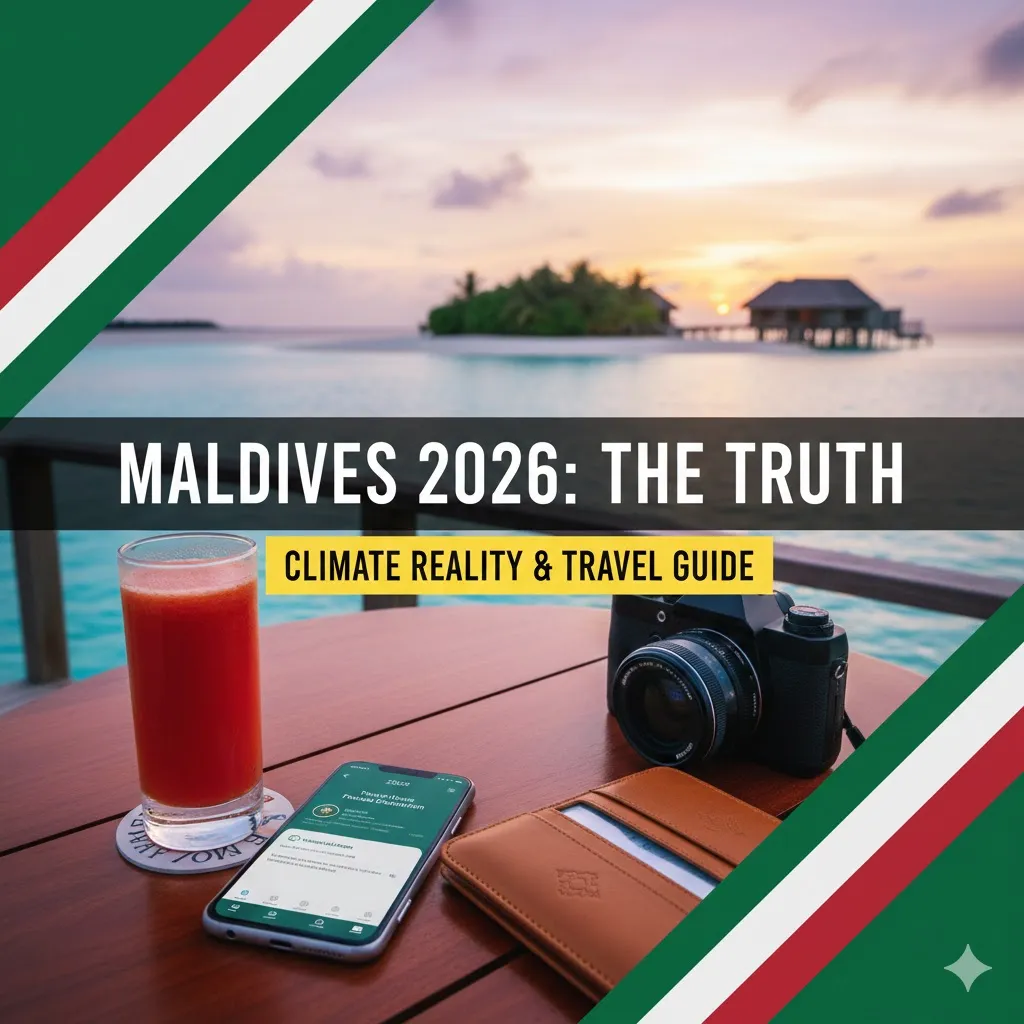
Is the Maldives Really Sinking? The Truth About Visiting in 2026
The short answer: Yes, the Maldives is experiencing sea level rise and facing serious climate threats—but no, it's not "sinking underwater" in 2026, and the country remains safe and accessible for visitors. However, understanding the real environmental challenges is crucial for responsible tourism and informed travel decisions.
The Maldives, the world's lowest-lying country with an average ground elevation of just 1.5 meters (4 feet 11 inches) above sea level, has become the poster child for climate change impacts. Dramatic headlines claim the island nation will "disappear by 2050" or is "sinking into the ocean." But what's the actual reality for travelers considering a Maldives vacation in 2026?
This comprehensive guide separates fact from fiction about the Maldives' environmental situation, explains the real science behind sea level rise, explores what the government and resorts are doing to adapt, and provides honest information about visiting this vulnerable paradise in 2026. Whether you're concerned about the ethics of visiting, the safety of your trip, or simply want to understand the truth behind the headlines, this article provides evidence-based answers.
The Science: Is the Maldives Actually Sinking?
Understanding Sea Level Rise
The Maldives faces a dual threat from climate change:
- Global sea level rise: Oceans are rising approximately 3.4 mm per year globally due to thermal expansion and melting ice caps
- Land subsidence: Some islands are naturally sinking due to geological processes
- Combined effect: Relative sea level rise is approximately 4-5 mm per year in the Maldives region
- 👉 Solo Female Travel in Thailand: 2026 Safety & Empowerment Guide
- 👉 Seoul City Guide 2026: Exploring Gyeongbokgung, Myeongdong and Beyond
- 👉 Budget vs Luxury All-Inclusive Central Asia Packages 2026
The Reality Check:
While these numbers sound alarming, context matters:
- Not sinking overnight: The Maldives is not rapidly submerging; changes occur gradually over decades
- Varied impacts: Some islands experience more erosion than others
- Adaptation efforts: The government and resorts are actively implementing protective measures
- Current status (2026): The Maldives remains fully habitable and operational for tourism
- 👉 Solo Female Travel in Thailand: 2026 Safety & Empowerment Guide
- 👉 Seoul City Guide 2026: Exploring Gyeongbokgung, Myeongdong and Beyond
- 👉 Budget vs Luxury All-Inclusive Central Asia Packages 2026
What the Data Shows
According to scientific measurements:
- Highest point: 2.4 meters (7 feet 10 inches) above sea level
- Lowest point: Sea level (Indian Ocean)
- 80% of land area: Less than 1 meter above sea level
- Projected rise by 2100: 0.5-1 meter (depending on emissions scenarios)
- 👉 Solo Female Travel in Thailand: 2026 Safety & Empowerment Guide
- 👉 Seoul City Guide 2026: Exploring Gyeongbokgung, Myeongdong and Beyond
- 👉 Budget vs Luxury All-Inclusive Central Asia Packages 2026
Key Insight: The Maldives won't "disappear" in 2026 or even 2050. However, long-term projections suggest significant challenges by the end of the century without dramatic climate action and adaptation measures.
Visible Climate Impacts in 2026
What Travelers Actually See
Visitors to the Maldives in 2026 will notice:
1. Coastal Erosion
- Some islands show visible beach erosion, particularly on eastern shores
- Many resorts have installed seawalls and coral barriers
- Beach nourishment projects actively rebuild eroded areas
- Some smaller, uninhabited islands have shrunk noticeably
- 👉 Solo Female Travel in Thailand: 2026 Safety & Empowerment Guide
- 👉 Seoul City Guide 2026: Exploring Gyeongbokgung, Myeongdong and Beyond
- 👉 Budget vs Luxury All-Inclusive Central Asia Packages 2026
2. King Tides and Flooding
- Occasional "king tide" events cause temporary flooding during full/new moons
- Low-lying areas of Male' and some local islands experience water intrusion
- Resort islands typically have elevated infrastructure to prevent flooding
- Flooding is temporary, not permanent submersion
- 👉 Solo Female Travel in Thailand: 2026 Safety & Empowerment Guide
- 👉 Seoul City Guide 2026: Exploring Gyeongbokgung, Myeongdong and Beyond
- 👉 Budget vs Luxury All-Inclusive Central Asia Packages 2026
3. Coral Bleaching
- Ocean warming has caused periodic coral bleaching events
- Many resorts operate coral restoration programs
- Some house reefs show damage; others remain healthy
- Marine life remains abundant despite challenges
- 👉 Solo Female Travel in Thailand: 2026 Safety & Empowerment Guide
- 👉 Seoul City Guide 2026: Exploring Gyeongbokgung, Myeongdong and Beyond
- 👉 Budget vs Luxury All-Inclusive Central Asia Packages 2026
4. Saltwater Intrusion
- Freshwater lenses (underground freshwater sources) are thinning on some islands
- Many islands now rely on desalination plants
- Local islands face greater challenges than resort islands
- 👉 Solo Female Travel in Thailand: 2026 Safety & Empowerment Guide
- 👉 Seoul City Guide 2026: Exploring Gyeongbokgung, Myeongdong and Beyond
- 👉 Budget vs Luxury All-Inclusive Central Asia Packages 2026
What You WON'T See:
- Islands actively disappearing underwater
- Widespread permanent flooding
- Abandoned resorts or evacuated islands (in tourist areas)
- Immediate danger to visitors
- 👉 Solo Female Travel in Thailand: 2026 Safety & Empowerment Guide
- 👉 Seoul City Guide 2026: Exploring Gyeongbokgung, Myeongdong and Beyond
- 👉 Budget vs Luxury All-Inclusive Central Asia Packages 2026
Government and Resort Adaptation Strategies
Maldives Government Initiatives
The Maldivian government is implementing ambitious adaptation measures:
1. Hulhumalé - The Artificial Island
- Elevation: Built 2 meters above sea level (higher than natural islands)
- Purpose: Relocation site for residents of vulnerable islands
- Status (2026): Phase 1 complete, housing 50,000+ residents
- Future: Phase 2 under construction
- 👉 Solo Female Travel in Thailand: 2026 Safety & Empowerment Guide
- 👉 Seoul City Guide 2026: Exploring Gyeongbokgung, Myeongdong and Beyond
- 👉 Budget vs Luxury All-Inclusive Central Asia Packages 2026
2. Sea Walls and Coastal Protection
- Seawalls constructed around Male' and other populated islands
- Breakwaters and revetments protect vulnerable coastlines
- Nature-based solutions: mangrove restoration, coral reef protection
- 👉 Solo Female Travel in Thailand: 2026 Safety & Empowerment Guide
- 👉 Seoul City Guide 2026: Exploring Gyeongbokgung, Myeongdong and Beyond
- 👉 Budget vs Luxury All-Inclusive Central Asia Packages 2026
3. International Advocacy
- Maldives is a vocal advocate for climate action at UN climate summits
- Pushing for global temperature limits of 1.5°C
- Seeking climate finance for adaptation projects
- 👉 Solo Female Travel in Thailand: 2026 Safety & Empowerment Guide
- 👉 Seoul City Guide 2026: Exploring Gyeongbokgung, Myeongdong and Beyond
- 👉 Budget vs Luxury All-Inclusive Central Asia Packages 2026
Resort Industry Response
The tourism sector, contributing 28% of GDP, is investing heavily in sustainability:
1. Sustainable Resort Design
- Elevated structures on stilts to accommodate sea level rise
- Renewable energy: solar panels, wind turbines
- Desalination plants for freshwater
- Advanced wastewater treatment and recycling
- 👉 Solo Female Travel in Thailand: 2026 Safety & Empowerment Guide
- 👉 Seoul City Guide 2026: Exploring Gyeongbokgung, Myeongdong and Beyond
- 👉 Budget vs Luxury All-Inclusive Central Asia Packages 2026
2. Coral Restoration Programs
- Many resorts operate coral nurseries
- Coral transplantation and reef rehabilitation
- Guest participation programs (voluntourism)
- Marine protected areas around resorts
- 👉 Solo Female Travel in Thailand: 2026 Safety & Empowerment Guide
- 👉 Seoul City Guide 2026: Exploring Gyeongbokgung, Myeongdong and Beyond
- 👉 Budget vs Luxury All-Inclusive Central Asia Packages 2026
3. Carbon Neutrality Goals
- Maldives pledged carbon neutrality by 2030
- Resorts investing in renewable energy
- Electric boats replacing diesel vessels
- Waste reduction and recycling programs
- 👉 Solo Female Travel in Thailand: 2026 Safety & Empowerment Guide
- 👉 Seoul City Guide 2026: Exploring Gyeongbokgung, Myeongdong and Beyond
- 👉 Budget vs Luxury All-Inclusive Central Asia Packages 2026
4. Innovative Architecture
- Floating structures and amphibious architecture
- Underwater restaurants (already operational)
- Climate-resilient building materials
- 👉 Solo Female Travel in Thailand: 2026 Safety & Empowerment Guide
- 👉 Seoul City Guide 2026: Exploring Gyeongbokgung, Myeongdong and Beyond
- 👉 Budget vs Luxury All-Inclusive Central Asia Packages 2026
Should You Visit the Maldives in 2026?
Ethical Considerations
This is a complex question with valid arguments on both sides:
Arguments FOR Visiting:
- Economic necessity: Tourism employs 60% of the workforce and provides essential income for adaptation measures
- Awareness: Visitors become climate advocates after witnessing impacts firsthand
- Supporting sustainability: Many resorts use tourism revenue to fund environmental programs
- Cultural exchange: Supporting local communities and preserving Maldivian culture
- It's still here: The Maldives remains a functioning, beautiful destination worth experiencing
- 👉 Solo Female Travel in Thailand: 2026 Safety & Empowerment Guide
- 👉 Seoul City Guide 2026: Exploring Gyeongbokgung, Myeongdong and Beyond
- 👉 Budget vs Luxury All-Inclusive Central Asia Packages 2026
Arguments for CAUTION:
- Carbon footprint: Long-haul flights contribute to the very problem threatening the Maldives
- Resource consumption: Luxury resorts consume significant water and energy
- Greenwashing concerns: Not all "eco-resorts" are truly sustainable
- Equity issues: Luxury tourism while locals face climate impacts
- 👉 Solo Female Travel in Thailand: 2026 Safety & Empowerment Guide
- 👉 Seoul City Guide 2026: Exploring Gyeongbokgung, Myeongdong and Beyond
- 👉 Budget vs Luxury All-Inclusive Central Asia Packages 2026
Balanced Perspective:
If you choose to visit, do so responsibly:
- Choose certified eco-resorts with genuine sustainability practices
- Offset your carbon emissions from flights
- Stay longer to justify the carbon footprint of travel
- Support local islands and community-based tourism
- Participate in conservation activities
- Respect marine life and coral reefs
- Minimize water and energy consumption
- 👉 Solo Female Travel in Thailand: 2026 Safety & Empowerment Guide
- 👉 Seoul City Guide 2026: Exploring Gyeongbokgung, Myeongdong and Beyond
- 👉 Budget vs Luxury All-Inclusive Central Asia Packages 2026
What to Expect When Visiting in 2026
Infrastructure and Safety
Safety: The Maldives is completely safe for tourists in 2026:
- No immediate danger from sea level rise
- Resorts have emergency protocols for extreme weather
- Modern infrastructure and medical facilities
- Stable government and tourism industry
- Well-developed evacuation procedures if needed
- 👉 Solo Female Travel in Thailand: 2026 Safety & Empowerment Guide
- 👉 Seoul City Guide 2026: Exploring Gyeongbokgung, Myeongdong and Beyond
- 👉 Budget vs Luxury All-Inclusive Central Asia Packages 2026
What's Different from Previous Years:
- More sustainability focus: Resorts emphasize environmental practices
- Higher prices: Sustainability investments increase costs
- Better technology: Solar power, desalination, waste management
- Educational programs: Many resorts offer climate education for guests
- Visible adaptation: Seawalls, elevated structures, coral restoration visible
- 👉 Solo Female Travel in Thailand: 2026 Safety & Empowerment Guide
- 👉 Seoul City Guide 2026: Exploring Gyeongbokgung, Myeongdong and Beyond
- 👉 Budget vs Luxury All-Inclusive Central Asia Packages 2026
What's the Same:
- Stunning natural beauty
- World-class diving and snorkeling
- Luxury resort experience
- Warm hospitality
- Crystal-clear waters
- Abundant marine life
- 👉 Solo Female Travel in Thailand: 2026 Safety & Empowerment Guide
- 👉 Seoul City Guide 2026: Exploring Gyeongbokgung, Myeongdong and Beyond
- 👉 Budget vs Luxury All-Inclusive Central Asia Packages 2026
Best Practices for Responsible Tourism
Choosing Your Resort
Look for these certifications and practices:
- Green Globe Certification or similar eco-certifications
- Renewable energy: Solar panels, wind power
- Water conservation: Desalination, rainwater harvesting, greywater recycling
- Waste management: Comprehensive recycling, composting, minimal single-use plastics
- Coral restoration: Active reef protection and restoration programs
- Local employment: Hiring and training Maldivian staff
- Community support: Contributing to local island development
- 👉 Solo Female Travel in Thailand: 2026 Safety & Empowerment Guide
- 👉 Seoul City Guide 2026: Exploring Gyeongbokgung, Myeongdong and Beyond
- 👉 Budget vs Luxury All-Inclusive Central Asia Packages 2026
Recommended Eco-Resorts (2026):
- Soneva Fushi (pioneer in sustainability)
- Barefoot Eco Hotel (carbon-neutral operations)
- Gili Lankanfushi (sustainable luxury)
- Six Senses Laamu (marine conservation focus)
- Conrad Maldives Rangali Island (coral restoration)
- 👉 Solo Female Travel in Thailand: 2026 Safety & Empowerment Guide
- 👉 Seoul City Guide 2026: Exploring Gyeongbokgung, Myeongdong and Beyond
- 👉 Budget vs Luxury All-Inclusive Central Asia Packages 2026
During Your Stay
Do:
- Use reef-safe sunscreen (many resorts provide it)
- Participate in coral planting or beach cleanups
- Conserve water (take shorter showers)
- Turn off AC and lights when leaving your villa
- Respect marine life (don't touch coral or chase turtles)
- Choose sustainable dining options (local, seasonal)
- Learn about climate impacts from resort naturalists
- 👉 Solo Female Travel in Thailand: 2026 Safety & Empowerment Guide
- 👉 Seoul City Guide 2026: Exploring Gyeongbokgung, Myeongdong and Beyond
- 👉 Budget vs Luxury All-Inclusive Central Asia Packages 2026
Don't:
- Collect shells, coral, or marine life as souvenirs
- Use single-use plastics (bring a reusable water bottle)
- Feed fish or marine animals
- Anchor on coral reefs
- Waste water or electricity
- Ignore resort sustainability guidelines
- 👉 Solo Female Travel in Thailand: 2026 Safety & Empowerment Guide
- 👉 Seoul City Guide 2026: Exploring Gyeongbokgung, Myeongdong and Beyond
- 👉 Budget vs Luxury All-Inclusive Central Asia Packages 2026
Alternative Destinations to Consider
If you're concerned about the ethics of visiting the Maldives, consider these alternatives:
Similar Experiences, Lower Climate Impact:
- Seychelles: Higher elevation islands, similar beach experience
- Mauritius: More elevation, diverse activities beyond beaches
- Fiji: Higher islands, strong sustainability initiatives
- Palau: Leader in marine conservation, higher elevation
- French Polynesia: Similar overwater bungalows, some higher islands
- 👉 Solo Female Travel in Thailand: 2026 Safety & Empowerment Guide
- 👉 Seoul City Guide 2026: Exploring Gyeongbokgung, Myeongdong and Beyond
- 👉 Budget vs Luxury All-Inclusive Central Asia Packages 2026
Why These Matter:
- Higher elevation = less immediate climate threat
- Often more affordable
- Diverse ecosystems beyond coral reefs
- Still support island economies
- 👉 Solo Female Travel in Thailand: 2026 Safety & Empowerment Guide
- 👉 Seoul City Guide 2026: Exploring Gyeongbokgung, Myeongdong and Beyond
- 👉 Budget vs Luxury All-Inclusive Central Asia Packages 2026
The Future: What Happens After 2026?
Short-Term (2026-2040)
- Continued gradual sea level rise (3-5mm/year)
- Increased investment in adaptation infrastructure
- More frequent king tide flooding events
- Tourism industry remains viable and important
- Coral bleaching events may increase
- Desalination becomes standard on all islands
- 👉 Solo Female Travel in Thailand: 2026 Safety & Empowerment Guide
- 👉 Seoul City Guide 2026: Exploring Gyeongbokgung, Myeongdong and Beyond
- 👉 Budget vs Luxury All-Inclusive Central Asia Packages 2026
Medium-Term (2040-2070)
- Sea level rise accelerates if emissions continue
- Some low-lying islands may become uninhabitable
- Relocation to Hulhumalé and other elevated areas increases
- Floating architecture becomes more common
- Tourism adapts with elevated infrastructure
- International climate action critical for survival
- 👉 Solo Female Travel in Thailand: 2026 Safety & Empowerment Guide
- 👉 Seoul City Guide 2026: Exploring Gyeongbokgung, Myeongdong and Beyond
- 👉 Budget vs Luxury All-Inclusive Central Asia Packages 2026
Long-Term (2070-2100)
- Existential threat if global warming exceeds 2°C
- Potential for significant land loss
- Massive adaptation or relocation may be necessary
- Maldives may need to purchase land in other countries
- Cultural preservation becomes critical issue
- Global climate action determines survival
- 👉 Solo Female Travel in Thailand: 2026 Safety & Empowerment Guide
- 👉 Seoul City Guide 2026: Exploring Gyeongbokgung, Myeongdong and Beyond
- 👉 Budget vs Luxury All-Inclusive Central Asia Packages 2026
The Bottom Line:
The Maldives' future depends primarily on global climate action, not individual tourism decisions. The country needs international cooperation to limit warming to 1.5°C, combined with continued adaptation investments.
Common Questions from Travelers
Q: Will the Maldives be underwater by 2030?
A: No. This is a common misconception. While sea levels are rising, the Maldives won't be completely underwater by 2030 or even 2050. The timeline for complete submersion, if it occurs, is more likely end of century (2100) and depends entirely on global emissions reductions.
Q: Is it ethical to visit the Maldives given climate change?
A: This is a personal decision with valid arguments on both sides. Tourism provides essential income for adaptation measures and employs 60% of the workforce. However, flights have a carbon footprint. If you visit, choose eco-certified resorts, offset your carbon, stay longer, and travel responsibly.
Q: Are resorts doing enough to address climate change?
A: Many resorts are implementing impressive sustainability measures (solar power, desalination, coral restoration, waste reduction). However, the luxury resort model inherently consumes significant resources. Look for certified eco-resorts and ask about their specific sustainability practices.
Q: What's the best time to visit considering climate impacts?
A: The Maldives is visitable year-round. Dry season (November-April) offers best weather. However, visiting during shoulder seasons (May, October) can be less crowded and still enjoyable. Avoid monsoon season (June-September) if concerned about weather disruptions.
Q: Should I be worried about my safety?
A: No. The Maldives is safe for tourists. Resorts have emergency protocols, modern infrastructure, and the government prioritizes tourist safety. Sea level rise is a long-term challenge, not an immediate danger to visitors.
Q: Can I help while visiting?
A: Yes! Participate in coral restoration programs, beach cleanups, choose eco-resorts, minimize your environmental footprint, educate yourself and others about climate impacts, and consider donating to Maldivian conservation organizations.
Conclusion: The Complex Truth
The Maldives is sinking—but not in the way headlines suggest.
The reality is nuanced: sea levels are rising, the country faces serious long-term threats, and urgent global climate action is needed. However, the Maldives is not disappearing in 2026, remains safe for visitors, and continues to offer one of the world's most spectacular travel experiences.
For travelers in 2026:
- The Maldives is safe, beautiful, and accessible
- Climate impacts are visible but not catastrophic
- Resorts are actively adapting and investing in sustainability
- Your visit can support the local economy and conservation efforts
- Traveling responsibly is essential
- 👉 Solo Female Travel in Thailand: 2026 Safety & Empowerment Guide
- 👉 Seoul City Guide 2026: Exploring Gyeongbokgung, Myeongdong and Beyond
- 👉 Budget vs Luxury All-Inclusive Central Asia Packages 2026
The bigger picture:
The Maldives' survival depends on global action to reduce carbon emissions, not on whether individual tourists visit. The country needs international support, climate finance, and ambitious emissions reductions worldwide.
If you choose to visit, do so with awareness, respect, and a commitment to minimizing your environmental impact. Witness the beauty, understand the vulnerability, and become an advocate for climate action. That's the most meaningful contribution any visitor can make.
The Maldives isn't sinking beneath the waves in 2026—but without global climate action, its long-term future remains uncertain. Visit responsibly, learn deeply, and advocate fiercely.
Disclaimer: This article is based on current scientific data and projections as of 2026. Climate science continues to evolve, and sea level rise projections may be updated. Always check current travel advisories and resort sustainability practices before booking. Individual resort environmental practices vary significantly; research thoroughly before booking.
0 Comments