.webp)
.webp)
Introduction: Discovering the Crown Jewel of Cambodia
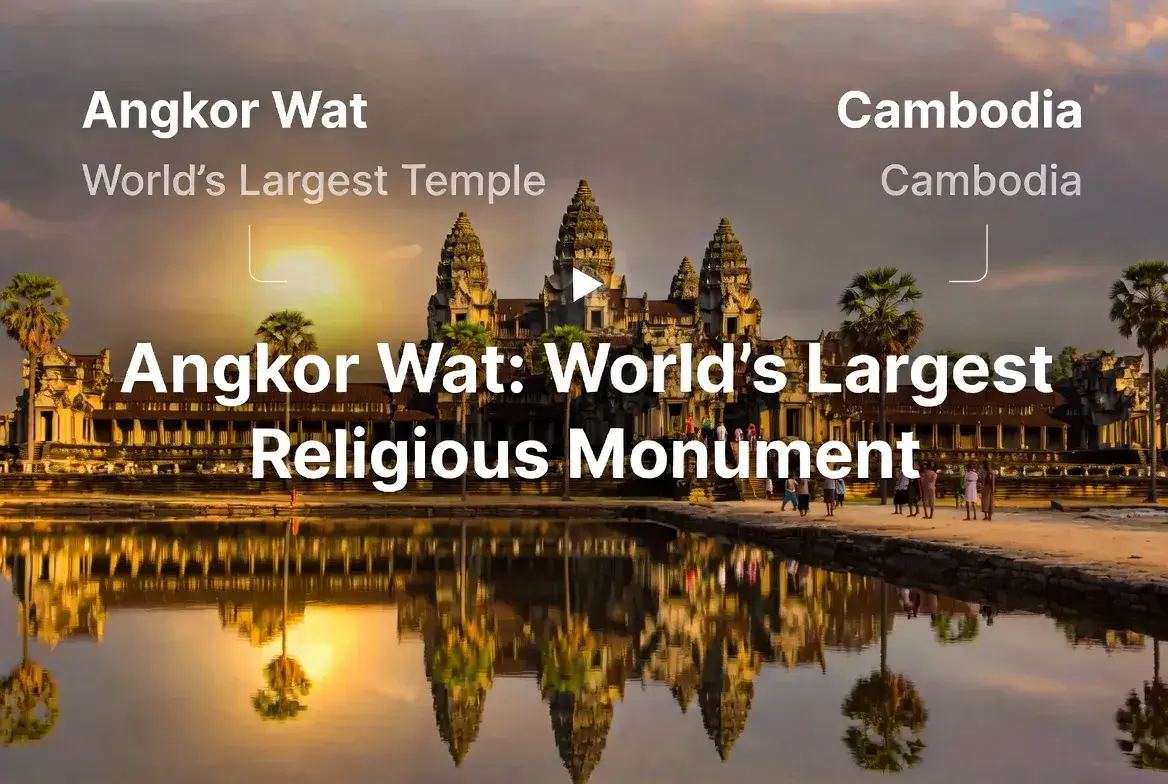
Angkor Wat stands as one of humanity's most extraordinary architectural achievements—a temple complex so vast and magnificent that it defies comprehension. Built in the early 12th century by King Suryavarman II as a Hindu temple dedicated to Vishnu, this UNESCO World Heritage Site has evolved into both a Buddhist place of worship and Cambodia's most iconic symbol, appearing on the national flag. As the world's largest religious monument, Angkor Wat spans an impressive 162.6 hectares (402 acres) and represents the pinnacle of Khmer architecture.
For travelers visiting Cambodia, exploring Angkor Wat is not just a sightseeing activity—it's a spiritual and historical journey through centuries of Southeast Asian civilization. The temple complex, located just 5.5 kilometers north of modern-day Siem Reap, serves as the centerpiece of the larger Angkor Archaeological Park, which contains the magnificent remains of the different capitals of the Khmer Empire.
This comprehensive guide will take you through everything you need to know about exploring Angkor Wat in 2026, from practical visiting information and ticket details to the best photography spots, hidden temples within the complex, and the profound historical significance that makes this monument one of the Seven Wonders of the World.
The History and Architecture of Angkor Wat

Origins and Construction
Angkor Wat was constructed between 1113 and 1150 CE during the reign of King Suryavarman II, one of the greatest kings of the Khmer Empire. Originally built as a Hindu temple dedicated to the god Vishnu, it represented a departure from previous Shaiva temples in the region. The temple was designed to represent Mount Meru, the home of the devas in Hindu mythology, with its five towers symbolizing the mountain's five peaks.
The construction of Angkor Wat required an enormous workforce and resources. Historians estimate that over 300,000 laborers and 6,000 elephants were involved in the construction, along with thousands of skilled artisans, architects, and sculptors. The sandstone blocks used to build the temple were quarried from the Kulen Mountains, approximately 40 kilometers away, and transported via a network of canals and the Siem Reap River.
Architectural Marvel
The temple's architecture represents the high classical style of Khmer architecture, also known as the Angkor Wat style. The complex is designed as a microcosm of the universe, divided into three levels:
- The outer wall: Represents the mountains at the edge of the world
- The middle level: Represents the earthly realm
- The inner sanctuary: Represents Mount Meru, home of the gods
- 👉 Is Myanmar Safe for US Tourists in 2026? A Real-Time Security Analysis.
- 👉 Afghanistan Drone Laws 2026 and Archaeological Filming Permits Guide
- 👉 Taiwan: Bloomberg's #1 Safest Solo Travel Destination 2026
The temple's most striking feature is its five lotus-bud towers, with the central tower rising 65 meters (213 feet) above the ground. The entire complex is surrounded by a massive moat 190 meters wide and an outer wall measuring 1,024 meters by 802 meters. The precision of the temple's alignment is remarkable—the main tower is aligned to the west, unusual for most Angkorian temples, which has led to debates among scholars about whether it was intended as a funerary temple.
Transformation to Buddhism
By the end of the 12th century, Angkor Wat gradually transformed from a Hindu temple to a Buddhist temple. This transition occurred as Buddhism gained prominence in the region. Rather than destroying the Hindu imagery, Buddhist practitioners adapted the temple, adding Buddhist statues and imagery while preserving much of the original Hindu bas-reliefs. Today, Angkor Wat serves as an active Buddhist temple, with monks conducting daily prayers and ceremonies.
Planning Your Visit: Essential Information

Angkor Archaeological Park Tickets
To visit Angkor Wat, you must purchase an Angkor Archaeological Park pass. The ticket system was updated in recent years to include biometric photos and is strictly enforced. Here are the current ticket options for 2026:
- 1-Day Pass: $37 USD - Valid for one day within a week of purchase
- 3-Day Pass: $62 USD - Valid for three days within a week
- 7-Day Pass: $72 USD - Valid for seven days within a month
- 👉 Is Myanmar Safe for US Tourists in 2026? A Real-Time Security Analysis.
- 👉 Afghanistan Drone Laws 2026 and Archaeological Filming Permits Guide
- 👉 Taiwan: Bloomberg's #1 Safest Solo Travel Destination 2026
Ticket Purchase Information:
- Location: Angkor Ticket Counter on Charles de Gaulle Road, Siem Reap
- Hours: 5:00 AM - 5:30 PM daily
- Photo: Your photo is taken at the time of purchase
- Validity: Passes are non-transferable and must be carried at all times
- Children: Free for children under 12 years old
- 👉 Is Myanmar Safe for US Tourists in 2026? A Real-Time Security Analysis.
- 👉 Afghanistan Drone Laws 2026 and Archaeological Filming Permits Guide
- 👉 Taiwan: Bloomberg's #1 Safest Solo Travel Destination 2026
Best Time to Visit
Seasonal Considerations:
Dry Season (November to March):
- Weather: Cool and dry, temperatures 20-30°C (68-86°F)
- Advantages: Pleasant temperatures, clear skies, ideal for photography
- Disadvantages: Peak tourist season, larger crowds, higher prices
- Best months: November, December, January
- 👉 Is Myanmar Safe for US Tourists in 2026? A Real-Time Security Analysis.
- 👉 Afghanistan Drone Laws 2026 and Archaeological Filming Permits Guide
- 👉 Taiwan: Bloomberg's #1 Safest Solo Travel Destination 2026
Hot Season (March to May):
- Weather: Very hot, temperatures can exceed 35°C (95°F)
- Advantages: Fewer tourists, lower accommodation prices
- Disadvantages: Extreme heat, challenging for extended exploration
- Best for: Early morning visits only
- 👉 Is Myanmar Safe for US Tourists in 2026? A Real-Time Security Analysis.
- 👉 Afghanistan Drone Laws 2026 and Archaeological Filming Permits Guide
- 👉 Taiwan: Bloomberg's #1 Safest Solo Travel Destination 2026
Rainy Season (May to October):
- Weather: Frequent afternoon showers, high humidity
- Advantages: Lush greenery, dramatic skies, fewer crowds, reflection pools full
- Disadvantages: Unpredictable rain, muddy paths, some areas may flood
- Best months: September, October (end of rainy season)
- 👉 Is Myanmar Safe for US Tourists in 2026? A Real-Time Security Analysis.
- 👉 Afghanistan Drone Laws 2026 and Archaeological Filming Permits Guide
- 👉 Taiwan: Bloomberg's #1 Safest Solo Travel Destination 2026
Opening Hours
Angkor Wat is open from 5:00 AM to 5:30 PM daily. The early opening time allows visitors to witness the spectacular sunrise, one of the most iconic experiences at Angkor Wat. The temple complex remains accessible until sunset, though individual structures may have varying closing times.
Getting to Angkor Wat

From Siem Reap
Siem Reap, the gateway city to Angkor Wat, is located approximately 5.5 kilometers south of the temple complex. Here are your transportation options:
Tuk-Tuk:
- Cost: $15-20 USD for a full day
- Duration: 15-20 minutes from Siem Reap
- Advantages: Affordable, authentic experience, drivers know the area well
- Best for: Small groups (1-3 people)
- 👉 Is Myanmar Safe for US Tourists in 2026? A Real-Time Security Analysis.
- 👉 Afghanistan Drone Laws 2026 and Archaeological Filming Permits Guide
- 👉 Taiwan: Bloomberg's #1 Safest Solo Travel Destination 2026
Private Car with Driver:
- Cost: $25-40 USD per day
- Duration: 15 minutes from Siem Reap
- Advantages: Air-conditioned comfort, more space, flexible schedule
- Best for: Families, hot weather, full-day temple tours
- 👉 Is Myanmar Safe for US Tourists in 2026? A Real-Time Security Analysis.
- 👉 Afghanistan Drone Laws 2026 and Archaeological Filming Permits Guide
- 👉 Taiwan: Bloomberg's #1 Safest Solo Travel Destination 2026
Bicycle:
- Cost: $2-5 USD per day rental
- Duration: 30-40 minutes cycling
- Advantages: Eco-friendly, exercise, flexibility
- Best for: Fit travelers, dry season, experienced cyclists
- 👉 Is Myanmar Safe for US Tourists in 2026? A Real-Time Security Analysis.
- 👉 Afghanistan Drone Laws 2026 and Archaeological Filming Permits Guide
- 👉 Taiwan: Bloomberg's #1 Safest Solo Travel Destination 2026
Motorbike/Scooter:
- Cost: $10-15 USD per day rental
- Duration: 15 minutes from Siem Reap
- Advantages: Independence, speed, affordability
- Requirements: Valid driver's license, helmet required
- 👉 Is Myanmar Safe for US Tourists in 2026? A Real-Time Security Analysis.
- 👉 Afghanistan Drone Laws 2026 and Archaeological Filming Permits Guide
- 👉 Taiwan: Bloomberg's #1 Safest Solo Travel Destination 2026
International Access
Siem Reap International Airport (SAI):
- Distance: 12 kilometers from Siem Reap city center
- Airlines: Multiple international carriers including Bangkok Airways, Singapore Airlines, AirAsia, and others
- Transfer: Taxi or tuk-tuk to Siem Reap ($10-15)
- 👉 Is Myanmar Safe for US Tourists in 2026? A Real-Time Security Analysis.
- 👉 Afghanistan Drone Laws 2026 and Archaeological Filming Permits Guide
- 👉 Taiwan: Bloomberg's #1 Safest Solo Travel Destination 2026
Land Borders:
- From Thailand: Poipet/Aranyaprathet border crossing
- From Vietnam: Bavet/Moc Bai or other crossings
- Bus services: Regular buses from Bangkok, Ho Chi Minh City, Phnom Penh
- 👉 Is Myanmar Safe for US Tourists in 2026? A Real-Time Security Analysis.
- 👉 Afghanistan Drone Laws 2026 and Archaeological Filming Permits Guide
- 👉 Taiwan: Bloomberg's #1 Safest Solo Travel Destination 2026
Exploring the Temple Complex

The Outer Wall and Moat
Your journey begins at the western entrance, where you'll cross a laterite causeway spanning the massive moat. The moat, 190 meters wide and 4 kilometers long, represents the mythical oceans surrounding Mount Meru. As you approach, notice the impressive scale of the outer wall, which measures 1,024 meters by 802 meters.
The Western Gopura (Entrance Tower):
The main western entrance features a three-tiered gopura (entrance tower) with three crumbling towers. This is where you'll present your Angkor Pass for inspection. The gopura itself is an architectural masterpiece, showcasing the intricate design that characterizes the entire complex.
The Outer Gallery and Bas-Reliefs
One of Angkor Wat's most remarkable features is its extensive bas-relief galleries, which contain some of the world's longest continuous bas-relief narratives. The outer gallery walls measure nearly 800 meters in length and depict various Hindu epics and historical scenes.
Key Bas-Relief Sections:
South Gallery - West Wing:
- Subject: Battle of Kurukshetra from the Mahabharata
- Description: Epic battle scene showing armies clashing, with intricate details of warriors, elephants, and chariots
- Highlights: Over 2,000 figures depicted in dynamic action
- 👉 Is Myanmar Safe for US Tourists in 2026? A Real-Time Security Analysis.
- 👉 Afghanistan Drone Laws 2026 and Archaeological Filming Permits Guide
- 👉 Taiwan: Bloomberg's #1 Safest Solo Travel Destination 2026
South Gallery - East Wing:
- Subject: Battle of Lanka from the Ramayana
- Description: Depicts the battle between Rama and Ravana
- Highlights: Dramatic scenes of monkey armies and demon forces
- 👉 Is Myanmar Safe for US Tourists in 2026? A Real-Time Security Analysis.
- 👉 Afghanistan Drone Laws 2026 and Archaeological Filming Permits Guide
- 👉 Taiwan: Bloomberg's #1 Safest Solo Travel Destination 2026
West Gallery - South Wing:
- Subject: Churning of the Ocean of Milk
- Description: One of the most famous reliefs showing 92 asuras and 88 devas churning the ocean
- Highlights: Central figure of Vishnu, emergence of apsaras, various mythological creatures
- 👉 Is Myanmar Safe for US Tourists in 2026? A Real-Time Security Analysis.
- 👉 Afghanistan Drone Laws 2026 and Archaeological Filming Permits Guide
- 👉 Taiwan: Bloomberg's #1 Safest Solo Travel Destination 2026
West Gallery - North Wing:
- Subject: Battle of Vishnu vs. Asuras
- Description: Victory of Vishnu over demon forces
- Highlights: Dynamic composition showing divine victory
- 👉 Is Myanmar Safe for US Tourists in 2026? A Real-Time Security Analysis.
- 👉 Afghanistan Drone Laws 2026 and Archaeological Filming Permits Guide
- 👉 Taiwan: Bloomberg's #1 Safest Solo Travel Destination 2026
North Gallery - West Wing:
- Subject: Battle of Devas and Asuras
- Description: Cosmic battle between gods and demons
- 👉 Is Myanmar Safe for US Tourists in 2026? A Real-Time Security Analysis.
- 👉 Afghanistan Drone Laws 2026 and Archaeological Filming Permits Guide
- 👉 Taiwan: Bloomberg's #1 Safest Solo Travel Destination 2026
North Gallery - East Wing:
- Subject: Historical procession of King Suryavarman II
- Description: The only historical (non-mythological) relief showing the king
- Highlights: Royal procession with parasols, fans, and military forces
- 👉 Is Myanmar Safe for US Tourists in 2026? A Real-Time Security Analysis.
- 👉 Afghanistan Drone Laws 2026 and Archaeological Filming Permits Guide
- 👉 Taiwan: Bloomberg's #1 Safest Solo Travel Destination 2026
East Gallery - North Wing:
- Subject: Churning of the Ocean of Milk (continuation)
- 👉 Is Myanmar Safe for US Tourists in 2026? A Real-Time Security Analysis.
- 👉 Afghanistan Drone Laws 2026 and Archaeological Filming Permits Guide
- 👉 Taiwan: Bloomberg's #1 Safest Solo Travel Destination 2026
East Gallery - South Wing:
- Subject: Victory of Krishna over Bana
- Description: Krishna's victory in battle
- 👉 Is Myanmar Safe for US Tourists in 2026? A Real-Time Security Analysis.
- 👉 Afghanistan Drone Laws 2026 and Archaeological Filming Permits Guide
- 👉 Taiwan: Bloomberg's #1 Safest Solo Travel Destination 2026
South Gallery - East Wing:
- Subject: Heaven and Hell
- Description: Judgment by Yama, scenes of 32 hells and 37 heavens
- Highlights: Moral lessons depicted through vivid imagery
- 👉 Is Myanmar Safe for US Tourists in 2026? A Real-Time Security Analysis.
- 👉 Afghanistan Drone Laws 2026 and Archaeological Filming Permits Guide
- 👉 Taiwan: Bloomberg's #1 Safest Solo Travel Destination 2026
The Second Level
Climbing to the second level requires navigating steep stairs—a testament to the temple's symbolic representation of the difficulty of reaching the divine realm. The second level features:
- Gallery with columns: Open-air gallery with intricate column carvings
- Apsara carvings: Nearly 2,000 unique apsara (celestial nymph) carvings throughout the temple
- Library buildings: Two cruciform libraries on either side
- Reflection pools: Perfect for photography, especially at sunrise
- 👉 Is Myanmar Safe for US Tourists in 2026? A Real-Time Security Analysis.
- 👉 Afghanistan Drone Laws 2026 and Archaeological Filming Permits Guide
- 👉 Taiwan: Bloomberg's #1 Safest Solo Travel Destination 2026
The Apsaras:
Each apsara carving is unique, featuring different hairstyles, jewelry, poses, and expressions. These celestial dancers were believed to entertain the gods and represent ideal beauty. Take time to observe the incredible variety and artistry of these carvings.
The Upper Level and Central Sanctuary
The third and highest level represents Mount Meru itself and houses the central sanctuary. Access is via extremely steep stairs (40-degree angle), symbolizing the difficulty of reaching the realm of the gods.
Important Notes:
- Dress code: Shoulders and knees must be covered
- Physical requirement: Steep climb not suitable for those with mobility issues or fear of heights
- Capacity: Limited number of visitors allowed at one time
- Hours: Upper level closes at 4:00 PM
- 👉 Is Myanmar Safe for US Tourists in 2026? A Real-Time Security Analysis.
- 👉 Afghanistan Drone Laws 2026 and Archaeological Filming Permits Guide
- 👉 Taiwan: Bloomberg's #1 Safest Solo Travel Destination 2026
The Central Sanctuary:
At the summit, you'll find the central tower surrounded by four smaller towers, forming the iconic five-tower silhouette. Originally housing a statue of Vishnu, the sanctuary now contains Buddhist statues. The view from this level offers panoramic vistas of the entire temple complex and surrounding jungle.
The Iconic Angkor Wat Sunrise

Experiencing One of the World's Great Sunrises
Watching the sunrise at Angkor Wat is a bucket-list experience for millions of travelers. The spectacle of the sun rising behind the temple's five towers, reflected in the reflection pools, creates one of the most photographed scenes in Southeast Asia.
Sunrise Schedule:
- Gates open: 5:00 AM
- Sunrise time: Varies by season (approximately 5:30-6:30 AM)
- Best viewing: 5:30-7:00 AM
- 👉 Is Myanmar Safe for US Tourists in 2026? A Real-Time Security Analysis.
- 👉 Afghanistan Drone Laws 2026 and Archaeological Filming Permits Guide
- 👉 Taiwan: Bloomberg's #1 Safest Solo Travel Destination 2026
Best Sunrise Viewing Locations:
Reflection Pools (Left Side):
- Advantages: Classic postcard view, temple reflection
- Crowds: Very crowded, arrive by 5:15 AM
- Photography: Best for wide-angle shots with reflection
- 👉 Is Myanmar Safe for US Tourists in 2026? A Real-Time Security Analysis.
- 👉 Afghanistan Drone Laws 2026 and Archaeological Filming Permits Guide
- 👉 Taiwan: Bloomberg's #1 Safest Solo Travel Destination 2026
Reflection Pools (Right Side):
- Advantages: Less crowded than left side, similar views
- Photography: Good alternative for reflection shots
- 👉 Is Myanmar Safe for US Tourists in 2026? A Real-Time Security Analysis.
- 👉 Afghanistan Drone Laws 2026 and Archaeological Filming Permits Guide
- 👉 Taiwan: Bloomberg's #1 Safest Solo Travel Destination 2026
Bridge Causeway:
- Advantages: Different perspective, fewer people
- Photography: Good for leading line compositions
- 👉 Is Myanmar Safe for US Tourists in 2026? A Real-Time Security Analysis.
- 👉 Afghanistan Drone Laws 2026 and Archaeological Filming Permits Guide
- 👉 Taiwan: Bloomberg's #1 Safest Solo Travel Destination 2026
Sra Srang (Royal bathing pool):
- Advantages: Less crowded, peaceful atmosphere
- Distance: Further from main temple
- 👉 Is Myanmar Safe for US Tourists in 2026? A Real-Time Security Analysis.
- 👉 Afghanistan Drone Laws 2026 and Archaeological Filming Permits Guide
- 👉 Taiwan: Bloomberg's #1 Safest Solo Travel Destination 2026
Sunrise Photography Tips:
- Arrive early: By 5:15 AM to secure good position
- Tripod: Essential for low-light photography
- Wide-angle lens: Capture entire temple complex
- Telephoto lens: Detail shots of towers
- Bracketing: HDR technique for high contrast scenes
- Include people: Silhouettes add scale and interest
- 👉 Is Myanmar Safe for US Tourists in 2026? A Real-Time Security Analysis.
- 👉 Afghanistan Drone Laws 2026 and Archaeological Filming Permits Guide
- 👉 Taiwan: Bloomberg's #1 Safest Solo Travel Destination 2026
Practical Tips for Visiting Angkor Wat

What to Bring
- Angkor Pass: Must be carried at all times
- Water: At least 2 liters per person (available for purchase but expensive)
- Sunscreen: SPF 50+ recommended
- Hat: Wide-brimmed hat for sun protection
- Comfortable shoes: Closed-toe shoes with good grip for steep stairs
- Light clothing: Breathable fabrics, but must cover shoulders and knees
- Scarf or sarong: For covering up if needed
- Insect repellent: Especially important in rainy season
- Camera: With extra batteries and memory cards
- Cash: Small bills for vendors, tips, water
- Snacks: Energy bars, fruit (respectful consumption only in designated areas)
- 👉 Is Myanmar Safe for US Tourists in 2026? A Real-Time Security Analysis.
- 👉 Afghanistan Drone Laws 2026 and Archaeological Filming Permits Guide
- 👉 Taiwan: Bloomberg's #1 Safest Solo Travel Destination 2026
Dress Code
Angkor Wat is an active religious site, and respectful dress is mandatory:
- Shoulders: Must be covered (no tank tops, sleeveless shirts)
- Knees: Must be covered (no shorts, short skirts)
- Clothing: Light, breathable fabrics recommended due to heat
- Footwear: Comfortable walking shoes; must remove shoes in some areas
- 👉 Is Myanmar Safe for US Tourists in 2026? A Real-Time Security Analysis.
- 👉 Afghanistan Drone Laws 2026 and Archaeological Filming Permits Guide
- 👉 Taiwan: Bloomberg's #1 Safest Solo Travel Destination 2026
Note: Guards actively enforce the dress code. Inappropriate dress will result in denied entry. Scarves and sarongs are available for rent/purchase at the entrance if needed.
Health and Safety
- Hydration: Drink plenty of water; heat exhaustion is common
- Rest: Take breaks in shaded areas
- Steep stairs: Use handrails; climb slowly
- Monkeys: Do not feed or approach; secure belongings
- Valuables: Keep secure; use hotel safe for passports
- First aid: Basic kit recommended
- 👉 Is Myanmar Safe for US Tourists in 2026? A Real-Time Security Analysis.
- 👉 Afghanistan Drone Laws 2026 and Archaeological Filming Permits Guide
- 👉 Taiwan: Bloomberg's #1 Safest Solo Travel Destination 2026
Beyond Angkor Wat: The Greater Angkor Complex

Angkor Thom
Located just north of Angkor Wat, Angkor Thom was the last and most enduring capital city of the Khmer Empire. Built by Jayavarman VII in the late 12th century, this walled city contains several must-see temples:
Bayon Temple:
- Highlight: 216 massive stone faces on 54 towers
- Features: Intricate bas-reliefs depicting daily life and historical events
- Time needed: 2-3 hours
- 👉 Is Myanmar Safe for US Tourists in 2026? A Real-Time Security Analysis.
- 👉 Afghanistan Drone Laws 2026 and Archaeological Filming Permits Guide
- 👉 Taiwan: Bloomberg's #1 Safest Solo Travel Destination 2026
Terrace of the Elephants:
- Features: 350-meter long platform with elephant carvings
- History: Used for public ceremonies and viewing platforms
- 👉 Is Myanmar Safe for US Tourists in 2026? A Real-Time Security Analysis.
- 👉 Afghanistan Drone Laws 2026 and Archaeological Filming Permits Guide
- 👉 Taiwan: Bloomberg's #1 Safest Solo Travel Destination 2026
Terrace of the Leper King:
- Features: Double wall with intricate carvings
- Mystery: Named after a statue possibly depicting Yama or a leper king
- 👉 Is Myanmar Safe for US Tourists in 2026? A Real-Time Security Analysis.
- 👉 Afghanistan Drone Laws 2026 and Archaeological Filming Permits Guide
- 👉 Taiwan: Bloomberg's #1 Safest Solo Travel Destination 2026
Ta Prohm
Famous for the massive trees growing out of the ruins, Ta Prohm offers a hauntingly beautiful glimpse of nature reclaiming ancient structures.
- Highlight: Giant silk-cotton and strangler fig trees intertwined with temple ruins
- History: Built as a Buddhist monastery by Jayavarman VII
- Movie fame: Featured in Tomb Raider (2001)
- Time needed: 1.5-2 hours
- Photography: Best in early morning or late afternoon light
- 👉 Is Myanmar Safe for US Tourists in 2026? A Real-Time Security Analysis.
- 👉 Afghanistan Drone Laws 2026 and Archaeological Filming Permits Guide
- 👉 Taiwan: Bloomberg's #1 Safest Solo Travel Destination 2026
Preah Khan
A sprawling temple complex built by Jayavarman VII, Preah Khan is less crowded than Ta Prohm but equally atmospheric.
- Features: Four-story sanctuary, extensive bas-reliefs, tree-covered ruins
- Size: One of the largest complexes in Angkor
- Time needed: 2-3 hours
- 👉 Is Myanmar Safe for US Tourists in 2026? A Real-Time Security Analysis.
- 👉 Afghanistan Drone Laws 2026 and Archaeological Filming Permits Guide
- 👉 Taiwan: Bloomberg's #1 Safest Solo Travel Destination 2026
Banteay Srei
Located 25 kilometers north of Angkor Wat, Banteay Srei is known as the "Citadel of Women" and features the finest stone carvings in all of Angkor.
- Highlight: Exquisite pink sandstone carvings with incredible detail
- Size: Small but densely decorated
- Distance: 25 km from Angkor Wat (45-minute drive)
- Time needed: 1-2 hours
- Combination: Often combined with visit to Kulen Mountains or Beng Mealea
- 👉 Is Myanmar Safe for US Tourists in 2026? A Real-Time Security Analysis.
- 👉 Afghanistan Drone Laws 2026 and Archaeological Filming Permits Guide
- 👉 Taiwan: Bloomberg's #1 Safest Solo Travel Destination 2026
Suggested Itineraries

One-Day Itinerary (Highlights Only)
For those with limited time, this itinerary covers the absolute must-see temples:
- 5:00 AM: Arrive at Angkor Wat for sunrise
- 7:30 AM: Explore Angkor Wat interior and upper levels
- 10:30 AM: Visit Angkor Thom (South Gate, Bayon Temple)
- 12:30 PM: Lunch break
- 2:00 PM: Explore Ta Prohm
- 4:00 PM: Return to Angkor Wat or visit Pre Rup for sunset
- 👉 Is Myanmar Safe for US Tourists in 2026? A Real-Time Security Analysis.
- 👉 Afghanistan Drone Laws 2026 and Archaeological Filming Permits Guide
- 👉 Taiwan: Bloomberg's #1 Safest Solo Travel Destination 2026
Three-Day Itinerary (Comprehensive)
Day 1: The Classics
- Sunrise at Angkor Wat
- Explore Angkor Wat thoroughly
- Angkor Thom (Bayon, Terraces)
- Ta Prohm
- Sunset at Pre Rup or Phnom Bakheng
- 👉 Is Myanmar Safe for US Tourists in 2026? A Real-Time Security Analysis.
- 👉 Afghanistan Drone Laws 2026 and Archaeological Filming Permits Guide
- 👉 Taiwan: Bloomberg's #1 Safest Solo Travel Destination 2026
Day 2: The Outer Temples
- Sunrise at Sra Srang or Pre Rup
- Preah Khan
- Neak Pean
- Ta Som
- East Mebon
- Banteay Srei (afternoon)
- Sunset at Banteay Srei or return to Angkor Wat
- 👉 Is Myanmar Safe for US Tourists in 2026? A Real-Time Security Analysis.
- 👉 Afghanistan Drone Laws 2026 and Archaeological Filming Permits Guide
- 👉 Taiwan: Bloomberg's #1 Safest Solo Travel Destination 2026
Day 3: Hidden Gems
- Sunrise at Angkor Wat (different angle)
- Ta Keo
- Chau Say Tevoda
- Thommanon
- Banteay Kdei
- Srah Srang
- Preah Khan (if missed on Day 2)
- Sunset at Phnom Bakheng or Pre Rup
- 👉 Is Myanmar Safe for US Tourists in 2026? A Real-Time Security Analysis.
- 👉 Afghanistan Drone Laws 2026 and Archaeological Filming Permits Guide
- 👉 Taiwan: Bloomberg's #1 Safest Solo Travel Destination 2026
Seven-Day Itinerary (In-Depth Exploration)
For photography enthusiasts, history buffs, or those who want to experience Angkor at a leisurely pace:
Days 1-3: Follow the three-day itinerary above
Day 4: Beng Mealea (77 km from Siem Reap)
- Massive jungle-covered temple complex
- Similar style to Angkor Wat but in ruins
- Full day trip (6-8 hours)
- 👉 Is Myanmar Safe for US Tourists in 2026? A Real-Time Security Analysis.
- 👉 Afghanistan Drone Laws 2026 and Archaeological Filming Permits Guide
- 👉 Taiwan: Bloomberg's #1 Safest Solo Travel Destination 2026
Day 5: Roluos Group
- Preah Ko
- Bakong
- Lolei
- Earliest major temples of Angkor period
- 👉 Is Myanmar Safe for US Tourists in 2026? A Real-Time Security Analysis.
- 👉 Afghanistan Drone Laws 2026 and Archaeological Filming Permits Guide
- 👉 Taiwan: Bloomberg's #1 Safest Solo Travel Destination 2026
Day 6: Koh Ker and Beng Mealea
- Koh Ker: Remote temple with seven-tiered pyramid
- Former capital of Khmer Empire
- Full day trip (100 km from Siem Reap)
- 👉 Is Myanmar Safe for US Tourists in 2026? A Real-Time Security Analysis.
- 👉 Afghanistan Drone Laws 2026 and Archaeological Filming Permits Guide
- 👉 Taiwan: Bloomberg's #1 Safest Solo Travel Destination 2026
Day 7: Favorite temples revisit and photography
- Return to favorite spots
- Different lighting conditions
- Relaxed pace
- 👉 Is Myanmar Safe for US Tourists in 2026? A Real-Time Security Analysis.
- 👉 Afghanistan Drone Laws 2026 and Archaeological Filming Permits Guide
- 👉 Taiwan: Bloomberg's #1 Safest Solo Travel Destination 2026
Photography Tips for Angkor Wat

Best Photography Locations
Angkor Wat:
- Reflection pools: Classic sunrise shots
- Western causeway: Leading lines to temple
- Upper level: Panoramic views
- Bas-relief galleries: Detail shots
- Doorways and windows: Framing opportunities
- 👉 Is Myanmar Safe for US Tourists in 2026? A Real-Time Security Analysis.
- 👉 Afghanistan Drone Laws 2026 and Archaeological Filming Permits Guide
- 👉 Taiwan: Bloomberg's #1 Safest Solo Travel Destination 2026
Bayon:
- Stone faces: Various angles and lighting
- Central mass: Tower clusters
- Bas-reliefs: Daily life scenes
- 👉 Is Myanmar Safe for US Tourists in 2026? A Real-Time Security Analysis.
- 👉 Afghanistan Drone Laws 2026 and Archaeological Filming Permits Guide
- 👉 Taiwan: Bloomberg's #1 Safest Solo Travel Destination 2026
Ta Prohm:
- Tree roots: Ta Som door, Ta Prohm gallery
- Jungle atmosphere: Misty morning shots
- Collapsed structures: Nature reclaiming stone
- 👉 Is Myanmar Safe for US Tourists in 2026? A Real-Time Security Analysis.
- 👉 Afghanistan Drone Laws 2026 and Archaeological Filming Permits Guide
- 👉 Taiwan: Bloomberg's #1 Safest Solo Travel Destination 2026
Technical Tips
- Golden hour: Sunrise and sunset provide best light
- Midday: Harsh light; focus on interiors and details
- Wide-angle lens: 16-35mm for architecture
- Telephoto lens: 70-200mm for details and compression
- Tripod: Essential for sunrise/sunset and interiors
- Polarizing filter: Reduces glare, enhances sky
- ND filter: For long exposures in bright light
- RAW format: Maximum flexibility in post-processing
- 👉 Is Myanmar Safe for US Tourists in 2026? A Real-Time Security Analysis.
- 👉 Afghanistan Drone Laws 2026 and Archaeological Filming Permits Guide
- 👉 Taiwan: Bloomberg's #1 Safest Solo Travel Destination 2026
Composition Tips
- Include people: Provides scale and interest
- Leading lines: Causeways, corridors, staircases
- Framing: Use doorways and windows
- Symmetry: Angkor Wat is highly symmetrical
- Patterns: Repetitive columns, carvings
- Reflections: Pools and puddles after rain
- 👉 Is Myanmar Safe for US Tourists in 2026? A Real-Time Security Analysis.
- 👉 Afghanistan Drone Laws 2026 and Archaeological Filming Permits Guide
- 👉 Taiwan: Bloomberg's #1 Safest Solo Travel Destination 2026
Cultural Etiquette and Respect

Visiting an Active Religious Site
Remember that Angkor Wat is not just a tourist attraction—it's an active Buddhist temple and a sacred site for Cambodians. Show respect by:
- Dress modestly: Shoulders and knees covered at all times
- Speak quietly: Especially in temple sanctuaries
- Remove shoes: When entering certain areas
- Don't touch: Bas-reliefs and carvings are fragile
- Ask permission: Before photographing monks or worshippers
- Respect ceremonies: Don't interrupt prayers or rituals
- No climbing: On restricted structures
- Follow signs: Respect barriers and restricted areas
- 👉 Is Myanmar Safe for US Tourists in 2026? A Real-Time Security Analysis.
- 👉 Afghanistan Drone Laws 2026 and Archaeological Filming Permits Guide
- 👉 Taiwan: Bloomberg's #1 Safest Solo Travel Destination 2026
Interacting with Locals
- Greetings: Learn "Chum reap suor" (hello) and "Aw kun" (thank you)
- Tipping: Not mandatory but appreciated for guides and drivers
- Bargaining: Acceptable at markets, not in fixed-price shops
- Photography: Ask before photographing people
- Donations: Give to reputable organizations, not directly to children
- 👉 Is Myanmar Safe for US Tourists in 2026? A Real-Time Security Analysis.
- 👉 Afghanistan Drone Laws 2026 and Archaeological Filming Permits Guide
- 👉 Taiwan: Bloomberg's #1 Safest Solo Travel Destination 2026
Accommodation and Dining in Siem Reap

Where to Stay
Luxury:
- Raffles Grand Hotel d'Angkor
- Park Hyatt Siem Reap
- Belmond La Résidence d'Angkor
- Four Seasons Resort The Nam Hai (nearby)
- 👉 Is Myanmar Safe for US Tourists in 2026? A Real-Time Security Analysis.
- 👉 Afghanistan Drone Laws 2026 and Archaeological Filming Permits Guide
- 👉 Taiwan: Bloomberg's #1 Safest Solo Travel Destination 2026
Mid-Range:
- Golden Temple Hotel
- Borei Angkor Resort & Spa
- Tara Angkor Hotel
- Angkor Palace Resort & Spa
- 👉 Is Myanmar Safe for US Tourists in 2026? A Real-Time Security Analysis.
- 👉 Afghanistan Drone Laws 2026 and Archaeological Filming Permits Guide
- 👉 Taiwan: Bloomberg's #1 Safest Solo Travel Destination 2026
Budget:
- Mad Monkey Hostel
- Onederz Siem Reap
- Lub d Cambodia Siem Reap
- The Siem Reap Hostel
- 👉 Is Myanmar Safe for US Tourists in 2026? A Real-Time Security Analysis.
- 👉 Afghanistan Drone Laws 2026 and Archaeological Filming Permits Guide
- 👉 Taiwan: Bloomberg's #1 Safest Solo Travel Destination 2026
Dining Recommendations
Traditional Khmer Cuisine:
- Khmer Kitchen Restaurant
- Chanrey Tree
- Temple Food n Beverage
- Cuisine Wat Damnak
- 👉 Is Myanmar Safe for US Tourists in 2026? A Real-Time Security Analysis.
- 👉 Afghanistan Drone Laws 2026 and Archaeological Filming Permits Guide
- 👉 Taiwan: Bloomberg's #1 Safest Solo Travel Destination 2026
International Options:
- Vibe Cafe (Australian)
- The Red Piano (European)
- Blue Pumpkin (Cafe/bakery)
- Pub Street (various options)
- 👉 Is Myanmar Safe for US Tourists in 2026? A Real-Time Security Analysis.
- 👉 Afghanistan Drone Laws 2026 and Archaeological Filming Permits Guide
- 👉 Taiwan: Bloomberg's #1 Safest Solo Travel Destination 2026
Practical Information

Money and Costs
Currency: US Dollar and Cambodian Riel both accepted
- US Dollar: Widely used for larger purchases
- Riel: Used for small purchases (under $1)
- Exchange rate: Approximately 4,100 riel = $1 USD
- 👉 Is Myanmar Safe for US Tourists in 2026? A Real-Time Security Analysis.
- 👉 Afghanistan Drone Laws 2026 and Archaeological Filming Permits Guide
- 👉 Taiwan: Bloomberg's #1 Safest Solo Travel Destination 2026
Typical Costs (2026):
- Angkor Pass: $37-72 depending on duration
- Tuk-tuk day rental: $15-20
- Private car with driver: $25-40/day
- Guide: $25-40/day
- Meals: $3-15 per meal
- Water: $0.50-1 per bottle
- Beer: $1-2
- Accommodation: $10-300+ per night
- 👉 Is Myanmar Safe for US Tourists in 2026? A Real-Time Security Analysis.
- 👉 Afghanistan Drone Laws 2026 and Archaeological Filming Permits Guide
- 👉 Taiwan: Bloomberg's #1 Safest Solo Travel Destination 2026
Connectivity
- SIM cards: Available at airport and throughout Siem Reap
- Providers: Cellcard, Smart, Metfone
- Cost: $5-15 for tourist SIM with data
- WiFi: Available in most hotels, restaurants, cafes
- 👉 Is Myanmar Safe for US Tourists in 2026? A Real-Time Security Analysis.
- 👉 Afghanistan Drone Laws 2026 and Archaeological Filming Permits Guide
- 👉 Taiwan: Bloomberg's #1 Safest Solo Travel Destination 2026
Health and Safety
- Vaccinations: Hepatitis A, Typhoid recommended; check current requirements
- Malaria: Low risk in Siem Reap; prophylaxis recommended for remote areas
- Water: Drink bottled or filtered water only
- Food safety: Eat at busy restaurants; avoid street food if sensitive
- Travel insurance: Essential; ensure coverage for adventure activities
- 👉 Is Myanmar Safe for US Tourists in 2026? A Real-Time Security Analysis.
- 👉 Afghanistan Drone Laws 2026 and Archaeological Filming Permits Guide
- 👉 Taiwan: Bloomberg's #1 Safest Solo Travel Destination 2026
Sustainable Tourism at Angkor Wat

Protecting the Heritage
Angkor Wat faces numerous challenges including overtourism, environmental degradation, and structural deterioration. As a visitor, you can help preserve this incredible site for future generations:
- Stay on designated paths: Protect fragile structures
- Don't touch carvings: Oils from skin damage stone
- No littering: Pack out what you pack in
- Respect wildlife: Don't feed monkeys or disturb animals
- Support local: Hire local guides, buy from local vendors
- Visit responsibly: Avoid peak times when possible
- Conserve water: Cambodia faces water scarcity
- 👉 Is Myanmar Safe for US Tourists in 2026? A Real-Time Security Analysis.
- 👉 Afghanistan Drone Laws 2026 and Archaeological Filming Permits Guide
- 👉 Taiwan: Bloomberg's #1 Safest Solo Travel Destination 2026
Community-Based Tourism
Consider these initiatives that benefit local communities:
- Local guides: Hire certified Cambodian guides
- Homestays: Experience rural Cambodian life
- Social enterprises: Restaurants and shops that support local causes
- Traditional crafts: Buy authentic handicrafts directly from artisans
- 👉 Is Myanmar Safe for US Tourists in 2026? A Real-Time Security Analysis.
- 👉 Afghanistan Drone Laws 2026 and Archaeological Filming Permits Guide
- 👉 Taiwan: Bloomberg's #1 Safest Solo Travel Destination 2026
Conclusion: An Unforgettable Journey

Exploring Angkor Wat is more than just visiting a tourist attraction—it's stepping into a living museum of human achievement, spiritual devotion, and artistic excellence. As the world's largest religious monument, Angkor Wat stands as a testament to the ingenuity and devotion of the Khmer Empire, offering visitors a profound connection to Southeast Asia's rich cultural heritage.
Whether you're watching the sunrise paint the five towers in golden light, tracing your fingers along thousand-year-old bas-reliefs, or simply sitting in contemplative silence as monks chant in the distance, Angkor Wat offers moments of wonder that stay with you long after you've left.
With proper planning, respect for the site, and an open heart, your visit to Angkor Wat will be one of the most memorable experiences of your travels. This ancient temple complex continues to inspire awe and reverence in all who visit, maintaining its status as one of the world's most important cultural treasures and a must-visit destination for any traveler to Cambodia.
As you plan your journey to Angkor Wat, remember that you're not just visiting a monument—you're participating in the ongoing story of this remarkable place, helping to ensure that future generations can experience the same sense of wonder that has captivated visitors for centuries.
0 Comments