.webp)
.webp)
Mauritania Travel Cost Breakdown: 2-Week Expedition Budget 2026
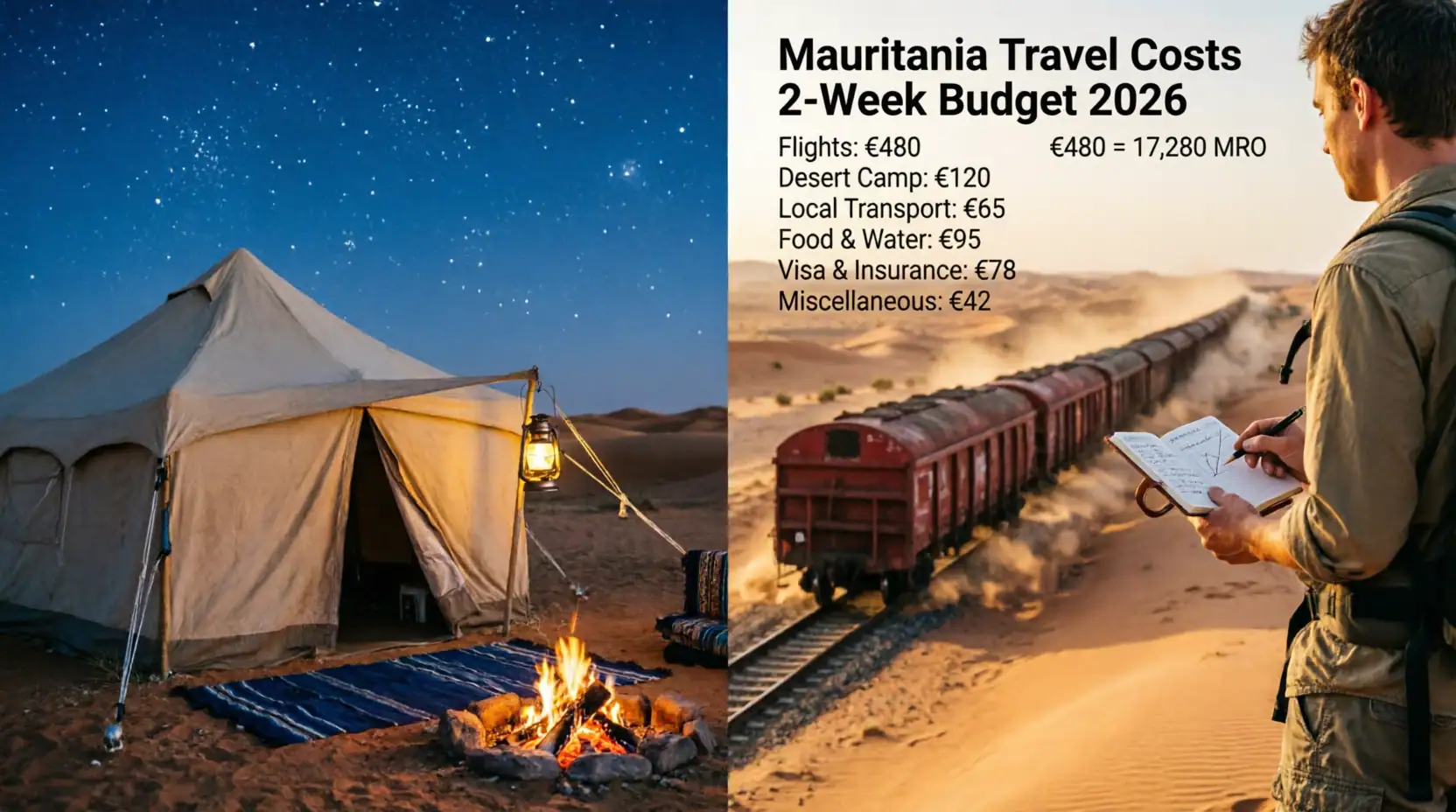
Mauritania Travel Cost Breakdown: How Much to Budget for a 2-Week Expedition
Planning a two-week expedition to Mauritania requires careful financial preparation, as this remote West African nation presents unique cost considerations that differ significantly from more accessible destinations. From the legendary iron ore train journey across the Sahara to ancient library towns, desert oases, and Atlantic coast adventures, Mauritania offers extraordinary experiences—but accessing them requires understanding the true costs involved in navigating one of Africa's least-visited countries.
Unlike typical tourist destinations with established infrastructure and competitive pricing, Mauritania's limited tourism sector, import-dependent economy, and vast distances create a cost structure that can surprise unprepared travelers. Everything from fuel to food must often be imported, driving up prices. Limited accommodation options mean less price competition. Internal transportation requires private vehicles or infrequent public options. Yet despite these challenges, Mauritania offers exceptional value for adventurous travelers seeking authentic cultural immersion, pristine desert landscapes, and experiences found nowhere else on Earth.
This comprehensive cost breakdown covers every expense category for a 2-week Mauritania expedition: international flights, visa fees, accommodation across budget ranges, food and dining, internal transportation, guided tours and activities, the iron ore train journey, travel insurance, and often-overlooked hidden costs. Whether you're a budget backpacker seeking authentic experiences or a mid-range traveler prioritizing comfort and safety, this guide provides realistic, detailed financial information to plan your Mauritanian adventure with confidence.
How much does a 2-week trip to Mauritania cost?
A 2-week Mauritania expedition costs $1,800-3,500 USD for budget travelers, $3,500-7,000 for mid-range travelers, and $8,000-15,000+ for luxury travelers. The biggest expenses are international flights ($1,000-2,500), internal transportation ($400-1,500 for 4WD hire and fuel), and guided tours/activities ($300-1,000). Accommodation ranges from $15-150/night, food from $10-40/day. The iron ore train itself is free but requires transport to reach it. Budget travelers can manage with careful planning; mid-range offers better comfort and safety; luxury remains limited but available in major cities.
International Flights: Your Largest Single Expense

Getting to Mauritania represents the biggest upfront cost for most travelers, with prices varying significantly by origin, season, and booking timing.
Flight Costs by Region of Origin:
• From United States:
- East Coast (New York, Washington DC): $1,200-2,200 USD round-trip
- West Coast (Los Angeles, San Francisco): $1,400-2,500 USD round-trip
- Airlines: Royal Air Maroc (via Casablanca), Turkish Airlines (via Istanbul), Air France (via Paris)
- Flight time: 12-20 hours with connections
- Best deals: Book 3-5 months ahead; avoid December-January peak
- Tip: Casablanca (Royal Air Maroc) often offers most reliable routing to Nouakchott
• From Europe:
- Paris, Madrid, Lisbon: $600-1,200 USD round-trip
- Airlines: Air France, Royal Air Maroc, Turkish Airlines
- Flight time: 4-8 hours with connections
- Best value: Paris-Nouakchott direct flights (seasonal)
• From West Africa:
- Dakar (Senegal): $200-400 USD round-trip
- Airlines: Mauritania Airlines, Air Senegal
- Flight time: 1 hour direct
- Best option for regional travelers
• From Middle East/Asia:
- Dubai, Istanbul: $800-1,600 USD round-trip
- Airlines: Turkish Airlines, Emirates (via connections)
- Flight time: 8-15 hours
- Less common routing but viable option
Money-Saving Flight Strategies:
• Book Early: Reserve 4-6 months ahead for best prices on this low-competition route
• Flexible Dates: Mid-week departures often 15-25% cheaper than weekends
• Off-Peak Travel: May-October (hot season) offers lower fares but challenging conditions
• Flight Alerts: Set price alerts on Google Flights, Skyscanner, Kayak
• Multi-City: Sometimes cheaper to book separate tickets (e.g., US to Casablanca, then Casablanca to Nouakchott)
• Frequent Flyer: Royal Air Maroc Safar Flyer, Turkish Miles&Smiles offer best redemption options
• Nearby Airports: Consider flying to Dakar (Senegal) and taking bus/flight to Nouakchott if significantly cheaper
Domestic Flights Within Mauritania:
• Mauritania Airlines: Government carrier with limited domestic network
• Nouakchott to Nouadhibou: $150-250 USD one-way (1 hour flight)
• Nouakchott to Atar: $120-200 USD one-way (1 hour)
• Availability: Very limited schedules; flights may be canceled or delayed
• Reliability: Weather-dependent; not recommended as primary transport
• Alternative: Private charter flights available but expensive ($500-1,500+)
• Recommendation: Ground transport generally more reliable and cost-effective for most itineraries
How much are flights to Mauritania from the US?
Round-trip flights from the US to Nouakchott cost $1,200-2,500 USD depending on departure city, season, and booking timing. East Coast departures average $1,200-2,200; West Coast $1,400-2,500. Royal Air Maroc via Casablanca typically offers most reliable routing. Book 3-5 months ahead for best prices. Off-peak travel (May-October) can save 20-30% but brings extreme heat. Consider flying to Dakar, Senegal ($800-1,500) then taking bus/flight to Mauritania if significantly cheaper.
Visa and Entry Costs

Understanding visa requirements and associated costs is essential for accurate budget planning.
Visa Requirements by Nationality:
• US Citizens: Visa required; must apply in advance
• EU Citizens: Visa required; apply at Mauritanian embassy
• Canadian/Australian: Visa required; similar process to US
• West African ECOWAS: Visa-free entry for member states
• Visa on Arrival: Available at Nouakchott airport but not recommended; apply in advance for reliability
Visa Application Costs:
• Tourist Visa Fee: $150-200 USD (varies by nationality and embassy)
• Processing Service Fees: $30-80 USD if using visa expeditor
• Passport Photos: $10-20 USD for compliant photos
• Shipping/Handling: $20-40 USD if mailing application
• Total Visa Cost: $180-300 USD including all fees
Application Process and Timeline:
• Processing Time: 1-3 weeks standard; expedited may be available
• Requirements: Passport (6+ months validity), application form, photos, flight itinerary, hotel confirmation, proof of funds
• Embassy Locations: Washington DC (US), Paris (France), Madrid (Spain); check for nearest to you
• Recommendation: Apply 6-8 weeks before travel to accommodate delays
Additional Entry Costs:
• Yellow Fever Certificate: $50-100 USD if traveling from/transiting through endemic country
• Travel Insurance: $100-400 USD for 2-week policy with medical evacuation (essential)
• Vaccinations: $100-300 USD for recommended vaccines (hepatitis, typhoid, meningitis)
• Passport Validity: Ensure 6+ months validity; renewal costs if needed ($130-160 US)
Do I need a visa for Mauritania and how much does it cost?
Yes, most travelers including US, EU, Canadian, and Australian citizens need a visa for Mauritania. Tourist visa fees cost $150-200 USD plus $30-80 in service fees if using an expeditor. Apply at a Mauritanian embassy 6-8 weeks before travel. Visa on arrival is available at Nouakchott airport but not recommended due to potential delays or denial. Budget $180-300 total for visa including all fees and documentation.
Accommodation Costs: From Desert Guesthouses to City Hotels

Accommodation in Mauritania ranges from basic desert guesthouses to mid-range city hotels, with limited luxury options. Prices reflect the remote location and limited tourism infrastructure.
Budget Accommodation ($15-40/night):
• Local Guesthouses/Auberges:
- Basic rooms with shared or private bathroom
- Fan or basic AC; shared kitchen access
- Locations: Nouakchott, Atar, Chinguetti, Nouadhibou
- Examples: Auberge de Chinguetti, local family guesthouses
- Best for: Budget travelers, cultural immersion, extended stays
- Pros: Authentic experience, low cost, local hospitality
- Cons: Basic amenities, variable cleanliness, limited English
• Budget Hotels:
- Simple hotels with private bathroom and AC
- Examples: Hotel El-Mourabitoune (Nouakchott), Hotel Al-Waha (Atar)
- Price: $30-50/night
- Best for: Travelers wanting reliability on budget
Mid-Range Accommodation ($50-120/night):
• Standard Hotels:
- Comfortable rooms with modern amenities
- Private bathroom, reliable AC, WiFi, TV
- Restaurant on-site or nearby
- Examples: Hotel Azawad, Hotel Paris-Nouakchott (Nouakchott); Hotel Atlas (Atar)
- Price: $60-100/night
- Best for: Comfort-seeking travelers, business visitors
• Desert Camps/Eco-Lodges:
- Organized desert camping with tents, meals, guides
- Examples: Campement du Banc d'Arguin, Terjit Oasis camps
- Price: $80-120/night including meals and activities
- Best for: Desert experiences with comfort and safety
Luxury Accommodation ($130-250+/night):
• Upscale Hotels:
- Best available in Mauritania; still modest by international standards
- Examples: Hotel Sabia, Caisse Nationale de Sécurité Sociale (Nouakchott)
- Amenities: Reliable AC, WiFi, restaurant, 24-hour security
- Price: $130-200/night
- Best for: Travelers prioritizing comfort and security
• Limited Options:
- True luxury resorts do not exist in Mauritania
- Manage expectations; "luxury" here means reliable basics
- Book well in advance; limited availability
Accommodation Booking Tips:
• Book Early: Limited options fill quickly, especially in Chinguetti and Atar
• Direct Booking: Often cheaper than third-party sites; contact properties directly
• Long-Stay Discounts: Many guesthouses offer weekly rates (10-20% discount)
• Verify Amenities: Confirm AC, WiFi, and hot water if essential
• Payment: Many properties require cash; credit cards rarely accepted
• Reviews: Read recent reviews from fellow travelers for current conditions
How much do hotels cost in Mauritania?
Budget guesthouses cost $15-40/night, mid-range hotels $50-120/night, and the best available "luxury" options $130-250/night. Nouakchott has the most options; remote towns like Chinguetti offer basic guesthouses at $20-40/night. Limited supply means prices are higher than neighboring Senegal but comparable to other remote Saharan destinations. Book well in advance, especially for Chinguetti and desert camps. Most properties require cash payment.
Food and Dining Costs

Food costs in Mauritania vary dramatically depending on whether you eat local cuisine, imported restaurant food, or self-cater.
Budget Food Options ($10-20/day):
• Local Markets and Street Food:
- Majors markets in Nouakchott, Atar: Fresh produce, local fish
- Breadfruit, dates, millet: $1-3 USD
- Fresh fish (per portion): $3-6 USD
- Tropical fruits: $1-2 USD each
- Best for: Self-catering, budget travelers
• Local Eateries:
- Thieboudienne (fish and rice): $4-7 USD
- Camel or lamb dishes: $5-9 USD
- Local bread and tea: $1-2 USD
- Locations: Town centers, local neighborhoods
• Self-Catering:
- Grocery stores (Nouakchott): Imported goods expensive
- Local staples cheaper than imports
- Weekly grocery budget: $40-70 USD per person
- Guesthouses with kitchen access ideal
Mid-Range Dining ($20-40/day):
• Local Restaurants:
- Restaurant du Port (Nouakchott): $12-20 USD per meal
- Hotel restaurants: $15-25 USD per meal
- Mix of local and international cuisine
- Fresh fish dishes: $15-25 USD
- International dishes: $12-20 USD
• Cafés and Casual Dining:
- Coffee/tea: $2-4 USD
- Sandwiches/salads: $6-12 USD
- Fresh juice: $3-5 USD
- Light meals: $8-15 USD
Luxury Dining ($40-80+/day):
• Upscale Hotel Restaurants:
- Fine dining experiences in Nouakchott
- Fresh seafood (fish, occasionally lobster): $25-45 USD
- Imported meats: $30-50 USD
- Wine (imported, expensive): $40-100+ USD/bottle
- Tasting menus: $50-80 USD
- Reservations recommended
• Imported Alcohol:
- Note: Alcohol is illegal in Mauritania; not available legally
- Some hotels may serve discreetly to foreigners; high cost and legal risk
- Not recommended; respect local laws
Food Cost-Saving Strategies:
• Eat Local: Mauritanian cuisine cheaper and more authentic than imported food
• Market Shopping: Buy fresh produce and fish at local markets
• Lunch Specials: Many restaurants offer cheaper lunch menus
• Self-Catering: Book accommodation with kitchen facilities
• Avoid Imports: Imported goods cost 2-3x prices in Europe/US
• Local Water: Buy large water containers vs. small bottles
• Group Dining: Share larger plates at restaurants to reduce per-person cost
How much does food cost in Mauritania?
Budget travelers can eat for $10-20/day at local markets and eateries. Mid-range dining costs $20-40/day at local restaurants. Luxury dining runs $40-80+/day at upscale hotel restaurants. Local food (thieboudienne, fish, dates, millet) is much cheaper than imported goods. Self-catering from local markets offers best value. Note: Alcohol is illegal in Mauritania and not available legally. Imported items cost 2-3x European prices due to shipping costs.
Transportation Costs Within Mauritania

Getting around Mauritania presents unique challenges and costs, particularly for covering vast desert distances.
Nouakchott Local Transportation:
• Taxis:
- Airport to city: $15-25 USD
- Within city: $3-10 USD per trip
- Hourly rate: $15-25 USD
- No meter; negotiate fare in advance
- Limited availability; call ahead
• Public Transport:
- Very limited bus service
- $1-2 USD per ride
- Irregular schedules; not reliable for tourists
• Rental Cars:
- Very limited availability
- $70-120 USD per day
- Requires advance booking and local license/permit
- Fuel: $1.50-2.00 USD per liter
- Not generally recommended for first-time visitors
Inter-City Transportation:
• Private 4WD with Driver (Most Common):
- Nouakchott to Atar (250 km): $150-250 USD one-way
- Atar to Chinguetti (150 km): $80-120 USD one-way
- Nouakchott to Nouadhibou (450 km): $250-400 USD one-way
- Daily rate for multi-day tours: $150-250 USD/day including driver
- Fuel costs additional or included depending on arrangement
- Best for: Flexibility, comfort, safety in remote areas
• Shared Taxis/Grand Taxis:
- Fixed routes between major towns
- $20-50 USD per person depending on distance
- Depart when full (6 passengers); unpredictable timing
- Less comfortable but budget option
- Best for: Budget travelers with flexible schedules
• Buses:
- Limited service between major cities
- $15-30 USD per trip
- Basic conditions; long travel times
- Not recommended for remote destinations
• Domestic Flights:
- Mauritania Airlines: Nouakchott to Nouadhibou/Atar
- $120-250 USD one-way
- Limited schedules; frequent delays/cancellations
- Not reliable as primary transport
Iron Ore Train Journey:
• Train Cost: Free for passengers
• Associated Costs:
- Transport to Choum/Zouérat: $30-80 USD
- Transport from Nouadhibou: $5-15 USD taxi
- Supplies for journey: $20-40 USD (water, food, dust protection)
- Tips for train staff: $5-15 USD appreciated
• Total Iron Ore Train Experience: $55-150 USD including all associated costs
• Note: Train is free but requires significant preparation and associated transport costs
Desert Excursions and 4WD Hire:
• Day Trips: $150-300 USD including vehicle, driver, fuel
• Multi-Day Desert Tours: $200-400 USD/day including vehicle, driver, guide, camping equipment
• Banc d'Arguin Access: $200-350 USD for 4WD transfer from Nouadhibou
• Terjit Oasis: $100-200 USD round-trip from Atar
• Recommendation: Never travel in desert alone; always use experienced driver/guide
How much does transportation cost in Mauritania?
Local taxis in Nouakchott cost $3-25 USD per trip. Inter-city private 4WD with driver costs $150-400 USD one-way depending on distance. Shared taxis cost $20-50 USD per person. The iron ore train itself is free but requires $55-150 USD in associated transport and supply costs. Desert excursions cost $150-400 USD/day for 4WD with driver/guide. Budget travelers can use shared taxis and buses; mid-range travelers should budget for private 4WD for safety and flexibility in remote areas.
Activities, Tours, and Experience Costs

Mauritania offers unique cultural and adventure experiences at varying price points.
Guided Tours and Cultural Experiences:
• Local Guides:
- Daily rate: $30-60 USD
- Essential for library visits in Chinguetti
- Provides cultural mediation and safety
- Language translation (Arabic/French to English)
• Chinguetti Library Visits:
- Library access fees: $5-20 USD per library
- Guide arrangement: $30-60 USD
- Total for 3-4 libraries: $50-120 USD
- Fees support preservation efforts
• Desert Camping Experiences:
- Organized desert camps: $80-150 USD/night including meals, equipment, guide
- DIY camping: $30-60 USD for equipment rental and guide
- Terjit Oasis visits: $100-200 USD including transport and guide
• Banc d'Arguin National Park:
- Park entrance: $20-30 USD
- Local Imraguen guide: $40-80 USD/day
- Boat excursions: $50-100 USD
- Total day visit: $110-210 USD
Adventure Activities:
• Camel Trekking:
- Short rides (1-2 hours): $20-40 USD
- Multi-day treks: $100-250 USD/day including guide, camel, camping
• Sandboarding/Dune Activities:
- Equipment rental: $10-25 USD
- Guided dune excursions: $50-100 USD
• Photography Tours:
- Specialized photography guides: $60-100 USD/day
- Access to best locations and lighting
- Cultural introductions for portrait photography
Activity Cost-Saving Tips:
• Group Rates: Travel with others to split guide and vehicle costs
• Multi-Day Packages: Book multi-day tours for better daily rates
• Local Guides: Hire directly vs. through international tour companies
• Negotiate: Some prices negotiable, especially for longer bookings
• Free Activities: Many cultural experiences (markets, town walks) are free
How much do guided tours cost in Mauritania?
Local guides cost $30-60 USD/day. Chinguetti library visits total $50-120 USD for 3-4 libraries including fees and guide. Desert camping experiences cost $80-150 USD/night organized or $30-60 USD DIY. Banc d'Arguin visits cost $110-210 USD including park fees and guide. Camel trekking ranges $20-250 USD depending on duration. Group travel and multi-day bookings can reduce per-day costs. Always hire guides for desert travel and cultural sites.
Sample 2-Week Budget Breakdowns

Here are realistic budget scenarios for different travel styles over a 14-day Mauritania expedition.
Budget Traveler: $1,800-3,500 USD Total
• Profile: Backpacker, cultural immersion focus, comfortable with basic conditions
• International Flights: $1,200-2,000 USD (from US/Europe)
• Visa and Entry: $200-300 USD
• Accommodation (14 nights): $210-560 USD ($15-40/night guesthouses)
• Food (14 days): $140-280 USD ($10-20/day local food)
• Transportation: $400-800 USD (shared taxis, buses, iron ore train associated costs)
• Activities/Guides: $150-300 USD (select guided experiences, library visits)
• Travel Insurance: $100-200 USD
• Miscellaneous: $100-200 USD (souvenirs, tips, unexpected costs)
• Daily Average: $43-83 USD excluding international flights
• Best For: Experienced budget travelers, cultural enthusiasts, flexible itineraries
• Trade-offs: Basic accommodation, local food, shared transport, limited luxury
Mid-Range Traveler: $3,500-7,000 USD Total
• Profile: Comfort-seeking adventurer, balance of culture and comfort
• International Flights: $1,400-2,200 USD
• Visa and Entry: $200-300 USD
• Accommodation (14 nights): $700-1,680 USD ($50-120/night mid-range hotels)
• Food (14 days): $280-560 USD ($20-40/day mix of local and restaurant)
• Transportation: $800-1,500 USD (private 4WD for key segments, some shared transport)
• Activities/Guides: $400-800 USD (guided library visits, desert camping, Banc d'Arguin)
• Travel Insurance: $200-300 USD (comprehensive with evacuation)
• Miscellaneous: $200-400 USD
• Daily Average: $86-169 USD excluding international flights
• Best For: Most travelers seeking authentic experiences with reasonable comfort
• Trade-offs: Good balance of cost and comfort; private transport for remote areas
Luxury/Comfort Traveler: $8,000-15,000+ USD Total
• Profile: Comfort-prioritizing traveler, safety-focused, limited tolerance for uncertainty
• International Flights: $1,800-2,500 USD (premium economy/business)
• Visa and Entry: $250-350 USD (expedited processing)
• Accommodation (14 nights): $1,820-3,500 USD ($130-250/night best available)
• Food (14 days): $560-1,120 USD ($40-80/day restaurant dining)
• Transportation: $2,000-4,000 USD (private 4WD with driver for entire itinerary)
• Activities/Guides: $800-1,500 USD (private guides, exclusive experiences)
• Travel Insurance: $300-500 USD (premium coverage)
• Miscellaneous: $400-800 USD
• Daily Average: $197-346 USD excluding international flights
• Best For: Travelers prioritizing comfort, safety, and convenience
• Trade-offs: Highest cost but maximum comfort and reduced logistical stress
• Note: True luxury options are limited in Mauritania; "luxury" here means reliable basics
Iron Ore Train Expedition Add-On:
• Additional Costs: $150-300 USD
• Includes: Transport to Choum/Zouérat, supplies for journey, tips, Nouadhibou transfer
• Note: Train itself is free but associated costs add to budget
• Recommendation: Include in mid-range or luxury budgets for comfort and safety
What is a realistic daily budget for Mauritania?
Budget travelers can manage on $43-83/day excluding international flights, staying in guesthouses, eating local food, and using shared transport. Mid-range travelers should budget $86-169/day for comfortable hotels, restaurant meals, and private transport for remote areas. Luxury travelers need $197-346/day for best available accommodation, fine dining, and private 4WD with driver throughout. These budgets exclude international flights ($1,200-2,500) but include accommodation, food, transport, activities, and insurance.
Hidden Costs and Often-Overlooked Expenses

Budget for these frequently missed expenses to avoid surprises.
Common Hidden Costs:
• Departure Tax: $20-40 USD (sometimes included in ticket)
• Travel Insurance: $100-400 USD (essential for remote destination with medical evacuation)
• Vaccinations: $100-300 USD (hepatitis, typhoid, meningitis, routine vaccines)
• Equipment Rental: $50-150 USD (sleeping bag for train, dust protection, camping gear)
• Communication: $20-50 USD (local SIM card, data packages)
• Tips: $50-150 USD total (guides, drivers, hotel staff, library custodians)
• Souvenirs: $50-200 USD (crafts, books, local goods)
• Emergency Fund: Always have $300-800 USD accessible for unexpected costs
Weather and Delay-Related Costs:
• Buffer Days: Build 2-3 extra days into itinerary ($50-150/day) for transport delays
• Flight Changes: Rebooking fees if domestic flights canceled
• Extra Accommodation: Unexpected nights due to delays ($15-120/night)
• Travel Insurance: Essential for covering delay-related costs
Health and Safety Costs:
• Medical Kit: $50-100 USD for comprehensive travel first aid
• Medications: Bring full supply; limited availability locally
• Water Purification: $20-40 USD for tablets/filter if self-catering
• Sun Protection: $30-60 USD for high-SPF sunscreen, protective clothing
Cultural and Access Costs:
• Library Fees: $5-20 USD per library in Chinguetti
• Photography Permissions: Small fees may be requested for photographing people/sites
• Guide Arrangements: $30-60 USD/day for cultural sites requiring local introduction
• Park Fees: Banc d'Arguin entrance $20-30 USD
What hidden costs should I budget for in Mauritania?
Budget for: departure tax ($20-40), travel insurance with evacuation ($100-400), vaccinations ($100-300), equipment rental for desert/train ($50-150), local SIM/data ($20-50), tips ($50-150 total), souvenirs ($50-200), and emergency fund ($300-800). Build 2-3 buffer days for delays ($50-150/day). Medical evacuation insurance is essential as local facilities are limited. Library fees, park entrance fees, and guide arrangements add $100-300 for cultural experiences.
Money-Saving Strategies for Mauritania Travel

Maximize your budget with these proven cost-reduction strategies.
Before You Go:
• Book Flights Early: Reserve 4-6 months ahead for best prices on low-competition routes
• Travel Off-Peak: May-October offers 20-30% lower prices but extreme heat; weigh trade-offs
• Flight Alerts: Set up price alerts; be flexible with dates and routing
• Visa Preparation: Apply early to avoid expedited fees; gather documents yourself
• Travel Insurance: Compare providers; don't skip this essential coverage
• Group Travel: Travel with others to split private transport and guide costs
Accommodation Savings:
• Guesthouses: Choose local guesthouses over hotels for 40-60% savings
• Long Stays: Negotiate weekly rates for extended visits (10-20% discount)
• Direct Booking: Book directly with properties to avoid commission fees
• Location Trade-offs: Stay slightly outside city centers for lower rates
• Meal Inclusions: Choose accommodations including breakfast to reduce food costs
Food Cost Reduction:
• Eat Local: Mauritanian cuisine costs half of imported restaurant food
• Market Shopping: Buy fresh produce and fish at local markets for self-catering
• Lunch Specials: Eat main meal at lunch when restaurants offer better value
• Self-Catering: Prepare your own meals when accommodation has kitchen access
• Avoid Imports: Imported food costs 2-3x European prices; stick to local staples
• Water Strategy: Buy large water containers vs. small bottles for significant savings
Transportation Savings:
• Shared Transport: Use shared taxis and buses for inter-city travel when possible
• Group Vehicle Hire: Split private 4WD costs with other travelers
• Strategic Private Hire: Use private transport only for remote/safety-critical segments
• Book Early: Reserve domestic transport in advance for better rates
• Flexible Itinerary: Build flexibility to take advantage of shared transport departures
Activity and Guide Savings:
• Free Activities: Prioritize free experiences: markets, town walks, desert landscapes
• Local Guides: Hire guides directly vs. through international tour companies
• Group Rates: Travel with others to split guide and activity costs
• Negotiate: Some prices negotiable, especially for multi-day bookings
• Focus on Value: Prioritize unique experiences (libraries, iron ore train) over generic tours
General Money Management:
• Cash is King: Bring sufficient USD/euros; exchange to MRU locally
• ATM Strategy: Withdraw larger amounts less frequently to reduce fees
• Notify Bank: Prevent card blocks by notifying bank of travel plans
• Track Spending: Use budgeting app to monitor daily expenses and adjust
• Emergency Buffer: Always carry extra cash for unexpected costs
How can I save money traveling in Mauritania?
Save money by: eating local food vs. imported cuisine ($10 vs. $30/day), staying in guesthouses ($20 vs. $80/night), using shared taxis and buses for inter-city travel, booking flights 4-6 months early, traveling in shoulder seasons, bringing your own dust protection and sleeping gear for the train, self-catering from local markets, hiring guides directly vs. through agencies, and focusing on free activities like markets and desert landscapes. These strategies can reduce costs by 30-50% while maintaining authentic experiences.
Payment Methods and Currency Management
Understanding payment options helps you manage money effectively in Mauritania's cash-dependent economy.
Currency Basics:
• Official Currency: Mauritanian Ouguiya (MRU)
• Exchange Rate: Approximately 35-40 MRU = 1 USD (verify current rate before travel)
• Foreign Currency: USD and euros widely accepted for exchange; less commonly for direct payment
• No Exchange Needed: For US citizens bringing USD; exchange to MRU for local transactions
• Bills: Bring small denominations ($1, $5, $10, $20) for easier transactions
• Condition: Bring crisp, undamaged bills; torn or marked bills may be rejected
Cash vs. Cards:
• Cash Preferred: 90%+ of transactions require cash (MRU)
• Credit Cards: Accepted only at major hotels in Nouakchott and Nouadhibou
• Debit Cards: Rarely accepted; use for ATM withdrawals only
• ATMs: Available in Nouakchott and Nouadhibou; very limited elsewhere
• ATM Fees: $3-5 USD per withdrawal plus your bank's foreign transaction fees
• Withdrawal Limits: Often $200-400 USD equivalent per transaction
• Backup: Always carry sufficient cash; don't rely on ATMs outside major cities
Money Management Strategies:
• Bring Enough: Calculate total budget; bring 20-30% extra for emergencies
• Diversify Storage: Split cash between multiple locations (wallet, money belt, hotel safe)
• Secure Storage: Use hotel safe for excess cash; carry only daily needs
• Notify Bank: Prevent card blocks by notifying bank of travel dates and destinations
• Emergency Cash: Keep $200-500 USD separate emergency fund inaccessible to thieves
• Receipts: Keep receipts for expensive items; customs may ask about valuable purchases
• Tipping: Not expected but appreciated; $2-10 USD for good service depending on context
Exchange Strategies:
• Where to Exchange: Banks and official exchange bureaus in Nouakchott; avoid street exchanges
• When to Exchange: Exchange upon arrival for initial needs; exchange more as needed
• How Much: Exchange enough for 2-3 days at a time to minimize risk
• Keep Records: Note exchange rates for budget tracking
• Final Exchange: Exchange remaining MRU back to USD/euros before departure if desired
Should I bring cash or use cards in Mauritania?
Bring cash—most transactions require Mauritanian Ouguiya (MRU) cash. Credit cards are only accepted at major hotels in Nouakchott and Nouadhibou. ATMs are very limited and unreliable outside these cities. Calculate your total budget and bring sufficient USD or euros to exchange, plus 20-30% extra for emergencies. Bring small denominations ($1, $5, $10, $20) as change may be limited. Use a money belt and hotel safe for security. Notify your bank of travel plans even though you'll primarily use cash.
Final Budget Planning Checklist
Use this comprehensive checklist to ensure thorough budget preparation for your 2-week Mauritania expedition.
Pre-Departure Costs:
☐ International flights: $1,200-2,500 USD
☐ Travel insurance with evacuation: $100-400 USD
☐ Vaccinations: $100-300 USD
☐ Visa application and fees: $180-300 USD
☐ Equipment purchase/rental (sleeping bag, dust protection): $50-150 USD
☐ Guidebooks/maps: $30-50 USD
☐ Miscellaneous gear: $100-200 USD
During Trip (Per Day Estimates):
☐ Accommodation: $15-250 USD/night depending on standard
☐ Food: $10-80 USD/day depending on dining choices
☐ Local transport: $5-100+ USD/day depending on method
☐ Activities/guides: $0-100+ USD/day depending on itinerary
☐ Miscellaneous: $10-30 USD/day for tips, souvenirs, small expenses
☐ Daily total range: $40-460+ USD excluding international flights
Inter-City Transportation:
☐ Nouakchott-Atar private 4WD: $150-250 USD one-way
☐ Atar-Chinguetti taxi: $80-120 USD one-way
☐ Iron ore train associated costs: $55-150 USD total
☐ Nouadhibou-Banc d'Arguin 4WD: $200-350 USD round-trip
☐ Buffer days for delays: $50-150/day
☐ Domestic flights (if used): $120-250 USD per flight
Emergency and Contingency:
☐ Medical evacuation coverage: Essential ($100-400 insurance)
☐ Cash emergency fund: $300-800 USD accessible
☐ Backup credit card: For emergencies only
☐ Embassy contact info: Saved and accessible
☐ Flexible return flight: Consider changeable tickets
Post-Trip Costs:
☐ Departure tax: $20-40 USD
☐ Souvenirs: $50-200 USD
☐ Photo/video processing: $0-100 USD
☐ Sharing experiences: Variable
Conclusion: Budgeting Realistically for Mauritania
Mauritania presents unique budget considerations as a remote, import-dependent Saharan nation. While more expensive than neighboring Senegal due to limited infrastructure and tourism competition, it offers exceptional value for travelers seeking authentic cultural immersion, pristine desert landscapes, and experiences found nowhere else on Earth.
Budget travelers can manage a 2-week expedition on $1,800-3,500 USD by staying in guesthouses, eating local food, using shared transport, and focusing on free cultural experiences. Mid-range travelers should budget $3,500-7,000 USD for comfortable accommodation, restaurant meals, and private transport for remote areas. Luxury travelers need $8,000-15,000+ USD for the best available accommodation, fine dining, and private 4WD with driver throughout.
The biggest expenses are international flights ($1,200-2,500), internal transportation ($400-1,500 for 4WD hire and fuel), and guided tours/activities ($300-1,000). Accommodation ranges from $15-250/night, food from $10-80/day. The iron ore train itself is free but requires associated transport and supply costs.
Money-saving strategies include traveling in shoulder seasons, booking flights early, eating local food, staying in guesthouses, using shared transport when possible, and focusing on free activities like markets and desert landscapes. These strategies can reduce costs by 30-50% while maintaining authentic experiences.
Remember to budget for hidden costs like travel insurance (essential), vaccinations, equipment rental, departure tax, and emergency funds. Always bring sufficient cash as credit cards are rarely accepted and ATMs are limited outside Nouakchott and Nouadhibou.
With careful planning and realistic budgeting, Mauritania offers unforgettable experiences that justify the investment. Whether you're riding the iron ore train across endless Sahara, exploring ancient libraries holding millennium-old manuscripts, or witnessing the meeting of desert and ocean at Banc d'Arguin, this remote West African nation delivers experiences found nowhere else.
Safar sa'id (safe travels) and shukran (thank you) for planning your Mauritania expedition with realistic budget expectations!
0 Comments