.webp)
.webp)
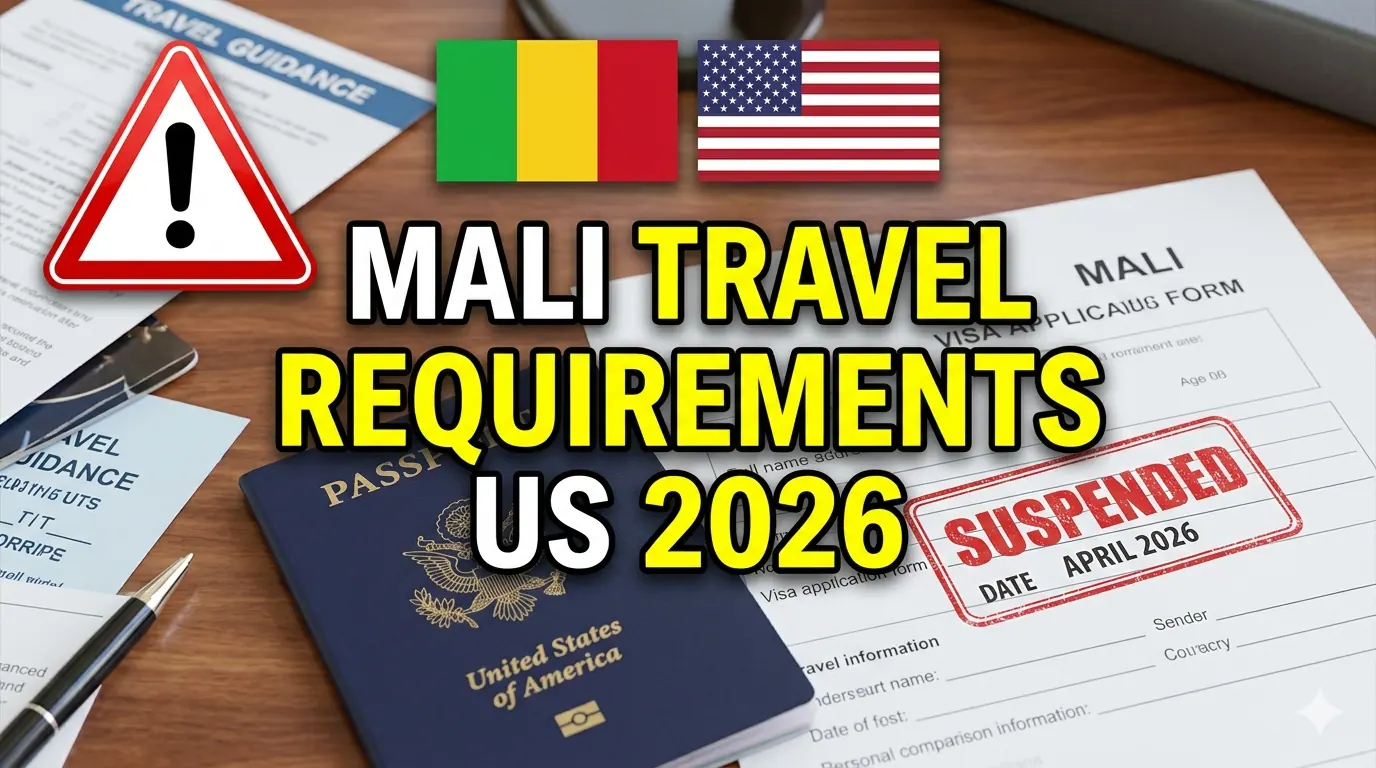
Mali Travel Requirements for US Citizens: Updated 2026 Entry Rules
Travel to Mali for US citizens in 2026 involves critical entry restrictions, heightened security advisories, and essential health requirements that every traveler must understand before considering a journey to this West African nation. As of January 1, 2026, the government of Mali has suspended visa issuance to US citizens, creating significant barriers to entry that fundamentally alter travel planning for Americans. This comprehensive guide provides the most current information on Mali travel requirements, security considerations, health protocols, and practical alternatives for US travelers with legitimate reasons to visit or those seeking similar West African experiences.
For journalists, humanitarian workers, diplomats, and others with essential business in Mali, understanding the evolving entry landscape is crucial for planning safe, compliant travel. For leisure travelers, this guide explains why Mali currently presents exceptional risks and suggests alternative destinations that offer comparable cultural and historical experiences with greater accessibility and safety. Whether you're researching for professional purposes or personal curiosity, this resource delivers accurate, responsible information aligned with official US government guidance.
Important note: The US Department of State maintains Mali at Level 4: Do Not Travel—the highest warning level—due to crime, terrorism, kidnapping, civil unrest, and health risks. This advisory reflects genuine, severe dangers that travelers must weigh carefully. This guide does not encourage travel to Mali but provides factual information for those who must travel despite the risks or who seek to understand current entry policies.
Can US citizens currently enter Mali in 2026?
As of January 1, 2026, the government of Mali has suspended visa issuance to US citizens, effectively barring most American travelers from entering the country. Limited exemptions may exist for diplomats, humanitarian workers with official authorization, and individuals traveling for Mali's national interest, but these require special approval through the Embassy of Mali. US citizens considering travel should contact the nearest Malian diplomatic mission for the most current entry requirements before making any plans.
Current Visa Status: Suspension and Limited Exceptions

Understanding Mali's visa policy for US citizens requires examining both the suspension and potential pathways for essential travel.
Visa Suspension Effective January 2026:
The Malian government's decision to suspend visas for US citizens represents a significant diplomatic development. This suspension means that standard tourist, business, and transit visa applications from US passport holders are not being processed through normal channels. The policy appears linked to reciprocal travel measures between the United States and Mali, reflecting broader geopolitical tensions. Travelers should not assume this policy will remain static; monitoring official channels is essential.
Pre-Suspension Visa Requirements (For Reference):
Before the suspension, US citizens applying for Malian visas faced these requirements:
• Visa fee: $185 USD, payable by cash, money order, or cashier's check
• Passport validity: Valid at time of entry with at least one blank page
• Application process: In-person submission at Embassy of Mali or authorized visa center
• Processing time: Variable; applicants advised to apply well in advance of travel
• Visa types: Tourist, business, transit, diplomatic (with varying validity periods)
While these requirements may resume if the suspension lifts, current applicants should verify status directly with Malian authorities.
Potential Exemptions and Special Authorization:
Limited categories of US travelers may still obtain entry authorization:
• Diplomatic passport holders on official government business
• Humanitarian workers with verified assignments through recognized NGOs or UN agencies
• Journalists with accredited press credentials and pre-arranged security protocols
• Individuals with documented "national interest" justification approved by Malian authorities
These exemptions require advance coordination with the Embassy of Mali and often involve additional security vetting, documentation, and coordination with US government channels.
How to Verify Current Entry Requirements:
Given the fluid situation, travelers must confirm requirements through official sources:
• Embassy of Mali in Washington, DC: consularsection@maliembassy.us
• US Department of State Mali country page: travel.state.gov
• US Embassy Bamako: ml.usembassy.gov for in-country guidance
• International SOS or other security risk consultancies for professional travelers
Never rely solely on third-party visa services or outdated online information for entry requirements to high-risk destinations.
What if I already have a valid Malian visa?
US citizens holding previously issued valid Malian visas should contact the Embassy of Mali to confirm whether their visa remains valid for entry under current policies. Even with a valid visa, entry remains at the sole discretion of Malian immigration officials at the port of entry. The US Embassy cannot intervene to facilitate entry for private US citizens. Travelers with essential business should coordinate with both Malian authorities and their US-based sponsors before attempting travel.
US State Department Travel Advisory: Level 4 Do Not Travel

The US Department of State's travel advisory system provides critical risk assessments that all US citizens should heed when considering international travel.
Level 4: Do Not Travel – Mali:
Mali carries the highest warning level due to multiple severe risk factors:
• Crime: Violent crime including kidnapping, armed robbery, carjacking, and home invasion is common throughout Mali, with increased risk in Bamako during holidays and seasonal events
• Terrorism: Terrorist groups affiliated with al-Qa'ida and ISIS operate throughout Mali and target foreigners for kidnapping; attacks have occurred at hotels, restaurants, places of worship, and diplomatic facilities
• Kidnapping: Westerners face high kidnapping risk; ransom payments fund terrorist operations; hostage situations can last months or years
• Civil Unrest: Spontaneous demonstrations can turn violent; Mali has experienced multiple coups; political instability remains elevated
• Health: Limited medical facilities, especially outside Bamako; risk of malaria, yellow fever, meningitis, and other tropical diseases; inadequate emergency medical evacuation capacity
US Government Employee Restrictions:
Reflecting the severity of risks, US government employees in Mali face strict movement limitations:
• Prohibited from traveling outside Bamako without special authorization
• Required to use approved transportation and security protocols
• Subject to curfews and heightened security measures
While these restrictions do not legally bind private US citizens, they signal the level of risk that professional security experts deem unacceptable for official personnel.
What Level 4 Means for Private Travelers:
The State Department urges US citizens not to travel to Level 4 destinations. For those who choose to travel despite the advisory:
• The US government's ability to provide emergency assistance is severely limited
• Commercial insurance policies often exclude coverage in Level 4 countries
• Medical evacuation may be impossible or prohibitively expensive
• Legal protections are minimal; local authorities may not prioritize foreign nationals' safety
• Family members should prepare contingency plans including proof-of-life protocols
Recent Advisory Updates:
As of January 9, 2026, the State Department lifted the ordered departure mandate for non-emergency US Embassy staff in Bamako, noting normalized embassy operations. However, the Level 4 advisory remains in place, and US government employees continue to face travel restrictions outside the capital. This nuanced update reflects improved embassy security posture but does not indicate reduced risk for private travelers.
Does the Level 4 advisory mean I cannot travel to Mali?
No US law prohibits private citizens from traveling to Level 4 countries, but the advisory strongly urges against it. Travelers who proceed despite the warning assume significant personal risk and should understand that US government assistance in emergencies will be extremely limited. Many travel insurance policies exclude coverage for Level 4 destinations, and commercial airlines may suspend service. Consult with security professionals and your insurance provider before making travel decisions.
Health Requirements: Vaccinations and Medical Preparedness

Health considerations for Mali travel are substantial and require careful planning well in advance of any potential journey.
Yellow Fever Vaccination Requirement:
Mali requires proof of yellow fever vaccination for all travelers aged 9 months and older arriving from countries with risk of yellow fever transmission. The vaccination must be administered at least 10 days before entry, and travelers should carry the International Certificate of Vaccination (yellow card) as proof. While the US is not a yellow fever endemic country, transit through endemic regions may trigger the requirement. Always verify current entry health rules with official sources.
Recommended Vaccinations and Health Precautions:
The CDC recommends US travelers to Mali be up-to-date on routine vaccines plus:
• Hepatitis A and B
• Typhoid
• Cholera (for certain areas/activities)
• Rabies (for travelers involved in outdoor activities or animal contact)
• Meningococcal meningitis (especially December-June)
• Malaria prophylaxis: Prescription antimalarial medication is essential; consult a travel medicine specialist for appropriate regimen
• COVID-19: Ensure vaccination and consider testing requirements
Medical Infrastructure Limitations:
Healthcare in Mali presents serious challenges for travelers:
• Public medical clinics lack basic resources and supplies
• Hospital-based care is only available through government institutions with limited capacity
• Psychological and psychiatric services are extremely limited
• Patients must cover all costs for transfers between facilities
• Rural areas have minimal to no accessible medical care
• US-standard emergency care does not exist in-country
Medical Evacuation Insurance Is Essential:
Given Mali's limited medical infrastructure, comprehensive travel insurance with medical evacuation coverage is non-negotiable for any traveler. Key considerations:
• Verify that your policy explicitly covers Mali (many exclude Level 4 destinations)
• Ensure coverage includes emergency medical evacuation to a country with adequate care (typically Europe)
• Confirm 24/7 assistance hotline access from Mali
• Carry insurance documentation and emergency contact information at all times
• Understand that evacuation may take days to arrange and cost tens of thousands of dollars
Medication and Health Supplies:
Travelers should bring all necessary medications in original packaging with copies of prescriptions. Many US-brand medications are unavailable in Mali; European equivalents may be found in Bamako pharmacies but cannot be guaranteed. Carry a sufficient supply for the entire trip plus extra for delays. Include a basic first-aid kit, insect repellent with DEET, oral rehydration salts, and any personal health items.
Is malaria a serious risk in Mali?
Yes, malaria is endemic throughout Mali and poses a significant health risk to travelers. The CDC recommends prescription antimalarial medication for all travelers to Mali, to be taken before, during, and after travel. Additional prevention measures include using insect repellent, sleeping under insecticide-treated bed nets, and wearing long sleeves/pants during evening hours. Seek immediate medical attention for any fever during or after travel to Mali.
Security Considerations and Risk Mitigation

For travelers with essential reasons to visit Mali despite the Level 4 advisory, understanding and mitigating security risks is paramount.
Regional Risk Variations:
Security conditions differ significantly across Mali:
• Northern regions (Timbuktu, Gao, Kidal): Extremely high risk; active terrorist groups, military operations, kidnapping threats; avoid all travel
• Central regions (Mopti, Segou): High risk; intercommunal violence, terrorist activity, banditry; avoid non-essential travel
• Bamako (capital): Elevated risk; violent crime, terrorism threats, civil unrest; exercise extreme caution
• Southern regions: Moderate to high risk; lower terrorist activity but crime and instability persist
Even within Bamako, risks vary by neighborhood, time of day, and current events.
Personal Security Protocols:
Essential practices for travelers in Mali:
• Maintain low profile; avoid displaying wealth, cameras, or Western-branded items
• Vary routines and travel times to avoid predictability
• Use trusted, vetted local drivers and vehicles; avoid public transportation
• Keep doors locked and windows up while driving; avoid nighttime road travel
• Stay in accommodations with verified security measures (guards, gates, alarms)
• Register with the US Embassy via STEP (Smart Traveler Enrollment Program)
• Establish communication protocols with family/employer including check-in schedules
• Carry copies of passport and important documents; store originals securely
• Avoid political gatherings, demonstrations, and large crowds
Kidnapping Risk Management:
The threat of kidnapping for ransom remains high throughout Mali. Mitigation strategies:
• Avoid travel outside Bamako without professional security assessment and support
• Use armored vehicles and trained security personnel for essential movement
• Limit public exposure of travel plans and personal information
• Establish proof-of-life protocols with family before travel
• Consider kidnap and ransom insurance for high-risk assignments
• Understand that US government resources for hostage recovery are extremely limited
Emergency Preparedness:
Travelers must have contingency plans that do not rely on US government assistance:
• Identify multiple evacuation routes and transportation options
• Maintain emergency cash reserves in multiple currencies
• Keep contact information for embassy, security providers, and medical facilities
• Prepare a "go-bag" with essentials for rapid departure
• Share itinerary and emergency contacts with trusted contacts outside Mali
• Draft legal documents (power of attorney, will) before travel
Should I hire professional security for travel in Mali?
For any essential travel to Mali, engaging professional security services is strongly recommended. Reputable security firms can provide risk assessments, secure transportation, close protection, and emergency response coordination. Verify credentials, insurance coverage, and local partnerships before contracting. Budget for security as a non-negotiable component of travel planning to high-risk destinations.
Entry and Exit Procedures: Practical Considerations
For travelers who obtain authorization to enter Mali, understanding border procedures helps ensure smoother processing.
Passport Requirements:
• Validity: Passport must be valid at time of entry (no specific minimum beyond entry date)
• Blank pages: At least one blank visa page required for entry stamp
• Copies: Carry photocopies of passport bio page and entry stamp; store separately from originals
• Digital backups: Secure cloud storage of travel documents accessible offline
Customs and Currency Regulations:
• Currency: No restrictions on amount of currency brought into or out of Mali
• Declaration: Declare large sums if required by connecting countries
• Prohibited items: Weapons, narcotics, certain cultural artifacts require special permits
• Cultural property: Export of archaeological items from Niger River Valley requires authorization from Mali's National Museum
Photography Restrictions:
Exercise extreme caution when photographing in Mali:
• Prohibited: Government buildings, military facilities, infrastructure, security personnel
• Restricted: Public spaces, markets, individuals without explicit permission
• Consequences: Detention, equipment confiscation, legal penalties for violations
• Best practice: Obtain written permission before photographing; err on side of caution
Communication and Connectivity:
• Cellular coverage: Available in Bamako and major towns; limited or absent in rural areas
• Internet: Available in urban centers; speeds and reliability vary
• Emergency contacts: Save US Embassy Bamako numbers: +(223) 2070-2300 (office), +(223) 6675-2860 (emergency)
• Satellite communication: Consider satellite phone or messenger for remote travel (verify legality)
Exit Procedures:
• Allow extra time at airport for security screening and document checks
• Ensure all required exit documentation is complete
• Retain boarding passes and entry/exit stamps for future reference
• Be prepared for additional questioning about purpose of visit and activities
What documents should I carry while in Mali?
Carry photocopies of your passport, visa/entry authorization, travel insurance, emergency contacts, and itinerary. Keep originals secured in accommodation safe. Also carry contact information for your embassy, security provider, medical facilities, and emergency contacts. Digital backups stored securely offline provide additional protection if physical documents are lost or confiscated.
Alternatives to Mali: Similar Experiences with Greater Accessibility
For travelers interested in West African culture, history, and landscapes but seeking safer, more accessible destinations, several alternatives offer compelling experiences.
Senegal:
• Rich cultural heritage including Gorée Island (UNESCO World Heritage)
• Vibrant music scene, historic slave trade sites, and Sahel landscapes
• Stable democracy with established tourism infrastructure
• Direct flights from US via Europe; visa-on-arrival for US citizens
• Lower security risks though standard travel precautions apply
Ghana:
• Historic castles and forts documenting transatlantic slave trade
• Cultural festivals, wildlife reserves, and coastal beaches
• English-speaking with welcoming tourism sector
• Visa required for US citizens but straightforward application process
• Generally stable security environment with standard urban precautions
Burkina Faso (With Caution):
Note: Burkina Faso also carries Level 4 advisory and has suspended US citizen entry. Included here only to note that neighboring countries face similar challenges; not recommended as alternative.
Niger (Not Recommended):
Note: Niger also faces severe security challenges and Level 4 advisory. Not a viable alternative for most travelers.
Morocco:
• Accessible North African destination with rich Islamic heritage
• Sahara Desert experiences, imperial cities, and Mediterranean coast
• Well-developed tourism infrastructure and transportation
• Visa-free entry for US citizens for stays under 90 days
• Generally stable though standard travel precautions advised
Tunisia:
• Roman ruins, Mediterranean beaches, and Sahara access
• Emerging tourism sector with improving security
• Visa-free entry for US citizens for stays under 90 days
• Exercise caution in border regions; consult current advisories
Planning Alternative Itineraries:
When substituting destinations, consider:
• Similar cultural themes: Islamic architecture, traditional music, historic trade routes
• Comparable landscapes: Sahel transition zone, desert edges, river valleys
• Practical factors: Flight connectivity, visa requirements, health preparations
• Security: Consult current State Department advisories for all destinations
• Local expertise: Engage reputable tour operators familiar with regional conditions
Is Senegal a good alternative to Mali for cultural travel?
Yes, Senegal offers many cultural experiences similar to Mali—including Islamic heritage, traditional music, historic sites, and Sahel landscapes—with greater accessibility and lower security risks. US citizens can obtain visa-on-arrival, and the country maintains stable governance with established tourism infrastructure. Always verify current travel advisories before planning any international trip.
Resources and Support for Essential Travelers
For journalists, humanitarian workers, and others with legitimate reasons to travel to Mali despite risks, these resources provide critical support.
US Government Resources:
• Smart Traveler Enrollment Program (STEP): step.state.gov for alerts and emergency contact
• US Embassy Bamako: ml.usembassy.gov for in-country guidance and emergency assistance
• Overseas Security Advisory Council (OSAC): osac.gov for country security reports
• State Department Travel Advisory: travel.state.gov for official risk assessments
• 24/7 Emergency Contact: +1-202-501-4444 (from abroad) or +1-888-407-4747 (US/Canada)
Health and Medical Resources:
• CDC Travelers' Health: cdc.gov/travel for destination-specific health guidance
• International SOS: internationalsos.com for medical and security risk services
• Travel medicine specialists: Consult before departure for personalized health planning
• Insurance providers: Verify Mali coverage and evacuation capabilities before travel
Security and Risk Management:
• Professional security firms: Engage for risk assessments and protective services
• Journalist safety organizations: Committee to Protect Journalists, Dart Center
• NGO security networks: INSO, EISF for humanitarian sector coordination
• Crisis response consultants: For contingency planning and emergency support
Legal and Documentation Support:
• Embassy of Mali: consularsection@maliembassy.us for visa/entry inquiries
• US Department of State: For passport services and emergency documentation
• Legal counsel: Consult attorneys familiar with international and Malian law
• Power of attorney: Prepare documents for managing affairs if unable to return
Family Preparedness:
• Emergency communication plan: Establish protocols for check-ins and crisis response
• Proof-of-life procedures: Agree on questions/answers to verify safety if kidnapped
• Financial arrangements: Ensure access to funds and payment of obligations
• Emotional support: Connect with counselors experienced in high-risk travel families
How do I enroll in STEP for Mali travel alerts?
Enroll in the Smart Traveler Enrollment Program at step.state.gov before traveling to Mali. Provide your itinerary, contact information, and emergency contacts. Enrollment enables the US Embassy to send security alerts, location-specific guidance, and contact you or your emergency contacts during crises. Update your registration if travel plans change.
Final Considerations: Responsible Decision-Making
Travel to Mali in 2026 presents exceptional challenges that demand careful, informed decision-making. The combination of visa suspension, Level 4 security advisory, limited medical infrastructure, and genuine threats to personal safety creates a risk profile that most travelers should not accept.
For those with essential professional obligations requiring presence in Mali, thorough preparation, professional security support, comprehensive insurance, and contingency planning are non-negotiable. Coordinate closely with employers, security providers, and government channels to maximize safety and compliance.
For leisure travelers, the current environment strongly favors postponing Mali visits until conditions improve. West Africa offers many remarkable destinations with rich cultural experiences and more accessible entry requirements. Exploring alternatives like Senegal or Ghana can fulfill travel aspirations while prioritizing personal safety.
Regardless of your travel purpose, stay informed through official channels, respect local laws and customs, and prioritize the safety of yourself and others. Travel decisions carry consequences not only for individuals but for families, employers, and emergency responders. Choose wisely, prepare thoroughly, and travel responsibly.
As geopolitical conditions evolve, entry policies and security assessments may change. Monitor official sources regularly and adjust plans accordingly. The most responsible travel choice is sometimes the decision not to travel—until conditions allow for safer, more accessible experiences.
0 Comments