.webp)
.webp)
Photography Tips for Capturing Western Lowland Gorillas in the Ngaga Forest: Complete 2026 Guide
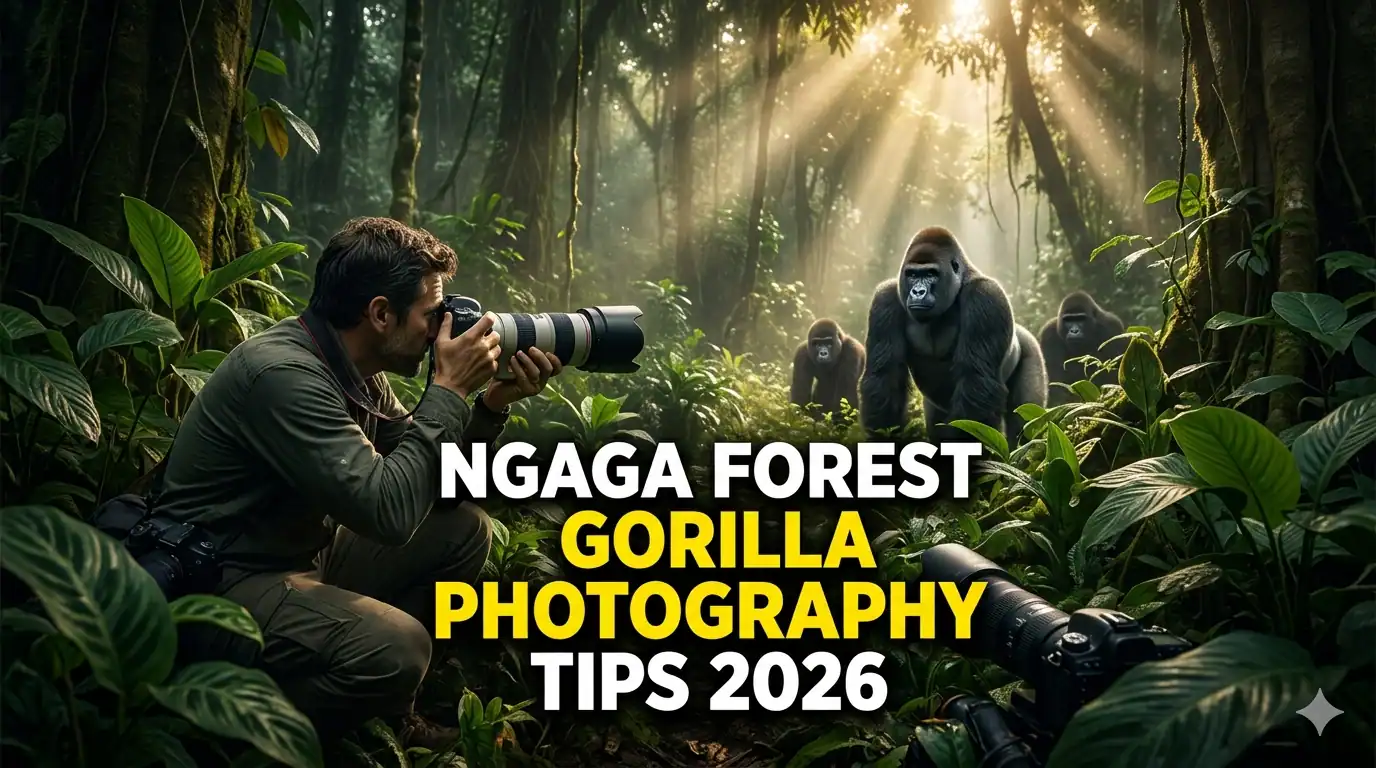
Introduction to Photographing Western Lowland Gorillas in Ngaga Forest
Photographing Western Lowland Gorillas in the pristine rainforests surrounding Ngaga represents one of wildlife photography's most rewarding yet challenging pursuits. Located in the Ndzehi Forest on the western boundary of Odzala-Kokoua National Park in the Republic of Congo, Ngaga offers photographers unprecedented opportunities to observe and capture these magnificent primates in their natural habitat . The dense equatorial rainforest environment, with its towering trees, thick marantaceae undergrowth, and dappled lighting conditions, creates unique photographic challenges that require specialized techniques, equipment, and preparation .
Western Lowland Gorillas present different photographic opportunities compared to their mountain gorilla cousins, often displaying more active behaviors and utilizing both forest floor and lower canopy levels. The habituated gorilla families at Ngaga allow photographers to spend intimate moments observing natural behaviors including feeding, social interactions, nesting, and play . However, the challenging low-light conditions of the rainforest canopy, unpredictable gorilla movements, humidity, and strict ethical guidelines requiring minimum distances create a complex photographic environment that demands both technical skill and artistic vision.
This comprehensive guide provides expert photography tips specifically tailored for capturing stunning images of Western Lowland Gorillas in Ngaga Forest. From camera settings optimized for dense rainforest lighting to ethical photography practices that prioritize gorilla welfare, from equipment selection to composition techniques, this guide equips photographers with the knowledge needed to create exceptional wildlife images while respecting these endangered primates and their fragile habitat.
Understanding Ngaga Forest's Unique Photographic Environment

The Ngaga Forest presents a distinctive photographic environment characterized by extremely low light levels, high humidity, dense vegetation, and limited shooting distances. The forest canopy creates a natural filter that reduces available light significantly, often requiring photographers to work in conditions equivalent to deep shade or twilight even during midday hours . This challenging lighting environment demands careful attention to camera settings, particularly ISO, aperture, and shutter speed, to capture sharp, well-exposed images without disturbing the gorillas with flash photography.
The marantaceae forest surrounding Ngaga features dense understory vegetation that can obstruct views and create busy, cluttered backgrounds . Photographers must develop skills in quickly identifying clear shooting angles, anticipating gorilla movements to position themselves advantageously, and using composition techniques to isolate subjects from complex forest backgrounds. The forest's moisture content creates atmospheric conditions that can affect image clarity and equipment functionality, requiring protective measures and moisture management strategies .
Lighting Conditions and Their Impact on Photography
Lighting in Ngaga Forest varies dramatically throughout the day and depends heavily on weather conditions, canopy density, and gorilla location within the forest structure. Early morning and late afternoon offer the best natural light opportunities, with shafts of golden light occasionally penetrating the canopy to create dramatic backlit scenes and rim lighting on gorilla subjects . However, photographers must be prepared to work with whatever light is available, as gorilla movements and behaviors cannot be controlled or predicted.
Typical lighting conditions in the forest require photographers to push ISO settings significantly higher than comfortable, often ranging from ISO 1600 to ISO 6400 or higher depending on specific conditions . The dense canopy creates soft, diffused light that eliminates harsh shadows but also reduces contrast and can result in flat-looking images if not managed properly through exposure compensation and post-processing techniques . Understanding how to work with these challenging lighting conditions while maintaining image quality is essential for successful gorilla photography at Ngaga.
Essential Camera Equipment for Ngaga Gorilla Photography

Selecting appropriate camera equipment for Western Lowland Gorilla photography in Ngaga Forest requires balancing image quality, low-light performance, focal length flexibility, and weather resistance. Professional wildlife photographers recommend bringing camera bodies with excellent high-ISO performance and fast, accurate autofocus systems capable of tracking moving subjects in low-contrast environments . Full-frame sensors provide advantages in low-light situations and depth of field control, though modern crop-sensor cameras can also produce exceptional results with their extended effective focal length.
Lens selection represents perhaps the most critical equipment decision for gorilla photography. Telephoto zoom lenses in the 70-200mm f/2.8 or 100-400mm f/4.5-5.6 range offer versatility for capturing both intimate portraits and environmental context shots . Fast prime lenses like 85mm f/1.4 or 135mm f/2 provide superior low-light performance and beautiful background separation but lack focal length flexibility . A wide-angle lens (16-35mm or 24-70mm) proves valuable for capturing forest landscapes, camp scenes, and environmental portraits when gorillas approach closer than expected.
Protecting Equipment in Rainforest Conditions
The humid, moist environment of Ngaga Forest poses significant risks to camera equipment, making weather-sealing and protective measures essential. Professional photographers recommend using weather-sealed camera bodies and lenses whenever possible, along with rain covers, lens hoods, and protective filters to shield equipment from moisture, dust, and accidental damage . Silica gel packets stored in camera bags help control humidity, while microfiber cloths and lens cleaning solutions enable quick removal of condensation and water droplets that inevitably accumulate on equipment .
Carrying equipment in padded, waterproof camera bags with comfortable carrying systems facilitates movement through challenging forest terrain while protecting valuable gear from impacts and moisture . Photographers should bring multiple camera batteries, as cold morning temperatures and extensive LCD screen use drain battery life quickly, and charging opportunities may be limited depending on camp facilities . Memory cards with high write speeds support continuous shooting modes essential for capturing fleeting gorilla behaviors, while backup storage solutions protect irreplaceable images.
Mastering Camera Settings for Low-Light Forest Photography

Successfully photographing Western Lowland Gorillas in Ngaga's challenging lighting conditions requires mastering the exposure triangle—aperture, shutter speed, and ISO—while balancing competing priorities of image quality, motion freezing, and adequate exposure . For typical gorilla photography scenarios, photographers should prioritize shutter speed to freeze subject movement, using a minimum of 1/250s for stationary gorillas and 1/500s or faster for active behaviors like feeding, playing, or moving through the forest .
Aperture selection involves trade-offs between light gathering ability and depth of field. Wide apertures like f/2.8 or f/4 maximize light intake and create pleasing background blur that isolates gorillas from busy forest backgrounds, but they also produce very shallow depth of field that can result in only part of the subject being in focus . Stopping down to f/5.6 or f/8 increases depth of field and overall image sharpness but requires higher ISO settings to maintain adequate shutter speeds in low light .
ISO Management and Image Quality
Modern camera sensors handle high ISO settings remarkably well, enabling photographers to push ISO to 3200, 6400, or even higher while maintaining acceptable image quality . In Ngaga Forest's dim conditions, photographers should not hesitate to use high ISO settings rather than risk motion blur from slow shutter speeds or missed shots from underexposure . While higher ISO introduces digital noise, modern post-processing software effectively reduces noise while preserving detail, making a sharp, noisy image preferable to a blurry, clean one.
Setting ISO to Auto with an upper limit (such as ISO 6400 or 12800) allows the camera to adjust sensitivity automatically while preventing excessively high settings that severely degrade image quality . Some photographers prefer manual ISO control, adjusting settings based on specific lighting conditions and subject activity levels. Regardless of approach, regularly reviewing images on the camera's LCD screen helps ensure proper exposure and allows adjustments before lighting conditions change or gorillas move to different locations.
Autofocus Strategies for Moving Gorillas
Gorillas' unpredictable movements and the forest's low-contrast environment challenge even advanced autofocus systems. Using continuous autofocus (AI Servo on Canon, AF-C on Nikon/Sony) with dynamic or zone autofocus points enables the camera to track moving gorillas and maintain focus as they shift position . Single-point autofocus provides precision for stationary subjects but requires manual point selection and recomposition, which can be slow when gorillas exhibit sudden behaviors.
Back-button focus, which separates autofocus activation from the shutter button, offers advantages for gorilla photography by allowing photographers to lock focus independently of exposure and maintain focus on subjects that temporarily move behind vegetation . Pre-focusing on areas where gorillas are likely to move, using focus limiting features if available on telephoto lenses, and practicing quick manual focus adjustments all improve hit rates for sharp images of active gorillas.
Composition Techniques for Compelling Gorilla Portraits

Creating compelling gorilla images requires more than technical proficiency—it demands artistic vision and thoughtful composition that captures the personality, emotion, and essence of these remarkable primates. Focusing on the eyes proves paramount, as sharp, well-lit eyes create connection and draw viewers into the image, even if other elements are slightly soft or the background is busy . Gorillas' expressive faces offer endless opportunities for intimate portraits that reveal individual character and emotional states.
Getting low to the ground and shooting at the gorillas' eye level creates more intimate, engaging perspectives than shooting down on subjects from a standing position . This eye-level approach requires photographers to sit, kneel, or even lie on the forest floor, but it produces images that place viewers in the gorillas' world rather than observing from a detached, superior position. When gorillas climb trees or occupy elevated positions, finding vantage points that maintain eye-level perspective enhances image impact.
Environmental Context and Storytelling
While tight portraits capture gorilla personality and expression, environmental shots that show gorillas within their rainforest habitat tell richer stories and provide context for their behavior and ecology . Using wider focal lengths or stepping back to include forest elements like towering trees, dense vegetation, forest clearings, or other gorilla group members creates images that document not just the individual but the species' relationship with its environment.
Varying composition between tight headshots, three-quarter portraits, full-body images, and group scenes ensures a diverse portfolio that captures different aspects of gorilla life . Including juvenile gorillas playing, silverbacks displaying authority, mothers with infants, or groups feeding together adds narrative depth and emotional resonance to photography. Patience and observation allow photographers to anticipate interesting interactions and position themselves for optimal compositions before behaviors unfold.
Managing Busy Forest Backgrounds
The dense, cluttered backgrounds typical of Ngaga Forest can distract from gorilla subjects and create visually chaotic images if not managed carefully . Using wide apertures (f/2.8-f/4) creates shallow depth of field that blurs backgrounds, helping subjects stand out from surrounding vegetation . Looking for angles that position gorillas against darker backgrounds, open sky visible through canopy gaps, or uniform vegetation rather than bright spots or contrasting patterns improves subject separation.
Sometimes accepting busy backgrounds proves necessary when gorilla behavior or forest conditions limit positioning options. In these situations, ensuring the gorilla remains the brightest or sharpest element in the frame, using light and shadow creatively, or converting images to black and white in post-processing can help subjects dominate despite complex backgrounds . The key remains maintaining focus on the gorilla while using background elements to enhance rather than detract from the image's impact.
Understanding Western Lowland Gorilla Behavior for Better Photography

Photographing gorillas effectively requires understanding their behavior patterns, social dynamics, and daily rhythms to anticipate photographic opportunities and position oneself advantageously. Western Lowland Gorillas at Ngaga follow somewhat predictable daily patterns, typically waking at dawn, traveling to feeding areas, resting during midday heat, and moving to nesting sites in late afternoon . Understanding these patterns helps photographers prepare for active periods when gorillas travel or feed versus quieter times when they rest or nest.
Gorilla groups at Ngaga include dominant silverbacks, adult females, and offspring of various ages, each exhibiting distinct behaviors and photographic characteristics . Silverbacks often rest prominently and display authoritative postures that make powerful portrait subjects, while juveniles and young gorillas provide dynamic action shots through play, climbing, and exploration. Observing group dynamics and individual personalities allows photographers to predict interesting interactions and prepare camera settings before behaviors occur.
Anticipating Photogenic Behaviors
Certain gorilla behaviors occur repeatedly and offer reliable photographic opportunities. Feeding sequences often involve gorillas manipulating vegetation, fruits, or termites with dexterous hands, providing close-up opportunities to capture facial expressions and hand details . Social grooming sessions between group members create intimate moments showing bonds and relationships. Play behaviors, particularly among juveniles, produce dynamic action shots but require fast shutter speeds and continuous shooting modes to capture peak moments.
Weather and seasonal factors influence gorilla behavior and photographic conditions. During rainy periods, gorillas may seek shelter under dense vegetation or construct temporary nests, creating opportunities for atmospheric images showing adaptation to weather . Dry season conditions often bring gorillas to forest clearings or water sources, potentially offering better lighting and clearer backgrounds. Understanding these patterns enables photographers to adapt expectations and techniques to current conditions.
Respecting Gorilla Space and Welfare
Ethical gorilla photography prioritizes gorilla welfare over image capture, maintaining minimum distances (typically 7-10 meters), avoiding prolonged direct eye contact that gorillas may perceive as threatening, and never positioning oneself between gorillas or blocking their movement paths . Guides at Ngaga provide crucial direction on appropriate positioning and behavior, and photographers should follow their instructions even when it means missing potential shots .
Photographers experiencing gorillas at close range may feel tempted to push boundaries for better images, but such behavior stresses gorillas, risks disease transmission, and undermines conservation tourism that protects these endangered primates . Using telephoto lenses rather than approaching closer, moving slowly and quietly, keeping voices low, and accepting the photographic opportunities that present themselves within ethical guidelines ensures gorilla welfare while still producing exceptional images.
Technical Challenges and Solutions for Rainforest Photography

Photographing in Ngaga's rainforest environment presents unique technical challenges beyond typical wildlife photography scenarios. Condensation forming on lenses when moving between air-conditioned vehicles or buildings and humid forest environments can ruin shots and potentially damage equipment . Allowing equipment to acclimate gradually to temperature and humidity changes, using lens hoods to shield from moisture, and carrying microfiber cloths for quick cleaning helps manage condensation issues.
The forest's green-dominated color palette creates white balance challenges, as cameras' automatic white balance systems may struggle with the overwhelming green cast from surrounding vegetation . Shooting in RAW format rather than JPEG preserves maximum flexibility for white balance adjustment in post-processing, while using custom white balance or Kelvin settings based on current lighting conditions can produce more accurate colors in-camera . Some photographers embrace the green cast as part of the rainforest atmosphere, while others prefer neutralizing it for more natural skin tones on gorillas.
Dealing with Limited Shooting Time
Gorilla viewing at Ngaga typically allows one hour with habituated groups, creating pressure to capture quality images within a limited timeframe . Arriving at shooting locations with camera settings pre-adjusted for current lighting conditions, lenses selected and ready, and mental preparation for likely scenarios maximizes productive shooting time . Rather than chimping (constantly reviewing images) during the hour, photographers should focus on observing gorillas and capturing images, saving image review for rest periods or evening.
Prioritizing shot types helps ensure capturing essential images within time constraints. Starting with wider environmental shots establishes context, then moving to medium shots and tight portraits as opportunities arise creates a logical workflow . Remaining flexible and ready to adapt when gorillas exhibit unexpected behaviors or move to different locations prevents missing once-in-a-lifetime moments while pursuing a predetermined shot list.
Post-Processing Rainforest Gorilla Images
Post-processing plays crucial roles in optimizing gorilla images captured in challenging rainforest conditions. RAW processing software enables exposure adjustments, shadow and highlight recovery, noise reduction for high-ISO images, and precise white balance correction . Selective adjustments brightening gorilla faces or eyes while maintaining natural forest atmosphere, careful sharpening to enhance fur detail without creating halos, and noise reduction that preserves detail while smoothing grain all improve final image quality.
Crop composition offers opportunities to improve framing, eliminate distracting edge elements, or create tighter portraits from wider shots, though excessive cropping reduces image resolution and quality . Batch processing similar images with consistent adjustments saves time while maintaining cohesive look across a series. Creating both color and black-and-white versions of compelling images provides creative options, as monochrome conversions can emphasize texture, form, and emotion while minimizing color cast issues from forest lighting.
Practical Tips for Bangladeshi Travelers Photographing at Ngaga

Bangladeshi travelers planning gorilla photography expeditions to Ngaga Forest should consider several practical factors specific to their journey from South Asia to Central Africa. Visa requirements for the Republic of Congo necessitate advance planning, with travelers needing to secure appropriate visas through Congolese embassies or consulates, often requiring invitation letters from lodges or tour operators . The journey typically involves flights from Dhaka to major hub cities like Addis Ababa, Nairobi, or European capitals, then connecting flights to Brazzaville, followed by ground or air transfer to Ngaga Lodge .
Packing appropriate photography equipment within airline weight restrictions while ensuring comprehensive coverage of focal lengths and backup capabilities requires strategic planning. Bangladeshi photographers should verify electrical adapter compatibility (Congo uses Type C and Type E outlets at 230V) for charging camera batteries and other equipment, bringing necessary adapters and potentially voltage converters . Travel insurance covering expensive photography equipment, medical evacuation, and trip cancellation provides crucial protection for significant investments in gorilla photography expeditions.
Cultural and Logistical Considerations
Understanding cultural contexts and logistical realities enhances the photography experience at Ngaga. The Republic of Congo's French colonial heritage means French serves as the primary language, though English-speaking guides typically work at Ngaga Lodge catering to international tourists . Bangladeshi travelers comfortable with English should confirm language capabilities when booking, or consider hiring private guides if language barriers might impede communication about photographic needs.
Accommodation at Ngaga Lodge or similar facilities provides comfortable bases for gorilla trekking, with amenities including charging stations for camera equipment, guided forest walks, and expert naturalist knowledge . Booking well in advance secures preferred dates and allows time for necessary preparations including vaccinations (yellow fever required), malaria prophylaxis, and physical conditioning for forest trekking . The investment in visiting Ngaga proves substantial for Bangladeshi travelers, making thorough preparation essential for maximizing photographic success.
Health and Safety Precautions
Protecting health in Congo's tropical environment enables photographers to focus on capturing images rather than managing illness. Malaria prevention through prophylactic medications, insect repellent containing DEET, and sleeping under provided bed nets proves essential . Staying hydrated, using sunscreen despite forest shade, and maintaining energy through regular meals supports the physical demands of trekking through humid forest while carrying photography equipment.
Respecting gorillas' susceptibility to human diseases requires photographers in good health, avoiding visits when experiencing cold, flu, or other contagious illnesses that could transmit to gorillas . Following lodge guidelines about maintaining distance, not eating near gorillas, and sanitizing hands protects both gorilla populations and ensures sustainable gorilla tourism that benefits conservation efforts and local communities.
Conclusion: Creating Lasting Images of Ngaga's Gorillas
Photographing Western Lowland Gorillas in the Ngaga Forest represents a privilege that combines technical challenge, artistic opportunity, and conservation significance. The skills developed navigating low-light rainforest conditions, anticipating wildlife behavior, and composing compelling images in complex environments elevate photographers' capabilities far beyond gorilla photography alone. Each moment spent with these magnificent primates offers opportunities to create images that not only satisfy artistic aspirations but also contribute to awareness and conservation of one of Africa's most endangered species.
Success in Ngaga Forest requires balancing technical preparation with adaptive flexibility, respecting ethical boundaries while pursuing creative vision, and accepting that some of the most memorable photographic experiences transcend the images captured. The gorillas of Ngaga, habituated yet wild, offer glimpses into behaviors and personalities that remind us of our shared heritage and responsibility to protect these remarkable beings. For Bangladeshi travelers and international photographers alike, the images created at Ngaga become treasured memories and powerful tools for sharing the wonder of Western Lowland Gorillas with audiences who may never have the opportunity to encounter these primates in person.
As you prepare for your Ngaga photography expedition, remember that technical excellence serves the greater purpose of connection—connecting viewers to gorillas, fostering appreciation for rainforest ecosystems, and inspiring conservation action. The challenging conditions, demanding preparation, and significant investment required to photograph at Ngaga pale in comparison to the profound experience of sitting quietly in ancient rainforest, observing gorillas living their lives, and creating images that capture the essence of these extraordinary primates for generations to come.
0 Comments