.webp)
.webp)
Introduction: Discovering Chefchaouen's Blue Mystery
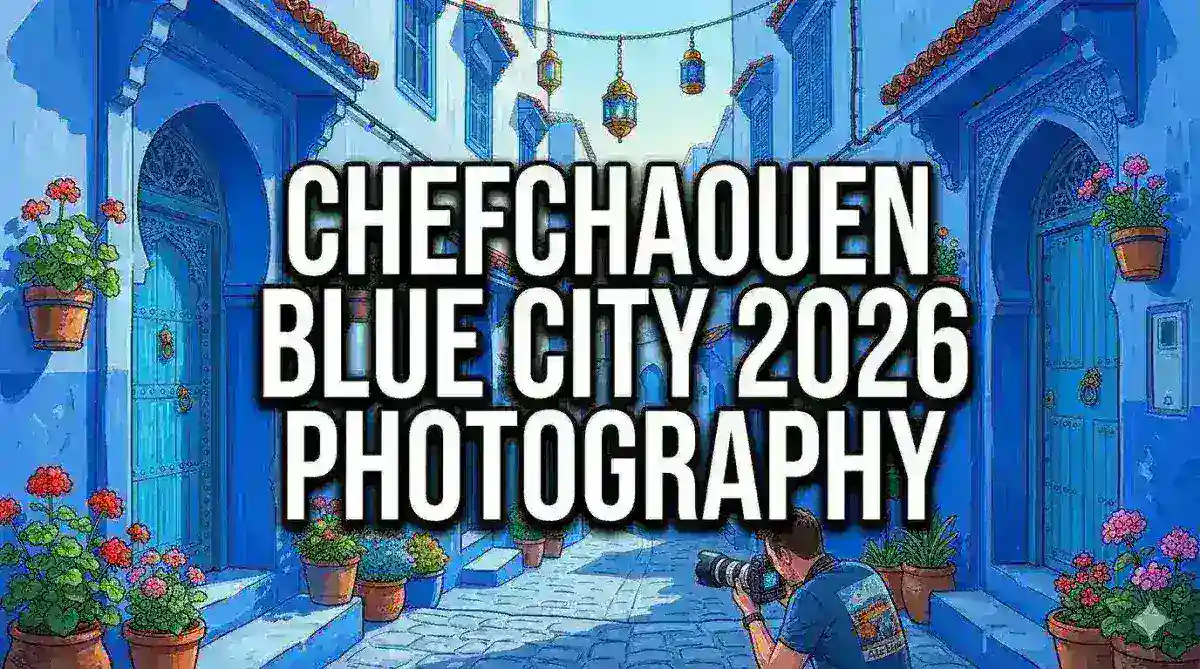
Chefchaouen Blue City photography 2026 reveals a mesmerizing world where every alley, doorway, and staircase is painted in endless shades of blue. This enchanting Moroccan mountain town, nestled in the Rif Mountains, has become one of the world's most photographed destinations, yet its hidden alleys hold secrets that most visitors never discover.
Known as the "Blue City" or "Blue Pearl," Chefchaouen's distinctive blue-washed buildings create an otherworldly atmosphere that captivates photographers from around the globe. The blue hues range from powder blue to deep indigo, creating endless compositional possibilities against the backdrop of traditional Moroccan architecture, colorful textiles, and dramatic mountain scenery.
This comprehensive 2026 photography guide explores Chefchaouen's hidden alleys, revealing secret photo locations, optimal lighting conditions, cultural photography etiquette, and practical tips for capturing the magic of Morocco's most photogenic town. Whether you're a professional photographer or smartphone enthusiast, this guide will help you discover the blue city's best-kept photographic secrets.
Why Chefchaouen Is Painted Blue: History and Mystery

Understanding the history behind Chefchaouen's blue paint adds depth to your photography and helps you appreciate the cultural significance of each blue-washed wall you capture.
Why is Chefchaouen painted blue?
The blue paint of Chefchaouen has multiple historical and cultural explanations. Jewish refugees who settled in the 1930s painted buildings blue to represent the sky and heaven, following Jewish tradition. The blue color also repels mosquitoes naturally, providing practical benefits in the mountain climate. Additionally, blue is believed to ward off evil spirits in Moroccan culture, offering spiritual protection to residents.
Theories behind the blue tradition:
- Jewish heritage: Jewish refugees brought the tradition of painting buildings blue to symbolize divinity and heaven
- Mosquito repellent: Blue paint contains natural ingredients that deter insects
- Spiritual protection: Blue is believed to ward off evil and bring peace
- Cooling effect: Blue reflects sunlight, keeping buildings cooler in summer
- Cultural identity: Blue distinguishes Chefchaouen from other Moroccan cities
- 👉 Ifrane Village Touristique: 2026 Eco-Stay Breakout
- 👉 Mountain Wellness Highveld 2026: Beyond Safari Guide
- 👉 Libyan United Airlines 2026: New A320 Fleet and Regional Connectivity Expansion
The blue washing is maintained by residents who regularly repaint their homes, creating a living tradition that continues today. This ongoing maintenance means the blue intensity varies throughout the medina, offering photographers diverse shades and textures to capture.
Best Photography Locations in Chefchaouen

Chefchaouen offers countless photography opportunities, from iconic blue alleyways to hidden corners that few tourists discover. Knowing where to go and when maximizes your chances of capturing stunning images.
Where are the best hidden alleys for photography?
Chefchaouen's best hidden photography locations include Rue Targui for iconic blue staircases, the Spanish Mosque viewpoint for panoramic city shots, Place Outa el Hammam for bustling square scenes, small alleys off Rue Bin Souika for intimate blue doorways, and the Kasbah area for historic architecture mixed with blue walls.
Top 10 photography locations in Chefchaouen:
- Rue Targui: Famous blue staircase with potted plants, best photographed early morning (7-9 AM) for soft light and no crowds
- Spanish Mosque: Hilltop location offering panoramic views of blue city against Rif Mountains, ideal for sunset (6-8 PM)
- Place Outa el Hammam: Main square with cafes and activity, great for street photography throughout the day
- Rue Bin Souika: Narrow blue alley with traditional doors, perfect for mid-morning light (9-11 AM)
- Kasbah Museum: Historic fortress with blue accents and architectural details, best visited midday when harsh light is less important
- Rue El Alj: Hidden alley with intense blue walls and local life, excellent for afternoon photography (2-4 PM)
- Bab El Ain: Historic gate with fountain, good for golden hour shots (5-7 PM)
- Small alleys near Grand Mosque: Quiet residential areas with authentic blue homes, best early morning (7-9 AM)
- Hammam Street: Traditional street with blue buildings and local shops, good for cultural photography
- Rooftop terraces: Various riads offer rooftop views of blue rooftops, best at sunrise or sunset
- 👉 Ifrane Village Touristique: 2026 Eco-Stay Breakout
- 👉 Mountain Wellness Highveld 2026: Beyond Safari Guide
- 👉 Libyan United Airlines 2026: New A320 Fleet and Regional Connectivity Expansion
For truly hidden locations, wander the residential areas northeast of Place Outa el Hammam. These neighborhoods receive fewer tourists and offer authentic blue alleyways with local life, laundry hanging between buildings, and cats lounging on blue steps.
What are the best times to photograph Chefchaouen?
Lighting dramatically affects the appearance of Chefchaouen's blue walls. The best photography times are early morning (7-9 AM) for soft, cool light that enhances blue tones and minimal crowds, and golden hour (5-7 PM) for warm light creating beautiful blue-orange contrast.
Optimal photography times by season:
- Spring (March-May): Morning 7-9 AM, Evening 6-8 PM. Mild temperatures, blooming flowers add color contrast to blue
- Summer (June-August): Morning 6-8 AM, Evening 7-9 PM. Avoid midday heat and harsh shadows
- Fall (September-November): Morning 7-9 AM, Evening 5-7 PM. Clear skies, comfortable temperatures
- Winter (December-February): Morning 8-10 AM, Evening 4-6 PM. Shorter days, dramatic mountain backdrop possible
- 👉 Ifrane Village Touristique: 2026 Eco-Stay Breakout
- 👉 Mountain Wellness Highveld 2026: Beyond Safari Guide
- 👉 Libyan United Airlines 2026: New A320 Fleet and Regional Connectivity Expansion
Overcast days actually enhance blue photography by creating even, diffused light that saturates blue tones without harsh shadows. Don't dismiss cloudy weather—it can produce the most intense blue photographs.
Photography Equipment and Settings

Capturing Chefchaouen's blue beauty requires thoughtful equipment choices and camera settings optimized for the unique lighting conditions of narrow blue alleyways.
What camera equipment is best for Chefchaouen?
The ideal photography equipment for Chefchaouen includes a wide-angle lens (16-35mm) for capturing narrow alleys and architectural details, a prime lens (35mm or 50mm) for street photography and portraits, a polarizing filter to enhance blue saturation and reduce reflections, and a lightweight tripod for long exposures in low light or self-portraits.
Recommended camera gear:
- Camera body: Mirrorless cameras preferred for lightweight portability (Sony A7 series, Fujifilm X-T series, Canon R series)
- Wide-angle lens: 16-35mm f/2.8 or f/4 for architecture and tight alleyways
- Standard zoom: 24-70mm f/2.8 for versatile shooting
- Prime lens: 35mm f/1.4 or 50mm f/1.8 for street photography and low light
- Polarizing filter: Essential for enhancing blue saturation and managing reflections on painted walls
- Tripod: Compact travel tripod for golden hour, blue hour, and self-portraits
- Extra batteries: Cold mountain mornings drain batteries faster
- Memory cards: Bring multiple high-capacity cards—you'll shoot more than expected
- 👉 Ifrane Village Touristique: 2026 Eco-Stay Breakout
- 👉 Mountain Wellness Highveld 2026: Beyond Safari Guide
- 👉 Libyan United Airlines 2026: New A320 Fleet and Regional Connectivity Expansion
Smartphone photographers can achieve excellent results using iPhone or Android flagship phones with wide-angle capabilities. Apps like Lightroom Mobile or Snapseed help enhance blue tones in post-processing.
What camera settings work best for blue city photography?
Optimal camera settings for Chefchaouen depend on lighting conditions, but general guidelines include using aperture priority mode with f/8-f/11 for sharp architecture shots, ISO 100-400 in good light, and shutter speed adjusted for proper exposure. For street photography, use shutter priority at 1/250s or faster to freeze movement.
Recommended settings by scenario:
- Architecture (blue walls): Aperture Priority, f/8-f/11, ISO 100-200, single-point autofocus
- Street photography: Shutter Priority, 1/250s or faster, ISO 400-800, continuous autofocus
- Golden hour: Manual mode, f/5.6-f/8, ISO 200-400, adjust shutter for exposure
- Blue hour (dusk): Manual mode, f/8-f/11, ISO 400-800, tripod recommended
- Interior doorways: Aperture Priority, f/2.8-f/4, ISO 800-1600, use available light
- Panoramas: Manual mode, f/8, ISO 100, overlap shots by 30%
- 👉 Ifrane Village Touristique: 2026 Eco-Stay Breakout
- 👉 Mountain Wellness Highveld 2026: Beyond Safari Guide
- 👉 Libyan United Airlines 2026: New A320 Fleet and Regional Connectivity Expansion
Shoot in RAW format for maximum post-processing flexibility. Blue tones benefit from RAW editing, allowing you to adjust white balance and saturation without quality loss.
Cultural Photography Etiquette

Photographing in Chefchaouen requires cultural sensitivity and respect for local residents who live in this photogenic town. Understanding proper etiquette ensures positive interactions and authentic photography opportunities.
Is it okay to photograph people in Chefchaouen?
Photographing people in Chefchaouen requires asking permission first, especially for close-up portraits. While street photography of public spaces is generally acceptable, pointing cameras directly at individuals without consent is considered disrespectful. Always ask "Photo?" with a smile and respect refusals gracefully.
Photography etiquette guidelines:
- Ask permission: Use simple Arabic "Mumkin sura?" (Can I take a photo?) or French "Photo?" with gesture
- Respect refusals: If someone declines or looks uncomfortable, smile, thank them, and move on
- Offer to share: Show people their photo on your camera screen—this often creates positive interactions
- Avoid sensitive subjects: Don't photograph people praying, in hammams, or in private moments
- Children: Always ask parents' permission before photographing children
- Tipping: If someone poses for an extended portrait, offering 10-20 MAD ($1-2 USD) is appreciated
- Women: Be especially respectful when photographing women; many prefer not to be photographed
- 👉 Ifrane Village Touristique: 2026 Eco-Stay Breakout
- 👉 Mountain Wellness Highveld 2026: Beyond Safari Guide
- 👉 Libyan United Airlines 2026: New A320 Fleet and Regional Connectivity Expansion
Building rapport before photographing creates better images and more meaningful experiences. Spend time in a location, observe daily life, and engage in friendly conversation before raising your camera.
What cultural sensitivities should photographers know?
Chefchaouen residents appreciate respectful photography that doesn't disrupt daily life or invade privacy. Avoid photographing inside homes without explicit invitation, don't block narrow alleyways for extended photo sessions, and be mindful that this is a living neighborhood, not just a photo backdrop.
Cultural do's and don'ts:
- DO: Learn basic Arabic greetings (Salam alaykum, Shukran), dress modestly, be patient, respect prayer times
- DON'T: Photograph inside mosques (non-Muslims cannot enter), be pushy or aggressive, litter, make excessive noise early morning
- DO: Support local businesses, buy from artisans, tip guides fairly, leave places as you found them
- DON'T: Touch people without permission, haggle aggressively, criticize local customs, expect everyone to speak English
- 👉 Ifrane Village Touristique: 2026 Eco-Stay Breakout
- 👉 Mountain Wellness Highveld 2026: Beyond Safari Guide
- 👉 Libyan United Airlines 2026: New A320 Fleet and Regional Connectivity Expansion
Remember that Chefchaouen is experiencing overtourism challenges. Being a respectful photographer helps preserve the town's authenticity and ensures residents maintain positive relationships with visitors.
How to Reach Chefchaouen: Transportation Guide

Reaching Chefchaouen requires planning as the town is located in Morocco's Rif Mountains, but multiple transportation options connect this blue city to major destinations.
What are the best ways to reach Chefchaouen?
Most travelers reach Chefchaouen from Tangier (2.5 hours), Tetouan (1 hour), or Fez (3.5-4 hours) by bus, grand taxi, or rental car. CTM and other bus companies offer comfortable, affordable service. Private transfers provide flexibility but cost more. The scenic mountain drive offers photography opportunities along the way.
Transportation options compared:
- Bus from Tangier: $8-12 USD, 2.5 hours, multiple daily departures, CTM most reliable, drops at bus station
- Bus from Tetouan: $5-8 USD, 1 hour, frequent departures, shortest route
- Bus from Fez: $12-18 USD, 3.5-4 hours, scenic mountain route, 2-3 daily departures
- Grand taxi: $15-25 USD from Tangier, shared with 6 passengers, faster than bus, less comfortable
- Private transfer: $80-120 USD from Tangier, door-to-door service, flexible stops for photography
- Rental car: $35-60 USD/day plus fuel, maximum flexibility, requires confident mountain driving
- 👉 Ifrane Village Touristique: 2026 Eco-Stay Breakout
- 👉 Mountain Wellness Highveld 2026: Beyond Safari Guide
- 👉 Libyan United Airlines 2026: New A320 Fleet and Regional Connectivity Expansion
Buses arrive at Chefchaouen's bus station, a 15-minute walk from the medina. Petit taxis cost 10-15 MAD ($1-2 USD) for the short ride. If staying in a riad, confirm if they offer pickup service.
Do I need a visa to visit Chefchaouen?
American citizens do not need a visa for tourist visits to Morocco under 90 days. However, the Morocco Digital Pass system introduced in 2026 requires all visitors to obtain digital travel authorization before arrival. This free pre-registration generates a QR code for airport entry.
Entry requirements for Americans:
- Valid passport with at least 6 months validity beyond entry date
- Completed Morocco Digital Pass registration (free for stays under 90 days)
- Proof of accommodation (riad or hotel confirmation)
- Return or onward travel ticket
- Travel insurance recommended
- 👉 Ifrane Village Touristique: 2026 Eco-Stay Breakout
- 👉 Mountain Wellness Highveld 2026: Beyond Safari Guide
- 👉 Libyan United Airlines 2026: New A320 Fleet and Regional Connectivity Expansion
Register for the Morocco Digital Pass at least one week before travel through the official Visit Morocco portal. Keep digital and physical copies of your QR code accessible during travel.
Best Time to Visit Chefchaouen for Photography

Timing your Chefchaouen visit significantly impacts photography quality, crowd levels, and overall experience. Understanding seasonal variations helps you plan the perfect photography trip.
When is the best time to photograph Chefchaouen?
The best times to photograph Chefchaouen are spring (April-May) and fall (September-October) when weather is mild, light is excellent, and crowds are manageable. Spring offers blooming flowers adding color contrast to blue walls, while fall provides clear skies and comfortable temperatures ideal for extended photography sessions.
Seasonal photography considerations:
- Spring (March-May): Ideal weather 60-75°F, blooming flowers, moderate crowds, occasional rain creates dramatic skies
- Summer (June-August): Warm 75-90°F, peak tourist crowds, harsh midday light, early morning essential
- Fall (September-November): Perfect weather 65-80°F, clear skies, fewer crowds than spring, golden light
- Winter (December-February): Cool 45-60°F, minimal crowds, possible snow on Rif Mountains, moody atmosphere
- 👉 Ifrane Village Touristique: 2026 Eco-Stay Breakout
- 👉 Mountain Wellness Highveld 2026: Beyond Safari Guide
- 👉 Libyan United Airlines 2026: New A320 Fleet and Regional Connectivity Expansion
For photography, avoid major Moroccan holidays and European school breaks when crowds peak. Weekdays (Tuesday-Thursday) are quieter than weekends. Visit during Ramadan for unique cultural photography but be aware that business hours change and some restaurants close during daylight.
Where to Stay: Photography-Friendly Accommodations

Choosing the right accommodation in Chefchaouen enhances your photography experience, providing convenient medina access, rooftop terraces for sunrise/sunset shots, and local knowledge from hosts.
What are the best places to stay for photographers?
Photographers should prioritize riads with rooftop terraces offering panoramic blue city views, central medina locations minimizing gear-carrying distance, and hosts who provide photography tips and location recommendations. Popular photography-friendly riads include Riad Hicham, Dar Echchaouen, and Lina Ryad.
Accommodation types and pricing:
- Budget riads: $30-60 USD/night, basic rooms, shared bathrooms, rooftop access, family hospitality
- Mid-range riads: $70-120 USD/night, private bathrooms, breakfast included, rooftop terraces, central locations
- Luxury riads: $130-250 USD/night, premium rooms, pools, spa services, personalized photography guidance
- Hotels: $50-150 USD/night, modern amenities, often outside medina requiring walking
- 👉 Ifrane Village Touristique: 2026 Eco-Stay Breakout
- 👉 Mountain Wellness Highveld 2026: Beyond Safari Guide
- 👉 Libyan United Airlines 2026: New A320 Fleet and Regional Connectivity Expansion
Book riads at least 2-3 months in advance for peak seasons. Request rooms with mountain or medina views for additional photography opportunities from your accommodation. Many riad owners are excellent resources for hidden photography locations and optimal timing.
Photography Itinerary: 3 Days in Chefchaouen

A well-structured photography itinerary ensures you capture Chefchaouen's diverse offerings while allowing time for exploration and unexpected discoveries.
What should I photograph in 3 days?
This 3-day photography itinerary balances iconic locations with hidden gems, optimal lighting conditions, and cultural experiences while allowing flexibility for personal exploration and spontaneous photography opportunities.
Day 1: Iconic Blue Alleys
- 7:00 AM: Sunrise photography at Place Outa el Hammam, empty square with soft morning light
- 8:00 AM: Breakfast at riad, review Day 1 shot list
- 9:00 AM: Photograph Rue Targui blue staircase with morning light and minimal crowds
- 10:30 AM: Explore Rue Bin Souika and surrounding alleys, focus on blue doors and architectural details
- 12:30 PM: Lunch break, review morning images, rest during harsh midday light
- 3:00 PM: Visit Kasbah Museum, photograph blue walls and historic architecture
- 5:00 PM: Hike to Spanish Mosque for sunset panoramic views
- 7:30 PM: Dinner in medina, evening street photography with ambient light
- 👉 Ifrane Village Touristique: 2026 Eco-Stay Breakout
- 👉 Mountain Wellness Highveld 2026: Beyond Safari Guide
- 👉 Libyan United Airlines 2026: New A320 Fleet and Regional Connectivity Expansion
Day 2: Hidden Alleys and Local Life
- 7:30 AM: Early morning photography in residential areas northeast of main square
- 9:00 AM: Breakfast, then explore Hammam Street and local shops
- 11:00 AM: Street photography around Bab El Ain fountain and gate
- 1:00 PM: Lunch, midday rest
- 3:00 PM: Wander small alleys near Grand Mosque, photograph daily life
- 5:00 PM: Golden hour photography on Rue El Alj
- 7:00 PM: Blue hour shots from rooftop terrace
- 8:30 PM: Traditional Moroccan dinner, night photography if energy permits
- 👉 Ifrane Village Touristique: 2026 Eco-Stay Breakout
- 👉 Mountain Wellness Highveld 2026: Beyond Safari Guide
- 👉 Libyan United Airlines 2026: New A320 Fleet and Regional Connectivity Expansion
Day 3: Panoramas and Details
- 6:30 AM: Sunrise hike to Spanish Mosque for panoramic blue city views
- 9:00 AM: Breakfast, pack gear
- 10:00 AM: Detail photography: door knockers, textiles, pottery, local crafts
- 12:00 PM: Final lunch in favorite location
- 2:00 PM: Revisit favorite spots for different light or missed shots
- 4:00 PM: Souvenir shopping, photograph artisan workshops
- 6:00 PM: Sunset photography, farewell shots
- 👉 Ifrane Village Touristique: 2026 Eco-Stay Breakout
- 👉 Mountain Wellness Highveld 2026: Beyond Safari Guide
- 👉 Libyan United Airlines 2026: New A320 Fleet and Regional Connectivity Expansion
This itinerary balances structured photography with flexibility. Adjust timing based on season, weather, and personal preferences. Leave room for unexpected discoveries—some of the best photographs come from unplanned moments.
Travel Cost Estimates

Planning a photography trip to Chefchaouen requires understanding realistic costs for accommodation, food, transportation, and activities.
How much does a Chefchaouen photography trip cost?
A typical 3-day Chefchaouen photography trip for American travelers ranges from $200-600 USD depending on accommodation level, transportation choices, and dining preferences. Budget travelers can experience the blue city for under $250, while those preferring comfort may spend $500+.
Estimated cost breakdown (per person, 3 days):
- Budget option: Accommodation $30-50/night ($90-150 total), bus transport $20, meals $15-25/day ($45-75), activities/entrance fees $20, Total: $175-265 USD
- Mid-range option: Accommodation $70-100/night ($210-300 total), private transfer/taxi $50, meals $30-50/day ($90-150), activities $40, Total: $390-540 USD
- Comfort option: Upscale riad $120-180/night ($360-540 total), private transfer $100, meals $50-80/day ($150-240), activities/photography tour $80, Total: $690-960 USD
- 👉 Ifrane Village Touristique: 2026 Eco-Stay Breakout
- 👉 Mountain Wellness Highveld 2026: Beyond Safari Guide
- 👉 Libyan United Airlines 2026: New A320 Fleet and Regional Connectivity Expansion
Photography-specific costs include extra memory cards ($20-40), polarizing filter if needed ($30-100), and potential photography guide ($50-100/day). Most photography in public spaces is free; Kasbah Museum entry costs 50 MAD ($5 USD).
Essential Photography Tips

Maximizing your Chefchaouen photography requires practical preparation, technical knowledge, and cultural awareness. These tips help you capture stunning images while respecting the local community.
What photography tips work best in Chefchaouen?
Essential Chefchaouen photography tips include arriving early to beat crowds and harsh light, using a polarizing filter to enhance blue saturation, seeking color contrast with orange/terracotta elements, photographing details like door knockers and textiles, and engaging respectfully with locals before photographing.
Technical photography tips:
- Enhance blue tones: Use polarizing filter, shoot in RAW, adjust white balance toward cooler temperatures
- Fight harsh light: Shoot early morning/late afternoon, use overcast days, find shaded alleyways
- Composition: Use leading lines of narrow alleys, frame doorways within doorways, include human elements for scale
- Color contrast: Look for orange pots, colorful textiles, green plants against blue walls
- Details matter: Photograph door knockers, lanterns, tiles, cats, and architectural details
- Vary perspectives: Shoot from low angles looking up, high angles from rooftops, straight-on for symmetry
- 👉 Ifrane Village Touristique: 2026 Eco-Stay Breakout
- 👉 Mountain Wellness Highveld 2026: Beyond Safari Guide
- 👉 Libyan United Airlines 2026: New A320 Fleet and Regional Connectivity Expansion
Practical photography tips:
- Wear comfortable shoes for cobblestone streets and stairs
- Bring lightweight tripod for golden hour and self-portraits
- Carry extra batteries—cold mountain mornings drain them faster
- Use backpack instead of camera bag for less intimidating appearance
- Learn basic Arabic phrases for better interactions
- Respect "no photography" signs in certain areas
- Back up images daily to cloud or external drive
- 👉 Ifrane Village Touristique: 2026 Eco-Stay Breakout
- 👉 Mountain Wellness Highveld 2026: Beyond Safari Guide
- 👉 Libyan United Airlines 2026: New A320 Fleet and Regional Connectivity Expansion
Safety Considerations for Photographers

Chefchaouen is generally safe for photographers, but taking reasonable precautions ensures worry-free photography sessions.
Is Chefchaouen safe for solo photographers?
Yes, Chefchaouen is considered very safe for solo photographers including women. Violent crime is rare, and locals are generally helpful. However, standard travel precautions apply: secure expensive equipment, be aware of surroundings, avoid isolated areas after dark, and keep copies of important documents.
Safety tips for photographers:
- Don't flash expensive equipment unnecessarily
- Use camera strap across body, not around neck
- Keep backup memory cards and batteries in separate location
- Inform riad staff of hiking plans to Spanish Mosque
- Carry riad business card with address in Arabic
- Use hotel safe for passports and excess cash
- Register with US Embassy's STEP program
- Keep emergency numbers saved: Police 19, Ambulance 15
- 👉 Ifrane Village Touristique: 2026 Eco-Stay Breakout
- 👉 Mountain Wellness Highveld 2026: Beyond Safari Guide
- 👉 Libyan United Airlines 2026: New A320 Fleet and Regional Connectivity Expansion
Petty theft can occur in crowded areas. Keep camera bags closed and in front of you in busy medina sections. Most importantly, trust your instincts—if a situation feels uncomfortable, move to a more populated area.
Post-Processing Blue City Photos

Post-processing enhances Chefchaouen's blue tones while maintaining natural, authentic appearances that respect the reality of what you photographed.
How should I edit Chefchaouen photos?
Edit Chefchaouen photos by adjusting white balance to enhance blue tones naturally, increasing clarity and dehaze for architectural sharpness, boosting blue saturation moderately without oversaturation, and adjusting shadows/highlights to reveal detail in blue walls. Avoid excessive editing that makes blues look artificial.
Recommended editing workflow:
- White balance: Cool temperature slightly (-5 to -15) to enhance blue tones
- Exposure: Adjust to proper exposure, Chefchaouen often benefits from slight underexposure (-0.3 to -0.7)
- Contrast: Increase moderately (+10 to +20) for architectural definition
- Highlights: Reduce (-20 to -40) to retain detail in bright blue walls
- Shadows: Lift (+20 to +40) to reveal detail in dark doorways
- Clarity/Dehaze: Increase (+15 to +30) for sharper architecture
- Vibrance: Boost moderately (+15 to +25) rather than saturation
- Blue saturation: Increase selectively (+10 to +20) using HSL panel
- 👉 Ifrane Village Touristique: 2026 Eco-Stay Breakout
- 👉 Mountain Wellness Highveld 2026: Beyond Safari Guide
- 👉 Libyan United Airlines 2026: New A320 Fleet and Regional Connectivity Expansion
Popular editing apps include Adobe Lightroom (desktop and mobile), Capture One for advanced color grading, and free options like Darktable or RawTherapee. Mobile photographers can use Lightroom Mobile, Snapseed, or VSCO for excellent results.
Common Photography Mistakes to Avoid

Learning from common mistakes helps you capture better images and have more positive experiences photographing in Chefchaouen.
What mistakes should photographers avoid in Chefchaouen?
Common Chefchaouen photography mistakes include only photographing during midday harsh light, ignoring cultural etiquette when photographing people, oversaturating blue tones in post-processing, only shooting wide angles without capturing details, and rushing through locations without observing light changes.
Additional mistakes and solutions:
- Mistake: Only photographing iconic blue staircase
Solution: Explore beyond famous spots; hidden alleys offer unique perspectives - Mistake: Not asking permission for portraits
Solution: Always ask first; respectful approach often leads to better images - Mistake: Ignoring golden hour
Solution: Wake early, stay late; best light happens at day's edges - Mistake: Only shooting blue
Solution: Include contrasting colors—orange pots, green plants, colorful textiles - Mistake: Not backing up images
Solution: Backup daily to cloud or external drive; memory cards can fail - Mistake: Carrying too much gear
Solution: Travel light with versatile lenses; narrow alleys favor minimal equipment - 👉 Ifrane Village Touristique: 2026 Eco-Stay Breakout
- 👉 Mountain Wellness Highveld 2026: Beyond Safari Guide
- 👉 Libyan United Airlines 2026: New A320 Fleet and Regional Connectivity Expansion
Remember that photography is about more than capturing images—it's about experiencing place, connecting with people, and creating memories. Don't let the pursuit of perfect photographs prevent you from simply enjoying Chefchaouen's magic.
Conclusion: Capturing Chefchaouen's Blue Magic

Chefchaouen's Blue City offers photographers an extraordinary canvas of endless blue shades, traditional Moroccan architecture, and mountain scenery. The hidden alleys reveal themselves to those who explore with patience, respect, and curiosity.
The mystery of why Chefchaouen is painted blue adds cultural depth to every photograph you capture. Whether you're drawn by the iconic blue staircase, the panoramic views from Spanish Mosque, or the intimate details of blue doorways and local life, this mountain town rewards photographers who take time to observe and connect.
Success in Chefchaouen photography requires preparation—booking accommodations in advance, understanding optimal lighting times, respecting cultural etiquette, and packing appropriate equipment. But it also demands flexibility and openness to unexpected moments that often create the most memorable images.
As you plan your 2026 Chefchaouen photography adventure, remember that the best photographs come from genuine engagement with place and people. The blue city's magic lies not just in its photogenic walls but in the warmth of its residents, the rhythm of daily life, and the stunning Rif Mountain backdrop.
Ready to photograph Chefchaouen's blue mystery? Book your riad, pack your camera, and prepare to discover why this mountain town has become one of the world's most beloved photography destinations. The blue alleys await.
0 Comments