.webp)
.webp)
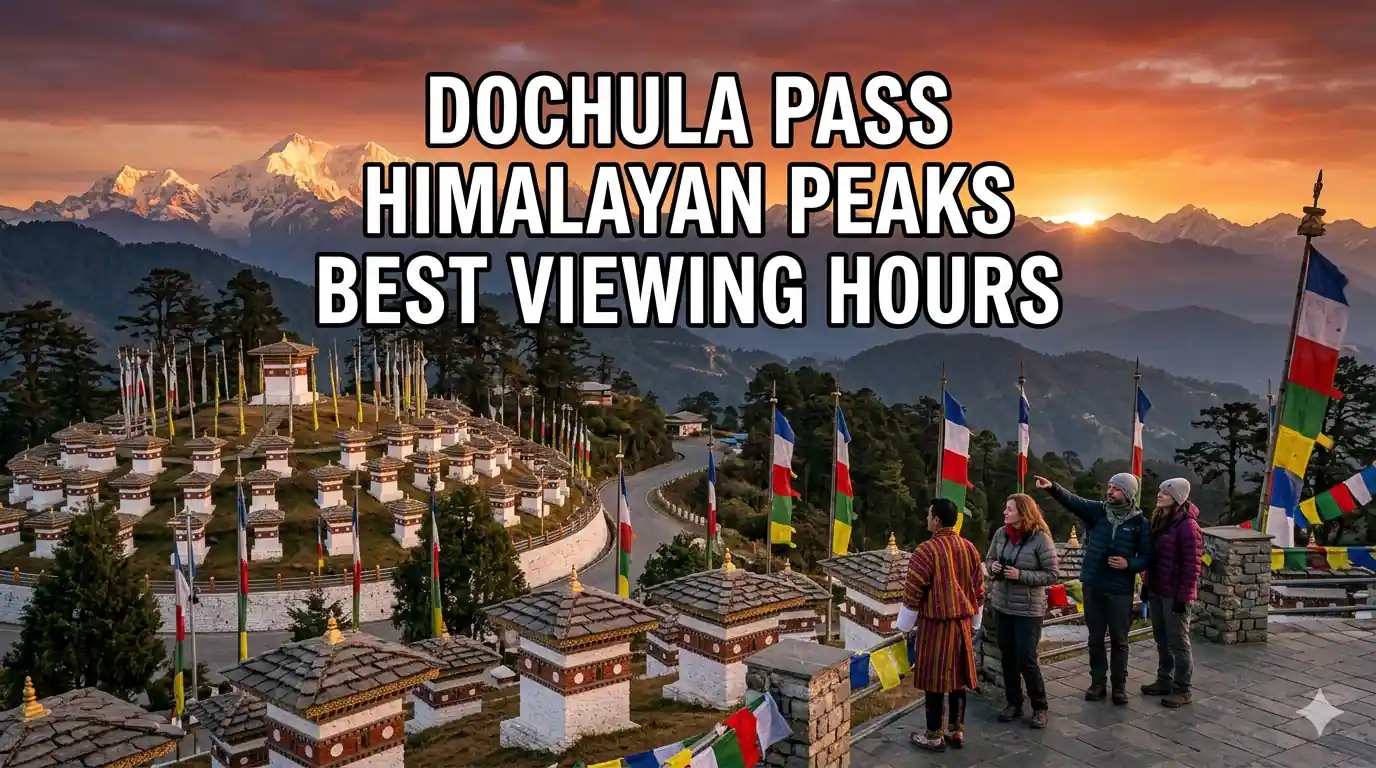
Discovering Dochula Pass and Its Spectacular Himalayan Views
Dochula Pass stands as one of Bhutan's most iconic mountain passes, sitting at an elevation of three thousand one hundred meters (ten thousand one hundred seventy feet) along the historic road connecting Thimphu to Punakha. This breathtaking location offers first-time travelers an unforgettable introduction to the Himalayan mountain range with panoramic views of some of the world's highest peaks.
The pass is renowned for the Druk Wangyal Khang Zhang Chortens, one hundred eight memorial stupas built in two thousand three to honor Bhutanese soldiers who lost their lives during operations against Assamese separatist militants. These white-washed stupas, arranged in perfect formation across the hillside, create a spiritually significant and visually stunning landscape that has become synonymous with Bhutan's natural and cultural heritage.
For first-time visitors, understanding the optimal viewing hours proves crucial for experiencing the Himalayan peaks in their full glory. The pass offers views of thirteen major Himalayan peaks including Gangkhar Puensum (seven thousand five hundred seventy meters), the world's highest unclimbed mountain, along with other notable peaks like Masagang, Tsherim Kang, and Gangla Phung.
Weather conditions, seasonal variations, and time of day dramatically impact visibility and the overall experience. This comprehensive guide examines the best hours for peak viewing, seasonal considerations, practical travel logistics, and essential tips for first-time travelers planning their Dochula Pass visit in 2026.
The Himalayan Panorama from Dochula Pass

Understanding which peaks are visible and their positioning helps travelers maximize their viewing experience and photography opportunities.
Major Peaks Visible from Dochula
Gangkhar Puensum dominates the eastern horizon as Bhutan's highest peak and the world's tallest unclimbed mountain. This sacred peak, revered by local communities, presents a challenging but rewarding sight when weather conditions align.
Masagang (seven thousand one hundred fifty-eight meters) appears prominently in the northern view, its distinctive pyramid shape making it easily identifiable among the snow-capped giants.
Tsherim Kang (six thousand nine hundred ninety meters) and Gangla Phung (six thousand nine hundred ninety meters) form part of the impressive mountain wall visible from the pass, their glacial faces catching light differently throughout the day.
Other visible peaks include Kula Kangri (seven thousand five hundred fifty-four meters), Table Mountain, and numerous subsidiary peaks creating a continuous wall of white against the blue sky when conditions prove favorable.
Viewing Conditions and Visibility Factors
Atmospheric clarity varies significantly based on season, time of day, and weather patterns. Winter months typically offer the clearest views with minimal cloud cover and reduced atmospheric haze.
Monsoon season from June through September brings frequent cloud cover that can completely obscure mountain views for days or weeks at a time, making this the least reliable period for peak viewing.
Air pollution and dust remain minimal in Bhutan due to strict environmental policies and low industrial development, contributing to generally excellent visibility when weather cooperates.
Temperature inversions can create dramatic effects with peaks appearing to float above cloud layers, particularly during early morning hours in cooler months.
Best Hours for Himalayan Peak Viewing

Timing your Dochula Pass visit proves critical for optimal mountain viewing with different hours offering distinct advantages and challenges.
Early Morning Hours (6:00 AM to 9:00 AM)
Early morning represents the golden hour for Dochula Pass visits with several compelling advantages for first-time travelers seeking the best Himalayan views.
Atmospheric clarity peaks during these hours as overnight cooling settles dust and pollutants, creating exceptionally clear air that enhances mountain visibility and photographic quality.
Cloud formation typically remains minimal in early morning before daytime heating generates convective clouds that can obscure peaks by mid-morning, particularly during warmer months.
Sunrise illumination creates spectacular alpenglow effects on snow-capped peaks with pink and orange hues painting the mountains in colors unavailable at other times of day.
Traffic remains light during early hours allowing unobstructed views and peaceful contemplation without crowds of tourists and tour groups that arrive later in the day.
Temperature considerations require warm clothing as early morning temperatures at three thousand one hundred meters can drop well below freezing even when daytime temperatures prove comfortable.
Mid-Morning Hours (9:00 AM to 11:00 AM)
Mid-morning offers a balance between optimal lighting and comfortable temperatures though visibility may begin decreasing as clouds develop.
Light quality remains excellent for photography with the sun high enough to illuminate peaks fully but not so high as to create harsh shadows or washed-out colors.
Temperature becomes more comfortable for extended viewing and photography sessions without the extreme cold of early morning or potential afternoon weather deterioration.
Tourist facilities including cafes and restrooms operate at full capacity during these hours providing convenience for travelers planning extended stops.
Cloud development may begin obscuring some peaks particularly during warmer months though winter and early spring often maintain clear conditions through late morning.
Late Morning to Afternoon (11:00 AM to 3:00 PM)
Midday and early afternoon typically prove least reliable for clear mountain views though can offer dramatic cloud formations and atmospheric effects.
Convective cloud development peaks during these hours as solar heating creates updrafts that form cumulus clouds often obscuring mountain peaks entirely.
Summer months see the most significant afternoon cloud cover with monsoon season bringing near-continuous cloud obstruction during these hours.
Winter afternoons can maintain reasonable visibility though atmospheric haze from daytime heating may reduce clarity compared to morning hours.
Photography becomes challenging with harsh overhead lighting creating strong contrasts and potentially washed-out images unless dramatic cloud formations provide interest.
Late Afternoon and Sunset Hours (3:00 PM to 6:00 PM)
Late afternoon can offer spectacular viewing opportunities if morning clouds dissipate though this proves less reliable than early morning visits.
Sunset illumination creates dramatic alpenglow effects similar to sunrise though afternoon atmospheric conditions often prove less clear than morning.
Temperature begins dropping rapidly after three in the afternoon requiring warm clothing for comfortable viewing during sunset hours.
Cloud clearing sometimes occurs in late afternoon as convective activity decreases though this depends heavily on daily weather patterns and seasonal conditions.
Tourist crowds typically thin during late afternoon as day-trippers return to Thimphu or continue to Punakha providing more peaceful viewing experiences.
Seasonal Variations in Viewing Conditions

Understanding seasonal patterns helps travelers plan optimal Dochula Pass visits aligned with their priorities for weather, visibility, and overall experience.
Spring Season (March to May)
Spring represents one of the best seasons for Dochula Pass visits combining generally clear morning views with comfortable temperatures and blooming rhododendrons.
March and April typically offer the clearest conditions with stable weather patterns and minimal cloud development through mid-morning hours.
May begins seeing increased afternoon cloud formation as pre-monsoon weather patterns develop though mornings usually remain clear for early visitors.
Rhododendron forests surrounding the pass burst into bloom during April and May adding spectacular color to the landscape alongside mountain views.
Temperatures range from freezing at dawn to fifteen to twenty degrees Celsius during daytime making layering essential for comfort throughout the day.
Summer and Monsoon Season (June to September)
Monsoon season proves most challenging for mountain viewing with frequent cloud cover and precipitation obscuring peaks for extended periods.
Early morning hours offer the best chance of clear views before convective cloud development though even mornings can prove cloudy during peak monsoon.
July and August see the heaviest precipitation with Dochula Pass experiencing frequent rain, fog, and near-zero visibility on many days.
Temperature remains comfortable ranging from ten to twenty degrees Celsius though humidity increases and rain gear proves essential.
Travelers visiting during monsoon should build flexibility into itineraries with multiple potential visit days to increase chances of clear mountain views.
Autumn Season (October to November)
Autumn ranks as the premier season for Dochula Pass visits with stable weather, clear skies, and excellent visibility of Himalayan peaks.
October and November offer the most reliable clear morning views with minimal cloud development and exceptional atmospheric clarity.
Post-monsoon air proves exceptionally clear with washed-out dust and pollutants creating optimal photography conditions.
Temperatures remain comfortable though begin cooling significantly in November requiring warm clothing particularly for early morning visits.
Tourist crowds peak during autumn requiring earlier arrival times to avoid congestion at viewpoints and photography spots.
Winter Season (December to February)
Winter provides excellent mountain visibility though cold temperatures and potential snow create challenging conditions for extended outdoor viewing.
December and January offer the clearest atmospheric conditions with minimal cloud cover and exceptional long-distance visibility on clear days.
Early morning temperatures can drop to minus ten degrees Celsius or lower requiring serious cold weather preparation for sunrise viewing.
Snow occasionally dusts the pass and stupas creating spectacular photographic opportunities though heavy snow can temporarily close the road.
Daytime temperatures range from five to fifteen degrees Celsius making mid-morning to early afternoon most comfortable for viewing though afternoon clouds may develop.
Practical Travel Information for First-Time Visitors

Successful Dochula Pass visits require understanding logistics, timing, and practical considerations specific to this high-altitude location.
Getting to Dochula Pass
Dochula Pass sits approximately thirty kilometers from Thimphu along the Thimphu-Punakha highway with travel time of forty-five to sixty minutes depending on road conditions and stops.
Private vehicle hire through tour operators provides the most flexible option allowing early morning departures for optimal viewing and extended time at the pass.
Taxi services from Thimphu cost approximately forty to sixty USD roundtrip including waiting time though negotiating clear terms before departure proves essential.
Organized tours often include Dochula Pass as part of Thimphu-Punakha itineraries though these typically arrive mid-morning rather than optimal early morning hours.
Public transportation proves unreliable for Dochula Pass visits with infrequent bus service and no dedicated stops at the viewpoint area.
Entrance Fees and Costs
Dochula Pass itself requires no entrance fee with the viewpoint and stupas freely accessible to all visitors throughout the day.
Parking facilities exist for private vehicles and tour buses though space can prove limited during peak tourist seasons and holiday periods.
Small cafes and souvenir shops operate at the pass with prices higher than Thimphu though reasonable by international tourist destination standards.
Photography remains free and unrestricted with no permits required for personal photography of the stupas or mountain views.
Facilities and Amenities
Restroom facilities exist though prove basic by international standards with limited maintenance during off-peak seasons.
Cafes serve hot beverages, simple snacks, and traditional Bhutanese refreshments providing warmth and refreshment during cold morning waits.
Sheltered viewing areas provide protection from wind and precipitation though seating remains limited requiring early arrival for prime spots during peak seasons.
Information boards explain the history of the stupas and identify visible peaks though English translations vary in quality and completeness.
Photography Tips for Dochula Pass

Capturing the spectacular scenery requires understanding optimal conditions, equipment needs, and compositional techniques specific to this location.
Equipment Recommendations
Wide-angle lenses (sixteen to thirty-five millimeter) prove essential for capturing the full sweep of stupas against the mountain backdrop.
Telephoto lenses (seventy to two hundred millimeter or longer) allow isolation of individual peaks and compression of the dramatic landscape layers.
Tripods prove crucial for early morning and sunset photography when light levels require longer exposures for optimal image quality.
Polarizing filters enhance sky contrast and reduce atmospheric haze improving mountain visibility in photographs though effects vary with sun angle.
Extra batteries prove essential as cold temperatures significantly reduce battery life particularly during winter morning photography sessions.
Optimal Photography Times
Sunrise provides the most dramatic lighting with alpenglow painting peaks in pink and orange hues unavailable at other times.
The blue hour before sunrise offers opportunities for long exposures capturing the stupas with twilight sky and emerging mountain silhouettes.
Golden hour after sunrise provides warm light on peaks with manageable contrast levels ideal for landscape photography.
Midday proves challenging for photography with harsh overhead light creating strong shadows and reduced color saturation.
Sunset can match sunrise for dramatic effects though afternoon atmospheric conditions often prove less clear than morning.
Compositional Techniques
Incorporating stupas as foreground elements creates depth and cultural context for mountain views rather than simple peak photography.
Prayer flags add color and movement to compositions while reinforcing the spiritual significance of the location.
Leading lines created by the road or stupa arrangements guide viewer eyes through the frame toward the mountain backdrop.
Layering foreground stupas, mid-ground valleys, and background peaks creates three-dimensional depth in two-dimensional images.
Human elements including travelers or pilgrims provide scale and emotional connection though should be used sparingly to maintain focus on landscape.
Weather Considerations and Preparation

Dochula Pass weather proves unpredictable requiring preparation for various conditions regardless of season or forecast.
Temperature Variations
Temperature swings of fifteen to twenty degrees Celsius between dawn and midday prove common requiring versatile clothing layers.
Wind chill significantly impacts perceived temperature with exposed pass location creating conditions much colder than Thimphu valley below.
Winter mornings require serious cold weather gear including insulated jackets, gloves, hats, and warm footwear for comfortable viewing.
Summer afternoons can prove surprisingly warm requiring sun protection and hydration despite cool morning temperatures.
Weather Patterns and Predictability
Mountain weather proves inherently unpredictable with conditions changing rapidly regardless of forecasts.
Clear mornings can deteriorate to complete cloud cover by midday particularly during warmer months requiring early arrival for reliable viewing.
Sudden fog can reduce visibility to near zero within minutes requiring patience and flexibility in timing.
Checking multiple weather sources and consulting local guides or hotel staff provides best insight into daily conditions though forecasts remain imperfect.
Rain and Snow Considerations
Rain gear proves essential year-round with sudden showers possible even during dry season months.
Winter snow creates spectacular scenery though can temporarily close the road requiring flexibility in travel plans.
Wet conditions make pathways slippery requiring sturdy footwear with good traction for safe movement around stupas and viewpoints.
Camera protection from rain and snow proves essential with waterproof covers or plastic bags protecting equipment during sudden precipitation.
Cultural and Spiritual Significance

Understanding the cultural context enhances the Dochula Pass experience beyond simple sightseeing.
The 108 Memorial Stupas
The Druk Wangyal Khang Zhang Chortens were built in two thousand three to honor Bhutanese soldiers killed during December two thousand three operations against Assamese separatist militants operating from bases in southern Bhutan.
Each of the one hundred eight stupas represents a fallen soldier with the number one hundred eight holding special significance in Buddhism representing the one hundred eight earthly desires or defilements that must be overcome to achieve enlightenment.
The stupas were commissioned by Queen Mother Ashi Dorji Wangmo Wangchuck and designed by architect Pema Wangda incorporating traditional Bhutanese architectural elements.
Visitors should circumambulate stupas clockwise following Buddhist tradition and maintain respectful behavior recognizing the memorial's sacred nature.
The Druk Wangyal Festival
The annual Druk Wangyal Tshechu festival held on December thirteenth celebrates Bhutan's victory and honors the fallen soldiers with traditional mask dances and cultural performances.
The festival attracts large crowds and proves an exceptional time to visit though accommodation books far in advance and the pass experiences significant congestion.
Festival performances occur at the nearby Druk Wangyal Khang Zhang Lhakhang temple rather than at the stupas themselves though both locations prove worth visiting.
Prayer Flags and Spiritual Elements
Colorful prayer flags surround the stupas and viewpoints with colors representing the five elements: blue (sky), white (air), red (fire), green (water), and yellow (earth).
Prayer flags carry mantras and prayers that spread on the wind bringing blessings and goodwill to all beings.
Visitors should never step on or remove prayer flags and should treat all religious objects with respect.
Adding personal prayer flags requires permission and proper placement according to local custom.
Health and Safety Considerations

Dochula Pass elevation and weather conditions require attention to health and safety particularly for first-time visitors to high altitude.
Altitude Considerations
At three thousand one hundred meters, Dochula Pass sits high enough to cause mild altitude effects in some visitors particularly those arriving directly from sea level locations.
Most travelers experience no serious altitude issues at Dochula as the elevation gain from Thimphu (two thousand three hundred meters) proves gradual.
Symptoms of altitude sickness include headache, nausea, dizziness, and shortness of breath. Descending to lower elevation if symptoms worsen proves the best treatment.
Staying hydrated, avoiding alcohol, and ascending gradually help prevent altitude issues though Dochula's elevation rarely causes serious problems for healthy travelers.
Physical Preparation
Walking around the stupas and viewpoints requires moderate fitness with uneven terrain and elevation changes.
Cold temperatures increase physical stress requiring adequate rest and nutrition particularly for early morning visits.
Visitors with heart or respiratory conditions should consult physicians before visiting high-altitude locations and carry necessary medications.
Safety Precautions
Roadside viewing areas require caution with busy highway traffic and limited barriers in some sections.
Slippery conditions during rain or snow require careful footing particularly on stone pathways around stupas.
Extreme cold can cause frostbite on exposed skin during winter mornings requiring appropriate protective clothing.
Emergency services prove limited at the pass with nearest medical facilities in Thimphu or Punakha requiring one hour or more travel time.
Maximizing Your Dochula Pass Experience

Strategic planning and realistic expectations enhance first-time visitor experiences at this iconic Bhutanese location.
Timing Your Visit
For best mountain views, arrive by six to seven in the morning during clear weather seasons (October-November, March-April) to maximize chances of clear peak visibility before cloud development.
Allow at least one to two hours at the pass for viewing, photography, and cultural appreciation though photography enthusiasts may wish to allocate three to four hours.
Consider multiple visits if your itinerary allows as weather variability means one visit may not provide optimal conditions.
Sunset visits can prove spectacular though require arranging return transportation to Thimphu or onward accommodation as most drivers prefer not to drive mountain roads after dark.
Combining with Other Destinations
Dochula Pass naturally fits into Thimphu to Punakha itineraries with the pass serving as a spectacular midpoint stop.
Punakha Dzong, Bhutan's most beautiful fortress, sits one hour beyond Dochula making an excellent same-day destination from Thimphu.
Chimi Lhakhang temple, the fertility temple, lies near Punakha and can be combined with Dochula Pass for a full day cultural and natural experience.
Extended stays in Punakha valley allow acclimatization and exploration of rice terraces, traditional villages, and riverside scenery.
Setting Realistic Expectations
Understand that mountain views depend entirely on weather conditions beyond anyone's control requiring flexibility and patience.
Even during best seasons, some days will prove completely cloudy with zero mountain visibility requiring backup plans and alternative activities.
The stupas and cultural significance provide value even when peaks remain hidden making the visit worthwhile regardless of weather.
First-time visitors should prioritize experience over perfect photographs with memories of the place proving more valuable than Instagram-perfect images.
Conclusion: Planning Your Perfect Dochula Pass Visit
Dochula Pass represents more than simply a scenic viewpoint; it embodies Bhutan's unique integration of natural beauty, spiritual significance, and cultural heritage. For first-time travelers, understanding optimal viewing hours, seasonal patterns, and practical logistics proves essential for maximizing this iconic destination.
Early morning hours between six and nine in the morning consistently provide the best combination of clear atmospheric conditions, minimal cloud cover, and dramatic lighting for viewing the thirteen visible Himalayan peaks. Spring (March-May) and autumn (October-November) offer the most reliable clear weather though winter provides exceptional clarity for those prepared for cold temperatures.
Success requires flexibility, patience, and realistic expectations acknowledging that mountain weather remains unpredictable regardless of planning. Building buffer days into itineraries, arriving early, and appreciating the cultural and spiritual dimensions beyond mere peak viewing ensures rewarding experiences even when weather proves uncooperative.
The one hundred eight memorial stupas provide profound context transforming Dochula from simple viewpoint to sacred memorial honoring those who defended Bhutan's sovereignty. Taking time to understand this history, observe Buddhist customs, and appreciate the prayer flags fluttering in the mountain wind adds depth to the visual spectacle.
For first-time travelers to Bhutan, Dochula Pass often provides the first breathtaking glimpse of the Himalayan range that defines this kingdom's identity and spirit. Approach this sacred pass with respect, preparation, and openness to whatever conditions await, and the experience will reward you with memories lasting far beyond your journey through the Land of the Thunder Dragon.
0 Comments