.webp)
.webp)
Best Locations for Astrophotography at Light Pollution Free Lake Markakol
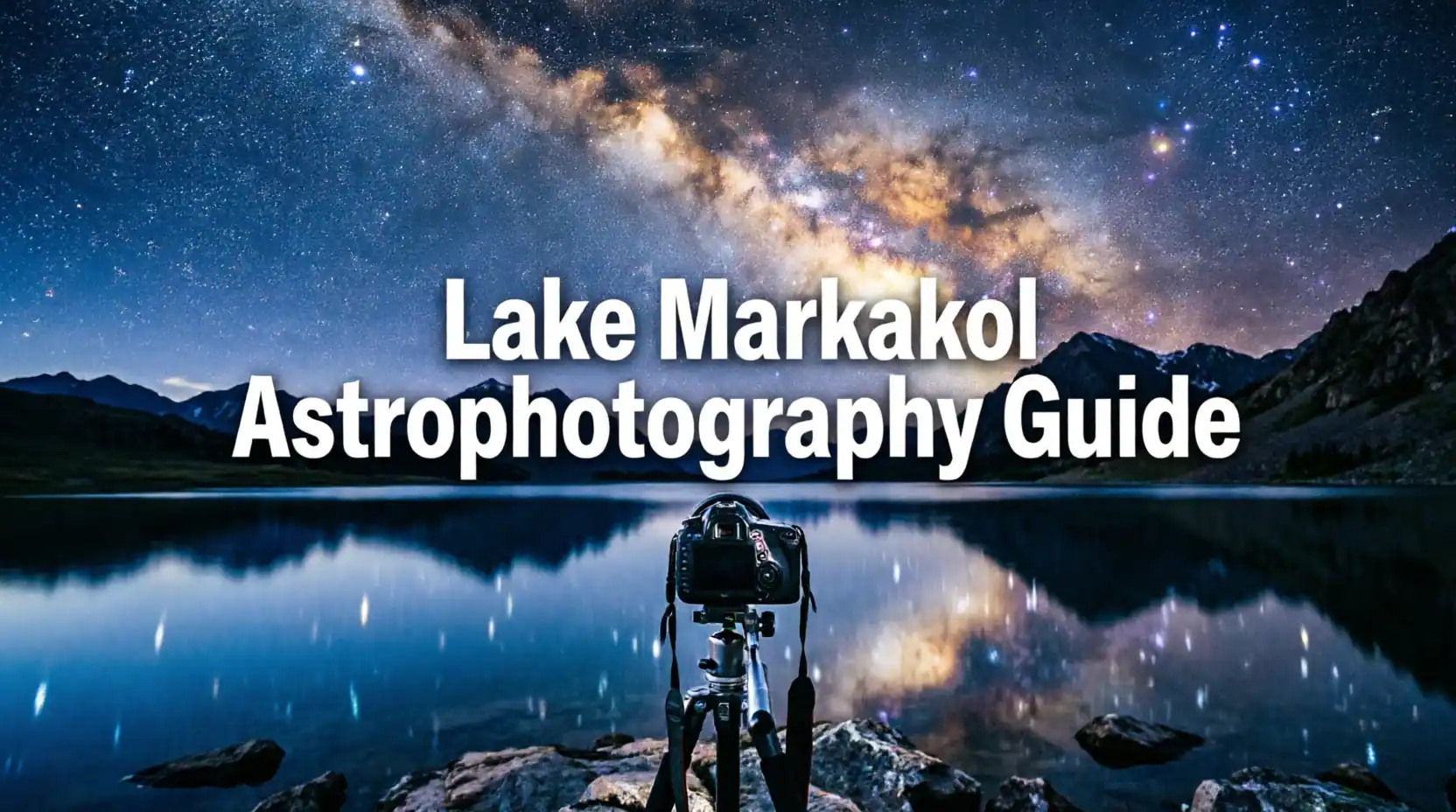
Introduction to Lake Markakol Astrophotography
Lake Markakol represents one of Central Asia's premier destinations for astrophotography and dark sky observation.
Located in eastern Kazakhstan's remote Altai Mountains, this pristine alpine lake offers exceptional night sky conditions.
With virtually zero light pollution and high altitude clarity, Markakol provides unparalleled opportunities for capturing the Milky Way.
The lake's dramatic mountain backdrop and reflective waters create stunning foreground elements for celestial photography.
This comprehensive guide reveals the best locations, timing, and techniques for astrophotography at Lake Markakol.
Understanding Lake Markakol's Dark Sky Advantages

Lake Markakol's remote location provides exceptional advantages for astrophotography enthusiasts.
Situated over 300 kilometers from major cities, the lake experiences minimal artificial light interference.
The high altitude of 1447 meters above sea level provides clearer atmospheric conditions for night photography.
Surrounding mountains create natural barriers blocking distant light pollution from urban areas.
These conditions make Markakol ideal for capturing faint celestial objects and the Milky Way's core.
Bortle Scale Classification
Lake Markakol qualifies as Bortle Class 1 or 2 on the nine-level light pollution scale.
Class 1 represents pristine dark sky conditions with Milky Way casting visible shadows on ground.
Zodiacal light, gegenschein, and airglow remain visible throughout the year at this location.
Naked eye can detect stars down to magnitude 7.5 or fainter under optimal conditions.
Such exceptional darkness is increasingly rare globally, making Markakol a precious astrophotography resource.
Atmospheric and Climate Advantages
Continental climate provides numerous clear nights throughout the year, especially in summer and autumn.
Low humidity during peak season reduces atmospheric distortion and improves image clarity.
Stable air conditions minimize turbulence that can degrade long-exposure astrophotography.
Cool temperatures help reduce camera sensor noise during extended exposures.
High altitude location provides thinner atmosphere allowing better light transmission from celestial objects.
Best Astrophotography Locations Around Lake Markakol

Lake Markakol's shoreline offers diverse locations each providing unique foreground compositions.
Different vantage points capture various mountain perspectives and water reflection opportunities.
Accessibility varies by location with some requiring hiking while others offer roadside access.
Understanding each location's characteristics helps photographers plan optimal shooting positions.
These specific spots provide the most spectacular astrophotography opportunities around the lake.
Western Shoreline Viewpoints
Western shore provides dramatic views of mountains rising from lake's edge with Milky Way alignment.
Easy roadside access allows equipment setup without extensive hiking in darkness.
Rocky outcrops and beaches offer varied foreground elements for compositional diversity.
Summer Milky Way core rises directly over mountain peaks creating spectacular alignment.
Water reflections enhance compositions when lake surface remains calm during evening hours.
Northern Bay Compositions
Northern bay features sheltered waters often calmer than exposed shoreline areas.
Forest edges provide silhouetted tree foregrounds framing celestial subjects effectively.
Smaller coves allow intimate compositions combining water, mountains, and night sky.
Access requires short hike from main road but rewards with secluded photography locations.
Early autumn provides golden larch trees adding color to foreground compositions.
Eastern Mountain Vistas
Eastern shore showcases highest mountain peaks creating dramatic silhouettes against starry sky.
Elevated viewpoints require moderate hiking but offer panoramic perspectives of lake and mountains.
Winter snow-covered peaks provide striking white foregrounds contrasting with dark night sky.
Spring wildflower meadows add colorful foreground interest during Milky Way season.
Remote location ensures complete darkness and minimal disturbance from other photographers.
Southern Peninsula Locations
Southern peninsula extends into lake providing 180-degree views of surrounding landscape.
360-degree panoramic opportunities allow capturing both lake reflections and mountain ranges.
Isolated position minimizes light interference from any direction ensuring optimal darkness.
Requires longer hike but offers exclusive location for serious astrophotographers.
Multiple composition options allow varied shots during single photography session.
Optimal Timing for Astrophotography

Timing significantly impacts astrophotography success at Lake Markakol.
Seasonal variations affect Milky Way visibility, weather conditions, and accessibility.
Moon phase dramatically influences sky darkness and optimal shooting windows.
Understanding temporal factors enables planning visits during ideal conditions.
These timing considerations maximize opportunities for spectacular night sky photography.
Best Seasons for Night Sky Photography
Summer months June through August provide warmest temperatures and Milky Way core visibility.
June offers extended twilight creating blue hour opportunities before complete darkness.
July and August feature Milky Way core highest in sky during convenient evening hours.
September provides darker skies earlier in evening with comfortable temperatures and fewer visitors.
October offers exceptional transparency though colder temperatures require winter preparation.
Moon Phase Considerations
New moon periods provide darkest skies essential for capturing faint Milky Way details.
Plan visits within three days before or after new moon for optimal darkness.
First quarter and last quarter moons provide partial illumination for landscape foregrounds.
Full moon periods不适合 Milky Way photography but excellent for moonlit landscape images.
Moon position and rise times vary seasonally requiring careful planning for each visit.
Daily Timing and Twilight
Astronomical twilight ends approximately 90 minutes after sunset providing complete darkness.
Blue hour before complete darkness offers opportunities for twilight astrophotography combinations.
Milky Way core visibility window varies by season from late evening to pre-dawn hours.
Pre-dawn hours often provide clearest atmospheric conditions after nighttime cooling.
Plan to arrive at location before darkness allowing time for setup and composition.
Technical Equipment and Settings

Successful astrophotography at Lake Markakol requires appropriate equipment and technical knowledge.
Remote location demands self-sufficiency with all necessary gear and power sources.
Cold temperatures affect battery performance requiring backup power solutions.
Understanding camera settings and techniques essential for capturing optimal night sky images.
These technical considerations ensure preparedness for challenging astrophotography conditions.
Essential Camera Equipment
Full-frame camera bodies provide superior low-light performance and reduced noise at high ISO.
Fast wide-angle lenses f/2.8 or faster with focal lengths 14-24mm ideal for Milky Way photography.
Sturdy tripod essential for long exposures and precise composition in darkness.
Remote shutter release or intervalometer prevents camera shake during exposures.
Extra batteries critical as cold temperatures significantly reduce battery life.
Recommended Camera Settings
Manual mode provides complete control over exposure settings for night sky photography.
ISO settings typically 1600-6400 depending on camera capability and desired exposure.
Aperture wide open or one stop down from maximum for optimal sharpness and light gathering.
Shutter speed follows 500 rule dividing 500 by focal length to prevent star trailing.
RAW format essential for maximum post-processing flexibility and image quality.
Specialized Astrophotography Gear
Star tracker mounts enable longer exposures capturing fainter deep sky objects.
Red headlamp preserves night vision while allowing equipment adjustment in darkness.
Lens heating elements prevent dew formation on lens elements during cold nights.
Portable power stations provide recharging capability for extended photography sessions.
Smartphone apps for sky mapping and planning enhance location and timing selection.
Composition Techniques and Foreground Elements

Compelling astrophotography combines celestial subjects with interesting foreground elements.
Lake Markakol provides diverse foreground options enhancing night sky compositions.
Effective composition requires planning and understanding of celestial movement.
Water reflections double visual impact when lake surface remains sufficiently calm.
These composition strategies create memorable images showcasing Markakol's night sky beauty.
Utilizing Lake Reflections
Calm evening conditions typically provide best mirror-like water surface for reflections.
Position camera low to water level maximizing reflection visibility in composition.
Include both sky and reflection creating symmetrical compositions when conditions allow.
Longer exposures smooth water surface enhancing reflection quality and clarity.
Windless nights rare but provide exceptional opportunities for perfect reflection photography.
Mountain Silhouette Compositions
Dark mountain silhouettes provide strong graphic elements contrasting with starry sky.
Position peaks to frame Milky Way or specific celestial objects of interest.
Twilight period offers balanced exposure between darkening mountains and brightening stars.
Multiple exposures combining optimized sky and foreground exposures often necessary.
Seasonal snow coverage changes mountain silhouettes providing varied compositional opportunities.
Incorporating Natural Elements
Driftwood, rocks, and vegetation add foreground interest and depth to compositions.
Wildflowers in summer provide colorful foreground elements during blue hour transitions.
Autumn foliage adds warm colors contrasting with cool tones of night sky.
Ice formations in winter create unique foreground textures and reflective surfaces.
Natural framing using trees or rock formations directs viewer attention to celestial subjects.
Practical Travel and Access Information

Reaching Lake Markakol requires planning and preparation for remote high-altitude travel.
Limited infrastructure necessitates self-sufficiency and advance arrangements.
Understanding access logistics prevents complications during astrophotography expeditions.
Permit requirements and local regulations must be observed for legal access.
These practical details ensure smooth journey to this exceptional astrophotography destination.
Transportation and Access Routes
Lake Markakol located in East Kazakhstan Region approximately 400 kilometers from Ust-Kamenogorsk.
Journey requires 6-8 hours driving from major city with final section on mountain roads.
4WD vehicle recommended especially for accessing shoreline photography locations.
Public transportation extremely limited with no direct routes to lake area.
Private vehicle or arranged tour essential for reaching optimal astrophotography locations.
Accommodation Options
Limited guesthouses and homestays available in nearby villages requiring advance booking.
Camping permitted in designated areas providing flexibility for astrophotography schedules.
No accommodation directly on shoreline requiring transportation to photography locations.
Wild camping possible though requires permission and adherence to reserve regulations.
Bring complete camping equipment including cold-weather rated sleeping systems.
Permits and Regulations
Lake Markakol located within Markakol State Nature Reserve requiring entry permit.
Permits obtained in advance through reserve administration in Ust-Kamenogorsk or online.
Photography permit may be required for professional or commercial astrophotography work.
Camping restrictions apply with designated areas only for overnight stays.
Reserve regulations protect wildlife and environment requiring strict adherence by visitors.
Safety and Environmental Considerations

Remote high-altitude environment presents specific safety challenges for astrophotographers.
Preparation and awareness prevent dangerous situations during night photography sessions.
Environmental protection ensures preservation of dark sky resource for future generations.
Wildlife awareness essential as bears and other animals active in lake area.
These safety practices protect both photographers and fragile mountain ecosystem.
High Altitude and Weather Preparedness
Altitude of 1447 meters may cause mild altitude sickness in some visitors.
Acclimatization recommended with gradual ascent and adequate hydration.
Weather changes rapidly in mountains requiring layered clothing and emergency gear.
Summer nights can drop below freezing requiring warm clothing for extended photography sessions.
Storm awareness essential with quick retreat options to shelter if weather deteriorates.
Wildlife Safety
Brown bears inhabit Markakol area requiring proper food storage and camp hygiene.
Make noise when hiking in darkness alerting wildlife to human presence.
Carry bear spray and know proper usage for emergency wildlife encounters.
Never approach wildlife maintaining safe distances for both human and animal safety.
Secure all food and scented items in bear-proof containers or vehicles.
Dark Sky Preservation
Use red lights only when necessary preserving night vision and minimizing light pollution.
Shield any necessary white lights directing beams downward and away from sky.
Avoid vehicle headlights at photography locations using parking lights only when necessary.
Educate fellow photographers about dark sky practices maintaining location quality.
Leave no trace principles essential preserving pristine environment for wildlife and future visitors.
Post-Processing and Image Enhancement

Post-processing transforms raw astrophotography captures into stunning final images.
Specialized techniques address unique challenges of night sky photography.
Software tools enable enhancement of faint celestial details while maintaining natural appearance.
Blending multiple exposures optimizes both foreground and sky elements.
These processing strategies maximize quality of Lake Markakol astrophotography.
Essential Processing Techniques
RAW file processing preserves maximum image data for night sky enhancement.
Noise reduction balances detail preservation with smoothing of high ISO grain.
Contrast and clarity adjustments reveal faint Milky Way structure and star detail.
Color temperature correction ensures natural star colors and sky tones.
Sharpening techniques enhance star points and foreground detail without introducing artifacts.
Blending and Compositing Methods
Multiple exposure blending optimizes separately exposed sky and foreground elements.
Focus stacking combines sharp foreground with sharp stars from different focal planes.
Time blending merges twilight foreground with darker sky exposures for balanced composition.
Panorama stitching creates wide-field views encompassing entire Milky Way arch.
Maintain natural appearance avoiding excessive processing that creates unrealistic results.
Conclusion and Final Recommendations
Lake Markakol offers world-class astrophotography opportunities in pristine dark sky conditions.
Proper planning, equipment preparation, and location knowledge ensure successful photography expeditions.
Respect for environment and regulations preserves this exceptional resource for future photographers.
Patience and flexibility accommodate variable weather and celestial conditions.
Lake Markakol's combination of dark skies, dramatic landscape, and natural beauty creates unforgettable astrophotography experiences.
0 Comments