.webp)
.webp)
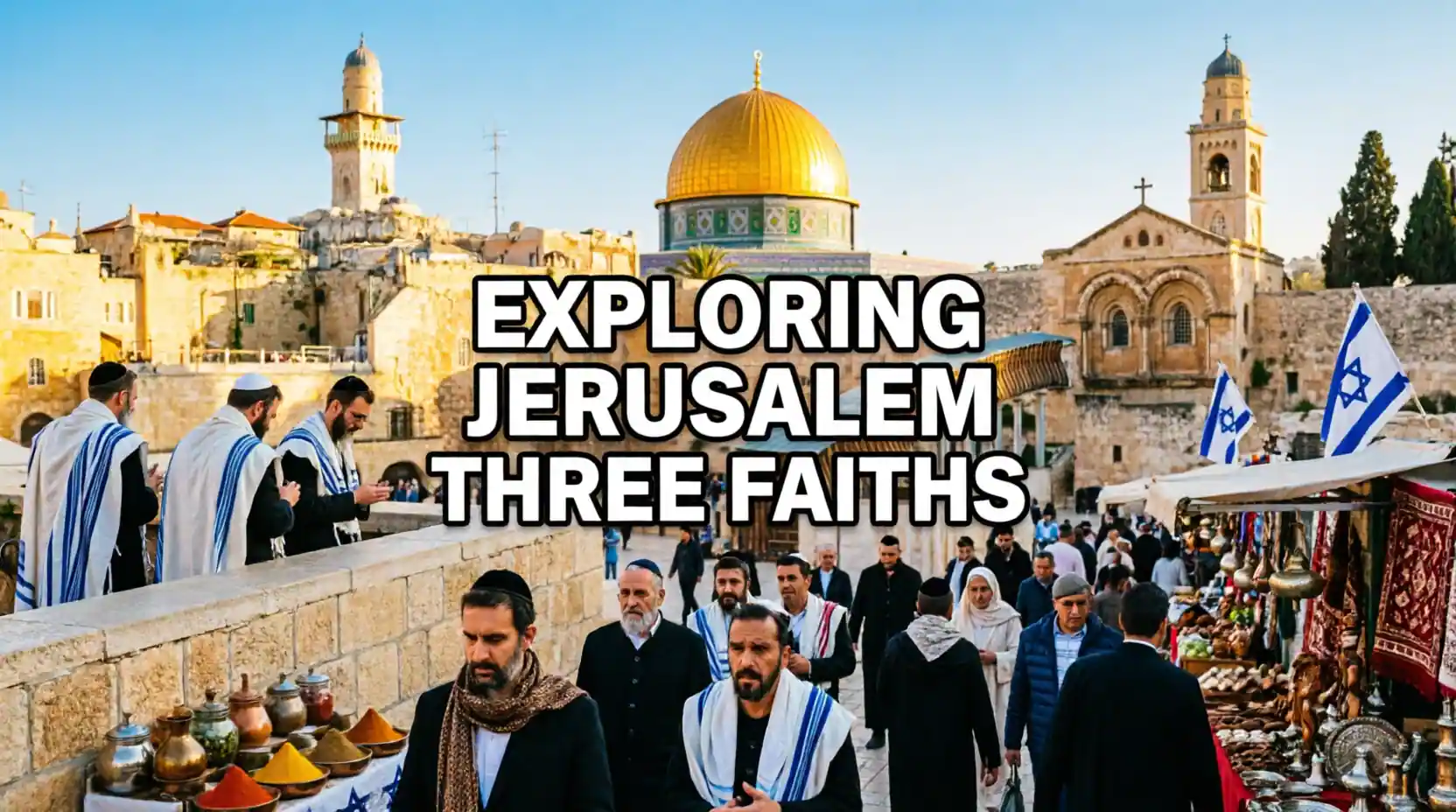
Exploring Jerusalem: A City of Three Religions
Jerusalem stands as one of the world's most extraordinary cities—a place where the sacred landscapes of Judaism, Christianity, and Islam converge within ancient stone walls, where the echoes of millennia of prayer, pilgrimage, and prophecy resonate through narrow alleyways, and where every cobblestone seems to hold the weight of human spiritual aspiration. For travelers in 2026, exploring Jerusalem offers a profound opportunity to engage with the foundational narratives of three major world religions, to witness living traditions of faith that have shaped human civilization, and to experience a city whose beauty, complexity, and spiritual intensity leave an indelible mark on all who enter.
Within the 0.9 square kilometers of the Old City, one finds the Western Wall, sacred to Jews as the last remnant of the ancient Temple; the Church of the Holy Sepulchre, revered by Christians as the site of Jesus' crucifixion and resurrection; and the Haram al-Sharif (Temple Mount), home to the Dome of the Rock and Al-Aqsa Mosque, among Islam's holiest sites. Beyond these iconic landmarks, Jerusalem's neighborhoods, markets, museums, and communities offer layers of historical, cultural, and contemporary experience that reward curious, respectful exploration.
This comprehensive guide explores everything you need to know about visiting Jerusalem: understanding the city's profound religious significance for Judaism, Christianity, and Islam; navigating the Old City's quarters and sacred sites with cultural sensitivity; appreciating the historical context that shapes contemporary Jerusalem; experiencing the city's diverse communities and cultural offerings; and approaching this complex, beautiful, and deeply meaningful destination with the respect, preparation, and openness it deserves. Whether you're a pilgrim, a history enthusiast, a cultural traveler, or simply someone seeking to understand one of humanity's most significant cities, this guide provides the insights you need to explore Jerusalem thoughtfully and meaningfully.
Understanding Jerusalem's Religious Significance

Jerusalem in Jewish Tradition
For Jews, Jerusalem is the eternal capital and spiritual center:
- Biblical foundations: Jerusalem established as capital by King David circa 1000 BCE; site of First and Second Temples
- Temple Mount significance: Location of ancient Temples; Western Wall (Kotel) is last remaining structure, focal point of Jewish prayer
- Prayer and pilgrimage: For millennia, Jews have faced Jerusalem in prayer; pilgrimage festivals (Passover, Shavuot, Sukkot) centered on Temple
- Continuity and hope: "Next year in Jerusalem" expresses longing for return; city symbolizes Jewish peoplehood and divine promise
- Contemporary practice: Western Wall remains active site of prayer, bar/bat mitzvahs, and national ceremonies
- 👉 The Digital Nomad Visa Kyrgyzstan 2026: New rules for remote workers.
- 👉 Philippines Digital Nomad Visa 2026: Application Guide
- 👉 "Hushpitality" in Hatta: Secluded eco-domes and quiet mountain retreats for a 2026 reset.
Jerusalem in Christian Tradition
For Christians, Jerusalem is the city of Jesus' passion and resurrection:
- Gospel narratives: Jerusalem central to Jesus' final week: entry on Palm Sunday, Last Supper, crucifixion, burial, and resurrection
- Church of the Holy Sepulchre: Traditional site of crucifixion (Golgotha) and empty tomb; pilgrimage destination since 4th century
- Via Dolorosa: Traditional route of Jesus' path to crucifixion; fourteen stations mark key moments
- Other sacred sites: Garden of Gethsemane, Mount of Olives, Room of the Last Supper, and numerous churches
- Pilgrimage tradition: Christians have journeyed to Jerusalem for centuries; city remains central to Christian spiritual life
- 👉 The Digital Nomad Visa Kyrgyzstan 2026: New rules for remote workers.
- 👉 Philippines Digital Nomad Visa 2026: Application Guide
- 👉 "Hushpitality" in Hatta: Secluded eco-domes and quiet mountain retreats for a 2026 reset.
Jerusalem in Islamic Tradition
For Muslims, Jerusalem is the third holiest city after Mecca and Medina:
- Al-Isra and Al-Mi'raj: Islamic tradition holds that Prophet Muhammad traveled from Mecca to Jerusalem (Al-Isra) and ascended to heaven (Al-Mi'raj) from the Temple Mount
- Haram al-Sharif (Noble Sanctuary): Temple Mount complex containing Dome of the Rock (completed 691 CE) and Al-Aqsa Mosque
- Architectural significance: Dome of the Rock is masterpiece of early Islamic architecture; Al-Aqsa Mosque is major place of worship
- Qibla history: Jerusalem was first direction of Muslim prayer before Mecca
- Contemporary significance: Haram al-Sharif remains active place of worship; Jerusalem holds deep spiritual and political significance for Muslims worldwide
- 👉 The Digital Nomad Visa Kyrgyzstan 2026: New rules for remote workers.
- 👉 Philippines Digital Nomad Visa 2026: Application Guide
- 👉 "Hushpitality" in Hatta: Secluded eco-domes and quiet mountain retreats for a 2026 reset.
Shared Heritage and Complex History
- Abrahamic connections: All three traditions trace spiritual lineage to Abraham; Jerusalem embodies shared patriarchal heritage
- Historical layering: City has been ruled by numerous empires and faiths; each left architectural, cultural, and spiritual marks
- Coexistence and conflict: Jerusalem's history includes periods of interfaith cooperation and painful conflict; contemporary reality reflects this complexity
- Contemporary significance: City remains central to religious identity, political claims, and peace efforts for millions worldwide
- Visitor responsibility: Understanding this complexity is essential for respectful, meaningful engagement with Jerusalem
- 👉 The Digital Nomad Visa Kyrgyzstan 2026: New rules for remote workers.
- 👉 Philippines Digital Nomad Visa 2026: Application Guide
- 👉 "Hushpitality" in Hatta: Secluded eco-domes and quiet mountain retreats for a 2026 reset.
Navigating the Old City: Quarters and Sacred Sites

The Four Quarters: Orientation and Character
The Old City is traditionally divided into four quarters, each with distinct character:
Jewish Quarter:
- Character: Restored after 1967; blend of ancient archaeological sites and contemporary Jewish life
- Key sites: Western Wall Plaza, Cardo (ancient Roman street), Hurva Synagogue, archaeological parks
- Atmosphere: Mix of religious observance, tourism, and residential life; yeshivas, synagogues, and kosher restaurants
- Visitor tips: Dress modestly; be mindful of Sabbath (Friday sunset to Saturday sunset) when many businesses close
- 👉 The Digital Nomad Visa Kyrgyzstan 2026: New rules for remote workers.
- 👉 Philippines Digital Nomad Visa 2026: Application Guide
- 👉 "Hushpitality" in Hatta: Secluded eco-domes and quiet mountain retreats for a 2026 reset.
Christian Quarter:
- Character: Centered on Church of the Holy Sepulchre; vibrant mix of pilgrims, residents, and souvenir shops
- Key sites: Church of the Holy Sepulchre, Via Dolorosa, Lutheran and Anglican churches, Christian hostels
- Atmosphere: Bustling marketplace with religious artifacts, icons, and crosses; diverse Christian communities
- Visitor tips: Church of Holy Sepulchre can be crowded; visit early morning or late afternoon; respect worship services
- 👉 The Digital Nomad Visa Kyrgyzstan 2026: New rules for remote workers.
- 👉 Philippines Digital Nomad Visa 2026: Application Guide
- 👉 "Hushpitality" in Hatta: Secluded eco-domes and quiet mountain retreats for a 2026 reset.
Muslim Quarter:
- Character: Most populous quarter; vibrant souks, residential neighborhoods, and Islamic heritage sites
- Key sites: Haram al-Sharif (Temple Mount) entrances, Al-Aqsa Mosque, Dome of the Rock, traditional markets
- Atmosphere: Lively marketplace with spices, textiles, and traditional crafts; call to prayer echoes through alleys
- Visitor tips: Non-Muslim access to Haram al-Sharif is restricted to specific hours and entrances; dress modestly; be respectful during prayer times
- 👉 The Digital Nomad Visa Kyrgyzstan 2026: New rules for remote workers.
- 👉 Philippines Digital Nomad Visa 2026: Application Guide
- 👉 "Hushpitality" in Hatta: Secluded eco-domes and quiet mountain retreats for a 2026 reset.
Armenian Quarter:
- Character: Smallest and quietest quarter; home to ancient Armenian Christian community since 4th century
- Key sites: St. James Cathedral, Armenian Museum, ceramic workshops, peaceful courtyards
- Atmosphere: Tranquil contrast to bustling neighboring quarters; distinctive Armenian architecture and culture
- Visitor tips: Explore ceramic shops showcasing traditional Armenian art; respect the community's privacy and religious spaces
- 👉 The Digital Nomad Visa Kyrgyzstan 2026: New rules for remote workers.
- 👉 Philippines Digital Nomad Visa 2026: Application Guide
- 👉 "Hushpitality" in Hatta: Secluded eco-domes and quiet mountain retreats for a 2026 reset.
The Western Wall (Kotel): Jewish Sacred Space
Visiting Judaism's holiest prayer site:
- Historical significance: Last remaining structure of Second Temple complex (destroyed 70 CE); focal point of Jewish prayer for centuries
- Visitor experience: Large plaza divided into men's and women's sections; observe worshippers praying, placing notes in wall crevices
- Dress code: Modest dress required: shoulders and knees covered; head covering (kippah) provided for men at entrance
- Etiquette: Maintain respectful silence in prayer areas; do not photograph worshippers without permission; follow posted guidelines
- Practical tips: Visit early morning or evening to avoid crowds; security screening at entrance; small bags only
- Cultural context: Understand that for many Jews, this is not a tourist site but a living place of prayer and connection to God
- 👉 The Digital Nomad Visa Kyrgyzstan 2026: New rules for remote workers.
- 👉 Philippines Digital Nomad Visa 2026: Application Guide
- 👉 "Hushpitality" in Hatta: Secluded eco-domes and quiet mountain retreats for a 2026 reset.
Church of the Holy Sepulchre: Christian Sacred Space
Exploring Christianity's most sacred church:
- Historical significance: Traditional site of Jesus' crucifixion (Golgotha), burial, and resurrection; church built 4th century, rebuilt after destruction
- Key areas: Stone of Anointing, Golgotha Chapel, Rotunda with Edicule (tomb), various chapels managed by different Christian denominations
- Denominational complexity: Church shared by Greek Orthodox, Catholic, Armenian, Coptic, Ethiopian, and Syriac communities; status quo agreements govern usage
- Visitor experience: Expect crowds, especially during religious holidays; atmospheric darkness, incense, and chanting
- Dress code: Modest dress required: shoulders and knees covered; head covering recommended for women
- Etiquette: Speak quietly; do not photograph during services without permission; respect worshippers and sacred spaces
- Practical tips: Visit early morning to avoid peak crowds; allow 1-2 hours for exploration; be prepared for uneven floors and stairs
- 👉 The Digital Nomad Visa Kyrgyzstan 2026: New rules for remote workers.
- 👉 Philippines Digital Nomad Visa 2026: Application Guide
- 👉 "Hushpitality" in Hatta: Secluded eco-domes and quiet mountain retreats for a 2026 reset.
Haram al-Sharif (Temple Mount): Islamic Sacred Space
Understanding access and significance of Islam's third holiest site:
- Historical significance: Site of ancient Jewish Temples; in Islamic tradition, location of Prophet Muhammad's night journey and ascension
- Key structures: Dome of the Rock (iconic golden-domed shrine), Al-Aqsa Mosque (major place of worship), other Islamic buildings
- Access for non-Muslims: Generally permitted during specific hours (typically Sunday-Thursday, morning hours); entrances via Mughrabi Gate near Western Wall; closed Fridays, Saturdays, and Islamic holidays
- Dress code: Strict modesty required: shoulders, arms, and legs covered; head covering for women; remove shoes before entering mosques
- Etiquette: Non-Muslims may not enter mosque interiors during prayer times; maintain respectful silence; no religious items or symbols displayed
- Security considerations: Security screening at entrance; bags may be restricted; follow instructions from Waqf (Islamic trust) authorities
- Cultural sensitivity: Recognize this is an active place of worship; your presence is a privilege; prioritize respect over photography or sightseeing
- 👉 The Digital Nomad Visa Kyrgyzstan 2026: New rules for remote workers.
- 👉 Philippines Digital Nomad Visa 2026: Application Guide
- 👉 "Hushpitality" in Hatta: Secluded eco-domes and quiet mountain retreats for a 2026 reset.
Historical Context: Layers of Jerusalem's Story

Ancient Foundations
Jerusalem's long history shapes its contemporary reality:
- Early settlement: Inhabited since Bronze Age; conquered by King David circa 1000 BCE, established as Israelite capital
- First and Second Temples: Central to ancient Jewish worship; destroyed by Babylonians (586 BCE) and Romans (70 CE)
- Roman and Byzantine periods: City rebuilt as Aelia Capitolina; Christianity becomes dominant; Church of Holy Sepulchre built
- Early Islamic rule: Conquered 638 CE; Dome of the Rock and Al-Aqsa Mosque constructed; period of relative interfaith coexistence
- Crusader and Ayyubid periods: City changes hands; Crusaders capture 1099, Saladin recaptures 1187; complex legacy of conflict and accommodation
- 👉 The Digital Nomad Visa Kyrgyzstan 2026: New rules for remote workers.
- 👉 Philippines Digital Nomad Visa 2026: Application Guide
- 👉 "Hushpitality" in Hatta: Secluded eco-domes and quiet mountain retreats for a 2026 reset.
Ottoman Era to Modern Period
- Ottoman rule (1517-1917): Current Old City walls built by Suleiman the Magnificent; period of relative stability and religious administration
- British Mandate (1917-1948): Modern urban development; rising tensions between Jewish and Arab communities
- 1948 War and division: City divided between Israeli-controlled West Jerusalem and Jordanian-controlled East Jerusalem/Old City
- 1967 Six-Day War: Israel captures East Jerusalem and Old City; reunification under Israeli administration; complex political and religious implications
- Contemporary reality: City remains central to Israeli-Palestinian conflict; sacred to three faiths; site of ongoing political, religious, and cultural negotiation
- 👉 The Digital Nomad Visa Kyrgyzstan 2026: New rules for remote workers.
- 👉 Philippines Digital Nomad Visa 2026: Application Guide
- 👉 "Hushpitality" in Hatta: Secluded eco-domes and quiet mountain retreats for a 2026 reset.
Understanding Contemporary Jerusalem
- Political sensitivity: Jerusalem's status is contested; be aware that language, maps, and narratives may reflect different political perspectives
- Religious diversity: City home to Jewish, Muslim, and Christian communities of various denominations and traditions
- Cultural richness: Beyond religious sites, Jerusalem offers museums, markets, cuisine, and contemporary cultural life
- Visitor perspective: Approach the city with humility, curiosity, and respect for multiple narratives and experiences
- 👉 The Digital Nomad Visa Kyrgyzstan 2026: New rules for remote workers.
- 👉 Philippines Digital Nomad Visa 2026: Application Guide
- 👉 "Hushpitality" in Hatta: Secluded eco-domes and quiet mountain retreats for a 2026 reset.
Practical Travel Considerations

Entry Requirements and Documentation
- Visa requirements: Most visitors receive entry permit on arrival; verify requirements for your nationality before travel
- Passport considerations: Ensure passport valid for at least 6 months beyond travel dates; some countries stamp separate entry cards rather than passports
- Border crossings: If entering via land borders (Jordan, Egypt), verify current procedures and documentation requirements
- Travel insurance: Recommended for any international travel; ensure coverage includes medical and emergency services
- 👉 The Digital Nomad Visa Kyrgyzstan 2026: New rules for remote workers.
- 👉 Philippines Digital Nomad Visa 2026: Application Guide
- 👉 "Hushpitality" in Hatta: Secluded eco-domes and quiet mountain retreats for a 2026 reset.
Accommodation Options
Lodging choices reflect Jerusalem's diversity:
Old City Hotels:
- Character: Historic buildings, atmospheric courtyards, immediate access to sacred sites
- Considerations: Narrow streets may limit vehicle access; noise from call to prayer or church bells; authentic but potentially less modern amenities
- Examples: American Colony Hotel (just outside walls), Petra Hostel, various guesthouses in different quarters
- 👉 The Digital Nomad Visa Kyrgyzstan 2026: New rules for remote workers.
- 👉 Philippines Digital Nomad Visa 2026: Application Guide
- 👉 "Hushpitality" in Hatta: Secluded eco-domes and quiet mountain retreats for a 2026 reset.
West Jerusalem:
- Character: Modern hotels, restaurants, and amenities; easier vehicle access
- Considerations: Short walk or taxi ride to Old City; more contemporary comforts
- Examples: King David Hotel, Mamilla Hotel, numerous mid-range and budget options
- 👉 The Digital Nomad Visa Kyrgyzstan 2026: New rules for remote workers.
- 👉 Philippines Digital Nomad Visa 2026: Application Guide
- 👉 "Hushpitality" in Hatta: Secluded eco-domes and quiet mountain retreats for a 2026 reset.
East Jerusalem:
- Character: Palestinian-owned hotels and guesthouses; authentic local atmosphere
- Considerations: Verify current access and security considerations; support local economy
- Examples: Seven Arches Hotel, Palestine Hotel, various family-run guesthouses
- 👉 The Digital Nomad Visa Kyrgyzstan 2026: New rules for remote workers.
- 👉 Philippines Digital Nomad Visa 2026: Application Guide
- 👉 "Hushpitality" in Hatta: Secluded eco-domes and quiet mountain retreats for a 2026 reset.
Transportation and Navigation
- Walking: Old City best explored on foot; wear comfortable shoes for cobblestones and hills
- Public transport: Light rail connects West Jerusalem to areas near Old City; buses serve broader metropolitan area
- Taxis and ride-hailing: Available throughout city; agree on fare or insist on meter use
- Security considerations: Allow extra time for security checks at sacred sites and some entrances; carry identification
- Navigation aids: Maps helpful but narrow alleys can be confusing; ask locals for directions; consider guided tours for first visits
- 👉 The Digital Nomad Visa Kyrgyzstan 2026: New rules for remote workers.
- 👉 Philippines Digital Nomad Visa 2026: Application Guide
- 👉 "Hushpitality" in Hatta: Secluded eco-domes and quiet mountain retreats for a 2026 reset.
Best Time to Visit
Timing affects experience and accessibility:
- Spring (March-May): Pleasant temperatures, blooming landscapes; major religious holidays (Passover, Easter) bring crowds and heightened significance
- Autumn (September-November): Comfortable weather, fewer crowds than spring; Jewish High Holidays (Rosh Hashanah, Yom Kippur) affect access and atmosphere
- Winter (December-February): Cooler temperatures, occasional rain; Christmas brings pilgrims; fewer tourists overall
- Summer (June-August): Hot and dry; long daylight hours; peak tourist season with crowds and higher prices
- Religious holidays: Research major Jewish, Christian, and Islamic holidays; they profoundly affect access, crowds, and atmosphere at sacred sites
- 👉 The Digital Nomad Visa Kyrgyzstan 2026: New rules for remote workers.
- 👉 Philippines Digital Nomad Visa 2026: Application Guide
- 👉 "Hushpitality" in Hatta: Secluded eco-domes and quiet mountain retreats for a 2026 reset.
Cultural Etiquette and Respectful Engagement

Dress Codes Across Sacred Spaces
Modest dress is required at most religious sites:
- General guideline: Cover shoulders, upper arms, and knees for both men and women
- Western Wall: Head covering (kippah) provided for men; modest dress for all
- Church of Holy Sepulchre: Modest dress; head covering recommended for women
- Haram al-Sharif: Strict modesty: long sleeves, long pants or skirt, head covering for women; remove shoes before entering mosques
- Practical tip: Carry a scarf or shawl for quick coverage; wear easily removable shoes for mosque visits
- 👉 The Digital Nomad Visa Kyrgyzstan 2026: New rules for remote workers.
- 👉 Philippines Digital Nomad Visa 2026: Application Guide
- 👉 "Hushpitality" in Hatta: Secluded eco-domes and quiet mountain retreats for a 2026 reset.
Behavior in Sacred Spaces
- Silence and reverence: Maintain quiet demeanor in prayer areas; avoid loud conversation or disruptive behavior
- Photography: Always ask permission before photographing worshippers; flash photography often prohibited; respect posted restrictions
- Religious observances: Be aware of prayer times, Sabbath, and religious holidays; some sites may have restricted access during services
- Physical contact: Avoid touching sacred objects, walls, or religious artifacts unless explicitly invited to do so
- Participation: You may be invited to participate in rituals; observe respectfully, follow guidance, and decline politely if uncomfortable
- 👉 The Digital Nomad Visa Kyrgyzstan 2026: New rules for remote workers.
- 👉 Philippines Digital Nomad Visa 2026: Application Guide
- 👉 "Hushpitality" in Hatta: Secluded eco-domes and quiet mountain retreats for a 2026 reset.
Interfaith Sensitivity
- Avoid comparisons: Refrain from ranking or comparing religions; each tradition has profound meaning for its adherents
- Listen and learn: Approach conversations with humility; ask questions respectfully; listen more than you speak
- Political awareness: Jerusalem's political status is sensitive; focus on cultural and religious understanding rather than political debate
- Language sensitivity: Different communities may use different names for sites (e.g., Temple Mount/Haram al-Sharif); be aware of these nuances
- Respect boundaries: Some areas may be restricted to adherents of specific faiths; respect these boundaries without question
- 👉 The Digital Nomad Visa Kyrgyzstan 2026: New rules for remote workers.
- 👉 Philippines Digital Nomad Visa 2026: Application Guide
- 👉 "Hushpitality" in Hatta: Secluded eco-domes and quiet mountain retreats for a 2026 reset.
Experiencing Jerusalem Beyond Sacred Sites

Markets and Culinary Traditions
Jerusalem's markets offer sensory and cultural immersion:
- Souks of the Old City: Labyrinthine markets selling spices, textiles, ceramics, religious artifacts, and traditional crafts
- Machane Yehuda Market: Vibrant open-air market in West Jerusalem; fresh produce, street food, and lively atmosphere
- Culinary diversity: Sample falafel, hummus, shakshuka, knafeh, and other regional specialties; kosher, halal, and Christian culinary traditions
- Food etiquette: Ask before photographing food vendors; try local specialties; support small businesses
- 👉 The Digital Nomad Visa Kyrgyzstan 2026: New rules for remote workers.
- 👉 Philippines Digital Nomad Visa 2026: Application Guide
- 👉 "Hushpitality" in Hatta: Secluded eco-domes and quiet mountain retreats for a 2026 reset.
Museums and Cultural Institutions
- Israel Museum: World-class collections including Dead Sea Scrolls, archaeological artifacts, and art; extensive gardens
- Yad Vashem: Holocaust memorial and museum; profound and moving experience; allow several hours; dress respectfully
- Mount of Olives: Panoramic views of Old City; ancient Jewish cemetery; churches and historical sites
- City of David: Archaeological park exploring ancient Jerusalem; tunnels and excavations reveal biblical-era city
- Visitor guidance: Many museums offer audio guides; check opening hours and ticketing in advance; allow adequate time for meaningful engagement
- 👉 The Digital Nomad Visa Kyrgyzstan 2026: New rules for remote workers.
- 👉 Philippines Digital Nomad Visa 2026: Application Guide
- 👉 "Hushpitality" in Hatta: Secluded eco-domes and quiet mountain retreats for a 2026 reset.
Contemporary Cultural Life
- Arts and music: Galleries, theaters, and music venues showcase Israeli and Palestinian artists; check local listings
- Coffee culture: Cafes serve as social hubs; enjoy Turkish coffee, Arabic coffee, or modern espresso while people-watching
- Community engagement: Opportunities to meet local residents, hear diverse perspectives, and understand contemporary Jerusalem life
- Respectful engagement: Approach conversations with openness and respect; recognize the complexity of identities and experiences in Jerusalem
- 👉 The Digital Nomad Visa Kyrgyzstan 2026: New rules for remote workers.
- 👉 Philippines Digital Nomad Visa 2026: Application Guide
- 👉 "Hushpitality" in Hatta: Secluded eco-domes and quiet mountain retreats for a 2026 reset.
Practical Tips for a Meaningful Visit

Planning and Preparation
- Research sacred sites: Understand significance, access rules, and etiquette before visiting
- Check holiday calendars: Major religious holidays affect access, crowds, and atmosphere at sacred sites
- Guided tours: Consider knowledgeable guides for historical context, navigation, and cultural interpretation
- Comfortable footwear: Essential for walking on uneven stone surfaces and hills
- Weather preparation: Layers for temperature changes; sun protection in summer; rain gear in winter
- 👉 The Digital Nomad Visa Kyrgyzstan 2026: New rules for remote workers.
- 👉 Philippines Digital Nomad Visa 2026: Application Guide
- 👉 "Hushpitality" in Hatta: Secluded eco-domes and quiet mountain retreats for a 2026 reset.
Security and Safety Considerations
- General safety: Jerusalem is generally safe for tourists; exercise normal urban precautions
- Security screening: Expect security checks at sacred sites, markets, and some entrances; allow extra time
- Situational awareness: Stay informed about current conditions; follow guidance from local authorities
- Emergency contacts: Save local emergency numbers and your embassy contact information
- Travel advisories: Check your government's travel advisory before and during your visit
- 👉 The Digital Nomad Visa Kyrgyzstan 2026: New rules for remote workers.
- 👉 Philippines Digital Nomad Visa 2026: Application Guide
- 👉 "Hushpitality" in Hatta: Secluded eco-domes and quiet mountain retreats for a 2026 reset.
Photography Guidelines
- Sacred spaces: Always ask permission before photographing worshippers; many sites restrict photography during services
- Respect privacy: Some individuals may decline to be photographed; respect refusals gracefully
- Cultural sensitivity: Avoid photographing military or security personnel; be discreet in sensitive areas
- Ethical sharing: When sharing images online, provide context and acknowledge the sacred nature of sites
- Technical tips: Low-light conditions in churches; avoid flash; consider a fast lens for interior photography
- 👉 The Digital Nomad Visa Kyrgyzstan 2026: New rules for remote workers.
- 👉 Philippines Digital Nomad Visa 2026: Application Guide
- 👉 "Hushpitality" in Hatta: Secluded eco-domes and quiet mountain retreats for a 2026 reset.
Sample Itineraries for Jerusalem Exploration

Three-Day Sacred Sites Focus
- Day 1: Old City orientation; Western Wall and Jewish Quarter; Mount of Olives views
- Day 2: Church of the Holy Sepulchre and Via Dolorosa; Christian Quarter exploration
- Day 3: Haram al-Sharif visit (if accessible); Muslim Quarter souks; reflection and departure
- 👉 The Digital Nomad Visa Kyrgyzstan 2026: New rules for remote workers.
- 👉 Philippines Digital Nomad Visa 2026: Application Guide
- 👉 "Hushpitality" in Hatta: Secluded eco-domes and quiet mountain retreats for a 2026 reset.
Five-Day Comprehensive Cultural Immersion
- Days 1-2: Old City sacred sites: Western Wall, Church of Holy Sepulchre, Haram al-Sharif (if accessible)
- Day 3: Israel Museum and Yad Vashem; understanding historical context
- Day 4: Market exploration, culinary experiences, contemporary cultural sites
- Day 5: Day trip to Bethlehem or other nearby sites; reflection and departure
- 👉 The Digital Nomad Visa Kyrgyzstan 2026: New rules for remote workers.
- 👉 Philippines Digital Nomad Visa 2026: Application Guide
- 👉 "Hushpitality" in Hatta: Secluded eco-domes and quiet mountain retreats for a 2026 reset.
Pilgrimage-Focused Itinerary
- Spiritual preparation: Research religious significance of sites; consider spiritual practices before visit
- Sacred site visits: Allow ample time for prayer, meditation, and reflection at each location
- Community engagement: Attend services if appropriate; connect with local faith communities respectfully
- Personal reflection: Journaling, quiet contemplation, and meaningful conversation enhance spiritual experience
- Respectful pacing: Prioritize depth over breadth; allow space for spiritual encounter rather than rushing through sites
- 👉 The Digital Nomad Visa Kyrgyzstan 2026: New rules for remote workers.
- 👉 Philippines Digital Nomad Visa 2026: Application Guide
- 👉 "Hushpitality" in Hatta: Secluded eco-domes and quiet mountain retreats for a 2026 reset.
Frequently Asked Questions

Is Jerusalem safe for foreign travelers?
Jerusalem is generally safe for tourists who exercise standard precautions. Violent crime against visitors is rare. Exercise normal urban caution: be aware of surroundings, secure valuables, avoid demonstrations or large gatherings, and follow guidance from local authorities. Check your government's travel advisory for current information. Most visitors have safe, meaningful experiences in Jerusalem.
Do I need a guide to visit Jerusalem's sacred sites?
While not required, knowledgeable guides can greatly enhance understanding of historical context, religious significance, and cultural etiquette. Guides can also help navigate access restrictions and security procedures. For first-time visitors or those seeking deeper understanding, guided tours are highly recommended. Ensure guides are reputable and respectful of all faith traditions.
Can non-Muslims visit the Dome of the Rock or Al-Aqsa Mosque?
Non-Muslims may visit the Haram al-Sharif (Temple Mount) complex during specific hours, but access to the interior of Al-Aqsa Mosque and Dome of the Rock is generally restricted to Muslims. Non-Muslim visitors must enter via designated gates (typically Mughrabi Gate near Western Wall), follow strict dress codes, and respect prayer times and religious observances. Access can change based on security conditions and religious holidays; verify current policies before visiting.
What should I wear when visiting Jerusalem's religious sites?
Modest dress is required at most sacred sites: shoulders, upper arms, and knees covered for both men and women. Women should carry a scarf for head covering when visiting mosques or churches. Wear comfortable, easily removable shoes for mosque visits. When in doubt, err on the side of modesty; you can often borrow coverings at site entrances.
How do I navigate Jerusalem's complex political context as a visitor?
Focus on cultural and religious understanding rather than political debate. Listen respectfully to diverse perspectives; avoid making assumptions or taking sides in complex historical and political narratives. Recognize that language, maps, and narratives may reflect different viewpoints. Approach the city with humility, curiosity, and respect for the multiple communities who call Jerusalem home.
What is the best way to learn about Jerusalem's history before visiting?
Read balanced historical accounts that acknowledge multiple perspectives. Consider works by scholars who specialize in Jerusalem's history, archaeology, and religious studies. Documentaries, museum resources, and reputable travel guides can provide helpful context. Approach historical narratives with awareness that different communities may emphasize different aspects of the city's story.
Conclusion: Approaching Jerusalem with Humility and Wonder

Jerusalem is not a city that yields its secrets easily. It demands more than casual sightseeing; it invites deep engagement, respectful curiosity, and a willingness to sit with complexity. For travelers in 2026, exploring Jerusalem offers a rare opportunity to stand at the intersection of three great faith traditions, to witness living expressions of spiritual devotion, and to reflect on the enduring human search for meaning, connection, and transcendence.
As you walk the ancient stones of the Old City, pray at the Western Wall, contemplate the empty tomb, or stand beneath the golden dome, remember that you are not merely observing history—you are participating in a continuum of human spiritual aspiration that spans millennia. The prayers whispered at the Wall, the candles lit in the Holy Sepulchre, the call to prayer echoing from the minarets—all are expressions of faith that have sustained communities through joy and suffering, exile and return, conflict and hope.
Approach Jerusalem not as a consumer of experiences but as a guest in sacred spaces. Listen more than you speak. Ask questions with humility. Respect boundaries without question. Support local communities through responsible tourism. And carry home not just photographs but a deeper understanding of the power of faith, the complexity of history, and the possibility of peace.
Jerusalem awaits—not as a puzzle to be solved or a destination to be checked off, but as a teacher, a challenge, and a gift. May your exploration of this city of three religions deepen your appreciation for the diversity of human spiritual expression, strengthen your commitment to respectful engagement across differences, and inspire you to carry Jerusalem's lessons of faith, resilience, and hope into your own life and community.
Welcome to Jerusalem. Welcome to a city where heaven and earth meet. Welcome to a journey that may change how you see the world—and your place in it.
0 Comments