.webp)
.webp)
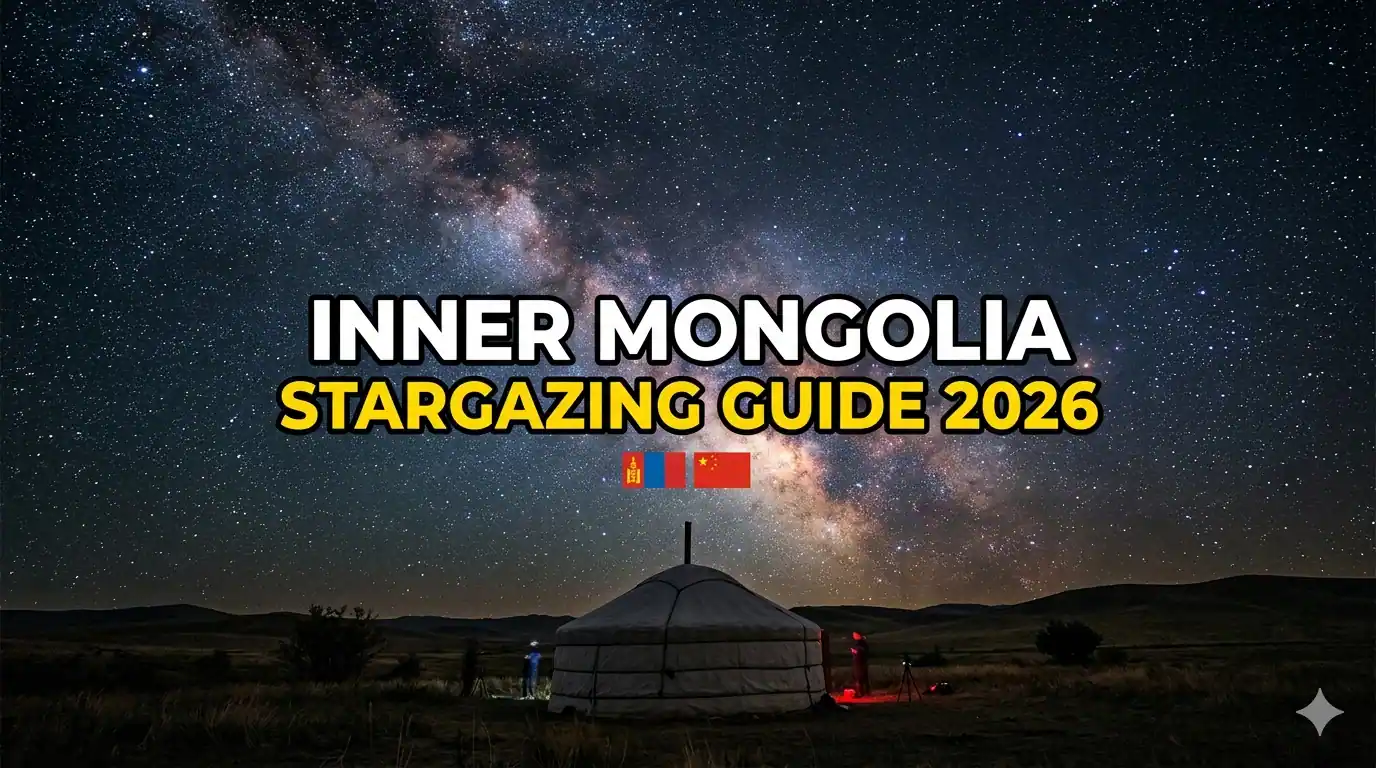
Overview of Inner Mongolia's Dark Sky Advantage
Inner Mongolia Autonomous Region offers some of China's darkest skies and most spectacular stargazing opportunities accessible to travelers in 2026.
Vast grasslands expansive deserts and minimal urban development create ideal conditions for observing the Milky Way and celestial phenomena.
Many areas achieve Bortle Class 1-3 ratings representing the darkest skies with exceptional visibility of zodiacal light and faint nebulae.
The region's high elevation dry climate and low humidity provide crystal clear atmospheric conditions for astronomy.
This comprehensive guide reveals the best zero-light-pollution locations for unforgettable stargazing adventures in Inner Mongolia.
Why Inner Mongolia Excels for Astronomy
Sparse population density with only 20 people per square kilometer ensures minimal artificial light interference.
Average elevation of 1000 to 1500 meters reduces atmospheric distortion and light scattering.
Arid desert climate produces over 300 clear nights annually perfect for observation.
Distance from major eastern China cities eliminates light dome effects common in other regions.
Traditional nomadic lifestyle preserves dark sky heritage without extensive infrastructure development.
Understanding Bortle Dark Sky Scale
Bortle Scale measures night sky darkness from Class 1 (excellent dark sky) to Class 9 (inner city sky).
Inner Mongolia's remote desert and grassland areas achieve Class 1-2 ratings among world's darkest skies.
Class 1 skies allow naked eye viewing of Milky Way structure casting shadows on ground.
Zodiacal light gegenschein and airglow clearly visible in Class 1-2 conditions.
Most accessible locations rate Class 3-4 still providing exceptional stargazing experiences.
Best Stargazing Locations in Inner Mongolia

Inner Mongolia offers diverse landscapes each providing unique stargazing experiences and photographic opportunities.
Desert locations offer dramatic foreground elements with sand dunes and rock formations.
Grassland areas provide expansive horizons and traditional Mongolian cultural contexts.
Mountain regions add elevation benefits and varied compositional elements.
Badain Jaran Desert Premium Dark Sky Site
Badain Jaran Desert in Alxa League represents one of China's darkest and most accessible stargazing locations.
Bortle Class 1-2 rating with exceptional transparency and minimal light pollution.
Dramatic sand dunes reaching 500 meters provide stunning foreground elements for astrophotography.
Over 140 lakes scattered throughout desert create unique reflection opportunities.
Accessibility via Badain Jaran Town with 4WD vehicle required for remote locations.
Best viewing locations include Bilutu Peak area and lakeside camping sites.
Accommodation options include desert camps and Mongolian ger accommodations.
Tengger Desert Astronomy Paradise
Tengger Desert offers excellent dark skies with easier accessibility than more remote locations.
Bortle Class 2-3 conditions providing outstanding visibility of Milky Way and deep sky objects.
Located near Zhongwei making it accessible for weekend astronomy trips.
Shapotou area combines desert scenery with established tourism infrastructure.
Multiple designated stargazing platforms and camping areas available.
Clear skies average 280 nights per year ideal for consistent observation.
Photography workshops and astronomy tours available through local operators.
Hulunbuir Grasslands Northern Dark Skies
Hulunbuir Grasslands in northeastern Inner Mongolia offer pristine dark skies with cultural richness.
Bortle Class 2 rating with exceptional horizon visibility across endless grasslands.
Traditional Mongolian herding communities maintain dark sky friendly practices.
Summer months provide comfortable temperatures for extended observation sessions.
Milky Way core visible from May through September with peak in July-August.
Combine stargazing with grassland cultural experiences and nomadic hospitality.
Multiple ger camps offer stargazing packages with astronomy guides.
Alxa League Desert Regions
Alxa League encompasses multiple desert areas with world-class dark sky conditions.
Remote location ensures Bortle Class 1 skies in many areas.
Multiple desert lakes provide unique reflection photography opportunities.
Extreme darkness allows naked eye observation of galaxies and nebulae.
Requires 4WD vehicle and preparation for remote wilderness conditions.
Best for experienced astronomy enthusiasts seeking ultimate dark sky experience.
Ordos Desert Accessible Dark Skies
Ordos Desert balances accessibility with excellent dark sky quality.
Bortle Class 3 conditions suitable for both casual observers and serious astronomers.
Closer proximity to Hohhot and Baotou enables easier logistics.
Developed tourism infrastructure with stargazing-focused accommodations.
Kubuqi Desert section offers dune landscapes for dramatic compositions.
Family-friendly stargazing programs and educational tours available.
Best Times for Stargazing in Inner Mongolia

Timing significantly impacts stargazing quality with seasonal variations in weather visibility and celestial events.
Understanding optimal periods helps plan successful astronomy adventures.
Seasonal Considerations
Spring March to May offers clearing skies after winter with moderate temperatures.
Milky Way becomes visible in early morning hours by late spring.
Lower humidity provides excellent transparency for deep sky observation.
Summer June to August represents peak stargazing season with Milky Way core overhead.
Warmest temperatures allow comfortable all-night observation sessions.
Longer nights in early summer provide extended observation windows.
Autumn September to November delivers crisp clear air and spectacular meteor showers.
Perseid meteor shower in August and Orionids in October highlight autumn skies.
Decreasing temperatures require warmer clothing but improve atmospheric stability.
Winter December to February offers longest nights and exceptional atmospheric clarity.
Extreme cold requires serious preparation but rewards with stunning visibility.
Winter Milky Way and constellations like Orion appear brilliantly.
Lunar Cycle Planning
New moon phases provide darkest skies essential for Milky Way and deep sky photography.
Plan visits during new moon or crescent moon periods for optimal darkness.
Full moon periods better for landscape photography with natural illumination.
Moon rises and sets affect observation windows requiring careful scheduling.
Use astronomy apps to track moon phases and rise/set times for planning.
Annual Celestial Events
Perseid Meteor Shower August 12-13 produces 60-100 meteors per hour.
Geminid Meteor Shower December 13-14 offers reliable meteor activity.
Orionid Meteor Shower October 21-22 provides moderate meteor rates.
Milky Way core season May through September best for galactic center viewing.
Planetary conjunctions and eclipses occur periodically check astronomy calendars.
Astrophotography in Inner Mongolia

Inner Mongolia's dark skies provide exceptional opportunities for capturing stunning astrophotography.
Proper equipment techniques and planning maximize photographic success.
Essential Equipment
Camera with manual mode and good high ISO performance essential for Milky Way photography.
Wide angle lens f/2.8 or faster with 14-24mm focal length ideal for night sky.
Sturdy tripod mandatory for long exposure photography in desert conditions.
Remote shutter release or intervalometer prevents camera shake during exposures.
Extra batteries critical as cold temperatures drain power rapidly.
Red headlamp preserves night vision while allowing equipment operation.
Lens warming strips prevent dew formation on optics during humid nights.
Camera Settings for Milky Way
Manual mode with aperture widest possible f/2.8 or lower.
ISO 1600 to 3200 balances signal to noise ratio for most cameras.
Shutter speed follows 500 rule divide 500 by focal length for maximum exposure.
For 14mm lens use 35 second maximum exposure to avoid star trailing.
Manual focus set to infinity verified by test shots of bright stars.
Shoot in RAW format for maximum post-processing flexibility.
White balance 3500-4000K provides natural star colors.
Foreground Composition Techniques
Include Mongolian ger sand dunes or grassland elements for context and scale.
Use light painting techniques to illuminate foreground elements subtly.
Blue hour photography combines twilight sky with emerging stars.
Panoramic stitching creates wide field views of Milky Way arch.
Reflection photography using desert lakes doubles visual impact.
Star trail photography requires 2-3 hour exposures showing Earth's rotation.
Practical Travel Planning

Successful stargazing trips require careful preparation for remote locations and extreme conditions.
Understanding logistics ensures safe and productive astronomy adventures.
Transportation and Access
4WD vehicle essential for accessing remote desert stargazing locations.
GPS navigation and offline maps critical as cell service unavailable in remote areas.
Fuel stations sparse in desert regions requiring careful range planning.
Rental vehicles available in Hohhot Baotou and other major cities.
Guided tours with transportation eliminate logistics concerns for first-time visitors.
Domestic flights to regional airports reduce overland travel time.
Accommodation Options
Desert camping provides ultimate dark sky experience with minimal light pollution.
Mongolian ger camps offer comfortable accommodation with stargazing platforms.
Eco-lodges and astronomy-focused resorts provide specialized facilities.
Some locations offer telescope rentals and astronomy guides on-site.
Book accommodation in advance especially during peak summer season.
Verify accommodation has minimal outdoor lighting to preserve dark skies.
Packing Essentials
Warm clothing essential even in summer as desert temperatures drop dramatically at night.
Layered clothing system allows adjustment for temperature variations.
Wind protection critical in exposed grassland and desert locations.
Sturdy footwear for navigating sand dunes and uneven terrain.
Sufficient water and food supplies for remote locations without services.
First aid kit and emergency supplies mandatory for wilderness areas.
Portable power bank for charging devices during extended observation sessions.
Cultural and Environmental Considerations

Responsible stargazing tourism respects local communities and fragile desert ecosystems.
Understanding cultural context enhances travel experience while preserving dark skies.
Dark Sky Preservation
Use red lighting only when necessary to preserve night vision and minimize light pollution.
Avoid white light sources that scatter and degrade dark sky quality for others.
Support dark sky friendly accommodations implementing responsible lighting practices.
Educate fellow travelers about importance of preserving Inner Mongolia's dark skies.
Advocate for dark sky protection as tourism development increases in region.
Mongolian Cultural Respect
Traditional Mongolian culture values harmony with nature including night sky.
Request permission before photographing ger camps or local residents.
Learn about Mongolian astronomical traditions and celestial mythology.
Support local communities by using Mongolian-owned guides and accommodations.
Respect sacred sites and traditional land use patterns.
Environmental Protection
Practice leave no trace principles in fragile desert and grassland ecosystems.
Pack out all trash and minimize impact on vegetation and wildlife.
Stay on designated paths to prevent erosion and habitat damage.
Avoid disturbing wildlife especially nocturnal animals active during observation hours.
Use biodegradable soaps and cleaning products if camping.
Safety Considerations for Remote Stargazing

Remote stargazing locations present unique safety challenges requiring preparation and awareness.
Understanding risks and mitigation strategies ensures safe astronomy adventures.
Weather and Environmental Hazards
Desert temperatures can drop 20-30 degrees Celsius after sunset requiring warm clothing.
Sudden weather changes possible with sandstorms developing rapidly in desert areas.
Monitor weather forecasts and have evacuation plans for severe conditions.
Dehydration risk high in arid environment requiring adequate water supplies.
UV exposure intense during day requiring sun protection even when planning night observation.
Navigation and Communication
Cell phone coverage unreliable or non-existent in remote stargazing locations.
Satellite communication device recommended for emergency contact in wilderness areas.
Inform others of travel plans and expected return times before departing.
GPS device with offline maps essential for navigation without cell service.
Carry physical maps as backup to electronic navigation systems.
Wildlife Considerations
Desert and grassland areas home to various wildlife including snakes and insects.
Check sleeping areas and equipment before use especially in warmer months.
Store food securely to avoid attracting wildlife to camping areas.
Awareness of surroundings important even during night observation sessions.
First aid kit should include supplies for treating insect bites and minor injuries.
Stargazing Tours and Guides

Professional stargazing tours provide expertise equipment and logistics support for optimal experiences.
Understanding tour options helps select appropriate services for skill level and interests.
Tour Types Available
Introductory stargazing tours suitable for beginners with basic equipment and instruction.
Advanced astrophotography workshops for experienced photographers seeking technical guidance.
Multi-day astronomy expeditions to remote locations with camping and comprehensive instruction.
Cultural astronomy tours combining stargazing with Mongolian traditional knowledge.
Private tours customized for specific interests skill levels and photography goals.
What to Expect from Guided Tours
Professional astronomy guides provide instruction on observation techniques and equipment use.
High-quality telescopes and cameras available for participant use during tours.
Transportation accommodation and meals typically included in multi-day packages.
Small group sizes ensure personalized attention and better viewing opportunities.
Weather contingency plans and flexible itineraries accommodate changing conditions.
Selecting Reputable Tour Operators
Verify operator credentials experience and reviews from previous participants.
Confirm equipment quality and maintenance standards before booking.
Check insurance coverage and safety protocols for remote area operations.
Ensure guides have astronomy background and local knowledge of observation sites.
Compare pricing and inclusions to ensure fair value for services provided.
Technology and Apps for Stargazing

Modern technology enhances stargazing experiences through planning tools and real-time assistance.
Essential apps and devices improve navigation observation and photography success.
Planning and Navigation Apps
Stellarium Mobile shows real-time sky view for any location and time.
PhotoPills provides augmented reality Milky Way positioning and planning tools.
Light Pollution Map shows Bortle scale ratings and dark sky locations.
Windy or AccuWeather provides detailed astronomical weather forecasts.
Google Maps offline downloads essential for navigation without cell service.
Observation and Photography Tools
SkySafari or Star Walk 2 identify celestial objects in real-time.
Planit Pro or The Photographers Ephemeris plan compositions with celestial events.
Peak Design or similar intervalometers control long exposure photography.
Battery grips and power banks extend camera operation during cold nights.
Portable star charts provide backup to electronic devices.
Future of Dark Sky Tourism in Inner Mongolia

Inner Mongolia's dark sky resources present opportunities for sustainable astronomy tourism development.
Balancing access with preservation ensures long-term viability of stargazing destinations.
Dark Sky Reserve Development
Several areas pursuing International Dark Sky Association designation as Dark Sky Parks or Reserves.
Formal recognition would protect dark skies while promoting responsible astronomy tourism.
Infrastructure development focuses on dark sky friendly lighting and minimal environmental impact.
Educational programs raise awareness about light pollution and dark sky preservation.
Community involvement ensures local benefits from astronomy tourism growth.
Sustainable Tourism Practices
Limited visitor numbers at sensitive locations prevent overcrowding and environmental degradation.
Eco-certification programs encourage accommodations to adopt dark sky friendly practices.
Local guide training programs ensure quality experiences while providing community employment.
Research partnerships monitor light pollution levels and ecosystem health.
Visitor education emphasizes responsibility for preserving dark skies for future generations.
0 Comments