.webp)
.webp)
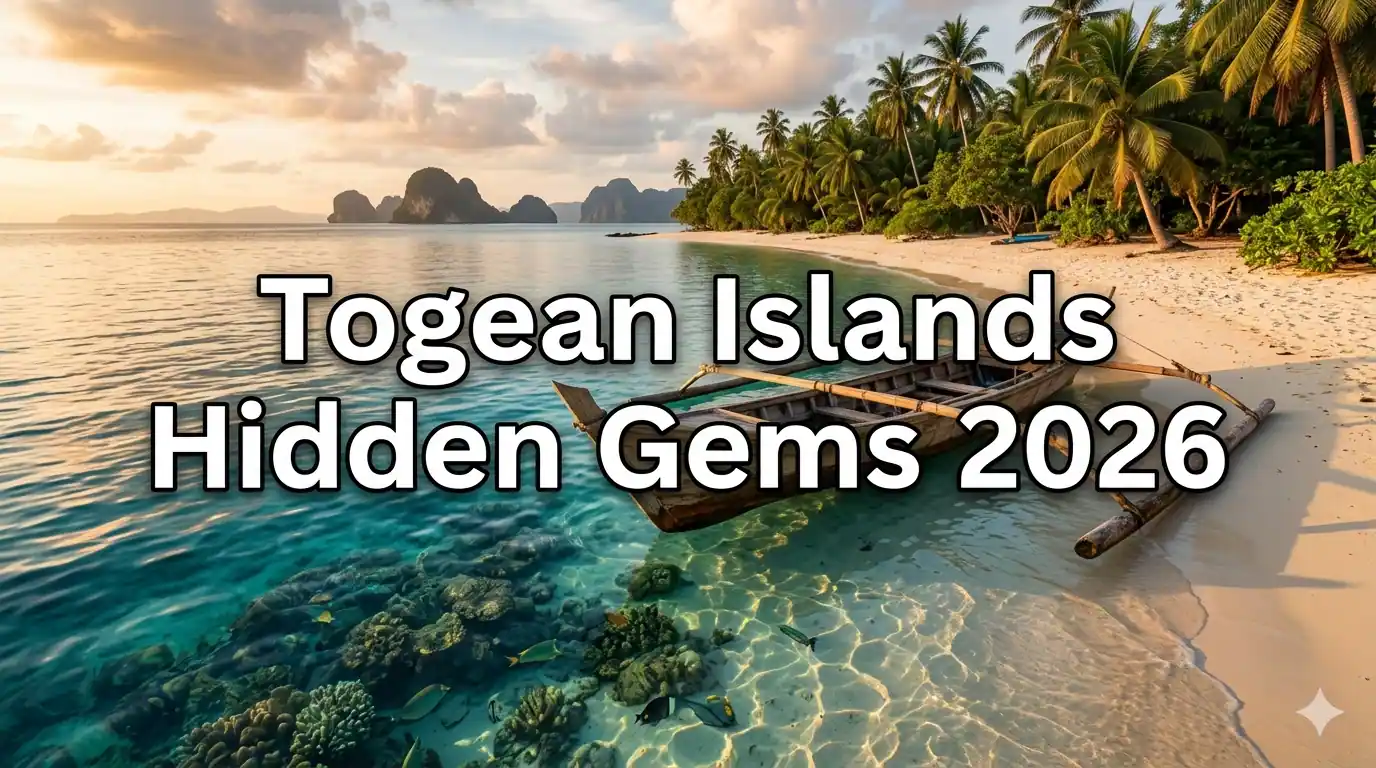
Overview of the Togean Islands Archipelago
The Togean Islands represent one of Indonesia's last truly unspoiled tropical paradises located in the heart of Tomini Bay [[1]].
This remote archipelago comprises 56 islands situated in Central Sulawesi Province far from mass tourism development [[2]].
The islands form part of the Coral Triangle containing some of the world's most biodiverse marine ecosystems [[3]].
Togean National Park protects over 260000 hectares of pristine coral reefs mangrove forests and tropical rainforests [[4]].
Indigenous communities including the Bajau Laut sea nomads and Taa people maintain traditional lifestyles unchanged for centuries [[5]].
Why the Togean Islands Remain Hidden
Geographic isolation requires multiple transportation connections deterring casual tourists seeking convenience [[6]].
Limited infrastructure preserves authentic character while challenging travelers accustomed to luxury amenities [[7]].
Absence of international marketing keeps the islands off mainstream tourism radar compared to Bali or Lombok [[8]].
Small visitor capacity protects environment but requires advance planning and flexibility from travelers [[9]].
Local communities prioritize cultural preservation over rapid tourism development maintaining genuine hospitality [[10]].
Geographic and Ecological Significance
The islands sit within Wallacea biogeographic transition zone hosting unique species found nowhere else on Earth [[11]].
Tomini Bay's depth and currents create ideal conditions for spectacular coral formations and marine life diversity [[12]].
Volcanic origins provide dramatic landscapes from active Una Una volcano to limestone cliffs and black sand beaches [[13]].
Mangrove forests serve as critical nurseries for fish species supporting both ecology and local fishing communities [[14]].
Primary rainforests on larger islands harbor endemic birds mammals and plant species awaiting scientific documentation [[15]].
Reaching the Remote Togean Islands

Accessing the Togean Islands requires patience and planning but the journey itself becomes part of the adventure [[16]].
Most travelers route through Gorontalo in northern Sulawesi or Palu in central Sulawesi depending on schedules [[17]].
Gorontalo offers more frequent connections with daily flights from Jakarta Makassar and Manado via Lion Air or Garuda [[18]].
From Gorontalo airport transfer to Port of Gorontalo approximately 30 kilometers for overnight ferry departure [[19]].
Pelni passenger ships operate weekly service to Wakai on Batudaka Island taking 10 to 12 hours overnight [[20]].
Transportation Options and Schedules
Pelni KM Bukit Raya and KM Ciremai serve Togean route with economy and business class cabin options [[21]].
Ferry tickets cost 150000 to 400000 Indonesian rupiah depending on class approximately 10 to 25 US dollars [[22]].
Alternative speedboat services operate from Gorontalo when weather permits reducing travel time to 4 to 5 hours [[23]].
Speedboat costs 350000 to 600000 rupiah but schedules depend on demand and sea conditions [[24]].
From Palu route requires combination of ferry and speedboat taking 2 to 3 days with intermediate stops [[25]].
Inter Island Transportation
Local wooden boats called perahu serve as primary transportation between Togean islands [[26]].
Boat schedules depend on weather tides and passenger demand requiring flexibility in travel plans [[27]].
Chartering private boat costs 500000 to 1500000 rupiah per day depending on size and destination [[28]].
Shared boat rides with locals cost 50000 to 150000 rupiah per person for short island hops [[29]].
Some homestays arrange boat pickup from Wakai port coordinating with ferry arrival schedules [[30]].
Best Time to Visit the Togean Islands
Dry season from April to October offers optimal conditions for diving snorkeling and island exploration [[31]].
Peak months July through September provide calmest seas best visibility but slightly more visitors [[32]].
Shoulder seasons April May and October balance good weather with fewer travelers and lower prices [[33]].
Wet season November to March brings heavy rainfall rough seas and limited boat operations [[34]].
Some accommodations close during peak monsoon months December through February for renovations [[35]].
Seasonal Marine Life and Activities
Whale sharks visit Togean waters from June to September following plankton blooms [[36]].
Turtle nesting season peaks May through August on remote beaches with guided conservation programs [[37]].
Manta ray sightings possible year round with higher frequency during transitional months [[38]].
Coral spawning occurs October to November creating spectacular underwater phenomena for divers [[39]].
Visibility ranges 20 to 40 meters during dry season dropping to 10 to 20 meters in wet season [[40]].
Una Una Island Volcanic Adventure
Una Una Island features active volcano offering challenging trek to crater rim with panoramic archipelago views [[41]].
The 1988 eruption reshaped island landscape creating dramatic terrain and fertile soil for agriculture [[42]].
Volcano trek requires local guide costing 200000 to 300000 rupiah for half day expedition [[43]].
Hike begins at village ascending through coconut plantations then primary forest to 420 meter summit [[44]].
Crater rim provides 360 degree views of Tomini Bay neighboring islands and volcanic formations [[45]].
Una Una Village Life and Culture
Main village centers around traditional houses built on stilts with community longhouse for gatherings [[46]].
Residents practice subsistence farming fishing and copra production maintaining self sufficient lifestyle [[47]].
Visitors can participate in daily activities like coconut harvesting seaweed farming and traditional fishing [[48]].
Evening cultural performances showcase traditional dances music and storytelling by village elders [[49]].
Homestays provide authentic immersion with family meals and opportunities to learn local language phrases [[50]].
Surrounding Islands and Snorkeling
Small uninhabited islands around Una Una offer pristine beaches and excellent snorkeling straight from shore [[51]].
Coral gardens feature healthy staghorn and brain corals with abundant tropical fish populations [[52]].
Local boat operators offer island hopping tours visiting 3 to 4 islands for 250000 rupiah per person [[53]].
Malenge Island nearby features limestone cliffs sea caves and hidden beaches accessible only by boat [[54]].
Snorkeling equipment rental available in village for 50000 rupiah per day or bring your own gear [[55]].
Batudaka Island Gateway and Marine Biodiversity
Batudaka serves as main entry point to Togean Islands with Wakai village hosting ferry port facilities [[56]].
Island offers mix of basic accommodations from homestays to small eco resorts catering to different budgets [[57]].
Marine biodiversity around Batudaka ranks among highest in Coral Triangle with over 600 coral species [[58]].
Dive sites feature dramatic drop walls coral gardens and macro life including rare pygmy seahorses [[59]].
Local dive operators provide equipment rental and guided dives at fraction of prices in developed destinations [[60]].
Diving and Snorkeling Highlights
House reefs accessible from beach offer convenient snorkeling with turtles reef sharks and colorful fish [[61]].
Popular dive sites include Black Forest Bamboo Wall and Shark Point with depths 10 to 30 meters [[62]].
Muck diving locations reveal rare critters like frogfish octopus blue ringed octopus and flamboyant cuttlefish [[63]].
Drift dives along coral walls provide encounters with barracuda trevally and occasional reef sharks [[64]].
Single tank dives cost 250000 to 350000 rupiah while multi dive packages offer better value [[65]].
Bajau Laut Sea Nomad Communities
Bajau Laut people inhabit stilt house villages over shallow waters maintaining centuries old maritime traditions [[66]].
These sea nomads possess extraordinary free diving abilities reaching 20 meters depth without equipment [[67]].
Visitors can arrange cultural tours through local guides respecting community protocols and privacy [[68]].
Bajau communities welcome respectful guests offering insights into traditional boat building and fishing [[69]].
Purchase handmade crafts or fresh fish directly supporting local economy without exploitation [[70]].
Malenge Island Pristine Wilderness
Malenge Island remains largely uninhabited preserving pristine ecosystems and untouched natural beauty [[71]].
Dramatic limestone karst formations rise from turquoise waters creating spectacular scenery for photography [[72]].
White sand beaches with powdery coral sand stretch along sheltered bays perfect for beach camping [[73]].
Snorkeling around island reveals pristine coral formations with minimal human impact or bleaching [[74]].
Day trips from Batudaka or Una Una possible though overnight camping provides deeper wilderness experience [[75]].
Camping and Wilderness Activities
Beach camping requires bringing own tent and supplies as no facilities exist on uninhabited islands [[76]].
Local boat operators offer camping packages including transport basic meals and guide for 400000 rupiah daily [[77]].
Freshwater sources limited requiring bringing adequate water supply or rainwater collection systems [[78]].
Night sky viewing offers exceptional stargazing with zero light pollution and Milky Way visibility [[79]].
Practice strict leave no trace principles packing out all waste and avoiding damage to coral or vegetation [[80]].
Hidden Beaches and Lagoons
Secret beaches accessible only through narrow channels or reef passages reward adventurous explorers [[81]].
Tidal lagoons form between reef and beach creating natural swimming pools with tropical fish [[82]].
Low tide reveals tide pools with sea stars urchins and small reef creatures for observation [[83]].
Kayaking around island coastline discovers hidden coves sea caves and secluded snorkeling spots [[84]].
Sunrise and sunset viewing points offer spectacular photo opportunities with minimal crowds [[85]].
Accommodation Options Across the Islands
Togean Islands offer range from basic homestays to comfortable eco resorts matching various traveler preferences [[86]].
Budget homestays cost 100000 to 200000 rupiah per night including simple meals and shared facilities [[87]].
Mid range bungalows with private bathrooms and fans range 250000 to 500000 rupiah nightly [[88]].
Eco resorts with solar power private beaches and diving packages cost 600000 to 1500000 rupiah [[89]].
Luxury options limited but some properties offer exclusive island experiences at 2000000 plus rupiah [[90]].
Homestay Experience and Cultural Immersion
Homestays provide authentic cultural exchange living with local families and participating in daily life [[91]].
Rooms typically basic with mattress on floor mosquito net and shared bathroom facilities [[92]].
Meals feature fresh local seafood rice tropical fruits and traditional Indonesian dishes [[93]].
Hosts often arrange activities like fishing trips village tours and introduction to community members [[94]].
Learning basic Indonesian or local language phrases enhances communication and shows respect [[95]].
Eco Resorts and Sustainable Tourism
Eco resorts prioritize environmental conservation using solar power rainwater collection and waste management [[96]].
Many properties employ local staff and source food from village farmers and fishermen [[97]].
Resort organized activities include coral restoration mangrove planting and marine conservation education [[98]].
Bungalows built with traditional materials and techniques minimizing environmental footprint [[99]].
Some resorts partner with international conservation organizations supporting research and protection efforts [[100]].
Marine Conservation and Responsible Tourism
Togean National Park established 1996 protects critical marine and terrestrial ecosystems from degradation [[101]].
Park management faces challenges from illegal fishing coral mining and potential over tourism development [[102]].
Local communities increasingly involved in conservation through community based marine protected areas [[103]].
Visitors can support conservation by choosing responsible operators and following environmental guidelines [[104]].
Conservation fees of 50000 rupiah per person support park management and community programs [[105]].
Coral Restoration Initiatives
Several organizations operate coral nurseries transplanting resilient species to damaged reef areas [[106]].
Volunteer programs allow travelers to participate in coral planting and monitoring activities [[107]].
Local dive shops conduct regular reef cleanups removing debris and ghost fishing nets [[108]].
Educational programs teach communities and visitors about reef ecology and protection methods [[109]].
Coral spawning research helps identify resilient species for restoration in warming oceans [[110]].
Turtle Conservation Programs
Green turtles and hawksbill turtles nest on remote Togean beaches requiring protection from poaching [[111]].
Community patrols monitor nesting sites during season relocating eggs to safer hatcheries when needed [[112]].
Turtle watching tours operate under strict guidelines maintaining distance and avoiding disturbance [[113]].
Hatchling releases offer visitors chance to participate while supporting conservation funding [[114]].
Education programs reduce local consumption of turtle eggs and meat through alternative livelihoods [[115]].
Cultural Heritage and Indigenous Communities
Togean Islands home to diverse ethnic groups including Taa Bajau and Bugis communities with distinct traditions [[116]].
Taa people inhabit larger islands practicing animist beliefs alongside Islam and Christianity [[117]].
Traditional ceremonies mark life events harvest seasons and maritime activities throughout year [[118]].
Indigenous knowledge systems include sustainable fishing practices weather prediction and medicinal plants [[119]].
Respectful cultural exchange requires permission for photography appropriate dress and genuine interest [[120]].
Traditional Arts and Crafts
Women weave traditional textiles using natural dyes from plants and intricate geometric patterns [[121]].
Wood carving produces decorative items boats and architectural elements with traditional motifs [[122]].
Basket weaving from pandanus and rattan creates functional items for daily use and sale [[123]].
Traditional boat building maintains ancient techniques constructing phinisi schooners and fishing boats [[124]].
Purchase crafts directly from artisans ensuring fair compensation and cultural appreciation [[125]].
Local Cuisine and Food Culture
Togean cuisine features fresh fish tuna snapper and reef fish prepared grilled fried or in soups [[126]].
Staple foods include rice cassava sago and tropical fruits like banana papaya and mango [[127]].
Coconut used extensively in cooking providing oil milk and flavoring for savory and sweet dishes [[128]].
Traditional cooking methods use wood fires clay pots and banana leaves for wrapping food [[129]].
Seafood markets in villages offer opportunity to see daily catch and interact with fishermen [[130]].
Budget Planning for Togean Islands Travel
Togean Islands travel costs significantly less than developed Indonesian destinations like Bali or Raja Ampat [[131]].
Transportation represents largest expense with flights and ferries totaling 1000000 to 2000000 rupiah [[132]].
Accommodation ranges from 100000 rupiah homestays to 1000000 rupiah eco resorts per night [[133]].
Meals cost 30000 to 100000 rupiah per person for local food at warungs or homestays [[134]].
Activities like diving snorkeling and boat tours add 200000 to 500000 rupiah daily depending on choices [[135]].
Daily Budget Breakdown
Budget travelers can manage on 300000 to 500000 rupiah daily using homestays and local transport [[136]].
Mid range travelers should budget 600000 to 1000000 rupiah daily for comfort and activities [[137]].
Luxury travelers may spend 1500000 to 3000000 rupiah daily for exclusive resorts and private tours [[138]].
Cash essential as no ATMs exist on most islands requiring withdrawal in Gorontalo or Palu [[139]].
Bring small denomination bills for easier transactions in villages where change may be limited [[140]].
Money Saving Strategies
Travel during shoulder season April May or October for lower prices and fewer crowds [[141]].
Stay longer at one location to negotiate better homestay rates and reduce transportation costs [[142]].
Eat at local warungs instead of resort restaurants for authentic food at fraction of price [[143]].
Join group boat tours rather than private charters to share costs with other travelers [[144]].
Bring own snorkeling gear to avoid daily rental fees of 50000 rupiah [[145]].
Practical Travel Tips and Preparation
Obtain travel insurance covering remote area evacuation as medical facilities extremely limited in Togean [[146]].
Bring comprehensive medical kit including prescription medications antibiotics and seasickness remedies [[147]].
Pack light quick dry clothing reef safe sunscreen insect repellent and waterproof bags [[148]].
Download offline maps and translation apps as internet connectivity sporadic or nonexistent [[149]].
Carry photocopies of passport visa and insurance documents in case of loss or damage [[150]].
Health and Safety Considerations
Malaria risk exists though low in Togean Islands requiring prophylaxis consultation with doctor [[151]].
Dengue fever present year round with higher risk during rainy season requiring mosquito protection [[152]].
Drink only bottled or purified water avoiding ice in drinks outside established accommodations [[153]].
Basic health clinics exist in larger villages but serious cases require evacuation to Gorontalo or Palu [[154]].
Swim carefully around reefs wearing shoes to avoid coral cuts and marine life injuries [[155]].
Connectivity and Communication
Mobile phone signal available only in Wakai and larger villages with Telkomsel providing best coverage [[156]].
Internet speeds slow and unreliable even where available not suitable for video calls or streaming [[157]].
Satellite communication devices recommended for emergency contact when traveling to remote islands [[158]].
Inform family and friends of itinerary and expected return dates before departing for islands [[159]].
Embrace digital detox opportunity focusing on nature and human connection over connectivity [[160]].
Environmental Responsibility and Leave No Trace
Togean Islands ecosystems fragile requiring strict adherence to environmental protection principles [[161]].
Never touch stand on or break coral while snorkeling or diving even accidentally [[162]].
Use only reef safe sunscreen without oxybenzone and octinoxate chemicals harmful to coral [[163]].
Pack out all trash including biodegradable items as waste management systems limited [[164]].
Respect wildlife maintaining distance from turtles sharks and other marine animals [[165]].
Supporting Local Communities
Choose locally owned accommodations and tour operators ensuring tourism benefits reach residents [[166]].
Purchase goods and services directly from villagers rather than external companies [[167]].
Learn about and respect local customs dress codes and behavioral expectations [[168]].
Hire local guides for treks and tours providing employment and cultural exchange opportunities [[169]].
Contribute to community projects through donations or volunteer work if skills match needs [[170]].
Sustainable Travel Practices
Minimize plastic use by bringing reusable water bottles bags and containers [[171]].
Conserve fresh water taking short showers and reusing towels at accommodations [[172]].
Choose sailing or human powered transportation over motorized boats when possible [[173]].
Offset carbon footprint from flights through verified carbon offset programs [[174]].
Share experiences responsibly avoiding geotagging sensitive locations that could attract overcrowding [[175]].
Planning Your Togean Islands Itinerary
Minimum 7 to 10 days recommended to experience multiple islands and activities without rushing [[176]].
Two week itinerary allows deeper exploration cultural immersion and relaxation time [[177]].
Base on Batudaka for diving and accessibility with day trips to Una Una and Malenge [[178]].
Alternative island hopping route visits 3 to 4 islands spending 2 to 3 nights each [[179]].
Build in buffer days for weather delays and transportation schedule changes [[180]].
Sample 10 Day Itinerary
Day 1 to 2 travel from Gorontalo to Wakai Batudaka settling in and exploring village [[181]].
Day 3 to 4 diving and snorkeling around Batudaka visiting Bajau Laut community [[182]].
Day 5 to 6 boat to Una Una hiking volcano and experiencing village life [[183]].
Day 7 to 8 island hopping to Malenge for camping and pristine beach time [[184]].
Day 9 return to Batudaka for final dives and souvenir shopping [[185]].
Day 10 ferry back to Gorontalo continuing journey or departing Sulawesi [[186]].
Extending Your Sulawesi Adventure
Combine Togean visit with Tana Toraja highland culture in South Sulawesi [[187]].
Explore Bunaken National Park near Manado for additional world class diving [[188]].
Visit Tanjung Putting National Park in Kalimantan for orangutan encounters [[189]].
Trek to Rantemario peak highest point in Sulawesi for challenging adventure [[190]].
Discover traditional boat building in Bulukumba watching phinisi construction [[191]].
0 Comments