.webp)
.webp)
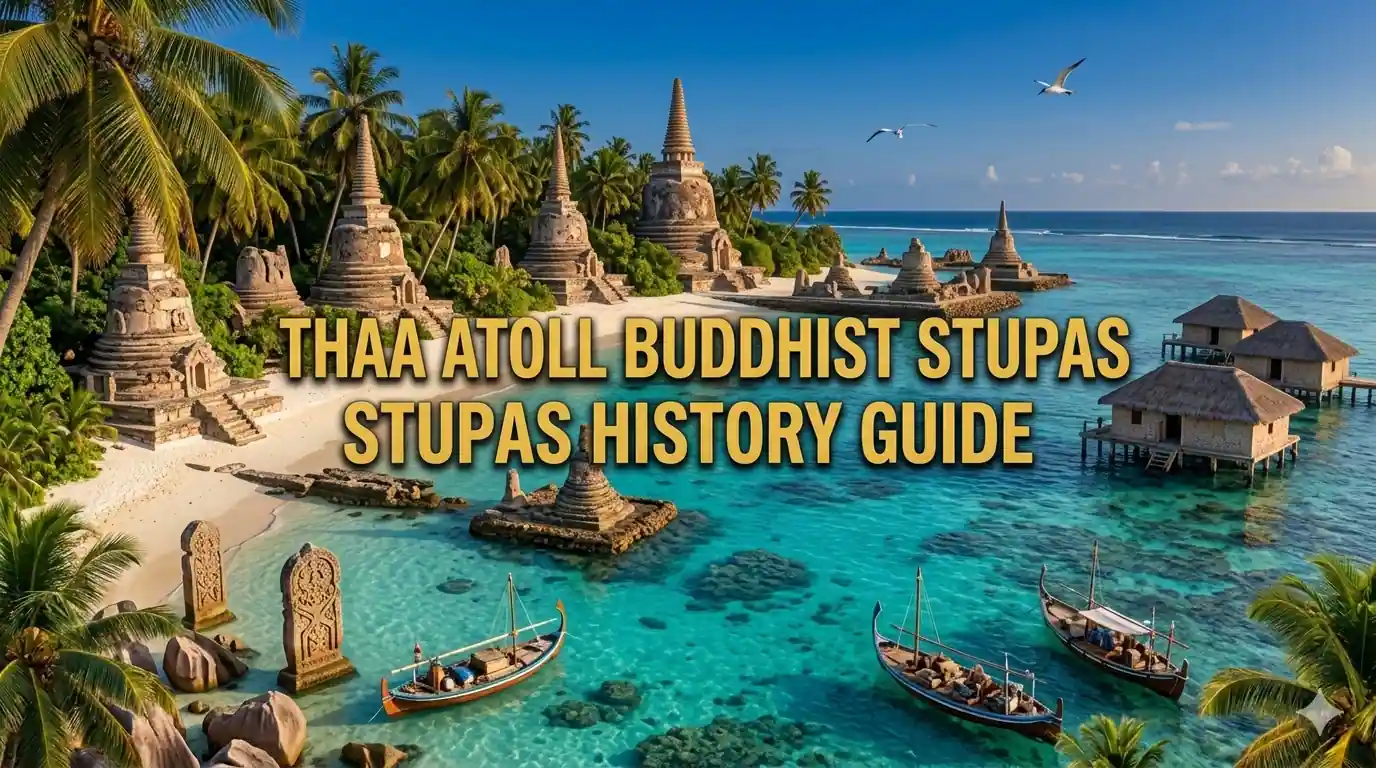
Introduction to Maldives Buddhist Heritage
The Maldives harbors a fascinating pre-Islamic past with Buddhist civilization flourishing for over a millennium.
Before the conversion to Islam in 1153 CE, the archipelago featured numerous Buddhist monasteries and stupas.
Thaa Atoll contains archaeological evidence of this ancient Buddhist heritage waiting to be explored.
This historical itinerary guides you through the Buddhist ruins and cultural significance of these sacred sites.
Understanding this heritage provides deeper appreciation for Maldivian history and cultural evolution.
Historical Context of Buddhism in the Maldives

Buddhism arrived in the Maldives around the 3rd century BCE during Emperor Ashoka's missionary campaigns.
The religion flourished for approximately fifteen hundred years before the Islamic conversion.
Archaeological evidence reveals sophisticated Buddhist civilization with monasteries, stupas, and sculptures.
Coral stone construction characterized Maldivian Buddhist architecture utilizing local materials ingeniously.
Trade routes connecting India, Sri Lanka, and Southeast Asia facilitated cultural and religious exchange.
Pre-Islamic Maldivian Civilization
Ancient Maldivians developed advanced maritime skills navigating the Indian Ocean trade networks.
Buddhist monasteries served as centers of learning, culture, and community organization.
Coral stone carving techniques produced intricate sculptures and architectural decorations.
Sanskrit and later Divehi Akuru script documented religious texts and administrative records.
Archaeological findings include Buddha statues, stupas, monastery foundations, and ceremonial objects.
The Conversion to Islam
In 1153 CE, King Dhovemi converted to Islam marking the end of Buddhist rule.
The conversion process involved both political decisions and gradual cultural transformation.
Many Buddhist structures were dismantled with materials repurposed for mosques and buildings.
Some Buddhist sites were abandoned and gradually reclaimed by jungle and sand.
Despite conversion, some Buddhist cultural elements persisted in Maldivian traditions and folklore.
Thaa Atoll Overview and Accessibility

Thaa Atoll lies in the central region of the Maldives approximately one hundred fifty kilometers south of Malé.
The administrative atoll comprises thirteen inhabited islands and numerous uninhabited islets.
Buddhist archaeological sites are scattered across several islands within the atoll.
Access requires domestic flight to nearby airports followed by speedboat transfers.
Visiting these remote sites demands planning, local guides, and respect for archaeological preservation.
Getting to Thaa Atoll
Domestic flights from Velana International Airport serve nearby regional airports.
Speedboat transfers from regional airports to Thaa Atoll islands cost fifty to one hundred dollars.
Liveaboard boats offer alternative access combining transportation with island hopping.
Travel time from Malé to Thaa Atoll ranges from three to five hours depending on method.
Weather conditions significantly impact sea travel requiring flexible scheduling.
Best Time to Visit Archaeological Sites
Northeast monsoon season December through March offers calmest seas and best visibility.
Dry season provides optimal conditions for exploring outdoor archaeological remains.
Avoid southwest monsoon May through November when rough seas limit boat travel.
Early morning visits prevent midday heat and provide best photographic lighting.
Low tide exposes more archaeological features making exploration more productive.
Major Buddhist Archaeological Sites in Thaa Atoll

Thaa Atoll contains several significant Buddhist archaeological locations worthy of exploration.
Coral stone stupa foundations reveal the scale and sophistication of ancient Buddhist architecture.
Monastery ruins indicate organized monastic communities once thrived across the atoll.
Sculpture fragments demonstrate artistic skill and religious devotion of ancient Maldivians.
Each site tells part of the larger story of Maldivian Buddhist civilization.
Coral Stone Stupa Remains
Stupa foundations constructed from precisely cut coral stone blocks fitted without mortar.
Circular and rectangular stupa bases indicate different architectural styles and periods.
Some stupas reached heights of three to five meters before deterioration.
Carved decorative elements including lotus motifs and geometric patterns adorn remaining stones.
Stupa locations often occupy elevated ground providing visibility across the island.
Monastery Complex Ruins
Monastery foundations reveal layout of residential quarters, prayer halls, and communal spaces.
Multiple small structures suggest organized monastic communities of ten to twenty monks.
Well systems and water management features demonstrate sophisticated planning.
Coral stone walls sometimes standing one meter high outline original building footprints.
Artifacts found include pottery shards, beads, and metal objects indicating daily monastic life.
Sculpture and Artifact Discoveries
Buddha statue fragments carved from coral stone and imported materials discovered at various sites.
Decorative plaques featuring Buddhist symbols like dharma wheels and lotus flowers.
Inscription stones with ancient scripts providing historical and religious texts.
Ceremonial objects including ritual vessels and offering bowls found during excavations.
Many artifacts now housed in National Museum in Malé with some remaining on-site.
Three Day Historical Itinerary

This comprehensive three-day itinerary maximizes your exploration of Thaa Atoll's Buddhist heritage.
Each day focuses on different islands and archaeological sites with expert local guidance.
The schedule balances archaeological exploration with cultural immersion and natural beauty.
Accommodation on local islands provides authentic Maldivian hospitality and cuisine.
Flexibility built into itinerary accommodates weather conditions and boat schedules.
Day One: Arrival and Initial Exploration
Morning departure from Malé via domestic flight to regional airport serving Thaa Atoll.
Speedboat transfer to inhabited island accommodation in Thaa Atoll checking into guesthouse.
Afternoon orientation walk through local village learning about contemporary island life.
Visit nearest accessible Buddhist stupa site with local guide providing historical context.
Evening traditional Maldivian dinner and briefing on following day's archaeological explorations.
Day Two: Major Archaeological Sites
Early morning speedboat departure to island with most significant stupa remains.
Guided exploration of coral stone stupa foundations and monastery ruins for two hours.
Photography session documenting architectural details and archaeological features.
Picnic lunch on beach with discussion of Buddhist civilization and conversion to Islam.
Afternoon visit to second archaeological site featuring sculpture fragments and artifacts.
Return to accommodation island for evening rest and cultural exchange with local community.
Day Three: Additional Sites and Departure
Morning visit to third archaeological location focusing on artifact discovery areas.
Meeting with local elders sharing oral histories and legends about ancient Buddhist period.
Documentation of findings and photographs for personal records and archaeological preservation.
Farewell lunch featuring traditional Maldivian cuisine prepared by local family.
Afternoon speedboat transfer to airport for return flight to Malé concluding historical journey.
Archaeological Preservation and Ethics

These ancient Buddhist sites represent irreplaceable cultural heritage requiring careful preservation.
Visitors must follow strict guidelines to prevent damage to fragile archaeological remains.
Unauthorized excavation, removal of artifacts, or vandalism threatens site integrity.
Climate change and coastal erosion pose ongoing threats to these vulnerable locations.
Responsible tourism supports preservation efforts while enabling educational access.
Visitor Guidelines and Restrictions
Always visit archaeological sites with authorized local guides familiar with preservation protocols.
Do not touch, move, or remove any stones, artifacts, or materials from sites.
Stay on established paths avoiding trampling vegetation or disturbing ground surfaces.
Photography permitted but avoid using flash on sensitive carved surfaces.
Report any site damage, looting, or erosion concerns to local authorities immediately.
Supporting Preservation Efforts
Pay required site fees and permits which fund archaeological conservation work.
Hire local guides ensuring community benefits from heritage tourism economically.
Purchase locally made crafts supporting traditional skills and cultural continuity.
Share photographs and information responsibly avoiding precise location data that could facilitate looting.
Contribute to archaeological organizations working on Maldivian heritage preservation.
Cultural Significance and Modern Context

Understanding Buddhist heritage provides context for contemporary Maldivian culture and identity.
Despite Islamic conversion, some Buddhist cultural elements persist in Maldivian traditions.
Archaeological sites serve as tangible connections to thousand-year history of human habitation.
Local communities maintain complex relationships with pre-Islamic heritage sites.
Balancing religious identity with historical preservation requires sensitivity and dialogue.
Buddhist Influences in Modern Maldives
Some traditional Maldivian crafts show continuity from Buddhist period techniques.
Certain place names and local legends reference pre-Islamic history and Buddhist sites.
Coral stone construction methods developed during Buddhist era continue in traditional architecture.
Folklore and oral histories preserve memories of ancient Buddhist civilization.
Linguistic elements in Divehi language reflect Sanskrit and Pali Buddhist influences.
Community Perspectives on Heritage
Local island communities often serve as custodians of archaeological sites.
Elders possess oral histories and traditional knowledge about ancient sites and artifacts.
Younger generations increasingly interested in understanding pre-Islamic heritage.
Community-based tourism initiatives provide economic incentives for site preservation.
Religious sensitivities require respectful engagement when discussing Buddhist heritage.
Practical Travel Considerations

Visiting remote archaeological sites in Thaa Atoll requires thorough preparation and realistic expectations.
Limited infrastructure on local islands necessitates bringing essential supplies and equipment.
Weather dependency demands flexible scheduling and contingency plans.
Cultural sensitivity and appropriate behavior essential when visiting inhabited islands.
Physical fitness requirements for boat travel and site exploration should be assessed honestly.
Accommodation and Facilities
Local island guesthouses provide basic but clean accommodation at thirty to eighty dollars nightly.
Facilities typically include air-conditioned rooms, private bathrooms, and WiFi.
Meals available at guesthouses or local cafes featuring Maldivian cuisine.
Electricity generally reliable though occasional outages possible on remote islands.
Bring essential medications, toiletries, and supplies as shopping options limited.
Equipment and Supplies
Sturdy walking shoes essential for exploring uneven archaeological sites and island terrain.
Sun protection including hat, sunscreen, and sunglasses critical in tropical environment.
Insect repellent necessary for protection against mosquitoes especially at dawn and dusk.
Reusable water bottle reducing plastic waste while staying hydrated during explorations.
Camera with extra batteries and memory cards for documenting archaeological sites.
Lightweight rain jacket for unexpected tropical showers especially during monsoon transitions.
Health and Safety Precautions
Travel insurance covering medical evacuation essential for remote island travel.
Basic first aid kit including treatments for cuts, bites, and common ailments.
Stay hydrated drinking plenty of water in hot and humid tropical climate.
Respect marine safety guidelines when swimming or snorkeling around islands.
Inform accommodation of daily plans especially when visiting remote archaeological sites.
Working with Local Guides

Local guides provide invaluable knowledge, access, and cultural mediation for archaeological site visits.
Experienced guides know site locations, historical context, and preservation protocols.
Building relationships with local guides supports community-based tourism and heritage preservation.
Clear communication about expectations, costs, and responsibilities ensures positive experiences.
Respect for local knowledge and customs enhances educational value of site visits.
Finding Qualified Guides
Guesthouses on inhabited islands can arrange qualified local guides for archaeological tours.
Maldives Ministry of Tourism maintains lists of licensed guides and tour operators.
Recommendations from other travelers and online reviews help identify reputable guides.
Archaeological organizations sometimes offer specialized heritage tours with expert guides.
Verify guide knowledge of Buddhist history and archaeological preservation practices.
Guide Services and Costs
Local guide fees typically range from fifty to one hundred dollars for half-day archaeological tours.
Full-day guided expeditions to multiple sites cost one hundred to two hundred dollars.
Guide fees often include boat transportation though confirm in advance.
Tipping customary for excellent service at ten to fifteen percent of guide fee.
Multi-day guide services can be arranged for comprehensive archaeological exploration.
Photography and Documentation

Photographing archaeological sites requires balancing documentation with preservation concerns.
High-quality images create valuable records while respecting site fragility and cultural sensitivity.
Proper techniques capture architectural details and spatial relationships effectively.
Ethical photography avoids facilitating looting or inappropriate commercial exploitation.
Sharing images responsibly promotes awareness and appreciation of Maldivian heritage.
Photography Best Practices
Golden hour lighting early morning or late afternoon provides best illumination for coral stone structures.
Wide-angle lenses capture overall site layout while telephoto lenses reveal carved details.
Polarizing filters reduce glare on stone surfaces and enhance color saturation.
Tripods useful for detailed shots though ensure stability on sandy or uneven ground.
Avoid flash photography which can damage sensitive ancient surfaces and carvings.
Ethical Documentation
Obtain permission before photographing local residents especially near archaeological sites.
Avoid publishing precise GPS coordinates that could facilitate looting or vandalism.
Share images with educational context promoting understanding of Buddhist heritage.
Credit local guides and communities when sharing photographs publicly.
Consider contributing images to archaeological documentation projects supporting preservation.
Extending Your Historical Journey
Thaa Atoll Buddhist sites represent just part of Maldives' rich archaeological heritage.
Other atolls contain significant Buddhist ruins worthy of exploration for dedicated history enthusiasts.
Combining Thaa Atoll visits with other archaeological sites creates comprehensive historical itinerary.
Museums and cultural centers provide additional context and artifact collections.
Multiple atoll visits require extended time and budget but reward with deeper historical understanding.
Other Maldivian Buddhist Sites
Laamu Atoll features extensive Buddhist ruins on Gan Island with well-preserved stupa foundations.
Isdhoo Island in Laamu Atoll contains ancient monastery ruins and coral stone structures.
Hithadhoo in Addu Atoll has archaeological remains including stupa bases and sculpture fragments.
Northern atolls including Haa Dhaalu contain lesser-known Buddhist sites requiring local guidance.
Each atoll's sites offer unique perspectives on regional variations in Buddhist civilization.
Museums and Cultural Centers
National Museum in Malé houses extensive collection of Buddhist artifacts and sculptures.
Museum displays include coral stone Buddha statues, inscriptions, and ceremonial objects.
Exhibitions provide historical context and chronological framework for understanding Buddhist period.
Curators and staff offer expertise and additional information about archaeological sites.
Visiting museum before site visits enhances understanding and appreciation of ruins.
Conclusion and Reflection
Exploring the ancient Buddhist stupas of Thaa Atoll offers profound connection to Maldivian history.
These archaeological sites testify to sophisticated civilization that flourished for over millennium.
Responsible tourism supports preservation while enabling educational and cultural experiences.
Understanding Buddhist heritage enriches appreciation for Maldives' complex cultural evolution.
These ancient ruins remind us of human history's depth and the importance of cultural preservation.
0 Comments