.webp)
.webp)
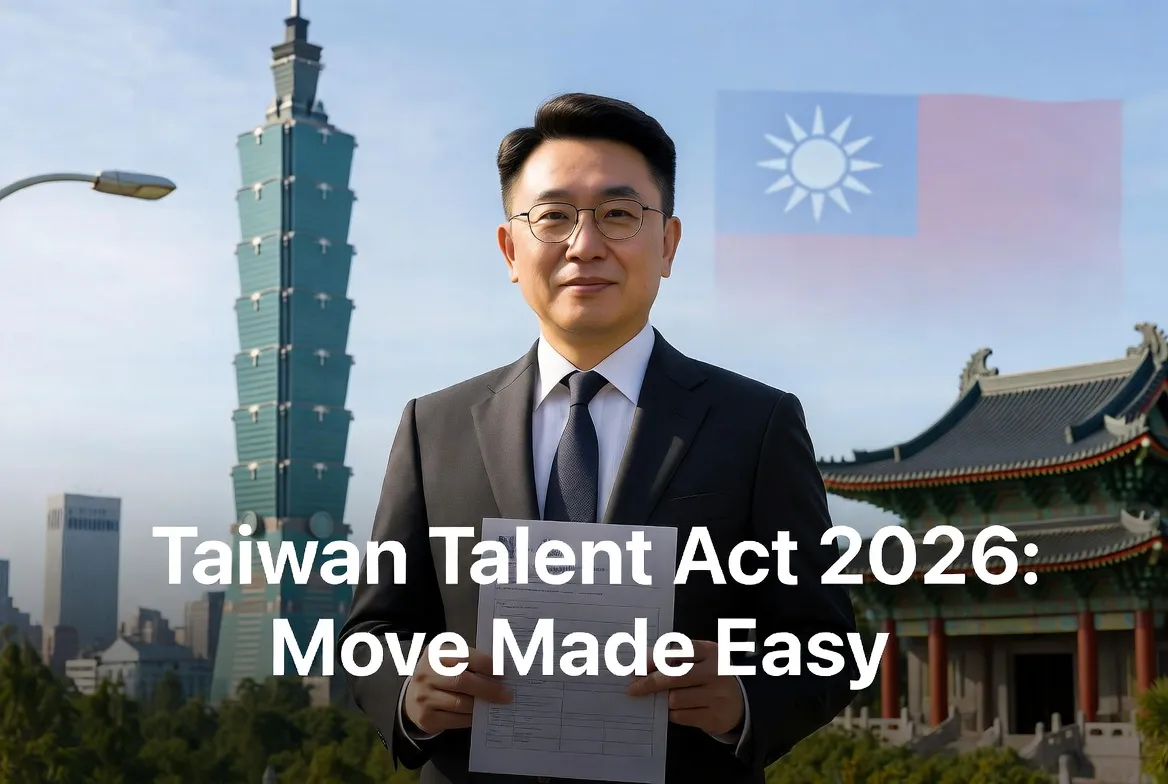
Introduction: Taiwan's Strategic Push for Global Talent
In an increasingly competitive global landscape for skilled professionals, Taiwan has emerged as a compelling destination for high-level talent seeking career advancement, quality of life, and innovative opportunities. The Taiwan Talent Act 2026 represents a landmark policy reform designed to streamline immigration pathways, enhance employment incentives, and position Taiwan as a premier hub for international professionals in technology, research, finance, healthcare, and creative industries.
For decades, Taiwan's economic success has been driven by its highly educated workforce, robust technology sector, and strategic position in global supply chains. However, demographic challenges including an aging population and declining birth rates have created urgent needs for skilled foreign talent to sustain economic growth and innovation. The Taiwan Talent Act addresses these challenges by removing bureaucratic barriers, offering attractive incentives, and creating a welcoming environment for professionals who can contribute to Taiwan's continued development.
This comprehensive guide explores everything high-level professionals need to know about the Taiwan Talent Act 2026: eligibility criteria, application procedures, benefits for individuals and families, tax incentives, pathways to long-term residency, and practical considerations for relocating to Taiwan. Whether you're a technology executive, research scientist, financial specialist, healthcare professional, or creative industry leader, understanding these new opportunities can help you evaluate Taiwan as your next career destination.
What Is the Taiwan Talent Act and Why Was It Introduced?

The Taiwan Talent Act is a comprehensive legislative framework enacted to attract, retain, and integrate high-level foreign professionals into Taiwan's economy and society. Building upon earlier immigration reforms, the 2026 updates represent the most significant enhancements to Taiwan's talent attraction policies, introducing streamlined processes, expanded eligibility, and enhanced benefits designed to compete with other Asian talent hubs like Singapore, Hong Kong, and South Korea.
Key Objectives of the 2026 Updates
The Taiwan Talent Act 2026 pursues several strategic goals:
Economic Competitiveness: By attracting top-tier international talent, Taiwan aims to strengthen its position in emerging industries including artificial intelligence, semiconductor manufacturing, biotechnology, renewable energy, and digital services. The Act recognizes that innovation increasingly depends on diverse, globally-connected teams.
Demographic Sustainability: With Taiwan's population aging and workforce shrinking, importing skilled professionals helps maintain economic productivity, support social services, and sustain the tax base necessary for public investments.
Global Integration: The Act facilitates deeper connections between Taiwan and international markets by bringing in professionals with global networks, cross-cultural expertise, and international business experience.
Quality of Life Enhancement: By creating pathways for professionals to bring families, access healthcare, and integrate into communities, the Act aims to make Taiwan not just a workplace but a home for international talent.
Who Qualifies as a "High-Level Professional"?
The Taiwan Talent Act defines eligible professionals through multiple pathways, recognizing that talent manifests in diverse forms:
Employment-Based Criteria:
- Annual salary threshold: Typically NT$1.5-2 million+ (approximately $50,000-70,000 USD), varying by industry and role
- Senior management positions at recognized companies
- Specialized technical roles requiring advanced expertise
- Professionals employed by Taiwan's flagship industries (semiconductors, biotech, etc.)
- 👉 Complete Guide to Exploring Paghman Valley Gardens
- 👉 2026 Taiwan Travel Subsidy: How to claim up to NT$3,200 as a foreign tourist.
- 👉 The Ultimate China Travel Guide: Navigating the Dragon State with Confidence
Qualification-Based Criteria:
- Advanced degrees (Master's or PhD) from accredited institutions
- Professional certifications recognized internationally
- Published research, patents, or demonstrated innovation in relevant fields
- Awards or recognition from prestigious organizations
- 👉 Complete Guide to Exploring Paghman Valley Gardens
- 👉 2026 Taiwan Travel Subsidy: How to claim up to NT$3,200 as a foreign tourist.
- 👉 The Ultimate China Travel Guide: Navigating the Dragon State with Confidence
Experience-Based Criteria:
- Minimum 5+ years of relevant professional experience
- Leadership roles in multinational corporations or startups
- Track record of successful projects, product launches, or business development
- Expertise in emerging or strategic industries
- 👉 Complete Guide to Exploring Paghman Valley Gardens
- 👉 2026 Taiwan Travel Subsidy: How to claim up to NT$3,200 as a foreign tourist.
- 👉 The Ultimate China Travel Guide: Navigating the Dragon State with Confidence
Points-Based Assessment:
For applicants who don't meet specific thresholds, Taiwan employs a points system evaluating factors including:
- Education level and institution prestige
- Work experience and career progression
- Salary level relative to Taiwan standards
- Age (younger applicants receive more points)
- Language proficiency (Mandarin, English, or other relevant languages)
- Previous connections to Taiwan (study, work, or family ties)
- 👉 Complete Guide to Exploring Paghman Valley Gardens
- 👉 2026 Taiwan Travel Subsidy: How to claim up to NT$3,200 as a foreign tourist.
- 👉 The Ultimate China Travel Guide: Navigating the Dragon State with Confidence
Applicants scoring above the threshold (typically 70+ points) qualify for Talent Act benefits.
Streamlined Application Process: What's New in 2026

One of the most significant improvements under the Taiwan Talent Act 2026 is the dramatic simplification of application procedures. Where previous processes required multiple agency approvals, extensive documentation, and months of waiting, the updated system prioritizes efficiency and user experience.
Single-Window Application Portal
The Taiwan Talent Act introduces a unified online platform where applicants can:
- Submit all required documentation through a secure digital portal
- Track application status in real-time with automated notifications
- Communicate directly with immigration officials via integrated messaging
- Upload supporting documents in multiple formats with automatic verification
- Receive digital approval notices that integrate with other government systems
- 👉 Complete Guide to Exploring Paghman Valley Gardens
- 👉 2026 Taiwan Travel Subsidy: How to claim up to NT$3,200 as a foreign tourist.
- 👉 The Ultimate China Travel Guide: Navigating the Dragon State with Confidence
This single-window approach eliminates the need to navigate multiple agencies, reducing administrative burden and processing time significantly.
Expedited Processing Timelines
Under the 2026 updates, standard processing times have been substantially reduced:
- Standard Applications: 10-15 business days (previously 30-60 days)
- Premium Processing: 3-5 business days for an additional fee
- Pre-Approved Employers: Companies on Taiwan's strategic industry list can sponsor applications with even faster turnaround
- 👉 Complete Guide to Exploring Paghman Valley Gardens
- 👉 2026 Taiwan Travel Subsidy: How to claim up to NT$3,200 as a foreign tourist.
- 👉 The Ultimate China Travel Guide: Navigating the Dragon State with Confidence
These accelerated timelines enable professionals to plan relocations with greater certainty and reduce the uncertainty that often accompanies international moves.
Reduced Documentation Requirements
The Talent Act 2026 minimizes bureaucratic friction by:
- Accepting digital copies of most documents rather than requiring original certified copies
- Recognizing international credentials without requiring Taiwan-specific validation in many cases
- Allowing employers to verify employment details directly through secure systems
- Permitting provisional approval pending submission of minor supplemental documents
- 👉 Complete Guide to Exploring Paghman Valley Gardens
- 👉 2026 Taiwan Travel Subsidy: How to claim up to NT$3,200 as a foreign tourist.
- 👉 The Ultimate China Travel Guide: Navigating the Dragon State with Confidence
These changes reflect a trust-based approach that prioritizes substantive qualifications over procedural formalities.
Family Inclusion Simplified
Previously, bringing family members to Taiwan required separate, complex applications. The 2026 updates enable:
- Joint applications for primary applicants and eligible dependents
- Streamlined documentation for spouses and children
- Coordinated processing so families receive approvals simultaneously
- Clear guidance on dependent eligibility (typically spouses and unmarried children under 20)
- 👉 Complete Guide to Exploring Paghman Valley Gardens
- 👉 2026 Taiwan Travel Subsidy: How to claim up to NT$3,200 as a foreign tourist.
- 👉 The Ultimate China Travel Guide: Navigating the Dragon State with Confidence
This family-friendly approach recognizes that successful relocation often depends on the well-being of the entire household.
Comprehensive Benefits for Talent Act Professionals

The Taiwan Talent Act offers a compelling package of benefits designed to attract and retain high-level professionals. These advantages extend beyond simple work authorization to encompass financial incentives, lifestyle enhancements, and long-term opportunities.
Employment Flexibility
Talent Act visa holders enjoy unprecedented employment flexibility:
- Multiple Employer Authorization: Unlike traditional work visas tied to single employers, Talent Act professionals may work for multiple Taiwan-based employers simultaneously, enabling consulting arrangements, board positions, or portfolio careers
- Self-Employment Rights: Qualified professionals may establish their own businesses or freelance while maintaining Talent Act status
- Role Flexibility: Changing positions or employers requires notification but not full reapplication, reducing career transition friction
- Remote Work Provisions: Professionals may work remotely for international employers while residing in Taiwan, subject to tax compliance
- 👉 Complete Guide to Exploring Paghman Valley Gardens
- 👉 2026 Taiwan Travel Subsidy: How to claim up to NT$3,200 as a foreign tourist.
- 👉 The Ultimate China Travel Guide: Navigating the Dragon State with Confidence
These provisions recognize that modern careers increasingly transcend traditional employer-employee relationships.
Tax Incentives and Financial Benefits
Taiwan offers attractive tax treatment for Talent Act professionals:
Preferential Tax Rates:
- Eligible professionals may qualify for a flat 18% income tax rate on Taiwan-sourced income for up to five years (compared to progressive rates reaching 40%)
- Foreign-sourced income may be exempt from Taiwan taxation under certain conditions
- Stock options and equity compensation receive favorable tax treatment
- 👉 Complete Guide to Exploring Paghman Valley Gardens
- 👉 2026 Taiwan Travel Subsidy: How to claim up to NT$3,200 as a foreign tourist.
- 👉 The Ultimate China Travel Guide: Navigating the Dragon State with Confidence
Relocation Allowances:
- Many employers supplement Talent Act hires with relocation packages covering moving expenses, temporary housing, and settlement assistance
- Tax deductions available for qualified relocation costs
- 👉 Complete Guide to Exploring Paghman Valley Gardens
- 👉 2026 Taiwan Travel Subsidy: How to claim up to NT$3,200 as a foreign tourist.
- 👉 The Ultimate China Travel Guide: Navigating the Dragon State with Confidence
Retirement and Savings Benefits:
- Access to Taiwan's labor pension system with employer contributions
- Options to maintain international retirement accounts while contributing to Taiwan systems
- 👉 Complete Guide to Exploring Paghman Valley Gardens
- 👉 2026 Taiwan Travel Subsidy: How to claim up to NT$3,200 as a foreign tourist.
- 👉 The Ultimate China Travel Guide: Navigating the Dragon State with Confidence
These financial incentives significantly enhance the net compensation package for international professionals.
Healthcare and Social Benefits
Taiwan's renowned healthcare system becomes accessible to Talent Act professionals:
- National Health Insurance: Immediate eligibility for Taiwan's comprehensive, affordable healthcare system covering medical, dental, and prescription services
- Family Coverage: Dependents may enroll in NHI at subsidized rates
- International Standards: Major hospitals offer English-language services and international patient programs
- Preventive Care: Regular health screenings and wellness programs included in coverage
- 👉 Complete Guide to Exploring Paghman Valley Gardens
- 👉 2026 Taiwan Travel Subsidy: How to claim up to NT$3,200 as a foreign tourist.
- 👉 The Ultimate China Travel Guide: Navigating the Dragon State with Confidence
Beyond healthcare, Talent Act professionals gain access to social services including education support, community integration programs, and cultural orientation resources.
Education Opportunities for Families
For professionals relocating with children, Taiwan offers excellent educational options:
- International Schools: Major cities host accredited international schools following American, British, IB, and other curricula
- Bilingual Public Schools: Growing network of public schools offering enhanced English instruction
- Higher Education: Taiwan's universities offer competitive programs, with many courses available in English
- Tuition Support: Some employers provide education allowances; tax deductions available for qualified education expenses
- 👉 Complete Guide to Exploring Paghman Valley Gardens
- 👉 2026 Taiwan Travel Subsidy: How to claim up to NT$3,200 as a foreign tourist.
- 👉 The Ultimate China Travel Guide: Navigating the Dragon State with Confidence
These options help ensure that family relocation supports children's academic development alongside parents' career advancement.
Pathways to Long-Term Residency and Citizenship

The Taiwan Talent Act isn't just about temporary employment—it creates meaningful pathways to long-term settlement for professionals who choose to build their lives in Taiwan.
Permanent Residency Acceleration
Under standard immigration rules, foreign nationals typically must reside in Taiwan for five consecutive years to qualify for permanent residency. The Talent Act 2026 introduces accelerated pathways:
- Three-Year Pathway: Talent Act professionals who maintain qualifying employment and meet integration criteria may apply for permanent residency after just three years
- Points-Based Acceleration: Additional points for Mandarin proficiency, community involvement, or investment in Taiwan can further reduce waiting periods
- Family Inclusion: Time spent in Taiwan by dependents counts toward the primary applicant's residency timeline
- 👉 Complete Guide to Exploring Paghman Valley Gardens
- 👉 2026 Taiwan Travel Subsidy: How to claim up to NT$3,200 as a foreign tourist.
- 👉 The Ultimate China Travel Guide: Navigating the Dragon State with Confidence
Permanent residency grants rights including unrestricted employment, property ownership, and enhanced social benefits while maintaining original citizenship.
Citizenship Considerations
For professionals considering full integration into Taiwan society, citizenship represents the ultimate commitment:
- Eligibility Timeline: After obtaining permanent residency, professionals may apply for citizenship following additional residency requirements (typically 1-2 more years)
- Language Requirements: Basic Mandarin proficiency demonstrates commitment to integration
- Dual Citizenship: Taiwan's policies on dual citizenship vary by country of origin; professionals should consult legal experts about implications
- Civic Integration: Citizenship applications consider community involvement, tax compliance, and adherence to Taiwanese laws
- 👉 Complete Guide to Exploring Paghman Valley Gardens
- 👉 2026 Taiwan Travel Subsidy: How to claim up to NT$3,200 as a foreign tourist.
- 👉 The Ultimate China Travel Guide: Navigating the Dragon State with Confidence
While citizenship isn't necessary for most professionals, the pathway provides options for those seeking deep, permanent connection to Taiwan.
Re-Entry and Travel Flexibility
Talent Act status includes practical benefits for international professionals who maintain global connections:
- Multiple-Entry Authorization: Unlimited entries and exits during visa validity
- Extended Absence Provisions: Reasonable periods abroad for business or family don't jeopardize residency status
- Family Travel Coordination: Dependents receive matching travel authorization
- 👉 Complete Guide to Exploring Paghman Valley Gardens
- 👉 2026 Taiwan Travel Subsidy: How to claim up to NT$3,200 as a foreign tourist.
- 👉 The Ultimate China Travel Guide: Navigating the Dragon State with Confidence
These provisions acknowledge that global professionals often maintain international responsibilities while building lives in Taiwan.
Industry-Specific Opportunities Under the Talent Act

Taiwan's strategic economic priorities shape how the Talent Act benefits different professional sectors. Understanding these industry-specific opportunities helps professionals evaluate fit and maximize advantages.
Technology and Semiconductor Industries
As a global leader in semiconductor manufacturing and technology innovation, Taiwan offers exceptional opportunities for tech professionals:
- Flagship Companies: TSMC, MediaTek, and other industry leaders actively recruit international talent with competitive packages
- Research Ecosystem: Strong collaboration between industry, academia, and government research institutes
- Startup Support: Growing venture capital ecosystem and government programs supporting tech entrepreneurship
- Specialized Visa Tracks: Accelerated processing for professionals in strategic technology fields
- 👉 Complete Guide to Exploring Paghman Valley Gardens
- 👉 2026 Taiwan Travel Subsidy: How to claim up to NT$3,200 as a foreign tourist.
- 👉 The Ultimate China Travel Guide: Navigating the Dragon State with Confidence
Professionals in AI, chip design, software engineering, and related fields find particularly favorable conditions under the Talent Act.
Healthcare and Biotechnology
Taiwan's advanced healthcare system and growing biotech sector create opportunities for medical and life sciences professionals:
- Medical Licensing: Streamlined processes for internationally-trained physicians and specialists
- Research Opportunities: Strong government investment in biomedical research and clinical trials
- Public Health Leadership: Taiwan's pandemic response has elevated its global health profile, creating demand for public health expertise
- Regulatory Expertise: Opportunities in pharmaceutical regulation, medical device approval, and healthcare policy
- 👉 Complete Guide to Exploring Paghman Valley Gardens
- 👉 2026 Taiwan Travel Subsidy: How to claim up to NT$3,200 as a foreign tourist.
- 👉 The Ultimate China Travel Guide: Navigating the Dragon State with Confidence
Healthcare professionals benefit from Taiwan's high-quality medical infrastructure and commitment to health innovation.
Finance and Professional Services
Taiwan's developing role in regional finance creates opportunities for financial professionals:
- Financial Hub Development: Government initiatives to strengthen Taipei's role in Asian finance
- Fintech Innovation: Supportive regulatory environment for financial technology development
- Professional Services: Demand for legal, accounting, consulting, and advisory expertise serving international business
- Cross-Border Expertise: Value placed on professionals with experience in multiple markets
- 👉 Complete Guide to Exploring Paghman Valley Gardens
- 👉 2026 Taiwan Travel Subsidy: How to claim up to NT$3,200 as a foreign tourist.
- 👉 The Ultimate China Travel Guide: Navigating the Dragon State with Confidence
Finance professionals with international experience find growing opportunities in Taiwan's evolving financial landscape.
Creative Industries and Education
Beyond traditional sectors, Taiwan welcomes talent in creative and knowledge fields:
- Cultural Content: Growing film, gaming, design, and media industries seeking international perspectives
- Higher Education: Universities recruiting international faculty and researchers
- Language Education: Demand for English and other language instruction
- Cultural Exchange: Programs supporting artists, writers, and cultural professionals
- 👉 Complete Guide to Exploring Paghman Valley Gardens
- 👉 2026 Taiwan Travel Subsidy: How to claim up to NT$3,200 as a foreign tourist.
- 👉 The Ultimate China Travel Guide: Navigating the Dragon State with Confidence
These sectors benefit from Taiwan's vibrant cultural scene and commitment to creative innovation.
Practical Considerations for Relocating to Taiwan

Understanding policy benefits is essential, but successful relocation requires attention to practical realities. These considerations help professionals prepare for life in Taiwan.
Cost of Living and Compensation
Taiwan offers an attractive balance of affordability and quality:
- Housing: Major cities offer modern apartments at costs significantly below comparable Asian hubs; Taipei averages $800-2,000/month for quality housing
- Daily Expenses: Food, transportation, and services remain affordable; excellent public transit reduces car dependency
- Healthcare Costs: National Health Insurance premiums are modest (typically 2-5% of salary) with comprehensive coverage
- Education: International school tuition ranges $10,000-25,000/year; public options available at minimal cost
- 👉 Complete Guide to Exploring Paghman Valley Gardens
- 👉 2026 Taiwan Travel Subsidy: How to claim up to NT$3,200 as a foreign tourist.
- 👉 The Ultimate China Travel Guide: Navigating the Dragon State with Confidence
When evaluating compensation packages, consider Taiwan's favorable cost-of-living ratio alongside salary figures.
Language and Cultural Integration
While many professionals work in English-speaking environments, language and cultural adaptation enhance the Taiwan experience:
- Mandarin Learning: Government and employers often provide language training; basic proficiency significantly improves daily life
- Cultural Orientation: Understanding Taiwanese customs, business etiquette, and social norms facilitates integration
- Community Connections: Expat networks, professional associations, and cultural groups provide support and friendship
- Family Adaptation: Resources for spouses and children help entire households adjust successfully
- 👉 Complete Guide to Exploring Paghman Valley Gardens
- 👉 2026 Taiwan Travel Subsidy: How to claim up to NT$3,200 as a foreign tourist.
- 👉 The Ultimate China Travel Guide: Navigating the Dragon State with Confidence
Taiwan's reputation for hospitality and openness makes cultural integration more accessible than in some destinations.
Quality of Life Factors
Beyond career considerations, Taiwan offers compelling lifestyle advantages:
- Safety: Consistently ranked among the world's safest countries with low crime rates
- Healthcare Quality: World-class medical facilities with short wait times and advanced technology
- Transportation: Efficient public transit, high-speed rail, and international airport connectivity
- Natural Beauty: Mountains, coastlines, hot springs, and national parks within easy reach of urban centers
- Culinary Culture: Renowned food scene from street markets to fine dining
- Work-Life Balance: Growing emphasis on reasonable working hours and quality of life
- 👉 Complete Guide to Exploring Paghman Valley Gardens
- 👉 2026 Taiwan Travel Subsidy: How to claim up to NT$3,200 as a foreign tourist.
- 👉 The Ultimate China Travel Guide: Navigating the Dragon State with Confidence
These factors contribute to Taiwan's appeal as a destination where professionals can thrive personally as well as professionally.
Frequently Asked Questions About Taiwan Talent Act 2026

Can I apply for the Taiwan Talent Act without a job offer?
Generally, the Taiwan Talent Act requires sponsorship from a Taiwan-based employer or organization. However, certain categories—including entrepreneurs, investors, and highly accomplished individuals with demonstrated potential to contribute to Taiwan—may qualify through alternative pathways. Consult with Taiwan's Ministry of Labor or authorized immigration professionals to evaluate your specific situation.
How does the Taiwan Talent Act interact with existing work visas?
The Talent Act creates a parallel, enhanced pathway rather than replacing existing work visa categories. Professionals already in Taiwan on standard work visas may apply to transition to Talent Act status if they meet eligibility criteria. The Talent Act offers superior benefits including greater employment flexibility, accelerated residency pathways, and enhanced tax treatment.
What happens if I lose my job while on Talent Act status?
Talent Act status includes reasonable grace periods for employment transitions. Typically, professionals have 30-60 days to secure new qualifying employment without jeopardizing their status. During this period, you may remain in Taiwan, seek new opportunities, and maintain access to benefits. Document your job search efforts and communicate with immigration authorities if transitions take longer than expected.
Can my spouse work in Taiwan under the Talent Act?
Yes, spouses of Talent Act professionals generally receive open work authorization, allowing employment with any Taiwan-based employer without requiring separate sponsorship. This provision significantly enhances family economic opportunities and integration prospects. Dependents should confirm specific documentation requirements during the application process.
How do taxes work for Talent Act professionals with international income?
Taiwan taxes residents on Taiwan-sourced income. Under Talent Act provisions, eligible professionals may qualify for preferential tax treatment including flat rates and potential exemptions for foreign-sourced income. However, tax obligations depend on individual circumstances including residency status, income sources, and applicable tax treaties. Consult qualified tax professionals familiar with both Taiwan and your home country's tax systems.
Conclusion: Taiwan's Invitation to Global Talent

The Taiwan Talent Act 2026 represents more than policy reform—it embodies Taiwan's strategic vision for its future and its invitation to global professionals to help shape that future. By removing bureaucratic barriers, offering compelling incentives, and creating pathways to long-term integration, Taiwan positions itself as a destination where high-level talent can advance careers while enjoying exceptional quality of life.
For professionals evaluating international opportunities, Taiwan offers distinctive advantages: a dynamic technology ecosystem, world-class healthcare, remarkable safety, rich cultural heritage, and a society that values education and innovation. The Talent Act amplifies these inherent strengths by ensuring that immigration processes facilitate rather than frustrate relocation, and that benefits reward rather than merely permit contribution.
As global competition for talent intensifies, Taiwan's proactive approach demonstrates serious commitment to attracting the expertise needed for continued prosperity. For professionals seeking environments where their skills are valued, their contributions matter, and their families can thrive, Taiwan presents a compelling opportunity enhanced by the practical advantages of the Talent Act 2026.
The question isn't whether Taiwan needs global talent—it clearly does. The question is whether your expertise, experience, and aspirations align with Taiwan's opportunities. If the answer is yes, the Taiwan Talent Act provides the framework to turn that alignment into reality.
Explore the application process. Connect with potential employers. Consult immigration professionals. And consider whether Taiwan's combination of career opportunity, lifestyle quality, and welcoming policy might be the catalyst for your next professional chapter.
Taiwan is ready for your talent. The Talent Act is ready to welcome you. The opportunity is now.
0 Comments