.webp)
.webp)
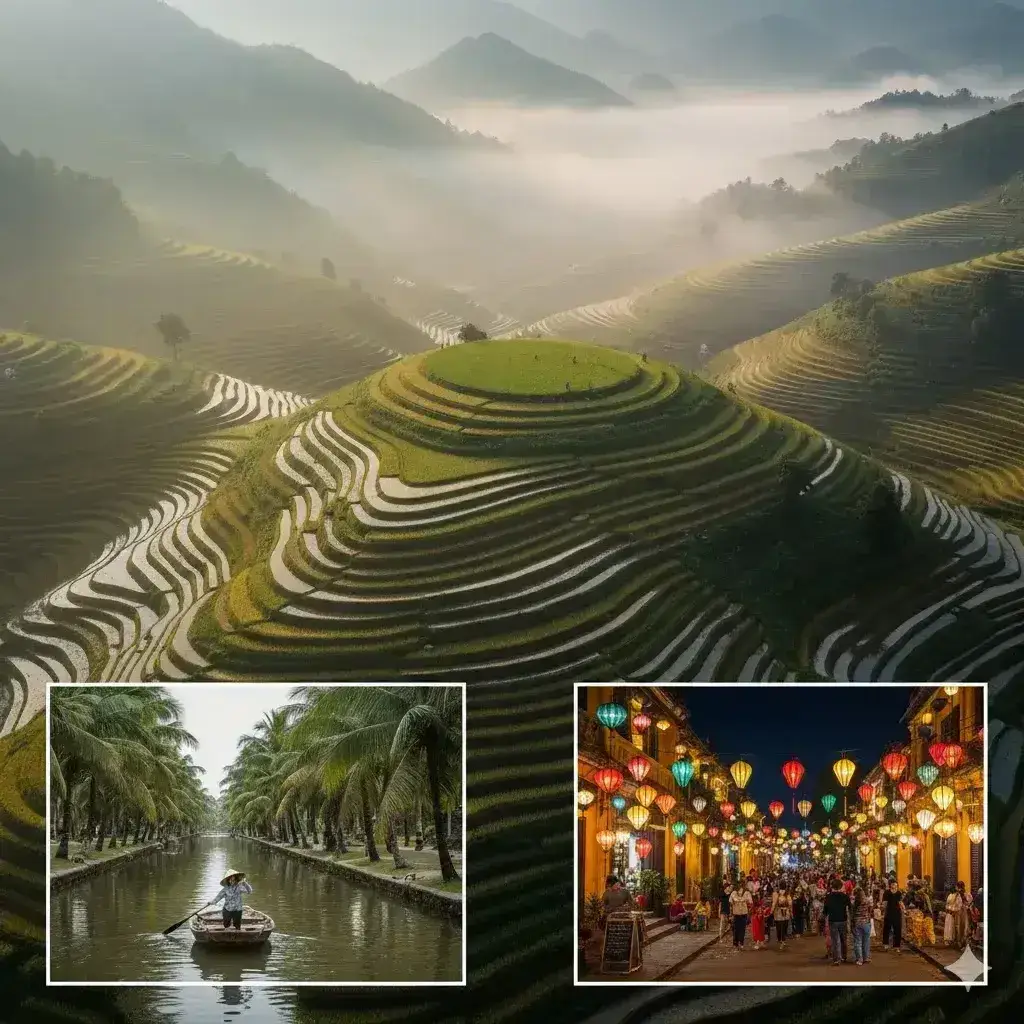
Vietnam Unveiled: Your Complete 2026 Journey from Northern Mountains to Southern Delta
Vietnam stretches like an elegant S-curve along the eastern edge of the Indochinese Peninsula, a country of breathtaking diversity where mist-shrouded mountain peaks give way to emerald rice terraces, where ancient imperial citadels stand beside French colonial architecture, and where the frenetic energy of modern cities blends seamlessly with timeless rural traditions. In 2026, Vietnam continues to captivate travelers as one of Southeast Asia's most compelling destinations, offering an extraordinary journey that takes you from the cloud-kissed heights of Sapa in the far north to the bustling waterways of the Mekong Delta in the south.
This comprehensive roadmap for 2026 will guide you through every aspect of traveling Vietnam's length, covering the essential destinations, hidden gems, cultural experiences, practical logistics, and insider tips that will transform your Vietnamese adventure from a simple vacation into a life-changing journey. Whether you're planning a two-week highlights tour or a month-long deep dive into this remarkable country, this guide provides the framework for an unforgettable exploration of Vietnam's landscapes, history, cuisine, and people.
Vietnam in 2026 offers improved infrastructure, sustainable tourism initiatives, and renewed commitment to preserving its cultural heritage while welcoming visitors with the legendary hospitality that has made it a favorite among seasoned travelers and first-time visitors to Asia alike. From trekking through minority villages in the northern highlands to cruising through limestone karsts in Ha Long Bay, from wandering the lantern-lit streets of Hoi An to navigating the floating markets of the Mekong, your Vietnamese journey promises moments of wonder at every turn.
Planning Your Vietnamese Adventure: Essential Information for 2026

Before embarking on your Vietnamese journey, understanding the practical aspects of travel will ensure a smooth and enjoyable experience. Vietnam has made significant strides in tourism infrastructure while maintaining its authentic character, making 2026 an ideal time to visit.
When to Visit: Understanding Vietnam's Complex Climate
Vietnam's elongated shape means weather varies dramatically from north to south, and timing your visit requires careful consideration of regional differences.
Northern Vietnam (Sapa, Hanoi, Ha Long Bay): The north experiences four distinct seasons. Spring (March-April) brings mild temperatures and blooming flowers, making it ideal for trekking in Sapa when rice terraces are being planted. Summer (May-August) is hot and humid with occasional heavy rainfall, though mountain areas remain cooler. Autumn (September-November) is widely considered the best time to visit, with comfortable temperatures, clear skies, and golden rice harvests in Sapa creating spectacular photography opportunities. Winter (December-February) can be quite cool, especially in mountainous regions where temperatures can drop to near freezing, though this offers a different kind of beauty with misty landscapes.
Central Vietnam (Hue, Da Nang, Hoi An): This region experiences a different pattern, with a dry season from January to August offering warm, sunny weather perfect for beach activities and exploring ancient towns. The wet season runs from September to December, with October and November seeing the heaviest rainfall and potential flooding, particularly in Hoi An. The ideal window is February to May, when temperatures are pleasant and rainfall is minimal.
Southern Vietnam (Ho Chi Minh City, Mekong Delta): The south has a more consistent tropical climate with two main seasons. The dry season (November to April) offers sunny days and lower humidity, making it the most comfortable time to explore. The wet season (May to October) brings daily afternoon downpours that are often brief but intense, though temperatures remain warm year-round. The Mekong Delta is particularly beautiful during the flood season (September to November) when water levels rise and the landscape transforms.
Best Overall Time: For a comprehensive north-to-south journey, March to May or September to November offer the best compromise, though you'll encounter different conditions in each region. Many travelers choose to start in the north and work southward, adjusting their pace based on seasonal conditions.
Visa Requirements and Entry Procedures for 2026
Vietnam has streamlined its visa process significantly, making entry easier than ever for most nationalities.
E-Visa System: As of 2026, Vietnam offers e-visas to citizens of all countries, valid for up to 90 days with multiple entries. The application process is entirely online through the official government portal, typically processed within 3-5 business days. The fee is approximately $25 USD for single entry or $50 USD for multiple entries. Apply at least two weeks before travel to allow for processing time.
Visa Exemption: Citizens of certain ASEAN countries enjoy visa-free entry for varying periods. Additionally, visitors to Phu Quoc Island can stay visa-free for up to 30 days if arriving directly from abroad.
Passport Requirements: Your passport must be valid for at least six months beyond your planned departure date and have at least two blank pages for entry stamps.
Entry Points: E-visas are valid at all international airports (Hanoi, Ho Chi Minh City, Da Nang, Nha Trang, Phu Quoc), many land borders, and seaports. Verify your intended entry point accepts e-visas before arrival.
Budgeting for Your Vietnam Journey
Vietnam remains one of Southeast Asia's most affordable destinations, though costs vary by region and travel style.
Accommodation: Budget hostels range from $5-15 USD per night for dorm beds. Mid-range hotels and boutique guesthouses cost $25-60 USD per night, offering comfortable rooms with air conditioning and private bathrooms. Luxury resorts and five-star hotels start around $100 USD and can exceed $300 USD per night in premium locations.
Food and Dining: Street food and local restaurants offer incredible value, with pho, banh mi, and com tam dishes costing $1-3 USD. Mid-range restaurants charge $5-15 USD per meal. Fine dining experiences range from $30-80 USD per person. Daily food budgets can range from $10 USD (street food only) to $50+ USD (mix of local and upscale dining).
Transportation: Domestic flights between major cities cost $50-150 USD depending on booking time and season. Overnight trains (Reunification Express) range from $30-80 USD for sleeper berths. Long-distance buses cost $15-40 USD. Local transportation including taxis, Grab (Southeast Asian ride-sharing), and motorbike taxis is very affordable, with most city trips costing $2-10 USD.
Activities and Tours: Day tours range from $25-100 USD depending on activities. Ha Long Bay cruises vary widely from $100-400+ USD for 2-day/1-night trips. Entrance fees to attractions typically cost $2-10 USD. Trekking guides in Sapa cost $25-50 USD per day.
Daily Budget Estimates: Backpackers can comfortably travel on $25-40 USD per day. Mid-range travelers should budget $50-100 USD daily. Luxury travelers might spend $150-300+ USD per day.
Northern Vietnam: Mountains, Metropolises, and Maritime Marvels

Your Vietnamese journey begins in the north, where dramatic mountain landscapes, vibrant ethnic minority cultures, and the thousand-year-old capital city create an unforgettable introduction to the country.
Sapa: Trekking Through Cloud-Kissed Rice Terraces
Nestled in the Hoang Lien Son mountains near the Chinese border, Sapa sits at 1,500 meters elevation, offering cool temperatures, spectacular scenery, and access to some of Vietnam's most beautiful rice terraces and ethnic minority villages.
Getting There: From Hanoi, you can reach Sapa by overnight train to Lao Cai followed by a 1-hour bus ride ($25-40 USD), by sleeper bus directly ($15-25 USD, 5-6 hours), or by private car ($100-150 USD). The overnight train offers a romantic travel experience with various comfort levels from hard seats to private cabins.
Best Time to Visit: September to November for golden rice harvest, March to May for green terraces and blooming flowers. Winter (December-February) can be very cold and foggy but offers a different atmospheric beauty.
Trekking and Villages: Sapa's main attraction is trekking through rice terraces to ethnic minority villages. Popular routes include:
- Cat Cat Village: Closest to town (3km), easily accessible, Black H'mong village with traditional crafts and a waterfall. Can be crowded but convenient for short visits.
- Lao Chai and Ta Van Villages: The most popular trekking route (10-12km), passing through Black H'mong and Dzay villages with stunning terrace views. Most treks include homestay opportunities.
- Y Linh Ho and Linh Ho Chi: Less crowded alternative with beautiful scenery and authentic village experiences.
- Muong Hoa Valley: Home to ancient rock carvings and expansive terrace views, accessible by motorbike or guided tour.
- Fansipan Mountain: At 3,143 meters, "the Roof of Indochina" can be climbed via a challenging 2-3 day trek or taken via the world's highest cable car ($30 USD round-trip).
- 👉 Traveling with Infants to Saudi Arabia Logistics Health and Family Services 2026
- 👉 Malaysia Named Affordable Luxury Capital 2026 by Bloomberg
- 👉 10 Sri Lanka Road Shocks That Surprise Americans
Ethnic Minorities: Sapa region is home to several ethnic groups including Black H'mong, Red Dzao, Tay, Giay, and Xa Pho. Each maintains distinct traditions, dress, and languages. Respectful cultural exchange is encouraged, though be mindful of photography etiquette and always ask permission.
Homestay Experience: Staying with local families in Ta Van or Lao Chai villages offers authentic cultural immersion. Basic accommodations ($10-20 USD) include simple rooms, shared bathrooms, and home-cooked meals. This provides direct economic benefit to local communities and deeper cultural understanding.
Local Markets: If visiting on weekends, don't miss the colorful markets where ethnic minorities gather to trade goods, socialize, and maintain cultural traditions. Bac Ha Market (Sunday, 40km from Sapa) is the largest and most vibrant.
Hanoi: The Soul of Vietnam
Vietnam's capital, with over 1,000 years of history, blends ancient traditions with rapid modernization. The city's charm lies in its contradictions: serene temples beside bustling markets, French colonial architecture alongside modern developments, and peaceful lakes surrounded by chaotic traffic.
Old Quarter: The heart of Hanoi, a labyrinth of 36 ancient streets, each traditionally dedicated to specific trades. Wander through narrow alleys, discover hidden temples, sip egg coffee at centuries-old cafes, and experience the organized chaos of street life. Don't miss:
- Hoan Kiem Lake: The spiritual center of Hanoi, especially beautiful at dawn and dusk. Visit Ngoc Son Temple on the small island.
- Dong Xuan Market: The largest covered market, offering everything from fresh produce to souvenirs.
- Train Street: A narrow residential street where trains pass meters from homes (check current access as regulations change).
- Street Food: Take a food tour or explore independently. Must-tries include pho, bun cha, banh mi, and bia hoi (fresh beer).
- 👉 Traveling with Infants to Saudi Arabia Logistics Health and Family Services 2026
- 👉 Malaysia Named Affordable Luxury Capital 2026 by Bloomberg
- 👉 10 Sri Lanka Road Shocks That Surprise Americans
Historical Sites:
- Ho Chi Minh Mausoleum: Where the revolutionary leader's embalmed body rests. Dress modestly and arrive early. Closed Mondays and Fridays.
- Temple of Literature: Vietnam's first university, dedicated to Confucius, featuring beautiful gardens and traditional architecture.
- One Pillar Pagoda: Iconic Buddhist temple built in 1049, resembling a lotus blossom.
- Hanoi Opera House: French colonial masterpiece modeled after Paris Opera.
- Imperial Citadel of Thang Long: UNESCO World Heritage Site with over 1,000 years of history.
- 👉 Traveling with Infants to Saudi Arabia Logistics Health and Family Services 2026
- 👉 Malaysia Named Affordable Luxury Capital 2026 by Bloomberg
- 👉 10 Sri Lanka Road Shocks That Surprise Americans
Museums:
- Ethnology Museum: Excellent exhibits on Vietnam's 54 ethnic groups, with outdoor traditional house reconstructions.
- Women's Museum: Fascinating insights into Vietnamese women's roles in society and history.
- Hoa Lo Prison: "Hanoi Hilton," used by French colonists and later North Vietnamese.
- 👉 Traveling with Infants to Saudi Arabia Logistics Health and Family Services 2026
- 👉 Malaysia Named Affordable Luxury Capital 2026 by Bloomberg
- 👉 10 Sri Lanka Road Shocks That Surprise Americans
Food Scene: Hanoi is Vietnam's culinary capital. Take a cooking class, join a street food tour, or explore independently. Key areas include the Old Quarter, Tay Ho (expat area with cafes), and Trang Tien Street.
Day Trips:
- Ninh Binh: "Ha Long Bay on land" with boat trips through rivers and caves among limestone karsts (2-hour drive).
- Perfume Pagoda: Buddhist pilgrimage site accessible by boat and cable car.
- Bat Trang Ceramic Village: Traditional pottery village where you can try your hand at ceramics.
- 👉 Traveling with Infants to Saudi Arabia Logistics Health and Family Services 2026
- 👉 Malaysia Named Affordable Luxury Capital 2026 by Bloomberg
- 👉 10 Sri Lanka Road Shocks That Surprise Americans
Ha Long Bay and Beyond: Cruising Through Karst Seascapes
Ha Long Bay, a UNESCO World Heritage Site featuring over 1,600 limestone islands and islets rising from emerald waters, is one of the world's most spectacular natural wonders.
Choosing Your Cruise: The bay offers everything from budget to luxury cruises. Key considerations:
- Duration: Most cruises are 2 days/1 night or 3 days/2 nights. The longer option allows more time for activities and less rushed experiences.
- Boat Size: Smaller boats (under 20 cabins) offer more intimate experiences and access to less crowded areas. Larger boats provide more amenities but feel more commercial.
- Itinerary: Look for cruises that visit less crowded areas like Lan Ha Bay or Bai Tu Long Bay, which feature similar scenery with fewer tourists.
- Activities: Typical activities include kayaking, cave visits (Sung Sot Cave is popular), cooking classes, tai chi sessions, and swimming.
- Price Range: Budget cruises $100-150 USD, mid-range $150-300 USD, luxury $300-600+ USD per person.
- 👉 Traveling with Infants to Saudi Arabia Logistics Health and Family Services 2026
- 👉 Malaysia Named Affordable Luxury Capital 2026 by Bloomberg
- 👉 10 Sri Lanka Road Shocks That Surprise Americans
Alternatives to Ha Long Bay:
- Lan Ha Bay: South of Ha Long, featuring similar karst scenery with fewer boats and pristine beaches. Many consider it more beautiful and less commercialized.
- Bai Tu Long Bay: Northeast of Ha Long, offering untouched beauty and authentic fishing village experiences.
- Cat Ba Island: The largest island in the archipelago, offering budget accommodation, trekking in national parks, and day cruises.
- 👉 Traveling with Infants to Saudi Arabia Logistics Health and Family Services 2026
- 👉 Malaysia Named Affordable Luxury Capital 2026 by Bloomberg
- 👉 10 Sri Lanka Road Shocks That Surprise Americans
Booking Tips: Book directly with cruise operators or through reputable agencies. Read recent reviews carefully. Ensure the cruise operator has proper safety certifications and environmental practices. Avoid the cheapest options as they often cut corners on safety and food quality.
What to Expect: Cruises typically include all meals, cabin accommodation, and activities. Cabins range from basic to luxurious with private bathrooms and balconies. Food quality varies significantly by price point. Most cruises depart from Hanoi around 8-9 AM, with pickup from your hotel, and return around 5-6 PM the following day.
Central Vietnam: Imperial Heritage and Ancient Towns

Journeying south, central Vietnam reveals the country's imperial past, stunning beaches, and some of its most charming towns, creating a perfect balance of culture, history, and natural beauty.
Hue: The Imperial City
Once Vietnam's imperial capital (1802-1945), Hue sits along the Perfume River and retains an air of elegance and tradition. The city was heavily damaged during the Vietnam War but has been carefully restored.
The Citadel: A UNESCO World Heritage Site, the Imperial City is a vast complex of palaces, temples, and walls modeled after Beijing's Forbidden City. Allow at least half a day to explore. Highlights include the Thai Hoa Palace, Forbidden Purple City (where emperors lived), and various temples. Entrance fee: approximately $7 USD.
Imperial Tombs: Scattered along the Perfume River south of the city, these elaborate tombs of Nguyen emperors blend Vietnamese and Chinese architectural styles. Must-see tombs include:
- Tomb of Khai Dinh: Most ornate, featuring intricate mosaics and blend of Eastern and Western architecture.
- Tomb of Tu Duc: Most poetic and beautiful, set in a park-like setting with lakes and pavilions.
- Tomb of Minh Mang: Most symmetrical and traditional, surrounded by forests and lakes.
- 👉 Traveling with Infants to Saudi Arabia Logistics Health and Family Services 2026
- 👉 Malaysia Named Affordable Luxury Capital 2026 by Bloomberg
- 👉 10 Sri Lanka Road Shocks That Surprise Americans
Rent a motorbike ($5-10 USD per day) or hire a driver ($30-50 USD for the day) to visit multiple tombs.
Perfume River: Take a dragon boat cruise to Thien Mu Pagoda, the city's iconic seven-story pagoda. Evening cruises often include traditional ca tru singing.
Food: Hue is famous for its refined imperial cuisine. Must-tries include bun bo Hue (spicy beef noodle soup), banh khoai (crispy pancakes), and various small dishes served at royal restaurants.
Da Nang: Modern Coastal City
Da Nang serves as central Vietnam's transportation hub and offers beautiful beaches, modern amenities, and proximity to several UNESCO sites.
Beaches: My Khe Beach stretches for kilometers with soft sand and gentle waves. It's perfect for swimming, sunbathing, and water sports. The beach is clean and less developed than those in Nha Trang.
Marble Mountains: Five limestone and marble hills just south of the city, featuring caves, tunnels, Buddhist shrines, and panoramic views. Climb the 156 steps to the top or take the elevator.
Dragon Bridge: This modern landmark breathes fire and water every Saturday and Sunday evening at 9 PM, drawing large crowds.
Day Trips:
- Hoi An: Just 30km south, easily accessible for day trips or overnight stays.
- My Son Sanctuary: Ancient Cham Hindu temples dating from 4th-13th centuries, a UNESCO World Heritage Site (70km west).
- Ba Na Hills: Mountain resort with the famous Golden Bridge held by giant stone hands, accessible via one of the world's longest cable cars.
- 👉 Traveling with Infants to Saudi Arabia Logistics Health and Family Services 2026
- 👉 Malaysia Named Affordable Luxury Capital 2026 by Bloomberg
- 👉 10 Sri Lanka Road Shocks That Surprise Americans
Hoi An: The Lantern-Lit Ancient Town
Hoi An is Vietnam's most charming town, a beautifully preserved ancient trading port where yellow-walled buildings, colorful lanterns, and riverside settings create an almost magical atmosphere.
Ancient Town: A UNESCO World Heritage Site, the old town is pedestrianized during certain hours and features:
- Japanese Covered Bridge: The town's iconic symbol, built in the 1590s.
- Assembly Halls: Beautiful Chinese temples including Fujian and Cantonese Assembly Halls.
- Old Houses: Well-preserved merchant homes like Tan Ky and Phung Hung houses.
- Lantern-lit evenings: On the 14th day of each lunar month, the town turns off electric lights and glows entirely by candlelight and lanterns.
- 👉 Traveling with Infants to Saudi Arabia Logistics Health and Family Services 2026
- 👉 Malaysia Named Affordable Luxury Capital 2026 by Bloomberg
- 👉 10 Sri Lanka Road Shocks That Surprise Americans
Tailoring: Hoi An is famous for its tailors who can create custom clothing in 24-48 hours. Quality varies widely, so research reputable shops and get clear pricing before ordering.
Countryside and Rice Paddies: Rent a bicycle ($2-5 USD per day) and explore the peaceful countryside, rice paddies, and water buffalo. Take a basket boat ride through coconut palm waterways in Cam Thanh village.
An Bang Beach: Just 4km from town, this relaxed beach offers restaurants, bars, and a laid-back vibe perfect for unwinding after exploring.
Cooking Classes: Hoi An offers excellent cooking classes, often including market visits to learn about ingredients before hands-on cooking instruction.
Food: Don't miss cao lau (noodles with pork and herbs), white rose dumplings, and banh mi phuong (made famous by Anthony Bourdain).
Southern Vietnam: Dynamic Cities and Water Worlds

Southern Vietnam pulses with energy, from the frenetic streets of Ho Chi Minh City to the tranquil waterways of the Mekong Delta, offering a different but equally compelling side of Vietnamese culture.
Ho Chi Minh City (Saigon): The Dynamic Metropolis
Vietnam's largest city is a place of contrasts, where skyscrapers tower over colonial architecture, where ancient temples sit beside trendy cafes, and where the energy is palpable 24/7.
Historical Sites:
- War Remnants Museum: Powerful and sobering exhibits on the Vietnam War. Allow 2-3 hours and prepare emotionally.
- Reunification Palace: The former presidential palace where the war ended in 1975. Well-preserved with period furnishings.
- Notre-Dame Cathedral Basilica: French colonial cathedral currently under restoration but still impressive from outside.
- Central Post Office: Beautiful French colonial building designed with input from Gustave Eiffel, still functioning as a post office.
- Jade Emperor Pagoda: Atmospheric Taoist temple filled with incense smoke and intricate carvings.
- 👉 Traveling with Infants to Saudi Arabia Logistics Health and Family Services 2026
- 👉 Malaysia Named Affordable Luxury Capital 2026 by Bloomberg
- 👉 10 Sri Lanka Road Shocks That Surprise Americans
Markets:
- Ben Thanh Market: The city's most famous market, though increasingly touristy. Good for souvenirs but negotiate prices firmly.
- Binh Tay Market: In Chinatown (Cho Lon), more authentic and less touristy, offering a real local market experience.
- 👉 Traveling with Infants to Saudi Arabia Logistics Health and Family Services 2026
- 👉 Malaysia Named Affordable Luxury Capital 2026 by Bloomberg
- 👉 10 Sri Lanka Road Shocks That Surprise Americans
Neighborhoods:
- District 1: The tourist and business center with most attractions, hotels, and restaurants.
- District 3: Quieter with beautiful colonial villas and local cafes.
- Pham Ngu Lao: The backpacker area with budget accommodation, travel agencies, and nightlife.
- Thao Dien (District 2): Expat area with trendy restaurants, cafes, and boutiques.
- 👉 Traveling with Infants to Saudi Arabia Logistics Health and Family Services 2026
- 👉 Malaysia Named Affordable Luxury Capital 2026 by Bloomberg
- 👉 10 Sri Lanka Road Shocks That Surprise Americans
Food Scene: Saigon is a food lover's paradise. Take a street food tour to safely sample local specialties. Must-tries include com tam (broken rice with pork), hu tieu (noodle soup), and fresh spring rolls. Don't miss rooftop bars for cocktails with city views.
Day Trips:
- Cu Chi Tunnels: Extensive underground tunnel network used by Viet Cong during the war. Located 70km northwest of the city. Half-day tours available.
- Mekong Delta: Multiple tour options ranging from day trips to multi-day excursions (see below).
- 👉 Traveling with Infants to Saudi Arabia Logistics Health and Family Services 2026
- 👉 Malaysia Named Affordable Luxury Capital 2026 by Bloomberg
- 👉 10 Sri Lanka Road Shocks That Surprise Americans
Mekong Delta: Vietnam's Rice Bowl
The Mekong Delta, where the mighty Mekong River empties into the sea through a maze of waterways, is a world of floating markets, fruit orchards, and riverside villages.
Getting There: From Ho Chi Minh City, you can take a bus ($5-10 USD, 3-4 hours) to Can Tho, the delta's largest city, or join an organized tour. Private cars cost $80-120 USD one way.
Can Tho: The delta's unofficial capital and the best base for exploring.
- Cai Rang Floating Market: The delta's largest and most famous floating market. Boats gather from 5-9 AM to trade goods. Take an early morning boat tour ($10-20 USD) to experience this unique cultural phenomenon. Vendors display their goods on bamboo poles (what they're selling hangs from the pole).
- Phong Dien Floating Market: Smaller and more authentic than Cai Rang, less touristy but requires earlier rising (4-6 AM).
- Binh Thuy Ancient House: Beautiful colonial-era house featured in the film "Indochine."
- Orchard Gardens: Visit fruit orchards to sample tropical fruits and learn about delta agriculture.
- 👉 Traveling with Infants to Saudi Arabia Logistics Health and Family Services 2026
- 👉 Malaysia Named Affordable Luxury Capital 2026 by Bloomberg
- 👉 10 Sri Lanka Road Shocks That Surprise Americans
Multi-Day Delta Tours: For a deeper experience, consider 2-3 day tours that take you deeper into the delta to less-visited areas like Ben Tre, Vinh Long, or Sa Dec. These tours often include homestays, cycling through villages, and boat trips through narrow canals.
Best Time to Visit: The delta is beautiful year-round, but the flood season (September to November) transforms the landscape as water levels rise, though some areas may be inaccessible.
Transportation: Navigating Vietnam with Ease

Vietnam's elongated shape and developing infrastructure offer multiple transportation options, each with advantages depending on your budget, time, and comfort preferences.
Domestic Flights
For covering long distances quickly, domestic flights are efficient and affordable. Major carriers include Vietnam Airlines (full-service), VietJet Air, and Bamboo Airways (both budget carriers).
Main Routes: Hanoi to Da Nang (1 hour 15 minutes), Hanoi to Ho Chi Minh City (2 hours), Da Nang to Ho Chi Minh City (1 hour 15 minutes).
Tips: Book in advance for best prices. Budget airlines charge extra for checked bags, meals, and seat selection. Vietnam Airlines includes these in ticket prices. Allow time for airport transfers and security.
Trains: The Reunification Express
Vietnam's railway system runs the length of the country on the North-South Railway (Reunification Express), offering a scenic and romantic way to travel.
Route: Hanoi to Ho Chi Minh City takes approximately 30-35 hours, with stops at major cities including Ninh Binh, Dong Hoi, Hue, Da Nang, Nha Trang, and Phan Rang.
Classes: Hard seat (not recommended for long journeys), soft seat, hard sleeper (6-berth compartments), soft sleeper (4-berth compartments with better bedding), and luxury private cabins on some trains.
Booking: Book through official Vietnam Railways website, at train stations, or through hotels/travel agencies. Book several days in advance, especially for sleepers.
Experience: Trains are comfortable but slow. Sleeper berths allow you to lie down and sleep. Bring snacks, entertainment, and earplugs. The scenery, especially through Hai Van Pass and coastal areas, is spectacular.
Buses
Modern sleeper buses connect major cities and are significantly cheaper than trains or flights.
Types: Standard buses, sleeper buses (beds instead of seats), and luxury limousine buses (smaller vans with premium seats).
Companies: Reputable companies include The Sinh Tourist, Futa Bus, and G5 Car. Book through reputable agencies or your hotel.
Comfort: Sleeper buses allow you to lie down but space is tight. Not recommended for those over 1.75m tall. Luxury buses offer more space and amenities.
Motorbikes
For the adventurous, renting a motorbike offers ultimate freedom, especially for shorter distances or specific routes like the Hai Van Pass.
Rental: Costs $5-15 USD per day depending on bike type. Automatic scooters are easiest for beginners. Always wear a helmet (legally required).
License: Technically requires an International Driving Permit with motorcycle endorsement, though enforcement varies. Riding without proper license may invalidate travel insurance.
Safety: Vietnamese traffic is chaotic. Only rent if you're experienced and confident. Start with short trips to acclimate. Avoid riding at night or in heavy rain.
Hai Van Pass: This spectacular coastal mountain pass between Hue and Da Nang is one of Southeast Asia's most scenic motorbike routes. Can be done as a day trip or as part of a longer journey.
Private Cars and Drivers
For comfort and flexibility, hiring a private car with driver is affordable, especially for groups.
Cost: Approximately $80-150 USD per day depending on distance and vehicle type, including fuel and driver.
Booking: Arrange through hotels, travel agencies, or reputable online platforms.
Advantages: Door-to-door service, flexible schedule, air conditioning, local knowledge from driver, ability to stop for photos and meals.
Vietnamese Cuisine: A Culinary Journey

Vietnamese food is one of the world's great cuisines, characterized by fresh ingredients, balance of flavors, and regional diversity.
Northern Cuisine (Hanoi and Surroundings)
More subtle and less spicy than other regions, with emphasis on fresh herbs and clear broths.
- Pho: Vietnam's iconic noodle soup, best in Hanoi. Beef or chicken broth with rice noodles and herbs.
- Bun Cha: Grilled pork with noodles, herbs, and dipping sauce. Obama and Bourdain famously enjoyed this together in Hanoi.
- Banh Mi: Vietnamese baguette sandwich with various fillings, combining French and Vietnamese influences.
- Cha Ca: Turmeric-marinated fish with dill and scallions, cooked tableside.
- 👉 Traveling with Infants to Saudi Arabia Logistics Health and Family Services 2026
- 👉 Malaysia Named Affordable Luxury Capital 2026 by Bloomberg
- 👉 10 Sri Lanka Road Shocks That Surprise Americans
Central Cuisine (Hue, Da Nang, Hoi An)
Bolder flavors, spicier dishes, and imperial influences from Hue's royal past.
- Bun Bo Hue: Spicy beef noodle soup from Hue, more robust than pho.
- Cao Lau: Hoi An specialty of noodles, pork, herbs, and crispy crackers.
- Banh Khoai: Crispy pancakes similar to banh xeo but smaller and thicker.
- Mi Quang: Turmeric noodles with shrimp, pork, and herbs from Quang Nam province.
- 👉 Traveling with Infants to Saudi Arabia Logistics Health and Family Services 2026
- 👉 Malaysia Named Affordable Luxury Capital 2026 by Bloomberg
- 👉 10 Sri Lanka Road Shocks That Surprise Americans
Southern Cuisine (Ho Chi Minh City and Mekong Delta)
Sweeter, bolder flavors with Chinese, Cambodian, and Thai influences.
- Com Tam: Broken rice with grilled pork, egg, and pickled vegetables.
- Hu Tieu: Clear noodle soup with various proteins, popular for breakfast.
- Banh Xeo: Crispy turmeric crepes filled with shrimp, pork, and bean sprouts.
- Ca Kho To: Caramelized fish cooked in clay pot.
- 👉 Traveling with Infants to Saudi Arabia Logistics Health and Family Services 2026
- 👉 Malaysia Named Affordable Luxury Capital 2026 by Bloomberg
- 👉 10 Sri Lanka Road Shocks That Surprise Americans
Street Food Culture
Street food is integral to Vietnamese life. Look for busy stalls with high turnover (ensuring freshness). Popular items cost $1-3 USD. Take a street food tour on your first night to learn what's safe and delicious.
Coffee Culture
Vietnam is the world's second-largest coffee producer. Vietnamese coffee is strong, sweet, and often served with condensed milk.
- Ca phe sua da: Iced coffee with condensed milk
- Ca phe trung: Egg coffee (Hanoi specialty)
- Ca phe sua chua: Coffee with yogurt
- Ca phe muoi: Salt coffee (Hue specialty)
- 👉 Traveling with Infants to Saudi Arabia Logistics Health and Family Services 2026
- 👉 Malaysia Named Affordable Luxury Capital 2026 by Bloomberg
- 👉 10 Sri Lanka Road Shocks That Surprise Americans
Cultural Etiquette and Responsible Travel

Understanding and respecting Vietnamese culture enhances your experience and ensures positive interactions.
General Etiquette
- Greetings: A slight bow with hands clasped is traditional, though handshakes are common. Address people by their given name (first name in Vietnamese naming convention) with appropriate title.
- Temples and Pagodas: Dress modestly (covered shoulders and knees), remove shoes when required, speak quietly, and ask permission before photographing worshippers.
- Photography: Always ask permission before photographing people, especially ethnic minorities. Some may expect payment.
- Public Behavior: Public displays of affection are frowned upon. Avoid raising your voice or showing anger, as this causes loss of face.
- Dining: Wait to be shown your seat. Place chopsticks across your bowl when finished. Don't stick chopsticks upright in rice (resembles incense for the dead).
- Tipping: Not expected but appreciated in tourist areas. Round up bills or leave 5-10% in restaurants. Small tips for guides and drivers are customary.
- 👉 Traveling with Infants to Saudi Arabia Logistics Health and Family Services 2026
- 👉 Malaysia Named Affordable Luxury Capital 2026 by Bloomberg
- 👉 10 Sri Lanka Road Shocks That Surprise Americans
Responsible Tourism
- Support Local: Choose locally-owned accommodation, restaurants, and tour operators to ensure money stays in the community.
- Plastic Reduction: Bring a reusable water bottle (many hotels offer filtered water refills) and shopping bag. Vietnam faces serious plastic pollution.
- Wildlife: Avoid attractions featuring animal performances or direct contact with wildlife. Don't purchase products made from endangered species.
- Cultural Respect: Learn basic Vietnamese phrases. Respect local customs and dress codes. Be mindful that you're a guest.
- Bargaining: Expected in markets but do it respectfully with a smile. Don't haggle over small amounts that mean little to you but matter to vendors.
- 👉 Traveling with Infants to Saudi Arabia Logistics Health and Family Services 2026
- 👉 Malaysia Named Affordable Luxury Capital 2026 by Bloomberg
- 👉 10 Sri Lanka Road Shocks That Surprise Americans
Practical Tips for 2026 Travelers

Money and Banking
- Currency: Vietnamese Dong (VND). US Dollars are sometimes accepted but you'll get better prices paying in dong.
- ATMs: Widely available in cities and tourist areas. Most charge $2-5 USD withdrawal fee. Notify your bank of travel plans.
- Credit Cards: Accepted in hotels, upscale restaurants, and shops in major cities. Cash is king elsewhere.
- Exchange: Exchange money at banks, gold shops (better rates), or airports (convenient but worse rates). Avoid street money changers.
- 👉 Traveling with Infants to Saudi Arabia Logistics Health and Family Services 2026
- 👉 Malaysia Named Affordable Luxury Capital 2026 by Bloomberg
- 👉 10 Sri Lanka Road Shocks That Surprise Americans
Connectivity
- SIM Cards: Purchase at airports or phone shops. Viettel, Vinaphone, and Mobifone are major carriers. Expect to pay $5-15 USD for tourist SIMs with generous data.
- WiFi: Widely available in hotels, cafes, and restaurants. Speeds are generally good in cities.
- Apps: Download Grab (ride-sharing and food delivery), Google Translate (download Vietnamese for offline use), Google Maps, and your banking apps before arrival.
- 👉 Traveling with Infants to Saudi Arabia Logistics Health and Family Services 2026
- 👉 Malaysia Named Affordable Luxury Capital 2026 by Bloomberg
- 👉 10 Sri Lanka Road Shocks That Surprise Americans
Health and Safety
- Vaccinations: Routine vaccines should be current. Hepatitis A and B, typhoid, and Japanese encephalitis recommended for longer stays. Consult a travel clinic 4-6 weeks before departure.
- Travel Insurance: Essential. Ensure it covers medical evacuation, adventure activities if planned, and has no exclusions for motorbike riding if you plan to rent.
- Food Safety: Street food is generally safe if busy and freshly cooked. Drink bottled or filtered water. Avoid ice in questionable establishments.
- Traffic: Crossing the street requires walking slowly and steadily through traffic—don't run or stop suddenly. Motorbikes will flow around you.
- Scams: Common scams include overcharging taxis (use Grab or reputable companies), closed hotel/attraction claims (verify independently), and friendly strangers inviting you to bars (overcharging). Be polite but cautious.
- 👉 Traveling with Infants to Saudi Arabia Logistics Health and Family Services 2026
- 👉 Malaysia Named Affordable Luxury Capital 2026 by Bloomberg
- 👉 10 Sri Lanka Road Shocks That Surprise Americans
Packing Essentials
- Lightweight, breathable clothing (cotton or linen)
- Modest clothing for temple visits
- Rain jacket or poncho (especially May-October)
- Comfortable walking shoes and sandals
- Sunscreen, hat, and sunglasses
- Insect repellent
- Basic first aid kit and personal medications
- Universal power adapter (Vietnam uses Type A, C, and F outlets, 220V)
- Reusable water bottle with filter
- Daypack for excursions
- 👉 Traveling with Infants to Saudi Arabia Logistics Health and Family Services 2026
- 👉 Malaysia Named Affordable Luxury Capital 2026 by Bloomberg
- 👉 10 Sri Lanka Road Shocks That Surprise Americans
Conclusion: Your Vietnamese Journey Awaits
Vietnam in 2026 offers travelers an extraordinary tapestry of experiences, from the misty mountains of Sapa where ethnic minorities maintain centuries-old traditions, through the imperial grandeur of Hue and the lantern-lit charm of Hoi An, to the dynamic energy of Ho Chi Minh City and the tranquil waterways of the Mekong Delta. This is a country that rewards curious travelers with its stunning landscapes, rich history, world-class cuisine, and the warmth of its people.
Your journey from Sapa's peaks to the Mekong's pulse will challenge you, inspire you, and leave you with memories that last a lifetime. You'll navigate chaotic streets, savor incredible flavors, witness breathtaking scenery, and perhaps most importantly, connect with a culture that has endured and thrived through millennia of change.
Vietnam is not just a destination to check off a list—it's a place that changes you. The early morning mist over rice terraces, the taste of perfectly balanced pho, the kindness of strangers, the resilience of a people who have faced immense challenges with grace—these are the moments that define travel at its best.
As you plan your 2026 Vietnamese adventure, remember that the best itineraries leave room for spontaneity. Some of your most memorable experiences will be the ones you didn't plan: the street food stall recommended by a fellow traveler, the unexpected invitation to a local festival, the quiet moment watching sunset over the South China Sea.
Vietnam awaits with open arms and endless discoveries. Pack your bags, bring an open mind and heart, and prepare for the journey of a lifetime. From the northern mountains to the southern delta, Vietnam's story is waiting to become part of yours.
Chuc ban duong thuong binh an! (Wishing you a safe and pleasant journey!)
0 Comments