.webp)
.webp)
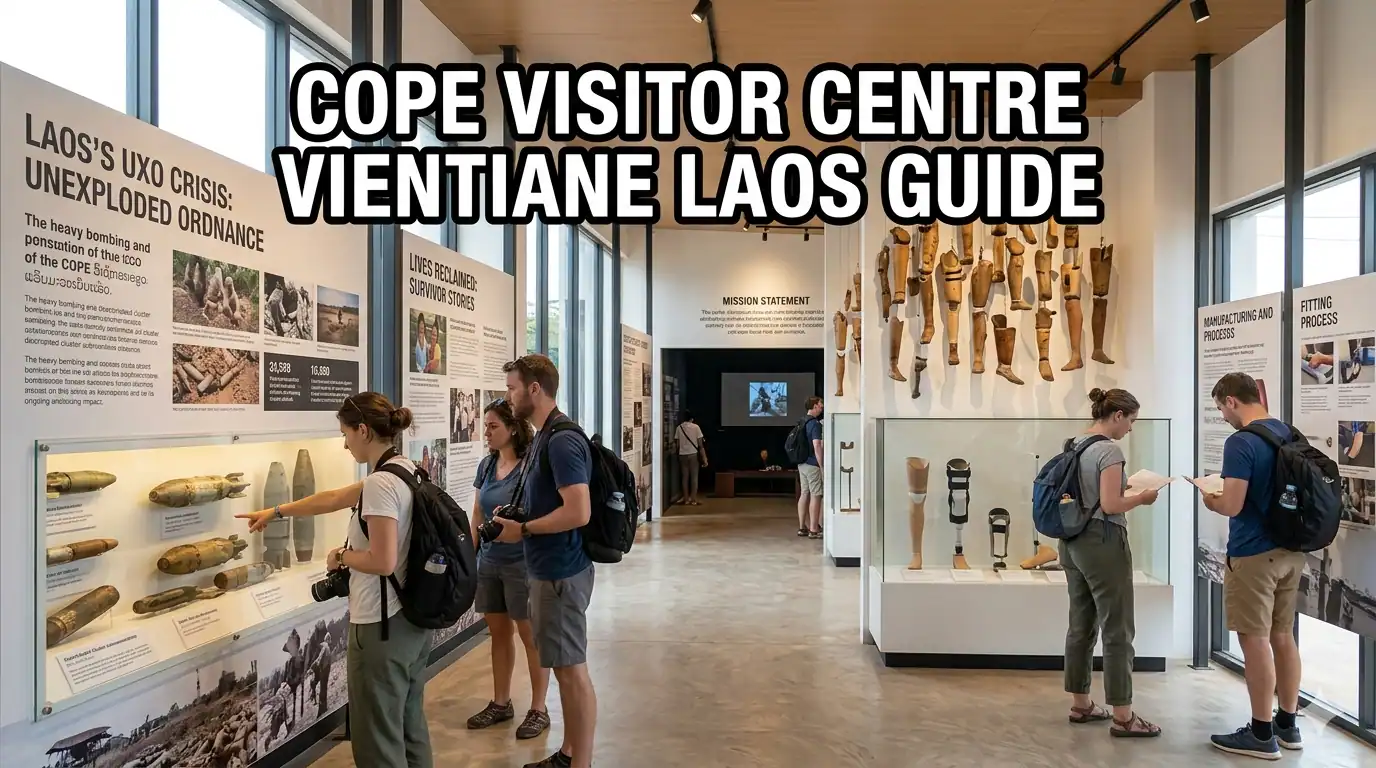
Discovering the COPE Visitor Centre: Laos's Essential Historical Experience
The COPE Visitor Centre stands as one of Vientiane's most important and moving attractions, offering visitors a profound understanding of Laos's devastating legacy from the Secret War and the ongoing crisis of unexploded ordnance (UXO) that continues to affect the country decades after the conflict ended.
Located in the heart of Vientiane, the COPE (Cooperative Orthotic and Prosthetic Enterprise) Visitor Centre serves a dual purpose: educating visitors about the UXO crisis that makes Laos the most heavily bombed country per capita in history, and supporting the vital work of providing prosthetic limbs, orthotic devices, and rehabilitation services to UXO survivors and people with disabilities.
For travelers seeking to understand modern Laos beyond its stunning temples and natural beauty, the COPE Centre provides essential context about the country's recent history, the human cost of war, and the ongoing efforts to clear landmines and cluster bombs while helping victims rebuild their lives. This comprehensive guide covers everything you need to know about visiting this important museum and memorial.
Understanding Laos's UXO Crisis

To fully appreciate the COPE Visitor Centre's mission, understanding the historical context proves essential. Between nineteen sixty-four and nineteen seventy-three, during the Vietnam War era, the United States conducted over five hundred eighty thousand bombing missions over Laos, dropping more than two million tons of ordnance—more than was dropped on Germany and Japan combined during World War Two.
Of the approximately two hundred sixty million cluster bomblets dropped, an estimated eighty million failed to explode, leaving a deadly legacy that continues to kill and injure Lao people today. These unexploded ordnance contaminate roughly one-third of Laos's land, preventing farming, development, and causing approximately one hundred casualties annually, many of them children.
The UXO crisis represents not just a historical tragedy but an ongoing humanitarian emergency that affects every aspect of Lao society, from agriculture and economic development to education and public health. The COPE Centre helps visitors understand this complex issue while supporting practical solutions.
History and Mission of COPE

COPE was founded in nineteen ninety-seven by Lao and Australian prosthetists and orthotists who recognized the critical need for rehabilitation services for UXO survivors and other people with disabilities in Laos. What began as a small workshop has grown into a comprehensive rehabilitation center serving thousands of patients annually.
The organization's mission encompasses three critical areas: providing free prosthetic and orthotic services to those in need, training Lao technicians in prosthetics and orthotics to build local capacity, and educating the public about the UXO crisis through the Visitor Centre.
The Visitor Centre opened in two thousand six and has since become one of Vientiane's most visited attractions, hosting tens of thousands of visitors annually. Revenue from the centre directly supports COPE's rehabilitation work, creating a sustainable model where tourism contributes to solving the problem it documents.
What to See at the COPE Visitor Centre

The COPE Visitor Centre offers a thoughtfully designed museum experience that balances education, memorial, and hope through various exhibits and interactive displays.
Main Exhibition Hall
The exhibition begins with historical context about the Secret War in Laos, explaining how the country became embroiled in the Vietnam War conflict despite official neutrality. Informational panels, photographs, and maps illustrate the scale and intensity of the bombing campaign.
Interactive displays show the different types of ordnance used, with actual examples of cluster bomblets, mortars, and other weapons (safely deactivated). These exhibits help visitors understand the technical aspects of the UXO problem and why clearance proves so difficult and dangerous.
Personal stories form the heart of the exhibition. Survivor testimonials, presented through video, photographs, and written accounts, put human faces on the statistics. These stories prove moving but essential for understanding the real-world impact of UXO on individuals, families, and communities.
Rehabilitation Centre Displays
The centre showcases COPE's rehabilitation work through displays of prosthetic limbs, orthotic devices, and mobility aids manufactured on-site. Visitors can see the technology and craftsmanship involved in creating these life-changing devices.
Information about the rehabilitation process explains how patients receive custom-fitted prosthetics and orthotics, physical therapy, and ongoing support. The centre treats not only UXO survivors but also people with disabilities from other causes including polio, diabetes, and traffic accidents.
Video testimonials from patients demonstrate the transformative impact of COPE's work, showing individuals who have regained mobility and independence through prosthetic limbs and rehabilitation services.
UXO Clearance Education
Exhibits explain the dangerous work of UXO clearance teams who risk their lives daily to make contaminated land safe. Displays show the equipment used, the methods employed, and the painstaking process of locating and destroying unexploded ordnance.
Information about UXO Lao, the national clearance organization, and international partners helps visitors understand the scope of the clearance challenge and the progress being made. Despite decades of work, experts estimate it could take over one hundred years to clear all contaminated land at current rates.
Educational displays teach visitors about recognizing UXO and what to do if they encounter unexploded ordnance—critical information for rural Lao communities where contamination remains widespread.
Children's Education Area
A dedicated children's area uses age-appropriate methods to teach young visitors about UXO safety through games, interactive displays, and colorful educational materials. This section proves particularly important as children represent a significant portion of UXO casualties.
Practical Visitor Information

Planning your visit to the COPE Centre requires understanding practical details about location, hours, costs, and what to expect.
Location and Getting There
The COPE Visitor Centre sits on Khou Vieng Road in Vientiane, approximately two kilometers from the city center and Patuxai monument. The address proves easy to find, and most tuk-tuk drivers know the location.
Tuk-tuk from city center costs approximately twenty to thirty thousand kip (two to three USD). Bicycle rental provides an eco-friendly option for the short ride. Walking takes approximately twenty-five to thirty minutes from the city center.
The centre offers limited parking for those with private vehicles or rental motorbikes.
Opening Hours and Best Time to Visit
The COPE Visitor Centre operates Monday through Saturday from eight thirty AM to five PM, with last admission at four PM. The centre closes on Sundays and Lao public holidays.
Morning visits (nine to eleven AM) typically prove less crowded and cooler, allowing more time for reflection. Allow at least one to two hours for a thorough visit, though some visitors spend three hours or more engaging with all exhibits.
Guided tours available in English and other languages can be arranged in advance or upon arrival, though many visitors prefer self-guided exploration using the excellent English-language exhibits.
Admission Prices 2026
Adult admission: twenty thousand kip (approximately two USD)
Student admission (with valid ID): ten thousand kip
Children under twelve: free
Group rates available for ten or more people
Admission fees directly support COPE's rehabilitation programs, making your visit a contribution to the cause as well as an educational experience. Additional donations welcomed and appreciated.
Photography Policy
Photography permitted in most areas of the centre, though visitors asked to be respectful when viewing survivor stories and sensitive exhibits. Some video testimonials request no photography to protect privacy.
Photography of the rehabilitation workshop and patients requires explicit permission. Always ask before photographing individuals.
The Visitor Experience: What to Expect

Understanding what awaits helps visitors prepare emotionally and practically for the COPE Centre experience.
Emotional Preparation
The COPE Centre presents difficult and sometimes disturbing content about war, injury, and suffering. While not gratuitous, the exhibits do not shy away from the harsh realities of UXO's impact on human lives.
Many visitors find the experience deeply moving and emotionally challenging. The centre succeeds in creating empathy and understanding, but this comes at an emotional cost. Allow time after your visit to process what you have seen and learned.
Despite the difficult subject matter, the centre balances tragedy with hope by showcasing the remarkable resilience of survivors and the life-changing work of rehabilitation. The overall message proves one of hope and human dignity rather than despair.
Accessibility
The COPE Centre features wheelchair-accessible facilities including ramps, wide doorways, and accessible restrooms. The museum's mission of supporting people with disabilities extends to ensuring the centre itself proves accessible to all visitors.
Seating areas throughout the exhibition allow visitors to rest and reflect. The pace of viewing can be self-directed, allowing time for processing information.
Gift Shop and Donations
The centre's gift shop offers books, postcards, handmade crafts, and souvenirs with proceeds supporting COPE's work. Items include books about Laos's history, UXO clearance, and survivor stories for those wishing to learn more.
Donation boxes located throughout the centre allow visitors to contribute directly to rehabilitation programs. Even small donations make a difference in providing prosthetics and therapy to those in need.
Why Visiting COPE Matters

Understanding the broader significance of visiting the COPE Centre helps contextualize the experience within responsible tourism and ethical travel.
Educational Value
For many visitors, the COPE Centre provides the first comprehensive understanding of Laos's Secret War and its ongoing consequences. This knowledge proves essential for understanding modern Laos, its development challenges, and the resilience of its people.
The centre fills a critical gap in historical education, as the bombing of Laos remains little-known internationally despite its massive scale and devastating impact. Visitors leave with knowledge they can share, helping raise awareness about this forgotten chapter of history.
Supporting Sustainable Tourism
Visiting COPE represents ethical tourism that directly contributes to solving a problem rather than exploiting it. Your admission fee and any donations fund prosthetics, orthotics, therapy, and training programs that change lives.
The centre demonstrates how tourism can serve as a force for good, creating sustainable funding for humanitarian work while educating visitors. This model proves replicable and inspiring for other destinations facing similar challenges.
Building Empathy and Awareness
Personal stories and faces put human dimension on what could otherwise remain abstract statistics. Meeting survivors (when possible) or hearing their stories creates lasting empathy and understanding.
Many visitors report that the COPE Centre visit becomes the most memorable and meaningful part of their Laos trip, fundamentally changing how they understand the country and its people.
Combining Your COPE Visit with Other Vientiane Attractions

The COPE Centre's central location makes it easy to combine with other Vientiane attractions for a full day of cultural and historical exploration.
Nearby Attractions
Patuxai Monument: Located approximately two kilometers from COPE, this war monument and park offers interesting architecture and city views. The contrast between this celebratory monument and COPE's sobering exhibits provides interesting perspective.
Talat Sao Market: Vientiane's main market sits nearby, offering shopping and local food. A good place to grab lunch after your COPE visit.
Wat Si Saket: This ancient temple, one of Vientiane's oldest, provides spiritual and architectural contrast to the modern history explored at COPE.
Lao National Museum: For those wanting broader historical context, this museum covers Laos's history from ancient times to the present, complementing COPE's focus on recent history.
Suggested Half-Day Itinerary
Morning (9 AM - 12 PM): Visit COPE Visitor Centre, allowing two to three hours for thorough exploration.
Lunch (12 PM - 1 PM): Eat at nearby restaurant or Talat Sao Market.
Afternoon (1 PM - 4 PM): Visit Patuxai Monument and surrounding area, or explore nearby temples.
Evening: Reflect on your experience, perhaps visiting a riverside restaurant along the Mekong.
Tips for Meaningful Engagement

Maximizing the value of your COPE Centre visit requires thoughtful engagement with the material and respect for the subject matter.
Before Your Visit
Read about Laos's history and the Secret War before visiting. Basic knowledge enhances understanding and allows you to focus on personal stories rather than trying to absorb all historical context at once.
Recommended reading includes "The Ravens" by Christopher Robbins, "Laos: A History" by Søren Ivarsson, or "The Legacy of the Secret War" available at the COPE gift shop.
Prepare emotionally for difficult content. The exhibits include photographs of injuries and personal accounts of trauma. This preparation allows you to engage fully rather than shutting down from shock.
During Your Visit
Take your time. Rushing through the exhibits defeats the purpose. Allow yourself to absorb information, read personal stories, and reflect on what you are learning.
Ask questions. Staff members prove knowledgeable and passionate about their work. They welcome thoughtful questions about the UXO crisis, rehabilitation work, and Laos's history.
Be respectful. Remember that the exhibits document real suffering of real people. Maintain appropriate demeanor, speak quietly, and treat the space as the memorial and educational facility it is.
Engage with survivor stories. While difficult, these personal accounts prove the heart of the COPE experience. They transform statistics into human lives and create lasting understanding.
After Your Visit
Share what you learned. Many people remain unaware of Laos's bombing history. Sharing your knowledge helps raise awareness about this forgotten conflict and ongoing crisis.
Consider donating to UXO clearance organizations like UXO Lao, MAG (Mines Advisory Group), or The HALO Trust if you wish to support clearance work beyond your COPE visit.
Support responsible tourism in Laos by choosing operators and businesses that contribute to local communities and sustainable development.
COPE's Impact and Ongoing Work

Understanding COPE's broader work beyond the Visitor Centre helps visitors appreciate the full scope of the organization's impact.
Rehabilitation Services
COPE's Rehabilitation Centre provides free prosthetic and orthotic services to approximately two thousand patients annually. Services include custom-fitted prosthetic limbs, orthotic braces, wheelchairs, and other mobility aids.
The centre employs Lao technicians trained in modern prosthetics and orthotics, building local capacity rather than relying on foreign experts. This approach ensures sustainability and knowledge transfer.
Physical therapy and occupational therapy services help patients maximize mobility and independence. Psychological support addresses the trauma and social challenges faced by people with disabilities.
Training and Education
COPE operates training programs for prosthetic and orthotic technicians, the only such programs in Laos. Graduates work throughout the country, expanding access to rehabilitation services.
Partnerships with international organizations and universities ensure training meets international standards while remaining appropriate for Lao context and resources.
Community Outreach
COPE conducts UXO risk education in rural communities, teaching people how to recognize and avoid unexploded ordnance. This preventative work saves lives while clearance efforts continue.
Mobile clinics reach remote areas where patients cannot easily travel to Vientiane, ensuring services reach those most in need regardless of location.
Conclusion: An Essential Vientiane Experience
The COPE Visitor Centre represents far more than a museum or tourist attraction. It serves as a memorial to victims of the Secret War, an educational facility raising awareness about an ongoing humanitarian crisis, a rehabilitation centre changing lives daily, and a testament to human resilience and dignity in the face of tragedy.
For visitors to Laos, the COPE Centre provides essential context for understanding the country's modern history, its development challenges, and the remarkable resilience of its people. While the content proves difficult and the experience emotionally challenging, it also proves deeply meaningful and ultimately hopeful.
Your visit supports vital work that helps survivors rebuild their lives while educating future visitors about this critical chapter of history. The COPE Centre demonstrates how tourism can serve as a force for good, creating sustainable funding for humanitarian work while fostering understanding and empathy.
When you visit Vientiane, make the COPE Visitor Centre a priority. Allow adequate time, come prepared to learn and feel, and leave with deeper understanding of Laos's past, present, and future. The experience will stay with you long after you leave, transforming how you understand this beautiful country and its resilient people.
The COPE Centre reminds us that while war's legacy proves devastating, human compassion, innovation, and determination can help heal even the deepest wounds. In supporting COPE's work through your visit, you become part of that healing process.
0 Comments