.webp)
.webp)
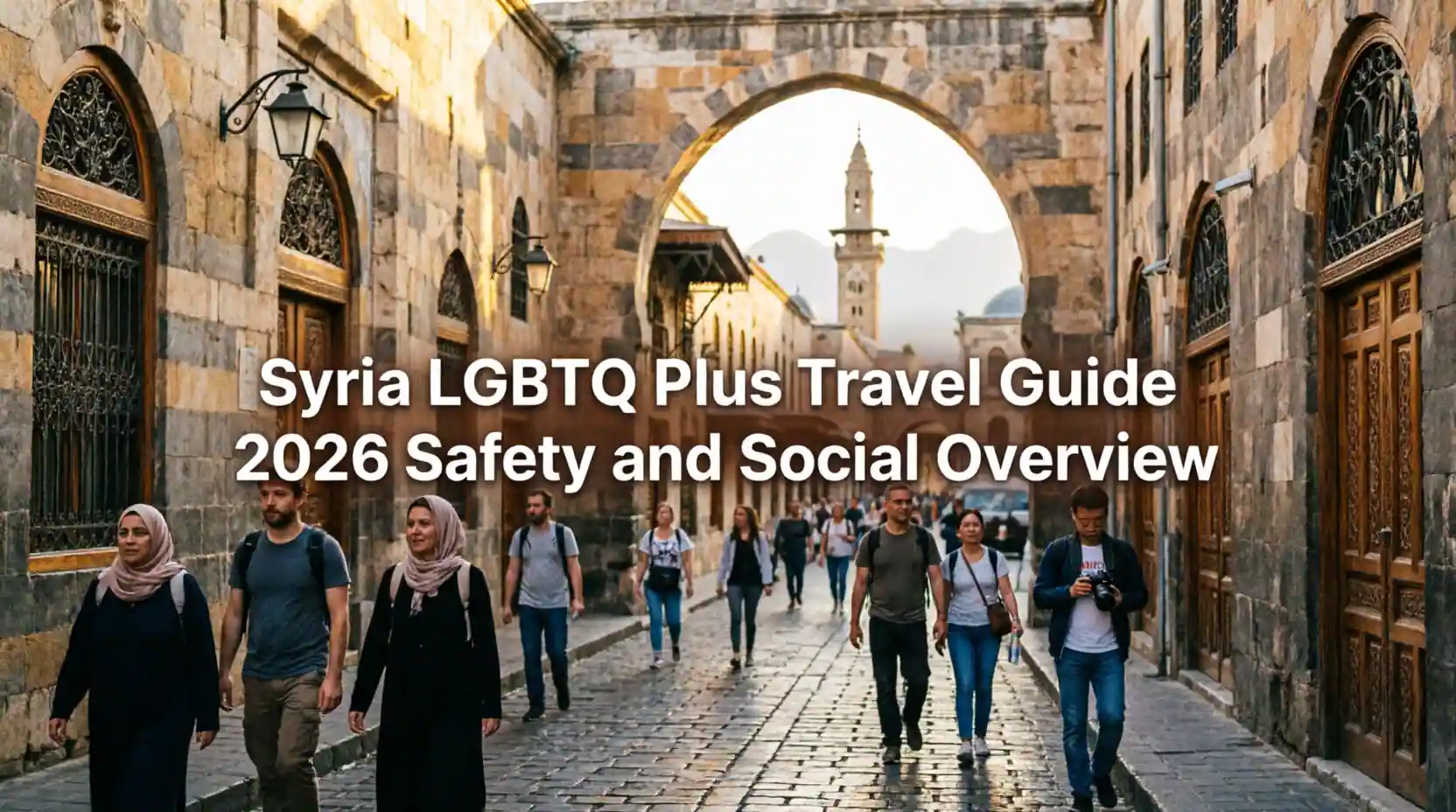
Introduction to LGBTQ Travel Considerations in Syria
Traveling to Syria as an LGBTQ individual requires careful consideration of legal frameworks, social attitudes, and personal safety considerations that differ significantly from many Western destinations.
This guide provides factual, balanced information to help LGBTQ travelers make informed decisions about visiting Syria in 2026.
Understanding the distinction between legal status, social norms, and practical realities is essential for assessing personal comfort and risk tolerance.
While Syria possesses extraordinary historical and cultural heritage, LGBTQ travelers must weigh these attractions against potential challenges related to identity expression and personal safety.
This resource aims to empower travelers with knowledge while respecting the complexity of Syrian society and the diversity of LGBTQ experiences worldwide.
Legal Framework Regarding LGBTQ Issues in Syria

Syrian law criminalizes same-sex sexual relations under Article 520 of the Penal Code, which prohibits "carnal relations against the order of nature" with penalties including imprisonment.
This law, inherited from Ottoman-era legislation, remains technically enforceable though application varies significantly by region, circumstance, and individual cases.
There are no legal protections against discrimination based on sexual orientation or gender identity in employment, housing, healthcare, or public accommodations.
Same-sex relationships, marriages, or civil unions are not recognized under Syrian law, and LGBTQ individuals cannot legally adopt children as couples.
Gender marker changes on official documents are not legally permitted, creating challenges for transgender and non-binary travelers regarding identification consistency.
Enforcement Patterns and Practical Realities
Enforcement of Article 520 has historically been inconsistent, with prosecutions often linked to other factors such as political activism, public visibility, or unrelated legal issues.
Foreign travelers are rarely targeted specifically for LGBTQ status, though this does not eliminate risk, particularly if identity becomes publicly known.
Discretion regarding personal relationships and identity expression significantly reduces potential legal exposure for LGBTQ visitors.
Legal risk increases in government-controlled areas with active security apparatus compared to regions with limited state presence.
Travelers should understand that laws can be applied selectively, and individual experiences may vary based on numerous factors beyond legal text.
Social Attitudes and Cultural Context

Syrian society is predominantly conservative with strong family-centered values and traditional interpretations of religion influencing social norms regarding gender and sexuality.
Public discussion of LGBTQ topics remains limited, and many Syrians have had minimal exposure to diverse perspectives on sexual orientation and gender identity.
Attitudes vary considerably by age, education, urban versus rural location, and exposure to international perspectives through travel or media.
Younger, urban, and educated Syrians may hold more nuanced views, though public expression of support for LGBTQ rights remains uncommon.
Family honor and social reputation carry significant weight, influencing how individuals navigate personal identity within community expectations.
Urban versus Rural Perspectives
Damascus, Aleppo, and Latakia feature more diverse populations and somewhat greater exposure to international ideas compared to rural areas.
Even in major cities, public displays of affection between same-sex couples may attract unwanted attention or negative reactions.
Rural communities and conservative neighborhoods typically maintain stricter adherence to traditional gender roles and relationship expectations.
Religious institutions and community leaders often reinforce conventional views on family structure and sexuality.
Understanding these variations helps travelers calibrate behavior and expectations across different regions of Syria.
Safety Considerations for LGBTQ Travelers

Personal safety for LGBTQ travelers in Syria depends on multiple factors including visibility, behavior, location, and individual circumstances.
Maintaining discretion regarding sexual orientation or gender identity significantly reduces potential risks in conservative social environments.
Public displays of affection between any couples, regardless of gender composition, are generally uncommon in Syrian public spaces.
Traveling as part of an organized tour group or with local guides can provide additional layers of support and cultural navigation assistance.
Individual travelers should assess their comfort level with potential questioning about relationship status or marital plans during social interactions.
Practical Safety Strategies
Use gender-neutral language when discussing personal relationships in public or with unfamiliar individuals.
Avoid displaying symbols, accessories, or digital content that might signal LGBTQ identity in conservative settings.
Research accommodation options carefully, prioritizing establishments with experience hosting international guests and professional discretion.
Connect with LGBTQ travel communities online before departure to gather recent, firsthand insights from travelers with Syria experience.
Develop contingency plans for uncomfortable situations, including polite deflection techniques and exit strategies from challenging conversations.
Accommodation and Social Spaces

Syria does not have openly LGBTQ-specific venues, accommodations, or social spaces comparable to those in more LGBTQ-affirming destinations.
International hotel chains and upscale accommodations in Damascus and Aleppo typically prioritize guest privacy and professional service standards.
Traditional guesthouses and family-run establishments may ask questions about marital status or room-sharing arrangements that require thoughtful responses.
Private accommodations booked through international platforms may offer greater discretion than locally marketed options.
Travelers should communicate room preferences clearly while understanding that cultural assumptions about relationships may influence host interactions.
Navigating Social Interactions
Syrian hospitality is renowned, and travelers often experience generous welcomes regardless of background when engaging respectfully with local customs.
Questions about marriage or family are common social conversation topics and may not reflect targeted inquiry about sexual orientation.
Polite, non-confrontational responses that redirect conversation can effectively manage personal boundaries while maintaining positive interactions.
Building rapport through interest in Syrian culture, history, and hospitality often creates goodwill that transcends differences in personal identity.
Understanding that curiosity about foreign travelers does not necessarily indicate judgment helps frame social exchanges constructively.
Healthcare and Support Resources

Access to LGBTQ-affirming healthcare services in Syria is extremely limited, with few providers trained in specific health needs of LGBTQ individuals.
Mental health support specializing in LGBTQ issues is scarce, and discussing sexual orientation or gender identity with healthcare providers may not be advisable.
Travelers with specific health needs should bring adequate supplies of medications and documentation from home-country providers.
International travel insurance that covers medical evacuation provides important protection given limited local specialized healthcare options.
Online telehealth services based outside Syria may offer confidential consultation options for travelers needing support during their visit.
Emergency Contacts and Resources
Register with your home country's embassy or consulate upon arrival if they maintain a presence in Damascus, though services may be limited.
Save contact information for international LGBTQ organizations that provide travel support, such as Rainbow Railroad or OutRight Action International.
Keep digital and physical copies of important documents including passport, visa, insurance information, and emergency contacts accessible.
Establish communication protocols with trusted contacts at home regarding check-in schedules and emergency procedures.
Understand that consular assistance for LGBTQ-specific issues may be constrained by local laws and diplomatic considerations.
Digital Privacy and Online Safety

Digital security requires heightened attention for LGBTQ travelers in environments where identity disclosure could create risks.
Use secure, encrypted messaging applications for sensitive communications and avoid discussing personal identity on unsecured platforms.
Consider using privacy-focused browser settings and avoiding logging into personal social media accounts on public or shared devices.
Be cautious about location tagging, photo sharing, or social media posts that might reveal travel patterns or personal associations.
Understand that internet monitoring capabilities exist, and discretion in digital communications enhances personal security.
Managing Social Media and Documentation
Review privacy settings on all social media accounts before travel to control visibility of posts, photos, and personal information.
Avoid posting real-time location updates that could reveal your whereabouts to unintended audiences.
Consider creating travel-specific social media accounts with limited personal information for sharing experiences publicly.
Store sensitive documents and communications in encrypted cloud storage or password-protected devices.
Be mindful that photos shared publicly might include background details revealing locations, companions, or contexts worth considering.
Cultural Etiquette and Respectful Engagement

Respectful engagement with Syrian culture enhances travel experiences and supports positive cross-cultural interactions for all visitors.
Dress modestly in public spaces, covering shoulders and knees, which aligns with local norms and reduces unwanted attention for all travelers.
Learn basic Arabic greetings and polite phrases to demonstrate respect and facilitate smoother interactions with local residents.
Accept hospitality graciously when offered, as refusing tea or conversation can be perceived as impolite regardless of personal identity.
Approach cultural differences with curiosity rather than judgment, recognizing that diverse societies hold varied perspectives on many topics.
Navigating Conversations About Identity
Prepare thoughtful, culturally appropriate responses to questions about relationships, marriage, or family that honor personal boundaries.
Redirect conversations toward shared interests in culture, history, food, or travel when personal topics become uncomfortable.
Recognize that many Syrians may have limited exposure to diverse LGBTQ perspectives and respond with patience to questions or comments.
Avoid political debates about LGBTQ rights or comparative cultural judgments that may create tension rather than understanding.
Focus on building human connections through shared experiences rather than emphasizing differences in identity or values.
Alternative Destinations and Regional Context

Travelers seeking Middle Eastern experiences with more LGBTQ-affirming environments might consider alternative destinations in the region.
Jordan, Lebanon, and Turkey offer varying degrees of LGBTQ visibility and legal protections while still providing rich cultural experiences.
Israel has more developed LGBTQ rights frameworks and visible communities, though political considerations affect travel decisions for many.
Understanding regional variations helps travelers align destination choices with personal comfort levels and safety priorities.
Some travelers choose to experience Syria's historical heritage through virtual tours, academic programs, or cultural exchanges as alternative engagement options.
Virtual and Indirect Engagement Options
Online cultural programs, museum virtual tours, and academic lectures offer ways to explore Syrian heritage without physical travel.
Supporting Syrian cultural preservation organizations allows engagement with heritage conservation efforts from afar.
Connecting with Syrian artists, writers, and scholars through digital platforms fosters cross-cultural understanding without travel risks.
Reading literature, watching films, and studying history provides meaningful engagement with Syrian culture and perspectives.
These alternatives may be particularly valuable for travelers whose safety or comfort would be significantly compromised by in-person visitation.
Making Informed Personal Decisions

Ultimately, the decision to travel to Syria as an LGBTQ individual requires honest self-assessment of risk tolerance, personal priorities, and safety considerations.
Consider consulting with LGBTQ travel specialists, security experts, or individuals with recent Syria travel experience before finalizing plans.
Recognize that conditions can change rapidly, and ongoing monitoring of security advisories and social developments is essential.
Balance appreciation for Syria's extraordinary cultural heritage with realistic assessment of personal safety and comfort in conservative social environments.
Whatever decision you make, prioritize your wellbeing while respecting the complexity of Syrian society and the dignity of its people.
Resources for Further Research
International LGBTQ travel organizations like Equal Earth, Nomadic Boys, and Travel Noire provide community insights and destination guidance.
Human rights organizations including Human Rights Watch and Amnesty International publish reports on LGBTQ rights globally.
Government travel advisories from your home country offer updated security information though LGBTQ-specific guidance may be limited.
Academic research on Middle Eastern gender and sexuality provides nuanced context beyond simplified media narratives.
Connecting with LGBTQ travelers who have visited Syria through online forums can provide recent, firsthand perspectives.
Final Considerations for 2026 Travel Planning

As you plan potential travel to Syria in 2026, remain flexible and prepared to adjust plans based on evolving conditions.
Document your decision-making process, including factors considered and resources consulted, to support informed choices.
Maintain open communication with travel companions about expectations, boundaries, and contingency plans regarding identity disclosure.
Recognize that choosing not to visit Syria does not diminish appreciation for its cultural heritage or solidarity with Syrian people.
Whatever path you choose, approach with respect for Syrian culture, awareness of personal safety, and commitment to ethical travel practices.
Supporting LGBTQ Rights Globally
Advocate for LGBTQ rights and protections in your home country and through international platforms where you have voice and influence.
Support organizations working on LGBTQ rights globally, including those focusing on Middle East and North Africa regions.
Share accurate information about LGBTQ travel considerations to help others make informed decisions about their journeys.
Engage in respectful dialogue about cultural differences while upholding fundamental human rights principles.
Recognize that progress on LGBTQ rights occurs through sustained, culturally sensitive engagement rather than external imposition.
Navigating travel to Syria as an LGBTQ individual requires careful consideration of legal frameworks, social attitudes, and personal safety.
While Syria's historical and cultural heritage is extraordinary, LGBTQ travelers must honestly assess whether potential risks align with their comfort and security needs.
Discretion, cultural respect, and thorough preparation can mitigate some challenges, though they cannot eliminate all risks in conservative social environments.
Whatever decision you make about travel to Syria, prioritize your wellbeing while maintaining respect for Syrian culture and the dignity of its people.
0 Comments