.webp)
.webp)
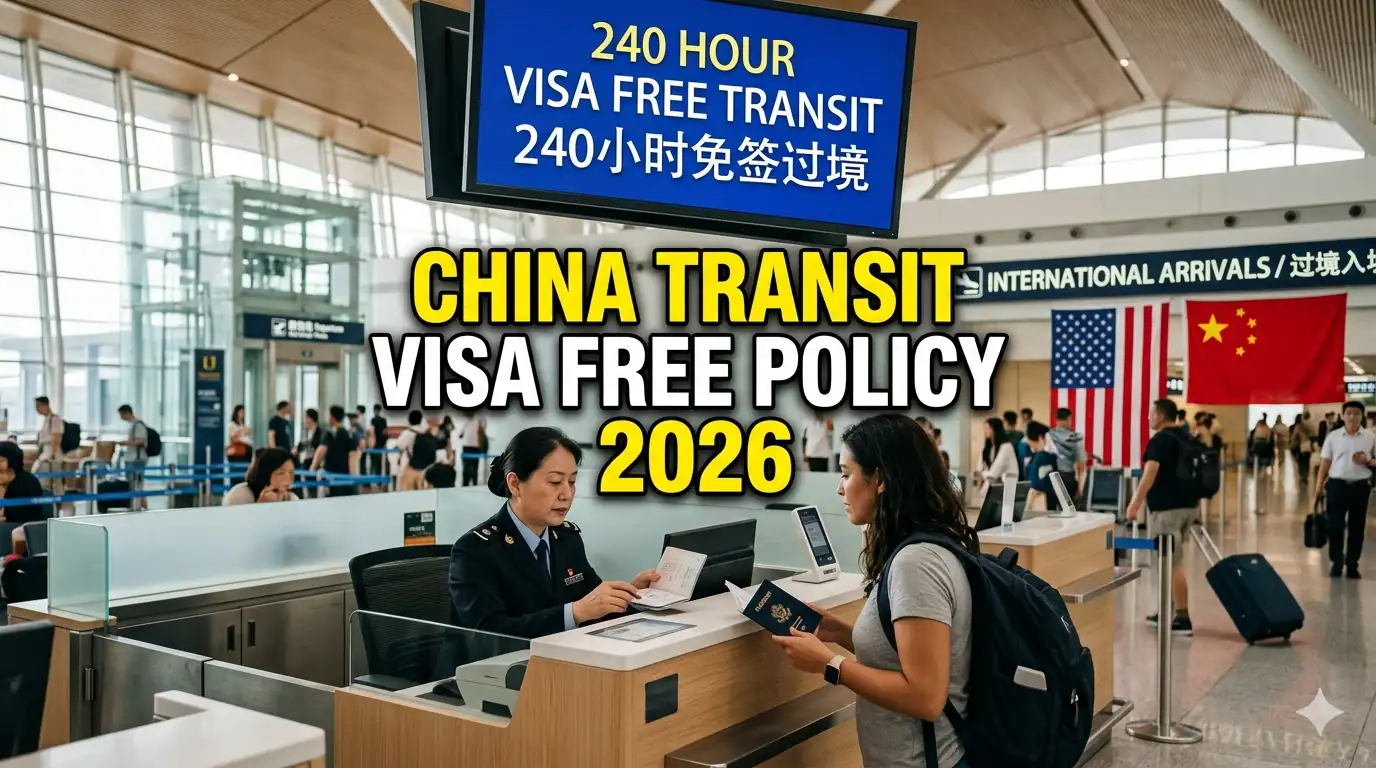
Overview of China Transit Visa Free Policies
China has significantly expanded its transit visa free policies in 2026 offering US citizens unprecedented flexibility for short term visits.
The landmark update extends eligible transit stays from previous 72 or 144 hours to 240 hours equaling 10 full days.
This policy applies to nationals of 55 countries including the United States at 65 designated ports across 24 provinces.
US passport holders can now explore major Chinese cities during extended layovers without applying for a traditional tourist visa.
Understanding eligibility requirements documentation and geographic restrictions ensures smooth border processing and compliant travel.
Key Policy Updates for 2026
The 240 hour visa free transit policy represents China's most expansive transit exemption to date.
Previous policies offered 72 hours in select cities or 144 hours in regional clusters now unified under single framework.
Eligible travelers may engage in tourism business meetings family visits and cultural activities during their stay.
Activities requiring work authorization study enrollment or journalism still require appropriate visa categories.
Policy implementation began in late 2024 with full operational status achieved across all designated ports by 2026.
Who Qualifies for Transit Visa Free Entry
US citizens holding valid passports with at least six months remaining validity qualify for the policy.
Travelers must possess confirmed onward tickets to a third country or region departing within 240 hours of arrival.
The onward destination must differ from the country of origin creating genuine transit itinerary.
Passengers transiting between two Chinese cities without third country connection do not qualify.
Children and infants holding US passports are eligible under same conditions as adult travelers.
Understanding the Three Transit Policy Tiers

China maintains multiple transit visa free options depending on port of entry and travel itinerary.
Travelers should understand distinctions between 24 hour 72 hour 144 hour and 240 hour policies.
Selection depends on port of entry nationality and confirmed onward travel documentation.
24 Hour Visa Free Transit Universal Policy
All open exit entry ports in China implement 24 hour visa free transit for nationals of all countries.
Foreigners transiting through China to third countries may stay no more than 24 hours without visa.
Travelers must hold valid international travel documents and onward tickets with confirmed seats.
Passengers must remain within restricted port areas unless obtaining temporary entry permit.
This policy serves as baseline option when longer transit policies do not apply.
240 Hour Visa Free Transit Expanded Policy
Nationals of 55 countries including United States may enter visa free through 65 designated ports.
Eligible travelers may stay in permitted administrative areas for no more than 240 hours equaling 10 days.
Valid international travel documents and onward tickets with confirmed seats and departure dates required.
Permitted activities include tourism business visits and family reunions within designated geographic areas.
Work study and news reporting activities still require prior approval and appropriate visa categories.
Geographic Scope of 240 Hour Policy
Policy covers 24 provinces autonomous regions and municipalities directly under Central Government.
Major entry points include Beijing Shanghai Guangzhou Shenzhen Chengdu Xian and Kunming.
Each port has designated administrative area where travelers may move freely during transit stay.
Leaving permitted area requires special authorization from local immigration authorities.
Travelers should confirm specific geographic boundaries when planning multi city itineraries.
Eligible Entry Ports for US Citizens

US citizens may utilize 240 hour visa free transit at 65 designated ports nationwide.
Ports include international airports seaports and land border crossings meeting policy criteria.
Major airports offer most convenient access with streamlined immigration procedures.
Beijing Metropolitan Area Ports
Beijing Capital International Airport PEK accepts 240 hour visa free transit applications.
Beijing Daxing International Airport PKX provides modern facilities with dedicated transit processing.
Permitted stay area covers Beijing municipality allowing exploration of Forbidden City and Great Wall.
Travelers may move freely within Beijing administrative boundaries during 10 day transit period.
Border inspection located at international arrivals with English speaking officers available.
Shanghai and Yangtze River Delta Ports
Shanghai Pudong International Airport PVG and Hongqiao Airport SHA both qualify for policy.
Permitted area includes Shanghai municipality plus Jiangsu and Zhejiang provinces forming regional cluster.
Travelers may visit Hangzhou Suzhou Nanjing and other Yangtze Delta cities during transit.
High speed rail connections enable efficient multi city exploration within permitted zone.
Shanghai border inspection provides dedicated lanes for visa free transit passengers.
Guangdong Province and Pearl River Delta
Guangzhou Baiyun International Airport CAN serves as primary gateway for southern China transit.
Shenzhen Baoan International Airport SZX offers convenient access for technology sector business travelers.
Permitted area covers Guangdong Province including Zhuhai Foshan Dongguan and other Pearl River Delta cities.
Regional integration enables seamless travel between Hong Kong adjacent areas under policy guidelines.
Immigration procedures streamlined for business travelers with frequent transit needs.
Western and Central China Ports
Chengdu Tianfu International Airport TFU and Shuangliu Airport CTU serve Sichuan Province transit.
Xian Xianyang International Airport XIY provides access to historic Shaanxi Province attractions.
Kunming Changshui International Airport KMG connects travelers to Yunnan Province and Southeast Asia.
Permitted areas correspond to provincial administrative boundaries allowing regional exploration.
These ports increasingly popular for travelers combining China transit with regional Southeast Asia itineraries.
Required Documentation for Border Inspection

Successful visa free transit entry requires specific documentation presented at border inspection.
Preparation prevents delays and ensures compliance with immigration regulations.
Documentation requirements apply uniformly across all designated ports.
Essential Documents Checklist
Valid US passport with minimum six months validity beyond intended departure date from China.
Confirmed onward ticket to third country or region with fixed date and seat assignment.
Completed arrival card for foreigners in transit distributed during flight or at immigration counter.
Proof of accommodation such as hotel reservation or invitation letter from Chinese host.
Return or onward travel itinerary demonstrating genuine transit purpose rather than intended long term stay.
Onward Ticket Requirements
Onward ticket must show departure from China to country or region different from origin country.
Flight ship or train tickets all acceptable provided they show confirmed seat and departure date.
Electronic tickets and mobile boarding passes generally accepted though printed copies recommended as backup.
Ticket must show departure within 240 hours calculated from time of entry immigration stamp.
Open tickets or tickets without confirmed dates do not satisfy policy requirements.
Passport and Entry Card Procedures
Immigration officers verify passport validity and check for any entry restrictions or previous violations.
Arrival card requires basic personal information intended address in China and onward travel details.
Officers may ask brief questions about travel purpose accommodation and onward plans.
Processing typically takes 5 to 15 minutes per passenger during normal traffic conditions.
Keep all documents organized and readily accessible to expedite border inspection process.
Permitted Activities and Geographic Restrictions

Understanding what travelers may do and where they may go prevents inadvertent policy violations.
Policy allows substantial flexibility while maintaining clear boundaries for compliance.
Allowed Activities During Transit Stay
Tourism activities including sightseeing cultural visits and recreational exploration fully permitted.
Business meetings conferences and commercial negotiations allowed without work visa.
Visiting family members or friends residing in China permitted with appropriate documentation.
Short term language courses or cultural workshops generally acceptable if not formal enrollment.
Medical tourism and health consultations permitted with appropriate facility documentation.
Prohibited Activities Requiring Separate Visas
Employment or paid work of any kind requires appropriate work visa and authorization.
Formal study enrollment at educational institutions requires student visa category.
Journalism news reporting or media production activities require special media visa approval.
Political activities or demonstrations not permitted under transit visa free provisions.
Any activity generating income from Chinese sources requires proper work authorization.
Geographic Movement Limitations
Travelers must remain within designated administrative area corresponding to port of entry.
Beijing port entrants may travel anywhere within Beijing municipality boundaries.
Shanghai port entrants may travel throughout Shanghai Jiangsu and Zhejiang provinces.
Leaving permitted area requires application for temporary entry permit at local immigration office.
Inter city travel within permitted zone encouraged using high speed rail and domestic flights.
Step by Step Application Process at Border

Visa free transit processing occurs at port of entry rather than requiring advance application.
Understanding procedure reduces anxiety and ensures efficient border crossing experience.
Pre Arrival Preparation
Confirm flight itinerary meets third country transit requirement before booking travel.
Print or save electronic copies of passport onward ticket and accommodation confirmation.
Complete arrival card during flight if distributed or prepare to complete at immigration counter.
Research permitted geographic area to plan compliant activities during transit stay.
Download translation app and save important addresses in Chinese characters for local navigation.
Border Inspection Procedure
Proceed to immigration counter designated for foreign passport holders upon aircraft arrival.
Present passport onward ticket and completed arrival card to immigration officer.
Answer brief questions about travel purpose accommodation and onward plans if asked.
Officer verifies documentation and stamps passport with temporary entry permit valid for 240 hours.
Retain entry stamp documentation as may be requested at hotels or during internal travel.
Post Entry Compliance
Register accommodation with local police within 24 hours if staying in private residence.
Hotels typically handle registration automatically for guests checking in with foreign passports.
Carry passport and entry documentation when traveling within permitted geographic area.
Monitor time carefully to ensure departure before 240 hour period expires.
Allow adequate time at departure airport for exit immigration procedures.
Common Scenarios and Eligibility Examples

Practical examples help travelers assess whether their itinerary qualifies for visa free transit.
Understanding edge cases prevents unexpected complications at border inspection.
Qualifying Transit Itineraries
Los Angeles to Shanghai to Tokyo qualifies as US origin China transit Japan destination.
New York to Beijing to Seoul qualifies with confirmed onward ticket within 240 hours.
Chicago to Guangzhou to Bangkok qualifies with Guangdong Province as permitted area.
San Francisco to Shanghai to Singapore qualifies with Yangtze Delta regional access.
Each example shows genuine transit to third country different from origin nation.
Non Qualifying Itineraries
Los Angeles to Shanghai to Los Angeles does not qualify as return to origin country.
Beijing to Shanghai to Guangzhou does not qualify as all destinations within China.
New York to Beijing with no onward ticket does not qualify without confirmed departure.
Chicago to Shanghai with onward ticket beyond 240 hours does not qualify for extended stay.
Each example fails third country transit or timing requirements of policy.
Complex Itinerary Considerations
Multi segment itineraries with China as intermediate stop generally qualify if requirements met.
Travelers with multiple China entries during single trip should verify each segment qualifies.
Connecting flights through different Chinese cities may require separate transit applications.
Consult immigration authorities for complex itineraries involving multiple policy zones.
When in doubt apply for traditional visa to ensure entry authorization.
Practical Tips for Successful Transit Travel

Strategic planning enhances experience while ensuring full compliance with immigration regulations.
These recommendations drawn from traveler experiences and official guidance.
Timing and Scheduling Recommendations
Allow buffer time between flights accounting for potential delays affecting transit eligibility.
Book onward tickets with flexible change policies in case entry processing takes longer than expected.
Arrive at departure airport early for exit immigration which may require additional documentation review.
Consider time zone differences when calculating 240 hour period from entry stamp.
Keep copies of all travel documents separate from originals as backup for emergencies.
Accommodation and Local Logistics
Book accommodation within permitted geographic area to avoid inadvertent policy violations.
Confirm hotel registration procedures for foreign guests upon check in.
Use ride hailing apps with English interface for convenient local transportation.
Carry hotel business card with Chinese address for taxi navigation and emergency reference.
Download offline maps for navigation in areas with limited mobile data coverage.
Communication and Emergency Resources
Save contact information for US Embassy or Consulate in China for emergency assistance.
Download translation app with offline Chinese language pack for basic communication needs.
Carry list of emergency contacts including hotel local emergency services and travel insurance.
Register travel itinerary with US State Department Smart Traveler Enrollment Program.
Keep digital copies of important documents accessible via secure cloud storage.
Troubleshooting Common Issues

Despite preparation travelers may encounter questions or complications during transit process.
Knowing how to address common issues reduces stress and resolves problems efficiently.
Documentation Questions at Border
If onward ticket format questioned present printed copy or show confirmation email to officer.
If accommodation details unclear provide hotel name and address in Chinese characters.
If travel purpose questioned explain tourism or business visit simply and honestly.
Request supervisor if language barrier prevents clear communication with initial officer.
Remain patient and cooperative as officers process high volume of international travelers.
Timing and Duration Concerns
If flight delay threatens 240 hour limit contact airline and immigration authorities immediately.
If needing to extend stay beyond 240 hours apply for visa extension at local immigration office.
If missing onward connection contact airline for rebooking and immigration for status guidance.
Keep all documentation of delays or changes as evidence of circumstances beyond traveler control.
Travel insurance covering trip interruptions provides additional protection for unexpected changes.
Geographic Boundary Questions
If uncertain whether destination falls within permitted area consult immigration officer before travel.
If accidentally traveling outside permitted area return immediately and explain circumstances to authorities.
If planning multi city travel confirm all destinations within same policy zone before departure.
Use official government resources rather than third party websites for boundary information.
When in doubt choose destinations clearly within permitted administrative area.
Official Resources and Verification

Policy details may evolve travelers should verify current requirements through official channels.
These resources provide authoritative information directly from Chinese immigration authorities.
Primary Government Sources
China National Immigration Administration website nia.gov.cn provides official policy documentation.
English language section offers policy summaries and frequently asked questions for international travelers.
Chinese Embassy in United States website us.china-embassy.gov.cn provides consular guidance for US citizens.
Local immigration offices at designated ports provide in person consultation for complex cases.
Official sources should be consulted for definitive answers to policy interpretation questions.
Staying Updated on Policy Changes
Immigration policies may change with minimal notice requiring travelers to verify before departure.
Subscribe to official embassy newsletters for policy updates affecting US citizens.
Check official sources 48 hours before travel for any last minute procedural changes.
Airlines often communicate entry requirement changes to ticket holders via email before travel.
Travel agents and tour operators should provide updated immigration information for China itineraries.
When to Consult Immigration Professionals
Complex itineraries involving multiple China entries or ambiguous transit status warrant professional consultation.
Travelers with previous immigration violations should seek guidance before attempting visa free transit.
Business travelers with activities bordering on work authorization should confirm compliance requirements.
When uncertainty exists applying for traditional visa provides guaranteed entry authorization.
Professional immigration consultation may prevent costly complications at border inspection.
0 Comments