.webp)
.webp)
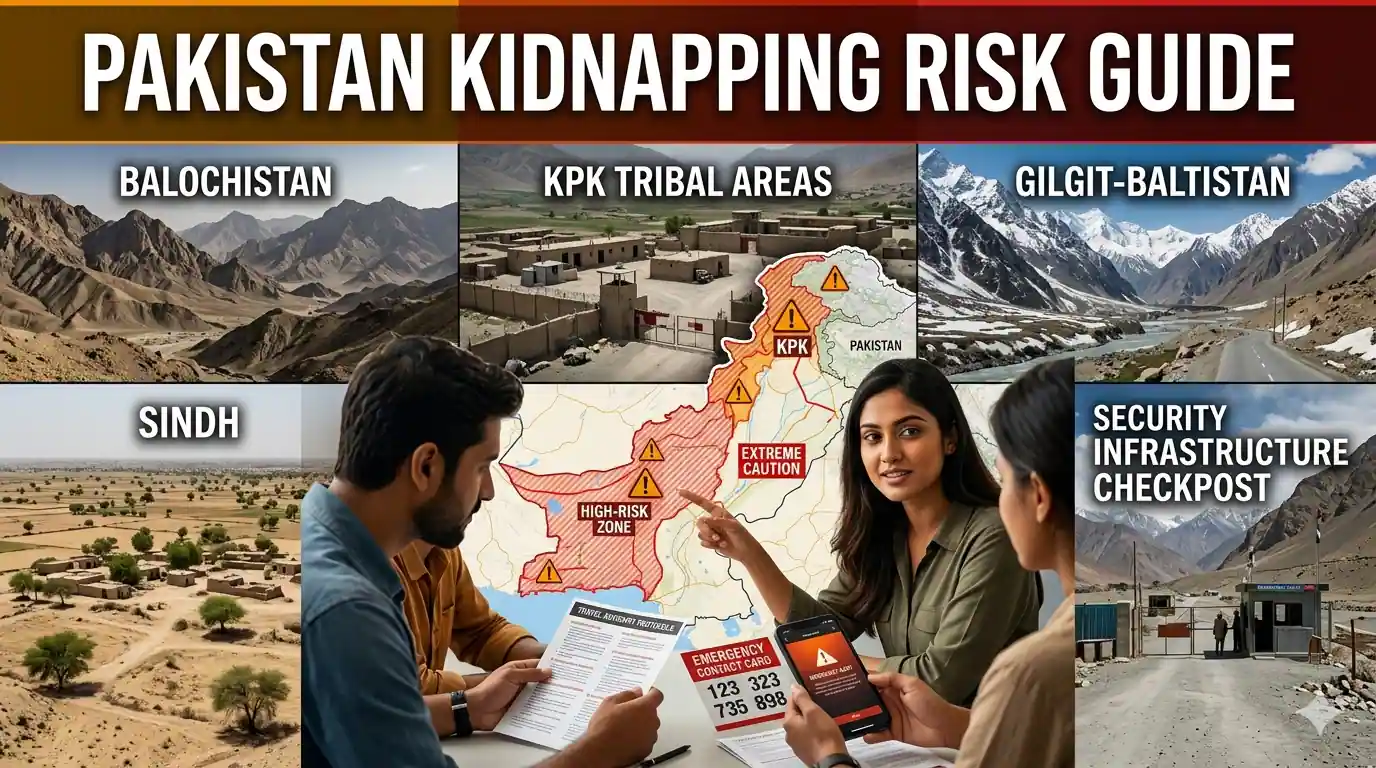
Understanding Kidnapping Threats in Pakistan's Remote Regions
Kidnapping risks for foreigners in remote provinces of Pakistan represent one of the most serious security challenges facing international travelers, aid workers, journalists, and business visitors. While Pakistan welcomes millions of visitors annually and many travel without incident, certain regions—particularly Balochistan, Khyber Pakhtunkhwa's tribal districts, and remote areas of Sindh and Gilgit-Baltistan—present elevated kidnapping and abduction risks that demand serious consideration and comprehensive preparation. This guide provides evidence-based, practical information to help travelers, especially Bangladeshi citizens and other South Asian visitors, assess risks, implement protective measures, and respond effectively if faced with kidnapping threats.
Kidnapping in Pakistan takes various forms: criminal kidnapping for ransom, politically motivated abduction, sectarian-targeted detention, and insurgent groups capturing foreigners for propaganda or prisoner exchanges. Understanding the distinctions, recognizing high-risk environments, and implementing layered security measures significantly reduce vulnerability. This article synthesizes guidance from security professionals, government advisories, kidnapping survivors, and regional experts to deliver actionable insights for safe travel in Pakistan's challenging environments.
What are the current kidnapping risks for foreigners in Pakistan?
As of 2026, kidnapping risks vary significantly by region and traveler profile. Balochistan province presents the highest risk, with multiple insurgent groups actively targeting foreigners, particularly those associated with Chinese projects or Western organizations. Khyber Pakhtunkhwa's former tribal areas (now merged districts) maintain elevated risks from residual militant networks. Remote areas of Sindh near the Balochistan border and certain Gilgit-Baltistan districts near the Line of Control face moderate risks. Urban centers like Islamabad, Lahore, and Karachi have lower kidnapping rates but criminal abduction for ransom occurs. Bangladeshi travelers, while less frequently targeted than Westerners, still face risks particularly in remote areas without proper security arrangements.
Historical Context: Kidnapping Patterns in Pakistan

Understanding kidnapping risks requires examining historical patterns and evolution of tactics used by criminal and militant groups in Pakistan. The country has experienced waves of kidnapping incidents targeting different victim profiles over the past two decades.
Evolution of Kidnapping Tactics
Pakistan's kidnapping landscape has shifted significantly since the early 2000s:
- 2000s Era: High-profile kidnappings of Western journalists, aid workers, and engineers, often resulting in executions or prisoner exchange demands. Groups like Al-Qaeda and Taliban affiliates dominated this period.
- 2010s Transition: Shift toward criminal kidnapping for ransom, particularly in Karachi and Balochistan. Insurgent groups began targeting Chinese nationals and infrastructure projects.
- 2020s Current Pattern: More selective targeting, increased focus on Chinese interests in Balochistan, criminal gangs operating in urban areas, and reduced but persistent risks in tribal regions. Foreign tourists face lower risks than aid workers or journalists but remain vulnerable in remote areas.
- 👉 Bahrain Entry Requirements Checklist for US Residents and Dual Nationals 2026
- 👉 Turkey Travel Guide: Where East Meets West
- 👉 Al-Mukalla Waterfront Cafes Safe Social Spaces and Fresh Seafood Guide
Notable Kidnapping Cases
Several high-profile cases illustrate the risks:
- 2002: Wall Street Journal reporter Daniel Pearl kidnapped and murdered in Karachi
- 2008-2010: Multiple Western tourists kidnapped in tribal areas, some executed
- 2013: Chinese engineers kidnapped in various locations, some rescued, others killed
- 2017: American journalist kidnapped in Balochistan, later rescued
- 2021-2025: Ongoing incidents targeting Chinese nationals in Balochistan, particularly around Gwadar and CPEC projects
- 👉 Bahrain Entry Requirements Checklist for US Residents and Dual Nationals 2026
- 👉 Turkey Travel Guide: Where East Meets West
- 👉 Al-Mukalla Waterfront Cafes Safe Social Spaces and Fresh Seafood Guide
These cases demonstrate that while frequency has decreased, risks remain real, particularly for certain profiles and in specific regions.
Who is most at risk of kidnapping in Pakistan?
Risk varies by profile: (1) Highest risk: Western journalists, aid workers in conflict zones, Chinese nationals in Balochistan, solo travelers in remote areas without security; (2) Moderate risk: Business travelers to sensitive regions, tourists visiting restricted areas, researchers in tribal districts; (3) Lower risk: Group tourists in major cities, business visitors to secure facilities, travelers with local sponsors and security arrangements. Bangladeshi travelers generally face lower profiles than Westerners but should not assume immunity, particularly in high-risk provinces.
Regional Risk Assessment: Province-by-Province Analysis

Kidnapping risks vary dramatically across Pakistan's provinces and territories. Understanding these differences is essential for travel planning and risk management.
Balochistan: Highest Risk Province
Balochistan presents the most severe kidnapping threat to foreigners in Pakistan:
- Active Insurgent Groups: Baloch Liberation Army (BLA), Baloch Liberation Front (BLF), and other separatist organizations actively target foreigners, particularly Chinese nationals and those associated with CPEC projects.
- Tactics: Roadside ambushes, checkpoint attacks, hotel raids, and targeted abductions of engineers, journalists, and aid workers.
- High-Risk Areas: Gwadar district, Kech (Turbat), Panjgur, Washuk, and areas near Afghanistan and Iran borders. Even Quetta city faces kidnapping risks.
- Recent Incidents: Multiple kidnappings of Chinese nationals 2021-2026, attacks on convoys, abduction of local workers for ransom.
- Government Travel Restrictions: NOC requirements, movement limitations, and effective closure of many districts to foreigners reflect genuine security concerns.
- 👉 Bahrain Entry Requirements Checklist for US Residents and Dual Nationals 2026
- 👉 Turkey Travel Guide: Where East Meets West
- 👉 Al-Mukalla Waterfront Cafes Safe Social Spaces and Fresh Seafood Guide
Khyber Pakhtunkhwa (KPK) and Former Tribal Areas
KPK province, particularly the former Federally Administered Tribal Areas (FATA) now merged into KPK, maintains elevated kidnapping risks:
- Militant Presence: Residual Taliban networks, ISIS-K affiliates, and criminal gangs operate in remote districts.
- High-Risk Districts: North Waziristan, South Waziristan, Khyber District, Bannu, Dera Ismail Khan, and areas near Afghanistan border.
- Lower-Risk Areas: Peshawar city (with caution), Swat Valley (tourist areas with security), Abbottabad, and major urban centers have reduced but not eliminated risks.
- Targeting Patterns: Aid workers, polio vaccinators, security forces, and occasionally tourists venturing into remote areas without proper arrangements.
- 👉 Bahrain Entry Requirements Checklist for US Residents and Dual Nationals 2026
- 👉 Turkey Travel Guide: Where East Meets West
- 👉 Al-Mukalla Waterfront Cafes Safe Social Spaces and Fresh Seafood Guide
Sindh Province: Urban and Rural Variations
Sindh presents mixed risks depending on location:
- Karachi: Criminal kidnapping for ransom occurs, primarily targeting wealthy Pakistanis but foreigners can be caught in crossfire or targeted opportunistically. Affluent areas (Clifton, DHA) safer than Lyari or Karachi East.
- Rural Sindh: Feudal areas and regions near Balochistan border (Kashmore, Ghotki) face kidnapping risks from criminal gangs and militant groups.
- Thar Desert: Remote areas present risks for solo travelers or those without local contacts.
- 👉 Bahrain Entry Requirements Checklist for US Residents and Dual Nationals 2026
- 👉 Turkey Travel Guide: Where East Meets West
- 👉 Al-Mukalla Waterfront Cafes Safe Social Spaces and Fresh Seafood Guide
Gilgit-Baltistan and Azad Kashmir
These northern territories generally present lower kidnapping risks but with important caveats:
- Tourist Areas: Gilgit, Hunza, Skardu, and major trekking routes have low kidnapping rates due to heavy tourism and security presence.
- Border Areas: Districts near Line of Control (Kargil, Neelum Valley) and Afghanistan border (Ishkoman, Ghizer) face elevated risks from militant infiltration.
- Remote Valleys: Solo trekking in isolated areas without guides presents kidnapping and criminal risks.
- 👉 Bahrain Entry Requirements Checklist for US Residents and Dual Nationals 2026
- 👉 Turkey Travel Guide: Where East Meets West
- 👉 Al-Mukalla Waterfront Cafes Safe Social Spaces and Fresh Seafood Guide
Punjab Province: Lowest Risk but Not Zero
Punjab, Pakistan's most populous province, maintains the lowest kidnapping risks:
- Major Cities: Lahore, Islamabad, Rawalpindi, Faisalabad have relatively low kidnapping rates for foreigners.
- Criminal Kidnapping: Occurs but primarily targets wealthy Pakistanis; foreigners rarely targeted.
- Rural Areas: Generally safe but solo travel in remote villages not recommended.
- 👉 Bahrain Entry Requirements Checklist for US Residents and Dual Nationals 2026
- 👉 Turkey Travel Guide: Where East Meets West
- 👉 Al-Mukalla Waterfront Cafes Safe Social Spaces and Fresh Seafood Guide
How do kidnapping risks differ for Bangladeshi travelers?
Bangladeshi travelers face a mixed risk profile: (1) Lower visibility than Westerners, reducing targeting by groups seeking propaganda value; (2) Cultural and religious similarities provide some protection in conservative areas; (3) However, lack of strong consular support compared to Western embassies means kidnapping victims may receive less government attention; (4) Criminal gangs may target Bangladeshis perceived as business travelers with resources; (5) In Balochistan and tribal areas, nationality matters less than being a foreigner—any non-Pakistani faces elevated risks. Bangladeshi travelers should not assume immunity based on nationality.
Kidnapping Tactics and Modus Operandi

Understanding how kidnappers operate helps travelers recognize threats and implement protective measures.
Common Kidnapping Methods
Kidnappers in Pakistan employ various tactics:
- Roadside Ambush: Armed groups stop vehicles at fake checkpoints or block roads, particularly in Balochistan and tribal areas. Victims are taken from vehicles and transported to remote locations.
- Hotel Raids: Militants attack hotels known to house foreigners, as seen in Quetta and Karachi incidents. Guests are kidnapped or killed.
- Surveillance and Tracking: Kidnappers monitor foreigner movements, identify patterns, and strike when victims are vulnerable (leaving secure facilities, traveling alone).
- Insider Assistance: Drivers, hotel staff, or local contacts provide information or facilitate kidnappings for financial gain.
- Opportunistic Criminal Abduction: Criminal gangs kidnap for ransom, often targeting individuals displaying wealth or traveling without security.
- False Documentation Checkpoints: Fake police or military checkpoints used to stop and abduct travelers.
- 👉 Bahrain Entry Requirements Checklist for US Residents and Dual Nationals 2026
- 👉 Turkey Travel Guide: Where East Meets West
- 👉 Al-Mukalla Waterfront Cafes Safe Social Spaces and Fresh Seafood Guide
Target Selection Criteria
Kidnappers select targets based on:
- Nationality: Westerners and Chinese nationals often prioritized for propaganda value or ransom amounts
- Profile: Journalists, aid workers, engineers on high-profile projects, and solo travelers face higher risks
- Location: Individuals in remote areas without security presence are easier targets
- Routine: Predictable movement patterns make surveillance and planning easier for kidnappers
- Perceived Value: Those believed to have access to money, organizational resources, or government attention
- 👉 Bahrain Entry Requirements Checklist for US Residents and Dual Nationals 2026
- 👉 Turkey Travel Guide: Where East Meets West
- 👉 Al-Mukalla Waterfront Cafes Safe Social Spaces and Fresh Seafood Guide
What are the warning signs of potential kidnapping threats?
Travelers should watch for: (1) Vehicles following you repeatedly or surveilling your location; (2) Unusual interest in your schedule, accommodation, or travel plans from strangers; (3) Fake checkpoints or unauthorized roadblocks; (4) Attempts to isolate you from security or companions; (5) Drivers or local contacts acting suspiciously or insisting on route changes; (6) Increased militant activity or security incidents in your area; (7) Warnings from locals, embassy, or security services about specific threats. Trust your instincts—if something feels wrong, take protective action immediately.
Prevention Strategies: Reducing Kidnapping Vulnerability

Effective kidnapping prevention requires layered security measures, situational awareness, and disciplined travel practices.
Pre-Travel Preparation
Before traveling to Pakistan, especially remote provinces:
- Risk Assessment: Honestly evaluate whether travel to high-risk areas is necessary. Consider postponing or choosing alternative destinations if risks outweigh benefits.
- Travel Insurance: Purchase comprehensive kidnapping and ransom (K&R) insurance if traveling to high-risk areas. Standard policies often exclude kidnapping.
- Security Training: Consider hostile environment awareness training (HEAT) for travel to Balochistan or tribal areas.
- Emergency Planning: Develop emergency protocols with family, employer, and embassy. Establish check-in schedules and duress codes.
- Local Contacts: Identify trusted local sponsors, fixers, or security providers before arrival.
- Embassy Registration: Register with Bangladesh High Commission in Islamabad and provide detailed itinerary.
- 👉 Bahrain Entry Requirements Checklist for US Residents and Dual Nationals 2026
- 👉 Turkey Travel Guide: Where East Meets West
- 👉 Al-Mukalla Waterfront Cafes Safe Social Spaces and Fresh Seafood Guide
Movement Security
While traveling in Pakistan:
- Avoid Predictability: Vary routes, departure times, and routines to prevent surveillance and tracking.
- Use Secure Transportation: Hire reputable security companies or use hotel-arranged vehicles with vetted drivers. Avoid public transportation in high-risk areas.
- Travel in Convoy: When possible, travel with other vehicles, especially on highways through remote areas.
- Daylight Travel Only: Never travel at night in Balochistan, KPK tribal areas, or remote Sindh. Most kidnappings occur after dark.
- Armed Security: In highest-risk areas, consider professional armed security escorts. This is standard for Chinese nationals in Balochistan.
- Communication: Carry multiple communication devices (mobile phone, satellite phone, radio). Share location with trusted contacts regularly.
- 👉 Bahrain Entry Requirements Checklist for US Residents and Dual Nationals 2026
- 👉 Turkey Travel Guide: Where East Meets West
- 👉 Al-Mukalla Waterfront Cafes Safe Social Spaces and Fresh Seafood Guide
Accommodation Security
- Secure Hotels: Stay in hotels with controlled access, security guards, and metal detectors. Avoid budget accommodations in high-risk areas.
- Room Selection: Request rooms not facing main roads, between 2nd-5th floors (avoid ground floor and top floor).
- Discretion: Do not discuss travel plans loudly in public areas. Avoid displaying foreign passports or expensive items in lobby.
- Verify Visitors: Never open door to unsolicited visitors. Confirm with reception before allowing anyone to your room.
- 👉 Bahrain Entry Requirements Checklist for US Residents and Dual Nationals 2026
- 👉 Turkey Travel Guide: Where East Meets West
- 👉 Al-Mukalla Waterfront Cafes Safe Social Spaces and Fresh Seafood Guide
Personal Security Practices
- Low Profile: Dress conservatively and blend in. Avoid displaying wealth, expensive cameras, or obvious tourist behavior.
- Situational Awareness: Constantly scan your environment. Note suspicious vehicles, individuals, or activities.
- Trust Local Advice: If local contacts, hotel staff, or security forces warn about specific areas or threats, take them seriously.
- Avoid Crowds: Large gatherings can be kidnapping targets or places where you can be easily grabbed.
- Document Security: Keep passport copies separate from originals. Store digital copies securely online.
- 👉 Bahrain Entry Requirements Checklist for US Residents and Dual Nationals 2026
- 👉 Turkey Travel Guide: Where East Meets West
- 👉 Al-Mukalla Waterfront Cafes Safe Social Spaces and Fresh Seafood Guide
How can travelers verify if their driver or guide is trustworthy?
Insider threats are real concerns. To vet drivers and guides: (1) Use only services recommended by your embassy, reputable hotels, or trusted organizations; (2) Verify credentials and licenses; (3) Ask for references from previous foreign clients and actually contact them; (4) Observe behavior—excessive curiosity about your schedule, finances, or security arrangements is a red flag; (5) Use drivers provided by established security companies rather than independent operators in high-risk areas; (6) Consider having multiple drivers/guides so no single person has complete control; (7) Trust your instincts—if something feels wrong, make changes immediately.
Entry Requirements and Documentation for High-Risk Travel

Traveling to Pakistan's remote provinces requires specific documentation and preparations that also serve security functions.
Visa and NOC Requirements
Bangladeshi citizens must navigate multiple layers of authorization:
- Pakistani Visa: Obtain appropriate visa (tourist, business, or journalist) well in advance. Journalist visas face additional scrutiny.
- No Objection Certificate (NOC): Required for travel to Balochistan, former tribal areas, and other restricted zones. Apply through Balochistan Home Department or relevant provincial authorities 4-6 weeks before travel.
- Police Registration: Foreigners must register with local police upon arrival in many districts. This creates official record of your presence.
- Embassy Clearance: Some areas require notification to and clearance from your embassy.
- 👉 Bahrain Entry Requirements Checklist for US Residents and Dual Nationals 2026
- 👉 Turkey Travel Guide: Where East Meets West
- 👉 Al-Mukalla Waterfront Cafes Safe Social Spaces and Fresh Seafood Guide
Essential Documentation
Carry at all times:
- Original passport with valid Pakistani visa
- Multiple photocopies of passport, visa, NOC permits
- Emergency contact cards (embassy, local sponsor, family)
- Travel insurance documentation with emergency numbers
- Letter of introduction from employer or sponsoring organization
- Hotel confirmations and itinerary
- 👉 Bahrain Entry Requirements Checklist for US Residents and Dual Nationals 2026
- 👉 Turkey Travel Guide: Where East Meets West
- 👉 Al-Mukalla Waterfront Cafes Safe Social Spaces and Fresh Seafood Guide
Communication and Tracking
- Satellite Phone: Essential for travel to remote areas where mobile networks are unavailable or unreliable.
- GPS Tracking: Share real-time location with trusted contacts or security providers.
- Check-in Schedule: Establish regular check-in times with embassy, employer, or family. Define protocols if check-in is missed.
- Duress Codes: Develop coded messages to signal distress without alerting kidnappers.
- 👉 Bahrain Entry Requirements Checklist for US Residents and Dual Nationals 2026
- 👉 Turkey Travel Guide: Where East Meets West
- 👉 Al-Mukalla Waterfront Cafes Safe Social Spaces and Fresh Seafood Guide
What should I do if my NOC application is denied?
NOC denials are common and often reflect genuine security concerns. If denied: (1) Do not attempt to travel to the restricted area without authorization—this is illegal and extremely dangerous; (2) Request explanation for denial (though you may not receive one); (3) Consider whether alternative routes or destinations exist; (4) Consult your embassy about the denial; (5) If travel is essential, work with local sponsors to address security concerns and reapply; (6) Accept that some areas are off-limits for good reasons. NOC denials are security tools designed to protect you as much as control movement.
Emergency Response: If Kidnapping Occurs

Despite best precautions, kidnapping can occur. Knowing how to respond can save lives.
During the Abduction
If you are being kidnapped:
- Assess Resistance: In most cases, resistance during initial abduction leads to injury or death. Unless you have clear escape opportunity, compliance may be safest initially.
- Memorize Details: Note directions, sounds, travel time, captor descriptions, and any identifying information. This aids rescue efforts.
- Stay Calm: Panic impairs judgment. Focus on survival and gathering intelligence.
- Activate Emergency Protocols: If possible, trigger panic buttons, send distress messages, or use duress codes before devices are confiscated.
- 👉 Bahrain Entry Requirements Checklist for US Residents and Dual Nationals 2026
- 👉 Turkey Travel Guide: Where East Meets West
- 👉 Al-Mukalla Waterfront Cafes Safe Social Spaces and Fresh Seafood Guide
During Captivity
If held by kidnappers:
- Establish Human Connection: Try to humanize yourself to captors. Share appropriate personal details, show photos of family, avoid political discussions.
- Comply with Reasonable Demands: Do not provoke captors unnecessarily. Follow instructions while maintaining dignity.
- Maintain Health: Eat and drink what is provided (unless clearly poisoned). Exercise if possible. Maintain mental health through routines, memory exercises, and hope.
- Avoid Escape Attempts: Unless success is highly probable, escape attempts often result in death. Wait for rescue or release negotiations.
- Document Abuse: Mentally note injuries, mistreatment, and captor identities for later reporting.
- 👉 Bahrain Entry Requirements Checklist for US Residents and Dual Nationals 2026
- 👉 Turkey Travel Guide: Where East Meets West
- 👉 Al-Mukalla Waterfront Cafes Safe Social Spaces and Fresh Seafood Guide
Post-Release or Rescue
- Medical Evaluation: Seek immediate medical and psychological assessment.
- Debrief Authorities: Provide detailed information to security forces and embassy to aid investigations and prevent future kidnappings.
- Psychological Support: Kidnapping causes lasting trauma. Engage professional counseling and support groups.
- Media Management: Work with embassy and employer on media statements. Avoid detailed public discussions that could endanger others or reveal sensitive information.
- 👉 Bahrain Entry Requirements Checklist for US Residents and Dual Nationals 2026
- 👉 Turkey Travel Guide: Where East Meets West
- 👉 Al-Mukalla Waterfront Cafes Safe Social Spaces and Fresh Seafood Guide
What is the role of kidnapping and ransom (K&R) insurance?
K&R insurance provides critical support: (1) Financial Coverage: Pays ransom demands (though governments often advise against paying ransoms), covers medical costs, lost income, and rehabilitation; (2) Expert Response: Provides access to kidnapping response consultants, negotiators, and crisis management teams available 24/7; (3) Legal Support: Covers legal expenses and liability; (4) Family Support: Provides counseling and logistical support to families; (5) Prevention Training: Many policies include pre-travel security training. For travel to Balochistan or tribal areas, K&R insurance is strongly recommended. Standard travel insurance typically excludes kidnapping.
Travel Cost Estimates: Budgeting for Security

Traveling safely in Pakistan's remote provinces requires significant security-related expenses.
Security-Related Costs
- Kidnapping and Ransom Insurance: High-risk area coverage costs 10-20% of trip value. For a $5,000 trip, expect $500-1,000 for K&R coverage.
- Security Consultants: Pre-travel risk assessment and security planning: $500-2,000 depending on complexity.
- Armed Security Escorts: In highest-risk areas: $300-800 per day per guard. Multi-day operations in Balochistan can cost $3,000-10,000.
- Secure Transportation: Armored vehicles or security-company vehicles: $200-500 per day plus driver.
- Satellite Communication: Satellite phone rental: $100-300 for trip plus usage fees.
- Secure Accommodations: Hotels with adequate security in remote areas: $80-200 per night.
- NO C and Permit Fees: Official fees minimal but facilitation costs: $100-500.
- Emergency Evacuation Insurance: Medical and security evacuation: $300-800.
- Contingency Fund: Reserve 30-40% of budget for emergency changes, extended stays, or crisis response.
- 👉 Bahrain Entry Requirements Checklist for US Residents and Dual Nationals 2026
- 👉 Turkey Travel Guide: Where East Meets West
- 👉 Al-Mukalla Waterfront Cafes Safe Social Spaces and Fresh Seafood Guide
Sample 10-Day High-Risk Area Budget
For travel to Balochistan or KPK tribal areas with security measures:
- K&R and evacuation insurance: $1,200
- Security consultant and planning: $800
- Armed security (5 days): $3,000
- Secure transportation (10 days): $2,500
- Accommodations (10 nights): $1,200
- Food and incidentals: $600
- Satellite communication: $300
- Permits and documentation: $300
- Contingency (30%): $3,000
- Total (excluding international flights): $12,900
- 👉 Bahrain Entry Requirements Checklist for US Residents and Dual Nationals 2026
- 👉 Turkey Travel Guide: Where East Meets West
- 👉 Al-Mukalla Waterfront Cafes Safe Social Spaces and Fresh Seafood Guide
Note: Costs vary significantly based on risk level, security requirements, and trip complexity. Travel to lower-risk areas costs substantially less.
How can travelers reduce security costs without compromising safety?
While cutting corners on security is dangerous, smart planning helps: (1) Travel during lower-risk periods when security situations are more stable; (2) Join organized groups or tours that share security costs; (3) Use reputable local security companies rather than international firms (verify credentials carefully); (4) Focus security spending on highest-risk portions of trip; (5) Build relationships with trusted local contacts who can provide reliable advice and support; (6) Invest in prevention (training, planning) to reduce need for expensive reactive measures; (7) Never eliminate critical security measures to save money—the cost is not worth the risk.
Sample Itinerary: Security-Conscious Travel to Moderate-Risk Areas

This itinerary demonstrates how to visit areas with elevated but manageable risks while maintaining security:
Days 1-3: Islamabad (Low Risk)
- Day 1: Arrival, hotel check-in, embassy registration, security briefing with local fixer
- Day 2: Meetings in Islamabad, review travel plans, finalize NOC documentation
- Day 3: Security training session, equipment check (satellite phone, emergency contacts), departure preparation
- 👉 Bahrain Entry Requirements Checklist for US Residents and Dual Nationals 2026
- 👉 Turkey Travel Guide: Where East Meets West
- 👉 Al-Mukalla Waterfront Cafes Safe Social Spaces and Fresh Seafood Guide
Days 4-6: Peshawar and Swat Valley (Moderate Risk)
- Day 4: Flight to Peshawar, hotel check-in in secure area, meeting with local contacts, avoid night movement
- Day 5: Day trip to Swat Valley with vetted driver, return to Peshawar evening, maintain check-in schedule
- Day 6: Peshawar city visits with security awareness, prepare for next destination or return to Islamabad
- 👉 Bahrain Entry Requirements Checklist for US Residents and Dual Nationals 2026
- 👉 Turkey Travel Guide: Where East Meets West
- 👉 Al-Mukalla Waterfront Cafes Safe Social Spaces and Fresh Seafood Guide
Days 7-10: Quetta and Hanna Lake (High Risk - With NOC and Security)
- Day 7: Flight to Quetta, police registration, hotel in secure area (Cantt or Satellite Town), review security protocols
- Day 8: Quetta city visits with armed security escort, maintain low profile, daylight movement only
- Day 9: Day trip to Hanna Lake with security escort, return to Quetta before dark
- Day 10: Departure from Quetta, arrival Islamabad, debrief with embassy
- 👉 Bahrain Entry Requirements Checklist for US Residents and Dual Nationals 2026
- 👉 Turkey Travel Guide: Where East Meets West
- 👉 Al-Mukalla Waterfront Cafes Safe Social Spaces and Fresh Seafood Guide
Critical Elements: This itinerary avoids highest-risk areas (Balochistan border districts, tribal areas), uses secure transportation, maintains embassy contact, travels only with proper NOCs, and builds in flexibility for security changes.
How should travelers respond if security conditions deteriorate during their trip?
Flexibility saves lives: (1) Monitor security updates daily through embassy, local news, and security providers; (2) If conditions worsen, do not proceed with planned travel to high-risk areas; (3) Contact embassy immediately for guidance; (4) Consider shortening trip or returning to safer areas; (5) Have backup accommodation and funds for extended stays; (6) Never take unnecessary risks to "complete" an itinerary; (7) Trust local security advice over personal desires to continue; (8) Remember that trips can be repeated—lives cannot.
Government and Embassy Support for Kidnapping Victims

Understanding what support is available if kidnapping occurs helps with planning and response.
Bangladesh High Commission Services
The Bangladesh High Commission in Islamabad provides:
- 24/7 Emergency Hotline: +92-51-2822051 (office), +92-300-5202851 (emergency mobile)
- Crisis Response: Coordination with Pakistani authorities, intelligence sharing, family notification
- Consular Assistance: Document replacement, legal support, medical coordination
- Limited Resources: Unlike Western embassies, Bangladesh has limited dedicated kidnapping response teams or ransom funds
- Prevention: Travel advisories, registration services, security briefings
- 👉 Bahrain Entry Requirements Checklist for US Residents and Dual Nationals 2026
- 👉 Turkey Travel Guide: Where East Meets West
- 👉 Al-Mukalla Waterfront Cafes Safe Social Spaces and Fresh Seafood Guide
Pakistani Government Response
- Law Enforcement: Police, Counter Terrorism Department (CTD), and intelligence agencies investigate kidnappings
- Military Operations: In high-risk areas, military and paramilitary forces conduct rescue operations
- Limited Effectiveness: Response capabilities vary by region. Remote areas have slower response times.
- Political Constraints: Government policy generally opposes ransom payments, though practice varies
- 👉 Bahrain Entry Requirements Checklist for US Residents and Dual Nationals 2026
- 👉 Turkey Travel Guide: Where East Meets West
- 👉 Al-Mukalla Waterfront Cafes Safe Social Spaces and Fresh Seafood Guide
International Support
- Western Embassies: US, UK, and other Western missions have dedicated kidnapping response teams but primarily assist their own citizens
- UN Security: For aid workers, UN provides security support and crisis response
- Private Security Firms: K&R insurers provide professional negotiators and crisis managers
- 👉 Bahrain Entry Requirements Checklist for US Residents and Dual Nationals 2026
- 👉 Turkey Travel Guide: Where East Meets West
- 👉 Al-Mukalla Waterfront Cafes Safe Social Spaces and Fresh Seafood Guide
What are the limitations of embassy assistance in kidnapping cases?
Travelers must understand realistic limitations: (1) Embassies cannot guarantee rescue or safe release; (2) Consular staff cannot enter high-risk areas without security arrangements; (3) Governments generally cannot pay ransoms (official policy); (4) Embassy resources are limited, especially for smaller missions; (5) Response depends on Pakistani government cooperation and capabilities; (6) Remote areas may have delayed or no government presence; (7) Embassy cannot prevent kidnapping—only respond after incident occurs. This makes prevention and personal security measures absolutely critical.
Building Long-Term Security Awareness

Kidnapping prevention is an ongoing skill requiring continuous development:
- Stay Informed: Regularly review security updates for Pakistan, particularly provinces you plan to visit
- Network: Connect with other travelers, security professionals, and local contacts for information sharing
- Training: Periodically update hostile environment awareness training
- Debrief: After each trip, review what worked and what could improve
- Mental Preparation: Develop psychological resilience and decision-making skills for crisis situations
- 👉 Bahrain Entry Requirements Checklist for US Residents and Dual Nationals 2026
- 👉 Turkey Travel Guide: Where East Meets West
- 👉 Al-Mukalla Waterfront Cafes Safe Social Spaces and Fresh Seafood Guide
Where can travelers find ongoing kidnapping risk updates for Pakistan?
Reliable sources include: (1) Bangladesh Ministry of Foreign Affairs travel advisories; (2) Bangladesh High Commission Islamabad communications; (3) Pakistan Interior Ministry security updates; (4) Reputable news: Dawn.com, TheNews.com.pk; (5) International advisories: UK FCDO, US State Department, Australian DFAT; (6) Security firms: International SOS, Control Risks, GardaWorld; (7) UN security updates for humanitarian workers. Subscribe to multiple sources for comprehensive awareness. Avoid sensationalized media and unverified social media.
Conclusion: Making Informed Decisions About Pakistan Travel

Kidnapping risks for foreigners in Pakistan's remote provinces are real and serious, particularly in Balochistan and former tribal areas. However, with comprehensive preparation, appropriate security measures, and informed decision-making, travelers can manage these risks effectively.
The key principles are: (1) Honest Risk Assessment: Not all travel is worth the risk. Evaluate whether your purpose justifies exposure to kidnapping threats; (2) Prevention First: Invest in security measures, training, and planning to prevent incidents rather than hoping to survive them; (3) Regional Variation: Pakistan is not uniformly dangerous. Major cities and tourist areas present far lower risks than remote provinces; (4) Professional Support: Use reputable security companies, maintain embassy contact, and purchase appropriate insurance; (5) Flexibility: Be willing to change plans or cancel trips based on security conditions; (6) Realistic Expectations: Understand that no security measures guarantee safety, but they significantly improve odds.
For Bangladeshi travelers, Pakistan offers rich cultural experiences, business opportunities, and religious tourism. By respecting security realities, following government advisories, and prioritizing safety over itinerary completion, you can engage with Pakistan while minimizing kidnapping risks.
Remember: The goal is not to eliminate all risk—an impossible task—but to make informed choices that align with your priorities while implementing practical measures to protect yourself and your companions.
0 Comments