.webp)
.webp)
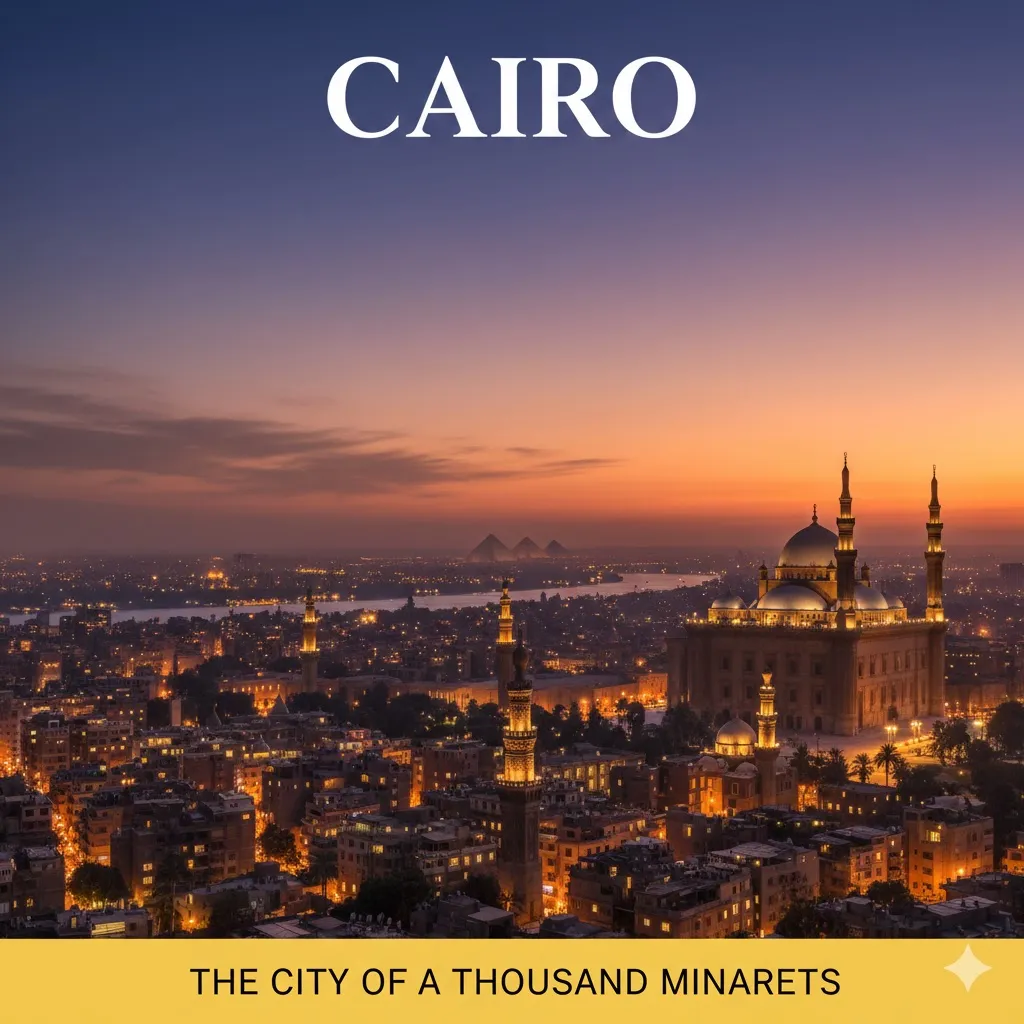
CAIRO: THE BUSTLING "CITY OF A THOUSAND MINARETS"
Cairo stands as one of the world's most captivating and complex cities, a sprawling metropolis where ancient history meets contemporary life, where the call to prayer echoes from countless minarets, and where the Nile River has sustained civilization for millennia. Known poetically as the "City of a Thousand Minarets," Cairo's skyline is defined by the domes and spires of Islamic architecture that reflect over a thousand years of religious, cultural, and artistic achievement. In 2026, as travelers seek destinations that offer both iconic monuments and authentic local experiences, Cairo continues to captivate with its layered history, vibrant street life, warm hospitality, and the enduring mystery of a city that has been a center of learning, faith, and commerce since medieval times.
This comprehensive guide invites you to explore Cairo with deeper understanding and greater appreciation. We will journey through the historic Islamic quarter where medieval mosques and madrasas tell stories of sultans and scholars, discover the ancient treasures of pharaonic Egypt in world-class museums, experience the sensory richness of Khan el-Khalili bazaar, sample the diverse flavors of Egyptian cuisine, and provide practical information for visiting in 2026. Whether you are a history enthusiast drawn by Islamic architecture, a culture lover seeking authentic local experiences, a photography enthusiast chasing golden hour minarets, or simply a curious traveler inspired by Cairo's legendary status, this guide will help you prepare for an unforgettable encounter with the City of a Thousand Minarets.
Understanding Cairo requires more than visiting famous monuments; it demands engaging with the river that made civilization possible, the faith that inspired extraordinary art and architecture, and the people who maintain continuity with the past while embracing the future. By approaching Cairo with curiosity and respect, you will discover not just ancient stones but a living dialogue between millennia of history and contemporary life, between tradition and transformation, between the sacred and the everyday.
HISTORICAL CONTEXT: FROM ANCIENT MEMPHIS TO ISLAMIC CAPITAL
The story of Cairo begins long before the city we know today. The nearby ancient city of Memphis, founded around 3100 BCE, served as the capital of Old Kingdom Egypt and the starting point for the pyramid-building era. However, the Cairo we recognize today emerged much later, shaped by successive waves of conquest, faith, and cultural synthesis.
The foundation of Islamic Cairo dates to 969 CE, when the Fatimid Caliphate established a new capital called al-Qahira ("the Victorious"), from which the modern name Cairo derives. The Fatimids built the city as a royal enclave, constructing the magnificent al-Azhar Mosque, which would become one of the world's oldest universities and a center of Islamic learning that continues to this day.
Subsequent dynasties—the Ayyubids, Mamluks, and Ottomans—expanded Cairo and enriched its architectural heritage. The Mamluk period (1250-1517) was particularly prolific, producing many of the city's most beautiful mosques, madrasas, and mausoleums. The distinctive style of Mamluk architecture, with its intricate stone carving, soaring minarets, and elaborate muqarnas (stalactite vaulting), defines much of what visitors associate with Islamic Cairo today.
The nickname "City of a Thousand Minarets" was popularized by European travelers in the 19th century who were struck by the forest of minarets visible across the city. While the exact number has varied over time, Cairo does contain hundreds of historic mosques, each with its own architectural character and historical significance.
In the modern era, Cairo has continued to grow and evolve. The 19th century brought European-inspired urban planning under Muhammad Ali Pasha, who commissioned the magnificent Mosque of Muhammad Ali in the Citadel. The 20th and 21st centuries have seen explosive population growth, with Greater Cairo now home to over 20 million people, making it one of the world's largest metropolitan areas.
For visitors in 2026, understanding this layered history enriches the experience of exploring Cairo, revealing how each era has contributed to the city's unique character and how ancient, medieval, and modern Cairo coexist in a dynamic, sometimes chaotic, always fascinating urban tapestry.
ISLAMIC CAIRO: EXPLORING THE HISTORIC QUARTER
The heart of Cairo's identity as the City of a Thousand Minarets lies in the district known as Islamic Cairo, a UNESCO World Heritage Site that contains one of the world's finest collections of medieval Islamic architecture. This historic quarter, with its narrow laneways, bustling markets, and monumental religious buildings, offers an immersive journey through centuries of Islamic civilization.
Al-Azhar Mosque and University:
Founded in 970 CE by the Fatimid Caliphate, al-Azhar is both a working mosque and one of the world's oldest continuously operating universities. For over a millennium, scholars have gathered here to study Islamic theology, law, philosophy, and sciences, making al-Azhar a beacon of Islamic learning that has influenced Muslim thought worldwide.
Visiting al-Azhar in 2026:
- Non-Muslim visitors are welcome but should dress modestly and respect prayer times
- Guided tours provide historical context and access to significant spaces
- The mosque's architecture reflects multiple periods of expansion and renovation
- Allow 45-60 minutes for a respectful visit
- Photography is permitted in most areas; avoid photographing worshippers without permission
The Citadel of Saladin and Muhammad Ali Mosque:
Perched on a hilltop overlooking Cairo, the Citadel was built by Saladin in the 12th century as a fortified palace complex. Today, it houses several museums and the magnificent Mosque of Muhammad Ali, completed in 1848 and often called the "Alabaster Mosque" for its gleaming white stone.
The Mosque of Muhammad Ali represents Ottoman architectural influence in Egypt, with its massive central dome, slender minarets, and expansive courtyard. The interior features intricate decoration, crystal chandeliers, and panoramic views of Cairo from the courtyard.
Visiting the Citadel:
- Arrive early to avoid crowds and heat; gates open at 8 AM
- Purchase combination tickets for access to multiple sites within the Citadel
- Allow 2-3 hours to explore the mosque, museums, and viewpoints
- Wear comfortable shoes; the site involves walking on uneven surfaces
- The panoramic views from the Citadel are particularly spectacular at sunset
Sultan Hassan Mosque and Madrasa:
Built in the 14th century during the Mamluk period, the Mosque-Madrasa of Sultan Hassan is one of the most impressive examples of medieval Islamic architecture in the world. Its massive scale, soaring iwans (vaulted halls), and intricate stone carving demonstrate the ambition and artistry of Mamluk builders.
The building's cruciform plan, with four iwans arranged around a central courtyard, was designed to accommodate the four schools of Islamic jurisprudence. Though construction was never fully completed due to political upheaval, the mosque remains a masterpiece of architectural engineering and decorative art.
Visiting Sultan Hassan:
- The mosque is still used for prayer; visitors should be respectful of worshippers
- Modest dress is required; women should cover hair, shoulders, and knees
- Remove shoes before entering prayer spaces
- Photography is permitted in most areas; avoid flash during prayers
- Allow 45-60 minutes to appreciate the architecture and decoration
Al-Muizz Street and Historic Lane ways:
Al-Muizz li-Din Allah al-Fatimi Street, often simply called al-Muizz Street, is one of the world's greatest concentrations of Islamic historic architecture. This pedestrian-friendly street, lined with medieval mosques, madrasas, sabils (fountains), and caravanserais, offers a walk through a thousand years of Islamic Cairo.
Key sites along al-Muizz Street include:
- Bab al-Futuh and Bab al-Nasr: Massive fortified gates from the Fatimid period
- Al-Hakim Mosque: One of Cairo's oldest mosques, with a vast courtyard
- Al-Aqmar Mosque: Known as the "Grey Mosque" for its distinctive facade
- Wikala of al-Ghuri: A restored caravanserai now hosting cultural performances
- Sabil-Kuttab of Abd al-Rahman Katkhuda: An ornate fountain and school
Walking al-Muizz Street:
- The street is pedestrianized in sections, making it pleasant for exploration
- Allow 2-3 hours for a leisurely walk with stops at key monuments
- Visit during weekday mornings for fewer crowds and better photography light
- Consider a guided walking tour for historical context and navigation
- Combine with a visit to nearby Khan el-Khalili bazaar
KHAN EL-KHALILI: THE HISTORIC BAZAAR EXPERIENCE
No visit to Cairo is complete without experiencing Khan el-Khalili, the legendary bazaar that has been a center of commerce and culture since the 14th century. This labyrinth of narrow alleys, aromatic spice shops, glittering jewelry stores, and bustling cafes offers a sensory immersion into traditional Egyptian market life.
History and Atmosphere:
Founded in 1382 by the Mamluk emir Djaharks al-Khalili, the bazaar was built on the site of a Fatimid cemetery, reflecting the cyclical nature of urban development in Cairo. Over the centuries, Khan el-Khalili has served as a hub for merchants trading spices, textiles, metals, and crafts from across the Islamic world and beyond.
Today, the bazaar retains much of its medieval character while adapting to contemporary tourism. The narrow, covered alleys are lined with shops selling everything from traditional lanterns and perfume oils to gold jewelry and papyrus art. The air carries the scents of spices, incense, and shisha tobacco, while the sounds of bargaining, call to prayer, and street musicians create a vibrant soundtrack.
Shopping in Khan el-Khalili:
The bazaar offers opportunities to purchase authentic Egyptian crafts and souvenirs:
Traditional crafts:
- Copper and brass lanterns: Intricately pierced metalwork that casts beautiful light patterns
- Perfume oils and essences: Traditional Egyptian fragrances including lotus, jasmine, and musk
- Papyrus art: Hand-painted scenes on authentic papyrus (verify authenticity)
- Textiles and embroidery: Traditional garments, scarves, and decorative items
- Spices and herbs: Saffron, sumac, hibiscus, and other Egyptian culinary staples
Bargaining etiquette:
- Bargaining is expected and part of the cultural experience
- Start by offering 30-50% of the asking price and negotiate in good faith
- Maintain a friendly, respectful demeanor; bargaining should be enjoyable, not confrontational
- If you agree on a price, complete the purchase; walking away after agreeing is considered rude
- Cash is preferred, though many vendors now accept cards
El Fishawy Cafe:
No exploration of Khan el-Khalili is complete without a stop at El Fishawy, Cairo's oldest coffeehouse, established in 1773. This historic cafe, with its mirrored walls, traditional seating, and shisha pipes, has hosted writers, artists, and travelers for centuries.
Visiting El Fishawy:
- Order traditional Egyptian coffee, mint tea, or shisha (flavored tobacco)
- Try local sweets like baklava or konafa
- Soak in the atmosphere; this is a place for lingering and people-watching
- Expect crowds, especially in the evening; arrive early for a seat
- Photography is welcome; the cafe's decor is highly photogenic
COPTIC CAIRO: CHRISTIAN HERITAGE IN THE HEART OF ISLAMIC CITY
While Cairo is renowned for its Islamic heritage, the city also contains significant Christian sites that reflect Egypt's diverse religious history. Coptic Cairo, a compact district within the larger historic city, preserves some of the oldest Christian churches in the world.
Historical Context:
Egypt's Christian community, known as Copts, traces its origins to the apostolic age, with tradition holding that St. Mark the Evangelist founded the church in Alexandria in the first century CE. The Coptic Orthodox Church has maintained continuous presence in Egypt for nearly two millennia, preserving ancient liturgical traditions, art, and architecture.
Coptic Cairo occupies the site of the Roman fortress of Babylon, and many of its churches were built on or near locations associated with the Holy Family's flight to Egypt, as recounted in Christian tradition.
Key Sites in Coptic Cairo:
The Hanging Church (Al-Muallaqa):
Built in the 3rd or 4th century and reconstructed in the 11th century, the Hanging Church is so named because it was constructed atop the gatehouse of the Roman fortress. Its beautiful wooden roof, intricate iconostasis (icon screen), and Coptic art make it one of Egypt's most significant Christian sites.
Church of St. Sergius and Bacchus (Abu Serga):
Traditionally believed to have been built on the site where the Holy Family rested during their flight to Egypt, this 4th-century church contains a crypt that pilgrims visit as a sacred space. The church's simple architecture and ancient atmosphere offer a powerful spiritual experience.
Ben Ezra Synagogue:
One of Egypt's oldest synagogues, Ben Ezra dates to the 9th century and is famous for the Cairo Geniza, a treasure trove of medieval Jewish manuscripts discovered in the 19th century. The synagogue's architecture blends Islamic and Jewish decorative traditions.
Coptic Museum:
Housed in a beautiful building designed to resemble a Coptic church, the Coptic Museum contains the world's finest collection of Christian Egyptian art, including icons, textiles, manuscripts, and architectural elements spanning from the Roman period through the Ottoman era.
Visiting Coptic Cairo:
- The sites are in close proximity; allow 2-3 hours for exploration
- Modest dress is appreciated in all religious sites; cover shoulders and knees
- Photography may be restricted inside churches; ask permission
- Consider visiting on a Sunday to experience Coptic worship (with respect and discretion)
- Combine with nearby Islamic Cairo sites for a comprehensive historic experience
MUSEUMS AND ANCIENT TREASURES: FROM PHARAOHS TO MODERNITY
While Cairo is celebrated for its Islamic heritage, the city also serves as the primary repository for ancient Egyptian artifacts, offering unparalleled opportunities to engage with pharaonic civilization.
The Egyptian Museum in Tahrir Square:
For over a century, the Egyptian Museum has been the world's premier destination for ancient Egyptian artifacts. Its vast collection includes over 120,000 objects, with highlights such as:
- The treasures of Tutankhamun: The iconic golden mask, jewelry, and funerary objects from the boy king's tomb
- Royal mummies: The preserved remains of pharaohs including Ramses II and Hatshepsut
- Everyday artifacts: Tools, cosmetics, games, and household items that reveal daily life in ancient Egypt
- Monumental sculptures: Colossal statues of pharaohs and gods that demonstrate ancient artistic achievement
Visiting the Egyptian Museum:
- Allow at least half a day; a full day is ideal for comprehensive exploration
- Consider a guided tour to navigate the vast collections and understand key artifacts
- Photography policies vary; check current rules before visiting
- The museum is undergoing transition as collections move to the new Grand Egyptian Museum
The Grand Egyptian Museum (GEM):
Located near the Giza pyramids, the Grand Egyptian Museum represents a transformative addition to Cairo's cultural infrastructure. When fully operational in 2026, GEM will be one of the world's largest archaeological museums, housing over 100,000 artifacts with state-of-the-art conservation facilities, immersive exhibitions, and panoramic views of the pyramids.
Key features of GEM:
- The complete Tutankhamun collection displayed together for the first time
- Advanced conservation laboratories visible to visitors
- Immersive digital experiences that bring ancient Egypt to life
- Educational programs and interactive exhibits for all ages
- Sustainable design incorporating energy efficiency and environmental responsibility
Visiting GEM:
- Check current opening status and ticketing information before planning your visit
- Allow a full day to explore the vast collections and facilities
- Book tickets and guided tours in advance, especially during peak season
- Combine with a visit to the nearby Giza pyramids for a comprehensive ancient Egypt experience
CONTEMPORARY CAIRO: CULTURE, CUISINE, AND CITY LIFE
Beyond its historic monuments, Cairo offers vibrant contemporary culture that reflects the creativity, resilience, and warmth of modern Egyptian life.
Cairo's Food Scene:
Egyptian cuisine is a delicious reflection of the country's geography, history, and cultural influences. Cairo's diverse food scene offers opportunities to sample both traditional dishes and contemporary interpretations.
Must-try Egyptian dishes:
- Koshari: A beloved street food combining rice, lentils, pasta, chickpeas, and crispy onions with tomato sauce and garlic vinegar
- Ful medames: Slow-cooked fava beans seasoned with garlic, lemon, and olive oil, typically eaten for breakfast
- Ta'ameya (Egyptian falafel): Made with fava beans rather than chickpeas, served in pita with vegetables
- Molokhia: A green soup made from jute leaves, often served with rabbit or chicken
- Mahshi: Vegetables like peppers, zucchini, or vine leaves stuffed with rice and herbs
- Om Ali: A sweet bread pudding dessert with nuts and raisins, perfect with mint tea
Where to eat:
- Street food stalls: For authentic, affordable koshari and ta'ameya; look for busy vendors with high turnover
- Local restaurants: Family-run establishments serving traditional home-style cooking
- Upscale dining: Contemporary Egyptian cuisine in settings that showcase the city's culinary innovation
- Food tours: Guided experiences that introduce visitors to diverse neighborhoods and dishes
Arts and Culture:
Cairo's contemporary arts scene is vibrant and diverse, reflecting the city's role as a cultural hub for the Arab world.
Key cultural venues:
- Cairo Opera House: Hosts classical music, ballet, theater, and contemporary performances
- Townhouse Gallery: A leading contemporary art space showcasing Egyptian and international artists
- Darb 1718: A cultural center in a restored warehouse featuring exhibitions, workshops, and performances
- El Sawy Culturewheel: A multi-arts venue with concerts, theater, and literary events
Engaging with contemporary Cairo:
- Attend a performance at a local venue to experience modern Egyptian creativity
- Visit art galleries in Zamalek or Downtown Cairo to see contemporary work
- Support local artisans by purchasing crafts directly from makers
- Take a cooking class to learn Egyptian culinary traditions
PRACTICAL TRAVEL INFORMATION FOR CAIRO IN 2026
Planning a visit to Cairo requires consideration of logistics, timing, and cultural norms. This section provides essential information for traveling responsibly in Cairo in 2026.
Getting to Cairo:
Cairo International Airport (CAI) is Egypt's primary international gateway, with direct flights from major cities worldwide.
Transportation from the airport:
- Airport shuttle buses: Economical option to central Cairo; allow extra time
- Taxis and ride-hailing: Uber and Careem operate at the airport; agree on fares or use app pricing
- Private transfers: Pre-booked services offer convenience and reliability, especially for first-time visitors
Getting Around Cairo:
Cairo's transportation network is extensive but can be challenging for first-time visitors.
Metro:
- Cairo Metro is efficient, affordable, and connects major districts
- Line 1 (red) connects Helwan to El Marg, passing through downtown
- Line 2 (blue) connects Shubra to Giza, including stops near Islamic Cairo
- Line 3 (yellow) is partially operational; check current status
- Women-only cars are available during peak hours
- Purchase tokens at station booths; fares are very affordable
Taxis and ride-hailing:
- Uber and Careem are reliable, with transparent pricing and GPS tracking
- Traditional taxis are plentiful; negotiate fares in advance or insist on meter use
- Avoid unlicensed taxis; use official stands or apps for safety
Private drivers and tours:
- Reputable tour operators offer private drivers for customized itineraries
- Ideal for visiting dispersed sites like Giza, Saqqara, and Memphis
- Book through established companies with good reviews
Best Times to Visit:
Cairo has a desert climate with hot, dry summers and mild winters.
- October to April: Pleasant temperatures (15-25°C / 59-77°F) ideal for sightseeing; peak tourist season with higher prices and crowds
- May to September: Hot temperatures (often exceeding 35°C / 95°F); fewer tourists and lower prices; indoor activities and evening exploration recommended
Regional considerations:
- Islamic Cairo: Best visited early morning or late afternoon to avoid midday heat
- Museums: Air-conditioned; good options for midday visits in summer
- Outdoor sites: Plan for sun protection and hydration year-round
Accommodation:
Cairo offers diverse accommodation options ranging from luxury international hotels to budget hostels and traditional guesthouses.
Key areas for visitors:
- Downtown Cairo: Central location, historic architecture, easy access to museums and Islamic Cairo
- Zamalek: Island neighborhood with upscale hotels, restaurants, and a quieter atmosphere
- Giza: Convenient for pyramid visits; many hotels offer Nile or pyramid views
- Islamic Cairo: Historic guesthouses and boutique hotels for immersive heritage experience
Booking tips:
- Reserve well in advance for peak season (October-April) and major holidays
- Check reviews for recent feedback on cleanliness, service, and location
- Consider amenities like air conditioning, reliable Wi-Fi, and breakfast inclusion
Budgeting:
Cairo can be very affordable compared to many global destinations, though costs vary by travel style.
Daily budget estimates:
- Budget travelers: $25-50 USD per day for hostels, street food, and public transportation
- Mid-range travelers: $50-120 USD per day for comfortable hotels, restaurant meals, and guided tours
- Luxury travelers: $120+ USD per day for five-star hotels, fine dining, and private guides
Money-saving tips:
- Use public transportation and local eateries for authentic, affordable experiences
- Purchase combination tickets for archaeological sites where available
- Bargain politely in markets; prices are often negotiable
- Travel during shoulder seasons (October-November, March-April) for lower prices and fewer crowds
Health and Safety:
Cairo is generally safe for travelers who take standard precautions.
Health considerations:
- Consult a travel clinic 4-6 weeks before departure for recommended vaccinations
- Drink bottled or filtered water; avoid ice in questionable establishments
- Practice good food hygiene; choose busy restaurants with high turnover
- Protect against sun exposure with sunscreen, hats, and protective clothing
- Consider travel insurance covering medical emergencies and evacuation
Safety tips:
- Register with your country's travel advisory service for safety updates
- Keep valuables secure; use hotel safes for passports and extra cash
- Be aware of your surroundings, especially in crowded areas like markets
- Follow local guidance regarding restricted areas or demonstrations
- Use reputable tour operators and transportation services
Cultural Etiquette:
Egypt is a predominantly Muslim country with conservative social norms in many areas.
Respectful behavior:
- Dress modestly, especially when visiting religious sites; cover shoulders and knees
- Ask permission before photographing people, particularly women and children
- Use your right hand for eating and greeting; the left hand is considered unclean
- Learn basic Arabic phrases like "shukran" (thank you) and "min fadlak" (please)
- Be patient and polite; Cairo's pace can be intense, but warmth and humor go a long way
Religious sensitivity:
- During Ramadan, avoid eating, drinking, or smoking in public during daylight hours in conservative areas
- Remove shoes before entering mosques and homes
- Respect prayer times; some shops and services may pause briefly
- Friday is the Muslim day of rest; some sites may have limited access
PHOTOGRAPHY TIPS: CAPTURING THE CITY OF A THOUSAND MINARETS
Cairo offers exceptional photography opportunities, from the intricate details of Islamic architecture to the vibrant energy of street life. Whether you are a professional photographer or simply capturing memories on your phone, these tips will help you make the most of Cairo's visual appeal.
Best Times for Photography:
- Golden hour: Sunrise and sunset provide warm, directional light that enhances the texture of stone minarets and creates dramatic shadows in narrow laneways. Sunrise offers fewer crowds and soft light on the pyramids.
- Blue hour: The period just after sunset offers soft, even light and dramatic sky colors with illuminated minarets and city lights.
- Overcast days: Diffused light reduces harsh shadows, ideal for architectural details and street photography.
Iconic Photography Locations:
- Islamic Cairo minarets: Al-Muizz Street and surrounding areas offer countless opportunities to capture the city's distinctive skyline
- Citadel viewpoints: Panoramic views of Cairo with minarets and the cityscape stretching to the horizon
- Khan el-Khalili: The bazaar's narrow alleys, lantern-lit shops, and bustling activity create dynamic compositions
- Al-Azhar Mosque: The historic mosque's architecture and courtyard offer both wide shots and detailed close-ups
- Street life: Markets, cafes, and everyday scenes capture the vibrant energy of contemporary Cairo
Photography Tips:
- Use a wide-angle lens: Captures the scale of mosques and the intimacy of narrow laneways
- Include human elements: Locals, vendors, and worshippers add life and scale to architectural shots
- Experiment with perspectives: Low angles emphasize minarets against the sky; elevated viewpoints capture the city's density
- Respect privacy: Avoid photographing individuals without permission, especially women and in religious contexts
- Protect your gear: Cairo's dust and humidity can affect equipment; use protective covers and clean regularly
SUSTAINABLE AND RESPONSIBLE TOURISM IN CAIRO
Visiting Cairo's historic monuments and vibrant neighborhoods carries responsibility to preserve these irreplaceable treasures for future generations. In 2026, sustainable tourism practices are essential for protecting Cairo's heritage.
Protect Historic Sites:
Cairo's Islamic and ancient monuments face challenges from environmental factors, visitor pressure, and conservation needs. Help preserve these wonders by:
- Following posted guidelines regarding photography, touching, and access
- Staying on designated paths to protect archaeological contexts and historic surfaces
- Not climbing on monuments or removing artifacts, even small fragments
- Supporting conservation initiatives through donations or responsible tour operators
Support Local Communities:
Tourism can be a powerful force for economic development when benefits reach local people. Support communities by:
- Choosing locally-owned accommodations, restaurants, and tour operators
- Purchasing crafts directly from artisans in Khan el-Khalili rather than mass-produced imports
- Engaging respectfully with local people; learn about their lives and perspectives
- Tipping appropriately for services; tips are an important part of many workers' income
Minimize Environmental Impact:
Cairo faces environmental challenges including air quality and waste management. Reduce your footprint by:
- Using public transportation like the metro when possible
- Carrying reusable water bottles and avoiding single-use plastics
- Choosing eco-certified tour operators and accommodations
- Respecting green spaces and parks; dispose of waste properly
Engage with Cultural Heritage Respectfully:
Cairo's heritage belongs to the Egyptian people and to humanity. Engage respectfully by:
- Learning about the history and significance of sites before visiting
- Listening to Egyptian guides and scholars who interpret their own heritage
- Avoiding activities that exploit cultural traditions or sacred practices
- Sharing your experiences in ways that promote understanding rather than stereotypes
CONCLUSION: A CITY OF LAYERS AND ENDURING MAGIC
Cairo is not a city that reveals all its secrets at first glance. It is a place of layers—of history, faith, culture, and daily life—that rewards patient exploration and open-hearted engagement. The "City of a Thousand Minarets" is not just a poetic nickname but a reflection of a place where the sacred and the everyday, the ancient and the contemporary, coexist in a dynamic, sometimes chaotic, always fascinating urban tapestry.
In 2026, as travelers seek meaningful experiences that balance iconic sights with authentic local life, Cairo offers opportunities to engage with history, culture, and community in ways that enrich both visitor and host. By approaching Cairo with curiosity, respect, and a commitment to sustainable practices, you can contribute to the preservation of this remarkable city while creating memories that last a lifetime.
May your Cairo adventure deepen your appreciation for the achievements of Islamic civilization and inspire your commitment to protecting the cultural treasures that make our world extraordinary. As the builders of Cairo's thousand minarets understood, true legacy lies not just in monuments of stone but in the knowledge, values, and stories that endure across generations. May you carry that understanding forward, wherever your journey leads.
Useful resources include the Egyptian Ministry of Tourism and Antiquities for official travel information, Cairo Tourism for visitor resources, and your country's travel advisory service for safety updates. Emergency services in Egypt can be reached at 122 for police, 123 for ambulance, and 180 for fire. Disclaimer: Information is accurate as of early 2026. Entry requirements, site hours, and policies may change; verify details before travel. This guide is for informational purposes only and does not constitute professional travel advice.
0 Comments