.webp)
.webp)
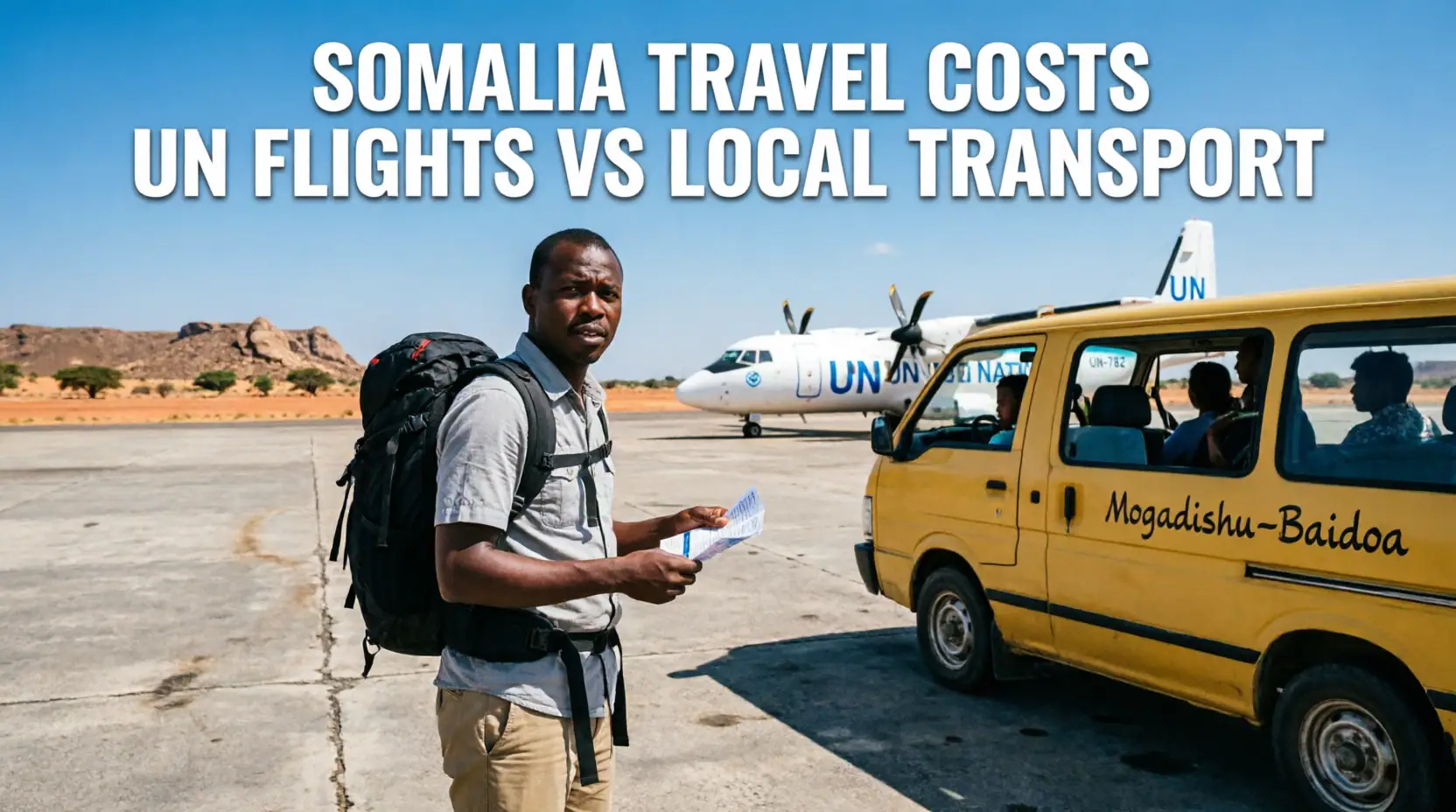
Somalia Travel Costs UN Flights Versus Local Transport Guide 2026
Traveling within Somalia presents unique challenges and opportunities for budget-conscious visitors. Understanding transportation costs and options is essential for planning safe, affordable journeys between cities.
The United Nations Humanitarian Air Service (UNHAS) operates regular flights connecting major Somali cities. These flights provide security and reliability but come at premium prices compared to local alternatives.
Local transportation options including buses, shared taxis, and private vehicles offer significant cost savings. However, these options require careful consideration of safety, comfort, and logistical factors.
This comprehensive 2026 guide compares UN flight costs with local transportation alternatives. You will discover strategies for saving money while maintaining safety and efficiency during inter-city travel in Somalia.
Understanding Transportation Options in Somalia

Somalia's transportation infrastructure has improved significantly in recent years. However, options remain limited compared to more developed destinations, requiring travelers to plan carefully.
Security considerations heavily influence transportation choices. Many international organizations and aid workers rely on UNHAS flights for inter-city travel due to security protocols and reliability.
Local travelers and budget-conscious visitors often use ground transportation. These options require local knowledge, flexibility, and acceptance of variable conditions.
Understanding the trade-offs between cost, safety, comfort, and convenience helps travelers make informed decisions about inter-city transportation in Somalia.
Overview of UNHAS Flight Services
UNHAS operates scheduled flights connecting major Somali cities including Mogadishu, Hargeisa, Bosaso, Kismayo, and Garowe. These flights serve humanitarian workers, government officials, and approved travelers.
Flights typically use small aircraft like Cessna Caravans or similar models. Capacity is limited, requiring advance booking and eligibility verification for most passengers.
UNHAS flights prioritize safety and reliability. Aircraft are maintained to international standards, and routes avoid known security risks when possible.
Access to UNHAS flights requires registration and approval. Travelers must demonstrate legitimate purpose for travel and comply with security screening procedures.
Local Ground Transportation Options
Buses operate between major Somali cities on established routes. These vehicles range from minibuses to larger coaches, with varying comfort and safety standards.
Shared taxis provide faster, more flexible travel than buses. These vehicles depart when full rather than on fixed schedules, requiring patience and flexibility from passengers.
Private vehicle hire offers maximum comfort and security but at significantly higher cost. Travelers can negotiate rates and routes directly with drivers or through agencies.
Local transportation requires understanding Somali customs, negotiation practices, and security considerations. Knowledge of routes, schedules, and local conditions proves essential.
UNHAS Flight Costs and Booking Procedures

UNHAS flight pricing reflects the security, reliability, and operational costs of humanitarian air services. Understanding fee structures helps travelers budget appropriately.
Prices vary by route, aircraft type, and passenger category. Humanitarian workers often receive subsidized rates, while other eligible travelers pay standard fares.
Booking requires advance planning due to limited capacity and eligibility requirements. Last-minute bookings may be unavailable or subject to premium pricing.
Additional costs including baggage fees, security processing, and ground transportation to and from airports should be factored into total travel budgets.
Typical UNHAS Flight Pricing
Mogadishu to Hargeisa flights typically cost 200 to 400 USD per person depending on passenger category and booking timing. This route represents one of the most frequently served connections.
Shorter routes like Mogadishu to Baidoa or Kismayo may cost 150 to 300 USD. Longer or less frequent routes can exceed 500 USD due to operational complexity.
Baggage allowances are typically limited to 20 kilograms checked plus carry-on. Excess baggage fees can add 50 to 100 USD to total costs.
Round-trip bookings sometimes offer modest discounts compared to two one-way tickets. Planning return travel in advance can yield savings.
UNHAS Booking Process and Requirements
Registration with UNHAS requires submitting personal information, travel purpose documentation, and security clearance materials. Processing times vary from days to weeks.
Eligible passenger categories include humanitarian workers, government officials, journalists with accreditation, and certain approved travelers. Tourist access remains limited.
Booking occurs through the UNHAS online portal or designated offices. Availability is limited, and flights can fill quickly during peak travel periods.
Payment typically requires bank transfer or approved payment methods. Credit card payments may not be accepted, requiring advance financial planning.
Local Ground Transportation Costs

Local transportation options offer substantial cost savings compared to UNHAS flights. Understanding pricing structures helps travelers budget effectively for ground travel.
Bus fares between major cities typically range from 20 to 60 USD depending on distance, vehicle quality, and route popularity. These prices represent significant savings over air travel.
Shared taxi costs typically run 30 to 80 USD for inter-city journeys. Faster travel times and flexible departure schedules justify modest price premiums over buses.
Private vehicle hire costs 100 to 300 USD per day depending on vehicle type, distance, and negotiation skills. This option provides maximum comfort and security at premium prices.
Bus Travel Pricing and Considerations
Bus companies like Daallo Airlines ground transport, Somali National Bus, and local operators serve major routes. Prices vary by company reputation and vehicle condition.
Mogadishu to Hargeisa bus journeys cost approximately 40 to 60 USD and take 12 to 18 hours depending on road conditions and security checkpoints.
Shorter routes like Mogadishu to Baidoa cost 20 to 35 USD with travel times of 4 to 6 hours. These journeys offer better value for budget travelers.
Bus travel requires patience and flexibility. Delays due to security checks, road conditions, or mechanical issues are common and should be factored into travel planning.
Shared Taxi and Private Vehicle Costs
Shared taxis depart when full rather than on fixed schedules. Fares are negotiated per seat, typically 30 to 80 USD for inter-city journeys depending on distance and demand.
Private vehicle hire provides door-to-door service and flexible scheduling. Daily rates of 100 to 300 USD include driver, fuel, and basic maintenance.
Negotiation skills significantly impact final prices. Researching typical rates and building rapport with drivers helps secure fair deals.
Security considerations may require hiring armed escorts for certain routes, adding 50 to 200 USD to transportation costs depending on distance and risk level.
Cost Comparison Analysis

Comparing UNHAS flights with local transportation requires evaluating total costs including time, safety, comfort, and ancillary expenses beyond ticket prices.
UNHAS flights offer time savings of 80 to 90 percent compared to ground travel. A 12-hour bus journey becomes a 1-hour flight, freeing time for productive activities.
Local transportation costs 70 to 90 percent less than UNHAS flights for equivalent routes. These savings can fund additional travel days, accommodation, or activities.
Safety considerations may justify premium pricing for UNHAS flights in high-risk areas. Ground travel requires accepting higher security risks for cost savings.
Route-Specific Cost Comparisons
Mogadishu to Hargeisa: UNHAS flights cost 200 to 400 USD for 1-hour travel. Bus travel costs 40 to 60 USD for 12 to 18 hours. Shared taxis cost 50 to 80 USD for 10 to 14 hours.
Mogadishu to Bosaso: UNHAS flights cost 250 to 450 USD for 1.5 hours. Ground travel costs 60 to 100 USD for 15 to 20 hours with significant security considerations.
Hargeisa to Bosaso: UNHAS flights cost 200 to 350 USD for 1 hour. Ground travel costs 50 to 90 USD for 10 to 14 hours through relatively stable regions.
Shorter routes like Mogadishu to Baidoa show smaller absolute savings but similar percentage differences. Ground travel costs 20 to 35 USD versus 150 to 300 USD for flights.
Hidden Costs and Total Budget Impact
Ground transportation requires overnight accommodation for multi-day journeys. Hotel costs of 30 to 100 USD per night add to total travel expenses.
Meals during long ground journeys cost 10 to 30 USD daily. UNHAS flights include minimal catering but eliminate meal costs during travel time.
Security escorts for ground travel add 50 to 200 USD depending on route risk. UNHAS flights include security as part of operational costs.
Time costs represent significant hidden expenses. Business travelers may value time savings at 50 to 200 USD per hour, justifying flight premiums for productivity.
Safety and Security Considerations

Safety considerations significantly influence transportation choices in Somalia. Understanding risk profiles helps travelers make informed decisions balancing cost and security.
UNHAS flights operate under strict security protocols with vetted passengers, screened baggage, and routes avoiding known threats. These measures justify premium pricing for risk-averse travelers.
Ground transportation requires accepting higher security risks. Checkpoints, road conditions, and potential for incidents require careful planning and local knowledge.
Security costs for ground travel including escorts, insurance, and contingency planning can narrow the price gap with UNHAS flights for high-risk routes.
Risk Assessment by Route
Mogadishu to Hargeisa: Relatively stable route with established security protocols. Ground travel feasible with proper planning, though UNHAS offers enhanced security.
Mogadishu to Kismayo: Higher risk route with periodic security incidents. UNHAS flights strongly recommended despite higher costs for most international travelers.
Hargeisa to Bosaso: Moderate risk with variable conditions. Ground travel possible with local guidance, though security assessments should precede travel decisions.
Regional routes within Somaliland generally present lower risks than south-central Somalia routes. Transportation choices should reflect regional security assessments.
Security Measures for Ground Travel
Traveling in convoys reduces risk for ground transportation. Coordinating with other travelers or organizations enhances security through numbers.
Armed escorts provide protection for high-risk routes. Costs vary by provider and route but typically add 50 to 200 USD to transportation budgets.
Communication equipment including satellite phones enables emergency contact during ground travel. Rental costs of 20 to 50 USD daily should be budgeted.
Travel insurance covering security incidents, medical evacuation, and trip interruption proves essential for ground travel. Premiums of 50 to 200 USD per trip provide valuable protection.
Money-Saving Strategies for Somalia Travel

Budget-conscious travelers can employ several strategies to reduce transportation costs while maintaining acceptable safety and comfort levels in Somalia.
Combining UNHAS flights for high-risk segments with ground travel for stable routes optimizes cost and safety. This hybrid approach balances budget constraints with security needs.
Group travel reduces per-person costs for private vehicle hire and security escorts. Coordinating with other travelers amplifies purchasing power and bargaining leverage.
Advance planning and flexible scheduling enable securing better rates for both UNHAS flights and ground transportation. Last-minute bookings typically command premium pricing.
Booking and Timing Strategies
Booking UNHAS flights well in advance secures better availability and potentially lower rates. Last-minute bookings face limited options and higher prices.
Ground transportation prices fluctuate with demand, season, and security conditions. Traveling during lower-demand periods can yield better rates.
Round-trip bookings for both flights and ground transport sometimes offer discounts compared to one-way purchases. Planning complete itineraries in advance maximizes savings.
Off-peak travel seasons may offer reduced pricing for both air and ground options. Researching seasonal patterns helps identify optimal booking windows.
Group Travel and Cost Sharing
Coordinating travel with other visitors enables sharing costs for private vehicles, security escorts, and accommodation during multi-day ground journeys.
Group bookings for UNHAS flights may qualify for volume discounts or priority access. Organizations with multiple travelers should explore group booking options.
Shared accommodation during overnight ground travel reduces per-person costs. Budget hotels or guesthouses offering group rates provide additional savings.
Meal sharing during ground journeys reduces food costs while enhancing social experiences. Coordinating meal purchases with travel companions stretches budgets.
Practical Booking and Payment Tips

Navigating transportation booking in Somalia requires understanding local practices, payment methods, and documentation requirements.
Cash remains the dominant payment method for local transportation. Carrying sufficient USD in small denominations facilitates transactions and negotiation.
UNHAS bookings require bank transfers or approved payment methods. Planning financial logistics in advance prevents booking delays or cancellations.
Documentation including passports, visas, and travel authorization must be current and accessible for both air and ground transportation.
UNHAS Booking Best Practices
Register with UNHAS early in travel planning to allow time for eligibility verification and security clearance. Processing delays can disrupt travel schedules.
Maintain flexible travel dates to accommodate limited flight availability. Rigid schedules increase risk of missed connections or extended waits.
Confirm baggage allowances and restrictions before packing. Excess baggage fees add unexpected costs and may require repacking at airports.
Keep confirmation documents accessible in both physical and digital formats. Airport staff may request verification at multiple checkpoints.
Local Transportation Negotiation Tips
Research typical fares before negotiating with drivers or operators. Knowledge of standard pricing prevents overpayment and builds negotiation confidence.
Build rapport with drivers through respectful interaction and cultural awareness. Positive relationships often yield better rates and service quality.
Confirm all terms including price, route, stops, and included services before departure. Written agreements or clear verbal confirmations prevent misunderstandings.
Carry small denomination USD for payments and tips. Large bills may be difficult to break and can complicate transactions.
Additional Travel Costs to Consider

Transportation represents only one component of Somalia travel budgets. Understanding ancillary costs helps travelers plan comprehensive budgets.
Accommodation costs vary significantly by location and quality. Mogadishu and Hargeisa offer more options at 30 to 150 USD per night, while remote areas have limited, basic options.
Meals cost 5 to 20 USD per person at local restaurants, with international cuisine commanding premium prices. Budget travelers can manage on 15 to 40 USD daily for food.
Communication costs including SIM cards, data plans, and satellite phone rentals add 20 to 100 USD to travel budgets depending on connectivity needs.
Visa and Documentation Expenses
Somalia visa fees range from 50 to 150 USD depending on nationality and visa type. Processing times and requirements vary by embassy or consulate.
Travel insurance covering medical emergencies, evacuation, and security incidents costs 50 to 300 USD per trip depending on coverage levels and trip duration.
Vaccination requirements including yellow fever, hepatitis, and typhoid add 100 to 300 USD to pre-travel medical expenses depending on existing immunization status.
Document preparation including passport photos, copies, and notarization adds minor but necessary costs to travel budgets.
Contingency and Emergency Funds
Unplanned expenses including route changes, security incidents, or medical needs require contingency funding. Budgeting 20 to 30 percent above estimated costs provides safety margin.
Emergency evacuation insurance costs 100 to 500 USD depending on coverage but provides critical protection for remote travel in Somalia.
Local currency exchange fees and ATM withdrawal charges add 3 to 10 percent to cash access costs. Planning cash needs minimizes transaction fees.
Communication backup including satellite phone rental or international roaming adds 20 to 100 USD but enables emergency contact during ground travel.
Regional Variations in Transportation Costs

Somalia's diverse regions present different transportation landscapes, costs, and security considerations. Understanding regional variations helps optimize travel planning.
Somaliland (northwest) offers more stable ground transportation options with lower security premiums. Bus and shared taxi services operate regularly between Hargeisa, Bosaso, and Berbera.
Puntland (northeast) presents moderate security considerations with variable transportation infrastructure. Costs reflect both distance and risk assessments.
South-central Somalia including Mogadishu, Baidoa, and Kismayo requires heightened security measures. Transportation costs include significant security premiums for ground travel.
Cost Variations by Region
Somaliland routes: Mogadishu to Hargeisa UNHAS 200-400 USD, bus 40-60 USD, shared taxi 50-80 USD. Lower security premiums reflect relative stability.
Puntland routes: Hargeisa to Bosaso UNHAS 200-350 USD, ground transport 50-90 USD with moderate security considerations affecting pricing.
South-central routes: Mogadishu to Kismayo UNHAS 250-450 USD, ground transport 60-100 USD plus security escorts adding 50-200 USD.
Remote routes to smaller towns often lack UNHAS service, making ground transport the only option despite higher relative costs and security risks.
Infrastructure and Service Quality Differences
Somaliland features better-maintained roads and more regular transportation services. Ground travel times are more predictable and vehicles generally better maintained.
Puntland infrastructure varies by route with some well-maintained corridors and others requiring 4WD vehicles and experienced drivers.
South-central Somalia road conditions can be challenging with security checkpoints adding time and complexity to ground journeys.
Airport facilities vary significantly with Mogadishu and Hargeisa offering more services than smaller regional airports serving UNHAS flights.
Final Thoughts on Somalia Transportation Budgeting

Planning transportation budgets for Somalia travel requires balancing cost, safety, comfort, and time considerations. No single option suits all travelers or situations.
UNHAS flights provide security and reliability at premium prices. These services justify costs for high-risk routes, time-sensitive travel, or risk-averse travelers.
Local ground transportation offers substantial savings for budget-conscious travelers willing to accept higher risks and longer travel times. Proper planning and local knowledge enhance safety and value.
Hybrid approaches combining air travel for high-risk segments with ground transport for stable routes optimize cost and safety for many travelers.
Regardless of transportation choices, thorough preparation, flexible planning, and realistic expectations prove essential for successful Somalia travel experiences.
Understanding the full cost picture including hidden expenses, security considerations, and regional variations enables informed budgeting decisions that support safe, affordable travel in this complex destination.
0 Comments