.webp)
.webp)
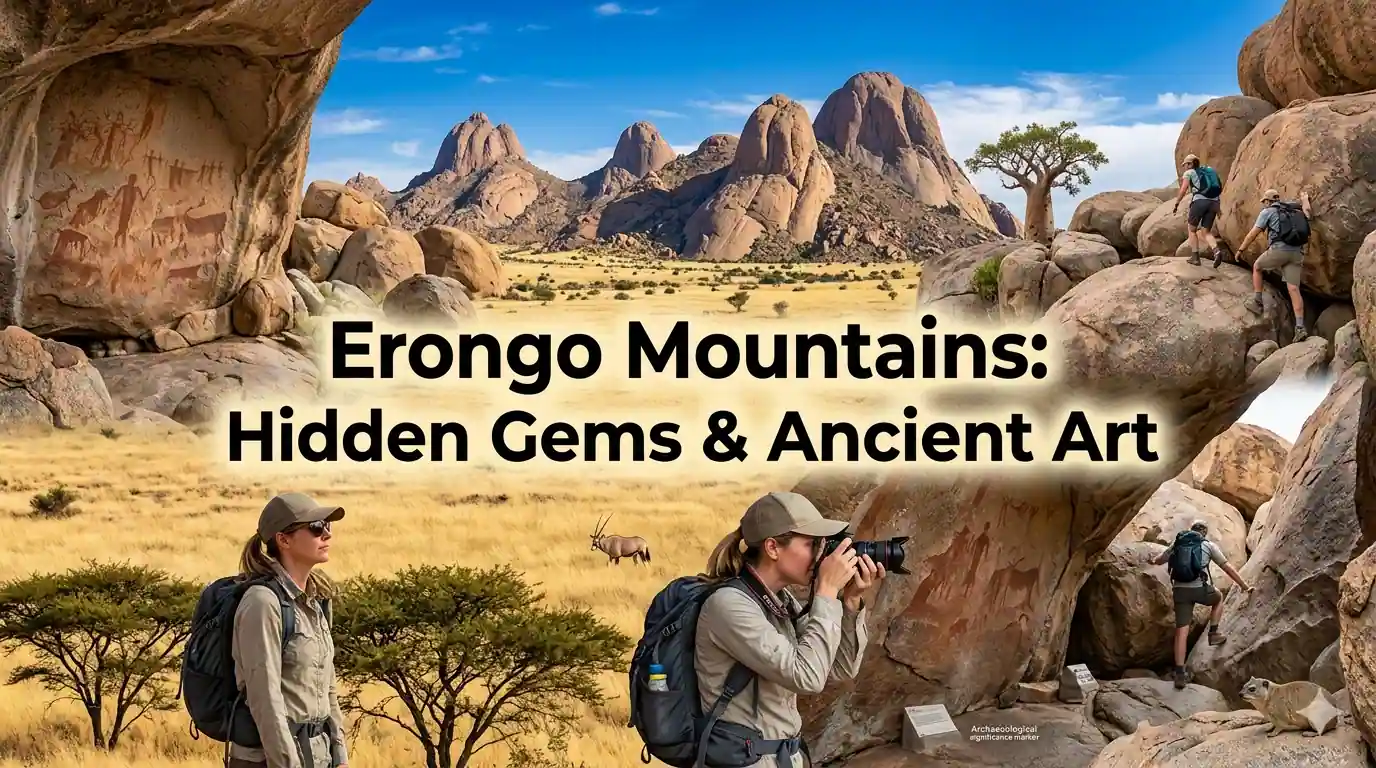
Discovering the Erongo Mountains: Namibia's Geological and Cultural Treasure
The Erongo Mountains rise dramatically from the arid plains of western Namibia, forming one of the country's most spectacular and least-visited natural wonders. This ancient volcanic complex, covering approximately 3,000 square kilometers, represents a hidden gem that combines extraordinary geological formations, pristine wilderness, and invaluable cultural heritage. For travelers seeking an authentic Namibian experience beyond the well-trodden paths to Sossusvlei and Etosha, the Erongo Mountains offer an unforgettable adventure into landscapes shaped by millions of years of geological history and thousands of years of human habitation.
Located roughly 200 kilometers west of Windhoek and 100 kilometers northeast of Swakopmund, the Erongo Mountains form a distinctive massif visible from great distances. The range gets its name from the Nama word meaning "place of the stone," a fitting designation for these remarkable granite domes and volcanic formations that have weathered into fantastical shapes over millennia. Unlike Namibia's more famous desert landscapes, the Erongo Mountains support surprising biodiversity, with permanent water sources in the form of natural springs creating oases of green in an otherwise arid environment.
What truly sets the Erongo Mountains apart is the remarkable combination of natural beauty and cultural significance. The granite rock shelters and caves scattered throughout the range contain some of Namibia's finest and most extensive collections of San rock art, created by hunter-gatherer communities over thousands of years. These ancient paintings offer a window into the spiritual beliefs, daily life, and artistic expression of the San people, making the Erongo Mountains not just a geological wonder but a living museum of human history. For photographers, hikers, climbers, and cultural enthusiasts, the Erongo Mountains provide an exceptional destination where adventure and discovery converge.
The Geology and Formation of the Erongo Mountains

Understanding the geological history of the Erongo Mountains enhances appreciation for these remarkable landscapes. The mountains are the eroded remnant of an ancient volcano that was active approximately 130 to 150 million years ago during the early Cretaceous period. This massive volcanic complex originally stood much taller than today's peaks, but millions of years of erosion have stripped away the volcanic cone, exposing the solidified magma chamber beneath.
The distinctive granite domes that characterize the Erongo Mountains formed through a process called exfoliation, where outer layers of rock peel away like onion skins due to pressure release as overlying material erodes. This process has created the smooth, rounded boulder formations that climbers and photographers find so captivating. The granite itself is composed primarily of quartz, feldspar, and mica, giving it a characteristic gray to pinkish hue that changes dramatically with the angle of sunlight throughout the day.
Interspersed with the granite formations are volcanic rocks including rhyolite, andesite, and basalt, remnants of the ancient volcanic activity. These varied rock types create diverse textures and colors across the landscape, from smooth granite domes to jagged volcanic outcrops. The erosion process has also created numerous caves and rock shelters, particularly along the base of cliffs and beneath overhanging boulders. These natural formations provided shelter for ancient San communities and now protect invaluable rock art from weathering.
The highest peak in the range, Erongo Mountain itself, reaches 2,319 meters (7,608 feet) above sea level, though several other prominent peaks and domes create a dramatic skyline. The topography varies from steep, technical climbing terrain to more gentle slopes suitable for hiking. This geological diversity creates varied habitats supporting different plant and animal communities, from arid savanna at lower elevations to more moisture-retaining environments in the mountain's protected valleys and springs.
Ancient Rock Art: The San Heritage of the Erongo Mountains

The Erongo Mountains contain one of the most significant collections of rock art in Namibia, with over 50 known sites featuring paintings and engravings created by San hunter-gatherers. These artistic treasures, some dating back 6,000 to 8,000 years, provide invaluable insights into the spiritual beliefs, hunting practices, and daily life of the San people who inhabited this region for millennia before the arrival of pastoralist communities and European colonizers.
The rock art is primarily found in natural rock shelters and caves where overhanging granite has protected the paintings from weathering. The San artists used natural pigments derived from minerals, ochre, charcoal, and plant materials to create images in red, white, black, yellow, and brown. Common subjects include human figures engaged in hunting, dancing, and ritual activities; animals such as elephants, rhinos, giraffes, antelopes, and lions; and enigmatic therianthropes (part-human, part-animal figures) believed to represent shamans in trance states.
One of the most famous sites is the Erongo Mountains' "White Lady" panel, though contrary to its name, the figure likely depicts a male San hunter or shaman rather than a woman. The painting shows a stylized human figure in white pigment with elaborate details including what appears to be ceremonial dress or body decoration. Other notable sites feature elaborate hunting scenes showing groups of archers pursuing game, ritual dances with participants in various poses, and geometric patterns that may represent spiritual concepts or maps of the landscape.
The rock art of the Erongo Mountains serves multiple purposes beyond artistic expression. For the San, these paintings were deeply spiritual, often created during or after ritual ceremonies and believed to hold supernatural power. The act of painting was itself a sacred activity, connecting the artists to the spirit world and to ancestral knowledge. Today, these sites require respectful visitation and conservation efforts to preserve them for future generations. Many sites are fragile, and the oils from human hands can damage ancient pigments, so visitors should view rock art without touching and follow guidelines provided by local guides and conservation organizations.
Hidden Gems: Must-Visit Locations in the Erongo Mountains
The Erongo Mountains contain numerous spectacular locations that reward exploration, each offering unique landscapes, geological features, and opportunities for discovery. While the range is less visited than Namibia's famous national parks, this relative obscurity means many sites remain pristine and offer a sense of genuine adventure and solitude.
Commando Koppie and the Granite Domes
Commando Koppie, a prominent granite dome formation near the town of Karibib on the eastern edge of the Erongo range, provides an accessible introduction to the area's geological wonders. This massive inselberg (isolated hill rising from a plain) features smooth granite surfaces, fascinating rock formations created by millions of years of weathering, and panoramic views of the surrounding savanna. The climb to the summit requires moderate scrambling ability but rewards visitors with 360-degree views stretching across the Erongo Mountains and the plains beyond.
The granite domes throughout the Erongo range offer similar experiences, each with its own character and challenges. Some domes feature smooth, polished surfaces created by wind and water erosion, while others display dramatic boulder piles where massive rocks balance precariously on narrow bases. These formations create natural labyrinths perfect for exploration, with passages between boulders leading to hidden alcoves and vantage points. Photographers will find endless compositions, particularly during golden hour when the granite glows with warm tones.
Erongo Nature Reserve and the Natural Springs
The Erongo Nature Reserve, encompassing a significant portion of the mountain range, protects not only geological features and rock art but also vital water sources that have sustained life for thousands of years. Natural springs emerge from the granite, creating permanent water sources that support lush vegetation in contrast to the surrounding arid landscape. These oases attract diverse wildlife and have been gathering places for both animals and humans throughout history.
The springs create microhabitats supporting plant species that cannot survive in the drier surrounding areas, including fig trees, wild palms, and various moisture-loving plants. These green corridors provide excellent birdwatching opportunities, with species such as rock thrushes, chats, and sunbirds commonly observed. The contrast between the verdant spring areas and the arid granite slopes creates striking photographic opportunities and demonstrates the mountains' ecological importance.
Remote Rock Shelters and Archaeological Sites
Beyond the well-known rock art sites, the Erongo Mountains contain numerous remote rock shelters and archaeological sites that offer glimpses into ancient human habitation. These locations require more effort to reach, often involving hiking through rugged terrain and navigating using GPS or local guides, but they reward visitors with a sense of discovery and connection to the past.
Many of these shelters contain not only rock art but also archaeological evidence including stone tools, grinding stones, and remnants of ancient campsites. These artifacts tell the story of how people adapted to life in this challenging environment, utilizing the mountains' resources while developing sophisticated knowledge of the landscape, seasonal patterns, and available food sources. Visiting these sites with knowledgeable guides enhances understanding and ensures respectful interaction with this cultural heritage.
Hiking and Climbing in the Erongo Mountains
The Erongo Mountains offer exceptional opportunities for both hiking and rock climbing, attracting outdoor enthusiasts from around the world. The varied terrain, from gentle slopes to technical granite faces, accommodates different skill levels while the relative solitude compared to more popular climbing destinations provides a more intimate wilderness experience.
Hiking Trails and Routes
While the Erongo Mountains don't have an extensive network of marked trails like some national parks, numerous hiking routes crisscross the range, ranging from easy walks to challenging multi-day treks. Day hikes can explore individual peaks, visit rock art sites, or follow dry riverbeds that cut through the mountains. These routes typically require moderate fitness and basic navigation skills, though hiring a local guide enhances safety and provides valuable knowledge about the area's natural and cultural features.
Multi-day hiking expeditions allow deeper exploration of the range, camping beneath the stars in remote locations and discovering hidden valleys, springs, and geological formations. These adventures require careful planning, adequate water supplies (or knowledge of reliable water sources), and appropriate camping equipment. The best approach for first-time visitors is to join organized hiking tours or work with local guides who know the terrain, weather patterns, and safe camping locations.
Popular hiking destinations include ascents of the main Erongo peak, traverses between granite domes, and routes connecting rock art sites. The hiking season runs from April to October during the cooler, drier months. Summer hiking (November to March) is possible but challenging due to high temperatures and the potential for afternoon thunderstorms.
Rock Climbing Opportunities
The Erongo Mountains have gained recognition among rock climbers for their high-quality granite and diverse climbing routes. The smooth granite domes and vertical faces offer everything from traditional multi-pitch climbs to modern sport routes, with difficulty levels ranging from beginner-friendly to extremely challenging. The granite provides excellent friction and features, making for enjoyable climbing even on routes without extensive protection.
Climbing in the Erongo Mountains requires self-sufficiency and experience, as there are no climbing schools or guide services directly in the mountains, though guides can be arranged from Windhoek or Swakopmund. The remote nature means climbers must bring all necessary equipment and be prepared for self-rescue if needed. Routes vary from single-pitch boulders to multi-pitch adventures reaching 200 meters or more in height.
The climbing season mirrors the hiking season, with April to October offering the most comfortable conditions. Climbers should be aware of the extreme temperature variations between day and night, and the potential for sudden weather changes. Water is scarce on the granite faces, so carrying adequate supplies is essential. Despite the challenges, climbers who visit the Erongo Mountains consistently praise the quality of the rock, the variety of routes, and the spectacular setting.
Wildlife and Flora of the Erongo Mountains
Despite the arid environment, the Erongo Mountains support surprising biodiversity, with species adapted to the challenging conditions of this semi-desert landscape. The varied topography, from rocky slopes to vegetated valleys and permanent springs, creates multiple habitats supporting different plant and animal communities.
Mammals and Larger Wildlife
The Erongo Mountains are home to a variety of mammals, though they are often elusive and more difficult to spot than in dedicated wildlife reserves. Rock hyrax (dassies) are abundant, commonly seen sunning themselves on granite boulders and darting between rocks when approached. These small, social mammals have adapted perfectly to the rocky environment and serve as an important food source for predators.
Larger mammals including klipspringer, steenbok, and duiker navigate the rocky terrain with remarkable agility, their specialized hooves providing traction on steep granite slopes. Baboons troops inhabit the mountains, their loud calls echoing through the valleys, while smaller primates like vervet monkeys can be found near water sources. Predators including leopards, caracals, and African wild cats inhabit the range, though they are rarely seen due to their nocturnal habits and elusive nature.
The mountains also support populations of larger herbivores including kudu, gemsbok (oryx), and zebra, particularly in the transitional zones between mountains and plains. These animals utilize the mountains for shelter and water while grazing on the surrounding savanna. Elephants occasionally venture into the Erongo range, particularly during dry periods when they seek water from the natural springs.
Birds and Smaller Fauna
Birdwatchers will find the Erongo Mountains rewarding, with over 200 species recorded in the range. The varied habitats support everything from arid-adapted species to those preferring more vegetated areas. Raptors including Verreaux's eagles, booted eagles, and rock kestrels utilize the granite cliffs for nesting and hunting. The distinctive black eagle, specialized for hunting rock hyrax, is commonly observed soaring above the domes.
Smaller bird species include rock thrushes, chats, warblers, and sunbirds, many of which are endemic or near-endemic to Namibia. The permanent springs attract water-dependent species including weavers, waxbills, and various dove species. Seasonal visitors add to the diversity, particularly during the summer rainy season when migratory species arrive from northern regions.
Reptiles are well-represented, with numerous lizard species basking on sun-warmed granite, including rock agamas, geckos, and the impressive Nile monitor near water sources. Snakes including puff adders, cobras, and various harmless species inhabit the range, though they are rarely encountered. The mountains also support diverse invertebrate life, from colorful butterflies to specialized insects adapted to the arid conditions.
Plant Life and Vegetation
The vegetation of the Erongo Mountains reflects the arid climate and varied topography. Lower slopes and surrounding plains support typical Namibian savanna vegetation including acacia trees, particularly camel thorn and shepherd's tree, along with various grasses and shrubs adapted to low rainfall. The mountains themselves feature more specialized plant communities, with species that can survive in rocky, nutrient-poor soils.
Near the permanent springs and in protected valleys, vegetation becomes lush and diverse, with fig trees, wild palms, and moisture-loving plants creating green oases. These areas support plant species not found in the surrounding arid landscape, demonstrating the mountains' role as refugia for biodiversity. Succulent plants including various aloes, euphorbias, and the distinctive quiver tree (aloe dichotoma) dot the landscape, their water-storing adaptations allowing survival in harsh conditions.
The Erongo Mountains also harbor several plant species of conservation concern, making the range important for botanical conservation. Endemic and near-endemic species have evolved in isolation, adapted to the specific conditions of these ancient mountains. Visitors should appreciate these plants without disturbing them, as the slow growth rates in this environment mean damaged specimens may take decades or centuries to recover.
How to Visit the Erongo Mountains: Access and Logistics
Reaching and exploring the Erongo Mountains requires some planning, but the logistics are straightforward for travelers familiar with Namibia's road network. The range's location between Windhoek and the Atlantic coast makes it accessible as a detour from more popular tourist routes or as a destination in its own right.
Getting There
The Erongo Mountains are located approximately 200 kilometers west of Windhoek and 100 kilometers northeast of Swakopmund. The nearest towns are Karibib on the eastern side and Omaruru to the north, both accessible via paved roads from the B1 and B2 highways. From Windhoek, the drive takes approximately 2.5 to 3 hours via the B2 highway through Okahandja and Karibib. From Swakopmund, the journey takes about 1.5 hours via the C35 road.
Access to the mountains themselves requires a high-clearance vehicle, preferably 4WD, as many roads within the range are rough gravel tracks or unmarked routes across savanna. While some lodges and campsites are accessible with careful driving in a 2WD vehicle, exploring the full range and reaching remote rock art sites or hiking trailheads requires the capability and ground clearance that 4WD provides.
Navigation within the Erongo Mountains can be challenging due to limited signage and numerous unmarked tracks. GPS with pre-loaded waypoints, detailed maps, or local guides are essential for safe exploration. Many visitors choose to base themselves at one of the lodges or campsites within or near the mountains and take guided tours to rock art sites and hiking destinations.
Accommodation Options
The Erongo Mountains offer varied accommodation options to suit different budgets and preferences. Several lodges and guest farms operate within the range, providing comfortable rooms, meals, and guided activities. These establishments typically feature stunning locations with views of the granite domes, and many have direct access to rock art sites, hiking trails, and wildlife viewing areas.
Mid-range to luxury lodges offer en-suite rooms, swimming pools, restaurants, and organized activities including guided rock art tours, game drives, and hiking excursions. These properties provide comfortable bases for exploring the mountains while supporting local conservation and community development. Booking in advance is recommended, particularly during peak season from April to October.
Camping options range from established campsites with basic facilities to remote wilderness camping for self-sufficient travelers. Campsites typically provide shaded areas, ablution facilities with showers and toilets, and sometimes cooking areas. Wilderness camping requires bringing all necessary equipment including water, food, and shelter, and should only be attempted by experienced campers familiar with the challenges of remote desert camping.
Best Time to Visit
The Erongo Mountains can be visited year-round, but the optimal time depends on your priorities and tolerance for heat. The cool, dry season from April to October offers the most comfortable conditions for hiking, climbing, and exploring. Daytime temperatures during these months typically range from 20-28°C (68-82°F), while nights can be cold, dropping to 5-10°C (41-50°F) or lower at higher elevations.
The summer months from November to March bring higher temperatures, often exceeding 35°C (95°F) during the day, though the mountains are generally cooler than the surrounding plains. This season also brings the possibility of afternoon thunderstorms, which can be dramatic but may disrupt outdoor activities. However, summer visits offer the advantage of greener landscapes, active birdlife including migratory species, and fewer tourists.
For rock art viewing and photography, the dry season provides clearer air and more predictable weather. For birdwatching and seeing the landscape at its most verdant, the early summer months after the first rains are ideal. Regardless of when you visit, the Erongo Mountains offer compelling experiences and stunning scenery that reward the journey.
Conservation and Responsible Tourism in the Erongo Mountains
The Erongo Mountains face various conservation challenges, from the impacts of climate change to pressure from increasing tourism and livestock grazing. Responsible visitation is essential to preserve the area's natural and cultural heritage for future generations.
Protecting Rock Art and Cultural Heritage
The ancient rock art of the Erongo Mountains is irreplaceable and extremely fragile. Visitors should never touch rock paintings, as oils from skin can damage pigments and accelerate deterioration. Photography should be done without flash, which can degrade pigments over time. Stay on established paths when visiting rock art sites, and never climb on or lean against painted surfaces.
Respect the cultural significance of these sites by approaching them with reverence and humility. These paintings are not merely tourist attractions but sacred places that hold deep meaning for descendant communities. Consider hiring local guides who can provide cultural context and ensure your visit respects both the sites and local traditions. Report any vandalism or damage to site managers or conservation authorities immediately.
Environmental Conservation
The Erongo Mountains' fragile ecosystem requires careful stewardship. Practice Leave No Trace principles: pack out all trash, minimize campfire impacts (or avoid fires entirely in this arid environment), and respect wildlife by observing from a distance. Water is scarce in the Erongo Mountains, so use it sparingly and avoid contaminating natural springs with soap or other pollutants.
Stay on established roads and trails to prevent erosion and damage to vegetation. The slow growth rates in this environment mean that damage from vehicles or foot traffic can persist for decades. Respect private property and conservancy boundaries, obtaining necessary permissions before entering restricted areas.
Support conservation efforts by choosing accommodation and tour operators committed to sustainable practices and community benefit. Many lodges in the Erongo Mountains contribute to conservation projects, employ local staff, and support community development. Your tourism dollars can help ensure the mountains remain protected and that local communities benefit from their preservation.
Conclusion: Why the Erongo Mountains Deserve a Place on Your Namibia Itinerary
The Erongo Mountains represent everything that makes Namibia special: dramatic landscapes, rich cultural heritage, abundant wildlife, and the sense of adventure that comes from exploring places few visitors experience. While Sossusvlei's dunes and Etosha's wildlife draw the crowds, the Erongo Mountains offer a more intimate, multifaceted experience that combines geology, archaeology, ecology, and outdoor adventure in one remarkable destination.
For photographers, the Erongo Mountains provide endless subjects: the interplay of light on granite domes, ancient rock art telling stories thousands of years old, wildlife adapted to challenging environments, and landscapes that shift from arid savanna to verdant oases. For hikers and climbers, the range offers routes for all skill levels in a setting of spectacular beauty. For cultural enthusiasts, the rock art sites provide a tangible connection to the San people who inhabited this land for millennia.
Perhaps most importantly, the Erongo Mountains offer solitude and the chance to experience Namibia away from the tourist trail. Here, you can sit on a granite boulder at sunset, watching the light change across the domes, hearing only the wind and the calls of birds. You can trace the lines of ancient paintings with your eyes, imagining the artists who created them thousands of years ago. You can hike through valleys where few people venture, discovering hidden springs and panoramic viewpoints.
The Erongo Mountains remind us that travel is not just about checking destinations off a list, but about meaningful engagement with place, history, and nature. They challenge us to slow down, to look more closely, to appreciate the layers of story written in rock and paint and landscape. For travelers willing to venture beyond the obvious destinations, the Erongo Mountains offer rewards that far exceed the effort required to reach them. In this ancient range, you'll find not just hidden gems, but a deeper understanding of Namibia's natural and cultural heritage, and memories that will last a lifetime.
0 Comments