.webp)
.webp)
Traveling with Professional Photography Gear to Afghanistan Customs and Security Advice
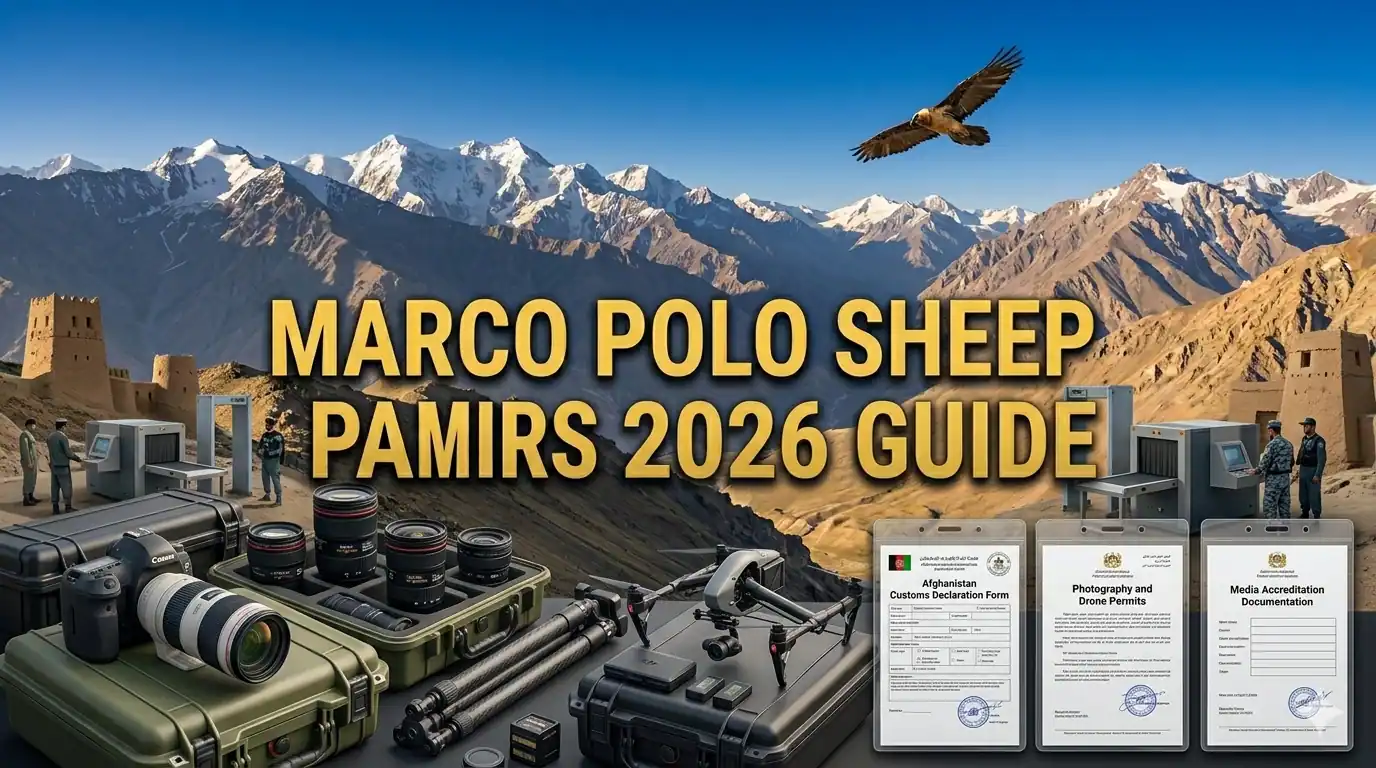
Introduction to Photography Equipment Travel in Afghanistan
Traveling to Afghanistan with professional photography gear requires careful planning and thorough understanding of current regulations.
Customs procedures, security considerations, and cultural sensitivities create complex requirements for photographers and filmmakers.
This comprehensive guide provides essential information for journalists, documentarians, and researchers planning equipment-intensive trips.
Proper preparation protects both your valuable gear and personal safety while ensuring regulatory compliance.
Understanding current Taliban-era regulations and practical realities helps avoid costly delays or equipment confiscation.
Current Regulatory Framework for Photography Equipment

Afghanistan's photography and media equipment regulations have evolved significantly since the 2021 political transition.
The de facto authorities maintain strict control over professional imaging equipment entering the country.
Distinctions exist between personal cameras, professional gear, and broadcast equipment with varying requirements.
Foreign nationals face more stringent scrutiny than Afghan citizens bringing equipment into the country.
Regulations continue to evolve requiring current information verification before travel.
Who Regulates Photography Equipment Imports
The Ministry of Information and Culture oversees media equipment permits and professional photography authorization.
Afghanistan Customs Department handles equipment declaration, valuation, and temporary import procedures.
The Ministry of Interior reviews security implications of professional imaging equipment especially drones and telephoto lenses.
Provincial information departments may require additional local registration upon arrival in different regions.
Ministry of Foreign Affairs coordinates visa-linked equipment permissions for international media organizations.
Equipment Categories and Restrictions
Personal cameras including DSLRs and mirrorless bodies for non-commercial use face minimal restrictions.
Professional photography equipment including multiple lenses, lighting, and tripods requires detailed declaration.
Broadcast and cinema cameras need special media permits and often government minder assignments.
Drone equipment faces severe restrictions with most unmanned aerial systems prohibited for foreign operators.
Telephoto lenses exceeding four hundred millimeters may trigger additional security review and justification requirements.
Customs Declaration Procedures

Proper customs declaration prevents equipment confiscation, fines, and potential legal complications.
All professional photography gear must be declared upon entry regardless of intended commercial use.
Detailed equipment lists with serial numbers, values, and specifications streamline the declaration process.
Temporary import procedures allow duty-free entry with commitment to re-export equipment upon departure.
Failure to declare equipment properly can result in confiscation and bans on future entry.
Required Documentation
Comprehensive equipment list in English and Dari or Pashto detailing every item including accessories.
Serial numbers for all cameras, lenses, computers, and valuable equipment must be documented.
Original purchase receipts or pro forma invoices establishing equipment values for customs assessment.
Letter of assignment from media organization or client explaining purpose of equipment import.
Carnet ATA documents facilitate temporary import though acceptance varies under current administration.
Declaration Process at Entry Points
Hamid Karzai International Airport in Kabul has dedicated customs counters for media equipment declaration.
Land border crossings at Hairatan, Islam Qala, and Torkham have less developed procedures requiring extra patience.
Allow minimum two to three hours for equipment processing even with complete documentation.
Customs officers physically inspect all declared equipment matching items to submitted lists.
Temporary import permits issued upon approval must be kept safely for exit verification.
Permit Requirements for Professional Photography

Professional photography in Afghanistan requires permits beyond basic equipment declaration.
Media visas linked to specific projects and equipment lists provide clearest legal status.
Journalist accreditation from Ministry of Information and Culture necessary for professional work.
Location-specific permits required for filming or photography at government buildings, military sites, and sensitive areas.
Local provincial permits may be needed in addition to national authorization.
Media Visa and Accreditation
Apply for journalist visa category rather than tourist visa when bringing professional equipment.
Ministry of Foreign Affairs processes media visa applications requiring assignment letters and credentials.
Processing times range from two to six weeks requiring advance planning.
Accreditation card issued upon arrival must be carried at all times during professional work.
Visa specifies permitted activities and equipment types with violations risking deportation.
Provincial and Local Permits
Each province may require separate notification or permit for professional photography work.
Provincial information departments review project details and may impose restrictions.
Local community leader approval often necessary in rural areas beyond formal permits.
Permit costs vary from fifty to five hundred US dollars depending on province and project scope.
Allow one to two weeks for provincial permit processing before travel to specific regions.
Security Considerations for Photography Equipment

Professional photography equipment attracts attention creating security risks requiring mitigation strategies.
Visible expensive gear can make you target for theft, kidnapping, or suspicion of espionage.
Balance between equipment needs and operational security essential for safe photography work.
Insurance coverage must address Afghanistan's high-risk environment with appropriate endorsements.
Backup and data security protocols protect work product against loss or confiscation.
Equipment Security Practices
Use nondescript camera bags rather than branded professional cases advertising valuable contents.
Maintain low profile avoiding display of expensive equipment in public spaces unnecessarily.
Secure equipment in hotel safes or locked storage when not actively needed for work.
Travel with trusted local fixers who understand security dynamics and can assess situations.
Avoid photographing security checkpoints, military installations, or government buildings without explicit permission.
Data Security and Backup
Cloud backup systems often unavailable requiring local redundant storage solutions.
Carry multiple hard drives storing duplicate copies of all footage and images.
Encrypt sensitive data protecting sources and subjects if equipment is searched or confiscated.
Consider satellite data transmission for critical though expensive and slow in Afghanistan.
Maintain off-site backup by regularly shipping drives to secure location outside country.
Insurance Requirements and Coverage

Comprehensive insurance coverage is essential though challenging to obtain for Afghanistan photography work.
Standard equipment insurance policies often exclude war zones and high-risk countries.
Specialized media insurance providers offer Afghanistan coverage at premium rates.
Medical evacuation insurance absolutely critical given limited healthcare infrastructure.
Kidnap and ransom coverage increasingly common requirement for professional work in Afghanistan.
Equipment Insurance Considerations
Verify policy explicitly covers Afghanistan and Taliban-controlled territories.
Document all equipment with photographs, serial numbers, and valuations before departure.
Understand exclusions for confiscation, war damage, and civil unrest which may apply.
Temporary import permits and customs documentation required for insurance claims.
Consider separate riders for high-value items exceeding standard policy limits.
Liability and Professional Coverage
Third-party liability insurance protects against claims from subjects or property damage.
Errors and omissions coverage addresses legal risks from published content.
Media liability insurance increasingly required by provincial permit authorities.
Certificate of insurance naming Afghan government entities may be required for permits.
Verify coverage extends to local fixers and assistants you employ.
Cultural Sensitivities and Photography Ethics

Afghanistan's conservative culture creates important considerations around photography subjects and practices.
Religious sensitivities, gender norms, and privacy expectations require respectful navigation.
Taliban restrictions on imaging vary by region and enforcement remains inconsistent.
Building trust with communities essential for ethical and safe photography work.
Understanding when not to photograph protects both subjects and photographers.
Photographing People
Always ask permission before photographing individuals especially women and religious figures.
Female photographers face different access and restrictions than male counterparts.
Avoid photographing women without explicit consent which can create serious problems for subjects.
Respect refusals gracefully without argument or attempts to photograph covertly.
Compensation for portraits expected in some contexts though creates ethical considerations.
Religious and Cultural Sites
Mosques and religious schools may restrict or prohibit photography especially during prayer times.
Always ask permission before photographing inside religious buildings or at shrines.
Some communities consider photography of religious sites disrespectful or forbidden.
Avoid photographing religious ceremonies without explicit community leader approval.
Respect signage prohibiting photography though absence of signs does not guarantee permission.
Practical Equipment Recommendations

Equipment choices significantly impact both photography success and operational security in Afghanistan.
Balancing quality needs with portability, durability, and low-profile considerations essential.
Redundancy protects against equipment failure in locations with limited repair options.
Power and connectivity challenges require specific preparation and backup systems.
Climate considerations affect equipment performance and maintenance requirements.
Camera and Lens Selection
Full-frame DSLR or mirrorless cameras provide image quality with relatively discreet profiles.
Zoom lenses like twenty-four to seventy millimeters and seventy to two hundred millimeters cover most needs.
Fast prime lenses useful for low light though telephoto lenses may attract unwanted attention.
Bring lens cleaning supplies as dust and sand quickly degrade image quality.
Avoid excessively large or conspicuous lenses that mark you as professional media.
Support and Power Equipment
Lightweight carbon fiber tripods balance stability with portability for travel.
Multiple high-capacity batteries essential as charging opportunities may be limited.
Universal power adapters and voltage converters needed for Afghanistan's mixed electrical systems.
Portable power banks provide backup though airline restrictions limit capacity.
Solar chargers useful for extended field work though add weight and complexity.
Working with Local Fixers and Guides

Local fixers are essential for navigating customs, permits, security, and cultural dynamics.
Experienced fixers facilitate equipment clearance and prevent costly delays or misunderstandings.
Trust and clear communication with fixers directly impacts project success and safety.
Fair compensation and respectful relationships build long-term partnerships beneficial for future work.
Fixers assume risks on your behalf requiring ethical treatment and adequate insurance coverage.
Finding Reputable Fixers
Recommendations from other journalists and photographers who recently worked in Afghanistan invaluable.
Media organizations with Afghanistan presence often maintain fixer networks available for hire.
Verify fixer credentials, experience, and references before committing to engagement.
Clear contracts defining scope, compensation, and responsibilities prevent misunderstandings.
Ensure fixers have appropriate permits and documentation for their work.
Fixer Roles and Responsibilities
Customs clearance assistance navigating bureaucracy and language barriers.
Permit acquisition and liaison with government authorities at national and provincial levels.
Security assessment and route planning based on current conditions and local knowledge.
Translation and cultural interpretation facilitating interviews and community engagement.
Logistics coordination including transportation, accommodation, and local services.
Border Crossing and Entry Procedures

Entry points into Afghanistan present different challenges for photography equipment.
Airport arrivals generally smoother though subject to more thorough equipment inspection.
Land borders involve more complex procedures with varying levels of bureaucracy.
Complete documentation essential regardless of entry point chosen.
Patience and respectful demeanor facilitate smoother processing at all border crossings.
Kabul Airport Entry
Hamid Karzai International Airport remains primary entry point for international photographers.
Customs officers familiar with media equipment though procedures can be time-consuming.
Expect detailed inspection of all declared equipment with serial number verification.
Temporary import permits issued on spot with copies provided for your records.
Allow three to four hours for complete processing including immigration and customs.
Land Border Crossings
Hairatan border from Uzbekistan busiest land crossing with most developed procedures.
Islam Qala from Iran and Torkham from Pakistan also used though facilities more basic.
Land borders may lack officials authorized to process professional equipment imports.
Additional delays common requiring flexibility in travel planning.
Consider flying into Kabul with equipment then traveling overland if land border procedures unclear.
Exit Procedures and Equipment Re Export

Proper exit procedures prevent complications and ensure ability to return with equipment.
Temporary import permits must be presented at departure for verification and cancellation.
All declared equipment should exit with you or require separate export documentation.
Customs officers verify serial numbers matching entry documentation.
Lost, stolen, or damaged equipment requires police reports and customs notification.
Departure Documentation
Present original temporary import permit received upon entry to customs at departure.
Equipment list verified against actual items being exported from country.
Any discrepancies between entry and exit equipment requires explanation and potential duties.
Obtain exit stamp or clearance document proving proper equipment export.
Retain all documentation for insurance and future visa applications.
Equipment Disposal or Transfer
Leaving equipment in Afghanistan requires formal transfer procedures and duty payment.
Donating equipment to Afghan organizations needs ministry approval and documentation.
Selling equipment locally requires customs clearance and tax payment.
Abandoning equipment without proper procedures creates legal problems and future entry bans.
Plan equipment disposition before travel to avoid difficult decisions under time pressure.
Emergency Situations and Equipment Loss

Despite careful planning emergencies involving photography equipment can occur.
Theft, confiscation, damage, or loss require specific response protocols.
Documentation and insurance prepare you for worst-case scenarios.
Local contacts and fixers critical for navigating emergency situations.
Embassy or consulate registration facilitates assistance though capabilities limited.
Theft or Confiscation Response
File police report immediately documenting circumstances and equipment details.
Notify your fixer and local contacts who can navigate local systems effectively.
Contact your embassy or consulate for guidance though intervention capacity limited.
Inform insurance provider promptly initiating claims process with required documentation.
Obtain official letters documenting confiscation if equipment seized by authorities.
Damage and Malfunction
Limited repair facilities exist in Kabul though quality and parts availability uncertain.
Bring backup equipment as repairs may be impossible requiring replacement.
Dust and sand cause most equipment issues requiring regular cleaning and maintenance.
Extreme temperatures affect battery performance and electronic equipment reliability.
Carry basic repair tools and cleaning supplies for field maintenance.
Current Challenges and Practical Realities

Photography work in Afghanistan faces significant challenges under current political situation.
International banking restrictions complicate equipment purchases, insurance, and fixer payments.
Limited international presence reduces support infrastructure for foreign photographers.
Security situation remains volatile requiring constant vigilance and flexibility.
Regulatory environment continues evolving requiring current information verification.
Banking and Payment Issues
International sanctions limit wire transfers and credit card functionality.
Cash economy necessitates carrying significant US dollars creating security risks.
Exchange rates volatile with limited official exchange options.
Plan to bring all necessary funds in cash as ATM and card access unreliable.
Coordinate with fixers on payment methods before arrival.
Communication and Connectivity
Internet connectivity limited and unreliable outside major urban centers.
Mobile phone coverage varies by region with many areas having no service.
Satellite communication devices may be restricted requiring special permission.
Plan for extended periods without communication especially in remote areas.
Establish check-in protocols with contacts outside Afghanistan.
Resources and Support Organizations

Several organizations provide support and resources for photographers working in Afghanistan.
Professional networks facilitate information sharing and emergency assistance.
Training programs prepare photographers for high-risk environment work.
Legal and insurance specialists understand Afghanistan-specific challenges.
Staying connected with Afghanistan photography community ensures current information.
Professional Support Organizations
Committee to Protect Journalists provides resources and emergency assistance for media workers.
Reporters Without Borders offers safety guides and advocacy for photographers in conflict zones.
Dart Center for Journalism and Trauma supports photographers covering difficult subjects.
International News Safety Institute provides training and resources for high-risk assignments.
Professional photography associations maintain Afghanistan-specific guidance and networks.
Information Sources
Afghanistan photographer networks on social media share real-time information on conditions.
Embassy security advisories provide updates though may be conservative.
Local fixer networks offer ground truth on current regulations and security.
Media organization security departments maintain Afghanistan-specific intelligence.
Regular information verification essential as situations change rapidly.
Conclusion and Final Recommendations

Traveling to Afghanistan with professional photography gear requires extensive preparation and realistic risk assessment.
Current political and security situation creates substantial challenges requiring careful consideration.
Proper documentation, local partnerships, and cultural sensitivity essential for successful work.
Prioritize safety and ethical practices over obtaining specific shots or stories.
Thorough preparation, flexibility, and respect for Afghan people and culture enable meaningful photography work.
0 Comments