.webp)
.webp)
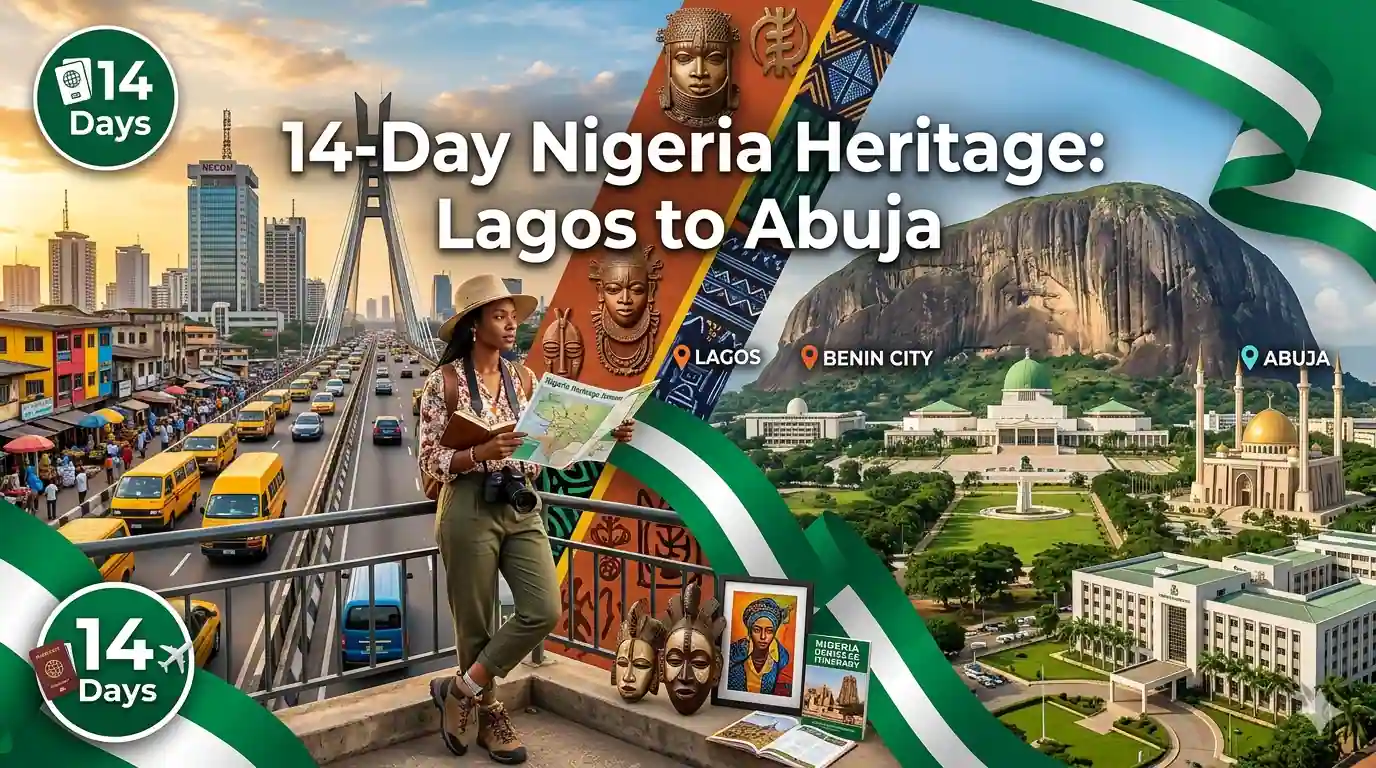
Introduction: Discovering Nigeria's Cultural Heart Through a 14-Day Heritage Journey
Nigeria, Africa's most populous nation and cultural powerhouse, offers travelers an extraordinary opportunity to experience the vibrant energy of Lagos, the ancient heritage of Benin City, the spiritual significance of Osun-Osogbo, and the elegant modernity of Abuja—all within a carefully crafted 14-day itinerary. This comprehensive heritage journey is designed for culturally curious travelers who seek to understand Nigeria's rich tapestry of Yoruba, Igbo, Hausa, and Edo traditions, contemporary arts, music, film, and the dynamic spirit that defines this remarkable West African nation.
From the bustling streets of Lagos, where Nollywood films are born and Afrobeat rhythms pulse through every neighborhood, to the serene political elegance of Abuja, where modern African architecture meets traditional design sensibilities, this itinerary balances urban exploration with cultural immersion, historical discovery with contemporary experiences. Each day is crafted to maximize your understanding of Nigeria's diverse heritage while maintaining a sustainable pace that allows for meaningful connections with local communities, artists, historians, and cultural custodians.
Whether you are drawn to Nigeria for its ancient bronze artistry, its vibrant contemporary arts scene, its spiritual traditions, or simply the opportunity to experience one of the world's most dynamic cultures, this 14-day heritage itinerary provides the roadmap for a transformative journey. You will explore UNESCO World Heritage sites, witness traditional festivals, engage with master artisans, experience Nigeria's legendary hospitality, and gain insights into a nation that continues to shape global culture through music, film, fashion, and innovation.
Days 1-3: Lagos - The Energy of Africa's Largest City

Your Nigeria heritage journey begins in Lagos, the nation's commercial heartbeat and cultural epicenter. This sprawling metropolis of over 20 million people pulses with energy, creativity, and the unmistakable rhythm of African urban life. Three days in Lagos provides the perfect introduction to Nigeria's contemporary culture while laying the foundation for deeper heritage exploration.
Day 1: Arrival and Victoria Island Orientation
Arrive at Murtala Muhammed International Airport and transfer to your accommodation in Victoria Island or Ikoyi, Lagos' upscale districts that offer comfortable lodging with easy access to cultural attractions. After settling in, begin your Lagos introduction with an evening walk along the Victoria Island waterfront, where the Lagos skyline meets the Atlantic Ocean.
Enjoy a welcome dinner at a restaurant featuring contemporary Nigerian cuisine, sampling dishes like jollof rice, egusi soup, or grilled suya while enjoying live Afrobeat or highlife music. This first evening sets the tone for your journey: vibrant, flavorful, and deeply connected to Nigeria's cultural soul.
Day 2: Lagos Heritage and Contemporary Arts
Dedicate your second day to exploring Lagos' cultural institutions and artistic heritage. Begin at the Nike Art Gallery in Lekki, West Africa's largest art gallery, featuring over 8,000 works by Nigerian artists spanning traditional and contemporary styles. Founder Nike Davies-Okundaye, a master of adire textile art, often welcomes visitors and shares insights into Nigerian artistic traditions.
Continue to the National Museum Lagos, which houses an impressive collection of Nigerian antiquities including Nok terracottas, Benin bronzes, and Igbo-Ukwu artifacts. Knowledgeable guides provide context about Nigeria's diverse cultural heritage and the historical significance of these treasures.
In the afternoon, explore the vibrant street art and creative energy of neighborhoods like Yaba or Surulere, where murals celebrate Nigerian identity, music, and social commentary. Visit a local recording studio or creative hub to learn about Nigeria's influential music industry, from Fela Kuti's Afrobeat legacy to contemporary Afrobeats global dominance.
Day 3: Markets, Waterfront, and Nollywood
Immerse yourself in Lagos' commercial and cultural life with a visit to Balogun Market or Lekki Market, where vendors sell traditional textiles, crafts, spices, and everyday goods. Practice respectful bargaining, observe the art of negotiation that defines West African markets, and perhaps purchase adire fabrics, beaded jewelry, or wooden carvings as meaningful souvenirs.
Experience Lagos from the water with a boat tour of Lagos Lagoon or a visit to the Makoko floating community, where residents have adapted to life on stilts above the water. This unique settlement showcases Nigerian ingenuity and resilience while raising important conversations about urban development and climate adaptation.
Conclude your Lagos experience with insights into Nollywood, the world's second-largest film industry. Visit a film studio if accessible, meet local filmmakers, or attend a screening of contemporary Nigerian cinema. Understanding Nollywood's role in shaping African narratives and global perceptions provides crucial context for Nigeria's cultural influence.
What Makes Lagos Essential for Heritage Travelers?
Lagos serves as Nigeria's cultural gateway, offering unparalleled access to contemporary arts, music, film, and urban heritage. The city's energy reflects Nigeria's dynamism, while its institutions preserve and celebrate the nation's diverse traditions. Three days allows visitors to experience both the modern pulse and historical depth that define this remarkable city.
Days 4-5: Benin City - Ancient Kingdom and Bronze Heritage

Travel from Lagos to Benin City, the historic capital of the ancient Edo Kingdom and home to one of Africa's most significant artistic legacies: the Benin Bronzes. Two days in Benin City provide deep immersion into pre-colonial African civilization, master craftsmanship, and the complex history of cultural heritage and repatriation.
Day 4: Journey to Benin City and Royal Palace
Depart Lagos early for the approximately 4-5 hour drive to Benin City. Upon arrival, check into your accommodation and begin your Benin exploration with a visit to the Oba's Palace, the spiritual and cultural heart of the Edo people. While access to inner sanctums may be restricted, the palace grounds, ceremonial spaces, and surrounding artifacts offer profound insights into Edo royalty and tradition.
Meet with palace historians or cultural guides who can share stories about the Benin Kingdom's golden age, the significance of bronze casting, and the ongoing dialogue about repatriating artifacts held in international museums. This conversation connects ancient heritage with contemporary global cultural politics.
Day 5: Benin Bronzes and Traditional Crafts
Dedicate your second Benin day to the city's artistic heritage. Visit the Benin City National Museum, which displays replicas and some original Benin Bronzes alongside explanatory materials about the lost-wax casting technique that produced these masterpieces. Understand the historical context of the 1897 British expedition that removed thousands of artifacts and the ongoing efforts to reclaim this heritage.
Visit the Igun Street bronze casters' guild, where master artisans continue the ancient tradition of bronze casting using methods unchanged for centuries. Observe the meticulous process of creating wax models, preparing molds, and casting metal, then perhaps commission a small piece that supports these cultural custodians directly.
Explore additional cultural sites including the City Walls of Benin, once among the world's largest earthworks, and local markets where traditional Edo crafts, textiles, and foods are sold. Conclude with a traditional Edo meal featuring dishes like banga soup, starch, and fresh fish from local rivers.
Why Benin City Matters for Cultural Understanding
Benin City offers travelers a direct connection to one of Africa's most sophisticated pre-colonial civilizations. The Benin Bronzes represent artistic achievement that challenged colonial narratives about African history, while the living traditions of bronze casting demonstrate cultural continuity despite historical disruption. Two days allows meaningful engagement with this profound heritage.
Days 6-7: Osun-Osogbo - Sacred Grove and Spiritual Heritage

Journey from Benin City to Osogbo, home to the Osun-Osogbo Sacred Grove, a UNESCO World Heritage Site that preserves Yoruba spiritual traditions, sacred art, and natural biodiversity. Two days in Osogbo provide immersion into Yoruba cosmology, traditional religion, and the intersection of spirituality and environmental conservation.
Day 6: Arrival and Sacred Grove Exploration
Travel to Osogbo and check into accommodation that respects the spiritual character of the area. Begin your Sacred Grove experience with a guided walk through this protected forest, where shrines, sculptures, and sacred sites dedicated to Osun, the Yoruba goddess of fertility and water, are nestled among ancient trees.
Your guide, often a priestess or cultural custodian, will explain the significance of various shrines, the role of Osun in Yoruba spirituality, and the annual Osun-Osogbo Festival that draws thousands of pilgrims and visitors. Observe the distinctive sculptures by Austrian artist Susanne Wenger, who collaborated with Yoruba priests to create contemporary sacred art that honors traditional beliefs.
Participate respectfully in rituals if invited, such as pouring libations or making offerings, always following the guidance of cultural custodians. This experiential learning provides deeper understanding than observation alone.
Day 7: Yoruba Culture and Craft Traditions
Deepen your understanding of Yoruba heritage with visits to local craft centers where adire textile artists, beadworkers, and woodcarvers practice traditional techniques. Learn about the symbolism in Yoruba art, the significance of colors and patterns, and how these traditions continue to influence contemporary Nigerian fashion and design.
Visit the Osun River itself, where pilgrims come to seek blessings, fertility, and healing. Observe the respectful practices of worshippers and learn about the river's significance in Yoruba cosmology. If timing aligns, research whether any cultural festivals or ceremonies are occurring during your visit.
Conclude your Osogbo experience with a traditional Yoruba meal featuring dishes like amala, ewedu, and gbegiri, often enjoyed communally. Reflect on the ways spiritual heritage continues to shape contemporary Nigerian identity and cultural expression.
What Makes Osun-Osogbo Unique for Heritage Travelers
The Osun-Osogbo Sacred Grove represents a rare example of living cultural heritage where ancient spiritual traditions continue to thrive in a protected natural environment. For travelers interested in indigenous religions, environmental conservation, and the continuity of cultural practices, Osogbo offers profound insights into Yoruba worldviews and their contemporary relevance.
Days 8-10: Abuja - Elegance, Governance, and Modern Nigerian Identity

Travel from Osogbo to Abuja, Nigeria's purpose-built capital city that embodies modern African governance, architecture, and national identity. Three days in Abuja provides contrast to the historical heritage of earlier destinations while showcasing Nigeria's contemporary aspirations, political culture, and urban planning.
Day 8: Arrival and Abuja Orientation
Arrive in Abuja and transfer to accommodation in the Central Business District, Maitama, or Wuse districts. Begin your Abuja introduction with a drive through the city's distinctive neighborhoods, noting the blend of modern architecture, green spaces, and traditional design elements that define Nigeria's capital.
Visit the Nigerian National Mosque and Nigerian National Christian Centre, located opposite each other in the city center. These architectural landmarks symbolize Nigeria's religious diversity and the constitutional commitment to religious freedom. Respectful observation from exterior viewpoints provides insight into Nigeria's pluralistic society.
Day 9: Governance, Arts, and Aso Rock
Explore Abuja's political and cultural institutions with a visit to the National Assembly complex, where guided tours may be available to learn about Nigeria's democratic governance. Continue to the National Arts Theatre, a landmark building that hosts performances celebrating Nigeria's diverse cultural traditions.
Experience Abuja's natural heritage with a visit to Aso Rock, the massive granite monolith that gives the city its name and serves as a powerful symbol of Nigerian strength and endurance. Viewpoints around the rock provide photographic opportunities and moments of reflection on Nigeria's journey as a nation.
Visit the Abuja National Museum or contemporary art galleries to understand how Nigeria's heritage is interpreted and presented in the capital. Engage with curators or artists who can provide context about contemporary Nigerian art and its relationship to traditional forms.
Day 10: Markets, Cuisine, and Contemporary Culture
Immerse yourself in Abuja's everyday life with a visit to Wuse Market or Garki Market, where vendors sell goods from across Nigeria's diverse regions. Observe the variety of languages, textiles, foods, and crafts that reflect Nigeria's cultural richness.
Experience Abuja's culinary scene with a food tour featuring dishes from different Nigerian regions: northern suya and tuwo, eastern pepper soup and fufu, western amala and ewedu. Understanding Nigeria's culinary diversity provides insights into regional identities and national unity.
Conclude your Abuja experience with contemporary cultural experiences: attend a live music performance, visit a fashion designer's studio, or engage with Nigeria's thriving tech and innovation scene. These experiences showcase how heritage informs contemporary Nigerian creativity and global influence.
Why Abuja Completes the Heritage Journey
Abuja represents Nigeria's present and future, offering travelers insights into how a modern African nation balances tradition with innovation, diversity with unity, and heritage with aspiration. Three days allows visitors to appreciate the capital's role in shaping Nigerian identity while experiencing the elegance and order that distinguish this planned city.
Days 11-14: Synthesis, Reflection, and Departure

The final four days of your Nigeria heritage itinerary provide opportunities for synthesis, deeper exploration of personal interests, and meaningful reflection on the journey's cultural insights.
Day 11: Return to Lagos or Extended Exploration
Depending on your departure flight schedule, either return to Lagos for final cultural experiences or extend your exploration of Abuja or another destination of personal interest. Options include revisiting favorite sites, purchasing final souvenirs, or engaging in deeper conversations with cultural contacts made during your journey.
Day 12: Cultural Workshops or Artisan Visits
Dedicate time to hands-on cultural learning through workshops with traditional artisans: adire textile dyeing, beadwork, bronze casting demonstrations, or Yoruba drumming lessons. These immersive experiences deepen appreciation for Nigerian craftsmanship and provide tangible connections to heritage traditions.
Day 13: Reflection and Community Engagement
Use your penultimate day for reflection and meaningful engagement. Visit a community project, educational initiative, or cultural organization that aligns with your interests. Consider how your travel experience has influenced your understanding of Nigeria, Africa, and global cultural heritage.
Prepare a travel journal, photo essay, or blog post that captures your insights and shares Nigeria's heritage with others. Thoughtful documentation honors the experiences and relationships formed during your journey.
Day 14: Departure and Lasting Connections
On your final day, allow time for airport transfer and departure procedures. As you leave Nigeria, carry with you not just souvenirs but deeper understanding of a nation whose cultural influence extends far beyond its borders. Maintain connections with contacts made during your journey, and consider how responsible travel can support cultural preservation and community development.
Practical Travel Information for Your Nigeria Heritage Journey

Successful travel in Nigeria requires understanding practical logistics, safety considerations, and cultural norms. This information ensures you are well-prepared for a smooth and enriching experience.
Best Time to Visit Nigeria
Nigeria experiences a tropical climate with regional variations. The optimal time for heritage travel is during the dry season from November to February, when temperatures are moderate, humidity is lower, and travel conditions are most reliable. This period also coincides with several cultural festivals that enhance heritage experiences.
The rainy season from March to October features lush landscapes and fewer tourists, though afternoon showers can disrupt outdoor activities. If traveling during this period, plan indoor cultural experiences for afternoons and maintain flexibility in your itinerary.
Transportation Between Destinations
Nigeria's domestic transportation options include flights, private drivers, and buses. For heritage travelers prioritizing comfort and efficiency, domestic flights between Lagos, Benin City, and Abuja save time and reduce travel fatigue. Private drivers with local knowledge provide flexibility for reaching cultural sites not served by public transport.
When using road transport, hire reputable drivers through hotels or trusted tour operators. Avoid night travel on intercity roads, and always verify vehicle condition and driver credentials. Domestic flights are operated by airlines like Air Peace, Arik Air, and Dana Air, with advance booking recommended.
Accommodation Recommendations
Nigeria offers accommodation ranging from international hotel chains to boutique guesthouses and heritage properties. In Lagos and Abuja, international hotels provide reliable standards, security, and business amenities. In Benin City and Osogbo, locally-owned guesthouses and heritage properties offer authentic atmosphere and cultural immersion.
Book accommodation in advance, particularly during festival periods or peak travel seasons. Verify security measures, location convenience, and guest reviews before confirming. Consider properties that support local communities and sustainable practices.
Safety and Health Considerations
Nigeria requires thoughtful preparation for safe travel. Consult current US State Department travel advisories and register with the Smart Traveler Enrollment Program (STEP). Purchase comprehensive travel insurance covering medical emergencies, evacuation, and trip interruption.
Health preparations should include yellow fever vaccination (required for entry), malaria prophylaxis, and routine vaccinations. Drink only bottled or purified water, eat well-cooked foods, and practice good hygiene. Carry a basic medical kit and know the location of reputable medical facilities in each destination.
Exercise situational awareness in urban areas, secure valuables, and use reputable transportation services. Respect local customs, dress modestly when visiting religious sites, and engage respectfully with cultural practices. Your safety and the respect you show contribute to positive travel experiences for yourself and future visitors.
Conclusion: Nigeria's Heritage Journey Transforms Perspectives

A 14-day heritage itinerary through Nigeria—from Lagos' vibrant energy to Abuja's elegant modernity, with stops in Benin City's ancient kingdom and Osun-Osogbo's sacred traditions—offers travelers a profound education in African history, culture, and contemporary identity. This journey balances urban exploration with spiritual immersion, historical discovery with artistic engagement, and personal reflection with community connection.
Nigeria rewards curious travelers with unforgettable experiences: the masterful artistry of Benin Bronzes, the spiritual depth of Yoruba traditions, the creative dynamism of Lagos' arts scene, and the aspirational elegance of Abuja's modern identity. Each destination contributes to a holistic understanding of a nation whose cultural influence extends globally through music, film, literature, fashion, and innovation.
As you plan your Nigeria heritage journey, approach each experience with humility, curiosity, and respect. Engage meaningfully with cultural custodians, support local artisans and communities, and document your experiences thoughtfully. Your journey contributes to cultural preservation, cross-cultural understanding, and the global appreciation of Nigeria's extraordinary heritage.
Whether this 14-day itinerary serves as your complete Nigeria experience or the beginning of deeper West African exploration, the memories, insights, and connections you create will endure. Nigeria's heritage is not static—it lives in the hands of artisans, the voices of musicians, the prayers of worshippers, and the aspirations of a dynamic nation. May your journey honor that living heritage and inspire continued engagement with the cultures that shape our shared human story.
0 Comments