.webp)
.webp)
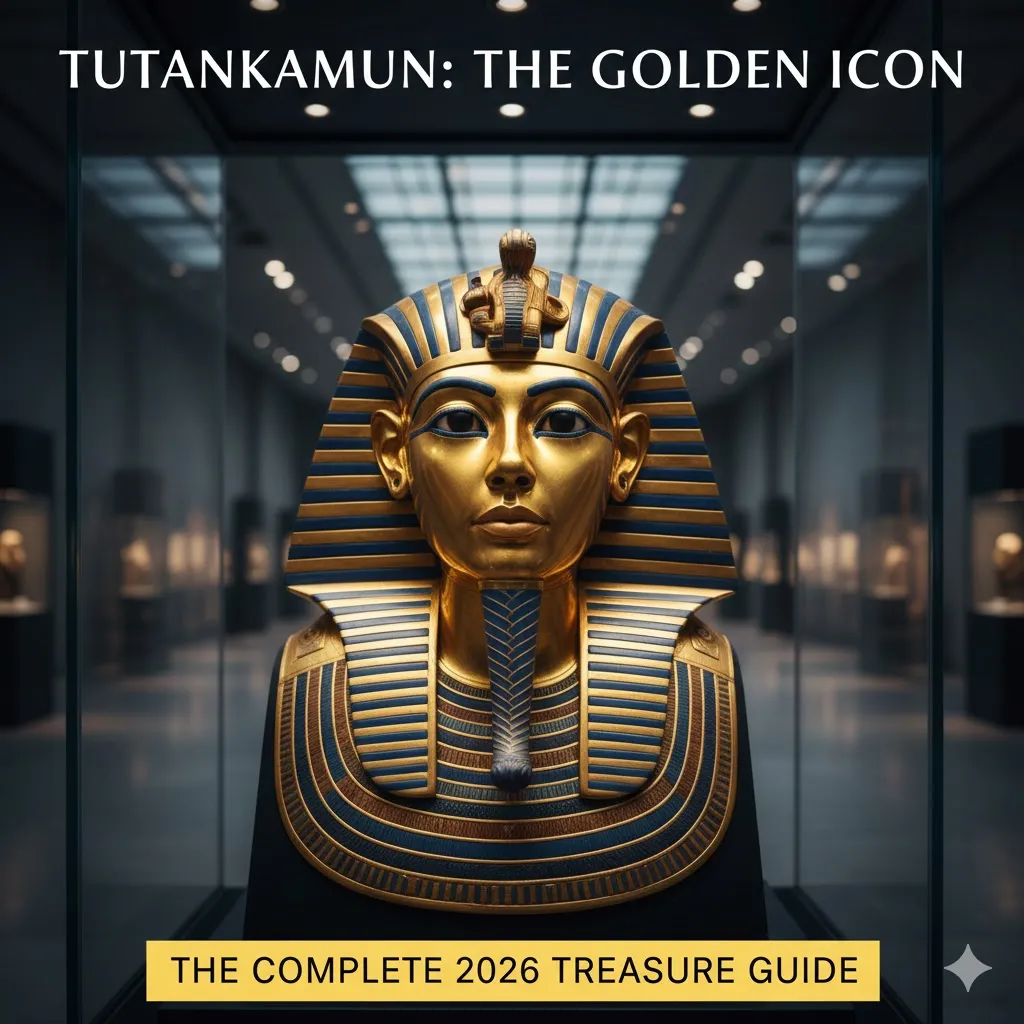
TUTANKHAMUN'S TREASURES: SEEING THE ICONIC GOLDEN DEATH MASK
Few artifacts in human history have captured the global imagination like the golden death mask of Tutankhamun. Discovered in 1922 by Howard Carter in the virtually intact tomb KV62 in the Valley of the Kings, this exquisite funerary mask has become the most recognizable symbol of ancient Egypt and one of the most celebrated works of art ever created. Crafted from 11 kilograms of solid gold and inlaid with lapis lazuli, quartz, obsidian, turquoise, and colored glass, the mask's serene expression, intricate craftsmanship, and symbolic richness embody the artistic achievement, religious beliefs, and royal ideology of New Kingdom Egypt. In 2026, as the complete Tutankhamun collection finds its permanent home in the Grand Egyptian Museum (GEM) near the Giza pyramids, visitors have an unprecedented opportunity to see the golden mask alongside all 5,398 artifacts from the young pharaoh's tomb, displayed together for the first time in history.
This comprehensive guide invites you to explore Tutankhamun's treasures with deeper understanding and greater appreciation. We will examine the historical context of the tomb's discovery, decode the artistic and symbolic innovations that make the golden mask a masterpiece of ancient art, explore the extraordinary collection of funerary equipment that equipped the pharaoh for eternal life, and provide practical information for visiting the Grand Egyptian Museum in 2026. Whether you are a history enthusiast drawn by pharaonic mysteries, an art lover fascinated by ancient craftsmanship, a conservation enthusiast interested in preservation science, or simply a curious traveler inspired by the mask's legendary status, this guide will help you prepare for an unforgettable encounter with one of humanity's greatest artistic achievements.
Understanding Tutankhamun's treasures requires more than admiring their golden splendor; it demands engaging with the beliefs that inspired their creation, the skilled artisans who crafted them, and the ongoing scholarly work that continues to reveal new insights into the young pharaoh's life, death, and eternal journey. By approaching these treasures with curiosity and respect, you will discover not just ancient objects but a living dialogue between past and present, between artistic achievement and spiritual aspiration, between Egyptian heritage and global humanity.
HISTORICAL CONTEXT: THE DISCOVERY THAT CHANGED EGYPTOLOGY
The story of Tutankhamun's treasures begins not in ancient Egypt but in the early 20th century, when a determined British archaeologist named Howard Carter embarked on a quest that would change Egyptology forever.
Tutankhamun's Reign:
Tutankhamun ruled Egypt during the 18th Dynasty of the New Kingdom, approximately 1332-1323 BCE. Ascending to the throne at approximately age nine, he reigned for about ten years before dying unexpectedly around age 19. His reign occurred during a period of political and religious transition, as Egypt recovered from the radical religious reforms of Akhenaten, who had attempted to replace traditional polytheism with worship of a single deity, the Aten.
Though Tutankhamun's reign was short and politically modest compared to great pharaohs like Thutmose III or Ramses II, his tomb's preservation has made him the most famous pharaoh in popular culture. The reasons for his tomb's survival are largely accidental: it was small, located in a less prominent area of the Valley of the Kings, and buried beneath debris from later tomb construction, which protected it from the systematic plundering that affected nearly all other royal tombs.
The Discovery:
On November 4, 1922, Howard Carter's excavation team discovered steps leading to a sealed doorway in the Valley of the Kings. With the financial backing of Lord Carnarvon, Carter had been searching for Tutankhamun's tomb for years, and this discovery marked the beginning of one of archaeology's most celebrated achievements.
On November 26, 1922, Carter made a small breach in the doorway and, holding a candle, peered into the tomb. When Lord Carnarvon asked, "Can you see anything?" Carter famously replied, "Yes, wonderful things!" What they saw was an antechamber filled with golden chariots, statues, chests, and other treasures, all remarkably preserved after more than 3,000 years.
The excavation of KV62 took nearly a decade, as Carter and his team meticulously documented, photographed, and removed each artifact. The tomb consisted of four chambers: the antechamber, the annex, the burial chamber, and the treasury. Each contained extraordinary treasures that revealed the sophistication of New Kingdom craftsmanship and the complexity of ancient Egyptian funerary beliefs.
The Golden Mask's Discovery:
The golden death mask was discovered in the innermost shrine within the burial chamber, placed directly over the mummified head of Tutankhamun. It was the innermost of three nested coffins, each more elaborate than the last. The mask's position—covering the pharaoh's face—reflected its ritual function: to protect and transform the deceased for his journey to the afterlife.
Carter's team carefully removed the mask in 1925, after documenting its position and condition. The mask was transported to the Egyptian Museum in Cairo, where it became the centerpiece of the museum's Tutankhamun collection and one of the most visited artifacts in the world.
The Global Impact:
The discovery of Tutankhamun's tomb captured global attention, sparking "Tut-mania" that influenced art, fashion, and popular culture throughout the 1920s and beyond. The treasures toured internationally in blockbuster exhibitions, introducing millions to ancient Egyptian culture and establishing Tutankhamun as a global icon.
In 2026, the Grand Egyptian Museum offers a new chapter in this story: for the first time, all 5,398 artifacts from Tutankhamun's tomb will be displayed together in a dedicated gallery, allowing visitors to experience the complete funerary assemblage as it was intended, rather than as isolated masterpieces.
THE GOLDEN DEATH MASK: ARTISTIC MASTERPIECE AND SPIRITUAL SYMBOL
The golden death mask of Tutankhamun is widely regarded as one of the greatest works of art ever created. Understanding its craftsmanship, materials, and symbolism enhances appreciation for this extraordinary object.
Physical Description:
The mask measures 54 centimeters (21 inches) in height and weighs 11 kilograms (24 pounds) of solid gold. It depicts Tutankhamun wearing the nemes headdress, the striped headcloth reserved for pharaohs, with a uraeus (royal cobra) and vulture emblem on the forehead symbolizing the protection of the goddesses Wadjet and Nekhbet.
The face is idealized rather than realistic, following Egyptian artistic conventions that emphasized eternal youth and divine perfection rather than individual likeness. The serene expression, with slightly parted lips and downcast eyes, conveys the peaceful transition from mortal life to eternal existence.
Materials and Craftsmanship:
The mask's construction demonstrates extraordinary technical skill:
- Gold: The primary material, hammered into thin sheets and joined using techniques that remain impressive by modern standards. Gold was associated with the flesh of the gods and the eternal, imperishable nature of the divine.
- Inlaid Stones: Lapis lazuli (for the hair and eyebrows), quartz and obsidian (for the eyes), turquoise, carnelian, and colored glass create vibrant contrasts and symbolic meanings. Lapis lazuli, imported from Afghanistan, was associated with the night sky and divine wisdom.
- Glass Paste: Used for decorative elements, demonstrating the sophisticated glassworking technology of New Kingdom Egypt.
- Techniques: The mask was crafted using repoussé (hammering from the reverse side), chasing (detailing from the front), and inlay techniques that required exceptional precision and artistic vision.
Symbolic Meaning:
Every element of the mask carried religious significance:
- The Nemes Headdress: Symbolized royal authority and divine kingship.
- The Uraeus and Vulture: Represented the protective goddesses of Lower and Upper Egypt, emphasizing the pharaoh's role as unifier of the Two Lands.
- The False Beard: A ceremonial attribute associated with Osiris, god of the afterlife, indicating the pharaoh's transformation into a divine being.
- The Inscription: Hieroglyphs on the shoulders and back of the mask invoke protective deities and affirm the pharaoh's identity and divine status.
- The Eyes: Inlaid with quartz and obsidian to create a lifelike gaze, symbolizing the pharaoh's ability to see and participate in the afterlife.
Funerary Function:
The mask served a specific ritual purpose within ancient Egyptian funerary practice:
- Protection: It protected the pharaoh's face and identity in the afterlife.
- Transformation: It facilitated the pharaoh's transformation into an akh (effective spirit) who could join the gods.
- Recognition: It ensured that the gods would recognize the pharaoh in the afterlife, allowing him to receive offerings and participate in divine rituals.
- Eternal Identity: It preserved the pharaoh's royal identity for eternity, beyond the decay of the mortal body.
THE COMPLETE TUTANKHAMUN COLLECTION: BEYOND THE MASK
While the golden mask is the most famous artifact from Tutankhamun's tomb, the complete collection of 5,398 objects reveals the extraordinary scope and sophistication of New Kingdom funerary practice. In 2026, the Grand Egyptian Museum will display these treasures together for the first time, allowing visitors to understand the tomb not as a collection of isolated masterpieces but as a comprehensive funerary assemblage.
The Golden Coffins:
Tutankhamun was buried in three nested coffins, each more elaborate than the last:
- Outer Coffin: Made of gilded wood, decorated with inlaid semiprecious stones and glass paste.
- Middle Coffin: Also gilded wood, with more intricate decoration and closer fitting to the body.
- Inner Coffin: Crafted from 110.4 kilograms of solid gold, the innermost coffin housed the mummy and the golden mask. Its intricate decoration includes depictions of protective deities, funerary texts, and symbolic motifs.
These coffins demonstrate the extraordinary resources dedicated to royal burials and the sophisticated craftsmanship of New Kingdom metalworkers and artisans.
Throne and Furniture:
The tomb contained exquisite furniture that reveals the luxury of royal life:
- The Golden Throne: One of the most beautiful objects from the tomb, featuring a backrest decorated with a scene of Tutankhamun and his wife Ankhesenamun, rendered in gold, silver, and semiprecious stones. The intimate, naturalistic style reflects the artistic innovations of the Amarna period.
- Beds and Chests: Elaborately decorated with gold, ivory, and ebony, these items provided comfort and storage for the pharaoh's eternal journey.
- Games and Leisure: Board games, musical instruments, and other recreational items suggest that the afterlife was envisioned as a continuation of earthly pleasures.
Weapons and Chariots:
The tomb included ceremonial weapons and two dismantled chariots that demonstrate the military technology and royal ideology of the period:
- Bows, Arrows, and Swords: Decorated with gold and inlaid stones, these weapons were ceremonial rather than functional, symbolizing the pharaoh's role as protector of Egypt.
- Chariots: Two elaborate chariots, one for war and one for hunting, decorated with gold and symbolic motifs. Their presence reflects the importance of chariot warfare in New Kingdom military practice.
Personal Items and Daily Life:
Perhaps the most poignant artifacts are those that reveal Tutankhamun's personal life:
- Clothing: Linen garments, including tunics, gloves, and sandals, some bearing the pharaoh's name.
- Jewelry: Exquisite necklaces, bracelets, rings, and pectorals crafted from gold, lapis lazuli, carnelian, and other precious materials.
- Cosmetics: Containers for kohl, oils, and perfumes, revealing the importance of personal grooming in royal life.
- Food and Drink: Jars of wine, grains, and other provisions intended to sustain the pharaoh in the afterlife.
Canopic Equipment and Funerary Texts:
The tomb contained elaborate equipment for protecting the pharaoh's internal organs and guiding his spiritual journey:
- Canopic Shrine: A gilded wooden shrine housing four canopic jars that protected the liver, lungs, stomach, and intestines.
- Ushabti Figures: 413 small figurines intended to perform labor for the pharaoh in the afterlife.
- Book of the Dead Papyri: Funerary texts with spells and instructions to guide the pharaoh through the afterlife.
- Amulets and Protective Objects: Hundreds of small amulets placed within the mummy's wrappings to provide magical protection.
CONSERVATION AND RESEARCH: PRESERVING ETERNAL TREASURES
The preservation of Tutankhamun's treasures represents one of the great achievements of modern conservation science. Understanding the ongoing work to protect these artifacts enhances appreciation for both their ancient craftsmanship and modern stewardship.
Conservation Challenges:
Tutankhamun's artifacts face ongoing conservation challenges:
- Light Sensitivity: Many materials (textiles, pigments, organic materials) degrade with exposure to light.
- Environmental Control: Precise temperature and humidity are essential for long-term preservation.
- Material Complexity: The artifacts combine multiple materials (gold, wood, linen, stone, glass) that require different conservation approaches.
- Previous Interventions: Early conservation efforts, while well-intentioned, sometimes used materials or techniques that have since proven problematic.
Conservation at the Grand Egyptian Museum:
The GEM houses one of the world's most advanced conservation facilities, featuring:
- Climate-Controlled Environments: Specialized chambers that maintain precise conditions for different artifact types.
- Analytical Equipment: X-ray fluorescence, CT scanning, and other non-invasive techniques that allow conservators to study artifacts without damage.
- Treatment Spaces: Dedicated areas for cleaning, stabilizing, and restoring artifacts using both traditional techniques and modern technology.
- Visible Conservation: Glass walls allow visitors to observe conservators at work, demonstrating the science of preservation.
Research and Scholarship:
The Tutankhamun collection continues to generate new scholarly insights:
- Scientific Analysis: Materials analysis, dating techniques, and imaging technologies reveal new information about craftsmanship, materials, and construction techniques.
- Historical Context: Ongoing research places Tutankhamun's reign and burial within broader political, religious, and cultural developments of the New Kingdom.
- Digital Documentation: 3D scanning, photogrammetry, and digital archives make the collection accessible to researchers worldwide while reducing handling of fragile artifacts.
VISITOR EXPERIENCE: SEEING TUTANKHAMUN'S TREASURES IN 2026
Visiting the Tutankhamun gallery at the Grand Egyptian Museum in 2026 offers an unprecedented opportunity to experience the complete funerary assemblage of one of history's most famous pharaohs.
The Tutankhamun Gallery at GEM:
The dedicated Tutankhamun gallery is designed to present the complete collection in a way that honors both the artifacts and their original context:
- Chronological and Thematic Organization: Artifacts are arranged to tell the story of Tutankhamun's life, death, and funerary journey, helping visitors understand the tomb as a comprehensive ritual landscape.
- Immersive Design: Lighting, spatial design, and interpretive materials create an atmosphere appropriate to the treasures' significance while enhancing visibility and understanding.
- Interactive Elements: Digital displays, reconstructions, and multimedia presentations provide additional context without distracting from the artifacts themselves.
- Conservation Visibility: Glass walls allow visitors to observe conservators at work, demonstrating the ongoing science of preservation.
Planning Your Visit:
Ticketing and Entry:
- General Admission: Provides access to permanent collections including the Tutankhamun gallery.
- Timed Entry: Due to high demand, the Tutankhamun gallery may require timed entry tickets; book in advance when possible.
- Combination Tickets: May offer savings for visiting both the GEM and the Giza pyramids; inquire at ticket offices.
Opening Hours:
- The museum is generally open daily from 9 AM to 9 PM.
- Last entry to the Tutankhamun gallery is typically one hour before closing.
- Check the official website for current hours, holiday closures, and special event schedules.
Navigating the Gallery:
Suggested Approach:
- Start with Orientation: Begin with introductory panels or multimedia presentations that provide historical context for Tutankhamun's reign and tomb discovery.
- Follow the Narrative: The gallery is organized to tell a story; following the intended sequence enhances understanding.
- Allow Ample Time: The complete collection is vast; allow at least 2-3 hours for a thorough visit.
- Take Breaks: Seating areas are provided for rest and contemplation; use them to reflect on what you've seen.
Photography Guidelines:
Personal Photography:
- Permitted in most areas for non-commercial use.
- Flash photography is prohibited to protect light-sensitive artifacts.
- Tripods and selfie sticks may be restricted; check policy before bringing.
Respectful Practices:
- Avoid blocking other visitors' views while taking photos.
- Do not touch artifacts or display cases.
- Respect signage and staff instructions regarding photography.
Educational Programming:
The GEM offers extensive educational programming related to Tutankhamun:
- Guided Tours: Expert-led tours provide historical context, artistic analysis, and insights into conservation work.
- Workshops: Hands-on programs teach about ancient Egyptian crafts, conservation techniques, and archaeological methods.
- Lectures and Symposia: Presentations by leading Egyptologists share new discoveries and scholarly debates.
- Family Programs: Age-appropriate activities bring Tutankhamun's story to life for younger visitors.
PRACTICAL VISITOR INFORMATION FOR 2026
Planning a visit to see Tutankhamun's treasures requires consideration of logistics, timing, and cultural norms. This section provides essential information for traveling responsibly to the Grand Egyptian Museum in 2026.
Getting to the Grand Egyptian Museum:
The museum is located on the Giza Plateau, approximately 20 kilometers (12 miles) southwest of central Cairo and just 2 kilometers from the Great Pyramids.
By Taxi or Ride-Hailing:
- Uber and Careem operate reliably in Cairo and can drop visitors directly at the museum entrance.
- Allow 30-60 minutes for the journey from central Cairo, depending on traffic.
- Cost: Approximately 150-300 EGP ($5-10 USD) each way.
By Organized Tour:
- Many tour operators offer combined GEM and Giza pyramid tours with transportation, guides, and sometimes meals included.
- Ideal for first-time visitors or those preferring structured experiences.
- Book through reputable companies with good reviews.
By Public Transportation:
- Metro Line 2 to Giza Station, then taxi or bus to the museum.
- Budget-friendly but requires navigation and local knowledge.
Best Times to Visit:
To avoid crowds and enjoy optimal conditions:
Weekday Mornings (9-11 AM):
- Smallest crowds, especially Tuesday-Thursday.
- Soft morning light ideal for photography of the building and pyramid views.
- Best time for focused exploration without distraction.
Late Afternoon (4-7 PM):
- Golden hour lighting creates dramatic views.
- Crowds begin to thin as day-trippers depart.
- Museum remains open late, allowing extended exploration.
Avoid Peak Times:
- Weekends (Friday-Saturday in Egypt) and public holidays attract larger crowds.
- Midday in summer months can be hot; the museum's climate-controlled environment provides comfortable refuge.
Seasonal Considerations:
October to April (Peak Season):
- Pleasant temperatures ideal for extended exploration.
- Largest crowds; book tickets and tours well in advance.
- Ideal weather for combining museum visit with outdoor exploration of the Giza plateau.
May to September (Off-Peak):
- Extreme heat; plan indoor museum activities for midday.
- Fewer tourists; shorter queues and more personalized experiences.
- Lower accommodation prices in Cairo and Giza.
Accessibility:
The Grand Egyptian Museum is designed to be fully accessible:
- Wheelchair Access: Ramps, elevators, and wide corridors throughout the building.
- Assistive Devices: Wheelchairs available for loan; assistive listening devices and large-print guides available upon request.
- Service Animals: Welcome throughout the museum; contact in advance to arrange specific accommodations.
- Sensory Considerations: Quiet spaces and sensory-friendly programming available.
Health and Safety:
The museum environment is generally safe and comfortable:
- Climate Control: The museum maintains precise temperature and humidity; dress in layers as interior temperatures may feel cool.
- Hydration: Water fountains and cafes are available throughout the building.
- Personal Belongings: Keep valuables secure; use hotel safes for passports and excess cash.
- Guidance: Follow instructions from museum staff; do not touch artifacts unless explicitly invited.
Cultural Etiquette:
Egypt is a predominantly Muslim country with conservative social norms:
- Dress Modestly: Cover shoulders and knees as a sign of respect.
- Respect Local Customs: Ask permission before photographing other visitors.
- Language: Learning basic Arabic phrases is appreciated: "Shukran" (Thank you), "Min fadlak" (Please).
- Tipping: Small tips (baksheesh) are customary for guides and service workers; carry small denominations of Egyptian currency.
SUSTAINABLE AND RESPONSIBLE VISITING
Visiting Tutankhamun's treasures carries responsibility to protect these irreplaceable artifacts for future generations. In 2026, sustainable tourism practices enhance the experience for all.
Protect the Collection:
How You Can Help:
- Follow Photography Guidelines: Avoid flash to protect light-sensitive artifacts.
- Maintain Distance: Respect barriers and do not touch artifacts.
- Report Concerns: Notify staff if you observe potential risks to exhibits.
Minimize Environmental Impact:
- Reduce Waste: Carry a reusable water bottle; avoid single-use plastics.
- Proper Disposal: Use designated recycling and waste bins.
- Sustainable Transportation: Use public transportation or ride-sharing to reduce carbon footprint.
Support Local Communities:
- Choose Local Guides: Hire licensed Egyptian guides who provide authentic perspectives.
- Purchase Responsibly: Buy crafts from the museum shop or reputable sources that fairly compensate artisans.
- Respect Workers: Treat museum staff with dignity and fairness; tip appropriately.
Engage with Cultural Heritage Respectfully:
- Educate Yourself: Learn about Tutankhamun's history before visiting; understanding deepens appreciation.
- Listen to Egyptian Voices: Prioritize Egyptian guides and scholars who interpret their own heritage.
- Avoid Pseudoscience: Be skeptical of claims about curses or lost civilizations; these theories often disrespect Egyptian culture.
- Share Responsibly: Promote accurate information and cultural respect rather than sensationalism.
CONCLUSION: AN ETERNAL LEGACY
The golden death mask of Tutankhamun is more than a masterpiece of ancient art; it is a window into the beliefs, values, and aspirations of a civilization that sought to transcend mortality through art, ritual, and memory. When displayed alongside the complete collection from KV62 at the Grand Egyptian Museum, the mask takes on new meaning as part of a comprehensive funerary assemblage designed to equip a young pharaoh for eternal life.
In 2026, as travelers seek meaningful connections to history, culture, and human achievement, Tutankhamun's treasures offer an unparalleled opportunity to engage with one of humanity's greatest artistic and spiritual achievements. Whether you marvel at the golden mask's serene expression, contemplate the craftsmanship of the nested coffins, observe conservators preserving fragile textiles, or simply reflect on the young pharaoh's journey from mortal life to eternal memory, these treasures invite reflection on questions that have animated human existence across the ages: What endures? How do we balance preservation with access? What legacy do we wish to leave?
As you plan your visit to see Tutankhamun's treasures, approach these extraordinary artifacts with curiosity, humility, and respect. Listen to the stories told by Egyptologists and conservators, engage with the scholarship that continues to reveal new insights, and allow the beauty and sophistication of ancient Egyptian culture to inspire your own appreciation for human creativity and enduring questions. By traveling responsibly and supporting conservation efforts, you can contribute to the preservation of this remarkable heritage while creating memories that will last a lifetime.
May your encounter with Tutankhamun's treasures deepen your appreciation for the achievements of ancient civilizations and inspire your commitment to protecting the cultural treasures that make our world extraordinary. As the artisans who crafted the golden mask understood, true legacy lies not just in objects that endure but in the knowledge, values, and stories that inspire future generations. May you carry that understanding forward, wherever your journey leads.
Useful resources include the Grand Egyptian Museum official website for visitor information and ticketing, the Egyptian Ministry of Tourism and Antiquities for official travel guidance, and your country's travel advisory service for safety updates. Emergency services in Egypt can be reached at 122 for police, 123 for ambulance, and 180 for fire. Disclaimer: Information is accurate as of early 2026. Museum hours, ticket prices, exhibition schedules, and policies may change; verify details through official channels before travel. This guide is for informational purposes only and does not constitute professional travel advice.
0 Comments