.webp)
.webp)
The Ultimate Guide to Samoa Independence Day Celebrations 2026- Experiencing Samoa's National Pride and Cultural Heritage
Introduction: Celebrating Samoa's Freedom and Cultural Heritage
Samoa Independence Day, celebrated annually on June 1st, represents the most significant national holiday in the Samoan calendar, commemorating the nation's independence from New Zealand administration on January 1, 1962. As Samoa prepares to celebrate its 64th anniversary of independence in 2026, the nation gears up for weeks of vibrant cultural celebrations, traditional ceremonies, sporting events, and community gatherings that showcase the rich heritage, resilience, and pride of the Samoan people. For visitors planning to experience Samoa in late May and early June 2026, Independence Day celebrations offer an unparalleled opportunity to witness authentic Samoan culture, participate in traditional festivities, and understand the profound significance of self-determination to the island nation.
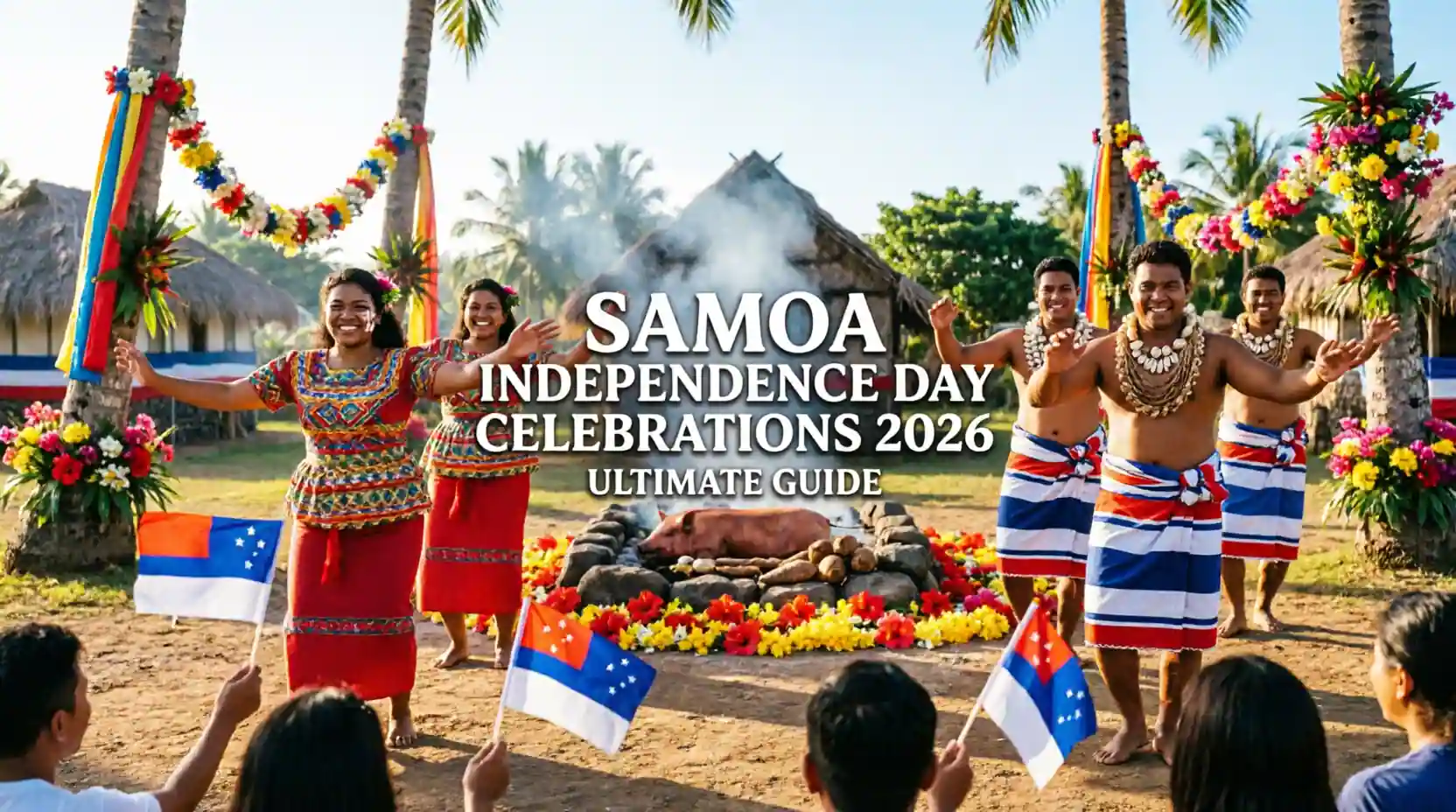
Independence Day in Samoa is not merely a single day of celebration but rather a period of festivities that typically begins in late May and culminates on June 1st with grand ceremonies, traditional performances, and community feasts. The celebrations, known locally as "Independence Day Celebrations" or "Samoa's Birthday," bring together communities from across the two main islands of Upolu and Savai'i, as well as the Samoan diaspora who return home to participate in this momentous occasion. The festivities feature traditional Siva Samoa (Samoan dance), ava (kava) ceremonies, traditional sports competitions, church services, flag-raising ceremonies, and elaborate feasts featuring traditional Samoan cuisine prepared in umu (earth ovens).
This comprehensive guide provides everything you need to know about experiencing Samoa Independence Day celebrations in 2026, including historical context, event schedules, cultural protocols, travel logistics, accommodation recommendations, and insider tips for making the most of this extraordinary cultural celebration. Whether you are a cultural enthusiast, a traveler seeking authentic experiences, or someone with Samoan heritage planning a homecoming visit, this guide equips you with the knowledge needed to respectfully participate in and appreciate one of the Pacific's most significant national celebrations.
Historical Context: Samoa's Journey to Independence

Understanding the historical significance of Samoa Independence Day enhances appreciation for the celebrations and provides context for the pride and emotion that characterize the festivities. Samoa's path to independence was shaped by colonial history, cultural resilience, and the determination of the Samoan people to govern themselves according to their own customs and values.
Samoa's colonial history began in the late 19th century when Germany, Britain, and the United States competed for influence in the Pacific. The Tripartite Convention of 1899 divided the Samoan archipelago, with Germany taking control of the western islands (now independent Samoa) and the United States administering the eastern islands (now American Samoa). German administration lasted until 1914, when New Zealand forces occupied Western Samoa at the outbreak of World War I.
New Zealand's administration of Western Samoa continued under a League of Nations mandate after World War I and later as a United Nations Trust Territory after World War II. The Mau movement, a non-violent political organization founded in the early 20th century, campaigned tirelessly for Samoan self-governance and independence, facing significant opposition and repression from colonial authorities.
Achieving Independence in 1962
After decades of advocacy and political organizing, Western Samoa achieved independence on January 1, 1962, becoming the first Pacific island nation to regain independence in the 20th century. This historic achievement was the culmination of efforts by leaders like Tupua Tamasese Mea'ole and Malietoa Tanumafili II, who became co-heads of state, and the countless Samoans who participated in the Mau movement.
Although independence was officially achieved on January 1st, Samoa celebrates Independence Day on June 1st, a date chosen to allow for more favorable weather conditions for outdoor celebrations and to provide adequate time for preparation of the extensive festivities. The June celebration has become deeply embedded in Samoan culture and national identity, serving as a time for reflection on the nation's history, celebration of cultural heritage, and reaffirmation of national unity.
Samoa's Unique Political System
Samoa's independence established a unique political system that blends Westminster-style parliamentary democracy with traditional Samoan chiefly governance structures. The fa'amatai system, based on chiefly titles (matai) and extended family (aiga) organization, continues to play a central role in Samoan society and governance. Understanding this dual system of governance helps visitors appreciate the cultural protocols and ceremonies that are integral to Independence Day celebrations.
Independence Day Celebrations: Events and Activities

Samoa Independence Day celebrations in 2026 will feature a diverse array of events and activities spanning several weeks, with the most intensive celebrations occurring in the final week of May and the first week of June. While specific schedules are typically announced closer to the event dates, the following overview outlines the traditional events and activities that characterize Samoa's Independence Day celebrations.
Opening Ceremonies and Flag Raising
Independence Day celebrations typically commence with official opening ceremonies in late May, often featuring a grand flag-raising ceremony at the Apia Park or government buildings in the capital. The Samoan flag, featuring a red field with a blue canton bearing the Southern Cross constellation, is raised with great ceremony, accompanied by the national anthem "The Banner of Freedom" (O Le Fu'a o Le Sa'olotoga o Samoa).
The opening ceremonies typically include speeches by government officials, traditional ava ceremonies, performances by cultural groups, and military parades. Visitors are welcome to attend these ceremonies, though respectful behavior and appropriate dress are essential. Business attire or modest traditional clothing is appropriate for official ceremonies.
Traditional Cultural Performances
Cultural performances represent the heart of Independence Day celebrations, showcasing Samoa's rich heritage of dance, music, and oratory. Siva Samoa, the traditional Samoan dance characterized by graceful hand movements and storytelling through gesture, is performed by groups from villages across the islands. These performances often tell stories of Samoan history, mythology, and cultural values.
Fire knife dancing (Siva Afi), though more commonly associated with contemporary Samoan culture and tourism performances, may also feature in Independence Day celebrations, particularly in evening festivities. The fire knife dance, which combines traditional dance with acrobatic knife manipulation and fire, demonstrates the skill, courage, and artistry of Samoan performers.
Choir performances and church music also play a significant role in celebrations, reflecting the deep Christian faith that characterizes Samoan society. Church services on the Sunday before or after June 1st are particularly significant, featuring special hymns, prayers for the nation, and sermons reflecting on independence and national unity.
Traditional Sports Competitions
Traditional Samoan sports competitions are a highlight of Independence Day celebrations, featuring events that test strength, skill, and cultural knowledge. Kilikiti, often described as Samoan cricket, is played with a three-sided bat and features teams from villages and organizations competing in spirited matches. The game combines athletic competition with cultural celebration, featuring singing, dancing, and feasting.
Other traditional sports may include soga'imiti (tug of war), ti'eta'ie (spear throwing), and various strength competitions. Rugby, Samoa's most popular contemporary sport, also features prominently in Independence Day celebrations, with special matches and tournaments organized throughout the celebration period.
Ava Ceremonies and Traditional Protocols
The ava (kava) ceremony, a central element of Samoan cultural protocol, features prominently in Independence Day celebrations. This traditional ceremony, involving the preparation and ceremonial serving of a beverage made from the pounded root of the kava plant, serves to welcome guests, honor chiefs and dignitaries, and mark significant occasions.
During Independence Day celebrations, ava ceremonies may be conducted at official government events, village celebrations, and cultural gatherings. Visitors invited to participate in or observe ava ceremonies should understand and respect the protocols: sitting cross-legged on the floor, maintaining respectful silence during the ceremony, accepting the ava cup with both hands, and following the guidance of hosts regarding appropriate behavior.
Community Feasts and Traditional Cuisine
Traditional Samoan feasts, featuring food prepared in the umu (earth oven), are central to Independence Day celebrations. The umu, a traditional cooking method involving heated volcanic stones buried in an earth oven, imparts a distinctive smoky flavor to foods and represents an important cultural tradition.
Independence Day feasts typically feature fresh fish, palusami (taro leaves baked in coconut cream), taro, breadfruit, roasted pork or chicken, and tropical fruits. Communities often organize large communal feasts where families contribute dishes and share meals together. Visitors may be invited to participate in these feasts, particularly if staying in village accommodations or developing relationships with local communities.
When invited to a Samoan feast, visitors should observe cultural protocols: waiting to be seated, accepting food with gratitude, eating with hands in the traditional manner (though utensils may be provided), and expressing appreciation to hosts. Bringing a small gift, such as food or a contribution to the feast, is appropriate when invited to a community celebration.
Where to Experience Independence Day Celebrations

Samoa Independence Day celebrations occur throughout the islands, with major events concentrated in and around Apia on Upolu island, though Savai'i island and rural villages also host significant celebrations. Choosing where to experience celebrations depends on your interests, accommodation preferences, and desired level of cultural immersion.
Apia and Upolu Island
Apia, Samoa's capital and largest city, hosts the most extensive Independence Day celebrations, including official government ceremonies, parades, cultural performances, and public festivities. Apia Park, the government complex, and various venues throughout the city serve as primary celebration sites.
Advantages of celebrating in Apia include access to official ceremonies, diverse cultural performances, convenient accommodation options, restaurants and services, and the energy of large-scale celebrations. Disadvantages include larger crowds, less intimate cultural experiences, and a more urban atmosphere that may feel less authentically Samoan than village celebrations.
Villages surrounding Apia, such as Vaitele, Fugalei, and Mulinu'u, often host their own celebrations featuring traditional ceremonies, sports competitions, and community feasts. These village celebrations provide more intimate cultural experiences while remaining accessible from Apia.
Savai'i Island
Savai'i, Samoa's larger and more rural island, offers Independence Day celebrations characterized by traditional village life, close-knit communities, and authentic cultural practices. While Savai'i lacks the large-scale official ceremonies of Apia, village celebrations on Savai'i often provide deeper cultural immersion and more intimate community experiences.
Visitors staying on Savai'i during Independence Day may be invited to participate in village celebrations, traditional ceremonies, and community feasts. The island's slower pace and stronger adherence to traditional customs create opportunities for meaningful cultural exchange. However, visitors should be prepared for more basic accommodation and fewer tourist services compared to Upolu.
Rural Villages and Cultural Immersion
For travelers seeking the most authentic Independence Day experience, staying in a rural village and participating in local celebrations provides unparalleled cultural immersion. Village celebrations feature traditional protocols, community feasts, local sports competitions, and intimate gatherings that showcase Samoan culture in its most authentic form.
However, village stays require cultural sensitivity, respect for local customs, and understanding of village protocols. Visitors should arrange village stays through reputable cultural tourism operators or with invitations from Samoan families. Understanding and observing village rules, including Sunday observance (aiga lotu), dress codes, and behavioral expectations, is essential.
Travel Planning and Logistics for 2026

Planning a trip to Samoa for Independence Day 2026 requires advance preparation regarding flights, accommodation, visas, and logistics. The popularity of Independence Day celebrations means that flights and accommodation book up well in advance, making early planning essential.
Flights and Arrival Timing
Faleolo International Airport (APW) on Upolu island serves as Samoa's main international gateway, with regular flights from Auckland, Sydney, Brisbane, Honolulu, and other Pacific and Australian/New Zealand cities. For Independence Day 2026, travelers should plan to arrive at least 3-5 days before June 1st to settle in, adjust to the time zone (Samoa Standard Time, UTC+13), and participate in pre-celebration events.
Booking flights 6-9 months in advance is advisable for Independence Day travel, as seats fill quickly and prices increase closer to travel dates. Consider arriving in late May to experience the full spectrum of celebrations, including opening ceremonies and pre-celebration cultural events.
Accommodation Options
Samoa offers diverse accommodation options ranging from luxury resorts to traditional beach fales (open-sided bungalows) and village homestays. For Independence Day 2026, booking accommodation 6-12 months in advance is strongly recommended, particularly for properties in Apia or near celebration venues.
Luxury resorts like Sinalei Reef Resort, Sheraton Samoa, and Aggie Grey's Hotel provide comfortable accommodation with modern amenities, restaurants, and organized Independence Day activities for guests. Mid-range hotels and motels in Apia offer good value and convenient access to celebration venues. Beach fales and eco-lodges provide authentic Samoan accommodation experiences at moderate prices, though they may book up quickly for the Independence Day period.
Village homestays or cultural tourism accommodations offer the most immersive cultural experiences but require advance arrangement through cultural tourism operators or community organizations. These experiences typically include participation in village life, traditional meals, and cultural activities.
Visa Requirements
Samoa offers visa-free entry for citizens of many countries, including the United States, Canada, United Kingdom, European Union nations, Australia, and New Zealand, for stays up to 60 days (extendable to 90 days). Travelers must possess a passport valid for at least six months beyond the intended stay, proof of onward or return travel, and sufficient funds for the duration of stay.
Citizens of countries not eligible for visa-free entry must obtain a visa before travel through Samoan diplomatic missions or online. Checking visa requirements well in advance of travel and allowing adequate processing time is essential.
Transportation in Samoa
Getting around Samoa during Independence Day celebrations requires planning, as roads may be congested during major events and some areas may be closed for celebrations. Renting a car provides flexibility for exploring the islands and attending various celebration events. Car rental costs typically range from 60-100 USD daily, and booking in advance is essential.
Important note: Samoa drives on the left side of the road (switched from right to left in 2009). Visitors should familiarize themselves with local driving conditions, which include narrow roads, occasional livestock on roads, and variable road conditions in rural areas.
Public buses provide inexpensive transportation between Apia and villages, though service may be limited on Sundays and public holidays. Taxis are available in Apia and can be hired for specific trips or full-day tours. For Independence Day events, arriving early and allowing extra travel time is advisable due to increased traffic and road closures.
Cultural Protocols and Respectful Participation
Participating in Samoa Independence Day celebrations requires understanding and respecting Samoan cultural protocols, customs, and values. Samoa is a deeply traditional society where respect for hierarchy, family, community, and Christian faith shapes social interactions. Visitors who demonstrate cultural sensitivity and respect are warmly welcomed and may be invited to participate more fully in celebrations.
Dress Codes and Modesty
Samoa maintains conservative dress standards, particularly during official ceremonies, church services, and village visits. Both men and women should dress modestly, covering shoulders and knees. For official Independence Day ceremonies, business attire or formal traditional clothing is appropriate.
Women should avoid wearing revealing clothing, particularly in villages and during cultural ceremonies. Lavalava (wraparound skirts) are appropriate for both men and women and can be purchased locally. Men typically wear lavalava or long pants with shirts; shorts are acceptable for casual beach settings but not for formal events or village visits.
During church services, which are integral to Independence Day celebrations, formal dress is expected. Women often wear elegant dresses and hats, while men wear suits or formal lavalava with dress shirts. Visitors attending church services should dress accordingly out of respect for local customs.
Sunday Observance and Religious Respect
Samoa observes Sunday as a day of worship and rest, with most businesses closed and recreational activities limited. This observance is taken seriously throughout the year but particularly during Independence Day celebrations, which often include a Sunday close to June 1st dedicated to church services and religious observance.
Visitors should respect Sunday observance by avoiding loud activities, refraining from swimming or beach activities in village areas, dressing appropriately for church, and participating quietly in community life. Swimming, fishing, and loud recreation are prohibited in many villages on Sundays, and visitors should observe these restrictions out of respect for local customs.
Village Protocols and Fa'a Samoa
Fa'a Samoa, "the Samoan way," encompasses the cultural values, social structures, and protocols that govern Samoan society. Understanding basic principles of fa'a Samoa enhances visitors' experiences and demonstrates respect for Samoan culture.
Key principles include respect for matai (chiefs) and village authority, importance of family (aiga) and community, hospitality and generosity, and humility and respect in social interactions. When visiting villages, visitors should seek permission from village chiefs or representatives, follow guidance from hosts regarding appropriate behavior, participate respectfully in ceremonies and activities, and express gratitude for hospitality received.
Photography in villages requires permission, particularly of people, ceremonies, and private property. Always ask before photographing individuals or cultural events, and respect refusals gracefully. During formal ceremonies, photography may be restricted; follow guidance from hosts regarding appropriate documentation of events.
Gifting and Reciprocity
Samoan culture emphasizes reciprocity and gift-giving as expressions of respect and relationship-building. When invited to village celebrations or homestays, bringing a small gift is appropriate and appreciated. Suitable gifts include food items (particularly if contributing to a feast), crafts or items from your home country (if appropriate and not offensive), or contributions to community projects or church.
Ava (kava) is traditionally presented as a gift to village chiefs when seeking permission to visit or participate in village activities. Visitors arranging village stays through cultural tourism operators will typically have these protocols managed by the operator, but understanding the significance of gift-giving in Samoan culture enhances cultural appreciation.
Practical Tips for Independence Day 2026
Making the most of Samoa Independence Day celebrations requires practical preparation and flexibility. The following tips help ensure a smooth, enjoyable, and culturally respectful experience.
Booking and Advance Planning
Independence Day is one of Samoa's busiest tourism periods, and advance booking is essential. Book flights 6-9 months in advance, accommodation 6-12 months in advance (particularly for popular properties or village stays), rental cars or transportation well ahead of time, and any organized tours or cultural experiences in advance.
Consider working with a travel agent specializing in Pacific destinations who can assist with logistics, cultural protocols, and accessing authentic experiences. Local Samoan tour operators can arrange village visits, cultural performances, and guided experiences that provide deeper cultural understanding.
Health and Safety Considerations
Samoa is generally safe for travelers, but standard travel precautions apply. Ensure routine vaccinations are current and consider hepatitis A, hepatitis B, and typhoid vaccines. Consult a travel medicine specialist 4-6 weeks before travel. Use insect repellent to prevent mosquito-borne illnesses, drink bottled or boiled water if uncertain about water quality (though tap water in Apia is generally safe), and use sun protection (SPF 30+, hat, sunglasses) given Samoa's tropical location.
Travel insurance covering medical emergencies, evacuation, and trip cancellation is strongly recommended. Samoa's medical facilities are adequate for routine care but limited for complex emergencies; medical evacuation to New Zealand or Australia may be necessary for serious conditions.
Money and Banking
Samoa's currency is the Samoan Tala (WST), with exchange rates approximately 2.7-2.8 WST to 1 USD. Exchange currency at banks, exchange bureaus, or ATMs upon arrival. Credit cards are accepted at major hotels, restaurants, and shops in Apia, but cash is essential in villages, markets, and rural areas.
ATMs are available in Apia and some larger towns but limited in rural areas and on Savai'i. Withdraw sufficient cash before traveling to rural areas or Savai'i. Inform your bank of travel plans to prevent card blocks due to international transactions.
Communication and Connectivity
Mobile phone coverage is good in populated areas of Upolu and parts of Savai'i, though coverage is limited in remote areas. Samoa uses GSM networks compatible with most international phones. Check with your carrier about international roaming plans or consider purchasing a local SIM card upon arrival.
WiFi is available at most hotels, resorts, and cafes in Apia, though speeds may be slower than in developed countries. Rural areas and villages may have limited or no internet access. Embrace the opportunity to disconnect and engage fully with cultural experiences.
Language and Communication
English is widely spoken in Samoa, particularly in Apia and tourist areas, making communication straightforward for English-speaking visitors. However, learning basic Samoan phrases demonstrates respect and enhances cultural connections:
Talofa (Hello), Fa'afetai (Thank you), Tofa (Goodbye), Manuia (Congratulations/Good luck), and Susu mai (Welcome). Samoans appreciate visitors who make an effort to speak their language, even if pronunciation is imperfect.
Photography and Documenting Celebrations
Samoa Independence Day celebrations offer extraordinary photographic opportunities, from vibrant cultural performances to traditional ceremonies and community feasts. However, photographing cultural events requires sensitivity, respect, and adherence to protocols.
Photography Etiquette
Always ask permission before photographing individuals, particularly in villages and during cultural ceremonies. Respect refusals gracefully and never photograph people without consent. During formal ceremonies, particularly ava ceremonies and church services, photography may be restricted or require special permission. Follow guidance from hosts and ceremony leaders.
Avoid using flash during ceremonies or performances, as it can be disruptive and disrespectful. Use natural light or available lighting when possible. Be unobtrusive when photographing; avoid blocking views, interrupting ceremonies, or drawing attention to yourself. Position yourself respectfully and move minimally during ceremonies.
Equipment Recommendations
Samoa's tropical climate presents challenges for camera equipment, including humidity, salt air, and potential rain. Protect equipment with weather-sealed bags, silica gel packets to control moisture, and rain covers for wet conditions. Clean equipment regularly to remove salt and humidity residue.
For cultural performances and ceremonies, a versatile zoom lens (24-70mm or 24-105mm) provides flexibility for capturing both wide scenes and details. A fast lens (f/2.8 or wider) helps in low-light conditions during evening performances or indoor ceremonies. Bring extra batteries and memory cards, as charging opportunities may be limited in rural areas.
Sharing Photos Responsibly
When sharing photos of Samoa Independence Day celebrations on social media or elsewhere, do so respectfully and accurately. Avoid exoticizing or misrepresenting Samoan culture, provide context and credit when appropriate, respect privacy and cultural protocols, and highlight the dignity and pride of Samoan people and culture.
Consider how your photos and descriptions might be perceived by Samoans themselves. Aim to represent the culture authentically and respectfully, celebrating the richness of Samoan traditions without reducing them to stereotypes or tourist attractions.
Beyond Independence Day: Exploring Samoa in 2026
While Independence Day celebrations are a highlight of visiting Samoa in early June, the islands offer numerous other attractions and experiences worth exploring. Extending your stay beyond the Independence Day period allows you to experience Samoa's natural beauty, cultural heritage, and warm hospitality more fully.
Natural Attractions
Samoa's natural beauty includes stunning beaches with white and black sand, lush rainforests with hiking trails and waterfalls, volcanic landscapes including the Alofaaga Blowholes on Savai'i, and coral reefs offering excellent snorkeling and diving. Notable natural attractions include To Sua Ocean Trench (a spectacular swimming grotto), Papase'ea Sliding Rocks (natural water slides), Afu Aau Waterfall, and Mount Vaea and Mount Fatu for hiking with panoramic views.
Cultural Sites and Experiences
Beyond Independence Day celebrations, Samoa offers rich cultural experiences including visiting traditional villages and observing daily life, exploring historical sites including German and New Zealand colonial architecture, attending Sunday church services to experience Samoan choral music, participating in cultural workshops (weaving, cooking, dance), and visiting the Robert Louis Stevenson Museum (Vailima).
Island Hopping: Savai'i
Savai'i, Samoa's larger and less developed island, offers a more traditional, slower-paced experience of Samoan life. Accessible by ferry from Upolu (approximately 90 minutes), Savai'i features pristine beaches, volcanic landscapes, traditional villages, and minimal tourism development. Spending several days on Savai'i provides deeper cultural immersion and opportunities to experience Samoa away from tourist centers.
Conclusion: Celebrating Freedom and Culture in Samoa 2026
Samoa Independence Day 2026 promises to be a spectacular celebration of national pride, cultural heritage, and community spirit. From June 1st ceremonies honoring the nation's independence to village feasts, traditional performances, and sports competitions, the celebrations offer visitors an extraordinary opportunity to witness and participate in authentic Samoan culture.
Experiencing Independence Day in Samoa requires cultural sensitivity, advance planning, and respect for Samoan customs and protocols. However, the rewards are immeasurable: the warmth of Samoan hospitality, the beauty of traditional ceremonies, the joy of community celebrations, and the opportunity to understand more deeply the values and heritage that define Samoan identity.
Whether you attend official ceremonies in Apia, participate in village celebrations on Savai'i, or simply observe and learn from the festivities, Samoa Independence Day 2026 offers a transformative travel experience that celebrates freedom, culture, and community. As Samoa marks 64 years of independence, the celebrations will reflect both pride in the nation's achievements and commitment to preserving the cultural traditions that make Samoa unique in the Pacific.
By approaching Independence Day celebrations with respect, openness, and genuine interest in Samoan culture, visitors can create meaningful connections, lasting memories, and a deeper appreciation for this remarkable Pacific nation. Talofa lava, and may your Samoa Independence Day 2026 experience be filled with joy, cultural discovery, and the spirit of fa'a Samoa.
0 Comments