.webp)
.webp)
Hiking the Canopy Walkway in Falealupo- A Complete Guide for Nature Lovers and Eco-Tourists in Samoa
Introduction: Walking Among the Treetops in Samoa's Ancient Rainforest
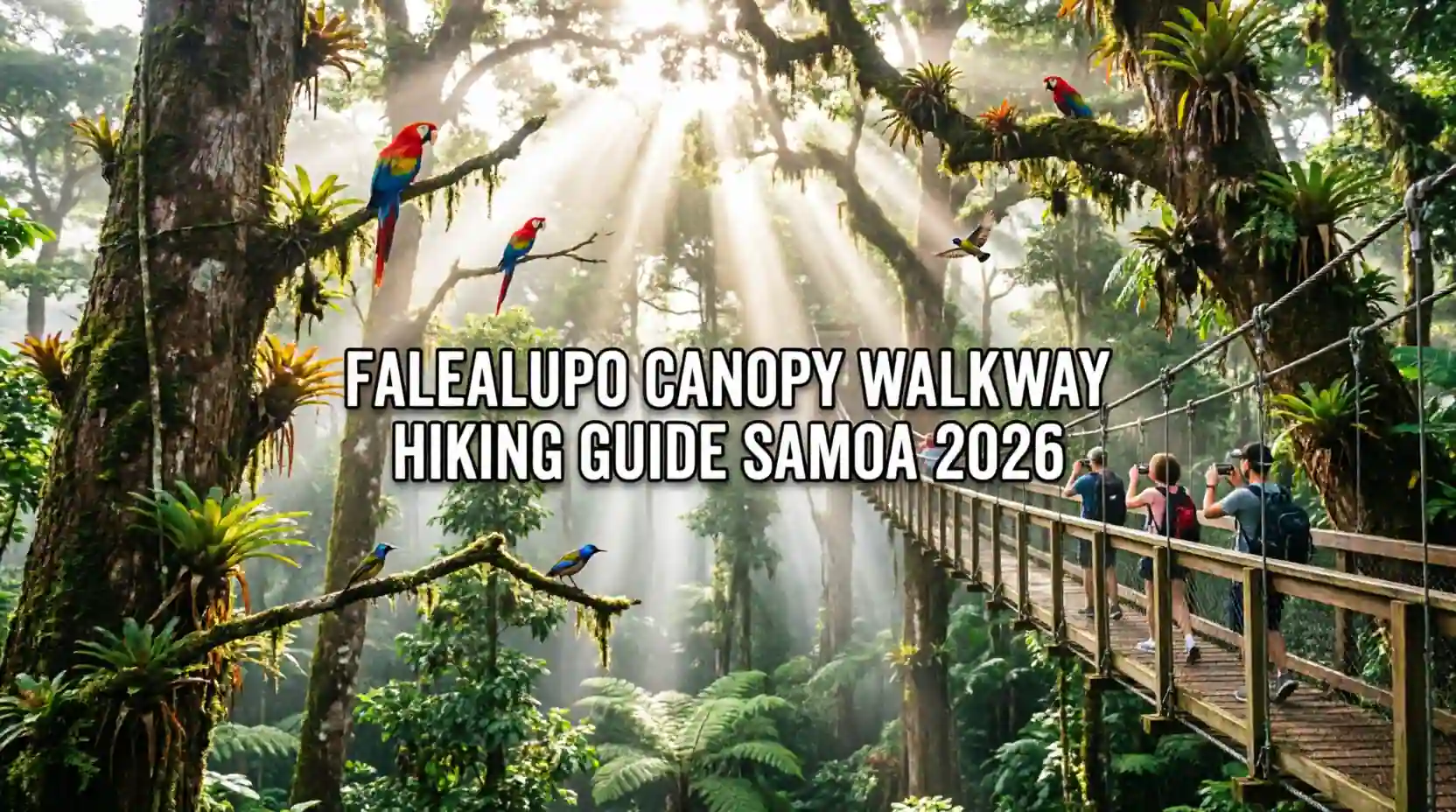
The Falealupo Canopy Walkway on Savai'i island offers one of Samoa's most extraordinary and unique nature experiences: the opportunity to walk suspended among the treetops of an ancient tropical rainforest. This elevated walkway, weaving through the canopy layer some 20-30 meters above the forest floor, provides an intimate perspective on one of the Pacific's most pristine and ecologically significant rainforests. For nature lovers, birdwatchers, photographers, and eco-tourists, the Canopy Walkway represents an unmissable opportunity to experience Samoa's natural heritage from a breathtaking vantage point rarely accessible to visitors.
Located in the village of Falealupo at the western tip of Savai'i, Samoa's largest and least developed island, the Canopy Walkway was established as a community-based eco-tourism initiative designed to protect the rainforest while providing sustainable income for the local community. The walkway traverses primary and secondary rainforest, passing through a living cathedral of towering native trees including ifilele (Intsia bijuga), maota (Ficus species), and other species that have stood for centuries. From the walkway, visitors gain unprecedented access to observe the rainforest canopy ecosystem, spot endemic bird species, and appreciate the complex biodiversity that makes Samoa's rainforests globally significant.
This comprehensive guide provides everything nature lovers need to know about experiencing the Falealupo Canopy Walkway, including practical information about access, costs, and difficulty levels; details about the rainforest ecosystem and wildlife you'll encounter; cultural context about Falealupo village and conservation efforts; and tips for making the most of this extraordinary experience. Whether you are a dedicated naturalist, a casual nature enthusiast, or simply seeking a unique adventure in Samoa, this guide equips you with the knowledge needed to appreciate and respectfully engage with one of the South Pacific's most remarkable eco-tourism attractions.
Discovering Falealupo: Location and Setting

Falealupo is a traditional Samoan village located at the westernmost point of Savai'i island, approximately 100 kilometers from Salelologa ferry terminal. This remote location, far from Samoa's capital Apia and the more developed areas of Upolu island, has helped preserve both the natural environment and traditional way of life that characterize the region. The village sits at the boundary between coastal settlements and the interior rainforest, making it an ideal base for exploring both marine and terrestrial ecosystems.
Savai'i itself is Samoa's largest island, covering 1,708 square kilometers and home to approximately 50,000 people. The island remains largely undeveloped compared to Upolu, with limited tourism infrastructure, traditional village life, and extensive areas of primary rainforest. This relative isolation has protected Savai'i's natural resources and created opportunities for community-based eco-tourism initiatives like the Canopy Walkway that prioritize conservation and local benefit over mass tourism.
Getting to Falealupo
Reaching Falealupo requires planning and patience, but the journey itself is part of the adventure. From Apia on Upolu island, travelers must first take a ferry to Savai'i. The ferry departs from Mulifanua Wharf on Upolu's western tip and arrives at Salelologa on Savai'i's eastern end. The crossing takes approximately 90 minutes and operates multiple times daily, though schedules can vary and advance booking is recommended, particularly during peak travel periods.
From Salelologa, Falealupo is approximately a 2-3 hour drive across Savai'i. The road traverses the island from east to west, passing through traditional villages, coastal settlements, and interior highlands. The journey showcases Savai'i's diverse landscapes, from black sand beaches and lava fields to lush rainforest and agricultural areas. Travelers can rent a car in Salelologa, hire a taxi for the journey, or arrange transportation through tour operators or accommodation providers in Falealupo.
Road conditions on Savai'i vary, with some sections well-maintained and others rough or unpaved. A 4WD vehicle is recommended but not essential during dry conditions. Driving is on the left side of the road, and visitors should allow extra time for the journey to account for variable road conditions, village protocols (sa), and the island's relaxed pace.
Accommodation in Falealupo
Falealupo offers several accommodation options ranging from basic beach fales to comfortable eco-lodges. Staying overnight in Falealupo is highly recommended, as it allows time to explore the Canopy Walkway without rushing, experience village life, and potentially visit other nearby attractions like the Tafua Rainforest Reserve or coastal sites.
Accommodation options include traditional beach fales (open-sided bungalows) offering authentic Samoan living experiences at budget-friendly prices, eco-lodges and guesthouses providing more comfortable amenities while maintaining environmental sensitivity, and village homestays arranged through community tourism initiatives that offer deep cultural immersion. Most accommodations are family-run and provide meals featuring traditional Samoan cuisine prepared with local ingredients.
Booking accommodation in advance is advisable, particularly during peak travel seasons (June-September) and holiday periods. Many properties have limited capacity and may book up quickly. Contact properties directly via email or phone, or work with a tour operator specializing in Savai'i tourism.
The Canopy Walkway: Design, Construction, and Conservation

The Falealupo Canopy Walkway represents an innovative approach to eco-tourism that balances visitor access with rainforest conservation. The walkway consists of a series of elevated platforms and suspension bridges that weave through the rainforest canopy at heights of 20-30 meters above the forest floor. The total length of the walkway system is approximately 500 meters, with multiple loops and viewing platforms that can be completed in 1-2 hours depending on pace and interest in observation.
The walkway was constructed using sustainable materials and techniques designed to minimize environmental impact. The structure is supported by trees rather than ground-based foundations, reducing disturbance to the forest floor and root systems. Walkway surfaces use non-slip materials suitable for wet tropical conditions, and safety railings provide security while maintaining visibility for observation and photography.
Conservation and Community Benefits
The Canopy Walkway was developed as a community-based conservation initiative, with the Falealupo village community playing a central role in planning, construction, and ongoing management. Revenue from walkway fees directly supports the village and funds conservation activities, creating economic incentives for rainforest protection rather than exploitation.
The walkway provides an alternative to destructive practices like logging or land conversion by demonstrating that intact rainforest has economic value through eco-tourism. This model has proven successful in Falealupo, where the community has committed to protecting thousands of hectares of rainforest while generating sustainable income from responsible tourism.
Conservation efforts associated with the walkway include protection of endemic and endangered species, maintenance of forest corridors connecting fragmented habitats, environmental education programs for local schools and visitors, and monitoring of forest health and wildlife populations. The walkway serves as both a conservation tool and an educational platform, raising awareness about the importance of rainforest protection in Samoa and the Pacific region.
Cultural Significance
For the people of Falealupo, the rainforest holds deep cultural and spiritual significance beyond its ecological value. The forest is integral to Samoan identity, providing traditional materials for construction, crafts, and medicine, serving as a source of food including fruits, nuts, and game, and holding spiritual significance as the dwelling place of ancestors and spirits.
The Canopy Walkway project respects and incorporates these cultural values, with village elders and cultural leaders involved in decision-making about walkway design, visitor protocols, and acceptable activities. Visitors are expected to respect cultural protocols and understand that they are guests in a living cultural landscape, not merely tourists in a natural attraction.
What to Expect on the Canopy Walkway

Walking the Falealupo Canopy Walkway is a multi-sensory experience that engages sight, sound, and even smell as you move through the rainforest canopy. The experience differs dramatically from ground-level forest walks, providing unique perspectives and access to an ecosystem layer rarely observed by humans.
The Physical Experience
The walkway is designed to be accessible to most visitors with reasonable fitness levels, though some sections may challenge those with severe fear of heights or mobility limitations. The walkway features gradual inclines and declines rather than steep stairs, making it manageable for most ages and fitness levels. However, the tropical climate means high humidity and warm temperatures year-round, so even moderate activity can feel strenuous.
The walkway surface is generally stable and well-maintained, though it can be slippery when wet. Rain is common in Samoa's tropical climate, so visitors should be prepared for wet conditions. Safety railings are present along most sections, though some viewing platforms may have more open designs to facilitate observation and photography. The walkway can accommodate small groups, though larger groups may need to stagger entry to avoid crowding.
Most visitors complete the walkway in 45-90 minutes, depending on pace, interest in observation, photography, and group size. Rushing through defeats the purpose; the walkway rewards slow, mindful observation and appreciation of the surroundings.
Visual Experience and Observation Opportunities
From the canopy walkway, you gain a perspective on the rainforest that few people ever experience. Looking down, you see the forest floor as a distant green carpet, with tree trunks rising like columns supporting the canopy roof. Looking across, you're eye-level with the canopy layer, observing flowers, fruits, epiphytes, and wildlife that inhabit this zone. Looking up, you see emergent trees towering above the general canopy, their branches reaching toward the sky.
The canopy layer is where much of the rainforest's biological activity occurs. You'll observe epiphytic plants (orchids, ferns, and other species) growing on tree branches, flowers and fruits that provide food for birds and bats, lianas (woody vines) connecting trees and creating pathways through the canopy, and the complex architecture of branches, leaves, and aerial roots that create a three-dimensional maze of vegetation.
Wildlife Encounters
The canopy walkway provides exceptional opportunities to observe Samoa's unique wildlife, particularly birds. Samoa has several endemic bird species found nowhere else on Earth, and the canopy walkway offers some of the best opportunities to observe them in their natural habitat.
Key bird species you may encounter include the Samoan Starling (Mao), a glossy black starling endemic to Samoa and common in the canopy; the Samoan Triller, a small songbird with distinctive calls; the Pacific Black Duck, occasionally visible in forest clearings; the Collared Kingfisher, with its distinctive call and bright plumage; and various fruit doves and imperial pigeons that feed on canopy fruits.
Beyond birds, observant visitors may spot flying foxes (Samoa's large fruit bats) roosting in canopy trees or flying overhead, geckos and skinks on walkway surfaces or tree trunks, and various insect species including colorful butterflies, stick insects, and large tropical beetles. Samoa has no snakes, making the rainforest completely safe from this concern.
Best Times to Visit the Canopy Walkway

Timing your visit to the Falealupo Canopy Walkway affects your experience in terms of weather, lighting, wildlife activity, and crowd levels. Understanding these factors helps you plan optimally.
Seasonal Considerations
Samoa has a tropical climate with two main seasons: the dry season (May-October) and the wet season (November-April). The dry season offers more predictable weather with less rainfall, lower humidity, and more comfortable hiking conditions. This is generally considered the best time to visit the canopy walkway, particularly June through September when rainfall is minimal and temperatures are moderate.
The wet season brings more frequent and intense rainfall, higher humidity, and potentially muddy conditions. However, the rainforest is spectacularly lush during this period, with abundant flowering and fruiting that attracts wildlife. Rain typically comes in intense afternoon showers rather than all-day rain, so morning visits can still be enjoyable. The wet season also sees fewer tourists, providing a more intimate experience.
Time of Day
Early morning (7-10 AM) is generally the best time to visit the canopy walkway. Birds are most active during morning hours, making wildlife observation optimal. Temperatures are cooler and more comfortable before the midday heat builds. Afternoon rain showers are common in Samoa's tropical climate, and morning visits reduce the likelihood of getting caught in rain. Lighting is excellent for photography, with soft morning light filtering through the canopy.
Late afternoon (3-5 PM) can also be pleasant, though bird activity may be reduced compared to morning. The light can be beautiful for photography, particularly if clouds create dramatic skies. However, afternoon rain showers are more likely during this time.
Midday (11 AM-2 PM) is generally the least ideal time due to peak heat and humidity, reduced wildlife activity, and harsh overhead lighting that creates challenging photography conditions. However, if this is your only available time, the walkway is still worthwhile.
Weather Considerations
The walkway operates in most weather conditions, though heavy rain or strong winds may temporarily close the walkway for safety. Light rain is common and shouldn't deter your visit; the rainforest is beautiful in the rain, and the walkway provides shelter beneath the canopy. However, surfaces can be slippery when wet, requiring extra caution.
Check weather forecasts before your visit, but understand that tropical weather can be unpredictable. Even on days forecast to be sunny, brief showers are common. Bring rain gear and be prepared for variable conditions.
Practical Information: Costs, Hours, and Accessibility

Planning your visit to the Falealupo Canopy Walkway requires understanding practical details about costs, operating hours, and what to expect in terms of facilities and services.
Entrance Fees and Costs
As of 2026, entrance fees for the Falealupo Canopy Walkway typically range from 20-30 Samoan Tala (WST) per adult (approximately 7-11 USD), with discounted rates for children, students, and Samoan residents. Fees are subject to change, so verify current rates before your visit.
Entrance fees directly support the Falealupo village community and rainforest conservation efforts, making your visit a contribution to sustainable development and environmental protection. Some properties may offer combination tickets that include the canopy walkway plus other village attractions or guided tours.
Payment is typically accepted in cash (Samoan Tala), though some larger operations may accept credit cards. Bring sufficient cash, as ATMs are not available in Falealupo and the nearest ATM is in Salelologa, over 100 kilometers away.
Operating Hours
The canopy walkway typically operates from approximately 7:00 AM to 6:00 PM daily, though hours may vary seasonally or based on staffing. Early morning visits are recommended for optimal wildlife observation and comfortable temperatures.
The walkway may close temporarily during severe weather (heavy rain, strong winds) for visitor safety. Check with your accommodation or the walkway operators if weather conditions are questionable.
Sunday operations may be limited or unavailable due to Samoa's strong observance of Sunday as a day of worship and rest. If Sunday is your only available day, confirm in advance whether the walkway will be open and what hours apply.
Guided vs. Self-Guided Visits
The canopy walkway can be experienced independently (self-guided) or with a local guide. Self-guided visits offer flexibility to explore at your own pace and spend time observing what interests you most. Informational signs along the walkway provide context about the rainforest ecosystem, tree species, and wildlife.
Guided tours, typically available for an additional fee (15-30 WST), offer significant advantages: local guides possess detailed knowledge about rainforest ecology, tree species, and wildlife; guides can spot wildlife that untrained eyes might miss; guides share cultural stories and traditional knowledge about the forest; and guides can answer questions and enhance understanding of what you're observing.
For first-time visitors, serious nature enthusiasts, or those interested in maximizing wildlife observation, hiring a guide is highly recommended. The additional cost is modest and the enhanced experience substantial.
Facilities and Amenities
Facilities at the canopy walkway are basic but functional. Expect parking areas near the walkway entrance, basic toilet facilities (though these may be rudimentary by Western standards), and possibly a small visitor center or information area. Some locations may have a small shop selling drinks, snacks, or souvenirs, though this is not guaranteed.
Don't expect luxury amenities; the focus is on conservation and authentic experience rather than commercial tourism infrastructure. Bring water, snacks, and anything else you might need, as services are limited in Falealupo.
What to Bring: Essential Gear and Supplies

Proper preparation enhances your canopy walkway experience and ensures comfort and safety. The tropical environment presents specific challenges that appropriate gear can mitigate.
Clothing and Footwear
Wear lightweight, breathable clothing suitable for warm, humid conditions. Long pants and long-sleeved shirts provide protection from insects, sun, and vegetation. Choose moisture-wicking fabrics rather than cotton, which stays wet and can cause chafing.
Sturdy, closed-toe shoes with good traction are essential. Hiking shoes or trail runners are ideal; avoid sandals, flip-flops, or smooth-soled shoes that can slip on wet surfaces. Shoes should be comfortable for walking and able to get wet or muddy.
Bring a lightweight rain jacket or poncho regardless of weather forecast; tropical rain can arrive unexpectedly. A hat with a brim provides sun protection, and sunglasses are useful though you may remove them frequently to observe details.
Equipment and Supplies
Bring sufficient water (at least 1-2 liters per person); the tropical climate and physical activity require hydration. Pack snacks or light meals if you plan to spend extended time; facilities are limited. Use a daypack to carry supplies hands-free.
Binoculars significantly enhance wildlife observation, allowing you to spot birds and other animals in the canopy. A camera with a zoom lens is useful for wildlife photography; protect equipment from humidity and rain with appropriate bags or covers. Insect repellent (DEET-based or natural alternatives) is essential for comfort; the rainforest has mosquitoes and other biting insects.
Sunscreen (SPF 30+) is necessary even beneath the canopy; UV radiation penetrates cloud cover and tree cover. Bring a small towel for sweat or rain. Carry cash for entrance fees, guides, or purchases; credit cards may not be accepted.
Optional but Useful Items
A field guide to Samoan birds or Pacific rainforest ecology enhances learning and identification. A small notebook and pencil allow you to record observations, species sightings, or questions for guides. A headlamp or small flashlight is useful if you visit early morning or late afternoon when light is limited beneath the canopy.
A waterproof bag or dry sack protects electronics, documents, and other items from rain and humidity. Trekking poles can provide stability on walkway surfaces, particularly if you have balance concerns, though they're not essential for most visitors.
Safety Considerations and Responsible Visiting

The Falealupo Canopy Walkway is generally safe for visitors who exercise common sense and follow guidelines. However, the elevated nature of the walkway and tropical environment present specific considerations.
Physical Safety
Stay on designated walkway surfaces at all times; never climb on railings, leave the walkway, or venture onto unsupported branches. The walkway is engineered for safety; leaving it creates serious risks. Supervise children closely at all times; the elevated walkway presents fall hazards for unsupervised children. Be cautious on wet surfaces; rain makes walkway surfaces slippery. Take smaller steps, use railings for support, and move deliberately rather than rushing.
Be aware of your surroundings; watch for low-hanging branches, uneven surfaces, or other potential hazards. Don't become so focused on observation that you neglect footing. If you have severe fear of heights, the walkway may be challenging; assess your comfort level honestly before visiting. The walkway is elevated 20-30 meters above ground, and there's no avoiding this reality.
Stay hydrated and recognize signs of heat exhaustion (dizziness, nausea, excessive fatigue); rest in shade if needed and drink water. The tropical climate can be more strenuous than you expect. If you have medical conditions or mobility limitations, assess whether the walkway is appropriate for you; consult with operators if you have concerns.
Wildlife Safety
Samoa has no dangerous large animals, snakes, or venomous creatures that pose serious threats to visitors. However, respect all wildlife and maintain appropriate distance. Don't attempt to touch, feed, or approach animals; this stresses wildlife and can result in injury. Flying foxes (fruit bats) are generally docile but can bite if handled; observe from a distance.
Insects including mosquitoes can be annoying and may transmit diseases like dengue fever. Use insect repellent and wear protective clothing. If you're bitten, avoid scratching to prevent infection.
Environmental Responsibility
Practice Leave No Trace principles: pack out all trash, including biodegradable items like fruit peels; don't pick plants, remove natural materials, or disturb wildlife; stay on designated paths to prevent erosion and habitat damage; and keep noise levels moderate to avoid disturbing wildlife and other visitors.
Respect cultural protocols and understand that you're visiting a village-managed resource. Follow guidance from local staff and guides, ask permission before photographing people or cultural sites, and dress modestly in accordance with Samoan cultural norms.
Your visit should contribute positively to conservation and community wellbeing. Pay entrance fees, consider hiring local guides, purchase local products if available, and treat the rainforest and village with respect. You're a guest in both a natural and cultural landscape.
Beyond the Canopy: Other Attractions in Falealupo

While the Canopy Walkway is Falealupo's premier attraction, the area offers additional natural and cultural experiences worth exploring, particularly if you're staying overnight.
Tafua Rainforest Reserve
The Tafua Rainforest Reserve, adjacent to Falealupo, protects thousands of hectares of primary and secondary rainforest. The reserve offers ground-level hiking trails through pristine forest, opportunities to observe endemic species, and a different perspective on the rainforest ecosystem compared to the canopy walkway.
Hiking in Tafua Reserve typically requires a local guide, which enhances both safety and educational value. Guides know the trails, can spot wildlife, and share traditional knowledge about forest uses and conservation. Multi-day treks through the reserve are possible for experienced hikers seeking adventure.
Coastal Sites and Beaches
Falealupo's coastal location provides access to black sand beaches, rocky shores, and marine environments. The area is known for its dramatic sunsets over the ocean, and evening beach walks are a popular activity. Swimming is possible but be aware of currents, waves, and reef conditions; ask locals about safe swimming areas.
The coastline near Falealupo features interesting geological formations, tidal pools, and opportunities to observe marine life. Snorkeling may be possible in protected areas, though facilities and equipment rental are limited.
Cultural Experiences
Falealupo village offers opportunities to experience traditional Samoan culture and village life. With permission and respect, visitors may observe or participate in traditional activities like weaving, cooking in an umu (earth oven), or learning about traditional medicine and forest uses.
Attending a Sunday church service (if you're in Falealupo on Sunday) provides insight into the central role of Christianity in Samoan culture. Services feature beautiful choral music and are open to respectful visitors. Dress formally and follow local customs.
Some village tourism initiatives offer cultural performances, traditional feasts (fiafia), or handicraft workshops. These experiences provide income for the community and meaningful cultural exchange for visitors.
Photography Tips for the Canopy Walkway

The Falealupo Canopy Walkway offers exceptional photography opportunities, from dramatic rainforest landscapes to intimate details of flora and fauna. Making the most of these opportunities requires some preparation and technique.
Equipment Recommendations
A versatile zoom lens (24-70mm or 24-105mm) handles most canopy walkway photography, from wide landscape shots to medium telephoto wildlife observation. A fast lens (f/2.8 or wider) helps in the low-light conditions beneath the canopy. For serious wildlife photography, a telephoto lens (200-400mm or longer) allows you to photograph birds and other animals without disturbing them.
A tripod can be useful for low-light photography or long exposures, though it may be cumbersome on the walkway and isn't essential for most visitors. A monopod offers a compromise between stability and portability. Many excellent photos can be captured handheld with modern cameras' high ISO capabilities.
Protect your equipment from humidity and rain with weather-sealed bags, silica gel packets to control moisture, and rain covers for wet conditions. Clean equipment regularly to remove salt and humidity residue that can damage lenses and cameras.
Technique and Composition
The canopy presents unique compositional challenges and opportunities. Look for leading lines created by branches, vines, or walkway railings. Use layers (foreground, midground, background) to create depth in dense vegetation. Seek out natural frames created by branches or leaves. Pay attention to light filtering through the canopy; beams of sunlight create dramatic effects.
For wildlife photography, patience is essential. Find a comfortable position, focus on an area where birds are active, and wait for subjects to enter your frame. Use continuous autofocus and burst mode to capture moving birds. Set your camera to silent shutter mode if available to avoid disturbing wildlife.
Don't neglect details: macro photography of flowers, insects, bark textures, or epiphytes can be as compelling as grand landscapes. The rainforest is full of intricate patterns and textures worth capturing.
Lighting Considerations
Light beneath the canopy is often dim and diffused, creating both challenges and opportunities. Overcast days actually provide ideal lighting for rainforest photography, with even, diffused light that reveals colors and details without harsh shadows. Direct sunlight creates high contrast that's difficult to manage; if shooting in direct sun, look for shaded areas or use fill flash.
Early morning and late afternoon offer the best light, with warmer tones and more dramatic shadows. Midday light is harsh and creates challenging contrast; if you must shoot at midday, focus on shaded areas or use techniques to manage contrast.
Conservation and Community Impact

Visiting the Falealupo Canopy Walkway isn't just a tourist experience; it's participation in a conservation and community development model that has important implications for Samoa and the Pacific region.
Supporting Conservation
Your entrance fee directly supports rainforest conservation in Falealupo, funding forest protection, patrolling to prevent illegal logging or hunting, environmental education programs, and monitoring of forest health and wildlife populations. By visiting, you demonstrate that intact rainforest has economic value, creating incentives for conservation rather than exploitation.
The canopy walkway model has inspired similar initiatives throughout Samoa and the Pacific, showing that community-based eco-tourism can generate income while protecting natural resources. Your visit contributes to this broader movement toward sustainable development in the Pacific.
Community Benefits
Revenue from the canopy walkway supports the Falealupo village community through employment (guides, maintenance staff, administrative roles), community development projects (infrastructure, education, health), preservation of cultural heritage and traditional knowledge, and youth programs that connect young people to their cultural and natural heritage.
By choosing community-based tourism over externally-owned operations, you ensure that economic benefits remain in the village rather than flowing to outside corporations. This model empowers local communities and supports self-determined development.
Responsible Tourism Practices
Maximize your positive impact by respecting cultural protocols and village authority, following all guidelines provided by guides and staff, minimizing environmental impact through Leave No Trace practices, purchasing local products and services when available, sharing your experience respectfully and accurately (avoiding exoticization or misrepresentation), and considering a donation to conservation or community projects if you're able.
Your behavior as a visitor sets an example for others and affects how the community perceives tourism. Positive, respectful interactions encourage the community to continue welcoming visitors and investing in eco-tourism. Negative experiences could undermine support for tourism and conservation.
Planning Your Visit: Putting It All Together
Making the most of your Falealupo Canopy Walkway experience requires thoughtful planning that integrates logistics, timing, and expectations.
Suggested Itinerary
For a comprehensive Falealupo experience, consider this itinerary:
Day 1: Travel from Upolu to Savai'i via ferry, drive to Falealupo (2-3 hours), settle into accommodation, explore the village and coastline, enjoy a traditional Samoan dinner, and rest early.
Day 2: Wake early and visit the canopy walkway at opening (7-8 AM) for optimal wildlife observation and comfortable temperatures, spend 2-3 hours on the walkway with a guide if possible, return to village for lunch and rest, explore Tafua Rainforest Reserve or coastal sites in the afternoon, and enjoy sunset at the beach.
Day 3: Visit any sites you missed, participate in cultural activities if available, depart for Salelologa ferry terminal, and return to Upolu or continue your Savai'i adventure.
This 2-3 day itinerary allows you to experience the canopy walkway without rushing while also exploring other Falealupo attractions and adjusting to the slower pace of village life.
Booking and Reservations
Reserve accommodation in Falealupo 2-6 months in advance, particularly for peak season (June-September). Confirm canopy walkway operating hours and any special requirements before your visit. Arrange transportation (rental car, taxi, or tour) in advance, as options are limited in Falealupo. If you want a guide, book in advance to ensure availability, particularly for groups.
Contact properties and services directly via email or phone. Internet connectivity in Falealupo may be limited, so allow time for responses. Be flexible and patient; island time operates differently than urban schedules.
Budget Considerations
Sample budget for a 2-day Falealupo visit per person: Accommodation (2 nights): 100-300 WST depending on style, Meals (2 days): 60-120 WST, Canopy walkway entrance: 20-30 WST, Guide (optional): 15-30 WST, Transportation (car rental, taxi, or tour): 100-300 WST, Miscellaneous (snacks, souvenirs, donations): 30-50 WST. Total estimated cost: 325-830 WST (approximately 120-300 USD) per person for 2 days.
Costs can be reduced by staying in budget accommodation, sharing transportation with other travelers, bringing some food supplies from Apia or Salelologa, and skipping optional extras. Costs increase with luxury accommodation, private tours, and extended stays.
Conclusion: An Unforgettable Journey Through Samoa's Rainforest Canopy
The Falealupo Canopy Walkway offers nature lovers a rare and precious opportunity to experience Samoa's ancient rainforest from a perspective few humans ever witness. Walking among the treetops, surrounded by the sounds, scents, and sights of a living ecosystem, creates memories that endure long after you've returned to ground level.
Beyond the immediate experience, your visit supports a conservation and community development model that protects rainforest while empowering local people. In an era of climate change, biodiversity loss, and cultural erosion, initiatives like the Falealupo Canopy Walkway demonstrate that conservation and development need not be opposing forces but can reinforce each other when communities lead and visitors participate respectfully.
As you plan your journey to Falealupo, approach it with openness, curiosity, and respect. Come prepared to learn, to observe mindfully, and to appreciate the complexity and beauty of one of the Pacific's last great rainforests. The canopy walkway awaits, offering not just a tourist attraction but a transformative experience that connects you to nature, culture, and the ongoing story of conservation in Samoa.
Whether you're a dedicated naturalist, a casual nature enthusiast, or simply someone seeking adventure and beauty, the Falealupo Canopy Walkway delivers an experience that engages all your senses and leaves you with deeper appreciation for the natural world. In 2026 and beyond, Falealupo invites you to walk among the treetops, to witness the wonders of the rainforest canopy, and to join in the vital work of protecting these irreplaceable ecosystems for future generations.
0 Comments