.webp)
.webp)
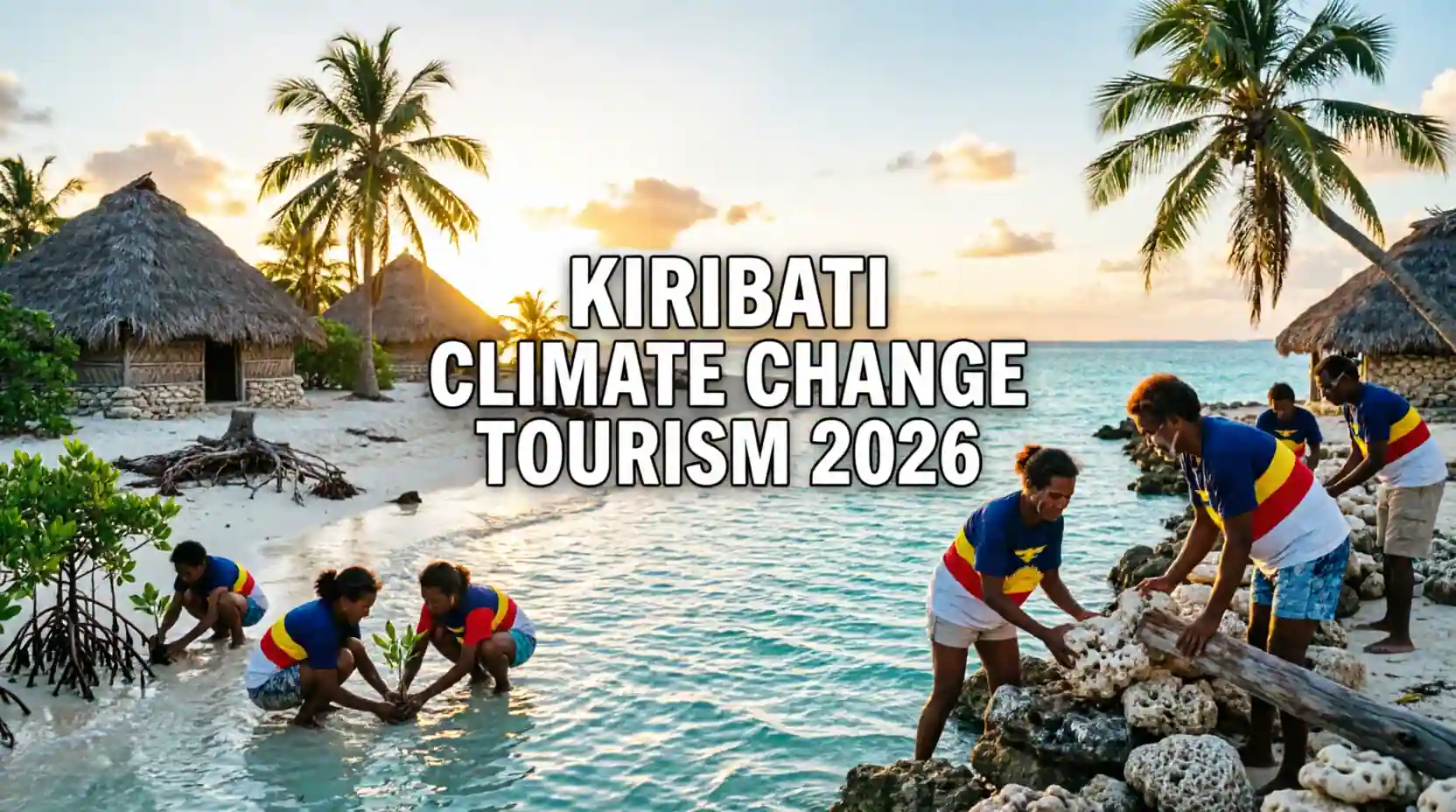
Kiribati Climate Change Tourism 2026: Visiting the Nation on the Front Lines of Sea-Level Rise
In the vast expanse of the central Pacific Ocean, scattered across 3.5 million square kilometers of ocean but comprising only 811 square kilometers of land, lies the Republic of Kiribati—a nation of 33 low-lying coral atolls and one raised coral island that sits at the epicenter of the global climate crisis. With an average elevation of just two meters above sea level, Kiribati faces an existential threat from rising seas, coastal erosion, saltwater intrusion, and increasingly severe weather events. For the 120,000 i-Kiribati people who call these islands home, climate change is not a distant future scenario but a present reality shaping daily life, cultural practices, and national survival.
In this context, a complex and ethically nuanced form of travel has emerged: climate change tourism. Sometimes called "last chance tourism" or "climate tourism," this phenomenon involves travelers visiting places perceived to be threatened by climate change—whether to witness impacts firsthand, to support local communities, to learn about adaptation strategies, or simply to experience places before they potentially disappear. For Kiribati, this form of tourism presents both opportunities and profound ethical challenges. Can travel to a nation facing existential threat be conducted respectfully and beneficially? How can visitors avoid exploitative "poverty tourism" or "disaster voyeurism" while still engaging meaningfully with climate realities? What responsibilities do travelers bear when visiting communities on the front lines of a crisis they did not create?
For travelers considering Kiribati in 2026, these questions are not abstract—they are central to planning a trip that is respectful, responsible, and potentially transformative. This comprehensive guide explores everything you need to know about climate change tourism in Kiribati: understanding the nation's climate vulnerability and adaptation efforts, navigating the ethical considerations of visiting a climate-threatened nation, practical travel information for reaching and experiencing Kiribati, cultural protocols for respectful engagement, opportunities to support climate resilience through tourism, and approaches to travel that center i-Kiribati voices, agency, and dignity. Whether you're a climate-conscious traveler, an environmental educator, a journalist, or simply someone seeking to understand the human dimensions of climate change, this guide provides the insights you need to approach Kiribati with humility, preparation, and purpose.
Understanding Kiribati: Geography, Culture, and Climate Vulnerability

Geographic and Cultural Context
Kiribati's unique geography shapes its climate vulnerability:
- Nation composition: 33 atolls and one raised island (Banaba) scattered across the equatorial Pacific; three island groups: Gilbert Islands, Phoenix Islands, Line Islands
- Population: Approximately 120,000 people, predominantly i-Kiribati with rich cultural traditions, language, and connection to land and sea
- Economy: Subsistence fishing and agriculture, remittances, limited tourism, and revenue from fishing licenses and the Phoenix Islands Protected Area
- Cultural values: Deep connection to land (te kainanga), community reciprocity, traditional ecological knowledge, and resilience forged through centuries of island life
- Governance: Democratic republic with strong emphasis on climate advocacy in international forums
- 👉 Palau Entry Permit for US Travelers: 2026 Application Guide
- 👉 Kiribati Visa Update 2026: Complete Guide for UK, US & EU Citizens
- 👉 Vanuatu Entry Requirements 2026 US Citizens Onward Travel Rules
Climate Change Impacts: The Present Reality
For Kiribati, climate change is not future speculation but current experience:
- Sea-level rise: Pacific sea levels rising faster than global average; king tides increasingly inundate villages, contaminate freshwater lenses, and erode coastlines
- Coastal erosion: Significant land loss on multiple atolls; some islets have disappeared entirely; homes, cemeteries, and cultural sites threatened
- Saltwater intrusion: Saltwater contaminates freshwater lenses, threatening drinking water and traditional agriculture (babai pits for giant taro)
- Coral bleaching: Rising ocean temperatures cause coral bleaching, affecting fisheries and coastal protection
- Weather extremes: More intense droughts and storms; traditional weather prediction knowledge challenged by changing patterns
- Food security: Impacts on traditional food systems; increased reliance on imported foods with nutritional and economic consequences
- 👉 Palau Entry Permit for US Travelers: 2026 Application Guide
- 👉 Kiribati Visa Update 2026: Complete Guide for UK, US & EU Citizens
- 👉 Vanuatu Entry Requirements 2026 US Citizens Onward Travel Rules
Adaptation and Resilience: i-Kiribati Responses
Despite profound challenges, i-Kiribati communities are not passive victims but active agents of adaptation:
- Traditional knowledge: Revival of traditional building techniques, water management, and agricultural practices adapted to island conditions
- Engineered solutions: Seawalls, land reclamation, raised gardens, and improved water infrastructure (often with international support)
- Mangrove restoration: Community-led mangrove planting to protect coastlines and support fisheries
- Migration with dignity: Government policy emphasizing skilled migration pathways rather than climate refugee status; maintaining cultural continuity
- International advocacy: Kiribati leaders prominent voices in global climate negotiations, emphasizing climate justice and loss and damage
- Cultural preservation: Efforts to document and maintain language, customs, and knowledge regardless of physical displacement
- 👉 Palau Entry Permit for US Travelers: 2026 Application Guide
- 👉 Kiribati Visa Update 2026: Complete Guide for UK, US & EU Citizens
- 👉 Vanuatu Entry Requirements 2026 US Citizens Onward Travel Rules
The Ethics of Climate Change Tourism: Navigating Complex Questions

Potential Benefits of Responsible Climate Tourism
When conducted thoughtfully, tourism can support Kiribati:
- Economic support: Tourism revenue supports local businesses, guides, and communities; diversifies economy beyond fishing and remittances
- Climate awareness: Visitors who witness climate impacts firsthand may become advocates for climate action in their home countries
- Cultural exchange: Respectful tourism fosters mutual understanding and challenges stereotypes about Pacific island nations
- Documenting change: Responsible journalists, researchers, and educators can amplify i-Kiribati voices and adaptation stories
- Supporting adaptation: Tourism can fund community projects, conservation efforts, and cultural preservation
- 👉 Palau Entry Permit for US Travelers: 2026 Application Guide
- 👉 Kiribati Visa Update 2026: Complete Guide for UK, US & EU Citizens
- 👉 Vanuatu Entry Requirements 2026 US Citizens Onward Travel Rules
Ethical Risks and Concerns
Climate tourism also carries significant ethical risks:
- Exploitation and voyeurism: Risk of treating i-Kiribati people and their struggles as spectacle rather than respecting their dignity and agency
- "Last chance" framing: Marketing Kiribati as "disappearing" can be disempowering, fatalistic, and inaccurate; many i-Kiribati reject this narrative
- Carbon footprint: Long-haul flights to reach Kiribati generate significant emissions; travelers must consider this contradiction
- Cultural disruption: Tourism can disrupt traditional life if not managed carefully; risk of commodifying culture
- Unequal power dynamics: Wealthy visitors from high-emission nations visiting communities bearing climate impacts they did not create
- Greenwashing: Risk of tourism operators claiming sustainability without meaningful action
- 👉 Palau Entry Permit for US Travelers: 2026 Application Guide
- 👉 Kiribati Visa Update 2026: Complete Guide for UK, US & EU Citizens
- 👉 Vanuatu Entry Requirements 2026 US Citizens Onward Travel Rules
Principles for Ethical Climate Tourism in Kiribati
Travelers can minimize harm and maximize benefit by following these principles:
- Center i-Kiribati voices: Seek out experiences led by i-Kiribati guides, organizations, and communities; prioritize local perspectives over external narratives
- Reject "last chance" framing: Avoid marketing or language that portrays Kiribati as doomed; focus on resilience, adaptation, and agency
- Offset carbon thoughtfully: Calculate and offset flight emissions through reputable programs; consider supporting Kiribati-based climate projects
- Travel slowly and stay longer: Minimize flights by staying longer; deeper engagement reduces per-day impact and increases benefit
- Support local economy: Choose locally-owned accommodations, guides, and services; ensure tourism revenue stays in communities
- Practice cultural humility: Approach as learner, not expert; listen more than you speak; respect protocols and protocols
- Amplify, don't appropriate: Share i-Kiribati stories with credit and context; avoid speaking for communities
- Commit to action: Use your experience to advocate for climate justice, policy change, and support for vulnerable nations
- 👉 Palau Entry Permit for US Travelers: 2026 Application Guide
- 👉 Kiribati Visa Update 2026: Complete Guide for UK, US & EU Citizens
- 👉 Vanuatu Entry Requirements 2026 US Citizens Onward Travel Rules
Practical Travel Information: Reaching and Experiencing Kiribati

Entry Requirements and Logistics
Planning a trip to Kiribati requires preparation:
- Visa requirements: Most nationalities receive 30-day visa on arrival; verify requirements for your nationality before travel
- Passport validity: Must be valid for at least 6 months beyond entry date
- Flights:
- Fiji Airways: Nadi (Fiji) to Tarawa (TRW) - twice weekly (main international gateway)
- Nauru Airlines: Connects Kiribati to Nauru, Fiji, and other Pacific islands
- Domestic flights: Air Kiribati serves outer islands; schedules can be irregular
- 👉 Palau Entry Permit for US Travelers: 2026 Application Guide
- 👉 Kiribati Visa Update 2026: Complete Guide for UK, US & EU Citizens
- 👉 Vanuatu Entry Requirements 2026 US Citizens Onward Travel Rules
- Travel time: Allow 2-4 days total travel time from most locations; flights can be delayed due to weather
- Best time to visit: April-October (cooler, less humid, less rain); avoid November-March (wet season, cyclone risk)
- Travel insurance: Essential; must include medical evacuation (limited medical facilities in Kiribati)
- 👉 Palau Entry Permit for US Travelers: 2026 Application Guide
- 👉 Kiribati Visa Update 2026: Complete Guide for UK, US & EU Citizens
- 👉 Vanuatu Entry Requirements 2026 US Citizens Onward Travel Rules
Accommodation Options
Lodging in Kiribati is basic but authentic:
Tarawa (Main Island):
- Rita Hotel: Longest-established hotel; basic rooms, restaurant, central location in Betio
- Otanemaauno Beach Resort: Beachfront bungalows; more secluded; popular with divers and anglers
- Guesthouses: Family-run guesthouses offer authentic experience; verify amenities and reliability
- Price range: $50-150 USD per night; limited luxury options
- 👉 Palau Entry Permit for US Travelers: 2026 Application Guide
- 👉 Kiribati Visa Update 2026: Complete Guide for UK, US & EU Citizens
- 👉 Vanuatu Entry Requirements 2026 US Citizens Onward Travel Rules
Outer Islands (Kiritimati/Christmas Island, Abaiang, etc.):
- Christmas Island Lodge: Premier eco-lodge on Kiritimati; recently renovated; focuses on fishing and diving
- Community guesthouses: Basic accommodations on some outer islands; arrange through local contacts
- Considerations: Outer islands have limited infrastructure; bring essentials; embrace simplicity
- 👉 Palau Entry Permit for US Travelers: 2026 Application Guide
- 👉 Kiribati Visa Update 2026: Complete Guide for UK, US & EU Citizens
- 👉 Vanuatu Entry Requirements 2026 US Citizens Onward Travel Rules
Getting Around Kiribati
- Tarawa: Buses (minivans) serve main road; taxis available; rental cars limited; walking feasible in some areas
- Outer islands: Walking, bicycles, or arranged transport; boats for inter-island travel
- Domestic flights: Air Kiribati connects islands; book well in advance; schedules subject to change
- Boat transport: Essential for accessing many sites; ensure vessels are safe and operators licensed
- Guides: Highly recommended; local guides provide cultural context, translation, and navigation
- 👉 Palau Entry Permit for US Travelers: 2026 Application Guide
- 👉 Kiribati Visa Update 2026: Complete Guide for UK, US & EU Citizens
- 👉 Vanuatu Entry Requirements 2026 US Citizens Onward Travel Rules
Experiences and Sites: Engaging with Climate Realities Respectfully

Climate Adaptation Sites and Projects
Visitors can learn about i-Kiribati adaptation efforts:
- Mangrove restoration projects: Community-led planting to protect coastlines; visitor participation opportunities (with permission)
- Babai pit restoration: Traditional giant taro cultivation in raised pits; adaptation to saltwater intrusion
- Seawall and land reclamation: Engineering projects protecting villages; understand both benefits and limitations
- Rainwater harvesting systems: Community and household systems for freshwater security
- Visitor guidance: Always seek permission before visiting projects; follow local protocols; support through donations if appropriate
- 👉 Palau Entry Permit for US Travelers: 2026 Application Guide
- 👉 Kiribati Visa Update 2026: Complete Guide for UK, US & EU Citizens
- 👉 Vanuatu Entry Requirements 2026 US Citizens Onward Travel Rules
Cultural and Historical Sites
Understanding i-Kiribati culture deepens climate engagement:
- Traditional village life: Visit villages with local guide; observe traditional housing, fishing, and community practices
- Cultural centers: Learn about i-Kiribati history, navigation, dance, and crafts
- World War II sites: Tarawa was site of fierce battle; historical sites offer perspective on resilience through adversity
- Phoenix Islands Protected Area: One of world's largest marine protected areas; symbol of Kiribati's conservation leadership
- Ethical engagement: Always ask permission before photographing people or cultural practices; compensate guides fairly
- 👉 Palau Entry Permit for US Travelers: 2026 Application Guide
- 👉 Kiribati Visa Update 2026: Complete Guide for UK, US & EU Citizens
- 👉 Vanuatu Entry Requirements 2026 US Citizens Onward Travel Rules
Natural Experiences
Kiribati's natural beauty is intertwined with climate vulnerability:
- Coral reefs: Pristine reefs offer world-class diving and snorkeling; observe bleaching impacts with guide interpretation
- Bonefishing: Kiritimati offers legendary bonefishing; support sustainable practices and local guides
- Seabird colonies: Important seabird nesting sites; observe with minimal disturbance
- Coastal landscapes: Witness beauty and vulnerability of atoll ecosystems; reflect on interconnectedness
- Responsible practices: Use reef-safe sunscreen; avoid touching coral or wildlife; follow guide instructions
- 👉 Palau Entry Permit for US Travelers: 2026 Application Guide
- 👉 Kiribati Visa Update 2026: Complete Guide for UK, US & EU Citizens
- 👉 Vanuatu Entry Requirements 2026 US Citizens Onward Travel Rules
Cultural Etiquette and Respectful Engagement

Understanding i-Kiribati Culture
Respectful engagement begins with cultural understanding:
- Language: Kiribati (Gilbertese) is official language; learning basic greetings (Mauri = hello, Ko na mauri = thank you) shows respect
- Community values: Emphasis on reciprocity, respect for elders, and collective decision-making
- Religion: Predominantly Christian (Catholic and Protestant); respect religious observances and sites
- Traditional protocols: Seek permission before entering villages, photographing, or participating in activities
- Gift-giving: Small gifts for hosts appreciated; avoid creating dependency; ask guides about appropriate gifts
- 👉 Palau Entry Permit for US Travelers: 2026 Application Guide
- 👉 Kiribati Visa Update 2026: Complete Guide for UK, US & EU Citizens
- 👉 Vanuatu Entry Requirements 2026 US Citizens Onward Travel Rules
Discussing Climate Change
- Listen first: Allow i-Kiribati people to share their experiences and perspectives; avoid imposing external narratives
- Avoid fatalism: Many i-Kiribati reject "sinking island" narratives; focus on resilience, adaptation, and agency
- Respect diverse views: Communities may have different perspectives on migration, adaptation, and international advocacy
- Center solutions: Ask about adaptation efforts, traditional knowledge, and hopes for the future
- Acknowledge privilege: Recognize that visitors from high-emission nations bear responsibility for climate impacts
- 👉 Palau Entry Permit for US Travelers: 2026 Application Guide
- 👉 Kiribati Visa Update 2026: Complete Guide for UK, US & EU Citizens
- 👉 Vanuatu Entry Requirements 2026 US Citizens Onward Travel Rules
Photography and Documentation
- Always ask permission: Before photographing people, homes, or cultural practices; respect refusals gracefully
- Avoid exploitative framing: Do not photograph poverty, damage, or vulnerability in ways that objectify or sensationalize
- Provide context: When sharing images, include i-Kiribati perspectives, adaptation efforts, and cultural strength
- Compensate fairly: If using images professionally, compensate subjects and communities appropriately
- Consider impact: Ask: Does this image respect dignity? Does it amplify i-Kiribati voices? Does it avoid stereotypes?
- 👉 Palau Entry Permit for US Travelers: 2026 Application Guide
- 👉 Kiribati Visa Update 2026: Complete Guide for UK, US & EU Citizens
- 👉 Vanuatu Entry Requirements 2026 US Citizens Onward Travel Rules
Supporting Climate Resilience Through Tourism

Choosing Responsible Operators
Select tourism providers committed to ethical practices:
- Local ownership: Prioritize i-Kiribati-owned businesses and guides
- Environmental practices: Operators with clear sustainability policies: waste reduction, reef protection, carbon awareness
- Community benefit: Operators that share revenue with communities, employ locally, and support cultural preservation
- Transparency: Clear information about how tourism supports climate adaptation and community well-being
- Verification: Look for certifications or partnerships with reputable environmental or cultural organizations
- 👉 Palau Entry Permit for US Travelers: 2026 Application Guide
- 👉 Kiribati Visa Update 2026: Complete Guide for UK, US & EU Citizens
- 👉 Vanuatu Entry Requirements 2026 US Citizens Onward Travel Rules
Direct Support Opportunities
- Community projects: Donate to or volunteer with (appropriately) community-led adaptation projects; verify legitimacy
- Local purchases: Buy crafts, food, and services directly from i-Kiribati producers
- Cultural programs: Support traditional arts, dance, and knowledge preservation through participation and purchase
- Conservation contributions: Support Phoenix Islands Protected Area or local conservation initiatives
- Advocacy: Use your voice to advocate for climate justice, loss and damage funding, and support for vulnerable nations
- 👉 Palau Entry Permit for US Travelers: 2026 Application Guide
- 👉 Kiribati Visa Update 2026: Complete Guide for UK, US & EU Citizens
- 👉 Vanuatu Entry Requirements 2026 US Citizens Onward Travel Rules
Carbon Responsibility
- Calculate emissions: Use reputable calculators to estimate flight emissions to Kiribati
- Offset thoughtfully: Purchase offsets from verified programs; consider supporting Kiribati-based renewable energy or conservation
- Travel slowly: Stay longer to reduce per-day emissions impact; combine trip with other Pacific destinations if possible
- Advocate for change: Support policies and technologies that reduce aviation emissions long-term
- Acknowledge contradiction: Recognize the tension between flying to witness climate impacts and contributing to emissions; act with humility
- 👉 Palau Entry Permit for US Travelers: 2026 Application Guide
- 👉 Kiribati Visa Update 2026: Complete Guide for UK, US & EU Citizens
- 👉 Vanuatu Entry Requirements 2026 US Citizens Onward Travel Rules
Sample Itineraries for Climate-Conscious Travel

5-Day Tarawa Climate Awareness Journey
- Day 1: Arrival in Tarawa; orientation with local guide; visit climate adaptation project (with permission)
- Day 2: Cultural immersion: traditional village visit, babai pit demonstration, cultural center
- Day 3: Coastal exploration: witness erosion impacts, mangrove restoration, community seawall project
- Day 4: Historical context: WWII sites, discussion of resilience through historical challenges
- Day 5: Reflection and action planning: journaling, discussion with guide, commitment to advocacy
- 👉 Palau Entry Permit for US Travelers: 2026 Application Guide
- 👉 Kiribati Visa Update 2026: Complete Guide for UK, US & EU Citizens
- 👉 Vanuatu Entry Requirements 2026 US Citizens Onward Travel Rules
7-Day Kiritimati (Christmas Island) Eco-Adventure
- Days 1-2: Arrival on Kiritimati; orientation; coral reef snorkeling with climate impact interpretation
- Days 3-4: Bonefishing with local guides; learn about fisheries and climate impacts on marine ecosystems
- Day 5: Seabird colony visit; learn about Pacific seabirds and climate threats
- Day 6: Community engagement: visit adaptation project; cultural exchange; support local economy
- Day 7: Reflection, departure, commitment to climate action
- 👉 Palau Entry Permit for US Travelers: 2026 Application Guide
- 👉 Kiribati Visa Update 2026: Complete Guide for UK, US & EU Citizens
- 👉 Vanuatu Entry Requirements 2026 US Citizens Onward Travel Rules
10-Day Comprehensive Kiribati Climate Journey
- Days 1-4: Tarawa: climate adaptation sites, cultural immersion, historical context
- Days 5-8: Kiritimati: marine ecosystems, fishing, seabirds, community projects
- Days 9-10: Outer island visit (if accessible): traditional knowledge, community resilience, departure
- Integration: Allow time for reflection, journaling, and planning post-trip advocacy
- 👉 Palau Entry Permit for US Travelers: 2026 Application Guide
- 👉 Kiribati Visa Update 2026: Complete Guide for UK, US & EU Citizens
- 👉 Vanuatu Entry Requirements 2026 US Citizens Onward Travel Rules
Frequently Asked Questions

Is it ethical to visit Kiribati given its climate vulnerability?
This is a complex question with no simple answer. Tourism can provide economic support, raise awareness, and foster cultural exchange when conducted respectfully. However, it carries risks of exploitation, voyeurism, and carbon emissions. The key is approaching travel with humility, centering i-Kiribati voices and agency, minimizing environmental impact, and committing to action beyond the trip. Many i-Kiribati welcome respectful visitors who contribute positively to their communities and amplify their climate advocacy.
What should I avoid when visiting Kiribati?
- Avoid "last chance" or "disappearing paradise" framing; focus on resilience and agency
- Avoid photographing people or vulnerability without explicit permission
- Avoid imposing external narratives about climate impacts or solutions
- Avoid single-use plastics and environmentally harmful products
- Avoid behaviors that disrupt traditional life or cultural practices
- Avoid speaking for i-Kiribati communities; amplify their voices instead
- 👉 Palau Entry Permit for US Travelers: 2026 Application Guide
- 👉 Kiribati Visa Update 2026: Complete Guide for UK, US & EU Citizens
- 👉 Vanuatu Entry Requirements 2026 US Citizens Onward Travel Rules
How can I minimize my carbon footprint when visiting Kiribati?
- Calculate and offset flight emissions through reputable programs
- Stay longer to reduce per-day emissions impact
- Choose accommodations and operators with clear sustainability practices
- Minimize waste: bring reusable water bottle, avoid single-use plastics
- Support local renewable energy or conservation projects through donations
- Advocate for aviation decarbonization and climate policy in your home country
- 👉 Palau Entry Permit for US Travelers: 2026 Application Guide
- 👉 Kiribati Visa Update 2026: Complete Guide for UK, US & EU Citizens
- 👉 Vanuatu Entry Requirements 2026 US Citizens Onward Travel Rules
What if I want to volunteer or help with adaptation projects?
Volunteering requires careful consideration. Short-term volunteer tourism can displace local workers or create dependency. Instead:
- Support established organizations working with i-Kiribati communities
- Offer skills-based support arranged in advance with community input
- Donate to community-led projects rather than imposing external solutions
- Focus on listening and learning rather than "fixing"
- Respect that i-Kiribati communities are experts in their own adaptation
- 👉 Palau Entry Permit for US Travelers: 2026 Application Guide
- 👉 Kiribati Visa Update 2026: Complete Guide for UK, US & EU Citizens
- 👉 Vanuatu Entry Requirements 2026 US Citizens Onward Travel Rules
How do I prepare mentally and emotionally for this trip?
- Educate yourself about Kiribati's history, culture, and climate challenges before traveling
- Reflect on your motivations: Why do you want to visit? What do you hope to learn or contribute?
- Prepare for emotional complexity: Witnessing climate impacts can be difficult; allow space for processing
- Approach with humility: You are a guest in a community facing challenges you may not fully understand
- Plan for post-trip action: How will you use your experience to support climate justice?
- 👉 Palau Entry Permit for US Travelers: 2026 Application Guide
- 👉 Kiribati Visa Update 2026: Complete Guide for UK, US & EU Citizens
- 👉 Vanuatu Entry Requirements 2026 US Citizens Onward Travel Rules
Conclusion: Traveling with Purpose in a Changing World
Visiting Kiribati in 2026 is not a simple vacation. It is an invitation to engage with one of the most urgent stories of our time: the human dimensions of climate change, the resilience of communities on the front lines, and the global responsibility to act. For travelers willing to approach this journey with humility, preparation, and purpose, Kiribati offers profound lessons about vulnerability and strength, loss and adaptation, and the interconnectedness of all people and places.
The i-Kiribati people are not waiting to be saved; they are acting, adapting, advocating, and maintaining their culture with dignity and determination. As a visitor, your role is not to rescue but to witness respectfully, to listen deeply, to support locally, and to amplify globally. Your travel can be a form of solidarity when conducted with care, a bridge between communities when built on mutual respect, and a catalyst for action when it moves beyond observation to advocacy.
As you plan your journey to Kiribati, remember that the most meaningful travel is not about collecting experiences but about transforming perspectives. Let your time in Kiribati deepen your understanding of climate justice, strengthen your commitment to reducing emissions, and inspire you to support vulnerable communities worldwide. Carry home not just photographs of turquoise lagoons and white sand beaches, but the voices of i-Kiribati people who remind us that climate change is not just about rising seas—it is about human dignity, cultural survival, and the urgent need for a more just and sustainable world.
Kiribati awaits—not as a destination to consume, but as a teacher, a challenge, and a call to action. May your journey be respectful, transformative, and purposeful. May you travel not as a spectator of climate change, but as a participant in the global movement for climate justice. And may you carry the spirit of Kiribati—resilient, hopeful, and deeply connected to land and sea—into your own life and community.
Welcome to Kiribati. Welcome to the front lines. Welcome to travel with purpose.
0 Comments