.webp)
.webp)
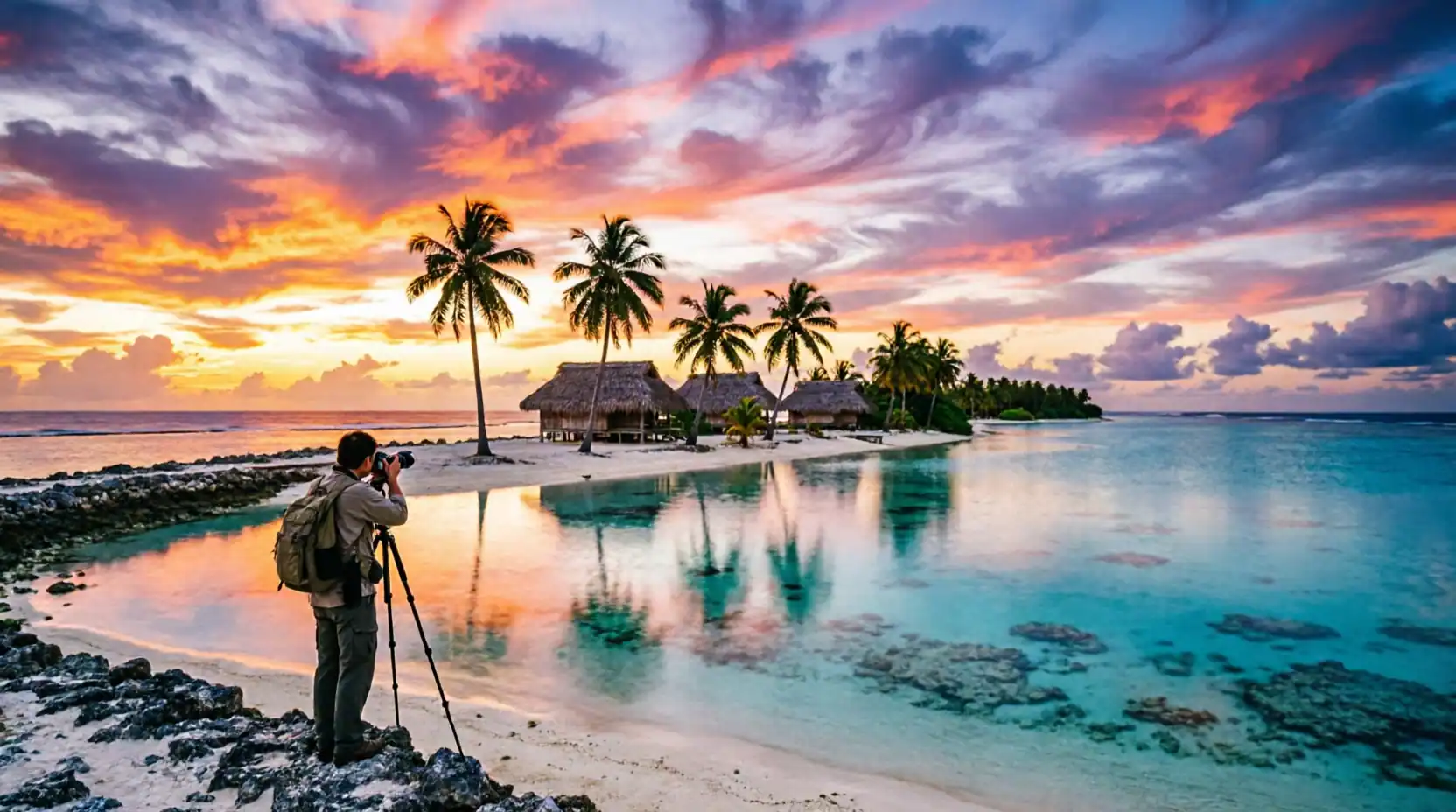
Discovering Funafuti Atolls Sunset Photography Potential
Funafuti Atoll in Tuvalu offers some of the most spectacular and underappreciated sunset photography opportunities in the Pacific. This remote atoll with its turquoise lagoon narrow land strip and dramatic horizon lines creates unique compositional challenges and rewards for photographers.
Capturing the perfect sunset at Funafuti requires understanding both technical photography skills and the unique characteristics of this Pacific atoll environment. The interplay between lagoon waters ocean horizons and tropical skies creates dynamic conditions that change rapidly.
This comprehensive 2026 guide covers everything from camera settings and equipment to location scouting and composition techniques specific to photographing Funafutis remarkable sunsets. Whether youre a beginner or experienced photographer these tips will help you capture stunning images of this remote Pacific paradise.
Understanding tidal patterns weather conditions and the best vantage points around the atoll proves essential for successful sunset photography. The narrow geography of Funafuti means the sun sets over the lagoon on one side and rises over the ocean on the other creating distinct photographic opportunities.
Essential Camera Equipment for Atoll Sunset Photography

Selecting the right equipment significantly impacts your ability to capture Funafutis stunning sunsets effectively in challenging tropical conditions.
A sturdy tripod proves non-negotiable for sunset photography. The low light conditions require longer exposures and a quality tripod ensures sharp images. Carbon fiber tripods offer the best balance of stability and portability for beach conditions though aluminum models work adequately.
Wide-angle lenses between fourteen and twenty-four millimeters capture expansive sunset scenes with dramatic foreground elements. The narrow atoll geography benefits from wide perspectives that include both lagoon and ocean when possible.
Telephoto lenses in the seventy to two hundred millimeter range compress sunset scenes creating dramatic layered compositions. These prove valuable for isolating specific elements like palm trees or traditional structures against the colorful sky.
Polarizing filters reduce glare on water surfaces and enhance sky contrast though use carefully during sunset as they can create uneven effects. Neutral density graduated filters help balance bright skies with darker foregrounds.
Weather-sealed camera bodies and lenses handle the salty humid tropical environment better than non-sealed equipment. Always clean gear thoroughly after beach sessions to prevent salt damage.
Optimal Camera Settings for Sunset Photography

Mastering camera settings enables capturing Funafutis dynamic sunset lighting conditions with technical precision and creative control.
Shoot in RAW format to maximize post-processing flexibility. Sunsets create extreme dynamic range situations and RAW files retain significantly more detail in highlights and shadows than JPEG files.
Use aperture priority mode with f-stops between f-eight and f-eleven for landscape sunset photography. This aperture range provides excellent depth of field keeping both foreground elements and distant horizons sharp.
Keep ISO as low as possible typically one hundred to four hundred to maintain image quality. Increase ISO only when necessary to maintain adequate shutter speeds particularly when handholding cameras.
Shutter speed varies dramatically during sunset from one over two hundredth second in bright conditions to several seconds in twilight. Use shutter speeds faster than one over focal length when handholding to avoid camera shake.
Enable highlight warning or zebra patterns to prevent blown highlights in bright sunset skies. Slightly underexposing preserves highlight detail that proves difficult or impossible to recover in post-processing.
Use manual focus or back-button focus to maintain consistent focus when recomposing. Autofocus can struggle in low contrast sunset conditions.
Understanding Light and Timing

Timing and light quality determine the success of sunset photography at Funafuti Atoll requiring strategic planning and patience.
Arrive at your location at least forty-five to sixty minutes before actual sunset. The best light often occurs during the golden hour before the sun dips below the horizon.
Stay after sunset for the blue hour when the sky turns deep blue and orange. This period typically lasts twenty to thirty minutes after sunset and creates magical atmospheric conditions.
Download sunset time apps or check local almanacs for precise sunset times. In Funafuti sunset times vary only slightly throughout the year due to the equatorial location typically occurring between six and seven PM.
Cloud cover dramatically affects sunset quality. Partly cloudy skies often produce the most spectacular colors as clouds catch and reflect the setting suns light. Completely clear or completely overcast skies typically prove less dramatic.
Weather patterns in Tuvalu mean afternoon clouds often build then dissipate around sunset. Monitor weather patterns throughout the day to predict sunset conditions.
Composition Techniques for Atoll Sunsets

Strong composition transforms good sunset photos into exceptional images that capture Funafutis unique character.
Use the rule of thirds by placing the horizon on either the upper or lower third of the frame rather than centering it. This creates more dynamic compositions and emphasizes either the dramatic sky or interesting foreground.
Incorporate foreground elements like palm trees traditional fale structures fishing boats or lagoon rocks to create depth and scale. These elements anchor the composition and provide visual interest beyond just the colorful sky.
Leading lines prove powerful in atoll environments. Use the natural curve of the shoreline reef edges or lagoon channels to guide viewers eyes through the image toward the sunset.
Reflections in the calm lagoon waters double the impact of colorful skies. Position yourself to capture mirror-like reflections particularly during calm conditions with minimal wind.
Include human elements like local fishermen traditional activities or village life to add cultural context and storytelling to your sunset images. This proves especially meaningful in Tuvalu where traditional life continues alongside modern challenges.
Best Sunset Photography Locations Around Funafuti

Funafutis narrow atoll geography offers distinct sunset viewing locations each with unique photographic characteristics.
The lagoon side facing west provides classic sunset views with calm waters and potential for stunning reflections. The shallow lagoon creates beautiful turquoise to orange color transitions during golden hour.
Vaiaku village area on the western side offers cultural elements combined with sunset views. Traditional architecture local life and sunset create compelling documentary-style photography opportunities.
The northern and southern tips of the atoll where land meets ocean provide dramatic perspectives with water on multiple sides. These locations allow creative compositions showing both lagoon and ocean.
Amatuku islet on the northern end offers secluded sunset photography away from village activity. The journey requires boat access but rewards with pristine conditions and unique perspectives.
Fogafale islets eastern ocean side though technically sunrise locations can offer interesting sunset photography looking back across the atoll with colorful sky backlighting the island silhouette.
Working with Tides and Water Conditions

Understanding tidal patterns and water conditions significantly impacts sunset photography success at Funafuti Atoll.
Check tide charts before planning sunset shoots. Low tide exposes interesting reef formations and tidal pools that create compelling foreground interest. High tide creates smooth water surfaces ideal for reflections.
The narrow atoll means tides affect both lagoon and ocean sides differently. Lagoon tides prove more subtle while ocean tides create more dramatic water level changes.
Wind conditions affect water surface texture. Calm conditions create mirror-like reflections while wind creates texture and movement. Both prove photographically interesting though require different techniques.
Wave action on the ocean side can create dramatic spray and movement particularly during higher surf. Use faster shutter speeds to freeze wave action or slower speeds to create smooth ethereal effects.
Safety proves paramount when photographing near water. Never turn your back on the ocean and be aware of incoming tides particularly on narrow sections of the atoll.
Long Exposure Techniques for Sunset

Long exposure photography during sunset creates stunning effects particularly with moving water and clouds at Funafuti.
Use shutter speeds between one second and thirty seconds to smooth water surfaces and create motion blur in clouds. This technique works particularly well during blue hour when light levels drop.
Neutral density filters allow longer exposures even in brighter conditions. A six-stop or ten-stop ND filter enables multi-second exposures during golden hour.
Use a remote shutter release or cameras self-timer to prevent camera shake during long exposures. Even pressing the shutter button can introduce vibration.
Enable mirror lock-up if your camera has this feature to eliminate mirror slap vibration during exposures longer than one second.
Experiment with different exposure times. Shorter exposures around one to five seconds maintain some water texture while longer exposures over fifteen seconds create completely smooth ethereal effects.
Dealing with Challenging Lighting Conditions

Funafutis sunset photography presents specific lighting challenges requiring technical solutions and creative adaptation.
High dynamic range between bright skies and dark foregrounds requires strategic exposure decisions. Consider exposure bracketing and HDR techniques or graduated neutral density filters to balance the scene.
Silhouettes prove effective when foreground detail proves impossible to capture. Expose for the bright sky allowing foreground elements to go completely black creating dramatic graphic compositions.
Backlighting challenges include lens flare and reduced contrast. Use lens hoods and flag the lens with your hand when necessary. Sometimes flare adds artistic value though often it proves distracting.
Color temperature shifts rapidly during sunset. Shoot in RAW to adjust white balance in post-processing or use auto white balance and fine-tune later.
Low light conditions test camera capabilities. Know your cameras high ISO performance limits and use image stabilization when available.
Post-Processing Sunset Images

Effective post-processing enhances sunset images while maintaining natural beauty and avoiding over-processed appearances.
Adjust exposure and recover highlight and shadow detail. RAW files typically allow recovering two to three stops of detail in both highlights and shadows.
Enhance colors subtly avoiding oversaturation. Increase vibrance rather than saturation for more natural-looking color enhancement. Focus on warming color temperature slightly to enhance golden hour glow.
Use graduated filters or radial filters to balance exposure between sky and foreground. This mimics the effect of graduated neutral density filters used during capture.
Sharpen images appropriately for output medium. Sunset images often benefit from moderate sharpening though avoid oversharpening which creates halos particularly along horizon lines.
Remove sensor dust spots and distractions. Sunset skies particularly reveal sensor dust requiring careful cleaning in post-processing.
Cultural Sensitivity and Local Considerations

Photographing sunsets in Funafuti requires cultural awareness and respect for local communities and traditions.
Many sunset photography locations sit on private or community land. Always seek permission before accessing areas particularly when photographing near homes or traditional structures.
Include local people in your images only with explicit permission. Tuvaluans generally prove friendly though always ask before photographing individuals particularly in village settings.
Respect sacred sites and traditional areas. Some locations hold cultural significance beyond their photographic appeal. When in doubt ask local residents about appropriate behavior.
Support local communities by hiring local guides who know the best locations and can facilitate appropriate access. This provides economic benefit while ensuring cultural sensitivity.
Be mindful that Tuvalu faces serious climate change threats. Approach photography with sensitivity to the communities challenges rather than treating the location merely as a picturesque backdrop.
Weather and Seasonal Considerations

Understanding Funafutis weather patterns and seasonal variations improves sunset photography planning and success rates.
Funafuti experiences relatively consistent temperatures year-round though trade winds prove stronger from May to October. These months often feature clearer skies and more predictable sunset conditions.
The wet season from November to April brings more variable weather with afternoon thunderstorms common. However storms often clear by evening creating spectacular sunset opportunities.
Cloud patterns typically build during the day then dissipate around sunset. Monitor cloud development throughout the day to predict sunset quality though remain flexible as conditions change rapidly.
Haze and humidity affect image clarity particularly during the wet season. Use polarizing filters to cut through atmospheric haze and enhance color saturation.
King tides occurring several times yearly create exceptional high water levels that can dramatically alter sunset photography locations and access. Check tide calendars when planning visits.
Protecting Equipment in Tropical Conditions

Tuvalus tropical marine environment presents specific challenges for camera equipment requiring proactive protection strategies.
Salt spray and humidity damage camera equipment rapidly. Always use lens caps when not shooting and store equipment in sealed bags with desiccant packets when not in use.
Clean equipment thoroughly after each beach session. Use fresh water and microfiber cloths to remove salt from camera bodies lenses and tripods. Never use salt water for cleaning.
Use weather-sealed equipment when possible though no camera proves completely immune to salt and humidity. Take extra precautions even with professional weather-sealed gear.
Bring silica gel packets and store equipment in dry bags or containers overnight. The humid environment causes condensation particularly when moving between air-conditioned and outdoor environments.
Carry backup equipment when possible. The remote location makes equipment replacement difficult and expensive. Having backup camera bodies and lenses proves wise for serious photographers.
Creative Composition Ideas

Beyond standard sunset photography Funafuti offers unique creative opportunities that distinguish images from typical sunset photos.
Capture the transition from day to night by creating a time-lapse series. Set up your camera on a tripod and shoot images every thirty to sixty seconds from golden hour through blue hour.
Experiment with intentional camera movement during longer exposures to create abstract interpretations of the sunset. This technique creates painterly effects particularly effective with colorful skies.
Frame sunsets through natural elements like palm fronds traditional architecture or boat rigging. These frames add depth and context while creating unique perspectives.
Photograph the sunset reflection in tidal pools or calm lagoon water then flip the image vertically in post-processing for surreal abstract compositions.
Include traditional canoe or fishing boat silhouettes against the colorful sky to add cultural narrative and human scale to your sunset images.
Planning and Preparation Strategies
Successful sunset photography at Funafuti requires advance planning and preparation to maximize limited time in this remote location.
Scout locations during daylight before your sunset shoot. Identify foreground elements access points and potential compositions so you can focus on lighting and exposure when the light proves best.
Check tide charts sunset times and weather forecasts daily. Conditions change rapidly in the tropics requiring flexibility and multiple opportunities.
Prepare equipment the night before with fully charged batteries formatted memory cards and cleaned lenses. Tropical humidity and limited time mean you cannot afford equipment failures.
Pack light but comprehensively. The narrow atoll means you can reach most locations quickly though carrying heavy equipment in heat and humidity proves exhausting.
Build relationships with local residents who can provide insider knowledge about the best locations changing conditions and cultural considerations. Local knowledge proves invaluable.
Conclusion Capturing Funafutis Sunset Magic
Photographing sunsets at Funafuti Atoll combines technical photography skills with appreciation for one of the Pacifics most remote and beautiful locations. The unique geography narrow land strip and stunning lagoon create distinctive photographic opportunities unavailable in most locations.
Success requires preparation technical knowledge and respect for both the environment and local culture. Understanding camera settings timing composition and the specific characteristics of atoll sunsets enables capturing images that do justice to this remarkable place.
Remember that while technical excellence matters the most compelling sunset photographs tell stories and evoke emotions. Include cultural elements respect the land and people and approach photography with humility and gratitude for the opportunity to witness and capture Funafutis natural beauty.
As climate change threatens low-lying atolls like Funafuti these photographs become increasingly important documents of a place and way of life. Approach your photography with awareness of this context and use your images to share awareness of Tuvalus beauty and vulnerability.
With proper preparation technical skill and respectful engagement your Funafuti sunset photographs will serve as lasting memories of this extraordinary Pacific atoll and help share its story with the world.
0 Comments