.webp)
.webp)
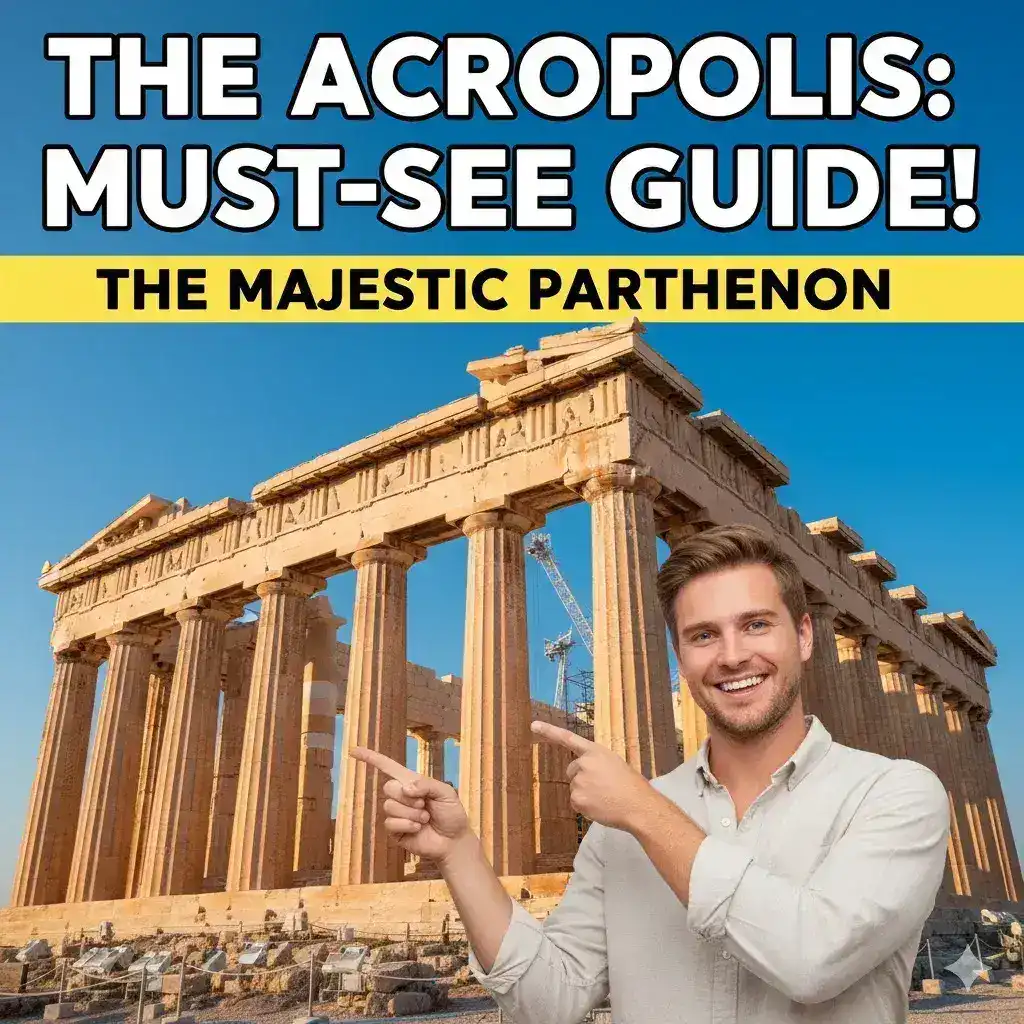
THE ACROPOLIS: STANDING BEFORE THE MAJESTIC PARTHENON
There are few moments in travel that transcend mere sightseeing to become profound encounters with human achievement. Standing on the sacred rock of the Acropolis in Athens, gazing upon the Parthenon as golden sunlight illuminates its weathered marble columns, is one such moment. For over two and a half millennia, this ancient citadel has watched over Athens, embodying the ideals, artistry, and ambitions of classical Greece. In 2026, as travelers seek meaningful connections to history and culture, the Acropolis remains an essential pilgrimage site, offering not just ancient ruins but a living dialogue between past and present, between human aspiration and enduring beauty.
This comprehensive guide invites you to experience the Acropolis and its crowning masterpiece, the Parthenon, with deeper understanding and greater appreciation. We will explore the historical context that gave birth to these monuments, examine the architectural innovations that make the Parthenon a timeless masterpiece, provide practical information for visiting in 2026, and reflect on the cultural significance that continues to make the Acropolis relevant today. Whether you are a history enthusiast, an architecture lover, a philosophy student, or simply a curious traveler, this guide will help you prepare for an encounter with one of humanity's greatest achievements.
Understanding the Acropolis requires more than admiring ancient stones; it demands engaging with the ideas, values, and human stories that shaped this sacred space. By approaching the Acropolis with curiosity and respect, you will discover not just a monument to the past but a source of inspiration for the present.
HISTORICAL CONTEXT: THE SACRED ROCK OF ATHENS
The Acropolis, meaning "high city" in Greek, has been a place of significance since prehistoric times. Archaeological evidence suggests that the rocky outcrop was inhabited as early as the fourth millennium BCE, with fortifications and religious structures built upon its summit. However, it was during the fifth century BCE, in the aftermath of the Persian Wars, that the Acropolis was transformed into the magnificent complex we recognize today.
After the Persian invasion of 480 BCE destroyed earlier temples on the Acropolis, the Athenian statesman Pericles initiated an ambitious rebuilding program that would celebrate Athenian democracy, artistic achievement, and devotion to the goddess Athena. Under the direction of the sculptor Phidias and architects Ictinus and Callicrates, the Parthenon was constructed between 447 and 432 BCE, followed by the Propylaea gateway, the Temple of Athena Nike, and the Erechtheion.
These buildings were not merely religious structures; they were powerful symbols of Athenian identity and imperial power. The Parthenon, dedicated to Athena Parthenos (Athena the Virgin), housed a colossal chryselephantine statue of the goddess and served as a treasury for the Delian League, the alliance of Greek city-states led by Athens. The architectural harmony, sculptural richness, and mathematical precision of these buildings expressed the Athenian ideals of order, beauty, and rationality that continue to influence Western culture.
The Acropolis survived wars, earthquakes, conversions, and centuries of neglect. In the seventh century CE, the Parthenon was converted into a Christian church; under Ottoman rule, it became a mosque. A catastrophic explosion in 1687, when Venetian forces bombarded the Ottoman garrison stored within the Parthenon, caused extensive damage. Despite these trials, the Acropolis endured, and in the nineteenth and twentieth centuries, archaeological excavations and restoration efforts began to reveal and preserve its ancient glory.
Today, the Acropolis stands as a UNESCO World Heritage Site and a symbol of classical civilization. Ongoing restoration projects, using modern technology and traditional techniques, continue to stabilize the monuments and reveal new insights into ancient construction methods. For visitors in 2026, the Acropolis offers a unique opportunity to walk in the footsteps of Pericles, Phidias, and the citizens of ancient Athens while witnessing the careful work of preserving this irreplaceable heritage for future generations.
THE PARTHENON: ARCHITECTURAL GENIUS AND ENDURING BEAUTY
The Parthenon is widely regarded as the finest example of Doric architecture and one of the most influential buildings in Western history. Its design embodies a sophisticated understanding of geometry, optics, and aesthetics that continues to astonish architects and scholars.
Architectural Features:
The Parthenon measures approximately 69.5 meters long by 30.9 meters wide, with eight columns on the short ends and seventeen on the long sides. Though it appears perfectly rectilinear, the building incorporates numerous subtle curves and adjustments designed to correct optical illusions and create a sense of harmony. The columns lean slightly inward, the stylobate (foundation platform) curves upward in the center, and the columns themselves swell slightly in the middle (a feature called entasis) to appear straight from a distance.
The temple was constructed primarily of Pentelic marble, quarried from Mount Pentelicus northeast of Athens. This marble, with its fine grain and subtle golden hue, was ideally suited for the intricate sculptural decoration that adorned the building. The Parthenon's sculptural program included ninety-two metopes depicting mythological battles, a continuous frieze showing the Panathenaic procession, and pedimental sculptures illustrating the birth of Athena and her contest with Poseidon for patronage of Athens.
Mathematical Precision:
The Parthenon's design reflects the ancient Greek pursuit of mathematical harmony. The ratio of the temple's length to width approximates the golden ratio, a proportion believed to embody aesthetic perfection. The spacing of columns, the dimensions of architectural elements, and the relationships between parts and whole were calculated with extraordinary precision. This mathematical rigor was not merely technical; it expressed a philosophical belief that beauty arises from order, proportion, and rationality.
Sculptural Decoration:
Though much of the Parthenon's sculpture has been lost, damaged, or removed over the centuries, enough remains to convey the extraordinary artistry of Phidias and his workshop. The metopes depicted battles between gods and giants, Greeks and Amazons, Lapiths and Centaurs, and Greeks and Trojans, symbolizing the triumph of civilization over chaos. The frieze, uniquely for a Doric temple, showed the Panathenaic procession, a festival honoring Athena that included citizens, priests, and sacrificial animals. The pedimental sculptures, though fragmentary, conveyed the dramatic mythology of Athena's birth and her divine contest for Athens.
The Elgin Marbles Controversy:
Approximately half of the Parthenon's surviving sculptures are housed in the British Museum, having been removed by Lord Elgin in the early nineteenth century. The question of whether these marbles should be returned to Athens remains a subject of international debate. The Acropolis Museum, opened in 2009, was designed with a gallery specifically intended to display the Parthenon sculptures in their original architectural context, should repatriation occur. For visitors, understanding this controversy adds depth to the experience of viewing both the Parthenon and the museum's collections.
OTHER MONUMENTS OF THE ACROPOLIS
While the Parthenon dominates the Acropolis, the sacred rock contains several other significant structures that enrich the visitor experience.
The Propylaea:
The monumental gateway to the Acropolis, designed by Mnesicles and constructed between 437 and 432 BCE, serves as a dramatic entrance to the sanctuary. The Propylaea combines Doric and Ionic architectural orders, with a central hall flanked by wings and a roof of marble coffers. Though never fully completed due to the Peloponnesian War, the Propylaea remains an impressive example of classical architecture and a powerful threshold between the secular city below and the sacred sanctuary above.
The Temple of Athena Nike:
Perched on a bastion to the right of the Propylaea, this small but exquisite temple was dedicated to Athena as bringer of victory. Designed by Callicrates and completed around 420 BCE, the temple features slender Ionic columns and a continuous frieze depicting battles between Greeks and Persians. The temple's location offers panoramic views of the Saronic Gulf and the approach to Athens by sea, reinforcing its association with naval victory.
The Erechtheion:
Located on the north side of the Acropolis, the Erechtheion is one of the most complex and enigmatic buildings of classical Greece. Constructed between 421 and 406 BCE, the temple was dedicated to both Athena and Poseidon and incorporated several ancient shrines and sacred sites. Its most famous feature is the Porch of the Caryatids, where six sculpted female figures support the roof in place of columns. The Erechtheion's asymmetrical design, adapted to uneven terrain and multiple cults, demonstrates the flexibility and creativity of classical architecture.
The Sanctuary of Artemis Brauronia and Other Structures:
Scattered across the Acropolis are remains of smaller shrines, altars, and monuments that reveal the complexity of ancient religious practice. The Sanctuary of Artemis Brauronia honored the goddess of childbirth; the Chalkotheke stored bronze vessels for religious ceremonies; and the Roman-era Monument of Agrippa celebrated a benefactor of Athens. These structures remind visitors that the Acropolis was not a static monument but a living sanctuary that evolved over centuries.
THE ACROPOLIS MUSEUM: CONTEXT AND CONTINUITY
No visit to the Acropolis is complete without exploring the Acropolis Museum, located at the foot of the sacred rock. Opened in 2009, this award-winning museum presents the artifacts of the Acropolis in a modern setting that enhances understanding of their original context.
Architectural Design:
Designed by Bernard Tschumi, the museum's architecture responds to the Acropolis itself. The building is supported by slender columns that echo the Parthenon's colonnade, and its glass walls offer views of the ancient monuments above. The top floor, the Parthenon Gallery, is oriented to match the temple's alignment, allowing visitors to view sculptures in the same relationship they held on the building.
Collections and Exhibits:
The museum's collections include sculptures, inscriptions, and everyday objects from the Acropolis, spanning from the Archaic period through Roman times. Highlights include the Moschophoros (Calf-Bearer), an Archaic statue of a man carrying a sacrificial animal; the Peplos Kore, a beautifully preserved statue of a young woman; and fragments of the Parthenon frieze and pediments. The museum's displays combine scholarly rigor with accessible interpretation, helping visitors understand the art, religion, and daily life of ancient Athens.
The Parthenon Gallery:
The museum's crowning achievement is the Parthenon Gallery, where surviving sculptures are displayed in their original architectural sequence. Though the Elgin Marbles remain in London, the gallery's design allows visitors to imagine the complete sculptural program. Large windows frame views of the actual Parthenon, creating a powerful dialogue between ancient monument and modern museum.
Practical Information:
The Acropolis Museum is open daily, with extended hours in summer. Combined tickets with the Acropolis are available and offer excellent value. Audio guides and guided tours provide deeper context, while the museum's cafe and shop offer opportunities to rest and purchase souvenirs. Allow at least two hours to explore the museum thoroughly.
VISITOR INFORMATION FOR 2026
Planning a visit to the Acropolis in 2026 requires some preparation to ensure a smooth and rewarding experience.
Tickets and Admission:
Entry to the Acropolis requires a timed-entry ticket, which can be purchased online in advance or at the site. In 2026, advance online booking is strongly recommended, especially for peak season (April to October), to avoid long queues and ensure entry at your preferred time.
Ticket options include:
- Single-site ticket for the Acropolis only
- Combined ticket (valid for five days) providing entry to the Acropolis, Ancient Agora, Roman Agora, Hadrian's Library, Kerameikos, Aristotle's Lyceum, and Temple of Olympian Zeus
The combined ticket offers excellent value if you plan to visit multiple archaeological sites. Prices are approximately twenty euros for the Acropolis alone or thirty euros for the combined ticket, with reduced rates for students, seniors, and EU youth.
Opening Hours:
The Acropolis is generally open daily from 8 AM to 8 PM in summer (April to October) and 8 AM to 5 PM in winter (November to March), though hours may vary for holidays and special events. The last entry is typically thirty minutes before closing. Check the official Hellenic Ministry of Culture website for current hours before your visit.
Best Times to Visit:
To avoid crowds and enjoy optimal lighting for photography, consider these strategies:
- Arrive at opening time (8 AM) for the smallest crowds and soft morning light
- Visit in late afternoon for golden hour lighting and fewer tour groups
- Avoid midday in summer, when heat and crowds peak
- Consider visiting on weekday mornings rather than weekends
Weather Considerations:
Athens has a Mediterranean climate with hot, dry summers and mild, wet winters. Summer temperatures can exceed 35 degrees Celsius (95 degrees Fahrenheit), so bring water, sunscreen, and a hat. The Acropolis offers little shade, so plan accordingly. Winter visits offer cooler temperatures and fewer crowds, though rain is possible and some areas may be slippery.
Accessibility:
The Acropolis has made efforts to improve accessibility, though the ancient site presents challenges due to its rocky terrain and historic structures. A paved path and elevator provide access to the summit for visitors with mobility challenges, and wheelchairs are available for loan. However, some areas, including the interior of the Parthenon, remain inaccessible. Contact the site in advance to arrange assistance if needed.
Dress Code and Etiquette:
While there is no formal dress code for the Acropolis, visitors are expected to dress respectfully as the site remains a place of cultural and historical significance. Comfortable walking shoes are essential, as the marble surfaces can be slippery and the terrain uneven. Shoulders and knees do not need to be covered, but modest dress is appreciated.
Photography is permitted throughout the site, though tripods and professional equipment may require special permission. Flash photography is discouraged in the museum to protect artifacts. Be mindful of other visitors when taking photos, and avoid climbing on ancient structures.
PRACTICAL TIPS FOR ENHANCING YOUR VISIT
Guided Tours vs. Self-Guided Exploration:
Both options have merits. Guided tours provide expert context, historical insights, and efficient navigation of the site. Licensed guides can bring the Acropolis to life with stories of Pericles, Phidias, and ancient Athenian life. Self-guided exploration offers flexibility to linger at favorite spots and discover details at your own pace. Audio guides and mobile apps provide a middle ground, offering commentary without the structure of a group tour.
What to Bring:
- Comfortable walking shoes with good grip (marble can be slippery)
- Water bottle (refill stations available)
- Sunscreen, hat, and sunglasses (limited shade)
- Camera with extra batteries
- Light jacket or layers (can be windy on the summit)
- Small backpack for essentials
- Printed or digital copy of your ticket confirmation
Crowd Avoidance Strategies:
- Book timed-entry tickets online in advance
- Arrive at opening time or late afternoon
- Visit during shoulder seasons (April-May, September-October)
- Explore lesser-known areas like the north slope or Sanctuary of Artemis
- Combine your visit with the Acropolis Museum, which is less crowded
Photography Tips:
- Golden hour (early morning or late afternoon) provides the most dramatic lighting
- Use a polarizing filter to reduce glare on marble surfaces
- Include human figures for scale and context
- Capture details: column capitals, sculptural fragments, views of Athens
- Respect other visitors and avoid blocking pathways for photos
Combining with Other Sites:
The Acropolis is part of a rich archaeological landscape in central Athens. Consider combining your visit with:
- Ancient Agora: The heart of ancient Athenian public life, featuring the Temple of Hephaestus and Stoa of Attalos
- Roman Agora and Tower of the Winds: A later forum with elegant architecture
- Temple of Olympian Zeus: One of the largest temples of the ancient world
- National Archaeological Museum: The finest collection of ancient Greek artifacts
- Plaka neighborhood: Charming streets with tavernas and shops at the Acropolis foot
CULTURAL SIGNIFICANCE: WHY THE ACROPOLIS MATTERS TODAY
The Acropolis is more than an ancient ruin; it is a symbol of enduring human values. The Parthenon's architectural harmony expresses the classical belief that beauty arises from order and proportion. The sculptures celebrate human achievement, divine favor, and the struggle between civilization and chaos. The very act of building the Acropolis demonstrated the Athenian commitment to public art, civic pride, and cultural excellence.
These ideals continue to resonate. The Parthenon has influenced architecture from the Renaissance to neoclassical government buildings worldwide. Its sculptures have inspired artists, writers, and philosophers for centuries. The Acropolis as a whole represents the possibility of creating beauty and meaning that transcend time.
Yet the Acropolis also invites reflection on complexity and contradiction. The glory of classical Athens was built on the labor of enslaved people and the exclusion of women from public life. The Parthenon's sculptures celebrated Athenian imperialism as well as artistic achievement. The Elgin Marbles controversy raises questions about cultural heritage, colonialism, and repatriation that remain relevant today.
Approaching the Acropolis with this nuanced understanding enriches the experience. Rather than a simplistic celebration of the past, the Acropolis becomes a site for engaging with the complexities of human history, the enduring power of art and ideas, and the responsibility we bear to preserve and interpret cultural heritage.
CONCLUSION: A TIMELESS ENCOUNTER
Standing before the Parthenon on the Acropolis is an experience that transcends ordinary tourism. As sunlight illuminates the weathered marble columns, as the city of Athens spreads below, and as the weight of millennia presses upon the present, visitors encounter something profound: the enduring power of human creativity, the fragility of cultural achievement, and the possibility of beauty that speaks across time.
In 2026, as the world grapples with challenges of sustainability, equity, and cultural preservation, the Acropolis offers not just a window into the past but inspiration for the future. The ancient Athenians who built these monuments believed in the power of art, reason, and civic engagement to elevate human life. Their achievement, though imperfect and incomplete, continues to challenge and inspire us to create, to question, and to aspire.
As you plan your visit to the Acropolis, approach this sacred space with curiosity, humility, and respect. Listen to the stories the stones tell, engage with the complexities of history, and allow the beauty of the Parthenon to move you. In doing so, you join the long line of travelers, scholars, and dreamers who have found meaning on this rocky summit.
May your encounter with the Acropolis deepen your appreciation for the achievements of the past and inspire your contribution to the future. As the ancient Greeks understood, true greatness lies not in monuments alone but in the ideas, values, and actions that give them meaning. May you carry that understanding forward, wherever your journey leads.
Useful resources include the Hellenic Ministry of Culture and Sports for ticket information and site updates, the Acropolis Museum for exhibits and educational programs, and the UNESCO World Heritage Centre for conservation information. Emergency services in Greece can be reached at 112. Disclaimer: Information is accurate as of early 2026. Site hours, ticket prices, and policies may change; verify details before travel. This guide is for informational purposes only and does not constitute professional travel or historical advice.
0 Comments